DD
MM
YYYY

PAGES

DD
MM
YYYY

spot_img

PAGES

Home Blog Page 4210

Revolutionary Moves in Crypto and DeFi with TMSN, USD Coin (USDC)’s Risk-Reward Ratio, and Optimism (OP)’s 25% Price Rally Prediction

0

Three recent developments have caught the attention of investors and experts alike. Firstly, TMS Network’s (TMSN) is gaining popularity among users. Secondly, USD Coin (USDC) is scrutinized for its risk-reward ratio. Finally, there is optimism in the DeFi and traditional finance (TradFi) spaces that the price of Optimism may rally by 25%. This article will examine these three developments and what they could mean for crypto and DeFi.

USD Coin (USDC)

According to InvestorsObserver analysis, USD Coin (USDC) has been given a low-risk rating. The risk assessment system analyzes the amount of money needed to influence the token’s price in the last 24 hours, considering changes in volume and market capitalization. Traders concerned about risk can use the USD Coin (USDC) risk gauge rank to avoid or consider risky investments. USD Coin (USDC) is currently rated as a low-risk investment.

USD Coin (USDC) has experienced a minor price decrease of 0.01% to its current value of $1.00. The token’s volume is below average, and its market capitalization has risen. In the last 24 hours, $4,569,159,292.34 worth of USD Coin (USDC) has been traded, with the cryptocurrency now having a market capitalization of $30,724,882,414.85. Based on these factors, USD Coin (USDC) has been given a low-risk rating.

Optimism (OP)

Optimism (OP) is an Ethereum layer 2 scaling solution that aims to increase transaction throughput and reduce gas fees on the network. Optimism (OP)’s price has risen by over 3% in the last 24 hours, and trading volume has increased by 41%, indicating growing demand for the token, making it a viable option for traders.

If the bullish momentum continues, Optimism (OP) price may surpass the 100- and 50-day Exponential Moving Averages at $2.236 and $2.383, respectively. These price levels are significant supply congestion zones and could be used by bulls as an opportunity to enter the Optimism (OP) market.

The Optimism (OP) price can exceed the psychological barrier of $2.787 and break out of the consolidation zone that it has been in for several months. In the most ambitious scenario, Optimism (OP) could reach $3.114, representing a 40% increase from its current price level.

TMS Network (TMSN)

TMS Network (TMSN) is a decentralized exchange (DEX) platform that provides users with a unique way to trade on Ethereum. Unlike traditional exchanges, TMS Network (TMSN) addresses issues such as high fees, slow transactions, and lack of education by offering innovative features like social trading and trading bots.

One of the notable advantages of TMS Network (TMSN) is its compliance with crypto trading regulations worldwide, which ensures that the platform can operate without any concerns of being shut down. Additionally, the token presale for TMS Network (TMSN) has already been completed, meaning token holders can earn dividends based on the exchange’s profits.

TMS Network (TMSN) focuses on innovative features, and education sets it apart from decentralized exchanges. Moreover, with the completion of the token presale, TMS Network (TMSN) offers it’s token holders an opportunity to benefit from the exchange’s profits.

Conclusion

The TMS Network’s (TMSN), USD Coin (USDC), and Optimism (OP) are all making waves in the crypto and DeFi world. TMS Network (TMSN) is gaining popularity among users and investors, while USD Coin (USDC) is being scrutinized for its risk-reward ratio. Investors and experts are showing interest in Optimism (OP) due to its possible increase in price by 25%. The world of cryptocurrency and decentralized finance is constantly evolving, and these three developments are just a small glimpse of what’s to come.


Presale: https://presale.tmsnetwork.io

Website: https://tmsnetwork.io

Telegram: https://t.me/TMSNetworkIO

Twitter: https://twitter.com/@tmsnetwork_io
Investors Flock To Big Eyes Coin Amid US SEC Crackdown On Blockchain

0

The US Securities and Exchange crackdown is in full swing. Government regulators have issued multiple investigations and lawsuits on high-profile cryptocurrencies, including XRP and BNB.

Looming disaster for the tokens has led to massive sell-offs from investors. XRP owners Ripple sold off $336 million worth of XRP tokens, and now $3.8 billion worth of BNB was staked to farm SUI tokens—a new emerging cryptocurrency being labelled the ‘Ethereum Killer’.

Blockchains such as Sui (SUI), MultiversX (EGLD), and Big Eyes Coin (BIG) have become appealing choices for investors looking for safe investments to come out unscathed from the SEC crackdown—but what makes them different from XRP and BNB?

Sui: Foundationally DeFi

To create a fully decentralised blockchain platform and coin, the community must have complete ownership over the assets. Sui (SUI) is a DeFi Layer 1 blockchain that is built on this premise.

Using a delegated Proof-of-Stake (PoS) system, scaling SUI is achieved horizontally without high-energy demands problematic to global emissions that regulators are cracking down on. Instead, SUI users can benefit from low-cost fees and fast transactions.

Unlike BNB, Sui will support dApps with high efficiency to further expand decentralisation on the web to usher in a DeFi future for Web 3.0 that government regulators can’t control and limit.

MultiversX: Bringing DeFi to the Metaverse

MultiversX is also a DeFi blockchain network set out to pave the way for decentralisation for Web 3.0. However, MultiversX’s vision expands beyond DeFi by tapping into the virtual reality identity of Web 3.0 that experts label as the ‘Metaverse’, where the future of the internet is a virtual representation of reality.

Within MultiversX, there will be a virtual world covering the ecosystem of DeFi, NFTs, and Web 3—it will be fully interoperable where all types of DApps, cryptocurrencies, and blockchain platforms can operate together. Users can access portals in the world with an avatar to engage with apps, cryptocurrency, and users.

MultiversX users can make and spend money there, redefining the idea of ‘The American Dream’ to ‘The Metaverse Dream’ with endless possibilities to capitalise upon in MultiversX.

Big Eyes Coin: A Rich Web 3.0 Ecosystem

Big Eyes Coin harbours all the qualities investors seek with a DeFi, scalable, and Web 3-compatible coin. BIG plays upon the premise of ‘sharing the cuteness’ by creating cute themes for Big Eyes Coin that feels personable with users and represents what people want for the future of transactions that are fun, playful and, decentralised.

BIG quickly received social media buzz as a meme coin similar to Dogecoin. Still, Big Eyes Coin has incredible scope since it uses the PoS consensus mechanism to be scalable. It has created a charity wallet that will expand alongside the coin’s market value and aims to have 90% of its community owning BIG by launch on June 3rd.

The foundation for BIG is strong, but its scope further expands by creating a social NFT platform where the community can share, buy and sell their BIG digital assets. The project has plans to develop a rich ecosystem in the metaverse by launching a Big Eyes Coin casino with over 4,000 games and 14 play-to-earn games.

Investor Safety and Web 3 Compatibility

Investors feel safe in MultiversX and Big Eyes Coin for their community-driven approach, and their ability to be sustainably scaled and futureproofed with new-age technologies and concepts, including Web 3 and the Metaverse.

However, Big Eyes Coin goes the extra mile to please regulators and users alike. Its personable approach brings fun and light-heartedness to an industry plagued by corruption and scams.


For more on Big Eyes Coin (BIG):

Presale: https://buy1.bigeyes.space/?source=tekedia

Website: https://bigeyes.space/

Telegram: https://t.me/BIGEYESOFFICIAL

OpenSea: https://opensea.io/collection/big-eyes-lootbox-cards

Twitter: https://twitter.com/BigEyesCoin

Setting Sail with Yachtify (YCHT): Outperforming Uniswap (UNI) in the Cryptocurrency Investment Arena

0

Yachtify (YCHT) has hoisted its sails and embarked on an impressive voyage through the cryptocurrency investment arena, leaving Uniswap (UNI) trailing in its wake. With a groundbreaking platform and an innovative approach to digital asset investments, Yachtify (YCHT) is swiftly making its mark as a top contender in the crypto world.

Discover the key factors that propel Yachtify (YCHT) ahead of Uniswap (UNI) and learn how this trailblazing project is revolutionizing the cryptocurrency investment landscape for discerning investors.

>>>> BUY YACHTIFY TOKENS <<<

Setting Sail with Yachtify (YCHT): Investors are Excited About This Emerging Project

Yachtify (YCHT) is charting new waters in the realm of digital assets, aiming to democratize the exclusive yacht ownership market. This groundbreaking project seeks to establish a marketplace for anyone interested in earning passive income through fractional boat ownership. With Yachtify, investors can own a share of a boat and earn income proportional to their share when the boat is rented out.

No longer an asset reserved solely for the wealthy, Yachtify is introducing the world’s first fractional yacht investment platform, allowing the community to buy, sell, and rent real-world yachts. The Yachtify Protocol offers a unique opportunity for investors to participate in a recession-proof maritime industry with multiple income streams, thereby making the elite yacht market accessible to cryptocurrency users.

Through the native token, $YCHT, investors can purchase fractional NFTs representing physical yachts, which are insured and stored in high-security ports worldwide. Existing yacht owners can list a minimum of 25% of their private yachts for fractional sale, and members can trade yacht hour smart NFTs that decrease as the hours are used. Each NFT represents a real-world yacht, allowing the community to purchase a stake for as little as $100. Private yachts are sold or leased to high-net-worth individuals and charter businesses, enabling investors to earn income or capital growth.

The Yachtify team has undergone a rigorous KYC process, with the founder’s identity verified. The project has been audited by SolidProof, ensuring liquidity will be locked for life, and team tokens are locked for three years. Yachtify has the potential to become a blue-chip crypto with significant growth prospects, especially for presale investors who can earn a revenue share of platform fees as long as they hold the tokens.

With Yachtify, users can rent, sell, and buy various boats on the blockchain, earning a share in the platform’s revenue. This innovative project could be an opportunity to invest in a future blue-chip cryptocurrency at an attractive price point of just $0.10. Experienced investors know that investing in solid projects early is where significant gains are often made, making Yachtify a promising investment opportunity worth checking out.

Uniswap (UNI) Experiences Market Turbulence: Volatility Uncovers Fresh Possibilities for Traders

In recent times, Uniswap (UNI) has witnessed considerable price fluctuations, leading investors to explore alternative investment opportunities. Uniswap (UNI) has built a solid reputation as a platform that enables the trading of Ethereum-based tokens since its inception. However, the Uniswap (UNI) coin’s value has nosedived from an astounding $44 to a mere $6.32, even though it saw an 11% increase recently. This downturn in Uniswap (UNI) value has raised questions among investors about its potential for sustained growth and the chances of reclaiming its past glory.

Consequently, numerous investors are shifting their focus to Yachtify (YCHT), which showcases more enticing growth potential. While optimism for Uniswap (UNI) persists, its capacity to attract investor attention and compete with other rising contenders in the ever-changing crypto landscape remains uncertain.

Join Presale: https://buy.yachtify.market

Website: https://yachtify.market

Telegram: https://t.me/yachtify

Twitter: https://twitter.com/yachtify_market

On Nigeria’s ARCON approval for skit maker; the clarification

0

The Advertising Regulatory Council of Nigeria (ARCON) took Meta Platforms Inc, the parent company of Facebook, Instagram and WhatsApp to court the other day, joining AT3 Resources Limited to the suit.

This suit was commenced as an enforcement of Act No. 23 of 2022 which has provided guidelines for advertisers and advertising agencies.

Basically, ARCON is suing AT3 Resources Limited for running an advertisement which was not vetted by the advertising panel (APCON) and Meta Platform Inc is joined as a party to the suit for allowing an agency to run an advertisement on their platform that has not been vetted by the government agency.

In a meeting that I participated in today, this issue was raised, asking as to the way forward for skit makers and content creators who engage in advertising and here is my professional legal opinion/advice as I submitted in the meeting.

After painstakingly going through the extant law ( Act No. 23 of 2022) purportedly requesting skit markers to obtain approvals and licenses from the advertising panel (APCON) before they can engage in an advertisement: there is nowhere this was expressly provided that skit makers, content creators or influencers should obtain approvals from the panel before making a post. In fact, under S. 63 of the act which is the interpretation section, Advertising agency was stated to mean an agent or organization that engages in express advertisement; skit markers, influencers, or content creators were never added as advertising agency nor advertisers.

Secondly, content creators and influencers although engage in the promotion and endorsement of products which can be interpreted to be a form of advertisement, they never engage in express or overt advertising; they have crafted a unique style of making “funny skits/content” while covertly infusing the product or brand they intend to promote and endorse. This, in my professional opinion and to every reasonable person’s opinion cannot be said to be advertising that approval is needed for.

As for the suit between ARCON v. Meta & Anor which has raised this recent panic amongst advertisers and content creators, this suit may have been misunderstood; “ARCON is suing META the parent company of Facebook, Instagram and WhatsApp mainly for allowing their platform to be used engaging in advertising that was never vetted by the panel, the next defendant in the suit is AT3 Resources ltd, a lagos based media agency that engages in outdoor and social media advert and public relation.

This case should totally be distinguished from what content creators and skit makers do hence why they do not need approval from the panel to post their funny skits or content. They are just agents of laughter and one should not be needing approval from the government to spread happiness through laughter.

Finally, I am fully aware that this whole brouhaha of skit makers obtaining approvals from APCON before advertising started off when the DG of ARCON in a press briefing last December charged skit makers and social media content creators to adhere to the Nigeria advertising code of practice but nowhere is it provided in the act that skit makers or content creators should secure approvals. I strongly believe that the DG was greatly misquoted by news blogs.

On that note, I advise that APCON licenses and approvals do not apply to content creators and skit makers because they do not engage in the express form of advertisement.

Gmail Introduces Blue Checkmark to Help Users Identify Messages From Legitimate Senders

0

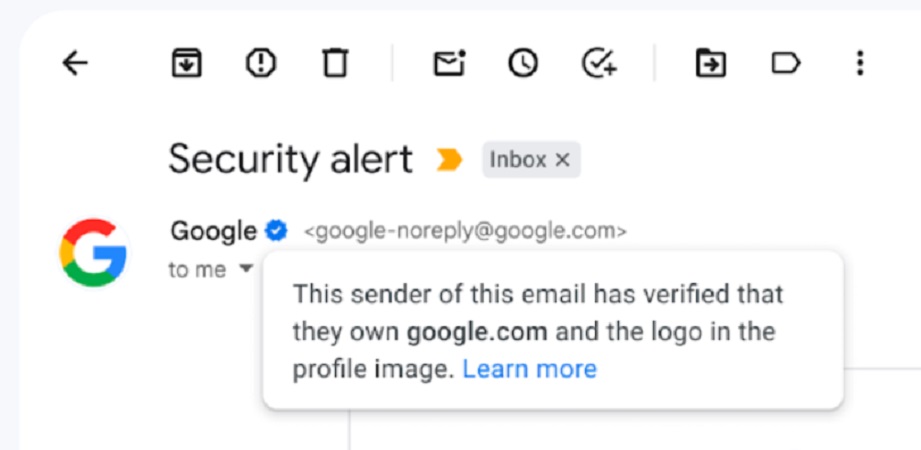
Tech giant Google began to introduce Twitter-like blue check marks next to select senders’ names on Gmail to verify that they are identified and to also help users identify messages from legitimate senders.

The tech giant via a blog post announced on Wednesday that the new blue check marks will appear next to companies that have adopted Gmail’s existing Brand Indicators for Message Identification (BIMI) feature.

The blog post which is titled “Expanding upon Gmail security with BIMI” reads,

“In 2021, we introduced Brand Indicators for Message Identification (BIMI) in Gmail, a feature that requires senders to use strong authentication and verify their brand logo in order to display a brand logo as an avatar in emails. Building upon that feature, users will now see a checkmark icon for senders that have adopted BIMI. This will help users identify messages from legitimate senders versus impersonators”.

Google via Twitter advised users to look out for the blue checkmark next to a company’s name in their emails to make sure they’re the real deal before they respond. It is worth noting that once users hover over the blue checkmark next to a sender’s name, they will see a blurb that says “the sender of this email has verified” that they own the domain and logo in the profile image.

The tech giant revealed that this strong email authentication feature was rolled out to help users and email security systems identify and stop spam, and also enables senders to leverage their brand trust. The company also disclosed that this will increase confidence in email sources and give readers an immersive experience, creating a better email ecosystem for everyone.

This feature which has started rolling out is available to all Google Workspace customers, as well as legacy G Suite Basic and Business customers. It is also available to users with personal Google accounts. Google’s introduction of Blue Checkmarks for Gmail accounts is coming at an interesting time, with the rise of ubiquitous Email scams especially in the wake of ChatGPT, which can pose a serious threat to online safety.

These scams are often hard to trick people into revealing sensitive financial information by responding to messages or clicking on links, which leads to loss of money. Now with the introduction of blue check marks, users will be very of divulging vital information to accounts without it.

Google joins the like of Twitter, YouTube, and Pinterest, which are using Blue Checkmarks to authenticate users. Recall that in March this year, Meta also launched paid verification check marks as well as LinkedIn with the introduction of verification badges. It wouldn’t come as a surprise if more companies jump on the trend of verification checkmarks to ensure the highest level of trust is maintained with customers.