DD
MM
YYYY

PAGES

DD
MM
YYYY

spot_img

PAGES

Home Blog Page 4230

Bitcoin Cash and Hedera: Staying Relevant in the Crypto Market Amid Big Eyes Coin Presale End News

0

With the crypto market continually evolving, many crypto investors and enthusiasts are looking for innovative ways to keep their investment portfolios updated. Amid the ongoing Big Eyes presale scaling new peaks, investors are considering how Bitcoin Cash and Hedera can stay relevant in the crypto market.

In this article, we will discuss and compare the features of Bitcoin Cash and Hedera, along with their similarities and differences. We will also compare them with the bonus code and other eye-catching, attention-grabbing features of Big Eyes Coin.

Bitcoin Cash: More Out Of Your Coin

Bitcoin Cash, a cryptocurrency that originated in 2017, is an offshoot of Bitcoin that is designed to increase the block size limit, allowing for faster and cheaper transactions. Bitcoin Cash aims to offer a more scalable and user-friendly version of Bitcoin by providing faster confirmation times and lower transaction fees.

Bitcoin Cash aims to make it easier for businesses and individuals to use cryptocurrency for everyday transactions. The Bitcoin Cash network can handle up to 32MB of data per block, allowing for faster transaction times and more transactions per second. Bitcoin Cash also uses a unique address format, making it easy to distinguish it from Bitcoin.

Bitcoin Cash has been accepted by numerous merchants, and it can be easily purchased on various cryptocurrency exchanges. Bitcoin Cash has also been added to several mobile wallets, making it more accessible to users.

Hedera: The ToolKit for Success

Hedera, a decentralized public network, aims to provide a secure and efficient way to create and run decentralized applications. Hedera uses a unique consensus algorithm known as the Hashgraph consensus algorithm, which is said to be faster, fairer, and more secure than traditional blockchain consensus algorithms.

Hedera’s cryptocurrency, HBAR, is used to pay for transactions on the network and to provide access to various decentralized applications. Hedera has a council that oversees the network, consisting of some of the world’s leading companies, including Google, IBM, and Boeing.

Hedera’s speed and security make it ideal for a wide range of applications, including finance, supply chain management, and gaming. Hedera also offers numerous developer tools and resources, making it easier for developers to build and deploy decentralized applications on the network.

Big Eyes Coin: Constant Rewards, Endless Wealth

Big Eyes Coin is a new cryptocurrency project that operates similarly to Shiba Inu. The project aims to create a decentralized ecosystem that will allow users to buy, sell, and trade digital assets easily.

Big Eyes Coin’s unique selling point is its bonus code, which allows users to receive a 300% bonus on their purchases during the presale, and the loot boxes along with their NFT marketplace hosted on the Opensea platform. The project also aims to contribute a significant amount to the environment through its 5% donation pledge.

Big Eyes Coin has a dedicated community of investors. The many offerings on the platform give investors a chance to create both long-term and short-term investments through the aforementioned avenues.

Final Thought

Bitcoin Cash and Hedera are two cryptocurrencies that offer unique features and benefits. While Bitcoin Cash aims to provide a more user-friendly version of Bitcoin, Hedera aims to offer a faster and more secure platform for decentralized applications. As for Big Eyes Coin, its bonus code and low transaction fees make it an attractive option for investors looking for a new cryptocurrency project to invest in. With the crypto market continually evolving, it is essential to research and consider the features and benefits of each cryptocurrency before investing.


Grab Your 300% Bonus Now Before It’s Gone Forever!

Presale: https://buy.bigeyes.space/

Website: https://bigeyes.space/

Twitter: https://twitter.com/BigEyesCoin

Telegram: https://t.me/BIGEYESOFFICIAL

Opensea: https://opensea.io/collection/big-eyes-lootbox-cards
Big Eyes Coin, Cronos, and VeChain: Exploring the Unique Features of These Crypto Projects

0

The crypto market is constantly expanding, with new altcoins and meme coins being introduced regularly. Big Eyes Coin (BIG) a new meme coin that will launch soon, and it’s already made a big impression in presale. Cronos (CRO) and VeChain (VET) have been volatile in the market this year but have been ones for investors to keep an eye on.

Big Eyes Coin: Crypto that Makes an Impact

Big Eyes Coin is an upcoming meme coin that has raised over $34 million during its presale. The project is completely community driven and every part of the ecosystem is designed to propagate growth for the community. One of the unique features of Big Eyes Coin is its commitment to donating 5% of its supply to ocean-saving charities.

The presale ends on June 3rd, and investors can use the code END300 for a 300% bonus. With strong investor interest in BIG during the presale, there is potential for the coin to skyrocket when it launches. Big Eyes Coin distinguishes itself from its competitors by emphasising token utility, which could give it the potential to expand beyond the meme coin space and become a prominent player in the broader cryptocurrency industry. The platform will also make crypto accessible and easy to use with how-tos and tutorials to help the community.

VeChain: Bringing Web3 to the Masses

VeChain is a crypto blockchain network that focuses on logistics and supply chain management. The platform uses a Proof-of-Authority consensus that helps secure transactions. VET is the native token used for storing and transferring value, while VTHO is used for transaction fees.

VeChain recently launched a Web3-as-a-service platform,VORJ, a Web3-as-a-service which summarises the blockchain development process, opening up Web3 building to more users. VORJ combines the Web2 user experience with the ability to create Web3 digital assets quickly, eliminating a key restriction to Web3 entry. VeChain’s goal is to build solutions that stop any obstacles impeding the mass adoption of blockchain technology.

Cronos: Powering Fast and Cheap Transactions

Cronos (CRO) is the native coin of the crypto exchange platform Crypto.com Chain. It is a decentralised, expansive, publicly accessible blockchain with fast speed and cheap processing costs. Holders of Cronos coins can take advantage of reduced fees and increased revenues for lending.

Recently, the Crypto.com platform announced it would cut 20% of its workforce, which surprisingly had a positive effect on the Cronos token price. Currently, the CRO coin is worth around $0.07, a rally of over 2.8% in the past week.

Big Eyes Coin, VeChain, and Cronos all have their unique features that make them promising projects in the crypto market. Big Eyes Coin’s emphasis on token utility and commitment to donating to ocean-saving charities offers investors something different. Don’t forget to use the code END300 for a 300% bonus when investing in Big Eyes Coin.

For more information on Big Eyes Coin (BIG):


Presale: https://buy.bigeyes.space/

Website: https://bigeyes.space/

Telegram: https://t.me/BIGEYESOFFICIAL

TMS Network (TMSN) Leads the Market with Mind-Blowing Performance While Dogecoin (DOGE) and Arbitrum (ARB) Forced to Take a Backseat

0
TMS no account

In the crypto sphere, pure speculation has a more significant impact than intrinsic value. Consequently, the market’s positive or negative sentiment critically impacts the investor psyche and price. It often makes predictions difficult to state except in some conditions. It has also caused a paradigm shift in the crypto world, where we see cryptocurrencies like Dogecoin (DOGE) and Arbitrum (ARB) in a state of traction. Simultaneously, a new entrant like TMS Network (TMSN) is becoming the talk of the town with its stellar performance.

Arbitrum (ARB) Optimistic of a Rebound after Its Bubble Burst

Arbitrum (ARB) cryptocurrency successfully grabbed the attention of investors with its Layer 2 Ethereum scaling solution that had the potential to revolutionize the decentralized finance (DeFi) ecosystem. Unfortunately, recent events raised questions about Arbitrum’s (ARB) reliability. Its airdrop was oversubscribed, which led to the crash of Arbitrum’s (ARB) network. Furthermore, the recent hacking of Sentiment resulted in the theft of $1 million worth of Arbitrum (ARB). It triggered a shockwave of distrust in investors about Arbitrum (ARB), and a question mark on its viability.

However, experts are optimistic about Arbitrum (ARB) rebound after the launch of Orbit. But its future remains uncertain. Currently, Arbitrum (ARB) is trading at $1.64, an increase of 0.26% in 24 hours, and 41.93% from its 7-day low of $1.16. But Arbitrum (ARB) is 5.74% down from its 7-day high of $1.74.

Dogecoin (DOGE) on a Rollercoaster Ride

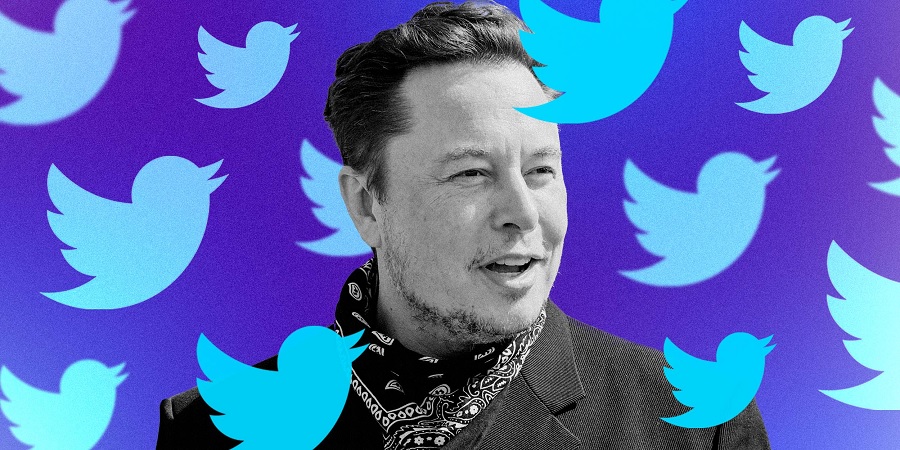
Dogecoin (DOGE), a meme coin, started as a joke. Unfortunately, it is still there even today. Like other meme coins, Dogecoin (DOGE) is not considered stable because of a lack of real-world utility. The value of Dogecoin (DOGE) is predominantly decided by hype and speculation. It was evident when Dogecoin (DOGE) value spiked due to Elon Musk changing Twitter’s logo to Dogecoin (DOGE) from the iconic blue bird. But the value of Dogecoin (DOGE) plummeted instantly after Twitter restored its original logo. Musk is trying hard to make Dogecoin (DOGE) a mainstream payment solution. However, it looks like a far-fetched dream for now, raising concerns about its long-term viability.

The current trading value of Dogecoin (DOGE) is $0.93, a 3.04% hike in the last 24 hours and an 11.57% increase in the past seven days. However, its future remains uncertain.

TMS Network (TMSN) Stages a Record 2500% Gains Attack

Entering the crypto market as a new non-custodial decentralized exchange, TMS Network (TMSN) has successfully addressed plenty of drawbacks of the crypto sphere, and staged a staggering presale profit. As the first DEX to support forex and equity trading, TMS Network (TMSN) is already showing signs of delivering 1,000% returns every few weeks. It has caused the market bulls to invest and pump TMSN tokens aggressively.

The first two stages of TMS Network (TMSN) sold out much earlier than expected, and it is now in its third presale stage. TMS Network (TMSN) has already raised over $4 million, with a record high of 2500% from its initial price of $0.003. TMS Network (TMSN) is gunning for $12 million shortly.

The latest value of TMS Network (TMSN) is $0.08. Investors’ confidence in TMS Network (TMSN) is also boosted several notches higher, with analysts and experts forecasting its growth to a minimum of 2,000x by the end of Q3. The sentiment stems from the project’s whitepaper, stating that TMS Network (TMSN) will get listed on the Uniswap exchange in June.

As an added advantage, TMS Network (TMSN) currently offers all its investors a 75% deposit bonus on orders over $5000.

All this makes it a no-brainer as to why TMS Network (TMSN) is leading the crypto market, and forcing Dogecoin (DOGE) and Arbitrum (ARB) to take a backseat.


Presale: https://presale.tmsnetwork.io

Website: https://tmsnetwork.io

Telegram: https://t.me/TMSNetworkIO

Twitter: https://twitter.com/@tmsnetwork_io

Twitter Finally Implements Removal of Blue Checkmarks

0

Microblogging platform Twitter has finally implemented the removal of Blue Checkmarks after the company’s CEO Elon Musk had earlier stated that the removal would commence on the 20th of April, 2023,.

Following Musk’s recent decision to remove verification badges, users who did not pay for the company’s subscription service, have noticed the disappearance of the checkmark from their Twitter handle.

The change has impacted several people, including public figures, as Twitter now mandates account holders to pay an $8 per month fee to retain their verification badges. However, government accounts and some corporate accounts will still maintain their verification badge through a separate set of icons, in silver and gold respectively.

Recall that long ago, legacy checkmarks were issued to notable and public figures for free to authenticate their handle, however with Musk’s takeover, the narrative has changed. The decision came as part of Musk’s plans to get rid of Twitter’s “Lords and peasants system for who has or doesn’t have a blue checkmark”.

It is however interesting to note that the New York Times, along with several other news organizations and high-profile Twitter users, decided not to pay for the Blue checkmark which they described as “absurd”. 

A spokesperson at the New York Times said, “We aren’t planning to pay the monthly fee for checkmark status for our institutional Twitter accounts, We also will not reimburse reporters for Twitter Blue for personal accounts, except in rare instances where this status would be essential for reporting purposes”.

This spurred Twitter CEO Musk to poke fun at the New York Times, calling the publication “unreadable” after it lost its blue verification badge on his social media platform. Musk wrote via a tweet “The real tragedy of New York Times is that their propaganda isn’t even interesting”. 

When asked about how taking away verification marks would impact disinformation spread on the platform, Musk said “I think the media is a driver of misinformation much more than the media would like to admit that they are”. Twitter has also disclosed that it will stop recommending non-verified accounts on its “For You” algorithmic timeline.

Twitter Blue got off to a rocky start in November after several accounts started impersonating public figures and companies, resulting in the company halting the subscription service for several weeks before relaunching it the next month. 

Criticism has continued to trail Twitter’s decision on its blue checkmark policy, with some saying that the essence of the verification badges was being defeated, as anyone could impersonate another by just subscribing to Twitter Blue.

And finally, even advertisers are not spared!

Advertisers have to pay for verification on Twitter. Businesses are now required to pay for Twitter Blue or Verified Organization subscription services to share ads, TechCrunch reports. Business accounts spending more than $1,000 per month on the app can have gold checks and can continue advertising. In an email that’s been shared on Twitter by some users, the social media site said the move was part of its broader verification strategy and its efforts to reduce fraudulent accounts and bots. (Fortune newsletter)

Musk Unveils Social Media Monetization 2.0 As Kardashian, Pope Francis, Bill Gates, etc Lose Blue Checkmarks

2

It happened because the boldest entrepreneur in the world has done it: “Elon Musk’s Twitter on Thursday began a purge of blue verification check marks from users who have not signed up for its subscription service, with the checks disappearing from the accounts of journalists, academics and celebrities.

“The blue checks even disappeared from the accounts of some of the most well-known and widely followed people on the social network, including Kim Kardashian, Beyonce, Bill Gates, Pope Francis, former president Donald Trump and Twitter founder Jack Dorsey.” This is a new revenue source for Twitter.

Good People, most times, we overestimate how customers will react because we are timid on capturing value in markets, as I explained in this Harvard Business Review piece. You give customers so much value, cruising  in the ocean of waters with water everywhere, yet, there is no drop of drinking water to quench the thirst! 

Indeed, activities are everywhere on your platform, but you make no money. Pity that company which is very popular but also dispensable by users. That dispensability means no one wants to support its mission by helping it to make money.

Twitter wanted to stop that nonsense where a very popular and valuable company has no money in the bank. Respect Musk for that: if you get value, pay; otherwise, do not. I count that many will do.

I just paid because Twitter has become better with extra space for me to make my points without the limitations of 140 characters or so! My account is here: @ndekekwe.

Welcome to Social Media Monetization 2.0 where you will pay for the privilege of feeding aggregators with data and raw materials which they use to make money. Of course, you also get value in return. Fair play!

Elon Musk’s Twitter on Thursday began a purge of blue verification check marks from users who have not signed up for its subscription service, with the checks disappearing from the accounts of journalists, academics and celebrities.

The blue checks even disappeared from the accounts of some of the most well-known and widely followed people on the social network, including Kim Kardashian, Beyonce, Bill Gates, Pope Francis, former president Donald Trump and Twitter founder Jack Dorsey.

Some government agencies — including the official account for US Citizenship and Immigration Services and accounts for some state Customs and Border Patrol offices — also lost their blue checks, which weren’t immediately replaced by the gray checks Twitter has designated for government accounts.

[ ]

Twitter had previously said it would “begin winding down” blue checks granted under its old verification system — which emphasized protecting high-profile users at risk of impersonation — on April 1. In order to stay verified, Musk said, users would have to pay $8 per month to join the platform’s Twitter Blue subscription service, which has allowed accounts to pay for verification since December.

Musk needs to drive this strategy when you consider that many entities which depend on advertisements are fading.

BuzzFeed News, the Pulitzer Prize-winning digital news website that that took the internet by storm roughly a decade ago and inspired jealousy from legacy media organizations, will shutter, BuzzFeed chief executive Jonah Peretti announced Thursday. […]

Edgar Hernandez, chief revenue officer, and Christian Baesler, chief operating officer, will depart as part of the company changes, Peretti also said on Thursday. Marcela Martin, president, would “take on responsibility for all revenue functions effective immediately.”

BuzzFeed is not the only news organization facing struggles. Nearly every major news, media, and technology company has announced layoffs in recent months. Insider on Thursday, for instance, said it will lay off approximately 10% of its staff, telling employees in a memo that the “economic headwinds that have hurt many of our clients and partners are also affecting us.”