DD
MM
YYYY

PAGES

DD
MM
YYYY

spot_img

PAGES

Home Blog Page 4237

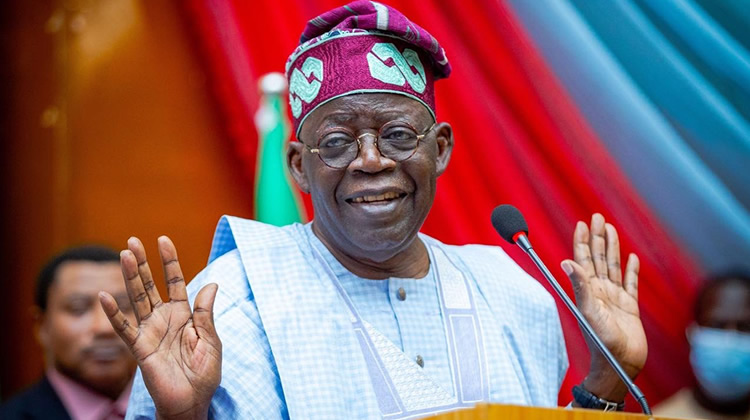
APC Responds to Chimamanda Ngozi Adichie On Her Open Letter to Joe Biden

0

The APC team has responded to the open letter Nigerian novelist wrote to Joe Biden, asking the US leader not to recognize Bola Tinubu’s victory in Nigeria’s 2023 presidential election.

CHIMAMANDA – NIGERIA’s POSITIVELY GROWING DEMOCRACY

By Dele Alake

The noted and internationally acclaimed Nigerian novelist and essayist, Chimamanda Ngozi Adichie, deserves a great deal of pity and sympathy for her so utterly biased piece titled ‘Nigeria’s hollow democracy’ published in the latest edition of ‘The Atlantic’ magazine. It is a piece that does little credit to the image and reputation of a leading Nigerian thinker who ought to be a voice of truth and reason in a time when passions run high and truth is almost indistinguishable from falsehood, in a situation in which many people are heavily emotionally invested in an election which, unfortunately, has not gone the way they expected. But that is the often difficult to anticipate way of elections in liberal democracies at varying levels of development. Chimamanda’s piece is a sad reminder that the possession of brilliance and high intellect by an individual provides no immunity against prejudice, bias and bigotry albeit disguised in the deceptive garb of elevated and high minded discourse.

Chimamanda at least makes one honest admission in a write up made up largely of rumours, hearsay, presumptuous conjectures and outright falsehood. She supported Mr Peter Obi, candidate of the Labour Party (LP) in Nigeria’s February 25, 2023, presidential election and hoped he would win “as many polls had predicted “. Peter Obi did not win. He came third in a closely fought election in which Bola Tinubu of the All Progressives Congress (APC) came first and Atiku Abubakar of the main opposition, the Peoples Democratic Party (PDP) came second. Chimamanda had pinned her hopes on a possible Obi victory partly on predictions of flawed opinion polls some of which were predicated on statistically negligible and thus unreliable sample sizes and others on no discernible empirical basis whatsoever. Opinion polls do not win elections. After all, most opinion polls had predicted a Hilary Clinton victory in the 2016 presidential election in America. Donald Trump won and that did not make America’s democracy hollow.

The writer can of course afford the luxury of pronouncing Nigeria’s democracy ‘hollow’ from the distance of her foreign abode all because her favoured candidate, Peter Obi, fell short in the election. She avers that Nigerians went out to vote on the morning of February 25 with high hopes mainly because of the promise by the electoral umpire, the Independent National Electoral Commission (INEC) to upload results of the exercise online from polling units in real time to enhance transparency. The INEC has admitted that its system suffered unanticipated glitches on that day which made it impossible for it to upload the polling units results of the presidential elections on its portal immediately as promised but it began to do so once the technical hitches had been resolved. Chimamanda gives her readers the impression that the deployment of technology implies that some machine would magically conjure puritanical results online, portraying and guaranteeing the transparency and credibility of the exercise. No, it is the results as recorded physically on INEC forms provided for the purpose from the polling units, signed by polling agents of political parties, electoral officials and security agents that are uploaded and there is ample opportunity for parties contesting the outcome of the elections to prove if there are discrepancies between the figures on those physical result sheets and the electronic results uploaded on the INEC portal.

Without the slightest shred of evidence, Chimamanda avers that INEC’s inability to upload results of the presidential elections online as promised on February 25 was not due to technical hitches but rather deliberate human mischief and manipulation to rig the election. In her words, “If results were updated right after voting was concluded, then the ruling party, the All Progressives Congress (APC), which has been in power since 2015, would have no opportunity for manipulation. Technology would redeem democracy. Results would no longer feature more than voters. Nigerians would no longer have their leaders chosen for them”. This is a mischievous distortion of reality and utterly laughable. The introduction of the Bimodal Voters Accreditation System, BVAS, in the 2023 election for the first time ever indeed helped to ensure that only duly accredited voters could vote. It was now no longer possible for party agents in collusion with unscrupulous electoral officials and security agents to simply thumbprint ballot papers and stuff ballot boxes in favour of certain parties and candidates. This is one of the reasons for the significantly lower vote count in this election relative to previous elections where millions of votes, substantially imaginary, were allotted to parties in various state constituencies.

To demonstrate that the February 25 presidential election was discredited, Chimamanda writes that “There were reports of a shooting at a polling unit, and of political operatives stealing or destroying ballot boxes. In Lagos, a policeman stood idly by as an APC spokesperson threatened members of a particular ethnic group who he believed would vote for the opposition “. It is unfortunate that an intellectual of Chimamanda’s stature would rely on rumours and hearsay to pronounce authoritatively on an issue as important as the 2023,elections in her country. She quotes “cousins” and “relatives” in Lagos to back up grievous allegations of violence and massive vote rigging in the election. For crying out loud, there are over 176,000 polling units across Nigeria. From what percentage of these polling units did she get her reports and how credible were these sources? In Lagos State, there are approximately 13,500 polling units. The exaggerated reports of violence and malpractices in the state did not occur in up to 1% of these polling units in one or two local government areas. How reliable and accurate then is the information which the writer feeds her readers?

In any case, a careful scrutiny of the results of the elections shows that it was a close and tight contest which speaks to its credibility. The winner, Bola Tinubu won in 12 states just like the second placed Atiku Abubakar who also won in 12 states. Peter Obi who came third won in 11 states and the Federal Capital Territory, Abuja, which for the purpose of the election counts as a state. Tinubu scored 8,794,726 votes, Atiku had 6,984,520 votes while Peter Obi won 6,202,533 votes. The candidate who came fourth, Rabiu Kwankwaso of the New Nigerian Peoples Party (NNPP) recorded 1,496,687 votes, the majority of which he got from Kano State, his political stronghold in the North. It was however only Tinubu who met the constitutional requirement of scoring 25% of the votes cast in each of at least two-thirds of the states of the federation including the FCT, which translates to 24 states. Tinubu met the 25% requirement in 30 states, Atiku in 21 and Obi in 15. If the APC’s votes in the election, according to Chimamanda’s narrative, were rigged and fictitious, what does she say about the votes recorded by the other parties particularly her favourite candidate, Peter Obi?

It is instructive that Peter Obi and Rabiu Kwankwaso broke away from the PDP to contest the election on the platforms of the LP and NNPP respectively. Had the PDP contested the election as one with Obi and Kwankwaso in its fold, winning the election would have been an uphill, almost impossible, task for the APC. But contesting on three separate platforms against the ruling party as they did, the victory of the APC was logically and empirically inevitable.

Chimamanda betrays her ignorance of Nigerian politics and unwittingly misled her readers when she wrote that “Nigerian democracy had long been a two-party structure -power alternating between the APC and the PDP – until this year, when the Labour Party, led by Peter Obi, became a third force. Obi was different; he seemed honest and accessible, and his vision of anti-corruption and self-sufficiency gave rise to a movement of supporters who called themselves “Obi-dients”. Unusually large, enthusiastic crowds turned up for his rallies”.

First, politics in this dispensation in Nigeria since 1999 has not always alternated between the APC and PDP. In 1999, Nigeria had a virtual three party system with the PDP and All Nigeria Peoples Party (ANPP) splitting the North, the PDP dominant in the South-East and South-South and the Alliance for Democracy controlling the South-West. After the 2003 elections, the polity became a one-party dominant system with the PDP in control of large swathes of the country, the ANPP with reduced influence in the North and the AD reduced to controlling only Lagos State in the South-West. In the 2007 and 2011 elections, the PDP remained nationally dominant although the AD had been rebranded into the Action Congress of Nigeria (ACN) and regained control of the South-West while the Congress for Progressive Change (CPC) and the All Progressives Grand Alliance (APGA) had emerged as powerful regional political parties in the far North and South-East respectively. It was not until 2013 that the APC was created as a merger of the CPC, ACN, a faction of the PDP and a faction of the APGA, which then went on to win the 2015 elections and has since then been the ruling party at the centre.

Secondly, contrary to the romantic picture of Peter Obi painted by the writer, he has always been part and parcel of Nigeria’s political establishment. He was governor of Anambra State for eight years on the platform of the APGA, a period during which he recorded no remarkable accomplishments beyond claims that he saved humongous amounts for the state while leaving behind largely decrepit and dilapidated infrastructure. After his tenure as governor of Anambra state in 2006, Obi promptly dumped the APGA, decamped to the then ruling PDP and became an appointee of the President Goodluck Jonathan administration. He was the Vice presidential candidate of the PDP in the 2019 election and had the party won, he would have been seeking reelection along with his principal, Atiku, in this year’s election. It was only in May last year that Obi quit the PDP and joined the LP when he saw that he could not win the PDP primaries. There is absolutely nothing new or fresh about Obi except in the jaundiced eyes of the Chimamandas of this world. The novelist does not hesitate to regurgitate rumours and baseless innuendos about the President-elect but chose to be silent on widely publicized revelations in the Panama Papers of Peter Obi hiding humongous questionable wealth in notorious tax havens around the world.

Thirdly, Chimamanda writes most laughably about “Unusually large, enthusiastic crowds” that turned up for Obi’s rallies. This is comic. Did larger crowds turn up for Obi’s rallies than for Tinubu or Atiku? How did Chimamanda measure the enthusiasm of one party’s campaign crowd relative to the other? Yes, Obi received excited and enthusiastic receptions in the various church assemblies that he concentrated his campaign on in the run up to the election. Large and enthusiastic crowds received him in the various South-East states where his Igbo kith and kin are found as well as many of the South-South states with close ethno-cultural and Christian religious affinity to the South-East. It is not surprising that those were the only two out of the country’s six geopolitical zones that he won despite his marginal victories in Lagos in the South-West as well as Nasarawa and Plateau states in the North-Central. By the way, Chimamanda does not explain Obi’s victory in Lagos, Tinubu’s stronghold, in an election she says was badly rigged and lacking credibility. Nor does she throw logical light on Atiku’s victories in states like Katsina, Kaduna, Jigawa, Yobe, Kebbi or Osun in the South-West in the presidential election.

Obi targeted Igbo and Christian votes in his campaigns and he got his victories in the South-East and South-South. He won two out of six states in the North-Central and did not have up to 25% of the votes cast in either the North-West or North-East. He had no realistic electoral path to victory in the presidential election. Victory in two out of the six geopolitical zones cannot give any candidate victory in a presidential election in Nigeria. What is most tragic about Chimamanda’s letter to President Joe Biden is that she wrote as an unrepentant Igbo jingoist masquerading as an objective intellectual and patriotic Nigerian. The point is that she is Igbo like Peter Obi and wanted him to win for purely primordial reasons. Many allude to her novel on the Nigerian civil war, ‘ Half of a Yellow Sun’, as depicting her essentially ’Igbocentric’ perception of reality. This is understandable. After all, she is human.

That Obi did not win the election does not make Nigeria’s democracy hollow. From 2011, there have been incremental and noticeable improvements in the country’s elections as witnessed in 2015, 2019 and now 2023. It can credibly be argued that Nigeria’s democracy is positively growing as we have had 24 years of civil rule uninterrupted by the military interventions that had hitherto been so detrimental to the country’s political development. The writer argues that the INEC Chairman should have paused the collation of results process to investigate grievances by political party agents as she alleged was done in the governorship elections of March 18. Grievances raised at the national collation Centre ought to have been addressed at the previous levels of the collation at local government and state levels. The governorship elections were declared inconclusive in Adamawa and Kebbi states and shifted to April 15 because the margin of victory was lower than the number of registered voters in areas where it was not possible to conduct elections on March 18, not because of grievances with the collation process. In any case, the Electoral Act provides for aggrieved parties in elections to seek redress through the judicial process and that is currently under way. So what exactly is the point of Chimamanda’s letter to President Biden? Is it to seek external intervention in the ongoing process?

Still stressing that the failure to upload the results of the presidential elections substantially marred the exercise and insinuating that this was deliberate, Chimamanda wrote, “Curiously, many polling units were able to upload the results of the House and Senate elections, but not the presidential election…The Senate and House results were easily uploaded. So why couldn’t the presidential results be uploaded on the same system?” We can thus presume that she finds the National Assembly elections credible and acceptable because they were uploaded. But the Senate and House of Representatives elections results reflected the electoral supremacy of the APC in the elections. They were a validation of the outcome of the presidential election which incidentally took place on the same day and at the same time as the legislative elections. 98 of 109 Senate seats have so far been declared. The APC won 57, PDP 28 and LP won 6. In the House of Representatives, 325 out of 360 seats have been declared. The APC won 162, the PDP 102 and the LP 34. Truth is the APC’s victory in this election cannot be credibly denied.

Amazingly, throwing all caution to the winds, Chimamanda writes “Many believe that the INEC Chair has been “compromised” but there is no evidence of the astronomical US-dollar amounts he is rumored to have received from the President-elect”. This is incredible. Chimamanda will be lucky if she does not have to prove this weighty allegation in court.

~Alake former editor of Nigeria’s Sunday Concord newspaper is the Special Adviser Communications to President-elect Bola Tinubu

Analysts Attribute N674.53bn Drop in Nigeria’s Capital Market to Rumor of Interim Govt

0

The Nigerian stock market fell by N674.53 billion during trading this week amid post-election uncertainties that have triggered concerns dampening investors’ confidence.

The drop in the capital market has been attributed to concerns about a plan to install an interim government following the disputed outcome of the just concluded presidential election. Market leaders believe that the Nigerian Exchange Limited (NGX) was reacting to that revelation made by the Department of State Services (DSS) late last month.

Against this backdrop, market capitalization dropped from N29.54 trillion that the market opened with on Monday, April 3, to N28.87 trillion on Thursday, April 6.

In its stock market report, the ICIR noted the impact of the Easter holiday, which cut trading week to four days ending Thursday, as well as the drop in Airtel’s shares – serving as factors in the entire market’s drop.

Movement of stocks showed that the NGX All-Share Index depreciated by 2.28 per cent to close the week at 52,994.13 basis points (bps), leaving the year-to-date return to decline to 3.40 per cent from 7.04 per cent last week.

This caused the stock market to drop further in value as investors also reacted to the publications of economic data and dividend announcement by companies.

Part of what also played out in the market was that investors have begun to reposition ahead of the first quarter earnings season based on the current price levels that have been perceived to be an attractive point of entry.

However, the stock market trended downward as a result of sell-pressure in some of the mid and large capitalized stocks.

Across the sectors, performance was largely negative, except for the insurance sector which gained 2.19 per cent to close at 181.40bps, while all other sub-sector indices dropped in volume.

The industrial index led the pack, dropping by 3.65 per cent to close at 2,455.43bps; banking index saw a 1.05 per cent loss to 448.23bps; consumer goods index declined by 0.62 per cent to 698.37bps; and oil and gas index fell by 0.11 per cent to 510.25bps.

The share price of Airtel Africa, the most capitalized stock on the Exchange, dropped by 10 per cent to close at N1,331.10 from N1,479.00 it opened on April 3.

In the review week, a total turnover of 1.054 billion shares worth N10.05 billion in 16,155 deals was traded by investors, in contrast to a total of 2.071 billion shares valued at N17.562 billion that exchanged hands last week in 17,917 deals.

While 37 stocks depreciated in price higher than 30 in the previous week, 16 stocks appreciated in price during the week lower than 37 stocks in the previous week.

In a chart with the ICIR, the national chairman of the Progressive Shareholders Association of Nigeria (PSAN), Boniface Okezie, said the political uncertainty in the country might have contributed to the capital market’s record four-day straight decline in the first week of the new month.

“Let’s know the direction the economy will be moving that will give us the direction the market will head for now. The coast is not clear because the outgoing government is just standing still even when their presence has not even helped the market,” Okezie said.

David Adonri, chief executive officer, Highcap Securities Limited, David Adonri, is another analyst who believes the drop in the capital market has much to do with Nigeria’s current political situation.

He told The ICIR: “The cumulative effect of all these is that migration of financial assets from equities to the safety of debt in this quarter may be inevitable,” admitting that the stock market might also be reacting to rising inflation, hike in interest rate and low capital inflow.

“Investors are also gearing up for the anticipated negative impact of the currency confiscation exercise on fundamentals of companies when Q1 (first quarter) results start hitting the market this month,” he said.

However, Abel Ezekiel, an investment and portfolio analyst, expressed a different view, saying that “the rumor” about an interim government couldn’t have impacted the capital market.

“The drop in the market value this week was as a result of the drop in the share price of Airtel Africa,” he told ICIR.

“What we saw this week is a corrective step, a kind of investors’ strategy to take dividends, and not because of the color of the rumor of an interim government.”

Alibaba Sends Invitation Codes to Companies to Test Its AI Chatbot

0

E-commerce giant company Alibaba has reportedly sent invitation codes to businesses to test its AI chatbot “Tongyi Qianwen”.

Alibaba’s cloud computing division disclosed that the chatbot could be used primarily to process queries in the e-commerce company’s home language. It also published a teaser on Friday, where it posted a message saying, “Hello, my name is Tongyi Qianwen, this is our first time meeting, I welcome your feedback”.

The chatbot’s name is reported to be derived from the ancient philosopher Mencius, which means “truth from a thousand questions”. The company has already opened up registration for businesses to conduct testing for its AI application.

Reports reveal that the AI chatbot is a large language model (LLM) which is targeted at business users. A formal launch is expected at an Alibaba cloud event next week Tuesday. The company’s CEO as well as the head of its cloud division Daniel Zhang will give more details on the chatbot at the event.

It is however interesting to note that Alibaba has been focused on large language models and generative AI since 2017 and is in the middle of internal testing. The company has not disclosed how it plans to utilize the AI, but reports suggest that the company might combine the technology with the group’s communication app DingTalk.

Alibaba Group is leveraging generative AI to transform China’s creative industries. So far, Alibaba is the only e-commerce company in the world that is making a foray into the generative AI chatbot space, with more companies expected to make an entry in the near future. Alibaba stock rose as much as 2.5% in Hong Kong on Thursday following its disclosure to launch its own AI tool this month. Also, shares of several Chinese AI companies rose this week, following reports of their own AI tools release.

Hong Kong-headquartered artificial intelligence company SenseTime Group also saw its stock rise in the past five trading days after speculation that China’s most valuable specialty AI company was preparing to launch a challenger to ChatGPT.

As ChatGPT, an artificial intelligence (AI) chatbot created by a US company OpenAI, makes waves around the world for its remarkable ability to generate humanlike responses to sophisticated questions, the technology has also attracted the attention of businesses as well as internet users in China where the service is officially unavailable.

With the Chinese government trying to block access to ChatGPT, the country’s Big Tech firms have sought to fill this gap by integrating the system into their products. From Baidu to iFlytek and NetEase, with Alibaba as the latest entry, China’s biggest technology companies are wasting no time jumping on the ChatGPT bandwagon to improve their businesses and also enhance user experience.

Also, an increasing number of companies today are seeking to integrate round-the-clock chatbots to improve their businesses and enhance the customer experience, where these chatbots can instantly communicate with customers, answer their questions, and create a pleasant customer experience on multiple channels.

Additionally, these AI chatbots are proven to automate sales and support 24/7, increasing the quality and frequency of customer conversations, and thereby giving customers a uniform experience across different channels. Despite the current market downturn and layoffs in the technology sector, generative AI companies have reportedly continued to receive interest from investors.

AI Detection Tools: Why Some UK Universities May Choose to Opt Out

0

“The Age of Artificial Intelligence (AI) has begun “, — as Bill Gates declared in one of his latest globally read GatesNotes Newsletter.

On defining artificial intelligence — he goes:

“Technically, the term artificial intelligence refers to a model created to solve a specific problem or provide a particular service.”

So, one can rightly say that artificial intelligence is powering things like ChatGPT, which has been built to learn how to chat better continuously but can’t learn other tasks.

Another aspect that makes ChatGPT a global thrill is that the tech has been around for a few years, and its second generation, released in 2019, has been trained on 17bn data points. This version has been trained on ten times that data and is the largest AI language model to date.

Meaning that, basically, it has been fed a truckload of texts from all over the web, which means it can use probability to work out what the next word should be.

It is currently free to use and therefore immersed 1m users in the first week of going live. And within two months clocked up 100m users, making it the fastest-growing web application in internet history.

ChatGPT, the acronym for Generative Pre-trained Transformer, is being sought after by people worldwide to write essays, computer code, or even create song lyrics in the style of their favourite artist, and then gasping at the rapidity and fluency of the results that come back to them.

However, it has become a frequent point of discourse in the education sector since more students and academics are boldly coming online on social to announce how they used the tech to write academic essays, and it passed.

“In September, when I met with them again, I watched in awe as they asked GPT, their AI model, 60 multiple-choice questions from the AP Bio exam — and it got 59 of them right. Then it wrote outstanding answers to six open-ended questions from the exam. We had an outside expert score the test, and GPT got a 5 — the highest possible score, and the equivalent to getting an A or A+ in a college-level biology course.

Once it had aced the test, we asked it a non-scientific question: “What do you say to a father with a sick child?” It wrote a thoughtful answer that was probably better than most of us in the room would have given. The whole experience was stunning.” — Bill Gates

Risks and problems with AI

The most accentuated problem is that many teachers are worried that students are using GPT to write their essays. And this risks affecting the next generation’s critical thinking skills and metacognition ability.

Additionally, there are other issues, such as AIs giving wrong answers to math problems. Because they struggle with abstract reasoning or inaccurate data because they can only assess information within the data year they are already trained on.

Finally, I perceive a problem with further polarisation led by again the inability of an AI to think outside the data load it was trained. This could provide massive access to information for students but at the same time introduce what I refer to as ‘knowledge homogenisation’ — which is not healthy for our civilisation.

There are, of course, more risks and problems with AI — you’ve probably read about them, but here I outlined three foremost concerns regarding AI and the educational sector.

Use of Artificial Intelligence (AI) detection tools and Why UK Universities May Choose to Opt Out

On 4th April 2023, Turnitin, an Internet-based plagiarism detection service used by most universities in the UK, announced the addition of AI writing detection functionality to their similarity report.

Here’re the possible reasons why UK universities may decide to opt out of the first release of this detection tool:

  • Turnitin is a subsidiary, a privately held American company. So UK universities may not have any access to the tool before its release, meaning they are unable to test it thoroughly or prepare guidance for
    staff.
  • There is a concern and fear of disruption. Although the world of academics thrives on taking on changes and complex dynamics, UK universities may not want to introduce a new tool in the middle of the academic year, especially when a busy assessment period is about to
    commence.
  • Turnitin has been unable to provide any information about how the tool works or how its quoted levels of accuracy have been
    calculated.
  • The AI working group that has only recently been formed in UK universities are still developing institutional policies regarding AI. This may mean a step ahead of this vital regulation body.

SSV Network (SSV) Price Prediction and Uwerx (WERX) Presale: The Hottest Crypto of The Year

0

Meta: Feel as if you have missed out on SSV Network major gains? Read this article to get to know if investing now in it is the right thing or heading to Uwerx’s presale is a better option. The freelancing project, though in development, has investors clamoring after its WERX token in the presale. Find out why. 

The crypto market is on the move again. After a declining 2022, 2023 is turning out to be a boon for cryptos like SSV Network (SSV), which has already seen a 3x jump in just three months.

But its profit-making moves may just not be enough when it comes to Uwerx, a next-generation freelancing platform set to enter the market. With a presale fever and a fantastic price prediction, Uwerx is slated to be the crypto of the year, even overtaking SSV Network (SSV).

The Future of SSV Network (SSV)

SSV Network (SSV) is a unique project. A Layer-0 network, it allows node operators to run a validator in a trustless and decentralized environment without any single node having the complete validator key.

SSV Network (SSV) helps Ethereum achieve more security and keep validators online. This has made SSV Network (SSV) a very sought-after crypto and its price this year alone has tripled, moving from $10.1 and reaching $40.6.

As more adoption continues, traders are expecting SSV Network (SSV) to gain more value, with price predictions for the next year sitting around $89.89 (121% more).

Uwerx (WERX) May Do 250x

SSV Network (SSV) is probably going to be one of the top performers in the industry, but it is Uwerx that may wear the crypto crown. Planning to help freelancers achieve their goals, Uwerx will give them more opportunities than ever to increase revenue, grab clients, and basically work in a trusted and friendly ecosystem.

Research by Velocity Global shows freelancers make more than their employed counterparts. For example, recreational industry ones make $2,000 more than traditional workers. This means Uwerx can rapidly increase in size as it will attract users like these.

The result is a price prediction by experts that puts its WERX token around $1.52 in Q1 2024 – a 30,000% increase from its current presale tag of $0.005 – or almost 250 times larger than SSV Network (SSV)’s price prediction.

Why Uwerx (WERX) Has Such High Potential?

The secret to Uwerx’s expected growth is in its carefully planned services merged with blockchain.

Uwerx will allow its users to bring more home as it will have a lower fee structure (5% flat), offer incentives and rewards for active users, webinars, access to high-paying clients, collaborative efforts, personalized matching, etc.

At the same time, built on blockchain, the platform will use its WERX token to offer advantages like:

  • Payments (paying and receiving) in a deflationary crypto.
  • Instant payouts with WERX.
  • Transparency in dealings.
  • Voting for WERX holders to improve the freelancing platform.

The dual-audited WERX (by InterFi Network and Solidproof) will also go through a token lock-up for 25 years after its presale, cementing its rise. The token will also benefit from the team’s plans to remove taxes and move the contract ownership to the platform and its users.

Discounted Uwerx (WERX) Presale is Running

With traders and freelancers showing extreme interest in Uwerx, they are scrambling to join the presale, which is running right now and offers its WERX token for a limited-time discount of $0.005.

Even though SSV Network (SSV) has great potential, it is falling well short of what WERX price prediction is showing, giving the freelancing token the chance to be the hottest crypto of 2023.

Do you find WERX to be interesting? Take part in its presale today before the limited discount ($0.005) finishes!


Website: www.uwerx.network

Presale: invest.uwerx.network

Telegram: t.me/uwerx_network

Twitter: https://twitter.com/uwerx_network