DD
MM
YYYY

PAGES

DD
MM
YYYY

spot_img

PAGES

Home Blog Page 4241

OpenAI Rolls Out New Privacy Controls For ChatGPT, Previews Business Plans

0

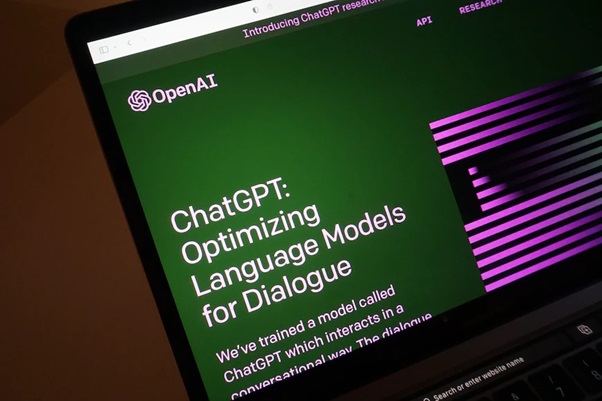
Artificial intelligence company OpenAI has rolled out new privacy controls for its chatbot ChatGPT and has also previewed its business plans.

The company on Tuesday announced that ChatGPT users can now turn off chat history, allowing them to choose which conversations can be used to train OpenAI’s models or appear in the history sidebar. It further added that it will keep the new conversations for up to 30 days, but will only review them if it is necessary to monitor for abuse.

The company wrote via a blog post,

We’ve introduced the ability to turn off chat history in ChatGPT. Conversations that are started when chat history is disabled won’t be used to train and improve our models, and won’t appear in the history sidebar. These controls, which are rolling out to all users starting today, can be found in ChatGPT’s settings and can be changed at any time.

We hope this provides an easier way to manage your data than our existing opt-out process. When chat history is disabled, we will retain new conversations for 30 days and review them only when needed to monitor for abuse, before permanently deleting them.”

OpenAI also revealed that ChatGPT data can be exported as of today. Users can request their data to be sent in a file to the email address associated with their OpenAI account. The new capabilities come as regulatory scrutiny grows over OpenAI’s data practices.

Aside from the rollout of new privacy controls for ChatGPT, OpenAI also disclosed its plans to introduce a new subscription tier for ChatGPT, tailored to the needs of enterprise customers.

The company had previously telegraphed that it was exploring additional paid plans for ChatGPT as the service rapidly grows. Recall that the chatbot’s first subscription tier, ChatGPT Plus, was launched in February and is priced at $20 per month.

Exploring potential new lines of revenue, OpenAI launched plug-ins for ChatGPT in March, which extended the bot’s functionality by granting it access to third-party knowledge sources and databases, including the web.The company said on Tuesday that it plans to make a new ChatGPT Business subscription available in the coming months.

It is worth noting that ChatGPT plans to launch in Japan, after the company’s CEO Sam Altman earlier this month revealed plans of starting operations in the Asian country. The serial entrepreneur met with Japanese Prime Minister Fumio Kishida, during a visit to Japan where he disclosed that his company is looking at setting up an office in the country as OpenAI seeks to build something great for the Japanese people.


Arbitrum (ARB) and Fantom (FTM) Struggle to Compete with New Kid on The Block HedgeUp (HDUP)

0

It’s been a tough few months for Arbitrum (ARB) and Fantom (FTM), two popular blockchain protocols. With the launch of HedgeUp (HDUP) earlier this year, these two have had to compete with a brand new player in the DeFi space. This new cryptocurrency has already made its mark and is quickly gaining traction and investments from top analysts.

> Buy HedgeUp Now <<

Arbitrum (ARB) Is Not Innovating Fast Enough

Arbitrum (ABT) extends its capabilities to grant developers the ability to design smart contracts by utilizing code to define the activity of a virtual machine (VM) that implements the contract’s purpose. Arbitrum (ARB) is enticing for only a small portion of users, however, as it has failed to keep up with the cutting-edge technologies that its rivals such as HedgeUp (HDUP).

Hedgup (HDUP) attracts interest from a broader range of users, due to its ability to provide drastic improvements in traditional investing. Arbitrum (ABT) is more designed for developers and is not as user-friendly, making it difficult for the average person to understand how to use Arbitrum (ABT). There is no clear path to trading profits for Arbitrum (ABT).

Furthermore, developers can avail of Arbitrum (ABT) for remarkable increases in scalability and privacy. Arbitrum (ABT) has some utility, but alternative investing is much more in demand than another useful tool for a select few.

> Buy HedgeUp Now <<

Fantom (FTM) Fights for Relevance

Fantom (FTM), on the other hand, is promoted as a highly scalable blockchain. However, very few people actually use Fantom (FTM). Fantom (FTM) has failed to gain the network effect of the popular blockchain protocols and has not been able to compete with HedgeUp (HDUP). There are several reasons for this, but one of the major ones is the lack of user-friendliness.

Fantom (FTM) lacks a user-friendly interface, making it difficult for new users to understand how to use the protocol. Fantom (FTM) also isn’t doing anything new whereas HedgeUp (HDUP) has revolutionized the alternative investing space.

Many retail investors are chomping at the bit to get into alternative investing and Fantom (FTM) doesn’t offer this. instead, it is just recreating something that already exists in the market. Therefore, Fantom (FTM) falls short when compared to HedgeUp (HDUP).

> Buy HedgeUp Now <<

Closing Remarks

Thus far, it’s been a battle between the three protocols as they try to attract users, developers, and investors. However, analysts are indicating that HedgeUp (HDUP) will continue to rise in popularity and that Arbitron (ARB) and Fantom (FTM) will need to step up their game if they want to compete.

Will the two veteran protocols be able to keep up with the new kid on the block? Only time will tell. For now, visit the links below to become an early investor in HedgeUp (HDUP) and receive an additional 30% on your investment!


Telegram Link: https://t.me/HedgeUpChat

Official Website: https://hedgeup.io/

The CBN Guidelines on Mobile Point of Sale (mPOS) Card Acceptance Services in Nigeria

0

The Central Bank of Nigeria (CBN) released its guidelines on Mobile Point of Sale (mPOS) Acceptances services in order to create a regulatory framework stipulating minimum acceptable operating standards.

This article will be focused on the notable provisions of the guidelines regarding :-

  1. Objectives of the guidelines
  1. mPOS stakeholders and their roles and responsibilities
  1. Settlement mechanisms
  1. Exclusivity agreements
  1. Consumer Protection/Dispute Resolution
  1. Compliance

What are the objectives of the guidelines?

The objectives of the guidelines are :-

  1. To provide minimum standards  and requirements for the operations of mPOS.
  1. To promote safety and effectiveness of mPOS systems and thereby enhance user confidence in the service.
  1. To identify the roles and responsibilities of stakeholders in the mPOS value chain. 

Which parties are identified by the guidelines as stakeholders in the mPOS system and what are their respective roles and responsibilities?

According to the guidelines the stakeholders of mPOS system and their respective roles and responsibilities are :-

  1. Acquirers

Roles and Responsibilities

– An acquirer may own an mPOS device.

– Acquirers shall ensure that mPOS devices deployed at merchant/retailer locations accept all cards.

– Every acquirer shall connect all its mPOS devices directly to the PTSA. 

  1. Issuers 

Roles and Responsibilities

The roles and responsibilities of Issuers are as stipulated in the extant POS guidelines.

  1. Payment Terminal Service Aggregator (PTSA)

Roles and Responsibilities

– The Nigerian Interbank Settlement Scheme (NIBBS) shall act as the PTSA for the financial system.

– All payment transactions shall be routed through the PTSA. 

– All mPOS transactions in Nigeria must be switched using the services of a local switch and shall not under any circumstance be routed outside Nigeria.

– As the industry PTSA, NIBBS shall annually certify mPOS devices that meet the industry standards. 

  1. Merchants

Roles and Responsibilities

– A merchant shall enter into agreement with the acquirer specifying in clear terms the obligations of each party.

– A merchant shall accept cards as a method of payment for goods and services.

– The merchant shall be held liable for fraud involving the use of mPOS device due to its negligence or connivance.

  1. The merchant shall ensure it complies with the minimum security guidance direction provided by the acquirer.
  2. Cardholders/Users

Roles and Responsibilities

– To protect the payment card, mobile device and PIN with due care.

– To notify the user immediately a PIN is compromised.

– To notify the issuer without delay about missing stolen, damaged, lost or destroyed cards or mobile devices.

– To present, when required by a merchant, a document confirming his identity. 

  1. Card Schemes

Roles and Responsibilities

– No card scheme,or any entity that has a management contract with a card scheme, or their subsidiaries,shall engage in the business of acquiring.

  1. Switching Companies

Roles and Responsibilities

– To ensure that transactions relating to all cards issued by Nigerian banks are successfully switched between acquirers and issuers.

What are the provisions of the guidelines on the settlement mechanism for mPOS transactions? 

The settlement for all domestic mPOS transactions shall be due to the merchant’s account on a T +1 basis, where “T” is the date the transaction is performed. A failure to execute will result in a sanction to the NIBBS.

What are the provisions of the guidelines on Exclusivity agreements?

The guidelines state that there shall be no form of exclusivity in any area of payment service including but not limited to issuing, acquiring, processing and sale/maintenance of hardware and software.

What do the guidelines say about compliance?

The guidelines state that any violation of any provision contained therein will attract appropriate sanctions from the CBN.

Which Business Model Is Better for Your Investment?

1

In the Igbo Nation, when a person dreams of fetching water or going to the stream to fetch water, it is a sign of something good coming. The road to the stream is never covered by weeds because in seasons and out of seasons, communities and villages need water, and they have to go to the stream. Fetching water in Igbo mythology is a sign of vitality and abundance.

But when a person dreams of going to fetch firewood on a farm, it is a sign of something bad. Yes, after the firewoods are gone, the weeds take over the road. So, you want to be fetching water over fetching firewood as it means there is a future.

Take this construct to business model and I have two cases:

A: Hire ten great movie producers to produce 200 short videos for your digital platform over 12 months (Quibi like). Quibi was a media company that developed media content (mainly short videos) designed for smartphones.

B: Allow tens of thousands of amateur creators, and use an AI to select the best videos daily and distribute them massively in your platform (TikTok like).

If you are an investor, which one would you invest in? And why?


How I see it: In 2000, Option A would have been a good business because the computing resources to run AI and crunch the numbers were not (commonly) available for Option B. But with cloud computing and the age of AI here, Option B wins. The probability of getting a hit video compounds in Option B while A is limited by the insights of just 10 people; virality is key for short movies. That is why TikTok will remain a better business than Quibi which has gone bankrupt.

Comment on Feed

Comment 1: @Ndubuisi Ekekwe, not just that but we live in the generation of social media and TikTok is more of a social media video site than a short Movie site(Quibi). Even with AI, I would argue quibi could have been successful however their timing was off(pandemic), their competition was free(Majorly YouTube) and worst of all, they are not even loaded!!!

Amazon Prime movies, Disney+ and lots of other Netflix competitors should have been out of the game by now but they are all flush with cash which keeps them in the competition.

If Quibi was cash flush, able to (or lucky to, whichever you prefer) hit a goldmine of 3 or 4 hit short series that goes mainstream and managed to convince a bigger startup to buy them out or go it alone(again cash flush), they could have turned into a short movie platform that produces 10-20 minute inspiring movies that gets people talking every time it comes out(go checkout some of the short movies that have won awards lately with incredibly moving messages).

My Response: ” If Quibi was cash flush,” You made it look like Quibi was that poor startup. This company raised $1.8 billion. What do you mean if it had cash? Every company you listed did not have that type of funding before launch. Simply, Quibi’s death was not a lack of cash but a business model problem. How many companies in the world raised $1.8billion before getting a dime from customers?

Comment 2: As an investor, I would consider the AI-selected contents created by amateurs for a number of reasons: 1. A higher scale of productivity as there will be a wider range of contents to choose from 2. These amateurs can bring lot of creativity because of the out-of-the-box, less traditional thinking 3. The AI trained based on the highest standard of acceptance criteria will filter the best out for distribution. 4. The AI-filtered generated contents can cater to diverse viewership which means wider reach and greater revenue 5. The Use of amateur is cheaper . We know of how remunerative models by existing models. 6. The speed to market is also achieved by AI unconstrained by time. That can confer both leverage and first-mover advantage. Overall, the investor’s goals achieving of sustainable profit, prolific contents, mass/wider appeal or spread, speed and cost efficiency are better served in the most dynamic ways. My perspective!

Comment 3: I will opt for B, because the amateurs of today will be more passionate and eager to be recognized in the line of business to make names and become known brands… The Nigerian teams constituted of amateurs won more trophies in 1985, 87, 93 etc than the professionals who have consistently brought us shame and disgrace in age group competitions and world cup…