DD
MM
YYYY

PAGES

DD
MM
YYYY

spot_img

PAGES

Home Blog Page 4241

Flutterwave Announces Nairobi, Kenya As East African Headquarters

0

Flutterwave, Africa’s leading payments technology company, has chosen Nairobi, Kenya as its regional headquarter in East Africa, the company has announced.

The move comes barely one month after the payment giant secured additional licenses to expand operation in Rwanda.

Flutterwave’s chief regulatory and government relations Officer, Oluwabankole Falade made the announcement during last week’s third American Chamber of Commerce (AmCham) Business Summit held in Nairobi.

Per the press statement issued by the company, the event, which was graced by the AmChams across East Africa, a senior U.S. government delegation, U.S. investors convened by the U.S. Department of Commerce, the U.S. Chamber of Commerce’s Africa Business Centre, and East African businesses and officials, was designed to chart new paths for enhanced U.S. commercial engagement with Kenya and the East Africa Region.

More than 500 East African and American delegates participated.

“We recognize the invaluable role Kenya plays in the East African region and the country’s business-friendly environment and digital capability,” said Mr Falade. “As a business with African roots and headquartered in San Francisco, we are aware of the importance of empowering the small business owners, an objective shared by the Kenyan administration.”

The two-day programme was anchored by U.S. Ambassador to Kenya Meg Witman, who delivered opening remarks on ‘Why Africa, Why Kenya,’ and closed by President William Ruto, who announced new measures to enhance U.S. trade and investment in the country, including steps to support the small and medium enterprises (SMEs) sector, a key segment of Flutterwave’s business.

Flutterwave was a sponsor of the AmCham event, and it is a board member of the U.S. Chamber of Commerce’s Africa Business Centre as well as a member of AmCham in most markets in which it operates, including Kenya, Tanzania, Rwanda, Uganda, and Zambia.

Flutterwave’s strategy is well aligned with that of the East Africa region, ensuring that SMEs are provided with efficient, simple and affordable technology solutions that drive their businesses to profitability across borders.

Flutterwave’s key SME solutions, Flutterwave Store and Flutterwave Market, aim to support Kenya’s SME sector, which employs around 80 percent of Kenya’s population, creates 30 percent of jobs annually, and contributes three per cent to its national GDP. Kenya offers Flutterwave a gateway into the region and to a customer base of about 476 million people as of 2023.

“We are also glad of the support we have received from the Government of Kenya, AmCham stakeholders and leadership across the region, and we are proud to have chosen to support the Summit and see many other global firms who we work with, such as Amazon and Uber choosing to settle here as well. We are in good company,” closed out Mr Falade.

Flutterwave moved to Kenya in 2016, becoming the first East African market for the Nigerian startup. It has since then expanded to new markets.

However, in recent times, the high-flying fintech had been involved in allegations of fraud, money laundering and operating without license in Kenya. Last year, Flutterwave’s accounts were frozen by a Kenyan court after it was accused by the authorities of facilitating fraudulent transactions and operating without license from the Central Bank of Kenya.

It was cleared of any wrongdoing in February, after Kenya’s Asset Recovery Agency (ARA)  withdrew its case. The announcement that it is making Nairobi its East African regional headquarters shows the coast is all clear for the African fintech giant.

Fintechs in Nigeria to Witness Further Growth as Banking Services Slow

0
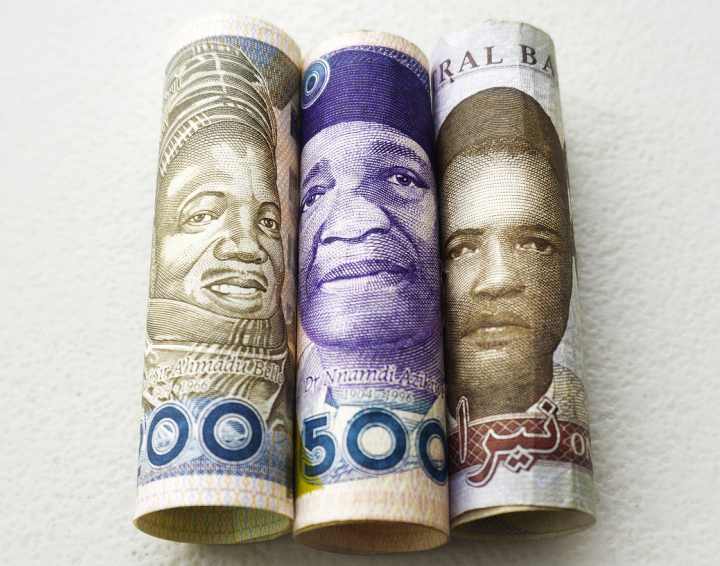
Nigerian naira banknotes are seen in this picture illustration, September 10, 2018. REUTERS/Afolabi Sotunde/File Photo

Fintechs in Nigeria have been predicted to witness further growth as banking services slow, a PWC report reveals.

The report titled “Growing the Nigerian Technology Ecosystem Through The Capital Markets”, revealed that the Nigerian fintech sub-sector has the biggest share of the number of Nigerian tech start-ups at 36%, with payments and consumer lending being the focus of almost half of the sub-sector.

The report further reveals that insufficient banking services particularly in rural areas, a young population, increasing smartphone usage, and regulatory efforts to increase financial inclusion, have created advantageous openings for fintech. These Fintechs have however not hesitated in seizing the opportunity to provide improved propositions across the value chain to address problems with affordable payments, Flexible savings, investments, quick loans, etc.

Despite the pandemic’s effect across all sectors of the economy, financial technology has been having a good run with positive results, making Nigeria Africa’s largest country by GDP. With more than 200 fintech companies currently operating in Nigeria which are driving innovation, the fintech ecosystem has witnessed new entrants carrying out four major financial services which include; Credit, Payments, Savings, and wealth management.

An economic intelligence report revealed that Nigerian fintech is branching out from payments into lending, wealth management, micro-investment, peer-to-peer transfers, and insurance. The report stated that payments and remittances are the most developed subsection to date, also stating that Nigeria has continued to see a surge of new and simplified apps to help merchants, businesses, and consumers.

While traditional banks are seeking to adapt to recent changes, fintech is driving more intrinsic innovations, whether by providing digital-first services themselves without any legacy issues, but also without the benefit of heritage customer bases or by providing the technology, platforms, and infrastructure that other service providers utilize.

The Central Bank of Nigeria disclosed that in the last ten years, Nigeria’s payment systems have experienced significant growth, especially with the development of a sound regulatory and supervisory framework, robust payment infrastructure, and the exponential rise in the number of fintech operating in the country.

The pressure from fintechs that is spreading rapidly in the country, has forced Nigerian banks to speed up their digital transformation in an effort to maintain market share. Several mainstream banks, initially slow to react to the digital era, have quickly adapted to offer apps and tools in areas like loans, while non-traditional players such as telecom companies and retailers are entering into the fintech space.

In a bid to ensure that fintechs cover the unbanked in the country, especially in rural areas, the CBN has issued licenses to several startups, allowing them to compete with commercial banks. While the pool of the very biggest commercial banks has changed relatively little over the past few years, the fintech sector is far more reactive, with companies being established, merging, growing quickly, or failing at a far higher speed.

Currently in Nigeria, major banks are going head to head against newcomers, as the growing financial services market is generating growth for all. As digital banks continue to evolve and become more accepted, offering users interesting banking experiences, the pressure has no doubt been mounting on traditional banks. It wouldn’t come as a surprise to see a more even playing field created in the longer term, with companies of various backgrounds providing a wide range of financial services.

This might likely bring about rapid change in the banking sector, forcing traditional banks to either work with current competitors, partner with them, copy their innovative approach, or face being sidelined. Finetchs emergence in Nigeria has no doubt redefined how payments are made, brought about ease of payment, and made banking seamless.

The Awakening: Activations in Africa

0

by By Warren Brett – Cluster Executive, SEA Region, Smollan Tanzania 

The digital era is on us with the pandemic sealing the deal as tech and ecommerce stepped up and on parade. Tantalising us with seamless, effortless shopping, even at 3am when sleep just won’t play the game – essentially reprogramming our DNA.

In the bigger picture looking well beyond the horizon (or is it just around the corner?), we are ultimately gearing up to be humanoids where our bodies are landscaped for tech. Super handy, but not just yet. As it turns out we also like the human-on-human experience – to network as a crew, to be part of a crowd and share experiences.

Warren Brett Cluster Executive, SEA Region, Smollan Tanzania, takes a closer look at activations in Africa. Where personal and immersive experiences capture interest and set the scene for a properly engaging story and where the customer feels great about their decision to buy product X or Y. Therein lies the beauty, that cannot be experienced (for now) from a couch.

Activations are the key that unlocks the connection between brands and consumers as they drive to incite trial and drive conversion, selling benefits over features and affecting behavioural changes.

As the market becomes increasingly flooded with a wide range of products and services it breeds a highly competitive environment to gain customer wallet share. So too, consumers are becoming increasingly discerning and with said tech developments and internet penetration they are not only well exposed but also knowledgeable. In turn, retailers and brands have had to shift their focus from awareness to connections, which have proven to offer a longer-term customer lifespan.

In Africa, companies are now offering more interactive BTL activities including activations as a must have in their marketing plans from sampling activities, experiential activities, and instore activations to drive brand and increase product uptake. A chance to build, target and engage.

“Activations in Africa are on the increase – an opportunity to position brands differently based on who your target market is, where they are shopping, and what they like to be associated with. As well as addressing specific needs both functionally and emotionally. With the economic difficulties affecting the region we’ve seen that consumers are shifting their shopping behaviour to purchasing more local products that are cheaper. This has forced multinationals to focus on the benefits of selling promotions and association marketing that is primarily being driven by consumer facing activations,” says Brett.

For niche brands – events, high-net worth activities i.e., golf activations and tastings as well mall experiential activations are beginning to sway consumer decision-making. At the other end of the mass brands scale, initiating high traffic activations such roadshows, market storms and home-to-home are reaching B-C2 consumers.

“We can then measure the effectiveness of activations with the ability to track reach, conversion as well as consumer insights which assist in tailoring the activation strategy to fit a specific consumer segment,” added Brett.

That said, there are challenges as reported by www.ecommerce.co.za. Customers in Africa in generalised terms are happy to experience brands for free during trials and shows, but not necessarily patronise the brand going forward.

Valuable strategies to shift this narrative include:

  • Using activations to increase brand value as findings show that customers in Africa do not regard value as making extraordinary promises but rather, as consistently fulfilling simple promises.
  • Thoughtfully planning and running activations that deliver the right messages to the right audience at the right frequency through the proper channels.
  • Determining the exact role of the activation at each step of the buying journey. Offline and online activations must also be in sync.
  • Prioritising intimate customer engagement over massive events can create new opportunities for understanding customer behaviour, consumption patterns, values, and lifestyles.

“Giving support to value chains and creating a buzz with consumers who have not necessarily experienced these types of events before is incredibly satisfying. We’ve seen first-hand in Kenya how we were able to reach 56,000 consumers in a week with a conversion rate of 91% for one client; 30,000 in-store customer interactions with approximately 7,500 Pcs sales recorded for another, and in a roadshow and caravan format, onboard 19,569 traders. It makes the activation potential in Africa, despite the challenges, so exciting,” said Brett.

Binance Coin (BNB), Uwerx (WERX), and OKB (OKB): Battle of the Utility Tokens

0

Meta: Find out which token, Binance Coin, Uwerx or OKB is most likely to break new grounds in 2023. Learn more about the newcomer Uwerx and how you can utilize its presale to maximize your profits by investing in a future AAA asset.

A very specific form of cryptocurrency, utility tokens are digital assets that serve a purpose within a broader ecosystem. Utility tokens like Binance Coin (BNB) and OKB (OKB) are very popular as they offer different services within their respective exchanges and blockchains.

Yet, one new utility token, Uwerx, is gaining traction in the crypto industry as it not only offers different advantages, the platform itself is becoming a hot topic within one of the fastest-growing industries: freelancing.

Binance Coin (BNB) – Too much Dependency?

Serving the dual purpose of being a crypto exchange utility token and the second-largest second-generation blockchain (BNB Chain), Binance Coin (BNB) is immensely popular.

The Binance Coin (BNB)’s performance is heavily dependent on the crypto market in general. With bull scenarios, there is a flurry of users and projects on the BNB Chain, prompting its supply vs demand curve to skew as more and more people use it. This is evident from its ATH of $671 in May 2021, when the latest bull cycle was at its peak.

But in less than two years, its value has dropped by nearly 60% to roughly $277 as the market slowed down. The lowering demand has also affected Binance Coin (BNB) trading volumes.

The near future has decent predictions for Binance Coin (BNB) though. With returning confidence in CEXs and the continuation of Binance Coin (BNB) quarterly burn, it just might rise to north of $350, a 26% increase.

Uwerx (WERX) Presale Gets Ready to Rumble

Uwerx (WERX) is understandably a different category of utility token, as it serves not an exchange. But don’t let this fool you. Uwerx is one of the most ambitious projects of its kind, set up to weed out issues faced by online gig economy freelancers.

Offering better security (both data and work), an astounding lower platform fee of just 1%, and overall protection of both freelancer and buyer rights, Uwerx has caught the eyes of freelancers and investors across the world.

Uwerx has already passed an audit with InterFi Network and SolidProof and has locked liquidity in for 25 years after the presale. An upcoming presale of 1 WERX for $0.0065 and a prediction that it might jump as high as $1 in the first few days is something to consider. That is a near 10,000% increase!

This is apart from the fact that the team has just announced it will be stepping down eventually, giving its users control of the platform, followed by a complete tax removal.

OKB (OKB)

While OKX is one of the top exchanges like Binance and its OKB (OKB) serves similar purposes to Binance Coin (BNB), the token lacks the same popularity. It hit its ATH of $40 in the same time frame as Binance Coin (BNB).

OKB (OKB) has seen an increase of $51.32. Though it dipped as low as $13 in 2022, it has rebounded and has since then beaten its initial ATH.

But OKB has a much better prediction, with some estimates putting it $60 before 2023 ends, translating into an 83% jump. Yet, OKB (OKB) prediction is largely dependent on several factors, such as increased OKEx and its OKExChain user adoption.

Uwerx (WERX) Presale set to win

With hypothetical weapons drawn, utility tokens like OKB (OKB), Binance Coin (BNB), and Uwerx  will have a three-way battle for supremacy this year.

Good and established as they are, both Binance Coin (BNB) and OKB (OKB) performances will not be able to touch Uwerx performance. This presents a unique and promising opportunity for investors who would like to take the chance of increasing their net worth to new levels in just a short period, participate in the presale by following the links below:


Presale: invest.uwerx.network

Telegram: https://t.me/uwerx_network

Twitter: https://twitter.com/uwerx_network

Website: https://www.uwerx.network/

Google CEO Sundar Pichai Urges Society to Adapt to The Rapid Development of AI Technologies

0

CEO of giant tech company Google, Sundar Pichai in a recent interview has urged members of society to adapt to the rapid development of AI technologies.

Sundar statement is coming after he hinted that society isn’t prepared for the rapid advancement of Artificial Intelligence (AI) which he feels could pose a negative impact on their lives.

While speaking in a 60 minutes interview with CBS, Sundar said that society needs to adapt to it already, adding that jobs that would be disrupted by AI would include knowledge workers, including writers, accountants, architects, and software engineers.

In his words,

This is going to impact every product across every company. For example, you could be a radiologist, if you think about five to ten years from now, you’re going to have an AI collaborator with you. You come in the morning, let’s say you have a hundred things to go through, it may say, these are the most serious cases you need to look at first.”

While warning on the consequences of AI, Pichai said that the scale of the problem of disinformation and fake news and images will be much bigger, adding that it could cause harm. His company Google has launched a document outlining recommendations for regulating AI, but the tech CEO stated that society must quickly adapt to regulation, laws to punish abuse, and treaties among nations to make AI safe for the world as well as rules that Align with human values including morality.

When asked whether society is prepared for Google’s chatbot Bard, he said, “On one hand, I feel no, because the pace at which we can think and adapt as societal institutions, compared to the pace at which the technology is evolving, there seems to be a mismatch.”  

However, he disclosed that he is optimistic because compared with other technologies in the past, the number of people who have started worrying about the implications did so early on.

It is interesting to note that individuals have continued to express fears and concerns about artificial intelligence (AI) and how it will affect the world. Those fears include robots taking jobs away from people, AI’s being used to spread misinformation, etc. However, tech experts have disclosed that it is short-sighted to ignore the many amazing ways AI could improve society.

With the rapid advancement of AI technology recently, which has seen several companies roll out different AI products, individuals are urged to embrace it quickly as posited by Google’s CEO as not doing so can pose a serious challenge.

One advantage of embracing AI technology is that combining the best of human skill with the best of automation can enable individuals to be more efficient, creative, and productive. With future jobs becoming automated, only those who arm themselves with relevant AI skills will thrive, unlike who due to fear failed to get familiar with the technology.

Artificial intelligence will no doubt cause the workforce to evolve. Despite concerns for the loss of jobs to machines, the real challenge is for humans to find their passion with new responsibilities that require their uniquely human abilities. According to PwC, 7 million existing jobs will be replaced by AI in the UK from 2017-2037, but 7.2 million jobs could be created. This uncertainty and the changes to how some will make a living could be challenging.

While there will be many learning experiences and challenges to be faced as AI technology continues to roll out into new applications, the expectation will be that artificial intelligence will generally have a more positive than negative impact on society.