DD
MM
YYYY

PAGES

DD
MM
YYYY

spot_img

PAGES

Home Blog Page 4243

Violation Of Individual’s Image Rights By Nigerian Based Companies.

0

Why do organizations in Nigeria always engage in the violation of individuals’ image rights?

Yesterday, a renowned Nigerian entertainer reached out to me briefing me on how a household fintech company based in Nigeria used his image to make a post and run an advert on social media through their official social media handles without his consent or authorization.

This is becoming regular in Nigeria where popular companies will use an image of a person to make a post and run an advert without first seeking the consent or authorization of the person whom they used his or her image. Just last year, I handled a public case where my client, a popular entertainer as well, had his image and pictorial representation used for an advert by a multinational company who are into manufacturing and supply of household consumer items without his consent or permission. The case ended with us coming to terms with the company and settling out of court when the company paid us the compensation we demanded.

It can only be interpreted that companies in Nigeria are taking advantage of the “anyhowness” in the Nigeria’s jurisprudence or that their social media handlers are just ignorant of the law. They dare not do this in countries with a more developed jurisprudence like the USA, the UK, Canada, Germany etc. 

In those country, you will first seek a person’s express consent and written authorization before you can use his image, pictorial representation or any other intellectual property affiliated to that person if not you will pay through your nose.

Most brands in Nigeria, even multinational organizations who are expected to know better always do engage in the Misappropriation of an individual’s Likeness and the violation of the image right of individuals.

At common law and in the court of equity, the use of another person’s image to promote or publicize products or services without their direct consent constitutes grounds for a cause of legal action. This is because the law recognizes a person’s right to be free from exploitation in any manner. Image rights refer to the use, appropriation and/or exploitation of a person’s image, and include the expression of a personality in the public domain.

When a person’s image or pictorial representation is used without that person’s consent and authorization, it constitutes not just a breach of intellectual property laws applicable in Nigeria, specifically the Copyright act, but also data protection laws, the cybercrime act and it is also an affront to the fundamental right to privacy of an individual as provided in section 37 of the constitution of the federal republic of Nigeria, 1999 (as amended).

Companies in Nigeria should take their staff through basic legal courses if they are ignorant of the law so that they can avoid attracting legal liabilities and legal causes of actions to their organizations. 
Naira Appreciates to N860/$1 As the Effect of NNPCL’s $3bn Loan Kicks In

0

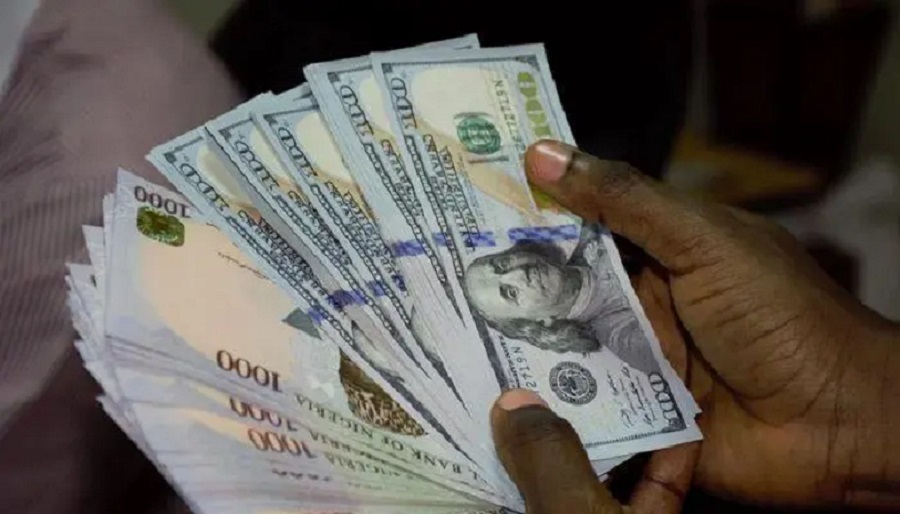
Naira has maintained its gain from Wednesday, when it appreciated to N890 per dollar at the parallel market, gaining over N70 – buoyed by the news of the Nigerian National Petroleum Company Limited (NNPCL) securing a $3bn emergency loan from Afreximbank to boost the currency.

The naira traded at N769 in the parallel market and N860/$1 on Thursday as of writing time, according to data from online forex rates aggregator, AbokiFX. The figure shows further gain amid efforts by the Central Bank of Nigeria (CBN) to stabilize the free-falling currency.

The CBN governor Folashodun Shonubi, announced on Tuesday that the apex bank has the approval of the president to implement new measures that will stabilize the fluctuating forex market.

That was followed by the announcement that the NNPCL has secured the $3bn loan.

Otega Ogra, senior special assistant to President Bola Tinubu on Digital/New Media explained on Thursday that the “loan will assist NNPC Limited in settling taxes and royalties in advance. It will also equip the Federal Government with the necessary dollar liquidity to stabilize the Naira, with limited risk.”

Naira’s poor performance in the FX market created a room for potential increase in petrol pump prices. Oil marketers had warned that fuel prices will rise to N720 per liter in the coming weeks if the naira keeps falling.

That would add further pain to Nigerians, who are already groaning over the high cost of living induced by the current price of petrol.

Nigeria’s headline inflation rate for July 2023 surged by 129 basis points (bps), reaching 24.08 percent on a year-on-year (YoY) basis, according to data from the National Bureau of Statistics (NBS). This marked an increase from the 22.79 percent YoY recorded in June 2023.

In an effort to ameliorate the suffering caused by high dollar rates and in a bid to avert a strike by the Nigerian Labour Congress – who had vowed to embark on a nationwide strike if fuel prices are further increased, the NNPCL secured the crude oil repayment loan.

Ogra said a strengthened Naira as a result of this initiative will lead to a reduction in fuel costs.

“This means that if the Naira appreciates in value, the cost of fuel will drop and further increases will be halted,” he said.

Prior to the initiative, there were speculations that the federal government was planning to provide temporary fuel subsidy to keep petrol prices stable.

Ogra said the deregulation policy remains unchanged. He indicated that the government’s focus is to strengthen the naira, because “a stronger naira will result in lower prices from the current level, making subsidies unnecessary.”

Before now, the naira was in a race to hit N1,000/$1, trading at around N950/$1 at the parallel market, as the illiquidity of the Investor & Exporter window drove buyers away from the banks.

Nigerian Government Gives N5bn Each to 36 States for Subsidy Palliatives

0

The federal government has introduced a N5 billion relief package for every state within the federation, as well as the federal capital territory (FCT), aiming to alleviate the repercussions of the petrol subsidy removal.

Governor Babagana Zulum of Borno State disclosed this information in Abuja on Thursday. He addressed State House correspondents after a national economic council (NEC) session chaired by Vice President Kashim Shettima.

The council consists of governors from all 36 states, the governor of the Central Bank of Nigeria (CBN), and various other government officials.

In a statement after the meeting, Zulum said the N5 billion is to enable the state governments to procure 100,000 bags of rice, 40,000 bags of maize, and fertilizers to cushion the effect of food shortage across the country.

“This funding has to be shared with a formula as follows: 52 percent of this money is given to states as grants, while 48 percent of the N5billon is to be paid back on an instalment basis within a period of 20 months to the CBN by the states and the local government areas in Nigeria,” he said.

“The council has taken bold decisions in order to ensure the speedy release of grains and other items to cushion the effects of subsidy removal on the less privileged in society.

“The council has also taken note of the $800 million loan and insists that it be strictly used for the intended purpose and based on an accurate and acceptable register. The $800 million announced by the president will go to Nigerians in accordance with an accurate social register.

“Furthermore, the council has also noted the package that was announced by the president in order to cushion the effect of subsidy removal, amounting to about N500 billion.

“This fund has to be distributed to the following sectors MSMEs:
industrial sector, about N125 billion, will go to cash transfers, agricultural sector as well as gas expansion for buses.

“And because of the increasing cost of fossil fuel, the federal government intends to establish more gas stations in Nigeria and procure more gas-powered buses, CNG buses, as well as electric buses.”

The move is coming weeks after the federal government suspended its earlier plan to disburse N8,000 naira each for 62 million Nigerian households.

The removal of fuel subsidy spiked the cost of living by about 300%, leaving Nigerians choking on unaffordable prices of goods and services.

President Bola Tinubu said the 2023 budget has no provision for fuel subsidy. On Wednesday, the federal government said it has no plan to reintroduce the subsidy. This means that the focus is to provide Nigerians with palliatives to mitigate the effects of the subsidy reform.

However, Nigerians are concerned that the palliatives, left in the care of governors, will not reach those they’re meant for. This concern stems from what happened during the covid pandemic, where governors hoarded palliatives given to states to distribute to citizens.

Another concern raised by Nigerians is that the palliatives are too meager to cushion the rising effect of the subsidy removal.

The Dramatic Change of Arik Air

1

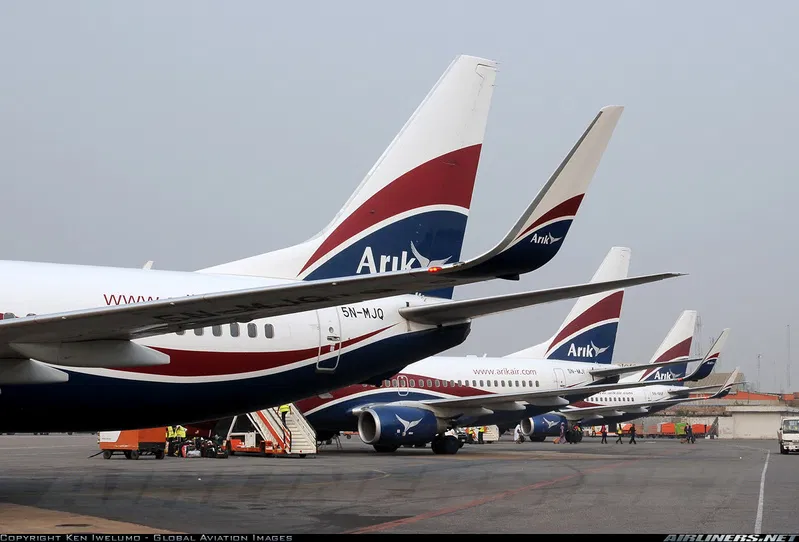
Arik Air is one of the renowned airlines operating in Nigeria. They are a household name in the Nigerian Airline Industry but they have also built a bad reputation over the years through their bad services. They were at a time arguably the worst airline in Nigeria. Little wonder they ground themselves to a halt and ran into debts until it was taken over by Asset Management Corporation of Nigeria (AMCON) and its operations and staff were totally overhauled.

If you are a regular flier you must have noticed how terrible Arik air service was. They never keep to schedule, they delay their flights for hours, they cancel their flights some minutes before departure, they treat customers with no respect, and they have the worst customer support staff. They kept doing this and rendering bad services until people started boycotting the airline and they got themselves multiple lawsuits from aggrieved customers which many are still pending in court. 

I was one of their regular fliers and I experienced a shitload of their terrible customer service until I decided that I have had enough of them and their shitty services. I even made the decision that if Arik Air is the only airline flying in my direction I will cancel or reschedule the trip because I know that once I waste my time and money and get to the airport they will either cancel the flight or delay it for hours without any concrete explanation.

To my utmost disbelief, I recently started seeing and hearing that Arik Air service has changed for good, that they now try to keep up with time and that they no longer cancel flights. When I heard it at first I just felt that it is just a cheap PR sponsored by them just to resuscitate their dying airline because almost every flier I know has boycotted them. Last week, I had no option but to fly to Arik since I was behind schedule and I was desperate to fly out that day to Lagos. So I flew with them from Abuja to Lagos and I was amazed that they stuck to their time. The Arik I know before never sticks to time. In fact I waited about 45 mins before departure before I left my house and went to the airport because I was thinking it’s better I’m still at home when I receive their delay or cancellation message but it didn’t happen, they stuck to the schedule and departed at the fixed time and landed at the fixed time. When we landed in Lagos I was tempted to ask my fellow passengers to join me in giving them a round of applause for a job well done. 

I really hope that Arik Air keeps up with this change because they were really bad, to say the least. To be fair, not just Arik Air, most (if not all) airlines in operation in Nigeria also render terribly bad services. The few Airlines that I have ever used in Nigeria and they didn’t fail are Valuejet, Green Africa and Ibom Air. These are the only airlines I can beat my best any day and say that they stick to time without fail and if they ever fail it must have been caused by factors beyond their control. The other airlines in Nigeria which I’m sure I have used every one of them all provide shitty service. From cancellation to rescheduling of flights to rude customer support staff. 

Arik Air is still on my watch list to see if they have really changed for good or if it was just camouflage.

This is not a free PR for Arik Air but a commendation for them and a charge to them to keep up with the good services they have decided to be rendering from now.


The Lesson from Chick-fil-A for Nigeria’s Fast Food Chains: Give Franchise Licenses To Those Who Love Feeding People!

0

Chick-fil-A, a fast food chain which makes chicken right, is blowing financial metrics.  The US-based fast food chain  is a revelation. It has a cheap fee to open a chain but it has a premium royalty. About 60,000 people apply for an outlet operating license but only 80 are selected yearly! This company which has the highest customer satisfaction in the fast food business, in the U.S, has built a Perception Demand. How did it do it? Focus on those who can make customers to become fans.

“Eat mor chikin”? Consumers are doing just that: Chick-fil-A earns the most per restaurant out of all of America’s top fast food chains, per a new report from QSR, which covers the industry. Its 2,837 restaurants nationwide average nearly $7 million dollars each and more than $18 billion altogether. Coming in second is another chicken-focused chain, Raising Cane’s, with over $5 million in sales per restaurant; Shake Shack, Whataburger and McDonald’s round out the top five.

Yes, you just need to have $10,000 and if they pick you because you really like the business of serving customers, your outlet can generate $6.7 million in average yearly sales. And you do not need to be a person of means (with a big net worth); you just have to be the right person to run a restaurant and feed people!

The top five average-unit volume quick-serves in America last year (among the top 50 highest grossing by sales):
1. Chick-fil-A: $6.7M
2. Raising Cane’s: $5.4M
3. Shake Shack: $3.8M
4. Whataburger: $3.7M
5. McDonald’s: $3.6M

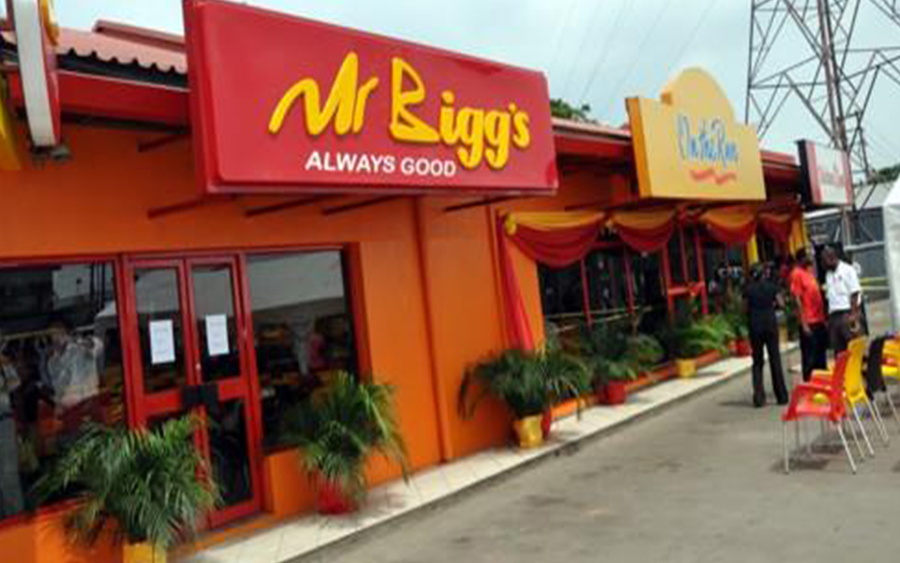
Let’s move to Nigeria, focusing on Jevinik, a casual dining restaurant. It does not run a franchise model. Franchising is always challenging in Nigeria. But Mr. Biggs does, and I will say that it has run into challenges. 

On that, there is a small lesson from the American brand: Give franchise licenses to those who love feeding people, over those with truckloads of cash who see this as pure business, for adding digits in their bank accounts. Possibly, if you recruit such feeding-loving  people, banks can step in and provide them funds, with a quasi-guarantee as Chick-fil-A does to its chains.