DD
MM
YYYY

PAGES

DD
MM
YYYY

spot_img

PAGES

Home Blog Page 4248

Amazon Lays Off Employees in its Video Games Division

0

E-commerce giant Amazon has recently laid off employees in its video games division.

The company reportedly let go about 100 employees in its gaming division as part of its broader cutbacks, affecting workers at Prime Gaming, Game Growth, and the company’s San Diego studio, an offering targeted at members of Amazon’s mainstay loyalty program.

The vice president of Amazon Games, Christoph Hartmann wrote in a companywide memo,

After evaluating our current projects against our long-term goals, the Games leadership team made the difficult decision to eliminate just over 100 roles across Prime Gaming, Game Growth, and in our San Diego studio, while also reassigning some employees to other projects that match our strategic focus.

Each employee whose role has been eliminated should now have a live meeting scheduled this morning so we can discuss these changes directly and give each employee an opportunity to ask questions. There is never a pleasant way to share this sort of news, but we are committed to treating our impacted employees with empathy and respect and will support them by offering them severance pay, health insurance benefits, outplacement services, and paid time to conduct their job search.

Going forward, our resources will be aligned to support our focus on content. We will continue to invest in our internal development efforts, and our teams will continue to grow as our projects progress: The New World team in Irvine will grow as we shift some resources to further support its continued development”.

The layoff comes as Amazon CEO Andy Jassy has moved to rein in costs across the company. The news is also coming just weeks after Amazon outlined plans to slash 9,000 positions, including some at the livestreaming service Twitch.

Amazon’s video games division has experienced some turnover among its top ranks. Mike Frazzini, who helped launch Amazon’s game studios, stepped down last March. And in January, John Smedley, who headed up Amazon Games’ San Diego studio, exited the company.

It is interesting to note that Amazon’s history in video games is riddled with expensive failures. Since its launch in 2013, Amazon Games has struggled to produce a hit despite several published projects, and the company luring top talent from the likes of Sony Online Entertainment.

The company’s only significant game to hit the market, a racing game based on the TV series The Grand Tour, flopped so badly that Amazon removed it from digital shelves a year after its release. According to Bloomberg, Amazon spends about $500 million per year on its games division.

Amazon AWS Opens Applications for 10-week program for Generative AI startups

0

This is the most buzzing domain in technology right now, and Amazon wants to soup it up. According to TechCrunch, ” AWS has created a 10-week program for generative AI startups around the globe. Generative AI startup founders within the cohort can expect to have access to AI models and tools as well as machine learning stack optimization and custom go-to-market advice. There’s also a Demo Day in San Francisco at the end of the program. Accepted startups will receive up to $300,000 in AWS credits to help build their companies.”

The AWS Generative AI Accelerator is a global program for 10 Generative AI startups that can demonstrate early-stage traction. Ideally, you’ll have an MVP already developed and your eyes set on Seed-stage funding, with plans to raise in the next 18 months. We welcome machine learning startups with technical leads who are leveraging cloud technologies, or who plan to. If you have game-changing ambitions in the Generative AI space, we want to support you!

Accelerate your Generative AI startup in just 10 weeks

Build and refine your Generative AI startup on AWS. Get mentorship from top AI/ML industry leaders and technical support from AWS product teams.

Application timeline

Applications open – April 4 – April 17
Cohort announced – May 24 (in-person event in SF Bay Area)
Program runs – May 24 – July 27

Program schedule

Kick-off event (May 24 – 25)
In person in the San Francisco Bay Area (U.S.)
Demo day (July 26 – 27)
In person in the San Francisco Bay Area (U.S.)

Apply here

Adaptability Wins in Markets

1

Markets are vector quantities with magnitude (size) and  direction (customer preferences). Unless your products evolve and adapt, you will remain a scalar quantity (only magnitude with no antenna to pick the directional patterns customers are moving to). Without adaptability, business missions struggle.

Every business model begins with “assumptions” on what the customers want. With those assumptions, products are created to serve customers. But most of the time, those assumptions must evolve because hit or strike rate is never 100% – and customers’ frictions keep changing. 

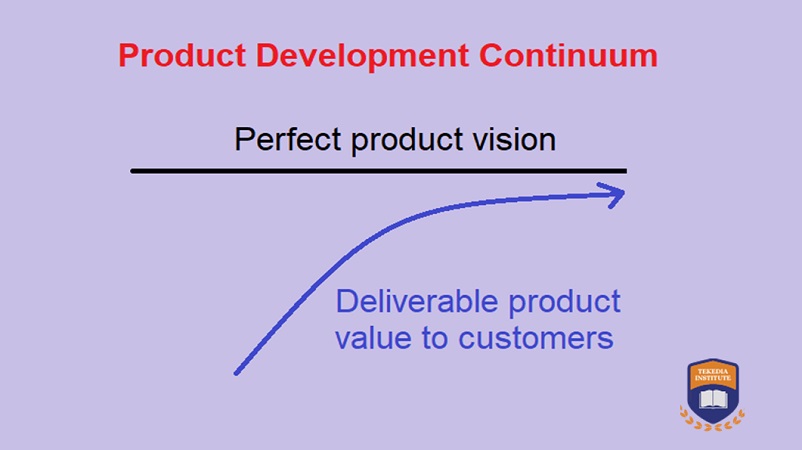
The implication is that the greatest companies are those that have mastered the art of adaptability because in this world even the customers are changing. How do you do that? You have a product development continuum which means your products keep improving within the finite space. It is like an asymptote, and you must keep pushing to give customers better value, continuously.

Comment on Feed

Comment 1: I agree with this statement. In today’s fast-paced and ever-changing business environment, companies need to be adaptable and continuously evolve their products and services to meet their customers’ changing needs and preferences. If a company fails to adapt, it risks becoming obsolete and losing its competitive advantage.
By viewing markets as vector quantities with both magnitude and direction, companies can better understand their customer’s preferences and identify emerging trends. This understanding allows companies to tailor their products and services to meet the evolving needs of their customers and stay ahead of the competition.
To remain relevant and successful, companies need to embrace a culture of adaptability and innovation, continuously seeking out new opportunities and staying attuned to the changing needs of their customers. By doing so, they can remain a vector quantity in the marketplace, with both magnitude and direction and position themselves for long-term success.

Comment 2: Product deployed to the market should be flexible so as to adapt easily with dynamic nature of customer. Taste and fashion of customers changes. Innovation is vital and company must constantly add values to their existing products to be relevant in the market if not new entrants or existing rivals might push them out of the market.

Comment 3: Thank you Ndubuisi Ekekwe for highlighting the importance of adaptability in business and the need for companies to continuously improve their products in response to ever-changing customer preferences.

Your analogy of markets as vector quantities with both magnitude and direction provides a clear visualization of how businesses must align with customer preferences to remain relevant and successful.

I agree with your point about assumptions is well taken. Businesses often make assumptions about what customers want, but these assumptions must be constantly re-evaluated as customer frictions and preferences change.

I believe that the most successful companies are those that have mastered the art of adaptability and can quickly adjust their assumptions and products to meet changing customer needs.

This serves as a reminder that adaptability is not simply an advantage, but rather, is critical for businesses to remain relevant and competitive in today’s rapidly changing market.

There is a clear need for a product development continuum that continuously improves and provides better value to customers.

Comment 4: No product goes into the market to satisfy itself, rather to satisfy the customers it’s meant to serve, because they are the ones that supply the oxygen that guarantees its continuous existence in the marketplace.

Companies release products, and customers validate them, and once the latter hold off validation, the former cease to exist.

Customers give life and meaning to your products, and without them, the products become worthless.

Comment 5: Product innovation plays a critical role in the success of any business. It is the key to staying relevant and meeting the changing needs of customers. Innovation can take many forms, including new products, features, or services. On the other hand, the ROI of product innovation is often difficult to measure, but it can be significant if done correctly.

Comment 6: In today’s competitive market, it’s not enough to just create a good product. It’s equally important to ensure that the product is adaptable to the changing needs and preferences of the consumers.

To stay ahead of the game and ensure the success of products in the long run, market adaptability must be prioritized. Adaptability should actually be a core value of current business strategy.

My Response: Indeed, markets move and products must adapt: “It’s equally important to ensure that the product is adaptable to the changing needs and preferences of the consumers.”

Google Takes Cost-cutting to Employee Laptops, Staplers and Services

0

Google is making more cuts to trim spending and save costs as the economic downturn takes a toll on the tech industry. The tech giant which announced layoff of about 12,000 staff in January, said in a rare company wide email firstly reported by Wall Street Journal, that it is making cuts to employee services.

In the email titled: “Our company-wide OKR on durable savings,” Google’s finance chief Ruth Porat described the recent move as “big, multi-year efforts.” It involves cutting back on fitness classes, staplers, tape and the frequency of laptop replacements for employees, according to a separate document seen by CNBC.

One of the company’s important objectives for 2023 is to “deliver durable savings through improved velocity and efficiency.” Porat said in the email. “All PAs and Functions are working toward this,” she said, referring to product areas. OKR stands for objectives and key results.

Alphabet, Google’s parent, like several other companies in the tech sector, is making the difficult decision to cut its workforce as sales’ decline eclipses the pandemic-induced growth that inspired massive hiring. The 12,000 workers laid off in January, which represents about 6% of its workforce, includes more than two dozen on-site massage therapists.

That marks the company’s decision to extend the cuts to other areas. CNBC reported that Google declined to pay the remainder of laid-off employees’ maternity and medical leaves.

In her email, Porat made reference to the January layoff, describing it as “the hardest decisions we’ve had to make as a company.”

“This work is particularly vital because of our recent growth, the challenging economic environment, and our incredible investment opportunities to drive technology forward — particularly in AI,” Porat’s email said.

She also made reference to the year 2008, twice in her email. Porat said in the email that “We’ve been here before,” citing 2008, when the company’s expenses were growing faster than revenue.

“We improved machine utilization, narrowed our real estate investments, tightened our belt on T&E budgets, cafes, micro kitchens and mobile phone usage, and removed the hybrid vehicle subsidiary.

“Just as we did in 2008, we’ll be looking at data to identify other areas of spending that aren’t as effective as they should be, or that don’t scale at our size,” she said.

A Google spokesperson told CNBC that “we have a company goal to make durable savings through improved velocity and efficiency. As part of this, we’re making some practical changes to help us remain responsible stewards of our resources while continuing to offer industry-leading perks, benefits and amenities.”

Cutting down on desktop PCs and staplers

Highlighting the plan to cut down on services, CNBC reports on areas that will be affected:

Among the equipment changes, Google is pausing refreshes for laptops, desktop PCs and monitors. It’s also “changing how often equipment is replaced,” according to internal documents.

Google employees who are not in engineering roles but require a new laptop will receive a Chromebook by default. Chromebooks are laptops made by Google and use a Google-based operating system called Chrome OS.

It’s a shift from the range of offerings, such as Apple MacBooks, that were previously available to employees. “It also provides the best opportunity across all of our managed devices to prevent external compromise,” one document about the laptop changes said.

An employee can no longer expense mobile phones if one is available internally, the document also stated. And employees will need director “or above” approval if they need an accessory that costs more than $1,000 and isn’t available internally.

Under a section titled “Desktops and Workstations,” the company said CloudTop, the company’s internal virtual workstation, will be “the default desktop” for Googlers.

In February, CNBC reported the company asked its cloud employees and partners to share desks by alternating days and are expected to transition to relying on CloudTop for their workstations.

Google employees have also noticed some more extreme cutbacks to office supplies in recent weeks. Staplers and tape are no longer being provided to print stations companywide as “part of a cost effectiveness initiative,” according to a separate, internal facilities directive.

“We have been asked to pull all tape/dispensers throughout the building,” a San Francisco facility directive stated. “If you need a stapler or tape, the receptionist desk has them to borrow.”

A Google spokesperson said staplers and tape continue to be offered companywide but did not provide details.

‘We’ve baked too many muffins on a Monday’

Google’s also cutting some availability of employee services.

“We set a high bar for industry-leading perks, benefits and office amenities, and we will continue that into the future,” Porat’s email stated. “However, some programs need to evolve for how Google works today.”

“These are mostly minor adjustments,” stated a separate internal document from the company’s real estate and workplace team. The document said food, fitness, massage and transportation programs were designed for when Googlers were coming in five days a week.

“Now that most of us are in 3 days a week, we’ve noticed our supply/demand ratios are a bit out of sync: We’ve baked too many muffins on a Monday, seen GBuses run with just one passenger, and offered yoga classes on a Friday afternoon when folks are more likely to be working from home,” the document stated.

As a result, Google may close cafes on Mondays and Fridays and shut down some facilities that are “underutilized” due to hybrid schedules, the document states.

US Dollar Dips: What Does It Mean for Investors?

0

The US dollar hit parity with the euro in July 2022, with both currencies having a 1:1 exchange rate for the first time in two decades. The last time this happened was in 2002, and the two-decade high against the euro and other major currencies boosted the dollar’s popularity amongst investors.

However, the growth was short-lived as the USD kept slipping lower in value since then and is now languishing in the first quarter of 2023. Several factors have contributed to this depreciation, but the focus here is its effects on investors.

Low Returns Dollar-denominated Assets

The latest US Treasury yields did not help the dollar dip. Instead, the DXY (US Dollar Index) keeps oscillating around 103, as it has since the beginning of 2023. The live chart, developed by the US Federal Reserve, showed that the currency fell more in the last month.

As a result, US Dollar-denominated assets are beginning to lose their value which may force foreign investors to release their holdings in order to save money. Many investors may become more risk-averse, and the market uncertainty may cause them to sell their dollar assets to seek higher returns elsewhere.

In return, demand for certain types of assets like stocks and bonds in USD may affect the market. The impact of the dip may depend on the current economic and political conditions, among other factors, but it can potentially lead to low market demand and returns for investors.

Increased Profits and Competitiveness

Foreign investors holding dollar-based assets may lose money as the dollar dips. Still, US-based companies that rely on exports and investors trading other currencies may have increased profits and competitiveness.

A low dollar value will equip foreign investors’ native currencies and enable them to buy US assets, goods, or services at cheaper rates. Therefore, if a US-based company exports products to foreign customers, consumers can purchase the products with less money, which may result in higher demand and increased profits for the company.

Investors trading in other currencies may benefit from the dip too. For instance, holders of dollar-denominated assets would love to sell their assets fast, which may be an opportunity for other currency investors to buy at cheaper rates and sell later when the dollar increases.

Higher Inflation

The US dollar dip can result in increased inflation due to several factors. For instance, imported goods will become more expensive since buying products denominated in other currencies will cost more dollars. As a result, consumers may pay more for the same products and services.

Similarly, US-based companies will import raw materials at higher costs, which may lead to higher production costs and imply increased costs of products and services for consumers.

Inflation becomes inevitable if the general increase of goods and services continues over time; it can affect investors by reducing their purchasing power, increasing interest rates and bond yields, and impacting stock prices.

A dollar dip can affect investors significantly, but the effects may not be the same for every investor. It can be a win or loss depending on certain factors, like the investors’ goals.