DD
MM
YYYY

PAGES

DD
MM
YYYY

spot_img

PAGES

Home Blog Page 4250

OpenAI CEO Sam Altman Reacts to Musk And Other Tech Leaders Call For Pause on Artificial Intelligence

0

OpenAI CEO Sam Altman has reacted to Tesla and Twitter CEO Elon Musk, and other tech leaders’ call for a pause in the ‘out of control’ Artificial Intelligence (AI) race.

Altman who spoke virtually at an MIT event disclosed that he agreed with part of the letter, while also noting that the letter wasn’t the right way to go about it.

He said,

“I think moving with caution and an increasing rigor for safety issues is really important. The letter I don’t think was the optimal way to address it. I also agree as capabilities get more and more serious, that the safety bar has got to increase. We are doing other things on top of GPT-4 that I think have all sorts of safety issues that are important to address and were totally left out of the letter”.

Altman’s disagreement with Musk and other tech leaders’ call for a pause on AI is coming after some of the biggest names in the tech industry are calling for AI labs to stop the training of the most powerful AI tools, for at least six months, citing profound risk to society and humanity.

The letter was written just two weeks after Altman OpenAI announced GPT-4, an even more powerful version of the technology that underpins the viral AI chatbot tool, ChatGPT. The letter stated that the pause should apply to AI systems more powerful than GPT-4, also stating that independent experts should use the proposed pause to jointly develop and implement a set of shared protocols for AI tools that are safe beyond a reasonable doubt. These tech leaders disclosed that if the pause is not put in place soon, governments should step in and create a moratorium.

Altman who is the CEO behind the company that created the buzzing chatbot ChatGPT believes artificial intelligence (AI) technology will reshape society, however, he believes it comes with real dangers, but can also be the greatest technology humanity has yet developed to drastically improve human lives.

In an interview last month with ABC News, he was emphatic that OpenAI needs both regulators and society to be as involved as possible with the rollout of ChatGPT 4, insisting that feedback will help deter the potential negative consequences the technology could have on humanity. He added that he is in regular contact with government officials.

He however expressed concerns that these models could be used for large-scale disinformation, due to the fact that they are now getting better at writing computer code, which he feels could be used for offensive cyberattacks.

Other Artificial intelligence experts have also become increasingly concerned about AI tools’ potential for biased responses, the ability to spread misinformation and the impact on consumer privacy. These tools have also sparked concerns about how AI can pose a serious risk to professions, enabling students to cheat, leading to massive job loss, and the likes.

Despite buzz to the contrary, OpenAI is not already working on a successor to Chat GPT-4, CEO Sam Altman says. A March letter signed by Elon Musk and a group of artificial intelligence researchers called for a halt in the development of large language models “more powerful than GPT-4” until safety protocols are in place. However, OpenAI is not training GPT-5 and “won’t for some time,” Altman said at a conference. He said his firm is keen to address concerns about AI, but that the letter was vague “about where we need the pause.” (LinkedIn News)


IMF Urges Nigeria to Increase Tax Bracket to Address Growing Debt Stock

0

The International Monetary Fund (IMF) has asked Nigeria to raise incomes from taxes, particularly through ensuring compliance and expanding the tax net, creating a medium-term plan to reduce its debt vulnerabilities.

Nigeria has been grappling with a burgeoning public debt profile amid faltering oil revenue that has made the country’s treasury empty. Though Africa’s largest economy recently introduced a new tax regime, it ranks the lowest globally at 8 percent tax-to-GDP ratio.

The Debt Management Office (DMO) announced in March that the country’s debt stock as at December 2022 had reached N46.25 trillion. Given recent borrowings by the federal government, the debt stock is expected to hit N77 trillion by the end of May.

Thus, the IMF, in its latest Fiscal Monitor, titled; ‘On the path to Policy Normalization,’ released Wednesday during its joint spring meetings with the World Bank, said Nigeria’s debt is projected to keep rising, creating the need for increased revenue generation from taxes.

“In general, what we are saying about Nigeria is the need for a medium-term plan to reduce debt vulnerabilities over time and is because Nigeria has very low tax revenues. So, that makes it more vulnerable to these types of shocks and tightening global conditions,” Paulo Medas, division chief, Fiscal Affairs Department at IMF, said.

“What we advocate is raising taxes which are going to create space not only to manage debt but also to spend on other priorities. And the other part of what we say is that Nigeria has not benefited as much from the windfall of the oil prices in the past because a lot of it has been spent on these untargeted energy subsidies.

“By shifting to more targeted subsidies, you can reduce the fiscal deficit, and you can use those resources on other priorities that actually can promote higher growth in the future such as education, and health, and reduce the deficit. So having more targeted energy subsidies actually can be very beneficial both for fiscal, debt dynamics, and growth.”

In 2020, Nigeria increased its Value Added Tax (VAT) from 5% to 7.5% as part of the government’s push to expand the scope of revenue generation amid dwindling oil revenue. But compared to several other countries of its status, the 7.5% VAT increase was considered not enough as there have been shortfalls in other areas of taxation.

Medas said Nigeria has “a lot of room for increasing the tax base and improving tax compliance” given that it has one of the lowest tax revenues in the world as a share of GDP.

While growing debt has become a global challenge led by the US and China, the world’s largest economies, the IMF said the impact will be heavier on developing economies.

The fund said public debt is growing faster than projected before covid globally as a result of the debt volumes of the US and China. Other large economies such as Brazil are also seeing rapid growth in their debt-to-GDP ratios.

The report said low-income developing countries had been hit by several concomitant shocks, including the COVID-19 pandemic and the cost-of-living and food security crises, which have taken their toll on public finances.

“Fiscal deficits in low-income developing countries, at an average 4.2 per cent of GDP in 2022, showed moderate improvements relative to the worst of the pandemic. Primary spending remained stable at 16.9 percent of GDP, just below its 2021 level, on average, as countries increased fuel subsidies and social spending to respond to rising energy and food import prices.

“The increase in spending was larger among commodity exporters Burundi, Democratic Republic of Congo and oil exporters Nigeria, Yemen, with the latter group benefitting from more fiscal space thanks to high energy prices. In non-oil commodity exporters, the average fiscal deficit rose by 0.6 percentage points in 2022, reversing the improvement in 2021, as both primary spending and debt service payments increased,” the IMF said.

The federal government has said that it plans to increase VAT further to 10%, and is in consultation with stakeholders to determine the kickoff date.

How to Leverage Strategic Blog and Content Plan to Improve the Performance and Visibility of Your Brand

0

Websites are the first contact point for any business. Your business’ website can influence the opinion of people about your brand as well as inform the decision of your customers. Blogs are important parts of a business website. Blog articles show that a business has authority in the field of its business. In a digital age, blogs mean more. The marketplace is digital and people search for a lot of things online. Thus, having a structured blog can ensure your site is organically ranked and increase the visibility of your brand.

Studies have shown that 75 percent of people judge the credibility of a business based on the design of its website; credibility has a direct relation to how likely people are to make purchases and web design has a direct impact on conversion.

A content plan gives a logical flow to your blog articles. A content plan gives a website a structure and Google algorithms can find the site when they are optimized for the field.

Furthermore, a content plan gives consistency to your business. These plans are structured to reflect the positions of the brand and help to project the brand image. The average online attention span most websites get to make an impression is 10 seconds (Attention span). Most readers would scan through the content before reading and if they can’t see a structure or guide, they easily lose focus.

How to Optimize Your Blog

Some of the ways you can maximize your content or blog include the following:

  1. Determine the area(s) where you want to be seen as an expert.
  2. Design a content plan that everyone can follow on a monthly or weekly basis
  3. Generate a proper guide for writing articles that is in line with the company’s brand.
  4. Advise writers to produce engaging articles that are short and straight to the point.
  5. The use of images, infographics and charts to illustrate what the article is about.
  6. Links from other social media platforms like YouTube should be included when relevant.
  7. Provide credibility for the articles by including backlinks to more credible sites.

CBN Issues Guidelines on Dormant Accounts, Directing Banks to Convert Unclaimed Funds to Treasury Bills

0

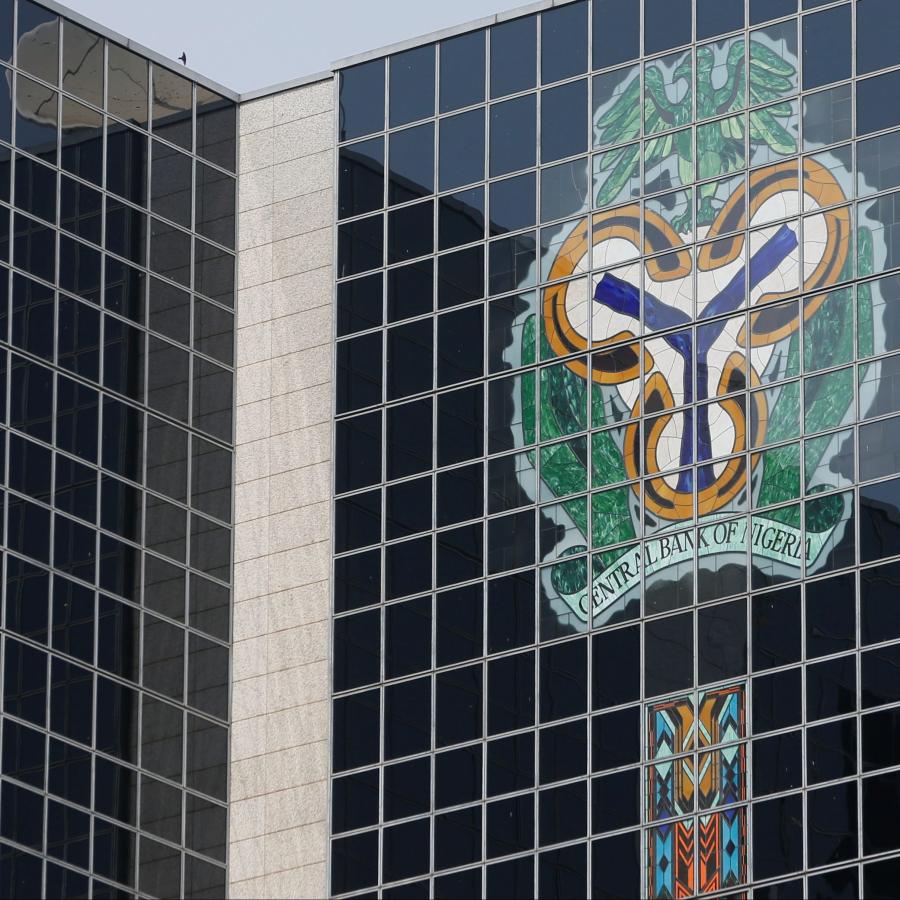
The Central Bank of Nigeria (CBN) has directed money deposit banks to move balances that have remained in dormant accounts for up to 10 years to the Unclaimed Balances Trust Fund Pool Account (UBTFPA), in a fresh move that will see the apex bank investing unclaimed funds in Treasury Bills on behalf of the federal government.

The directive was contained in a circular signed by Chibuzo Efobi, director, financial policy and regulation department of the CBN, which was shared to all banks and other financial institutions (OFIs) with the title; ‘the Management of Dormant Accounts, Unclaimed Balances and other financial assets in Banks and Other Financial Institutions in Nigeria’, on Thursday.

The directive came as part of the release of an exposure draft of guidelines for the management of dormant accounts, unclaimed balances, and other financial assets in banks and other financial institutions in Nigeria.

Efobi said the directive was necessitated by demand from banks and other stakeholders, for the CBN to further clarify the procedures for management of dormant and inactive accounts by banks in Nigeria.

According to the guidelines, the CBN shall open and maintain the UBTF Pool Account to warehouse unclaimed balances in eligible accounts. The funds in the account will be invested in Nigerian Treasury Bills (NTBs) and other securities as approved by the “Unclaimed Balances Management Committee.”

This means that eligible dormant accounts, unclaimed balances and other financial assets include various types of deposits, domiciliary accounts, prepaid card accounts, and wallets, proceeds of uncleared and unrepresented financial instruments, unclaimed salaries and wages, and other similar assets will be transferred into the UBTFPA.

Are the account holders losing their money?

Under the Finance Act 2020, the federal government can borrow from the unclaimed dividends and dormant account balances under the Unclaimed Funds Trust Fund. The funds are therefore converted and made available as a special debt owed by the federal government to the respective shareholders and the dormant bank account holders.

The guidelines state that the affected account will be able to access the list of unclaimed balances transferred to CBN on the websites of financial institutions, CBN or newspaper publications as a way of monitoring their funds.

In addition, the guidelines mandate the CBN to publish annually on its website, the list of owners of unclaimed balances that have been transferred to the UBTF Pool Account. The apex bank is also required to publish on its website, the procedure for reclaim of warehoused funds and other financial assets.

Financial institutions are also required to monitor inactive accounts and notify the customers, as well as protect such accounts from unauthorized usage. They are also expected to establish procedures that will ensure continuous contact with customers to reduce the incidence of inactive/dormant accounts.

In other to ensure full compliance with the new guidelines, the central bank has established a management committee to oversee the operation of the UBTF Pool Account, issue regulations, guidelines, and circulars on the administration of dormant/unclaimed balances and financial assets in FIs, and monitor compliance with the guidelines.

The financial sector has for long been without guidelines on how to handle unclaimed funds or funds in dormant accounts. The situation has created cases where depositors and next of kins were deprived of their money. Those are believed to have the capability to cause chaos in the financial system. The new guidelines, which now stipulate how unclaimed funds and all funds in dormant accounts should be handled, are expected to put an end to the different rules being applied by each financial institution.

However, while the draft stipulates moving unclaimed funds to the UBTFPA, it also made exemptions. The guidelines specify that certain classes of dormant accounts financial assets such as; government-owned accounts, accounts that are subject to litigation, accounts under investigation by a regulatory authority or law enforcement agency, and encumbered accounts, are exempted.

Exploring Vs Exploiting: How Category-king Companies Service and Maintain their Markets

0
Joint venture is one of the ways to grow businesses

The CEO of ABC Limited, a fintech company based in Nigeria, calls for an emergency meeting to discuss the company’s plummeting revenue. He finds it quite ironic that the company had more cash flow when it had fewer offerings and patronage last year than now that it can boast of a highly diversified portfolio and client base.

In the previous year, when the company newly launched its maiden product targeted at the top half of the market pyramid, it reached its first 100 million market cap selling to fewer than 100 persons. This year, the company added five new products to extend its reach to the bottom half but could barely reach two-thirds of the last year’s financial performance despite a 500 percent increase in client base.

It transpired that a reduction in the intensity to move upward was the price the company had to pay for exploring downward. This is reflected in the performance of the marketing unit.

Analysts use the terms exploration and exploitation to describe how businesses innovate and strategically service and maintain their markets. A business is said to be evaluating the option of exploring versus exploiting its market when it raises questions such as follows:

  1. Should we create new products or improve on existing products?
  2. Should we allocate resources to acquire new customers or focus on retaining existing ones?

Organizations with a dual capacity to explore and exploit are called ambidextrous.

In the case of ABC Limited, it was exploring new possibilities rather than exploiting an existing pathway it already created in the market. Consequently, it was carried away in the euphoria of reaching a larger segment.

While it is often desirable to innovate and have a wider market reach, it is required to understand the competitive landscape and which customer segment one has the greatest resources to service and then direct strategies based on that awareness.

However, there are instances where diversifying is not an option. In this case, the business must explore with caution such that it does not lose its primary flywheel.

Distracted by extraneous threats, adventures, and opportunities, leaders neglect a primary flywheel, failing to renew it with the same creative intensity that made it great in the first place. — Jim Collins.

In his book, ”How the Mighty Fall” Jim Collins identified neglecting the primary flywheel as a hubristic tendency that has led many great companies to their early extinction. He states:

‘’To disrespect the potential remaining in your primary flywheel or worse, to neglect that flywheel out of boredom while you turn your attention to The Next Big Thing in the arrogant belief that its success will continue almost automatically is hubris…’’

The above condition could have been avoided at ABC Limited if it had specialization within its marketing unit, such that each product has its own marketing team. It is believed this specialization would not only lead to healthy rivalry but also promote deeper product knowledge among marketers.

More so, having a marketing team focus on one product at a time will give maximum output. The tendency for monotony or lack of extensive product knowledge can be offset when each marketer is allowed to move across different sub-teams at specific intervals.

The conclusion to be drawn is that having more products or acquiring new customers may not readily translate to increased revenue or cash flow. The quality of your clients and the capacity of your employees also matter to the shape of your revenue curve. More importantly, while attempting to explore, attention must not be taken off your primary flywheel.