DD
MM
YYYY

PAGES

DD
MM
YYYY

spot_img

PAGES

Home Blog Page 427

NBCUniversal and YouTube Secure Carriage Deal, Revive NBC Sports Network as Carriage Battles Reshape TV Market

0
A picture shows a You Tube logo on December 4, 2012 during LeWeb Paris 2012 in Saint-Denis near Paris. Le Web is Europe's largest tech conference, bringing together the entrepreneurs, leaders and influencers who shape the future of the internet. AFP PHOTO ERIC PIERMONT (Photo credit should read ERIC PIERMONT/AFP/Getty Images)

NBCUniversal and YouTube averted a blackout Thursday afternoon by reaching a new multi-year carriage deal that preserves NBCUniversal’s full slate of broadcast and cable networks on YouTube TV.

The agreement followed a brief extension after the original contract expired — a last-minute negotiation tactic that echoed their previous renewal in 2021.

The terms remain undisclosed, but both companies stressed that the agreement extends beyond traditional carriage fees. In addition to long-term access for channels like NBC, Telemundo, Bravo, CNBC, Golf Channel, E!, Oxygen True Crime, MSNBC, USA, Syfy, and Universo, the deal includes expanded digital rights: short-form highlights and shows on YouTube, Universal Pictures films on Google TV and YouTube, and Peacock’s upcoming availability through YouTube Primetime Channels.

The most striking development is the return of NBC Sports Network (NBCSN), four years after its shutdown. Relaunching later this fall, NBCSN will carry NBCUniversal’s extensive sports programming, complementing flagship events that remain on NBC’s broadcast network.

Matt Schnaars, NBCUniversal’s president of content distribution, framed the deal as both a defensive and forward-looking move.

“We’ve secured long-term access to our full portfolio of broadcast and cable networks on YouTube TV, and we’re advancing our Peacock strategy with an upcoming launch on YouTube Primetime Channels and ongoing presence on Google TV,” he said.

For NBCUniversal, reviving NBCSN reverses part of a 2022 strategy that shifted sports rights to Peacock and USA Network to cut costs. Analysts say the decision reflects slowing growth at Peacock, where sports have been central to subscriber acquisition. NBC aims to extract steady carriage fees from distributors, while still driving some viewers to Peacock for exclusive rights by restoring NBCSN to channel bundles like YouTube TV.

Greg Abel, Berkshire Hathaway vice chairman who is slated to succeed Warren Buffett as CEO, praised NBCUniversal’s balancing act in its sports business model, noting it could stabilize revenues across multiple platforms.

This deal underscores a broader trend in the television industry: the uneasy coexistence of streaming ambitions with the financial safety of legacy carriage. Other companies are also impacted by this recalibration.

Disney’s bruising dispute with Charter Communications in 2023 exposed how reliant even the biggest entertainment companies remain on distribution fees, despite the billions poured into direct-to-consumer platforms like Disney+. That standoff ended with Disney agreeing to give Charter’s pay-TV customers free access to Disney+ and ESPN+, a compromise that blended old and new business models much like NBCUniversal’s deal with YouTube.

Similarly, Paramount has leaned on YouTube TV and Hulu Live to maintain exposure for CBS and its cable channels, even as Paramount+ struggles to reach profitability. Carriage negotiations have shifted from simple pricing disputes into battlegrounds over the streaming future, where tech distributors like Google wield increasing leverage.

YouTube TV has grown to more than 8 million subscribers, which means that retaining NBCUniversal was non-negotiable. Losing access to live sports from NBCSN, Golf Channel, and Telemundo — alongside news networks like MSNBC and CNBC — could have triggered a wave of cancellations. Google ensures its platform remains the most comprehensive streaming bundle on the market by securing this deal, competing with Hulu Live, Sling, and Fubo.

Deal highlights:

  • Channels: Multi-year carriage of NBC, Telemundo, Bravo, CNBC, Golf Channel, E!, Oxygen True Crime, MSNBC, USA, Syfy, Universo.
  • NBCSN relaunch: Returning in fall 2025 as a key part of YouTube TV’s sports offering.
  • Peacock integration: Available soon through YouTube Primetime Channels, expanding its reach.
  • Digital rights: Short-form clips and highlights on YouTube; Universal films on Google TV, YouTube TV, and YouTube.
  • Library content: NBCUniversal Global TV Distribution titles on YouTube Premium (SVOD) and YouTube Free Primetime Content (AVOD).
  • Android extension: Peacock to remain available across Google Play and Google TV under a new multi-year extension.

Ultimately, NBCUniversal’s move shows the growing recognition among media giants that the streaming revolution is not enough on its own. While Peacock remains central to NBCU’s future, resuscitating NBCSN and locking in YouTube TV demonstrates that traditional carriage still delivers the stability Wall Street demands.

As the industry recalibrates, the NBCUniversal-YouTube agreement becomes another case study in how legacy media companies are hedging their bets — building out direct-to-consumer offerings while continuing to rely on distributors to keep the cash flowing.
Musk Urges Netflix Boycott Over Transgender Show, But Analysts See Limited Impact on Streaming Giant

0

Elon Musk waded deeper into America’s culture wars this week, urging his 195 million followers on X to cancel their Netflix subscriptions over what he described as a “transgender woke agenda.”

His comments have fueled a wave of online backlash, but analysts say the controversy is unlikely to inflict lasting damage on the streaming company’s bottom line.

On Wednesday, Musk reposted an image criticizing Netflix for allegedly promoting transgender content, adding the caption: “Cancel Netflix for the health of your kids.” The uproar centers on Dead End: Paranormal Park, a now-canceled animated show that featured a transgender character. The series ran for two seasons before being scrapped in 2023, but it has since become a target for conservative activists.

Musk’s intervention was prompted by posts circulating among right-wing accounts, including one accusing the show’s creator, Hamish Steele, of mocking the death of conservative activist Charlie Kirk. Steele responded on rival social platform Bluesky, quipping, “It’s probably going to be a very odd day.” He also reshared support from TV writer Jack Bernhardt, who described Dead End as “a brilliant show about kind, wonderful characters.”

While Musk has increasingly used his platform to champion conservative causes, analysts argue his call for a boycott will likely have minimal business consequences for Netflix.

The streaming company, which stopped disclosing subscriber numbers earlier this year, last reported 301.63 million global subscribers in the fourth quarter of 2024. With a market capitalization of around $490 billion and shares up more than 60% over the past year, Netflix remains one of Wall Street’s most resilient media companies.

This week, Netflix stock is down about 4% — but analysts attribute the dip more to broader market movement than to Musk’s criticism.

“Is that going to move the needle necessarily? … You’re going to see people sign up on the back of that to counter it,” CNBC contributor Guy Adami said Wednesday on Fast Money. “I don’t think this is a reason to sell the stock.”

Wedbush Securities analyst Alicia Reese echoed that view, noting Musk’s comments came too late in the third quarter to sway reported subscriber metrics. Any marginal fallout, she added, is likely to be offset by Netflix’s growing advertising business.

“Their numbers should come out just fine,” Reese said. “I think that shares haven’t been hit too hard.”

Tim Seymour of Seymour Asset Management said the controversy may briefly rattle trading but argued that Netflix stock is too expensive and too entrenched to be derailed by “internet backlash.”

“We’ve had these moments in time where, whether it was an ad campaign that went wrong or whether it was some sense that a company was aligned in a particular political channel… I don’t think that that’s going to be the reason to sell Netflix here,” he said.

The backlash has drawn comparisons to the boycott of Anheuser-Busch InBev in 2023, after Bud Light featured transgender influencer Dylan Mulvaney in an ad campaign. That boycott led to steep sales declines and billions in lost market value for the brewer. But CNBC contributor Karen Finerman argued Musk’s campaign will be far less damaging.

“I feel like this will be very fleeting,” she said.

Musk’s attack on Netflix fits into a broader pattern of high-profile CEOs inserting themselves into divisive social debates — a move that can rattle brands but often proves temporary in its effect. The latest skirmish may prove little more than a passing storm for Netflix, which has weathered controversies ranging from Cuties in 2020 to Dave Chappelle’s comedy specials.

Citigroup and JPMorgan Recently Adjusted Forecast Prices For BTC, ETH As BTC Reclaims $120k Priceline

0

Citigroup (Citi) has recently updated its year-end 2025 price targets to $132,000 for Bitcoin and $4,500 for Ethereum, citing shifting investor flows toward ether amid macroeconomic factors and sustained ETF demand, though with smaller inflows expected for Ethereum compared to Bitcoin.

These forecasts represent a slight trim for Bitcoin from prior estimates like an earlier $135,000 base case but a lift for Ethereum from $4,300 announced in September.

Citi’s models incorporate user activity, ETF inflows which explain over 40% of Bitcoin’s recent price variation, and Ethereum’s utility in areas like stablecoins and tokenization, with bull cases reaching $199,000 for BTC and $6,400 for ETH.

Separately, JPMorgan has indicated Bitcoin is undervalued relative to gold and could see significant upside to $165,000, driven by institutional adoption, ETF inflows, corporate treasuries, and potential state-level reserves in the U.S.

This aligns with broader JPMorgan views on Bitcoin outperforming gold in the second half of 2025, though exact year-end targets vary across reports some cite $150,000. These predictions come amid Bitcoin trading above $120,060 and Ethereum above $4,483 as of early October 2025, with risks tilted upward due to accelerating institutional demand but tempered by macro uncertainties.

The price targets from Citi $132K for Bitcoin, $4,500 for Ethereum and JPMorgan $165K for Bitcoin by year-end 2025 carry several implications for investors, markets, and the broader crypto ecosystem.

JPMorgan’s higher Bitcoin target $165K reflects growing institutional interest, driven by ETF inflows, corporate treasury allocations, and potential state-level Bitcoin reserves in the U.S. This suggests increasing mainstream acceptance, which could stabilize prices and reduce volatility over time.

Citi’s focus on Ethereum’s utility like the stablecoins, tokenization indicates confidence in its long-term value beyond speculative trading, potentially attracting more institutional capital to ETH-based projects.

Bitcoin’s current price at $120,060k is below both targets, suggesting potential upside of 11–39% by year-end. Ethereum’s price $4,483 is close to Citi’s target, implying limited short-term growth 2–3% unless bull-case scenarios ($6,400) materialize.

ETF inflows, which Citi notes explain over 40% of Bitcoin’s price variation, will likely remain a key driver. Any slowdown in inflows or regulatory hurdles could cap upside potential.
Investment Strategies.

Investors may tilt portfolios toward Bitcoin for higher upside potential, per JPMorgan’s outlook, while Ethereum could appeal to those focused on blockchain utility and diversified crypto exposure.

The bullish forecasts could spur retail FOMO, but macro risks like the interest rate hikes, geopolitical tensions noted by Citi may prompt caution, favoring hedged positions or stablecoin-based strategies.

Rising prices could accelerate development in Ethereum-based DeFi and tokenization, as higher valuations attract more developers and capital. JPMorgan’s mention of state-level Bitcoin reserves signals potential policy shifts, which could legitimize crypto further but also invite stricter regulations, impacting market access and liquidity.

Discrepancies between Citi’s conservative ($132K) and JPMorgan’s aggressive ($165K) Bitcoin targets highlight uncertainty in macro conditions and adoption pace. Investors face risks from market corrections if ETF inflows or institutional interest wane.

Ethereum’s growth may lag Bitcoin’s due to smaller ETF inflows, potentially leading to underperformance relative to expectations. These targets signal a bullish outlook for crypto, with Bitcoin likely to lead due to stronger institutional backing, while Ethereum’s growth hinges on its ecosystem’s expansion.

Investors should weigh these opportunities against macro risks and monitor ETF flows and regulatory developments closely.

BlockDAG Steals the Spotlight as Presale Nears $420M, While Binance Coin Targets $1K & Monero Recovers

0

Market watchers are zeroing in on the Binance Coin (BNB) price prediction as BNB edges toward $945, wondering if $1,000 is within reach. At the same time, Monero (XMR) price rally defied odds, climbing nearly 7% after a rare 51% network attack shook confidence.

BlockDAG (BDAG) is in a league of its own. With presale nearing $420 million, 26.5B coins sold, 312,000 holders, 3 million X1 app users, and 20,000 ASIC miners shipped, it turns adoption into verifiable infrastructure. Unlike BNB or XMR, BlockDAG offers a confirmed user base, proof of delivery, and a limited-time presale price of $0.0015 in Batch 30. For those evaluating the best crypto to invest in, BDAG takes theory and converts it into measurable growth.

BNB Pushes Higher: Will $1,000 Break or $900 Hold?

BNB set a fresh record close to $945, sparking talk of whether $1,000 could fall next. Yet before that, the $900 support level demands attention. If it breaks, BNB could slide back before continuing higher. Charts back this with a rejection at resistance and bearish RSI divergence hinting at fading strength.

Still, every run needs structure. BNB’s rally is fueled by more activity in its ecosystem and growing institutional adoption, both signs of long-term support. Those eyeing an entry may prefer waiting near $900 if it holds, offering a better setup. If not, the risk of a deeper correction grows.

Monero Jumps Despite a 51% Attack, Confidence or Caution?

Monero (XMR) shocked traders by surging nearly 7% even after a rare 51% attack hit its network. In mid-August, Qubic, a mining pool, briefly held majority control of Monero’s hash power, causing an 18-block reorganisation and reversing 117 transactions.

The attack breached Monero’s 10-block safety threshold, raising double-spend concerns and fears of concentrated mining power. Even so, the swift recovery shows the market’s belief in Monero’s resilience. For buyers, this brings a split view: while the incident reveals vulnerabilities, it also reinforces XMR’s role as the top privacy coin. If developers roll out timely security fixes, Monero may retain its stronghold as the most trusted privacy-focused project.

BlockDAG Shows Dominance as Presale Nears $420M

BlockDAG isn’t a routine launch, it’s quickly shaping into the biggest presale of the decade. With almost $420 million raised and 26.5 billion BDAG coins already sold, the numbers speak for themselves. This isn’t empty buzz, it’s solid proof that people view BlockDAG as a rare, once-in-a-generation project. The limited-time Batch 30 price of $0.0015 sends a clear signal: securing a spot now means buying at levels that may look very cheap once the mainnet goes live.

Unlike countless projects that only market promises, BlockDAG has already shown results with more than 312,000 holders, 3 million X1 app users, and over 20,000 ASIC miners distributed worldwide, building a functional ecosystem before launch day even arrives. The Awakening Testnet is live, the presale dynamics are already changing, and anyone holding back could regret waiting.

For long-term buyers, this is not just another trade, it’s an entry into tested infrastructure that has already proven adoption. Yet, the $0.0015 limited-time presale price still remains available. For those chasing shorter-term moves, it’s also a rare chance to capture momentum before exchanges bring in mass liquidity. The signal could not be stronger: this is far more than a presale, it’s the defining event of this market cycle.

Final Thoughts

BNB’s near-$1,000 push and Monero’s XMR price rally both offer compelling setups, but each carries short-term risks tied to technicals and sentiment. BlockDAG, however, is already rewriting the playbook. Its presale is almost at $420M, and the ecosystem highlights the adoption that is happening now. With 3M miners on the X1 app, 312,000 holders, and over 20,000 ASIC miners, the foundation is solid.

The Batch 30 limited-time price of $0.0015 ensures those who act now gain maximum upside ahead of launch. For anyone doing a serious best crypto to invest in assessment, BlockDAG’s numbers overshadow BNB and XMR, combining liquidity, adoption, and long-term strength. Missing this presale isn’t just a lost opportunity; it’s risking sitting on the sidelines while history is being made.

Presale: https://purchase.blockdag.network

Website: https://blockdag.network

Telegram: https://t.me/blockDAGnetworkOfficial

Discord: https://discord.gg/Q7BxghMVyu


Nvidia’s Jensen Huang Calls Elon Musk “The Ultimate GPU” as Tesla CEO Races to Build World’s Largest AI Supercomputer

0

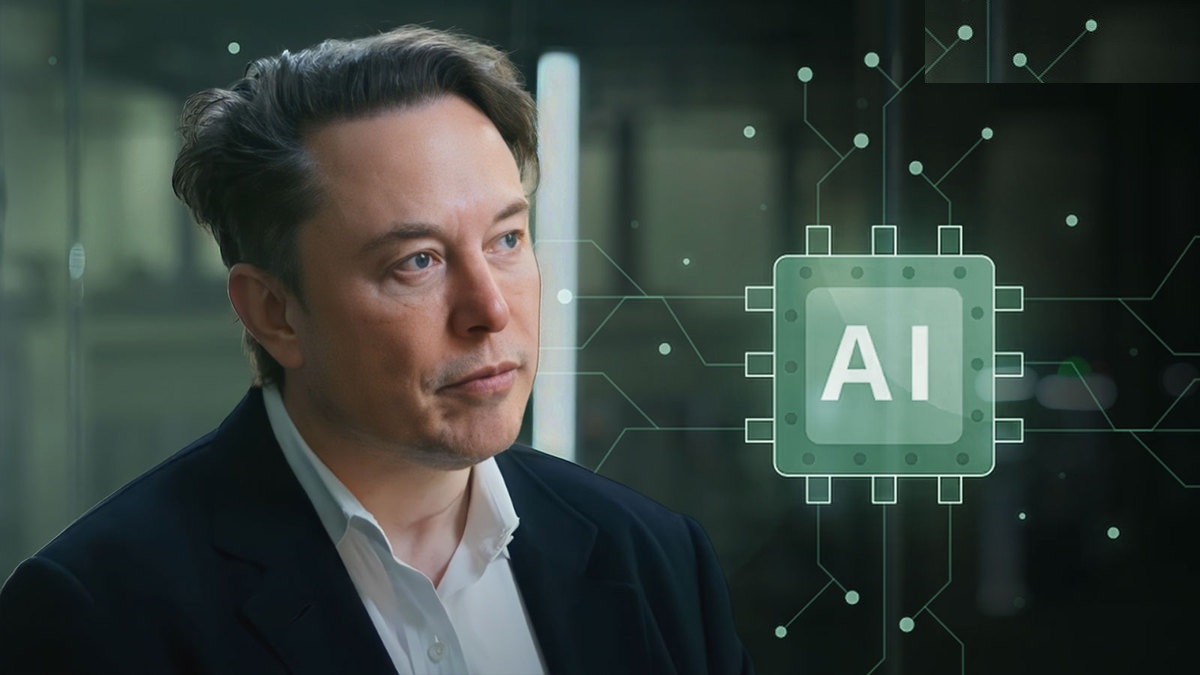
Tesla and SpaceX CEO Elon Musk have earned praise from one of the tech industry’s finest, Jensen Huang, Nvidia’s CEO. Huang, speaking on the “BG2” podcast, likened Musk’s mind to one of Nvidia’s most powerful chips.

He said, according to BI, the way the world’s richest man processes information makes him capable of accomplishing “unique” feats — a comparison that underscores Musk’s outsize role in the global race to build next-generation artificial intelligence infrastructure.

Musk is currently juggling at least five companies, spanning everything from Tesla’s self-driving cars to robotics projects to xAI’s conversational AI companions. Among his most ambitious undertakings is Colossus II, a Tennessee-based supercomputer Musk has described as “the world’s first gigawatt AI training cluster.”

Huang explained that AI supercomputers are among the most difficult projects humanity has ever attempted.

“These AI supercomputers are complicated things,” he said. “The technology is complicated. Procuring it is complicated because of financing issues. Securing the land power and shell, powering it is complicated.”

Calling the effort “unquestionably the most complex systems problem humanity has ever endeavored,” Huang suggested Musk has a distinct advantage: “All of these systems are interoperating and the interdependencies reside in one head, including the financing.”

The podcast hosts compared Musk to a “big GPT” or a supercomputer, to which Huang replied, “He’s the ultimate GPU.” Huang also praised Musk’s urgency and determination. “He has a real desire to build it, and so when will comes together with skill, unbelievable things can happen. Quite unique.”

Building Colossus II

Musk is already moving fast, as documents reviewed by Business Insider show that at least $400 million has been spent on Colossus II, which is under construction outside Memphis, Tennessee. The system will run on 200,000 Nvidia GPUs, with plans to eventually scale up to 1 million GPUs.

That scale makes Colossus II one of the boldest attempts to build infrastructure capable of supporting frontier AI systems. Huang said he “would not be surprised if he gets to a gigawatt before anybody else does.”

It is happening as Nvidia is simultaneously investing $100 billion into OpenAI to support AI data center buildouts. OpenAI, led by Musk’s longtime rival Sam Altman, is also part of the U.S. government-backed Stargate project. Musk’s xAI, by contrast, is going its own way with Colossus II — yet both ventures highlight how dependent the AI industry is on Nvidia’s chips.

The Competitive Lens

Huang’s praise for Musk is not only admiration but also acknowledgment of Nvidia’s stake in the outcome. Musk’s companies, from Tesla to xAI, are major Nvidia customers. Nvidia’s dominance in AI hardware has made its GPUs indispensable to anyone attempting to compete at scale, from Big Tech incumbents like Meta and Google to challengers like Musk’s xAI.

While OpenAI, backed by Microsoft, and Meta, through partnerships with CoreWeave, are locking in long-term infrastructure deals, Musk is attempting to build independent capacity at unprecedented scale. If successful, Colossus II could make xAI less reliant on the same circular financing structures critics say are fueling an AI bubble.

For now, Musk is again positioning himself at the center of the most consequential technology race of the decade. Huang said building a gigawatt-scale AI cluster is a challenge of financing, engineering, and sheer willpower. And in his view, Musk may be the only one who has all three under one roof — or, as Huang put it, “in one head.”

However, the praise stands in sharp contrast to Musk’s own tone when it comes to his peers in Silicon Valley. Musk has frequently taken aim at other tech leaders, often questioning their strategies in blunt terms. In 2023, for instance, he dismissed Apple’s use of OpenAI for powering Siri as “a security violation,” publicly warning iPhone users that they were effectively “handing their data over to a black box.” He has also repeatedly clashed with Mark Zuckerberg, most famously calling Meta’s approach to AI “closed” and “untrustworthy.” On Wednesday, Musk urged his followers to cancel their Netflix subscriptions, prompting a decline in the streaming platform’s shares.

That, many believe, makes Huang’s admiration noteworthy. While Musk is often the first to challenge or ridicule competitors’ business moves, here he is being celebrated as uniquely equipped to solve what Huang calls the “most complex systems problem” ever attempted.