DD
MM
YYYY

PAGES

DD
MM
YYYY

spot_img

PAGES

Home Blog Page 4275

Google to Integrate ChatGPT’s Kind of AI into Search – Pichai

0

Google is planning to onboard conversational AI to its flagship search product, following the intimidating momentum gathered so far by rival, OpenAI’s ChatGPT.

Alphabet’s CEO Sundar Pichai revealed this in an interview with Wall Street Journal, where he explained that the plan involves using Large Language Models (LLM) to elaborate search contexts with conversational features.

“Will people be able to ask questions to Google and engage with LLMs in the context of search? Absolutely,” he said.

Google has already said it would integrate LLMs into search, but this is the first time the company has announced plans for conversational features.

Alphabet, Google’s parent company, was rattled by the emergence of ChatGPT and Microsoft’s decision to incorporate it into Bing, its search engine. The web search giant has been working to protect its market dominance using AI model languages. Google launched Bard, its ChatGPT 3 equivalent; to counter the threat Microsoft’s incorporation of AI-powered chatbot may pose to its ad business.

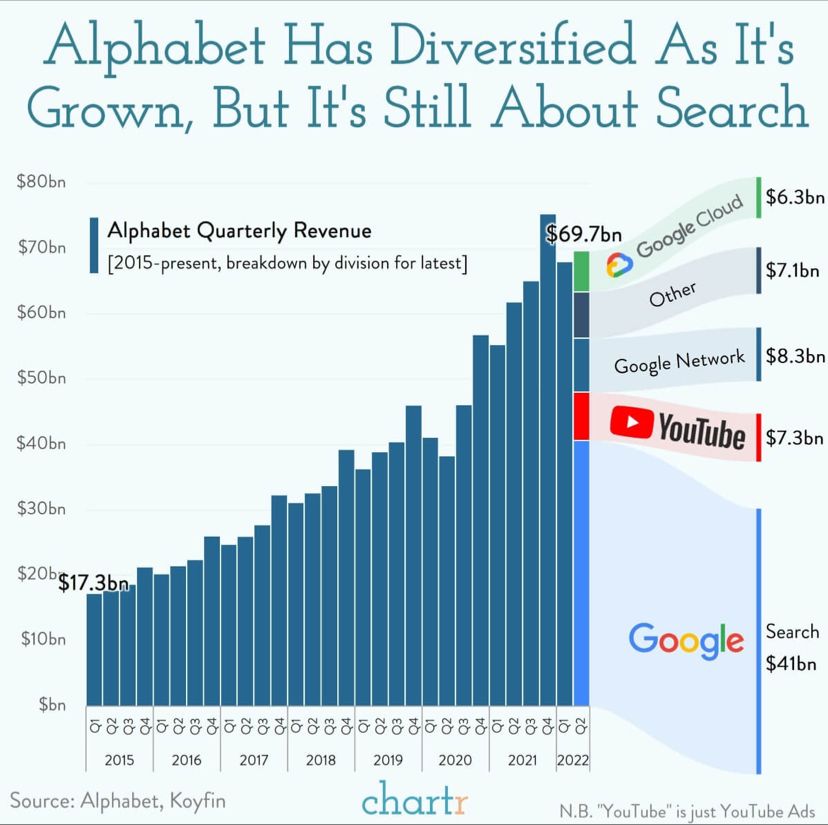
Google controls 93.4 percent share of the worldwide search market, a near total dominance that Microsoft said it intends to disrupt by adding OpenAI’s ChatGPT 3, which provides humanlike context to queries, to Bing.

Pichai told WSJ that he saw AI chat as a way to expand its search business, rather than a threat. “The opportunity space, if anything, is bigger than before,” he said.

ChatGPT 3 triggered a global AI language model race, with Microsoft, which has invested billions of dollars in OpenAI, leading the pace. Google falls behind after apparently being rattled by the events. The tech giant issued ‘code red’ late last year, following the ChatGPT 3 frenzy, which saw the chatbot racked up more than 100 million users in about three months after launch – the most for any company.

Bard hurriedly launched, failed to produce convincing performance during a test run, giving credence to ChatGPT as the top choice in the AI chatbot frenzy. Though Google said it does not intend to incorporate Bard into search for now, it has not concealed its plan to expand the use of AI language model in its business. Bard is designed strictly as a chat product on a standalone site and it’s so far not used in search.

OpenAI recently rolled out GPT 4, and improved version of its AI language model that it has placed on premium. Microsoft has also integrated it into Bing to use its uncanny abilities to further promote the search engine.
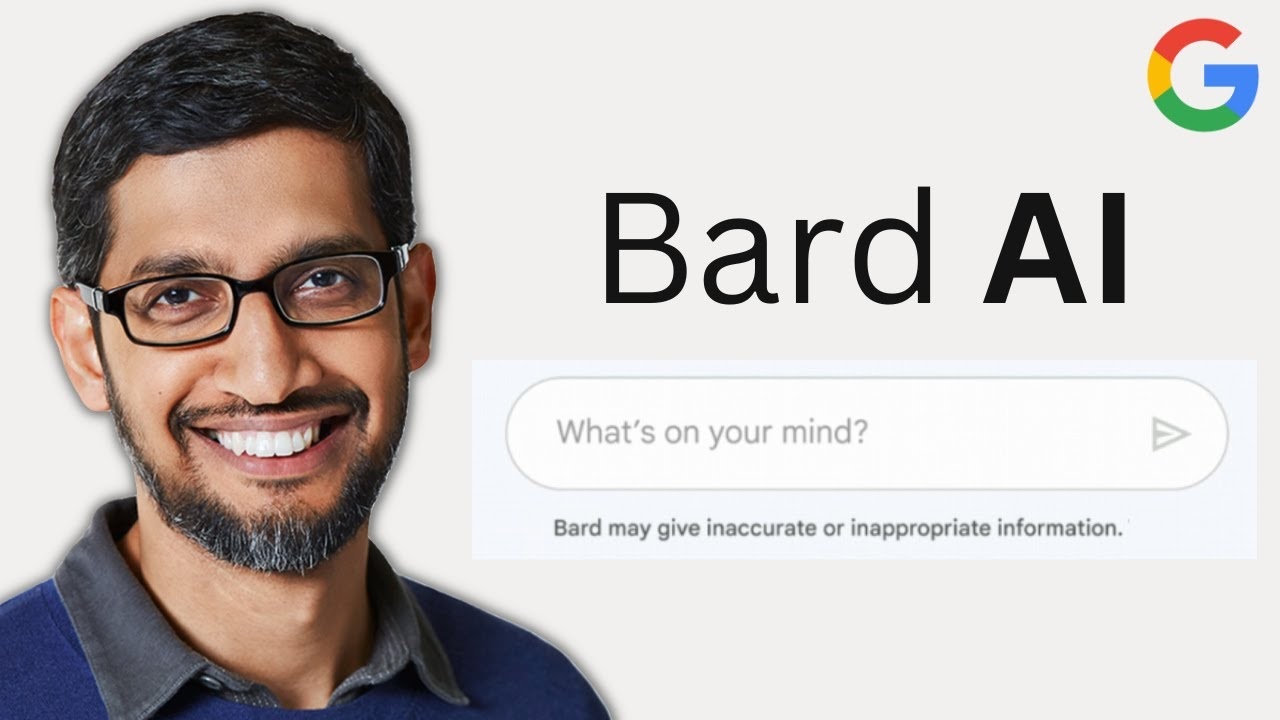
Google employees had criticized the company’s rush to launch Bard, blaming the decision for the incorrect, inaccurate or inappropriate responses the chatbot gave during its trial.

But Pichai recently said Google would soon switch to a more capable language model in an effort to close the gap.

Last month, the CEO told employees that a lot of things will go wrong as the company works to expand access to the AI language model. Google plans to allow more collaboration between divisions like Google Brain and DeepMind, its two primary AI units, as a way to ensure efficacy of its AI language model.

“Expect a lot more, stronger collaboration, because some of these efforts will be more compute-intensive, so it makes sense to do it at a certain scale together,” he said.

Conversational AI features will be added to Google’s search engine, Alphabet CEO Sundar Pichai confirmed to The Wall Street Journal, as the tech giant ramps up its artificial intelligence efforts. Pichai countered the idea that ChatGPT and other bots pose a threat to its core search business by saying, “The opportunity space, if anything, is bigger than before.” The AI race is unfolding as Google faces pressure to cut costs while increasing productivity, with WSJ reporting that Pichai “wouldn’t directly address” the prospect of more staffing cuts following January’s layoff announcement affecting 12,000 people.

Google lifted the veil on one of its AI supercomputers on Wednesday, saying it’s more powerful than Nvidia’s AI model training and deployment systems.

Labor laws in Europe are making it tougher for tech giants, including Google, to lay off staff there, Bloomberg reports. (LinkedIn News)

Matrimonial / Divorce Proceedings Under Nigerian Law

0

Legally, it is recognized that a marriage and by extension,a family constitutes the most important unit of society and as such should be protected as a matter of public policy. This thus explains the need for a legal regime governing matrimonial disputes and divorces in Nigeria.

This article will be looking at the topics of :-

– The legal framework governing matrimonial disputes in Nigeria.

– The available matrimonial dispute remedies under Nigerian Law.

– The grounds for marriage dissolution.

– The standard of proof in matrimonial causes under Nigerian Law.

What constitutes the legal & regulatory framework governing Matrimonial disputes in Nigeria?

Matrimonial Causes are governed by the Matrimonial Causes Act of Nigeria & The High Courts of Nigeria.

What are the actual legal remedies available in courtroom matrimonial disputes in Nigeria?

The available reliefs in matrimonial causes under Nigerian Law are :-

– Marriage Dissolution/Divorce decrees.

– Marriage Nullification orders :- Where a marriage is deemed by a court to have never existed in the first place e.g. 

– Judicial Separation orders :- Which take away cohabitation & conjugal rights from an otherwise still valid marriage.

– The restitution of conjugal rights.

– Jactitation of Marriage :- Which allows ex-spouses to still legally bear their marriage surnames.

– Maintenance orders for ex-spouses.

What are the acceptable grounds for dissolving a marriage under Nigerian Law?

A marriage can be dissolved on irreconcilable differences based on :-

  1. A lack of consummation.
  1. Intolerable infidelity.
  1. Gross irresponsibility of spouse.
  1. Desertion of a spouse.
  1. Living apart for a period of at least 2 years.
  1. The evidential presumption of death upon proof of a spouse being missing for at least 7 years.

What is the scope of the Matrimonial Causes Act?

The act applies strictly to statutory marriages entered into at a marriage registry under Nigerian Law.

Is polygamy allowed under the Act?

No, no person married under the act is allowed to contract a second marriage as this constitutes the offence of bigamy punishable with an improvement term of up to 7(Seven) years.

Are customary marriages under the jurisdiction of the Act?

No, they’re not. But a divorce carried out under customary law will be invalid where the couple also got married under the Act.

When is a marriage deemed void under the Act?

A void marriage is one which is deemed to have never happened and occurs where :-

  1. One of the persons entering into a marriage was in fact already married to another person at that time.
  1. Parties are within a relationship deemed prohibited under Nigerian Law by virtue of the spouses being traceable actual family relatives.
  1. There was no valid consent by either or both parties to a marriage.
  1. A party in a marriage is actually a minor below the age of 18 years.

When will a marriage be deemed voidable under Nigerian Law?

A marriage is voidable when the law gives its parties the option to have it set aside on the basis of :

  1. Insanity
  1. One of the parties having a venereal disease at the time of the marriage
  1. The discovery of a pregnancy belonging to a 3rd party at the time of marriage.
  1. The inability of either party to a marriage to consummate it. 

What is the standard of proof required in Matrimonial disputes in Nigeria?

The standard of proof required in matrimonial causes under Nigerian Law is “The satisfaction of the court” which simply means satisfying the court that a marriage has broken down irretrievably to have it dissolved or voided.

Crypto Exchange, Paxful, Winds Down Operation

0

Crypto exchange Paxful, has joined the growing number of exchanges winding down due to downturn and regulatory challenges the industry is facing.

Paxful founder and CEO, Ray Youssef announced the decision in a statement shared on the platform.

“Today, Paxful will be suspending its marketplace. We are not sure if it will come back,” the statement reads.

“This will probably come as a big shock to many. While I cannot share the full story now, I can say that we unfortunately have had some key staff departures. Also, regulatory challenges for the industry continue to grow, especially in the peer-to-peer market and most heavily in the U.S. While we work through these issues, we have taken the most secure option and ask you to explore self-custody and trade elsewhere.”

Paxful is a peer-to-peer (P2P) cryptocurrency marketplace that allows users to buy and sell Bitcoin and other cryptocurrencies using various payment methods such as bank transfers, credit and debit cards, and even gift cards.

The decision to shut it down comes on the heels of market turmoil and regulatory tightening by governments around the world, which have seen other P2P platforms such as LocalBitcoins shut down operation too.

Founded in 2015 by Ray Youssef, the Delaware, US-based company has been offering crypto exchange services to countries around the world, including Nigeria, where it was receiving huge transaction volumes until recently. Government’s prohibition of regulated financial institutions from enabling crypto transactions – though limited the volume of trade from the West African country, made Paxful more popular.

Paxful’s P2P services provided a safe and secure platform for users to trade cryptocurrencies without the need for intermediaries such as banks or financial institutions. For traders in Nigeria, it was a welcomed alternative in the face of the government’s apathy toward cryptocurrency.

The company said in 2022 that it had reached over 10 million users globally with Nigeria accounting for over 2 million users. With its growing popularity in Nigeria, Paxful introduced corporate social responsibility (CSR) as part of services in the country.

In 2021, Paxful opened the PaxNaija Education Center to empower Nigerians through Bitcoin education, hosted several campus tours and workshops to encourage entrepreneurship, and met with hundreds of community members to help increase financial literacy.

Youssef also co-founded the Built With Bitcoin Foundation, a non-profit organization dedicated to creating equal opportunities by providing clean water, access to quality education, sustainable farming and humanitarian support – all powered by Bitcoin. The foundation, which was established as part of Paxful’s mission to support emerging markets, constructed eight schools in Africa, including two in Kaduna State, Nigeria.

As the shock of Paxful’s shutdown spreads, Youssef has assured users that their funds are safe, explaining that the Paxful wallet will be up for customers to retrieve their funds. He advised users to withdraw the funds and hold them personally – using alternate platforms such as Exodus Wallet and Muun Wallet.

As part of its plan to protect customers’ funds, Paxful says it is offering an easy migration to other options for non-U.S. users to platforms like Noones — a new P2P company dedicated to the Global South.

Recommending the platforms it made a list of things its migrating customers can do: “All the things you do on Paxful you can do on Noones”, including:

  • Lower trading fees
  • One of the cheapest wallets
  • An affiliate program even more generous than Paxful’s program
  • A more efficient KYC process
  • Local dispute moderators
  • A much friendlier TOS policy with no accounts being locked
  • I personally vouch for Noones, you can trust them
  • Bitnob — who makes it easy for Africans to connect with Bitcoin.

Besides its regulatory and personnel concerns, Youssef said Paxful is currently wielding a legal battle with its former Chief Operating Officer and Co-founder, Artur Schaback. Schaback, who was ousted from the company more than a year ago, initiated the lawsuit against Paxful in January.

“My co-founder sued the company and sued me. I have a lawsuit over my head right now,” he said without giving details.

Stripe Discloses Processing More Than $817 Billion in 2022

0

Financial services company Stripe has revealed that it processed more than $817 billion in 2022, up 26% from 2021, where it processed $640 billion. 

The company, which currently has a valuation of $50 billion, disclosed that it now has more than 100 companies, each processing more than $1 billion in payments on the platform.

In an annual letter from its founders Limerick Brothers Patrick and John Collison, they wrote,

This is the significant deceleration from the breakneck growth that we saw during the 2020 and 2021. At the same time, we are as confident as ever in the internet economy’s long-term prospects, as we are heartened by the steady advancement of the millions of businesses we serve in the face of banking crises, energy shocks, pestilence, war, inflation, supply chain issues, and broader volatility”.

The startup number of customers rose by 19% this year, averaging up to 1,000 plus new businesses joining daily. This seems impressive but not as impressive as when it recorded 1,400 businesses per day, a year ago.

While the U.S. remains its biggest market, Stripe disclosed that 55% of new customers emerged from other countries this year. Stripe’s impact in the market over the last decade has been undoubtedly huge as the company’s strategy has been on diversification for years. With Stripe, one can also generate an invoice.

Stripe is undoubtedly one of the fastest-growing Fintech companies in the world, and has positioned its growth on the demand for more flexible payment options. Unlike many startups, Stripe has come up with a strategy of not trying to hack the success based on growth hacking, but with a solid growth marketing strategy. With a solid growth marketing strategy, Stripe achieved growth with a customer-driven, sustainable approach.

It has on several occasions rolled out many services that complement its core payments product, banking in it as a great way to build stronger relationships with customers, and hopefully build out bigger revenue streams and margins. Instead of going the marketing/sales route, or the hybrid route, Stripe chose product growth as its strategy.

The startup did not limit itself to only enabling online payment, they have built a programmable infrastructure for global money movement, known as Global Payments and Treasury Network (GPTN).

Its remarkable services and product offerings have seen it strike deals with top brands across the globe. In January 2022, it entered a five-year partnership with Ford Motor Company. Through this deal, Stripe will handle transactions for consumer vehicle orders and reservations. That same month, Stripe partnered with Spotify to help creators monetize subscriptions, accept payments and launch recurring revenue streams.

In April 2022, Twitter announced that it will partner with Stripe for piloting cryptocurrency payouts for limited users on the platform. The crypto payments will be routed through Stripe Connect, which will also handle KYC requirements.

As markets are becoming more and more competitive, payment processing is becoming more of a commodity and Stripe owes its growth story to success in its ability to fill this gap.

The finest startups begin life here; join us

0

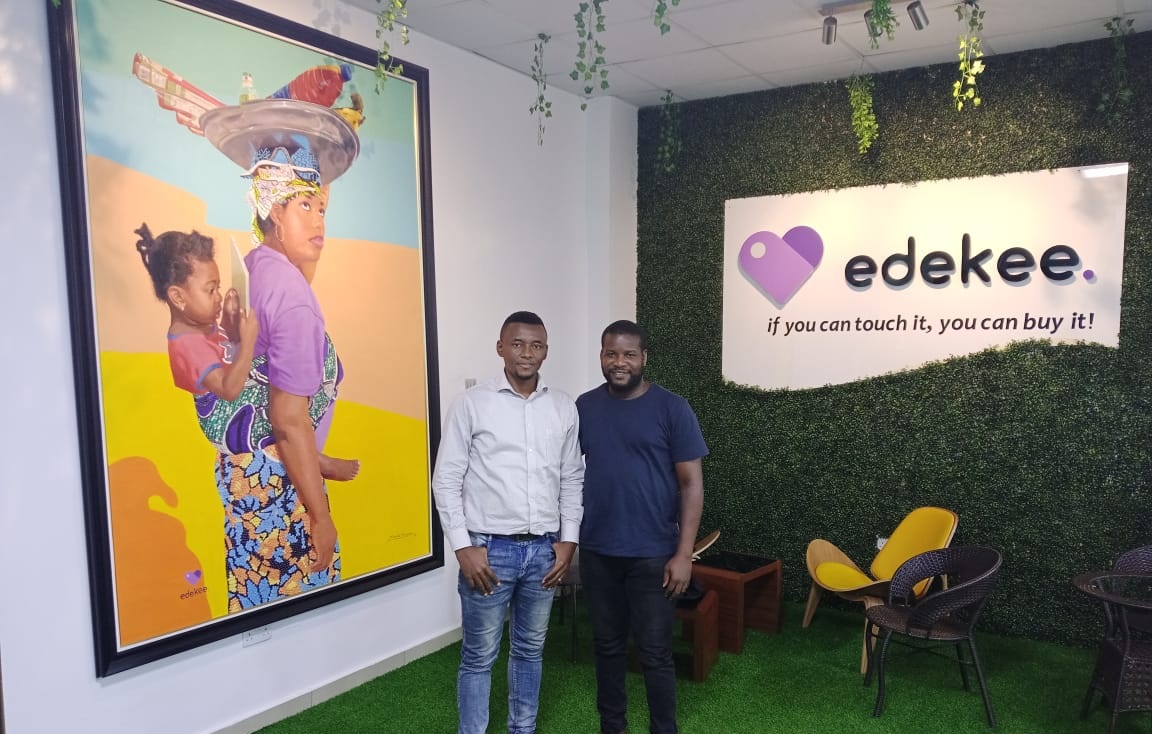
Edekee, as you travel to New York City, to showcase the best of Africa tech and anchor new vistas in the beautiful America, Tekedia Capital wishes you safe travels. OneID, as you travel to Canada to export the excellence in building secured digital ID systems, Tekedia Capital appreciates the efforts of our innovators.

At Tekedia Capital, we discover great startups – and support them, at scale. Learn how we do that as we begin the next edition of Tekedia Capital Syndicate on Saturday. April 8. The finest startups begin life here 

We’re making it easier for citizens, groups, investment clubs, companies, organizations, etc to own a piece of early-stage, high-growth technology startups operating across Africa.

Our opportunity antenna and grassroot connections with innovators enable us to see patterns as they develop. We invite you to partner with us as we nurture and build category-king companies in Africa and beyond, and in the process advance citizens, communities and nations.