DD
MM
YYYY

PAGES

DD
MM
YYYY

spot_img

PAGES

Home Blog Page 4279

Top Tokens For 2023: VeChain (VET), Algorand (ALGO) And Collateral Network (COLT)

0

In 2023, three cryptocurrencies are generating buzz among the community as potential investment opportunities. These are Collateral Network (COLT), VeChain (VET), and Algorand (ALGO). Of these, Collateral Network recently launched it’s presale offering investors the chance to grab COLT tokens before they reach the public exchanges.

The token is currently trading at $0.01 however experts believe this token could 35x by the time it launches on exchanges.

>>BUY COLT TOKENS NOW<<

Collateral Network (COLT)

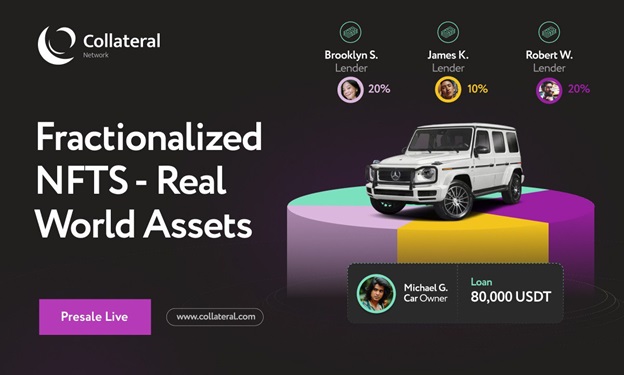
Imagine a lending platform that makes borrowing funds a breeze with physical asset like gold, diamonds, or real estate as collateral. That’s what Collateral Network (COLT) offers, but with a unique twist: it mints an NFTs that represents the collateralized asset.

When the NFT is minted it is then fractionalized into smaller pieces. This approach enables multiple lenders to fund the same borrower, improving liquidity and expediting loan approvals. Lenders on Collateral Network (COLT) benefit from lowered barriers to entry and potentially higher returns compared to other platforms and traditional lending routes.

Collateral Network (COLT) relies on smart contracts to manage every aspect of the lending process, from initiation to repayment. Collateral Network (COLT)’s automated system ensures all parties follow a predetermined set of rules, minimizing the likelihood of disputes between lenders and borrowers.

The native token of the platform, COLT, is used for transactions within the network. Holding COLT also comes with discounts on marketplace fees, staking rewards, and improved borrowing rates.

The Collateral Network (COLT) presale is currently underway, and investors interested in getting in early can do so at a discounted rate. With Collateral Network (COLT)’s unique approach to lending and its potential for growth, now may be the perfect time to invest in this exciting project before it officially launches. 

VeChain (VET)

Already adopted by numerous industry powerhouses like DVN GL and PwC, VeChain (VET) demonstrates the promising potential for long-term growth.

Furthermore, with a recent sponsorship from the UFC, VeChain (VET) appears poised to capture mainstream attention and solidify its presence in the market.

VeChain (VET) is an innovative cryptocurrency project that leverages blockchain technology to revolutionize supply chain management and traceability systems for businesses. VeChain (VET) provides an array of services, including product lifecycle management, asset tracking, and anti-counterfeiting.

The VeChain (VET) platform is powered by two tokens: VET and Thor Power (THOR). VET acts as a form of value transfer within the VeChain (VET) network, while THOR is used to pay transaction fees and enable VeChain (VET)’s smart contracts.

By harnessing the power of VeChain (VET)’s technology, companies can acquire in-depth insights into their supply chain processes, leading to enhanced efficiency, reduced costs, and ultimately, greater profits.

>>BUY COLT TOKENS NOW<<

Algorand (ALGO)

Notwithstanding the advanced technology it offers, Algorand (ALGO) has faced difficulty in capturing the same level of enthusiasm as other digital assets in recent times. A primary reason for this is its underwhelming price trajectory; since its introduction in June 2019, Algorand (ALGO) has seen a decline of more than 90%.

Algorand (ALGO) stands as a groundbreaking, open-source blockchain network, designed to provide developers with the tools and environment to build decentralized applications (DApps) of the future.

Conceived by MIT professor Silvio Micali, Algorand (ALGO) uses a consensus mechanism dubbed Pure Proof of Stake (PPoS), which is revered for its ability to reach consensus quickly and securely without sacrificing decentralization.

The Algorand (ALGO) ecosystem is powered by its native token, ALGO, which plays multiple roles, from rewarding Algorand (ALGO) network participants to enabling staking, voting, and covering transaction fees on the platform.


Find out more about the Collateral Network presale here:

Website: https://www.collateralnetwork.io/

Presale: https://app.collateralnetwork.io/register

Telegram: https://t.me/collateralnwk

Twitter: https://twitter.com/Collateralnwk

Orbeon Protocol (ORBN) Explodes in Price, While Tron (TRX), and Cosmos (ATOM) Fall This Week

0

As Orbeon Protocol (ORBN) experiences an explosion in price during its presale phase, Tron (TRX) and Cosmos (ATOM) seem to be struggling to keep up. This article will delve into the factors contributing to the divergent performance of these three cryptocurrencies, examining the reasons behind Orbeon Protocol (ORBN)’ meteoric rise and the challenges faced by Tron (TRX) and Cosmos (ATOM). 

Orbeon protocol (ORBN) is near to the end of its presale and already has experienced a 2713% increase.

>>BUY ORBEON TOKENS HERE<<

Orbeon Protocol (ORBN)

Imagine Orbeon Protocol (ORBN) as an innovative crowdfunding platform set to change how startups find funding and how investors support early-stage businesses.

The standout feature of Orbeon Protocol (ORBN) is its use of fractionalized NFTs for crowdfunding. No longer are shares of a company limited to large payments. Instead, investors can buy only the amount they want for as little as $1.

By letting investors buy portions of NFTs representing startup equity, Orbeon Protocol (ORBN) allows early-stage startups to receive capital without having to give up control to angel investors, while investors can speculate on an early-stage business with only a small amount of money.

The ORBN token plays a crucial role in the Orbeon Protocol (ORBN) ecosystem, facilitating the transfer of fractionalized NFTs and encouraging participation through staking rewards, governance rights, fee discounts, and more as Orbeon Protocol (ORBN) grows.

Recently, Orbeon Protocol (ORBN) reached stage 11 of its ongoing presale, with the ORBN token price soaring over 2713% from its initial price. As Orbeon Protocol (ORBN) gets ready for launch and a listing on Uniswap, we can expect to see the ORBN token’s value increase exponentially over the coming months.

>>BUY ORBEON TOKENS HERE<<

Tron (TRX)

Tron (TRX) is a unique blockchain platform that was introduced in 2017 with the ambitious goal of revolutionizing the internet by promoting decentralization. Initially facing challenges, Tron (TRX) experienced a period of significant growth, eventually becoming one of the top blockchain projects globally in 2018.

However, Tron (TRX) and its supporters now find themselves grappling with difficulties once again. Declining prices have caused the token to lose much of its 2018 gains, with Tron (TRX) now trading at under $0.06 — 78% below the 2018 high of $0.30.

Additionally, recent reports indicate that the SEC has targeted Justin Sun, Tron (TRX)’s founder, for alleged infractions related to the sale of Tron (TRX) tokens. This development is still unfolding, but it could have significant implications for the Tron (TRX) project and its future prospects. The price of Tron (TRX) has reacted negatively with a 5% drop since this time last week.

>>BUY ORBEON TOKENS HERE<<

Cosmos (ATOM)

Cosmos (ATOM) is a blockchain ecosystem that seeks to enable interoperability between blockchains and facilitate the development of secure DeFi applications. Due to its ambition, Cosmos (ATOM) has earned the support of many big names in the cryptocurrency industry, including Coinbase, Polychain Capital, and Binance Labs.

However, Cosmos (ATOM)’s progress has been hindered by intense competition from Ethereum (ETH) and other competing projects. There is more to a successful blockchain project than simply having a good idea — community support is also essential for success, and Cosmos (ATOM) is starting to fall behind.

Cosmos (ATOM)’s price has fallen 13% since this time last week, furthering the Cosmos (ATOM) project’s struggles in the face of growing competition. The Cosmos (ATOM) team has built a great product, but without increased community support, Cosmos (ATOM) may struggle to reach its potential.


Find Out More About The Orbeon Protocol Presale

Website: https://orbeonprotocol.com/

Presale: https://presale.orbeonprotocol.com/register

Nigeria’s Senator Ike Ekweremadu convicted, to be sentenced

0

Due to Ike Ekwerenmadu’s and his family’s ongoing unfortunate ordeal, readers and netizens have been forced to learn two important legal lingos used often in criminal litigation and it is “conviction and sentencing”.

It all started last week when it trended that Ike Ekwerenmadu and his accomplices (wife and doctor) have been found guilty of human organ trafficking; he was therefore convicted of the criminal charges raised against him by the British government and he will be sentenced for the crime in subsequent date; people started to ask what is the difference between conviction and sentencing if there is any and which comes first. 

What then is conviction and sentencing in criminal trials;

A Sentence is the judgment formally pronounced by the court or judge upon an accused person after his conviction in a criminal prosecution, imposing the punishment to be inflicted upon him for the crime he committed; It most times reads; “you are hereby sentenced to “so so” years in prison”. 

The primary meaning of the word conviction according to the Nigerian court of appeal in the case of Engineer Goodnews Agbi & Anor v. Chief Audu Ogbeh & 3 ors S.C. 63/2005 denotes the judicial determination of a case. It is a judgment which involves two matters, a finding of guilt or the acceptance of a plea of guilty followed by the sentence”.

A conviction refers to the outcome of a criminal trial. It is the act of proving or declaring a person guilty of a crime while the sentencing is the formal declaration by a court imposing a punishment on the accused person convicted of the crime.

A conviction can as well be said to mean that the court holds or finds the accused person guilty of the offence of the crimes he is being charged with under the relevant section(s) of the prevailing laws after the case has been proved beyond reasonable doubt by the prosecutor. The court then awards a punishment to the guilty person (afore-convicted) which is termed “a sentence”.

In criminal litigations, Conviction comes first and sentencing can follow immediately after the court has convicted or sentencing can be reserved for a later date. Section 248 of Nigeria’s Criminal Procedure Act is provided that if the court finds the accused guilty, the court shall pass a sentence on the accused (immediately) or make an order or reserve judgment and adjourn the case to some future day. Therefore, in practice and procedure, conviction comes first and sentencing follows immediately or subsequently. 

Hence, in Ekwerenmadu’s case, the court in England after the trial found him guilty of the offence he is been accused of (convictions) and by the reason of his guilt, the court is to punish him by imposing on him a jail term (sentencing) which is reserved till May 2023. 

               ********************

Ike Ekweremadu is a renowned Nigerian politician; a lawmaker and a former deputy senate president. In his desperation to save his ailing daughter who is suffering from kidney failure allegedly conspired to bring a 21 years old Lagos street trader to London and exploit him for his kidney. The young lad after getting to the United Kingdom raised alarm and the Uk authorities got involved; the Ekwerenmadus has been found guilty of the crime of organ trafficking and they are to be sentenced in May this year. 

G7 nations Plan to Push For Tougher Crypto Regulation

0
G7 summit or meeting concept. Row from flags of members of G7 group of seven and list of countries, 3d illustration

Recent reports reveal that G7 countries will advocate for stricter cryptocurrency laws globally at the upcoming 49th G7 summit which is scheduled for May 2023 and will take place in Hiroshima, Japan.

These countries will push for tighter regulation of the crypto sector, in the interest of consumer protection and greater business transparency, as the discussion about the implementation of these regulations is set to be the major highlight of the summit.

While at the summit, nations will present policies that would be directed at improving crypto transparency and increasing consumer protection while also addressing dangers that can negatively affect the performance of the global financial system. 

The G7 countries are hoping to take the lead in formulating global standards for virtual assets. Japan, which already has cryptocurrency regulations, and other members such as Britain, Canada, France, Germany, Italy, the United States, and the European Union are seeking to state their collective efforts in a leaders’ declaration.

The officials say that the G7 will accelerate the pace of related discussions toward a meeting of finance ministers and central bankers in mid-May, just days before Japanese Prime Minister Fumio Kishida hosts this year’s summit in Hiroshima. While the legal status of virtual assets and rules about them vary by country, the G7 is seeking to establish global standards.

Although before this, some countries have begun a charge to ensure proper crypto regulations are set. Japan recently announced that crypto assets are properties under the Payment Services Act (PSA). As a result, there is a mandatory registration process for crypto exchanges that want to operate within the country. Also, crypto exchanges must comply with the rules set in Anti Money Laundering/Combating the Financing of Terrorism (AML/CFT) law. 

Countries like South Africa and Belgium have launched policies mandating crypto ads to include risks attainable with crypto trading. Similarly, the United Kingdom has indicated its desire to regulate the space further.

Following the collapse of one of Crypto’s leading exchanges FTX which sent shock waves to the crypto sector and negatively impacted the cryptocurrencies, ever since, there has been a clamor for the regulation of cryptocurrencies to protect customers’ assets.

The regulation of cryptocurrencies according to analysts not only protects customers’ assets, it instills greater confidence in those trading in the market, and also increases the attractiveness of the industry, facilitating wider adoption of crypto services. According to them, rolling out clear regulatory guidance would see nations become more crypto-friendly and provide a welcoming environment for growing innovative companies.

This in turn will boost economic growth for the host jurisdictions, also controllers of digital asset firms will see the value in establishing their operations in these well-regulated jurisdictions, which will allow them to trade in a safe and certain regulatory environment with clear laws that also serve to protect consumers. 

There are arguments that any unregulated system has the ability to fund criminal acts. As a result, a client due diligence process akin to that of a bank is required. This can help in keeping track of investors’ real identities and verifying their locations when they are buying or selling cryptocurrencies. Any infringement of such norms should be met with severe sanctions.

First Citizen Acquires SVB from FDIC in A Near $200 Billion Deal

2
FILE PHOTO: First Citizens BancShares and SVB (Silicon Valley Bank) logos are seen in this illustration taken March 19, 2023. REUTERS/Dado Ruvic/Illustration/File Photo

US First Citizens Bank said Monday it has agreed to purchase all loans and deposits from collapsed Silicon Valley Bank (SVB), whose collapse triggered reverberating concern about the health of the banking sector across the globe.

First Citizens said in a statement that under the agreement, it will purchase “substantially all loans and certain other assets, and assume all customer deposits and certain other liabilities of Silicon Valley Bridge Bank.”

“The transaction is structured as a whole bank purchase with loss share coverage,” it added.

SVB collapsed earlier this month, trapping depositors’ fund and prompting the intervention of federal regulators. Authorities had moved in to protect depositors, announcing that all of the lender’s customers will be granted access to the entirety of their funds.

“Depositors will have access to all of their money starting Monday, March 13. No losses associated with the resolution of Silicon Valley Bank will be borne by the taxpayer,” The U.S. Treasury, the Federal Reserve and the Federal Deposit Insurance Corp., said then in a joint statement.

Silicon Valley Bank has served as a key lender to tech companies for decades, beginning from the 1980s. But run into trouble after selling part of its portfolio at a $1.8 billion loss and did not succeed in raising more capital. Its failure was the biggest in the US bank industry history since 2008. SVB was the country’s 16th-largest bank before its collapse.

SVB Financial, Silicon Valley Bank’s former parent company, filed for bankruptcy on March 17.

Regulators’ intervention cut across to the UK. HSBC reached an agreement to buy SVB UK for $1, securing about $8.1 billion of deposits.

First Citizens will take over Silicon Valley Bridge Bank, which was created from SVB by regulators following its collapse, from Monday. It said the 17 former branches of SVB will open on Monday in California and Massachusetts as “Silicon Valley Bank, a division of First Citizens Bank.” Its employees will automatically become employees of First Citizens.

“Admittedly, there has been a strong amount of runoff from the legacy Silicon Valley Bank this quarter. However, it is our intent to embrace the talents of our legacy SVB employees, embrace their business capabilities and then reiterate to their clients that First Citizens has an unwavering focus on holistic client relationships,” Craig Nix, the chief financial officer of First Citizens, said on a call with investors on Monday.

Also, the FDIC, which has been looking for a buyer for the bank, either in part or as whole, said Sunday the transaction covers $119 billion in deposits and $72 billion in assets, and depositors of SVB will automatically become depositors of First Citizens Bank. The regulator added that deposits will continue to be insured.

As part of the deal, the bank regulator will receive rights linked to the stock of First Citizens, which is said to be worth about $500 million, per the Times. It estimated that the cost of Silicon Valley Bank’s failure to the government’s deposit insurance fund would be around $20 billion.

First Citizens Bancshares is acquiring much of Silicon Valley Bank, the Federal Deposit Insurance Corporation announced late Sunday. The collapse of SVB a little more than two weeks ago was the U.S.’s largest bank failure since the fall of Lehman Brothers in 2008 and caused widespread panic across the financial sector. SVB’s 17 branches will open Monday as First Citizens’, with its clients becoming those of the latter’s, too. The deal includes the purchase of approximately $72 billion of SVB assets at a discount of $16.5 billion, while around $90 billion in securities and other assets were not included. The FDIC believes SVB’s failure will cost the government’s deposit insurance fund around $20 billion.

In addition, part of the agreement says that First Citizens and the FDIC will both bear the risk of losses on the loans included in the transaction. This type of arrangement is common in the sale of failed banks. For example, the FDIC has agreed to reimburse First Citizens for 50% of any losses exceeding $5 billion on the commercial loan portfolio that is transferred in the deal, according the Times.

In addition to the FDIC, the US Treasury and Federal Reserve have collaborated on a plan to ensure that SVB customers have access to their deposits. To prevent a recurrence of SVB’s sudden collapse, the Fed has also introduced a new lending tool for banks.