
DD
MM
YYYY

PAGES

DD
MM
YYYY

spot_img

PAGES

Home Blog Page 4280

Google Introduces AI Tools to Enhance The Cybersecurity Landscape Across Various Industries

0

Giant tech company Google has recently launched Artificial Intelligence (AI) tools to enhance the cybersecurity landscape across various industries.

While at the RSA conference in San Francisco, the tech giant launched a new AI model that focuses on addressing three critical industry challenges, which are threat overload, complex tools, and the talent gap.

Utilizing the power of Large Language Models (LLMs), Google’s Chronicle security operations will benefit from cutting-edge AI capabilities to streamline threat detection, investigation, and initial response processes. These advancements also help to simplify intricate data analysis and security engineering tasks.

Chronicle is a cybersecurity company that is part of the Google Cloud Platform. The company is a cloud service, built as a specialized layer on top of core Google infrastructure, designed for enterprises to privately retain, analyze, and search the massive amounts of security and network telemetry they generate. Chronicle aims to help businesses find and stop cyber attacks.

The Chronicle AI operates by using natural language, which enables users to enter their security-related queries. The tool will do the work for them, generating the query, presenting initial information, and allowing them to modify and iterate on results in different things.

Chris Corde, Director of Product Management, Security Google, and Spencer Lichtenstein of Chronicle, respectively stated that recent breakthroughs in generative AI, specifically in LLMs, have unlocked “new avenues of practical application for security teams of all sizes and skill levels”.

They emphasized the need for a thoughtful application of AI to boost the capacity of security analysts while noting that AI should be employed in areas necessitating a high degree of specialization or significant manual effort.

Google’s latest developments demonstrate its commitment to providing robust cybersecurity solutions and leveraging AI to maximize efficiency and security in the digital age. Driven by increasing awareness of data risks and threats, the global cybersecurity market has been predicted to witness massive growth over the next few years. Statistics reveal that Global cybersecurity market revenue is forecast to jump to $262.3 billion by 2027, a rise of more than 67 percent from $156.35 billion this year.

As cyberattacks grow in volume and complexity, artificial intelligence (AI) is helping under-resourced security operations analysts stay ahead of threats. Curating threat intelligence from millions of research papers, blogs, and news stories, AI technologies like machine learning and natural language processing provide rapid insights to cut through the noise of daily alerts, drastically reducing response times.

AI has also been proven to find threats faster. With a sharp increase in the levels of cybercrime, it is imperative for companies to utilize every tool available to safeguard against these attacks.
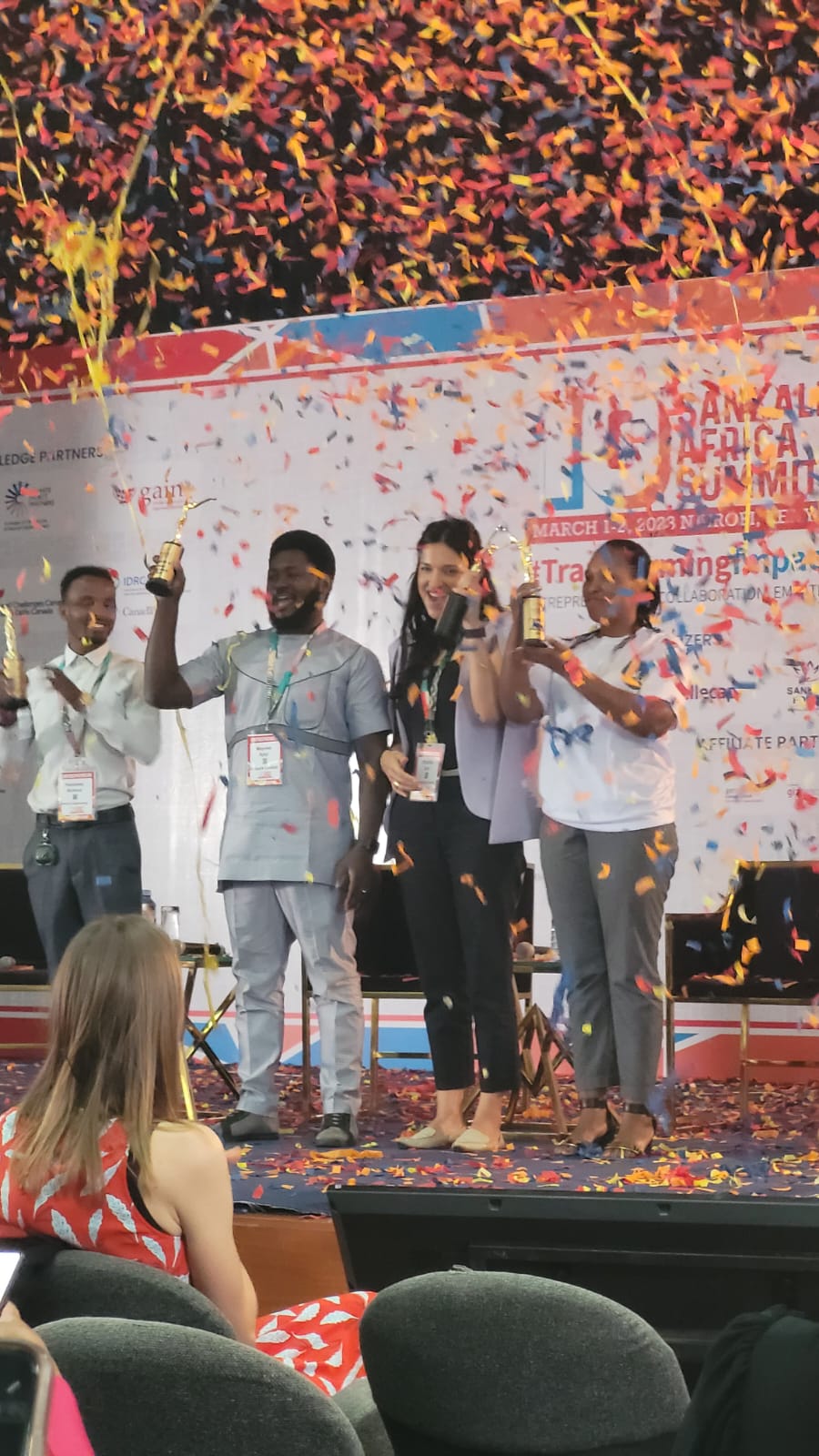

Tekedia Capital: Acquisition / Exit Meeting; Incoming Portfolio Wins Awards

0

Dear Sir/Madam,

Greetings! One of our startups has received an acquisition offer. Accordingly, we’re scheduling an urgent meeting to discuss our options. There are options for cash and equity in the deal. Log into the Board (General Area) to see the company. Direct investors in this company will receive a Zoom link for the meeting which will be held this week.

Meanwhile, one of the startups we currently have in the Board raising capital emerged the best company in the University of Notre Dame, USA, IDEA competition. This is coming in the same month they won the Visa Sankalp Visa award. Learn more in the deal page when you login.

Remember: Saturday is Demo Day; Zoom link is in the board. So far, we have recorded outstanding numbers. Evidently, our members like the startups, and together we’ll ring bells. Thanks for the partnership.

Tekedia Capital Team


Publishing a user’s private information is a crime

0

There is this ignominious thing that constantly happens on social media platforms but it is more regular on Twitter where a user publishes another user’s private information like phone numbers, home addresses, office addresses, pictures of family members, etc on the timeline.

This act is done with the malicious intent to subject the victim to stalking, bullying or harassment by or from other users and it is commonly and legally referred to as doxing or swatting and is therefore generally considered a violation of the user’s privacy.

This act is highly prohibited and criminalized as well in many jurisdictions around the world; therefore, it is an illegal and criminal act to publish a user’s private information on social media. It is as well prohibited by Twitter’s policy/ users’ rules and regulations which have provided that any person who publishes another person’s private information without the express authorization or permission of the person if reported will have the post flagged down first for being in breach of the Twitter users’ policy and will as well have their account suspended or deleted as a form of punitive measure. 

Twitter and other social media platforms don’t just prohibit the actual sharing of another’s private information but also prohibits the threatening to expose the private information of users. The only exception to this is that you have previously obtained the person’s express consent or authorization to share his or her Private information or the private information you are sharing has already been made public by that user.

Publishing someone’s private information on Twitter or other social media platforms without their consent can be considered a crime with a jail term as punishment depending on the circumstances and the jurisdiction because in many jurisdictions around the world, doxing or swatting is considered a form of cyber harassment, cyberbullying, or cyberstalking which are all criminal offenses. Additionally, the publication of someone’s private information without their consent can also violate data protection and privacy laws as have been enshrined in numerous jurisdictions.

In Nigeria for instance, the Cybercrime Act of 2015 expressly prohibits cyber harassment, cyberstalking or cyberbullying and publishing another user’s private information is deemed as cyber harassment and cyberbullying and this carries an imprisonment term of not less than 5 years. 

Therefore, it is important to be cautious when publishing the personal information of another user on social media platforms like Twitter and to obtain the necessary consent and authorization before sharing any private information so as not to get sued and end up in jail. 

If you are the victim of doxing or swatting, you should report the incident to the appropriate authorities and seek legal counsel.


Overcoming Writer’s Block; The Prof. Ndubuisi Ekekwe’s Hacks.

0

Whenever I see a post from Prof. Ndubuisi Ekekwe I really do wonder how he manages to keep up with his ritual of making daily posts on his social media pages. He makes posts on LinkedIn on daily bases, he doesn’t miss it; it’s more like a ritual for him. I am yet to see any day that passes without him making at least a post. I do envy the fact that he constantly has something new and fresh to say, write about and share with his readers and that is a superpower. 

It is a known fact that every writer; both professional writers and amateur writers like myself who have taken writing as a hobby sometimes face what is called writer’s block, which makes you as a writer not to have an idea or inspiration or to even know what to write about; sometimes you may just blank out. This non-medical condition is not just faced by writers alone but by every other person in the creative industry like entertainers, news anchors, sculptors, painters, etc. 

There’s no doubt of the fact that Prof Ekekwe is extremely talented or maybe he has trained himself to overcome writer’s block which makes it possible for him to constantly have new and fresh ideas to share or something to talk about on daily bases. 

Hopefully, someday, Prof can share with us in a master class how he does it and how he has been doing it and his secrets to overcoming writer’s block but before then these are some seven simple hacks I always apply to overcome writer’s block whenever I’m down with it, maybe you may find it useful as a writer.

  1. Take a break: Sometimes, the best way to overcome writer’s block is to take a break from writing. Engage in a different activity, such as going for a walk, doing some exercise, or listening to music. This can help you clear your mind and return to writing with a fresh perspective.
  2. Freewrite: Freewriting is a technique where you write continuously for a set period of time without worrying about grammar, spelling, or punctuation. The goal is to write whatever comes to mind, even if it doesn’t make sense. This can help you overcome writer’s block by getting your creative juices flowing. You can always go back to proofread and edit when you have written substantially enough. 
  3. Change your environment: Sometimes a change of scenery can help you overcome writer’s block. If you normally write at a desk, try moving to a different location, such as a coffee shop or a park or a public library. 
  4. Set achievable goals: Setting achievable writing goals can help you overcome writer’s block. For example, if you are struggling to write a whole chapter, try setting a goal of writing 500 words a day. This can help you break down the writing process into manageable chunks.
  5. Read: Reading can be a great way to overcome writer’s block. Read books in the genre you are writing in or read books that inspire you. This can help you get new ideas and find inspiration.
  6. Watch a movie; watch your favorite tv show, watch a movie, especially on the subject matter you are writing about. I have gotten fresh ideas and inspirations of things to write about just by merely watching a movie. 
  7. Don’t worry about perfection: Many writers get stuck in the writing process because they want everything to be perfect from the start. Remember that writing is a process, and it’s okay to make mistakes. Just focus on getting your ideas down on paper and worry about editing later.

Also, to overcome writer’s block as a writer, you need to constantly look out for things you will draw fresh ideas and inspiration from. There are many places you can draw inspiration from and here are some places you can draw inspiration from as a writer and they can form the bases of things to write about or share with your readers:

  1. Personal experiences: Write about your own life experiences, including your struggles, triumphs, and everything in between. You can also draw inspiration from the experiences of people you know.
  2. Current events: This as I have come to find out is the forte of Prof Ekekwe, that’s why he never runs out of things to share or write about. He is constantly analyzing and writing about current events and he will always use it to draw references to what happened back when he was growing up in Ovim or make reference to what happened while he was studying in FUTO.  There is no major news event that has ever happened in Abia, Nigeria or around the world that you won’t see the thoughts or analysis of Prof Ekekwe on it. Keep up with the news and write about the issues that matter to you. This can be a great way to connect with readers who are also interested in these topics.
  3. Nature: Spend time outdoors and draw inspiration from the natural world around you. Write about the beauty of nature, or use it as a metaphor for larger themes.
  4. Literature: Read books, poetry, and other forms of literature for inspiration. Pay attention to the writing style, the themes, and the characters, and see how you can incorporate these into your own writing.
  5. Travel: Visit new places and draw inspiration from the people, culture, and landscapes you encounter. Write about your experiences or create a fictional story set in these places.
  6. Music: Listen to music and draw inspiration from the lyrics, the melodies, and the emotions the music evokes. You can also create a character or plot inspired by a song.

Remember, inspiration can come from anywhere, so keep an open mind and be willing to explore new ideas and experiences. Most importantly, remember that writer’s block is a normal part of the writing process, and it happens to everyone. Don’t be too hard on yourself or think that there’s something wrong with you, it is normal and if you apply those hacks above it may get you going again.

We Could Not Invest – And The Illusion of American Dropouts. Stay In School.

2

Today, three amazing undergraduate students spoke with me. They’re looking for funds to accelerate their startup. Typically, there are many steps required before I get to speak with startups. No one knew they were actually students. But during the call, they revealed that. And because of that, we would not invest.

At Tekedia Capital, we have a policy of not investing in startups run by undergraduates who have months to graduation. My thesis is simple: life is more than building companies and making money. Education is the liberation of the mind, and it is very important that many people experience that. I do not see the reason why any smart kid would like to skip that experience. 

Young people, read it from me: do not drop out to go and build companies in Africa, citing the experiences of Bill Gates and Mark Zuckerberg. Bill and Mark did not drop out, they merely dropped in.  In a way, they replaced mass-training professors at Harvard University with private Harvard-quality professors called venture capitalists (VCs). Magically, they have “special professors” who actually pay them! Which one is better: a Harvard professor that asks you to pay school fees or the VC that writes you $millions and still coaches you because he wants to ensure his $millions are safe?

The funding ecosystems in Nigeria are not at that level yet. We will get there but we’re years away. So, you cannot just drop out.

I am a TED Fellow, a World Economic Forum Young Global Leader, etc, the kind of immersive experiences in some ecosystems is a testament that using “dropout” does not do justice to what happens to these technical “dropouts”. In TED, I met a guy who did not finish secondary school but MIT admitted him. Yes, MIT admitted someone without a secondary school certificate!

In the first semester, he took a leave from school because some investors gave him $millions to commercialize something exciting. To get him up to speed, they surrounded him with experts and coaches. Simply, he was getting more than MIT professors even though he “dropped” out, and in the process they turned him into a paper millionaire! That is not the typical outcomes of dropouts.

Do not fall into the illusion: stay in school and work hard. Startups and opportunities to create new ones will always be here. The best businesses have not been started. You will have time to do just that, post-graduation. That university education is an internship for something big – make the best out of it. #graduate

Comment on Feed

Comment: Lucid as always. Meanwhile, if education is the liberation of the mind, who/what caged it? Thank you in advance.

My Response: ” Meanwhile, if education is the liberation of the mind, who/what caged it?” Before education or acquisition of knowledge, we came with norms and dogmas. But education liberates that. We killed twins in Africa. But knowledge explained that it was a pure biological system. Men fought wives because the colours of kids’ skins were different from theirs; education explained dominant and recessive genes.

Comment 2: Prof Ndubuisi Ekekwe, I appreciate your perspective on the importance of education and the dangers of dropping out of school to start a company. It’s refreshing to see someone in the business world emphasising the value of education beyond just making money. Prof Ndubuisi Ekekwe, I support the compelling argument that education is more than gaining knowledge. It’s about developing a mindset of curiosity and learning that can lead to success in all areas of life, including entrepreneurship.

Furthermore, dropping out and “dropping in” is an insightful way to frame the idea that successful entrepreneurs like Bill Gates and Mark Zuckerberg didn’t abandon their education to pursue their dreams but instead leveraged their educational experiences to build successful businesses. This highlights the importance of viewing education as a valuable resource for entrepreneurship rather than something to be discarded in pursuit of quick success.

Overall, I love the valuable perspective on the relationship between education and entrepreneurship, and I strongly encourage young people to prioritise their education as a foundation for future success.