DD
MM
YYYY

PAGES

DD
MM
YYYY

spot_img

PAGES

Home Blog Page 4282

Google Takes Cost-cutting to Employee Laptops, Staplers and Services

0

Google is making more cuts to trim spending and save costs as the economic downturn takes a toll on the tech industry. The tech giant which announced layoff of about 12,000 staff in January, said in a rare company wide email firstly reported by Wall Street Journal, that it is making cuts to employee services.

In the email titled: “Our company-wide OKR on durable savings,” Google’s finance chief Ruth Porat described the recent move as “big, multi-year efforts.” It involves cutting back on fitness classes, staplers, tape and the frequency of laptop replacements for employees, according to a separate document seen by CNBC.

One of the company’s important objectives for 2023 is to “deliver durable savings through improved velocity and efficiency.” Porat said in the email. “All PAs and Functions are working toward this,” she said, referring to product areas. OKR stands for objectives and key results.

Alphabet, Google’s parent, like several other companies in the tech sector, is making the difficult decision to cut its workforce as sales’ decline eclipses the pandemic-induced growth that inspired massive hiring. The 12,000 workers laid off in January, which represents about 6% of its workforce, includes more than two dozen on-site massage therapists.

That marks the company’s decision to extend the cuts to other areas. CNBC reported that Google declined to pay the remainder of laid-off employees’ maternity and medical leaves.

In her email, Porat made reference to the January layoff, describing it as “the hardest decisions we’ve had to make as a company.”

“This work is particularly vital because of our recent growth, the challenging economic environment, and our incredible investment opportunities to drive technology forward — particularly in AI,” Porat’s email said.

She also made reference to the year 2008, twice in her email. Porat said in the email that “We’ve been here before,” citing 2008, when the company’s expenses were growing faster than revenue.

“We improved machine utilization, narrowed our real estate investments, tightened our belt on T&E budgets, cafes, micro kitchens and mobile phone usage, and removed the hybrid vehicle subsidiary.

“Just as we did in 2008, we’ll be looking at data to identify other areas of spending that aren’t as effective as they should be, or that don’t scale at our size,” she said.

A Google spokesperson told CNBC that “we have a company goal to make durable savings through improved velocity and efficiency. As part of this, we’re making some practical changes to help us remain responsible stewards of our resources while continuing to offer industry-leading perks, benefits and amenities.”

Cutting down on desktop PCs and staplers

Highlighting the plan to cut down on services, CNBC reports on areas that will be affected:

Among the equipment changes, Google is pausing refreshes for laptops, desktop PCs and monitors. It’s also “changing how often equipment is replaced,” according to internal documents.

Google employees who are not in engineering roles but require a new laptop will receive a Chromebook by default. Chromebooks are laptops made by Google and use a Google-based operating system called Chrome OS.

It’s a shift from the range of offerings, such as Apple MacBooks, that were previously available to employees. “It also provides the best opportunity across all of our managed devices to prevent external compromise,” one document about the laptop changes said.

An employee can no longer expense mobile phones if one is available internally, the document also stated. And employees will need director “or above” approval if they need an accessory that costs more than $1,000 and isn’t available internally.

Under a section titled “Desktops and Workstations,” the company said CloudTop, the company’s internal virtual workstation, will be “the default desktop” for Googlers.

In February, CNBC reported the company asked its cloud employees and partners to share desks by alternating days and are expected to transition to relying on CloudTop for their workstations.

Google employees have also noticed some more extreme cutbacks to office supplies in recent weeks. Staplers and tape are no longer being provided to print stations companywide as “part of a cost effectiveness initiative,” according to a separate, internal facilities directive.

“We have been asked to pull all tape/dispensers throughout the building,” a San Francisco facility directive stated. “If you need a stapler or tape, the receptionist desk has them to borrow.”

A Google spokesperson said staplers and tape continue to be offered companywide but did not provide details.

‘We’ve baked too many muffins on a Monday’

Google’s also cutting some availability of employee services.

“We set a high bar for industry-leading perks, benefits and office amenities, and we will continue that into the future,” Porat’s email stated. “However, some programs need to evolve for how Google works today.”

“These are mostly minor adjustments,” stated a separate internal document from the company’s real estate and workplace team. The document said food, fitness, massage and transportation programs were designed for when Googlers were coming in five days a week.

“Now that most of us are in 3 days a week, we’ve noticed our supply/demand ratios are a bit out of sync: We’ve baked too many muffins on a Monday, seen GBuses run with just one passenger, and offered yoga classes on a Friday afternoon when folks are more likely to be working from home,” the document stated.

As a result, Google may close cafes on Mondays and Fridays and shut down some facilities that are “underutilized” due to hybrid schedules, the document states.
US Dollar Dips: What Does It Mean for Investors?

0

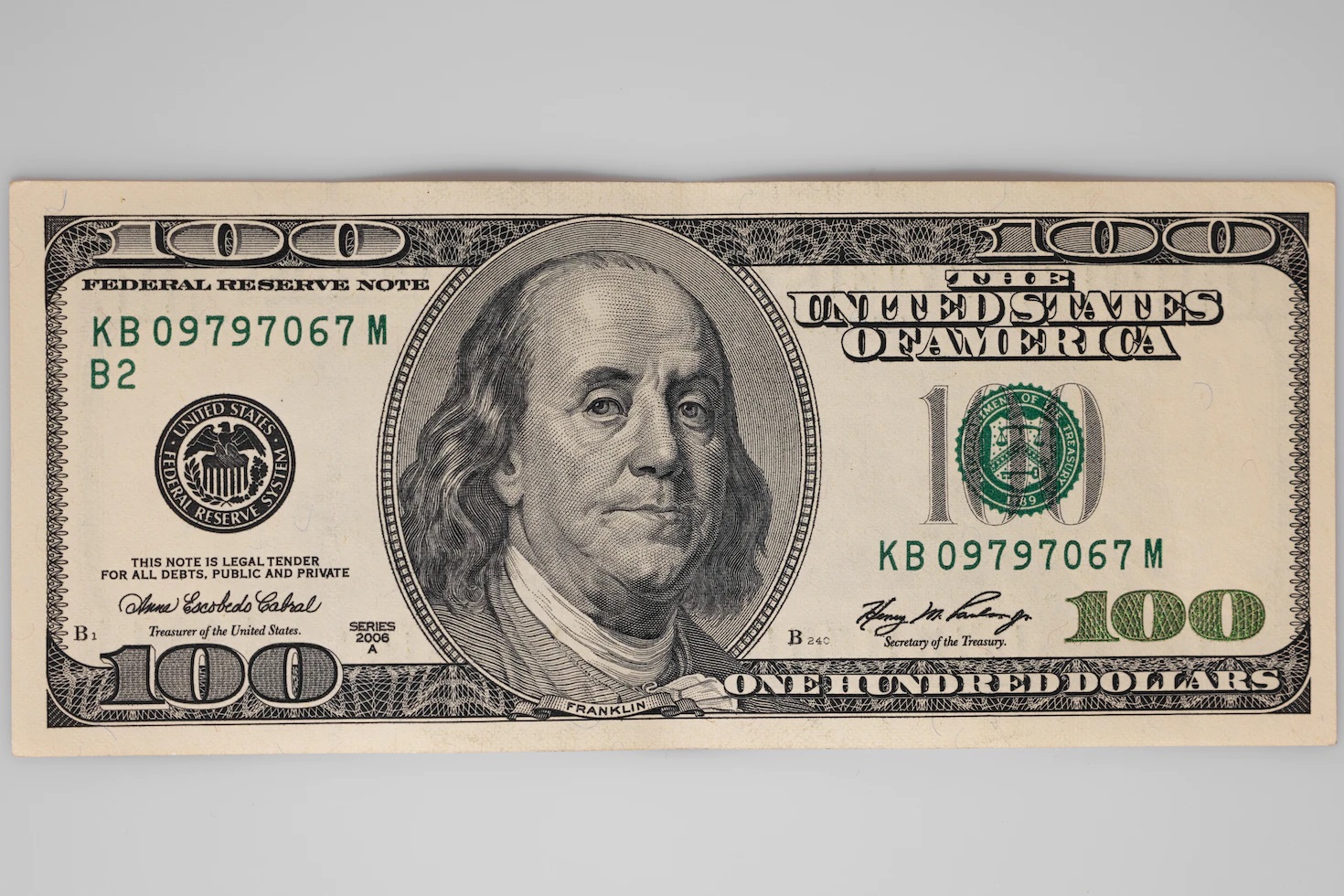
The US dollar hit parity with the euro in July 2022, with both currencies having a 1:1 exchange rate for the first time in two decades. The last time this happened was in 2002, and the two-decade high against the euro and other major currencies boosted the dollar’s popularity amongst investors.

However, the growth was short-lived as the USD kept slipping lower in value since then and is now languishing in the first quarter of 2023. Several factors have contributed to this depreciation, but the focus here is its effects on investors.

Low Returns Dollar-denominated Assets

The latest US Treasury yields did not help the dollar dip. Instead, the DXY (US Dollar Index) keeps oscillating around 103, as it has since the beginning of 2023. The live chart, developed by the US Federal Reserve, showed that the currency fell more in the last month.

As a result, US Dollar-denominated assets are beginning to lose their value which may force foreign investors to release their holdings in order to save money. Many investors may become more risk-averse, and the market uncertainty may cause them to sell their dollar assets to seek higher returns elsewhere.

In return, demand for certain types of assets like stocks and bonds in USD may affect the market. The impact of the dip may depend on the current economic and political conditions, among other factors, but it can potentially lead to low market demand and returns for investors.

Increased Profits and Competitiveness

Foreign investors holding dollar-based assets may lose money as the dollar dips. Still, US-based companies that rely on exports and investors trading other currencies may have increased profits and competitiveness.

A low dollar value will equip foreign investors’ native currencies and enable them to buy US assets, goods, or services at cheaper rates. Therefore, if a US-based company exports products to foreign customers, consumers can purchase the products with less money, which may result in higher demand and increased profits for the company.

Investors trading in other currencies may benefit from the dip too. For instance, holders of dollar-denominated assets would love to sell their assets fast, which may be an opportunity for other currency investors to buy at cheaper rates and sell later when the dollar increases.

Higher Inflation

The US dollar dip can result in increased inflation due to several factors. For instance, imported goods will become more expensive since buying products denominated in other currencies will cost more dollars. As a result, consumers may pay more for the same products and services.

Similarly, US-based companies will import raw materials at higher costs, which may lead to higher production costs and imply increased costs of products and services for consumers.

Inflation becomes inevitable if the general increase of goods and services continues over time; it can affect investors by reducing their purchasing power, increasing interest rates and bond yields, and impacting stock prices.

A dollar dip can affect investors significantly, but the effects may not be the same for every investor. It can be a win or loss depending on certain factors, like the investors’ goals.

Are Tattoos illegal in Nigeria?

0

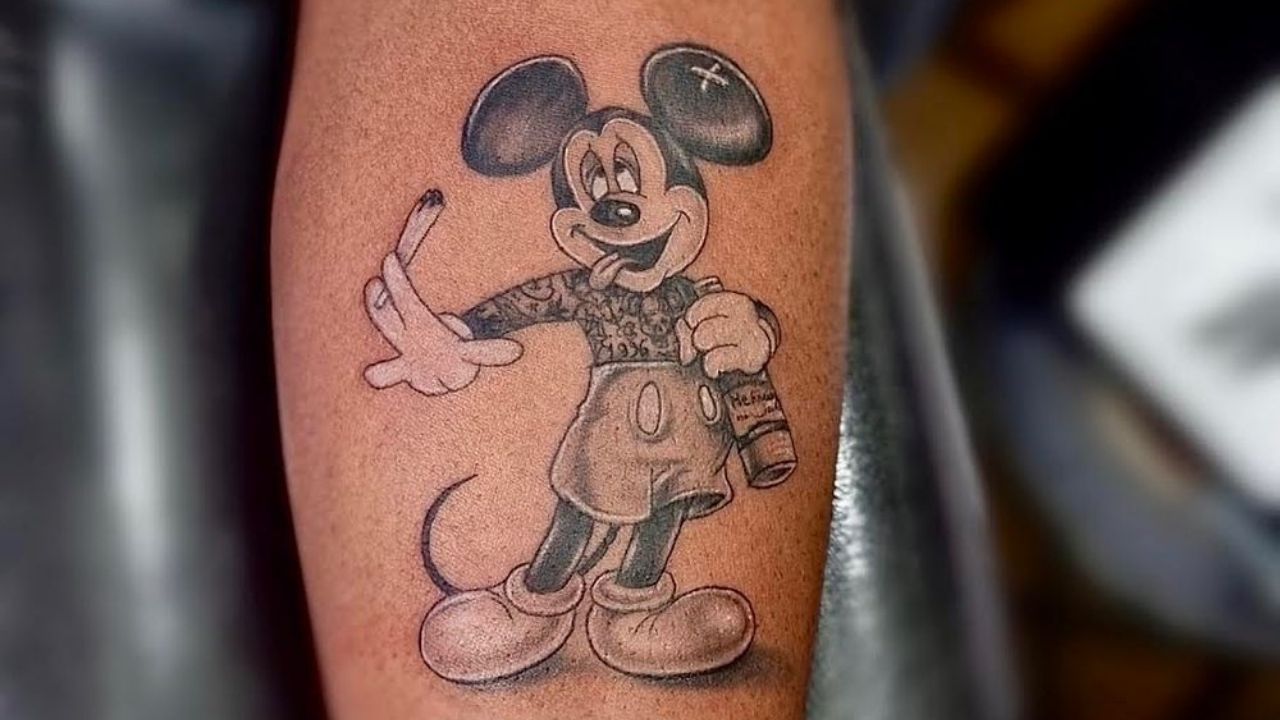
A tattoo is a form of body modification that is made by inserting inks, paints, dyes, or pigments to make some inscriptions or drawings/paintings on the human body which can either be temporary or permanent.

Tattoos evolved from an old cultural background as a means of identity; used as a mark of identifying a particular tribe or culture an individual hails from; that was the initial concept for the ancient tattoo. Later on, tattoos cascaded into fun fares and became a thing done for body positivity and to boost self-image and self-confidence.

Generally speaking, there is no law in Nigeria (as of this moment) outrightly criminalizing tattoos. Therefore, wearing a tattoo is not banned or prohibited by our laws in Nigeria but there are some government agencies or organizations that outright prohibit it as a matter of their internal policy for members or intending members of that organization to wear tattoos on their bodies. For instance, one of the criteria for joining the Nigerian military service is that you must not have any tattoos on your body, if you do have any, it is expected of you; you are even mandated to clean them off before joining the military service.

In many other countries of the world; especially the liberal/secular countries, tattoos are legal and there is no outright ban or prohibition on them; in fact in the USA and other countries that have taken the liberty crusade to a whole new level, a person who is denied joining an organization for the reason of being tattooed can file a legal action against that organization for discrimination.

While in some other countries, especially countries that are practising the Sharia laws, tattoos are not just morally frowned upon but it is also criminalized in the Sharia laws.

Some other countries are just indifferent about tattoos; it is neither legally banned nor is it legally recognized. 

Some countries like; Denmark, Turkey, Iran, Sri Lanka, United Arab Emirates, (UAE), Japan, North Korea, South Korea, Saudi Arabia etc morally and legally frown at citizens or residents wearing tattoos.  In the majority of these Islamic countries, tattoos are regarded as “Haram” and in some other secular states, you are allowed to have a tattoo but it should never be on a conspicuous part of your body where it will easily be seen in the public like the face, neck, lower limbs.

Understandably, some morality police still look at those with tattoos with so much disdain even in countries where it is not prohibited, they regard modifying one’s body with inks and paints as immoral and also a sign of a spiritual or mental problem. Some societies tend to see those that wear tattoos as bad guys; truth be told that people that feel this way about those that are tatted are not far from the truth, tattoos were initially worn by prisoners and societal misfits. Prisoners used it as a mark to identify themselves or loyalty to the gangs they pay allegiance to in the prison yard.

Despite the stereotypes that surround tattoos in today’s society, tattoos are not illegal in Nigeria and those wearing them are not criminals; to some persons, it is just a fashion statement while to some it is a way of boosting self-confidence.


Stacks (STX), Orbeon Protocol (ORBN), And Polkadot (DOT) Spike In The 2023 Crypto Boom

0

Coin prices are on the rise again, with well-established coins such as Stacks (STX) and Polkadot (DOT) showing green charts again. However, one project has caught the eye of analysts as it has already surged by 2712% – Orbeon Protocol (ORBN). Keep on reading and find out how all of these tokens will compare against each other in 2023!

>>BUY ORBEON TOKENS HERE<<

Stacks (STX)

The total value locked (TVL) of Stacks (STX) is increasing, and the enthusiasm around Bitcoin Ordinals is driving up the token’s price. Later this year, the Stacks (STX) network will also receive an update to increase performance.

Stacks (STX) has a value of $1.01 with a market cap of $1.3B, a solid jump of 14.75% in the last 24 hours. Not only that, but the Stacks (STX) trading volume also sits at $309,271,131, an increase of 64% in that same time.

However, the technical analysis for Stacks (STX) paints an alarming picture of its future, as both moving averages and RSI show strong sell signals. If Stacks (STX) does not pass the resistance level of $1.3 soon, it could fall below $1 and sink to $0.6. However, analysts remain bullish for Stacks (STX) as they see it rising to $1.50 by the end of 2023.

>>BUY ORBEON TOKENS HERE<<

The Orbeon Protocol (ORBN)

As an everyday investor, you probably would not be able to back the next promising startup during its early stages. Access to this investment opportunity is mainly reserved for high net worth. But not any longer; Orbeon Protocol (ORBN) aims to change this notion to its core by bridging the gap between regular investors and Tier 1 startups!

This blockchain-based investment platform will allow startups needing funding to launch financial rounds in the form of equity-based NFTs on its Launchpad. These tokens will then be fractionalized and sold partially to all investors for a price as low as $1!

To quell rug-pull fears, Orbeon Protocol (ORBN) has already obtained an audit by Solid Proof and will freeze liquidity for ten years. Moreover, a unique “Fill or Kill” mechanism will also provide fund safety as it immediately returns all investor funds if a project’s financial round is unsuccessful.

At the center of this platform is the ORBN token, now available on major exchanges worldwide. Experts predict it could hike to $0.24.

>>BUY ORBEON TOKENS HERE<<

Polkadot (DOT)

In a recent blog post by Lido creator MixBytes, the staking service Lido (LDO) will end its staking program on Polkadot (DOT) and Kusama (KSM) on August 1. All Polkadot (DOT) and Kusama (KSM) assets on Lido (LDO) will also be unstaked on June 22.

However, this news has not negatively affected the Polkadot (DOT) token as it trades for $6.22, a rise of 4.45% overnight. The trading volume for Polkadot (DOT) has also increased by 7.71% in that same time and now stands at $165,131,306.

The technical analysis for Polkadot (DOT) has also been showing positive trends forming, with all technical indicators and moving averages displaying buy signals. Analysts believe this bullish trend will continue, with Polkadot (DOT) surpassing $7.44 by December 2023. Ultimately, Polkadot (DOT) has a good short-term rally in store that could attract more investors to the asset.


Find Out More About The Orbeon Protocol

Website: https://orbeonprotocol.com/

Uniswap: https://app.uniswap.org/#/swap

Telegram: https://t.me/OrbeonProtocol

Twitter: https://twitter.com/OrbeonProtocol

TikTok Fined in The UK Over Breach of Children’s Data Protection Law

0
The brand is growing

Short-form video hosting platform TikTok has been fined £12.7m for multiple breaches of data protection law, including using the personal data of children under the age of 13 without parental consent.

The Information Commissioner’s Office (ICO) which upholds information rights in the public interest, estimated that TikTok allowed up to 1.4 million UK children under 13 to use its platform in 2020, despite its own rules of not allowing children of that age to create an account.

The UK data protection law disclosed that organizations that use personal data when offering information society services to children under 13 must have consent from their parents and TikTok failed to adhere to the law, knowing fully well that the platform is being used by some children under the age of 13.

The social media giant has been called out for failing to do due diligence by identifying underage individuals on the app and restricting them from gaining access to it. The ICO disclosed that such information was uncovered after some senior employees at the company expressed concerns about children under 13 using the platform and not being removed.

The UK Information Commissioner John Edwards said,

There are laws in place to make sure our children are as safe in the digital world as they are in the physical world. TikTok did not abide by those laws. As a consequence, an estimated one million under 13s were inappropriately granted access to the platform, with TikTok collecting and using their data. That means that their data may have been used to track them and profile them, potentially delivering harmful, inappropriate content on their very next scroll.

TikTok should have known better. TikTok should have done better. Our £12.7m fine reflects the serious impact their failures may have had. They did not do enough to check who was using their platform or take sufficient action to remove the underage children that were using their platform.”

Responding to the ICO investigation claims, a spokesperson at TikTok said,

TikTok is a platform for users aged 13 and over. We invest heavily to help keep under-13s off the platform and our 40,000-strong safety team works around the clock to help keep the platform safe for our community.

“While we disagree with the ICO’s decision, which relates to May 2018 to July 2020, we are pleased that the fine announced today has been reduced to under half the amount proposed last year. We will continue to review the decision and are considering the next steps.”

TikTok emphasized that it had changed its practices since the period the ICO investigated. Now, in common with social media peers, the site uses more signals than a user’s self-declared age when trying to determine how old they are, including training its moderators to identify underage accounts and providing tools for parents to request the deletion of their underage children’s accounts.

TikTok’s recent fine in the U.K, is coming amid calls for it to be banned in the U.S. over national security concerns, as government officials disclose that the app could be providing vital information of US users to Beijing.