DD
MM
YYYY

PAGES

DD
MM
YYYY

spot_img

PAGES

Home Blog Page 4291

Ten points about copyright protection

0

The 23rd of April was the world copyright day. World Book and Copyright Day, which is known as the International Day of the Book, are celebrated with the purpose of promoting the publishing, reading, and protection of intellectual property rights in books. 

So in the spirit of the celebration, here are the ten most important things you (as an author or as a book lover) should know about copyright protection and their corresponding laws around the world. 

  1. Copyright is a right bestowed on the creator of a book so as to enjoy the exclusive rights to control the publication/re-publication, distribution and adaptation or exploitation of the book.  Therefore, if you who is not an author of a book is interested in the distribution or republication, the adaption of the book into a play or movie or the general exploitation of the book, you will have to seek express consent and authorization of the writer who as a way of granting you his authorization will transfer his copyright to you through contract. 
  2. Copyright protection was introduced as a way of ensuring that book authors enjoy just reward and recognition for their hard work and creativity, hence, authors of books are granted a legal right known as copyright on a book they created. 
  3. The general rule as to copyright protection is to the effect that the author owns the copyright of his book once it is created but the exception to this general rule is that another person who is not an author of a book can acquire the copyright of the book through contract or by the transference of the rights from the author to the interested party.
  4. Copyright protection for a book begins immediately after the book has been written and fixed in a tangible form, ie once a book has been written; it does not matter if it is a manuscript, highlights or the unedited version of the book, once a writer has scribbled his original thoughts and ideas into a paper he there and then begins to enjoy the copyright protection over that work. 
  5. You do not have to apply for copyright over your book for you enjoy copyright protection over your book, although it is advisable that as an author you should take the extra-legal step of protecting your creativity by applying for the copyright over your work. This copyright certificate that will be issued to you will serve as a notice to the government, to the public and to intending infringers. 
  6. Copyright of an author over his/her book lasts throughout the lifetime of the author and expires 70 years after the death of the author. 
  7. Copyright is an alienable right; this means that it can be transferred from its original owner to another party and even to a third party. 
  8. Copyright on a book can be jointly owned or shared. This is to say that if a book is written by more than one person, the different people who contributed to the writing of the book enjoy equal copyright unless it is otherwise agreed through a contract. 
  9. Copyright protection does not cover only books written or published in hard copy format, e-books or books/articles published in digital format or electronically are also protected by copyright laws. 

Once again from all of us at Law Capitol Hill/ Tekedia Institute, happy belated world book and copyright day. 

How SAP Impacted Nigeria’s Economy in the 1980s

0

Nigeria’s political economy is often analyzed along three epochal movements; the pre-colonial, the colonial and the postcolonial epochs. A significant event in the postcolonial epoch is the introduction of the Structural Adjustment Programme which has been widely made reference to in various national economic discourses since 1980s.

Structural Adjustment Programme (SAP) is a set of economic reform policy introduced to many developing countries that approached international financial institutions such as World Bank and the International Monetary Fund (IMF) to secure credit facilities, particularly long-term loans. The Policy is anchored on the western capitalist ideology, hence, it includes elements such as reduced Government Spending, free market economy, devaluation of local currencies etc.

In 1986, the Structural Adjustment Programme was introduced in Nigeria under the Babangida-led military regime. The SAP had earlier been rejected by the Buhari-led regime in 1984. However, several conditions reportedly transpired internally and externally which influenced the adoption of the programme in 1986.

Before the adoption of SAP, Nigeria had prioritized the Public Sector Enterprises (PSEs) which thrived largely in the 1970s. Increased Government spending on the PSEs at the period was generally based on the assumption that the sector would facilitate optimal resource allocation and national development. Initially, the PSEs had constituted 16.3% of Nigeria’s GDP and 17% of sub-Saharan Africa’s GDP but later in the mid 1980s they had begun to reduce in economic efficiency and had continued to incur heavy loses even as government’s transfers and overdraft to them covered about 8-14% of the nation’s total GDP (Salako 1999).

The Nigerian Government was forced to adopt SAP based on the following reasons:

  1. Pervasive corruption and political sentiments that developed in the PSEs
  2. Failure of the various economic task force and commissions that the government had set up to combat the economic crisis at the period
  3. Pressure from the people who were hard pressed by the prevailing economic condition
  4. Pressure from the international community.

The philosophy of SAP was to correct the friction in the economy by offsetting the external components of the national income equation. Hence, emphasis was placed on exchange rate flexibility, credit control, devaluation of naira, reduction in government expenditure among others (Anyanwu 1992).

However, the policy aggravated rather than improve the adverse economic condition of the country. For instance, there was massive inflation, and Nigeria’s external debt more than quadrupled between 1986 and 1989.

The privatization and commercialization of Government corporations caused tariff hike, and increase in the production and optimal cost of firms. As a result many small firms wound out of business. Additionally, removal of subsidy from the economy resulted in harsh living conditions for the poor.

Since its official termination in 1996 the adverse effect of SAP had continued to impact the nation’s economy. The World Bank, International Monetary Fund (IMF) and some other international observers argue that the failure of SAP in Africa countries is not due to the policy per se but due to the abuse of the policy. However, many African critics have continued to contest this.

OpenAI Rolls Out New Privacy Controls For ChatGPT, Previews Business Plans

0

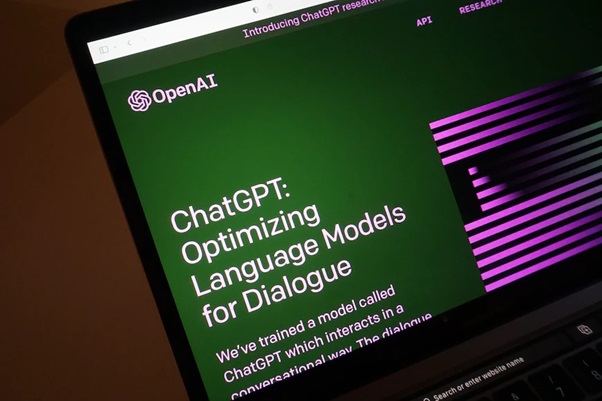
Artificial intelligence company OpenAI has rolled out new privacy controls for its chatbot ChatGPT and has also previewed its business plans.

The company on Tuesday announced that ChatGPT users can now turn off chat history, allowing them to choose which conversations can be used to train OpenAI’s models or appear in the history sidebar. It further added that it will keep the new conversations for up to 30 days, but will only review them if it is necessary to monitor for abuse.

The company wrote via a blog post,

We’ve introduced the ability to turn off chat history in ChatGPT. Conversations that are started when chat history is disabled won’t be used to train and improve our models, and won’t appear in the history sidebar. These controls, which are rolling out to all users starting today, can be found in ChatGPT’s settings and can be changed at any time.

We hope this provides an easier way to manage your data than our existing opt-out process. When chat history is disabled, we will retain new conversations for 30 days and review them only when needed to monitor for abuse, before permanently deleting them.”

OpenAI also revealed that ChatGPT data can be exported as of today. Users can request their data to be sent in a file to the email address associated with their OpenAI account. The new capabilities come as regulatory scrutiny grows over OpenAI’s data practices.

Aside from the rollout of new privacy controls for ChatGPT, OpenAI also disclosed its plans to introduce a new subscription tier for ChatGPT, tailored to the needs of enterprise customers.

The company had previously telegraphed that it was exploring additional paid plans for ChatGPT as the service rapidly grows. Recall that the chatbot’s first subscription tier, ChatGPT Plus, was launched in February and is priced at $20 per month.

Exploring potential new lines of revenue, OpenAI launched plug-ins for ChatGPT in March, which extended the bot’s functionality by granting it access to third-party knowledge sources and databases, including the web.The company said on Tuesday that it plans to make a new ChatGPT Business subscription available in the coming months.

It is worth noting that ChatGPT plans to launch in Japan, after the company’s CEO Sam Altman earlier this month revealed plans of starting operations in the Asian country. The serial entrepreneur met with Japanese Prime Minister Fumio Kishida, during a visit to Japan where he disclosed that his company is looking at setting up an office in the country as OpenAI seeks to build something great for the Japanese people.

Arbitrum (ARB) and Fantom (FTM) Struggle to Compete with New Kid on The Block HedgeUp (HDUP)

0

It’s been a tough few months for Arbitrum (ARB) and Fantom (FTM), two popular blockchain protocols. With the launch of HedgeUp (HDUP) earlier this year, these two have had to compete with a brand new player in the DeFi space. This new cryptocurrency has already made its mark and is quickly gaining traction and investments from top analysts.

> Buy HedgeUp Now <<

Arbitrum (ARB) Is Not Innovating Fast Enough

Arbitrum (ABT) extends its capabilities to grant developers the ability to design smart contracts by utilizing code to define the activity of a virtual machine (VM) that implements the contract’s purpose. Arbitrum (ARB) is enticing for only a small portion of users, however, as it has failed to keep up with the cutting-edge technologies that its rivals such as HedgeUp (HDUP).

Hedgup (HDUP) attracts interest from a broader range of users, due to its ability to provide drastic improvements in traditional investing. Arbitrum (ABT) is more designed for developers and is not as user-friendly, making it difficult for the average person to understand how to use Arbitrum (ABT). There is no clear path to trading profits for Arbitrum (ABT).

Furthermore, developers can avail of Arbitrum (ABT) for remarkable increases in scalability and privacy. Arbitrum (ABT) has some utility, but alternative investing is much more in demand than another useful tool for a select few.

> Buy HedgeUp Now <<

Fantom (FTM) Fights for Relevance

Fantom (FTM), on the other hand, is promoted as a highly scalable blockchain. However, very few people actually use Fantom (FTM). Fantom (FTM) has failed to gain the network effect of the popular blockchain protocols and has not been able to compete with HedgeUp (HDUP). There are several reasons for this, but one of the major ones is the lack of user-friendliness.

Fantom (FTM) lacks a user-friendly interface, making it difficult for new users to understand how to use the protocol. Fantom (FTM) also isn’t doing anything new whereas HedgeUp (HDUP) has revolutionized the alternative investing space.

Many retail investors are chomping at the bit to get into alternative investing and Fantom (FTM) doesn’t offer this. instead, it is just recreating something that already exists in the market. Therefore, Fantom (FTM) falls short when compared to HedgeUp (HDUP).

> Buy HedgeUp Now <<

Closing Remarks

Thus far, it’s been a battle between the three protocols as they try to attract users, developers, and investors. However, analysts are indicating that HedgeUp (HDUP) will continue to rise in popularity and that Arbitron (ARB) and Fantom (FTM) will need to step up their game if they want to compete.

Will the two veteran protocols be able to keep up with the new kid on the block? Only time will tell. For now, visit the links below to become an early investor in HedgeUp (HDUP) and receive an additional 30% on your investment!


Telegram Link: https://t.me/HedgeUpChat

Official Website: https://hedgeup.io/