DD
MM
YYYY

PAGES

DD
MM
YYYY

spot_img

PAGES

Home Blog Page 4296

Digital Identification Technology: Key for Combating Business ID Fraud and Driver of Financial Inclusion

0

One of the reasons African businesses, including small and medium enterprises (SMEs), do not perform optimally to achieve the purpose for which they are set up is the menace of business identity fraud. This problem has been rampant in the last few years, especially with increasing use of technology in the running of businesses in many parts of the world, notably developed economies.

Business identity fraud occurs in many forms, including assumption of the identities of business owners, officials or employees to fraudulently receive payments or loans, leaving the victims with either loss of legitimate payments or responsibility to repay loans they did not obtain. This is usually done through hacking of mails or organizations’ systems for the purpose of obtaining relevant and sensitive information that would aid in the commission of the crime.

The challenge is exacerbated by the poor and low-level deployment of technology in running businesses in Africa, which results in the absence of the needed security controls to detect and prevent fraudulent activities. This makes them easy targets for criminal attacks.

Admittedly, business identity fraud is a global phenomenon, and is not limited to Africa.  There is paucity of data on how much is lost globally to business identity fraud. But in the United States alone, about $43 billion is estimated to have been lost in 2022, a figure that is even a drop from the $52 billion recorded the previous year. That is one of the societies with presumably the most sophisticated technology available for preventing business identity fraud.

Apart from low application of technology, African businesses face the problem of lack of digital identity in a global business community that is digitally driven – a handicap that denies them access to adequate financing and equally exposes them to the activities of fraudsters. They face the twin problem of remaining invisible in a world business community where only the legally and digitally well-known thrive, and dealing with more sophisticated and technologically savvy criminals.

However, with the prominent role expected to be played by the Global Legal Entity Identifier Foundation (GLEIF) in Africa’s economy in the coming years, there appears to be hope for a new lease of life for organizations and SMEs on the continent. Established by Finance Ministers and Governors of Central Banks in the world’s 20 leading economies, GLEIF is an organization that manages a network of partners, with responsibility to provide open, trusted and reliable data for legal identification of businesses throughout the world.

The Legal Entity Identifier (LEI) is the organization’s major financial inclusion product that creates legal, digital and unique identity for businesses and organizations. The product allows business owners access to the true identities of their counterparts anywhere in the world, thus putting them in good stead to know and have relevant information on not just the personalities they are going to be dealing with, but the ownership structures of the organizations they want to do business with across all industries and sectors.

This helps to build trust among business counterparts, even in different parts of the world, and eliminates fear of business identity fraud. This is especially so because business counterparts, as well as clients and customers, would have access to one another’s digital identity portal. Since inception, GLEIF has used EIL to promote financial inclusion in developing economies in different parts of the world.

The growing interest being shown in Africa’s economy by GLEIF is quite significant and, in the estimation of organizations and SME operators on the continent, a welcome development. It is coming at a time the major economies of the world are seeking greater participation in the continent’s economy, which is not unconnected with the coming into being of the African Continental Free Trade Area (AfCTA). This is a market that is expected to be the largest in the world, when fully operational.

As an organization whose products are technology driven, GLEIF is hoping to use LEI to promote financial inclusion on the continent by spurring the growth and expansion of the ICT, Financial Technology (FinTech) and Regulatory Technology (RegTech) industry, as well as the SME sector.

Perhaps nothing underscores GLEIF’s interest in promoting financial inclusion in Africa than the fact that two of the non-executive directors recently appointed to the board of the company are Africans with vast knowledge and experience in the FinTech industry. Dr. Folarin Alayande, a Nigerian, is the Vice President for Public Sector, Eastern Europe, Middle East and Africa, at MasterCard. Angela Kyermaten-Jimoh, a Ghanaian, is Lead in Strategic Partnerships and Multinational Corporations, at Microsoft.

The presence of these two Africans in the highest decision making organ of GLEIF is expected to reflect in policies and projects that engender greater participation of African businesses in the global community of technology-driven economies. A major aspect of this participation is adoption of digital identity technology, which would act as a safeguard against business identity fraud of which African businesses have been perennial victims.

By fully embracing digital identification technology, African SMEs are going to be free of the threat posed by business identity fraudsters. This would position them for easier access to credit facilities and, very importantly, give them security in terms of protection of their finances, systems and processes, thus giving them the wherewithal to be the engine room of economic growth and prosperity on the continent.

Small businesses, the world over, are known to be the biggest employers of labor. The situation is not going to be different with African SMEs when they acquire digital identity that gives them security against business identity fraud. It would be possible for them to thrive well enough to create employment at the lowest level, and thus contribute significantly to the eradication of poverty on the continent.

Tekedia Mini-MBA Welcomes Learners from China

0

Let me welcome our Learners from the People’s Republic of China to Tekedia Mini-MBA edition 12 which begins on Sept 11. Thank you for choosing Tekedia Institute for your business education and the grand understanding of Africa’s business universe. We remain the #best choice for more than 41 countries who seek to understand the best way to master Africa’s entrepreneurial capitalism and business climate.

For others who want to join, connect with Jack L.A.  to help with payment processing since most Chinese cards do not work on Stripe and Paypal. Through Jack, you can enroll with AliPay and other local options.

Tekedia Mini-MBA serves more than 41 countries, from Singapore to Canada, Nigeria to India, and beyond. Our courses are natively created with all the full-awareness of Africa’s business terrains and global market realities. I shared that philosophy when I wrote in Harvard Business Review, “The Best Global Leaders are Local Leaders”.

As I welcome our Learners from the People’s Republic of China, I ask you to pick your seat here as our early discount window closes . The wealth of a people is the knowledge of a people; go for KNOWLEDGE and thrive on that career or business venture.

A Sex Worker Can Sue Her Client To Recover Her Fees

0

The Canadian court has made an exceptional ruling that a sex worker can sue her client to recover her unpaid fees.

This ruling of the court squashed the old rule which used to be that the court would not be used to enforce an illegal contract; a contract between a sex worker and her client is seen as an illegal contract and also repugnant to public policy which can not be enforced in the court of law but in this recent case of Brogan Leigh Sheehan v.Bradley Samuelson (2023 NSSM 27 CanLII) decided in April 2023 the Canadian court in the primary issue tabled before them which was “Can a sex worker sue to recover unpaid fees from a client”, The judge in its obiter dictum while ruling in favor of the claimant (the sex worker) stated thus; “for the reasons outlined below, based on the facts as I find them, I have concluded the answer is ‘yes’, that a sex worker can sue her client to recover her unpaid fees”. 

What happened in this case was that a sex worker was contracted by a horny man to come and keep him company and “service him”. During their negotiation, the sex worker told the man that she charges per hour. They agreed on a price and the man sent the woman his location for the woman to meet him up. They ended up spending seven hours together, during which they had different kinds of sex multiple times. 

When the lady was about to leave, she demanded payment for the seven hours she spent with the man. The man claimed that he was having issues making the payment at that time to the lady and that the lady should go, promising he would sort out the payment much later. The woman left and waited for her fee. Much time passed and the man didn’t pay the lady, hence the lady decided to take the matter to court. 

In court, the man’s defense was that the contract between him and the lady was an illegal contract since prostitution or hook-up is a criminal act and any contract to engage in a criminal act such as “hookup”, can not be enforceable in court. The man prayed the court to strike out the matter since it was below the jurisdiction of the court to sit on such a matter. The Claimant on the other hand argued that the law on enforceability of illegal contracts has evolved and there are many exceptions to the old rule that illegal contracts were void ab initio. This means that in effect the court can make an exception and hear a purportedly illegal contract and decide it on its merit. 

After listening to both arguments, the court held that the claimant who is a sex worker is entitled to recover her fee and the accruing interest from the man. 

This decision has therefore set the new judicial precedent in Canada that a sex worker can sue her client to recover her unpaid fees.

Regulatory Guidelines For Chemicals and Chemical Products in Nigeria

0

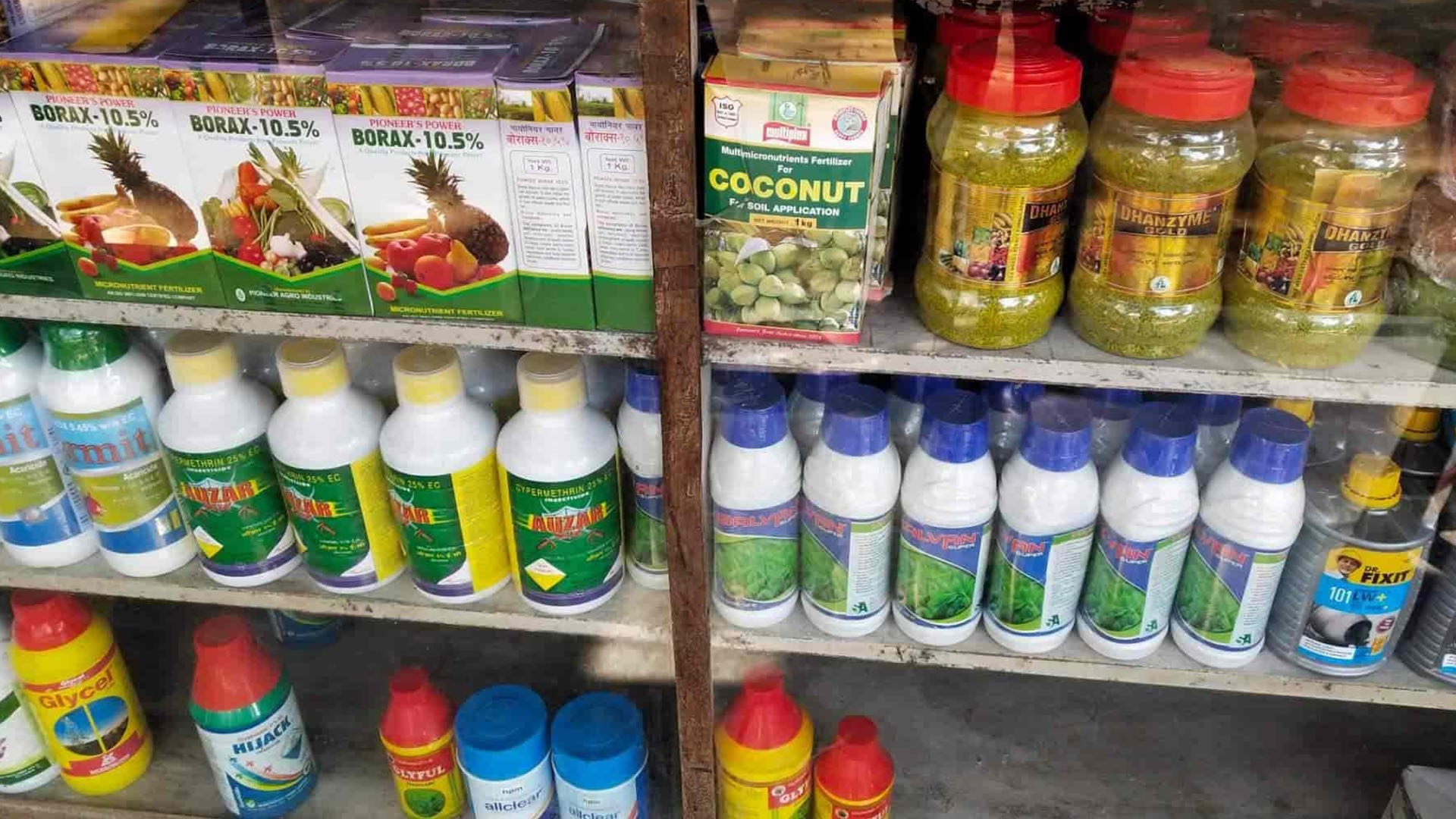
The objective of the regulatory framework governing Chemical Good Manufacturing Practice (GMP) guidelines as issued by the National Agency For Food and Drug Administration and Control (NAFDAC) is to ensure that products are consistently manufactured in conformance with quality standard. It is concerned with all aspects of production and quality control.

These guidelines are for the manufacture, storage, distribution and shipment of chemicals and chemical products in Nigeria.

It is necessary to emphasize that, no chemical products shall be Manufactured, Exported, Advertised, Sold or Distributed in Nigeria unless it has been registered in accordance with the provisions of the Food, Drugs and Related Products Act Cap F33 LFN 2004 (formerly decree 19 of 1993) and the accompanying guidelines. The provisions of these guidelines regarding chemicals and chemical products are what will constitute the focus of this article.

What are the general considerations highlighted by the NAFDAC guidelines on chemicals?

In the manufacture of chemicals and chemical products, monitoring is essential in ensuring that products of quality standards are produced.

Provisions of the guidelines on personnel 

-There should be adequate number of personnel with adequate knowledge, experience, skill and capabilities relevant to their assigned function. They should be in good health and capable of handling the duties assigned to them.

Provisions of the guidelines on organization, qualification and responsibilities 

-The organizational structure of the company shall be such that different persons head the production and quality control sections, neither of which shall be responsible to the other. 

-The key officers should have a minimum qualification of BSc or equivalent in Chemistry/Chemical Engineering or any related science disciplines.

-The head of production should be adequately trained, experienced and qualify in chemical manufacturing. He/she should have authority and responsibilities to manage production; covering operations, equipment, production personnel, production areas and records.

-The head of quality control should be adequately trained and experienced in the area ofquality control. He should have full authority and responsibility in all quality control duties such as establishment, verification and implementation of all quality control procedures. He should also have the authority to designate/assign when appropriate,personnel, to approve starting materials, intermediates, bulk and finished products that meet specification or to reject those which do not conform or not manufactured in accordance with approved procedures.

-The responsibilities and authorities of key personnel should be clearly defined.

Training

-All personnel directly involved in manufacturing activities should be appropriately and continuously trained in manufacturing operations in accordance with GMP principles. Special attention should be given to training of personnel working with hazardous materials.

-Records of training should be maintained and its effectiveness assessed periodically.

Premises

-The premises for manufacturing should be suitably located, designed, constructed and maintained.

-Effective technical and administrative measures should be taken to avoid any cross contamination to the environmentand the production facility.

-Appropriate changing rooms and toilet facilities should be provided.

-Defined areas should be provided for, wherever possible and applicable:-

a).Materials receiving bay

b). Material Sampling

c).Incoming goods and quarantine.

d).Starting materials storage.

e).Weighing and dispensing.

f). Processing.

g). Storage of bulk products.

h). Packaging

i). Quarantine storage before final release of products.

j). Storage of finished products.

k).Loading and unloading.

l). Laboratories.

m).Equipment washing.

-Walls and floors, where applicable should be smooth and easy to maintain. The floor in processing areas should be industrial concrete floor with surface that is easy to clean.

-Drains should be of adequate size and have trapped gullies and proper flow. Open channels should be avoided where possible, but if required they should be able to facilitate cleaning and disinfection.

-Buildings should be adequately lit and properly ventilated.

-Pipework, light fittings, ventilation points and otherservice points in manufacturing areas should be installed in such a way to make for easy cleaning.

-Laboratories should be separated from the production areas. The premises for manufacturing should be suitably located, designed, constructed and maintained.

Storage Areas

-Storage areas should be of sufficient capacity to allow orderly placement of materials such as starting and packaging materials, intermediates, bulk and finished products, products in quarantine, released, rejected, returned, or recalled products.

-Secured segregated area should be available for storage of chemicals of safety and security concerns.

-Storage areas should have good storage conditions. Where special storage conditions are required (temperature, humidity and security) these should be provided, checked and monitored

Provisions of guidelines on Equipment

Constructions and Design

-Equipment should be designed and constructed to suit production of the product.

-The equipment surfaces in contact with any in-process material should not react with or adsorb the materials being processed.

-Equipment should not adversely affect the product through leaking valves, lubricant drips and inappropriate modifications or adaptations.

-Equipment should be easily cleaned.

-Equipment used for flammable substances should be explosion proof.

Installation and Location

-Equipment should be located to avoid congestion and should be properly identified to assure that products do not become admixed or confused with one another.

-Support systems such as heating, ventilation, air conditioning (HVAC), steam, compressed air and gases should function as designed and identifiable.

Maintenance of Equipment

– Weighing,measuring, testing and recording equipment should be serviced andcalibrated regularly. All records should be maintained.

Sanitation and Safety

-Sanitation and safety should be practiced to cover personnel, premises, equipment, production materials and containers.

Personnel

-Personnel engaged in the manufacture, processing, packaging, or holding of chemical andchemical products should wear appropriate personnel protective equipment for assigned duties.

-Personnel should be healthy to perform their assigned duties. Regular medical examination should be conducted for all production personnel.

-Factory wears should not be worn out of the area they are meant for.

Premises

– Adequate employee’s washing and toilet facilities should be provided and separated from the production area.

-Suitable locker facilities should be provided at appropriate location for the storage of employee’s clothing and personal belongings.

Waste materials should be regularly collected in suitable receptacles for removal to collection points, outside the production area.

– Restricted areas to unauthorized personnel should be clearly defined with signage displayed appropriately.

PRODUCTION

Verification of Materials

-All deliveries of raw materials and packaging materials should be checked and verified for conformity to specifications and should be traceable to the product.

-Samples of raw materials should be physically checked for conformity to specifications priorto release for use. The raw materialsshould be clearly labeled. All goods must be clean and checked for appropriate protective packing to ensure no leakages, perforations or exposures.

Rejected materials

-Deliveries of raw materials that do not comply with specifications should be segregated anddisposed according to Standard Operating Procedures.

Batch Numbering System

-Every finished product should bear a production identification number, which enables the history of the product to be traced.

-A batch numbering system should be specific for the product and a particular batch number should not be repeated for the same product in order to avoid confusion.

-Whenever possible, the batch number should be printed on the immediate and outer container of the product.

– Records of batch number should be maintained.

Weighing and Measurement

-Weighing should be carried out in the defined areas using calibrated equipment. 

-All weighing and measurement carried out should be recorded and where applicable, counterchecked.

Procedure and Processing

-All starting materials used should be approved according to specifications.

-All manufacturing procedures should be carried out according to written.

-All required in-process controls should be carried out and recorded.

-Bulk products should be properly labelled until approved by Quality Control, where applicable

Dry Chemical Products

– Handling dry chemical materials and products should be given special attention.

-Where possible, dust-containing production system, central vacuum system or other suitable methods should be employed.

Wet Chemical Products

-Liquid chemical products should be produced in such a way as to protect the product from spillage and other hazard contamination.

-Where pipelines are used for delivery of raw materials or bulk products, care should be taken to ensure that the systems are easy to clean.

Labeling and Packaging

-Packaging line should be inspected for clearance prior to operation. 

-Equipment should be clean and functional. All materials and products from previous packaging operation should have been removed.

-Samples should be taken and checked at random during labeling and packaging operations.

-Each labeling and packaging line should be clearly identified to avoid mix-up.

-Excess labels and packaging materials should be returned to the store and recorded. Any rejected packaging materials should be disposed of accordingly.

Finished Product: Quarantine and Delivery to Finished Stock.

-All finished products should be approved by Quality Control prior to release.

Provisions of the guidelines on Quality Control

-Quality control is an essential part of GMP. It provides assurance that chemical products will be of consistent quality appropriate to intended use.

-A quality control system should be established to ensure that chemical products contain thecorrect materials of specified quality and quantity and are manufactured under proper conditions according to Standard Operating Procedures.

-Quality control involves sampling, inspecting and testing of starting materials, inprocess, intermediate, bulk, and finished products. It also includes where applicable, environmental monitoring programs, review of batch documentation, sample retention programs,stability studies and maintaining correct specifications of materials and products.

Bitcoin ETFs will enhance Crypto Market Decentralization

0

Bitcoin is a digital currency that operates on a decentralized network of computers, without the need for a central authority or intermediary. Bitcoin ETFs are exchange-traded funds that track the price of bitcoin and allow investors to gain exposure to the cryptocurrency without having to buy, store, or manage it themselves.

There are several potential benefits of investing in bitcoin ETFs, such as:

Liquidity: Bitcoin ETFs trade on regulated stock exchanges, which means they have high liquidity and can be easily bought and sold throughout the day.

Diversification: Bitcoin ETFs can offer investors a way to diversify their portfolio and hedge against inflation, currency devaluation, or geopolitical risks.

Simplicity: Bitcoin ETFs eliminate the hassle of dealing with bitcoin wallets, exchanges, or custodians, which can be complex, costly, or insecure.

Tax efficiency: Bitcoin ETFs may have lower tax implications than directly owning bitcoin, depending on the jurisdiction and the type of fund.

However, there are also some drawbacks of investing in bitcoin ETFs, such as:

Fees: Bitcoin ETFs charge management fees and other expenses that reduce the returns for investors. These fees may vary depending on the fund provider and the structure of the fund.

Tracking error: Bitcoin ETFs may not perfectly replicate the performance of bitcoin, due to factors such as market volatility, liquidity constraints, or regulatory issues. This means that the price of the fund may deviate from the price of bitcoin over time.

Regulatory uncertainty: Bitcoin ETFs are subject to the rules and regulations of the jurisdictions where they are listed and traded, which may change or differ from those governing bitcoin itself. This creates uncertainty and risk for investors, especially in countries where bitcoin is not widely accepted or legal.

Limited availability: Bitcoin ETFs are not widely available in many markets, as they face significant regulatory hurdles and skepticism from authorities. As of August 2023, only a few countries have approved or launched bitcoin ETFs, such as Canada, Brazil, and Germany.

Decentralization means that no single entity or authority has control over the network, the transactions, or the governance of the system. Instead, the power is distributed among the participants, who can verify, validate, and contribute to the network in a transparent and democratic way.

Why is decentralization important for the cryptocurrency industry? There are several reasons:

Decentralization enhances security. By eliminating the need for intermediaries or central servers, decentralization reduces the risk of hacking, censorship, or manipulation. The network is protected by cryptography and consensus mechanisms that ensure its integrity and reliability.

Decentralization promotes innovation. By allowing anyone to participate and contribute to the network, decentralization fosters a culture of creativity and experimentation. The network can evolve and adapt to the changing needs and preferences of the users, without being constrained by bureaucratic or regulatory barriers.

Decentralization empowers users. By giving users more control over their own data, assets, and identity, decentralization enhances their privacy and sovereignty. Users can choose how to interact with the network, what services to use, and whom to trust, without relying on third parties or intermediaries.

The cryptocurrency industry will only become better as it becomes decentralized. Decentralization is not only a technical feature, but also a social and economic vision. It is a vision of a more open, fair, and inclusive world, where everyone can benefit from the opportunities and advantages of digital currencies.

Bitcoin ETFs are a convenient, decentralized and accessible way for investors to gain exposure to the cryptocurrency market, but they also come with some challenges and risks. Investors should weigh the pros and cons of investing in bitcoin ETFs carefully before making a decision.