DD
MM
YYYY

PAGES

DD
MM
YYYY

spot_img

PAGES

Home Blog Page 43

The Best New Year Resolution!

1

I do not believe in New Year resolutions. It is an illusion to think that flipping a digit, from 2025 to 2026, will magically deliver new outcomes when you have not examined, redesigned, and deepened what truly matters: your processes.

Good People, one of the greatest victories in life is the victory over time. Time is allocated equally to all of us, 24 hours a day. Yet even in its seeming abundance, time is the scarcest resource we have. Until you learn to win over time through better processes, your future will remain unresolved. So, forget grand New Year resolutions. Focus instead on fixing your daily and weekly non-optimal processes.

The richest among us spend money to save time; they fly. The poorest among us spend time to save money; they take the road. It is not just about transport; it is optimizing processes. In the same way, wealth builders convert money into capital; they invest. But the wishers want capital-like outcomes from money without conversion; they gamble, driven by a wager spirit. One group uses resources to compress time and compound value. The other trades time away and hopes for miracles.

Check carefully, process is the difference. How do we get better on processes? Consider this simple framework. Buy an exercise book or diary. Every Sunday night, take ten minutes to list the most important things you want to accomplish in the week. Then, each night before bed, or early each morning, write down the key tasks for the day. As the week unfolds, cross out what you complete. Then reflect: what worked, what did not, and how can you do it better next time? Keep optimizing. Keep refining. And track just two indicators: quality and speed.

In the professional world, those who thrive are not necessarily the smartest. They are the ones who can deliver high-quality outcomes in the shortest time. That is the edge. That is how careers rise. And that edge comes from process, not merely from brilliance. It is not about being the best graduating student in your class. Grades matter, yes, but what matters more is the process that produced those grades.

If you are naturally gifted and coast to an A, you may feel confident. But if that same talent leads you to a C because your process is weak and you refuse to change it, you could be in trouble. Compare that with someone who struggled, worked relentlessly, and still earned a C. That person has built tenacity and discipline into their process. And when that same effort is applied to other areas of life, results will follow. Yes, in the long run, process beats raw undeveloped talent.

At work, how can you beat deadlines while improving depth and clarity, signaling that you are ready for greater responsibility? Largely, when you resolve your processes, mountain-sized New Year resolutions become irrelevant. So as the year turns, I wish you a happy new one, but more importantly, I wish you a year where New Year resolutions become unnecessary, because every day, you are already resolving your processes. Indeed, make New Year resolutions unnecessary because you are resolved daily!

The Flow Blockchain Suffered a Security Exploit Resulting to $3.9M Losses

0

The Flow blockchain suffered a security exploit in its execution layer, allowing an attacker to mint unauthorized tokens including FLOW, wrapped BTC, ETH, and stablecoins and drain approximately $3.9 million in assets.

The funds were primarily bridged out via protocols like Celer, deBridge, Relay, and Stargate before validators coordinated a network halt to prevent further losses. Validators paused the chain and initially proposed a rollback reverting to a pre-exploit checkpoint, which would erase several hours of transactions.

This plan drew sharp criticism from ecosystem partners, including bridge operators like deBridge founder Alex Smirnov, who argued it was rushed, lacked coordination, and could cause greater harm—such as doubled balances for some users or unbacked assets on bridges—while undermining blockchain immutability and decentralization principles.

Revised Plan After Backlash

Following intense community and partner backlash, the Flow Foundation scrapped the rollback on December 29. Instead, it adopted an “isolated recovery plan”: Restart from the last sealed block before the halt, preserving legitimate transaction history.

Temporarily restrict accounts that received fraudulent tokens. Use independent forensics to verify illicit assets, then burn them on-chain via a validator-approved software upgrade.
Phased restoration: Non-EVM (Cadence) environment relaunched first, with EVM in read-only mode initially; over 99.9% of accounts unaffected.

The network has entered Phase 1 recovery, with validators deploying fixes and coordination ongoing. The incident triggered a sharp sell-off, with the $FLOW token dropping over 40% from ~$0.17 to as low as $0.09–$0.10, reflecting eroded confidence. Total value locked (TVL) briefly dipped but partially recovered.

This event highlights ongoing tensions in blockchain governance: balancing rapid crisis response with decentralization and immutability. While the revised approach avoids rewriting history, recovery of the stolen funds remains uncertain, depending on off-chain cooperation.

The Flow mainnet has successfully entered Phase 1 of recovery. The Cadence (non-EVM) environment is fully operational, with over 99.9% of accounts restored to normal functionality. The EVM layer remains in read-only mode, and a small number of accounts linked to fraudulent tokens are temporarily restricted.

Phase 2: remediation via token burns is ongoing expected 24-48 hours, followed by full EVM restoration and bridge resumptions. This phased approach minimizes disruptions for most users. Partial recovery occurred, but the token remains volatile and down significantly, reflecting immediate loss of confidence. TVL dipped ~31% before partial rebound.

The ~$3.9M stolen assets were bridged out mostly to Ethereum/Bitcoin and laundered via protocols like THORChain/Chainflip. Recovery is uncertain—freeze requests were sent to issuers/exchanges, but much has already moved off-chain.

The initial rollback proposal triggered backlash from bridge operators, like deBridge and community, accusing the team of poor coordination and risking decentralization. Scrapping it in favor of an “isolated recovery” targeted restrictions + burns via validator-approved upgrade preserved immutability and was praised by some analysts as a balanced response.

However, temporary admin-like powers like freezing accounts, burning tokens have drawn criticism as undermining decentralization principles, even if revocable and opt-in. Bridges, DEXs, and apps like NBA Top Shot users reporting issues faced temporary disruptions.

Better coordination in future crises could strengthen partnerships, but perceived centralization risks may deter developers or users seeking “pure” decentralization. The exploit exposed a vulnerability in the execution layer likely related to minting/proxy issues. A full post-mortem is promised within days.

This may lead to audits, bug bounties, and upgrades, but repeated incidents could slow growth in consumer-focused apps. This incident highlights tensions in blockchain crisis management: rapid action vs. immutability/decentralization.

Flow’s pivot to community feedback sets a positive example for responsive governance but raises questions about validator power in emergencies. Flow, built for consumer/NFT/DeFi scale by Dapper Labs, has struggled post-2021 hype. Amid 2025’s $3B+ hack wave, this could exacerbate challenges in attracting TVL/institutional interest if confidence lingers low.

Conversely, resilient recovery could demonstrate maturity. Its reinforces 2025 trends—rising exploits, bridge risks, and debates over rollbacks echoing past Ethereum discussions. May push regulators toward stricter accountability and networks toward proactive forensics/coordination tools.

While user funds were largely protected and the revised plan avoided worse outcomes, the event erodes short-term trust. Full recovery depends on transparent remediation, post-mortem insights, and sustained ecosystem activity. Flow’s consumer focus gives it resilience potential, but rebuilding momentum will be key.

Key Implications of Uniswap’s UNIfication and Fee Changes

0

Uniswap Labs has officially removed all interface fees previously charged on the Uniswap web app, mobile wallet, and API from their front-end products. This change took effect around December 27–29, 2025, as part of the “UNIfication” governance proposal execution.

The UNIfication proposal passed overwhelmingly on December 25, 2025— 99.9% approval. After a short timelock, on-chain execution included: Burning 100 million UNI tokens from the treasury worth ~$596M at the time.

Activating the long-awaited protocol fee switch often called the “back-end” or “backend” fees on Uniswap v2 pools and select high-volume v3 pools on Ethereum mainnet. A portion of trading fees now accrues to the protocol like 0.05% on v2, fractions on v3, which is used programmatically to burn more UNI over time.

Setting all Uniswap Labs front-end/interface fees to zero, shifting focus from app-layer monetization to protocol-level growth. Uniswap Labs announced this directly on X: December 27: “UNIfication has officially been executed onchain, Labs interface fees are set to zero…” December 28: “All interface fees have been set to zero across Uniswap apps and API”. December 29: Confirmation of no more interface fees.

This makes swapping on official Uniswap products completely fee-free at the interface level aside from gas and protocol/LP fees, while the newly activated protocol fees create deflationary pressure on UNI supply. The move aligns incentives toward protocol sustainability and has been positively received in the community, with UNI holding gains post-activation.

The removal of all interface fees on the Uniswap web app, mobile wallet, and API combined with the activation of protocol fees marks a pivotal shift in Uniswap’s economics, governance, and competitive positioning. This stems from the overwhelmingly approved UNIfication proposal executed on-chain.

For Users and Traders

Cheaper swapping on official Uniswap products: No more interface fees means swaps are effectively free at the front-end level only gas + LP/protocol fees apply. This reduces friction, encourages higher volume, and makes the official app/wallet more attractive vs. third-party aggregators.

Slightly higher costs in some pools: Protocol fees now take a cut like 0.05% on v2 pools, 1/4 or 1/6 on select v3 pools, but this is minimal and only on activated pools initially v2 all + high-volume v3 on Ethereum mainnet, covering 80–95% of fees. More user-friendly experience, potentially driving adoption and volume growth.

Deflationary pressure created: One-time burn of 100 million UNI ~$596M–$635M value, reducing supply by ~16%. Protocol fees flow into a mechanism that programmatically burns UNI via “TokenJar” and “Firepit” contracts. Unichain sequencer fees also contribute after costs.

Value accrual shift: UNI transitions from a pure governance token to one directly tied to protocol revenue and usage. Higher trading volume = more burns = potential scarcity-driven appreciation. Price impact so far: UNI surged 20–30% during/after voting but has stabilized around $5.90–$6.40 post-burn minor pullback from highs. Long-term bullish if volume sustains.

Reduced earnings in activated pools:v2: LP fees drop from 0.30% to 0.25% protocol takes 0.05%. v3 select pools: Protocol takes 1/4 (low-fee tiers) or 1/6 (higher tiers) of LP fees. Some LPs may migrate to non-fee pools, other DEXs, or v4 not yet activated if yields drop significantly. Community/governance will monitor and may adjust.

Uniswap’s dominant liquidity and brand may retain most LPs; higher overall volume from zero interface fees could boost total fees earned. Labs drops interface revenue previously ~$125M/year to focus on protocol growth. Funded by a new annual growth budget for development, integrations, and expansion.

Foundation teams transition to Labs for streamlined efforts like v4 hooks, Unichain, aggregators. Positions Uniswap as a “public good” at the front-end while capturing value sustainably at the protocol level. Aligns with DeFi maturity and reduced regulatory concerns.

Precedent for mature protocols: Shows DAOs can execute complex, value-accruing changes fee switches, burns after years of debate. Potential volume flywheel: Zero front-end fees + deflationary UNI could attract more traders/developers, increasing dominance.

Short-term LP outflows if fees deter providers; execution monitoring needed for adjustments. Analysts estimate ~$130M annual burn potential at current volumes. Positive reception: Community largely views this as aligning incentives for long-term sustainability, with UNI holding gains amid broader market conditions.

This makes Uniswap more accessible and user-focused while creating real economic utility for UNI through deflation. Early data shows burns already underway beyond the initial 100M. The true test will be sustained volume and LP retention in 2026.

Hyperliquid Wraps EOY with $844M in Annual Revenue Amid Low Revenue During Christmas Holiday

0

Hyperliquid, a leading decentralized perpetuals exchange, wrapped up 2025 strongly with ~$844 million in annual revenue primarily from perps trading fees and ~$2.95 trillion in cumulative trading volume, per data from sources like DefiLlama, Hyperscreener, and ASXN.

However, activity cooled in late December amid broader market consolidation and rising competition from platforms like Lighter and Aster. Weekly revenue for Dec 22–28 hit $9.16 million — the lowest since May 2025 and a ~70% drop from its 2025 peak of $31.1 million according to DefiLlama data reported across Phemex, KuCoin, PANews.

This reflects declining volumes— 7-day perps volume down ~35% and user engagement as points-farming hype faded.

Upcoming Team Token UnlockOn January 6, 2026

Hyperliquid will distribute 1.2 million HYPE tokens ~$31–32 million at current prices of ~$25–26 to team members/core contributors. This is part of the scheduled vesting for the 23.8% team allocation, 238 million HYPE total following a 1-year cliff that ended in late 2025.

Future distributions (if any) will occur monthly on the 6th for predictability, as announced by co-founder Iliensinc on Discord. Some reports note this is 30% less than an earlier expected amount (1.7M), potentially easing pressure.

HYPE currently trades around $25–26 with market cap ~$8.7 billion, ranking top 15, down ~57% from its September 2025 ATH of ~$59 but up significantly from launch levels. The unlock adds ~0.12% to circulating supply monthly, offset partly by protocol buybacks— 99% of fees go to an Assistance Fund for HYPE repurchases and recent burns.

Community sentiment is mixed: transparency reduces FUD, but short-term selling pressure is possible in a low-volume holiday period. While near-term volatility looms, Hyperliquid’s real revenue flywheel and dominance in on-chain perps ~80% market share earlier in 2025 provide strong fundamentals heading into 2026.

The combination of declining revenue and the upcoming 1.2 million HYPE token unlock valued at ~$30–32 million at current prices of ~$25–26 creates a challenging near-term setup for Hyperliquid and $HYPE.

Potential Price Pressure from Unlock

This distribution to team/core contributors represents ~0.3–0.4% of total supply but adds new circulating tokens in a low-volume holiday period. Historical unlocks in November 2025, caused temporary dips due to perceived selling.

Analysts forecast possible 10–15% corrections if team members sell portions, especially amid broader market consolidation. Community sentiment is mixed—transparency reduces FUD, but short-term volatility is expected, with crowded longs risking liquidations below $24–25 support.

Weekly revenue hitting $9.16 million, lowest since May signals cooling trader activity, fading points-farming hype, and rising competition like Lighter, Aster eroding market share from ~80% earlier in 2025 to ~30–40%.

Lower fees mean reduced buybacks via the Assistance Fund which absorbs ~99% of revenue for HYPE repurchases, potentially failing to fully offset unlock supply. This could extend downward pressure on $HYPE, already down ~57% from its $59 ATH.

Holiday lows in volume exacerbate risks. If selling materializes post-Jan 6, $HYPE could test $20–22 levels. However, predictability monthly unlocks on the 6th allows planning, and reductions from initial estimates ~1.7M to 1.2M ease some concerns.

Despite near-term headwinds, Hyperliquid’s fundamentals remain robust, positioning it well for 2026 recovery and growth. Closed the year with $844 million revenue, $2.95 trillion cumulative volume, and dominance in on-chain perps.

Real revenue flywheel; fees ? buybacks and burns, e.g., recent 37–37.5 million token burn creates deflationary pressure over time, offsetting monthly unlocks, $30M supply vs. higher buyback potential in active markets.

Team’s 23.8% allocation vests gradually over 24 months, aligning incentives without VC/overhang dumps seen in rivals. No VC funding preserves “people’s token” narrative. Roadmap includes equity perps expansion, Airdrop Season 2, and protocol upgrades. Competition is healthy—drives innovation while Hyperliquid retains top-3 status and high open interest.

Rebounds in volume common post-holidays could quickly restore revenue/buybacks. Short-term risks of volatility and downside but long-term outlook bullish due to proven revenue, transparent vesting, and perps leadership.

$HYPE’s resilience up massively from launch despite dips suggests dips as accumulation opportunities for believers in on-chain derivatives dominance.

Key Drivers of Silver’s Industrial Demand in 2025

0

Silver has surpassed Nvidia to become the world’s second most valuable asset by total estimated market value, trailing only gold. This remarkable shift occurred amid a historic rally in silver prices, which surged over 150-170% year-to-date, pushing spot prices to record highs around $80–$84 per ounce.

The total value of all above-ground silver estimated at ~1.75 billion ounces mined historically reached approximately $4.65–$4.7 trillion, briefly exceeding Nvidia’s market capitalization of around $4.6 trillion. Gold remains firmly in first place with a valuation of ~$31–$32 trillion.

Silver’s rally was driven by strong industrial demand like solar panels, EVs, electronics, supply deficits, geopolitical tensions, safe-haven buying, and potential export restrictions from major producers like China.

Nvidia, the AI chip leader, held the #2 spot among investable assets/companies for much of 2025 but was overtaken in this broader “asset” ranking that includes commodities. Note that commodity “market caps” are estimates based on current prices × historical mined supply adjusted for losses, while company values fluctuate with stock prices.

Silver’s lead was brief and volatile, with profit-taking causing pullbacks, but the crossover did happen. This highlights a rare rotation from tech/AI dominance back toward hard assets in 2025’s market environment.

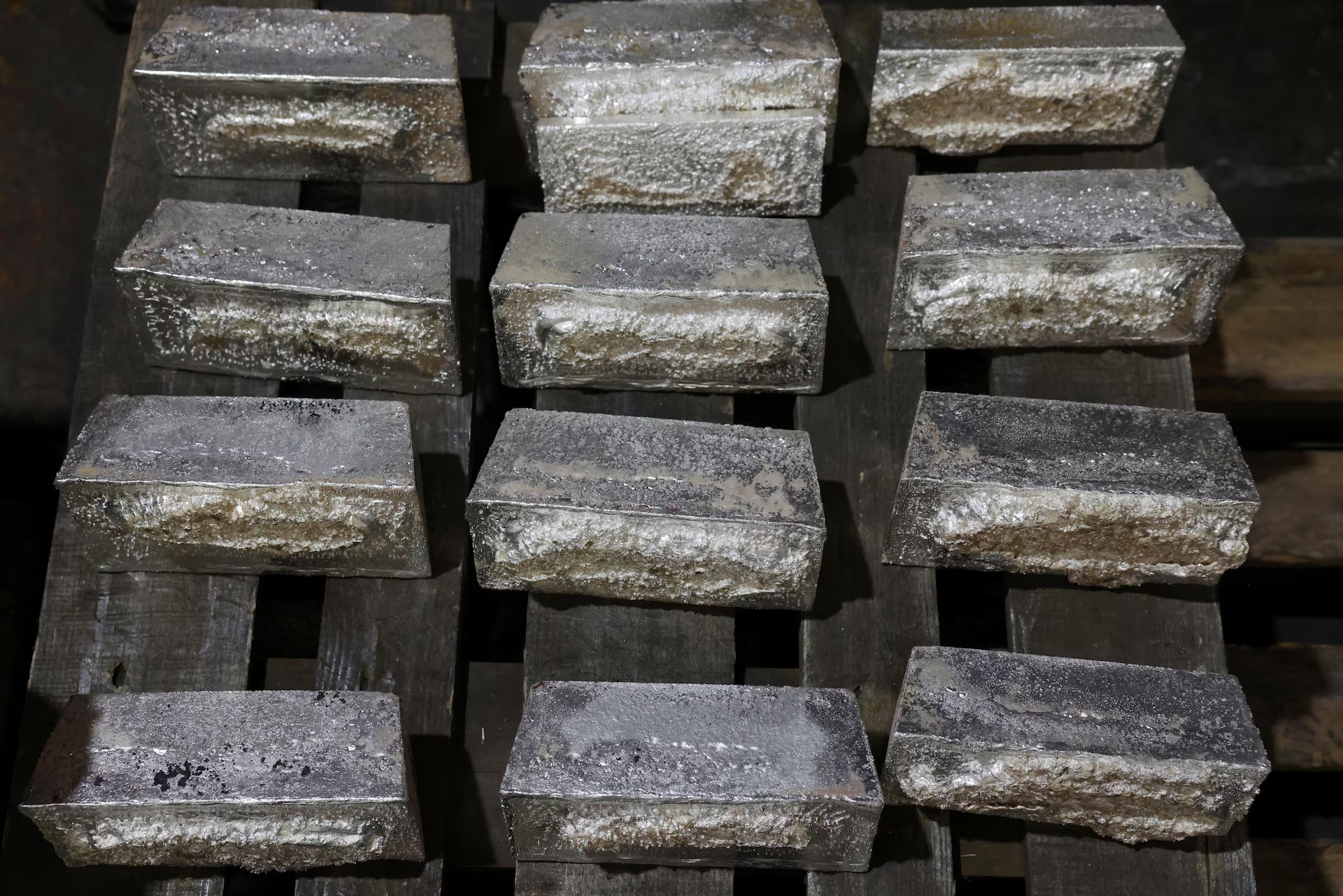
Silver’s industrial demand remains a dominant force in the global market, accounting for approximately 55-60% of total silver consumption.

In 2024, industrial fabrication reached a record 680.5 million ounces (Moz), and forecasts for 2025 indicate it will stay near record levels around 680-700 Moz despite some thrifting efforts and economic headwinds. This resilience stems from silver’s unmatched electrical and thermal conductivity, making it irreplaceable in high-performance applications.

The primary drivers are tied to the global push for green energy, electrification, and digitalization. Unlike gold, silver’s demand is largely inelastic—industries continue buying even at higher prices because substitutes are limited or inferior.

The fastest-growing segment, consuming ~19-30% of industrial silver up from ~5% a decade ago. Silver paste is essential for conductive layers in photovoltaic cells, capturing and transporting electrons efficiently. Global solar installations are booming— China’s massive additions, EU’s 700 GW target by 2030.

Demand surged in recent years, with projections for continued growth despite efforts to reduce silver per panel (thrifting).
In 2024-2025, solar alone drove significant uptake, often cited as passing jewelry as the top single use.silverinstitute.org

Electric Vehicles (EVs) and Automotive Electrification

EVs use 25-50 grams of silver per vehicle vs. 15-28g in traditional cars, mainly in wiring, sensors, battery management, power electronics, and charging infrastructure. Rapid EV adoption especially in China and Europe is boosting demand at a ~3-4% CAGR through 2030.

By 2027-2031, EVs could dominate automotive silver use up to 59% of the sector. Silver is critical in printed circuit boards, connectors, switches, semiconductors, 5G infrastructure, and AI-related hardware (e.g., power-hungry data centers needing efficient conductivity).

AI and digitalization have exploded electricity/IT power needs, indirectly driving silver in grids and devices. This sector including consumer electronics has grown ~51% since 2016 and remains a steady, broad-based driver.

Other notable uses Ethylene Oxide (EO) production: Chemical catalysts for plastics and detergents. Antimicrobial properties in coatings and devices (stable demand). Upgrades for electrification and renewables.
These drivers contributed to persistent supply deficits, like 117-149 Moz in 2025, fueling the metal’s rally.

Long-term, silver’s role in the energy transition and tech revolution positions industrial demand as the core structural support for prices.