
DD
MM
YYYY

PAGES

DD
MM
YYYY

spot_img

PAGES

Home Blog Page 4303

Beyond Early Coding, Foundational Physics and Mathematics Win and Super Important

2

I have received a lot of questions after my recent articles on jobs, future opportunities and redesigns in our economies: “I want my child to be a successful coder, what do you suggest we do now in this secondary education phase?”

First, I am not a career counselor and have zero license in that space. Nonetheless, from my experiences and others I know, a child who is well groomed in physics, mathematics and chemistry at the foundational phases has a better chance of thriving, than one, who is forced to start coding and learning computer languages, without those basics.

The best developers and creators in computer science and engineering are great math and physics persons, leveraging computational thinking to tackle complex problems effectively. The challenges you solve are first of the natural philosophy type, and which must be solved at the mathematics and physics level, before they are translated into codes. The coding is not really the zenith: mathematics and physics define everything.

As a PhD student in Johns Hopkins, my main project  for a course titled Computer Integrated Surgery was to build a machine that can control a needle via an endoscope/laryngoscope to get through the larynx to enable a doctor perform minimally invasive surgery of the throat, with da Vinci medical robot connected. It was a really tough engineering problem but looking at all, one had to solve complex mathematical equations which will ensure you can track the needle, the equipment, human tissues (you use markers), etc. We were grouped in pairs!

I had booked a flight to Scotland and needed to travel. I did the equations and sent the written math to my colleague, and left for Scotland. He implemented it in Python (my Python coding was basic). But he did one more thing: he wrote a complaint to the professor that I allowed him to do the work.

When I returned, the professor summoned two of us, and asked what happened. I explained that I did the math but with limited  experience using Python (just largely coming from Lagos), I asked him to help since he was proficient with it. Right there, Prof Taylor said “Nd, you did this”? I responded and the guy confirmed. The Prof gave me a fellowship, and gave me a lab space, and I joined his computer science group, expanding my fellowships. He explained – the focus of the PhD is solving the math, not writing codes. With that, I had two labs – one in electrical and electronics engineering, and another in the computer science department. Hope that explains what really matters!

Of course, you need to code. But no useful coding happens without algorithms and those happen because of a good understanding of mathematics and logic. Code but be loaded with Math also to get to the sweetest part of coding (the upstream), instead of the downstream which offers nothing much.

Comment on Feed

Comment 1: If they are mutually exclusive, then by all means a child needs to master math and physics before learning to code.
The great thing is that they can be learned together and mastered together. Coding at age 8 should actually start with a course on Computational Thinking which in itself is a serious skill for problem solving. In well designed CS curriculums for high school, students write programs to solve mathematical and physical problems, thereby integrating these three worlds in beautiful harmony. They should all be compulsory for the broad training of the child’s mind.

My Response: “Coding at age 8 should actually start with a course on Computational Thinking” – that would be super awesome if we have that. Possibly, it is integrated within Quantitative Aptitude which is possibly woven within General Mathematics in primary/secondary school. In entrance exams to move  from primary to secondary school, they used to have two core components: verbal and quantitative aptitudes. That QA is actually logic which can go for this Computational Thinking. The problem now is that most of those things are making way for html syntax.

Comment 2: As someone who did physics, maths and logic at various points in my formal educational, and a programmer, I will tell you logic is fundamental and more important to coding than mathematics and/or physics. Way more important.

My Response: Logic of numbers  is a branch of mathematics. In your primary school entrance exam for secondary school, you took two components: verbal and quantitative aptitudes. And everything is philosophy, the very reason why PhD is appended after those doctoral degrees. PhD in Economics means that you have mastered the philosophy of economics. Philosophy is logic. Mathematics translates it. So, if you studied the logic of numbers, you actually did mathematics.

Comment 3: Spot on Ndubuisi Ekekwe . This right here is what the big techs always look out for in candidates. The ability to grab concepts and apply them to solve problems. Explains why you will always be put to data structure & algorithms test in any serious engineering role. I once attended a white board live coding interview where a final yr electrical engr student finished top. In the room were people with years of experience, those who couldn’t make it were asked to go home and the rest proceeded with the process.

The Big Warning from the Bankers on Jobs

4

In a new report, Goldman Sachs posits that many jobs could be lost as a result of AI and broad automation: “roughly two-thirds of current jobs are exposed to some degree of AI automation, and that generative AI could substitute up to one-fourth of current work. Extrapolating our estimates globally suggests that generative AI could expose the equivalent of 300mn full-time jobs to automation”.

When things are automated, on average, jobs are lost at scale, even though a smaller number of jobs are created within a close category of those jobs. (In the broad industry, more jobs could actually be created over time.)

You may dismiss it. But note this: that redesign has already started.  For years, I have not seen the type of job losses we’re experiencing right now in the technology industry in the United States. From Facebook* to Electronic Arts, announcements of job cuts have become a constant. 

Unlike during the great recession when losses came big and then stopped, this new redesign is totally different: companies are constantly cutting even when they’re making more money. In short, some startups raise big money, then they announce job cuts. How is that possible? They possibly raised money to automate many things.

But it is not all bad; people with great modern skills will thrive. Prompt engineers, new species of engineers who can “talk” and “whisper” to AI chatbots, making them better, are going to $335,000 per year on salaries. Indeed, we will see new dimensions of opportunities even as the old ones are being displaced.

The recent emergence of generative artificial intelligence (AI) raises whether we are on the brink of a rapid acceleration in task automation that will drive labor cost savings and raise productivity. Despite significant uncertainty around the potential of generative AI, its ability to generate content that is indistinguishable from human-created output and to break down communication barriers between humans and machines reflects a major advancement with potentially large macroeconomic effects.

If generative AI delivers on its promised capabilities, the labor market could face significant disruption. Using data on occupational tasks in both the US and Europe, we find that roughly two-thirds of current jobs are exposed to some degree of AI automation, and that generative AI could substitute up to one-fourth of current work. Extrapolating our estimates globally suggests that generative AI could expose the equivalent of 300mn full-time jobs to automation

Comment on Feed

Comment 1: While technology can certainly impact the job market, it is not the sole factor driving workforce restructuring. It is important to consider various factors and opportunities for upskilling and reskilling in order to navigate the changing nature of work.

The rise of AI is disruptive in a different way and the market may not recover from this disruption. However, new roles such as data analysts, machine learning engineers, and AI ethicists will emerge or continue to be in vogue.

My Response: Absolutely, new vistas will emerge. The world is a dynamic system.

Comment 1A: Not so. With Microsoft’s Copilot you can highlight entire spreadsheets and/or databases and simply “ask” it to do whatever you want and it’ll do it. Need to run a regression? Just ask it in plain language and boom there it is….no need for a data analyst or analytics “expert” – the system is the expert. Same goes for software engineers – one intelligent individual trained on the language of AI could replace an entire team of software engineers. The reality of AI capabilities are simply amazing, and we are at its infancy. I like your optimism but it’s not reality.

My Response: why will people go to school or learn anything when you can command machines to do anything. An interesting age awaits.

Comment 2: Prof. thanks for the insights you always provide. Yes AI is causing and will cause significant disruptions and job losses. But it will be more of a reclassification of income classes, (where people in lower upper class maybe pushed to a  lower class, and vice versa ) as against permanent job losses. One of the fundamental human rights of human beings is the right to earn a living. AI cannot and will not deny humanity that right essentially because the future of work is and will continue to be driven by people and not technology or AI. Notwithstanding, the need to upskill cannot be overemphasized.
Thanks Prof.

My Response: sure. There will be work. But note this – if you track the revenue of Microsoft and Zenith Bank, you will notice one thing: the revenue growth is faster than staff growth. Zenith Bank got close to N1 trillion revenue last year even though its staff strength has remained flat. There will always be work. The issue is this: will Ndubuisi and Obichukwu be ready for those new jobs? AI will create new types of jobs but not everyone will qualify.

More so, it is easier for a rich investor to compound more wealth than a worker since AI can make it easier to create products and services. Bill Gates is donating billions but he is not meeting up with the rate he is creating more wealth. That pattern cuts across domains. While new people can join, those already there may not drop. Tech accelerates inequalities because it can scale wealth faster and only those with means are usually at the production phase.

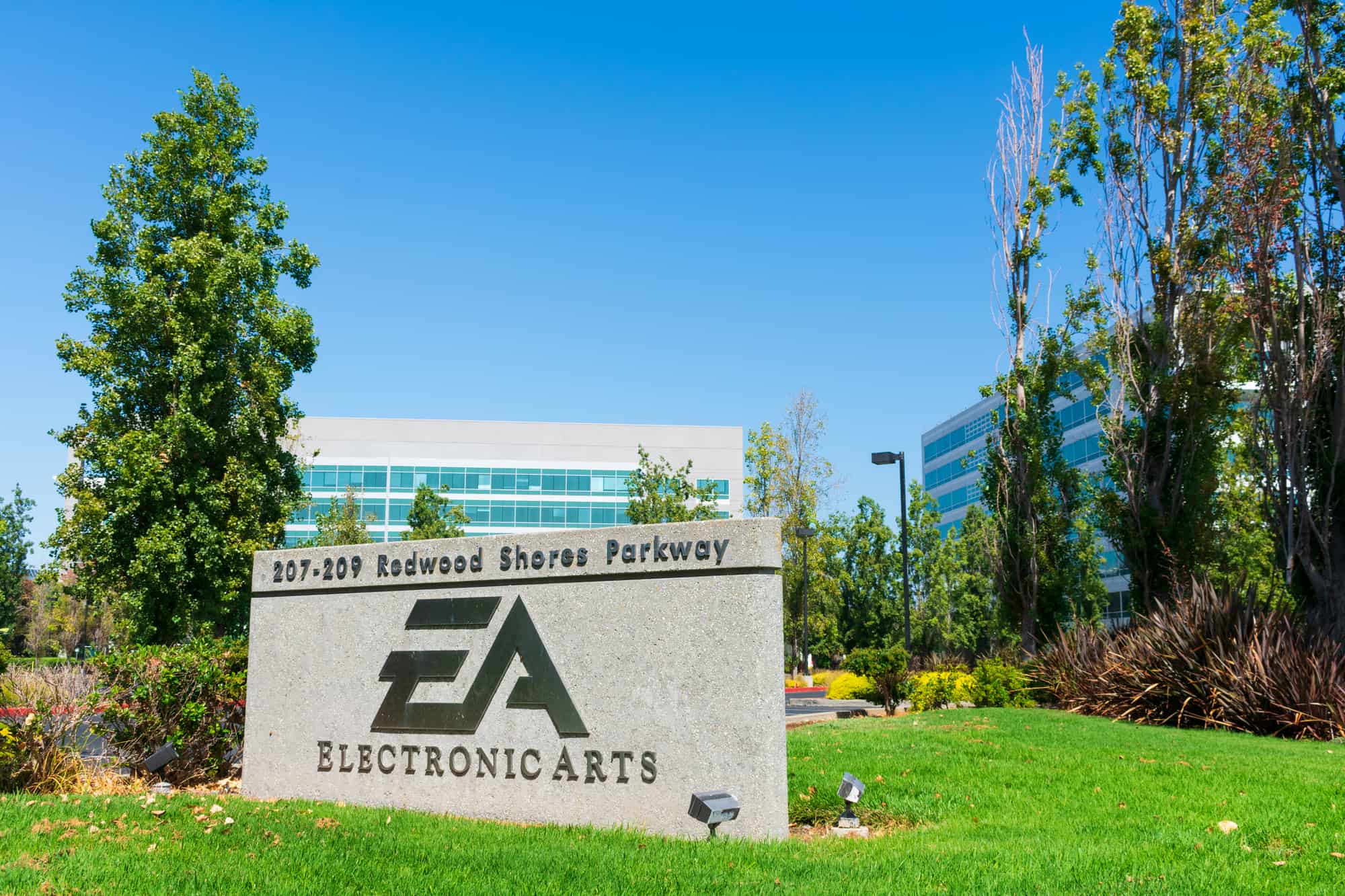
Electronic Arts Trims 6% of Its Workforce as Part of A Restructuring Plan

0

Video game company headquartered in Redwood City, California, Electronic Arts (EA) has announced plans to trim its workforce by 6%, which is equal to about 800 jobs, as part of its restructuring plan.

The company also announced plans to move away from certain projects and reorganize certain teams as it aims to reduce its office space.

According to the company’s CEO Andrew Wilson, he disclosed via a press release that the upcoming layoff implementations were communicated to employees at the beginning of the company’s current quarter.

In a note to employees, he wrote, 

“As we drive greater focus across our portfolio, we are moving away from projects that do not contribute to our strategy, reviewing our real estate footprint, and restructuring some of our teams. These decisions are expected to impact approximately six percent of our company’s workforce.

This is the most difficult part, and we are working through the process with the utmost care and respect. Where we can, we are providing opportunities for our colleagues to transition onto other projects. Where that’s not possible, we are providing severance pay and additional benefits such as health care and career transition services.”

EA, which had about 12,900 staff at the end of March last year, expects to incur between $170 million and $200 million in charges related to the restructuring.

The game sector has grown over the past decade, culminating in an explosive boom during the pandemic. Combined sales of games, consoles and subscriptions totalled a whopping $191bn globally in 2021.

However, following the uncertain economy, video game sales so far this year were flat and spending on video game content across platforms is down at 2%. Mobile gaming has typically offset the losses in console and PC gaming and has been the largest and fastest-growing sector in the industry for years. But this year’s decline marks a surprising downturn for mobile.

Mobile game spending in the U.S. continues to decline as consumers contend with both economic uncertainties and a new post-pandemic normal. Electronic Arts had to lower its annual bookings forecast in January after it delayed the release of a game based on the “Star Wars” franchise.

Also, video game publishers are struggling with a slowdown in player spending in the face of decades-high inflation, a change in fortunes from the significant growth witnessed during the covid pandemic.

Game software company Unity Software Inc., Tencent Holdings Inc.’s Riot Games, and Israeli gaming company Playtika Holding Corp. have all laid off a part of their workforce, but EA’s cuts are the biggest in 2023. Other companies that have laid off large numbers of employees due to the uncertain economy, include Take-Two Interactive, Meta, twice, Google, Microsoft, and Amazon.

Loopring (LRC) and Stellar Lumens (XLM) See Decline in Confidence From Investors, Bulls Swarm to Uwerx (WERX) Presale

1

Anyone with a little knowledge of the crypto market is aware of just how volatile it is. Compared to traditional financial areas, like the stock market, the crypto industry is greatly influenced and shaped by rumors and opinions.

The drawdown of the crypto market has been around 74%, and this has largely shaken investor confidence. Investors are, therefore, now looking for the next big token and investing as early as possible.

While cryptos like Loopring (LRC) and Stellar Lumens (XLM) showed potential earlier, they have been showing a downward trend over the past few months. Alternatively, Uwerx has caught the attention of investors. Analysts have predicted WERX could reach $2.60 by Q1 2024.

Loopring (LRC) Is Plummeting 

Priced at $0.1989 with a market volume of $16,020,315, Loopring (LRC) is a coin of the DEX protocol built on the Ethereum network. While the main selling point of Loopring (LRC) is zk-rollups, experts consider the token to be a high-risk investment. 

For a long time, Loopring (LRC) has struggled to endure the turbulent market winds, which has led to a constant decline in its price.

Due to an online rumor that Loopring was collaborating with GameStop, the token attracted a lot of interest at first. The reported decision by GameStop to abandon its acquisition of Loopring (LRC), however, had a significant impact on the token’s valuation. 

 The Decline of Stellar Lumens (XLM) 

Stellar Lumens (XLM) is priced at $0.073302 with a market volume of $55,168,181. While Stellar Lumens (XLM) initially showed potential, its 59% drop in the last few months has been alarming. 

Stellar Lumens (XLM) no longer intends to produce additional lumens after destroying half of them. This casts doubt on its investment potential.

Whilst Stellar Lumens (XLM) is quite an old crypto, it comes with significant risks. And analysts are observing bearish signs in the price of Stellar Lumens (XLM) in the past couple of months, which is not a good sign.

Uwerx (WERX) Could Be the Next Big Thing

Uwerx is priced at $0.005 during its presale with a market volume of X. WERX is in its presale stage and projected to revolutionize the freelancing market. The unpredictable nature of the crypto market makes it difficult for investors to understand which tokens to hold. Reassuringly, the Uwerx project has had its audits reviewed and approved by both InterFi Network and SolidProof.

However, with its inherent benefits over conventional freelancing platforms, Uwerx is projected to become a dominant player and potential blue-chip token in the market. Some of its perks include:

  • Transparent record-storing
  • Quick transactions
  • Intellectual property rights protection
  • Increased security
  • Reduced fees (5% vs 20% at Upwork and Fiverr)

How Can Uwerx (WERX) Be a Good Opportunity? 

Uwerx has strong fundamentals and development prospects. As any seasoned investor would know, making big gains frequently involves investing early in projects. With the drop in tokens like Stellar Lumens (XLM) and Loopring (LRC), investors are eyeing WERX as it is predicted to increase by 8,500%.

With benefits like robust security and reduced fees, investors cannot afford to miss out on WERX. The future of freelancing appears promising, and Uwerx can be a positive move in that path. Predicted to reach $2.60 in 2023, Uwerx can outperform tokens like Stellar Lumens (XLM) and Loopring (LRC).

Thus, investors must get this crypto if they wish to make big gains in the future. Liquidity will be locked after presale for 25 years, contract ownership will be renounced when the project is listed on a centralized exchange and discount prices aren’t going to last much longer. The crypto crash nor global market conditions certainly haven’t phased the future of freelancing out! Find out more using the links below!


Website: www.uwerx.network

Presale: invest.uwerx.network

Telegram: https://t.me/uwerx_network

Twitter: https://twitter.com/uwerx_network

NEAR Protocol (NEAR), Filecoin (FIL) Price Prediction 2023: Uwerx (WERX), A Revolutionary Freelance Platform

0

Investors looking for good investments in 2023 want to see some quality in cryptocurrency projects. The days of easy valuations may be over with the rise in interest rates across the globe. Liquidity is harder to find, and the best projects will be rewarded. This is our 2023 price prediction for NEAR Protocol (NEAR), Filecoin (FIL), and Uwerx (WERX).

Uwerx (WERX) is Tipped for Success

We’ll start with Uwerx (WERX) which likely has the best chance of a big price. Some analysts have suggested a 6,000% advance for the WERX token. It is currently available in presale and investors can get their hands on a coin with some good price drivers. Uwerx (WERX) is targeting a niche area with a freelance work platform. This is a fast-growing and lucrative sector that was boosted by pandemic changes to working. Reassuringly, liquidity will be locker in after presale and for an additional 25 years later.

Uwerx will bring this niche onto the blockchain and can benefit from first mover advantage. Uwerx (WERX) is set to disrupt an industry monopolized by Upwork and Fiverr. The digital ledger can shake up an industry that has been criticized for high fees (20% with Fiverr and 10% with Upwork) and slow payment processing. Uwerx (WERX) is still under the radar and can get a rocket boost when it attains mainstream attention and exchange listings. This could be an opportunity to get a potentially future blue-chip cryptocurrency at an extremely good price. In 2023, it is not inconceivable to see WERX trading around the $1.00 level.

NEAR Protocol (NEAR) Seeks to Shake off Gloom

NEAR Protocol (NEAR) was trading at $20 in 2021 at the peak of the bull market. The coin slumped to lows above $1.00 in 2022 and has seen a recent rally. NEAR Protocol (NEAR) emerged in the crypto industry with a bang when it received $350 million in funding after its launch. Hedge fund Tiger Global led the charge and the project reached a valuation high of $12.5 billion.

NEAR Protocol (NEAR) now has a market cap of $1.3 billion and ranks at number 33 in the list of coins. One headwind for NEAR could be financial problems at a firm which is facing a fallout from the FTX collapse. Digital Currency Group, led by Barry Silbert, saw its Gemini exchange and Silvergate Capital companies running into concerns. DCG had to cover $8.5bn in withdrawals, bringing their cash to $3.5bn. NEAR Protocol (NEAR) is one of the company’s holdings. NEAR Protocol (NEAR) could see headwinds from forced selling but should recover to around $5.

Filecoin (FIL) was Hit Badly in 2022

Filecoin (FIL) saw a disastrous plunge in 2022 with a drop from a high of $180 to around $3. Filecoin (FIL) is a decentralized storage network, but the project has to fight against the tech giants in the cloud such as Microsoft and Amazon. When crypto was in a bull market, Filecoin (FIL) saw its value soar. As sentiment turned negative, hopes for mass adoption faded.

Filecoin (FIL) will need to see large-scale adoption of cryptocurrency by institutions and that could be slow after recent market setbacks. For that reason, our price prediction for 2023 is around the $12 mark.

However, we do believe the Uwerx platform stands to give potential investors more gains as it has presents a unique opportunity for investors to get into a future blue chip cryptocurrency and a project that seeks to solve real world problems in a high growth industry. Interfi Network and Solidproof have both certified the audits for Uwerx and liquidity has been locked for 25 years after presale ends, join the presale of 2023 (currently at $0.005) by following the links below:

Website: www.uwerx.network

Presale: invest.uwerx.network

Telegram: https://t.me/uwerx_network

Twitter: https://twitter.com/uwerx_network