
DD
MM
YYYY

PAGES

DD
MM
YYYY

spot_img

PAGES

Home Blog Page 4310

Digital Currency Group (DCG) Says It Sees Resolving Genesis Chapter 11 Bankruptcy Soon

0

Digital Currency Group (DCG), the parent company of Genesis crypto exchange, said it expects to resolve the Chapter 11 bankruptcy case of the exchange soon. The company filed for bankruptcy protection in June, citing liquidity issues and regulatory challenges. DCG is one of the largest and most influential companies in the crypto space. It owns and operates several subsidiaries, including Genesis, a leading crypto trading and lending platform, Grayscale, a crypto asset manager, CoinDesk, a crypto media outlet, and many others. DCG has been a pioneer and a supporter of innovation and adoption in the crypto sector.

In a blog post, DCG CEO Barry Silbert said that the company has been working closely with the bankruptcy trustee, creditors, and regulators to find a solution that would allow Genesis to resume operations and repay its debts. He said that the company has made significant progress and hopes to announce a resolution in the coming weeks.

Silbert added more details about the bankruptcy situation, explaining that Genesis had faced a series of setbacks that led to its financial difficulties. He said that the exchange had suffered from a cyberattack in March, which resulted in the loss of some customer funds and data. He also said that the exchange had faced increased scrutiny and pressure from regulators, who had imposed stricter rules and requirements on its activities.

However, in 2022, DCG announced that it had filed for Chapter 11 bankruptcy protection in the U.S. Bankruptcy Court for the District of Delaware. The company cited “unprecedented market volatility, regulatory uncertainty, and operational challenges” as the main reasons for its decision. DCG also said that it had secured $500 million in debtor-in-possession financing from a group of lenders led by Silver Lake Partners, a private equity firm.

Chapter 11 bankruptcy is a legal process that allows a company to reorganize its debts and assets under the supervision of a court. It is different from Chapter 7 bankruptcy, which involves liquidating all the company’s assets and distributing them to creditors. Chapter 11 bankruptcy gives the company a chance to continue operating while negotiating with its creditors on a plan to repay them over time.

According to DCG’s press release, the company intends to use the Chapter 11 process to “strengthen its balance sheet, optimize its cost structure, and position itself for long-term growth”. DCG also stated that its subsidiaries, including Genesis, will continue to operate as usual and that its customers and partners will not be affected by the bankruptcy filing.

However, some experts and analysts have expressed doubts and concerns about DCG’s future and its impact on the crypto industry. Some of the questions that have been raised include:

How will DCG’s creditors react to the bankruptcy filing and what are their claims on DCG’s assets?

How will DCG’s bankruptcy affect its subsidiaries’ operations, especially Genesis, which holds billions of dollars’ worth of crypto assets on behalf of its clients?

How will DCG’s bankruptcy affect its reputation and credibility in the crypto space and among regulators, investors, and customers?

How will DCG’s bankruptcy affect the overall sentiment and confidence in the crypto market, which is already facing significant challenges from regulatory crackdowns, cyberattacks, and environmental issues?

He elaborated on how the cyberattack happened, saying that a group of hackers had exploited a vulnerability in the exchange’s software and gained access to its servers. He said that the hackers had stolen some of the exchange’s cryptocurrency holdings and deleted some of its records and backups. He said that the attack had caused significant damage and disruption to the exchange’s operations and security.

He said that these factors had caused Genesis to lose some of its market share and revenue and had made it harder to access liquidity and funding. He said that the company had tried to address these issues but had ultimately decided to file for Chapter 11 protection to avoid further losses and protect its assets.

Silbert said that DCG remains committed to the crypto industry and believes that Genesis is a valuable asset that can provide innovative services to its customers. He said that DCG has invested over $200 million in Genesis since acquiring it in 2016 and has supported its growth and expansion into new markets and products.

He also thanked the Genesis team, customers, and partners for their patience and support during this difficult time. He said that DCG is confident that Genesis will emerge from this process stronger and more resilient than ever.

“We are optimistic about the future of Genesis and the crypto industry as a whole. We believe that crypto is here to stay and will continue to transform the world of finance. We look forward to sharing more updates with you soon,” Silbert wrote.
Binance CEO on Stablecoin Strategy: Diversify to spread risk across different Stablecoins

0

Stablecoins are digital assets that are designed to maintain a stable value against a reference currency, such as the US dollar or a basket of currencies. Stablecoins are often used as a medium of exchange, a store of value, or a unit of account in the crypto ecosystem, especially for traders and investors who want to avoid the volatility of other cryptocurrencies.

However, stablecoins are not without risks. Some of the challenges that stablecoin issuers and users face include regulatory uncertainty, technical vulnerabilities, market fluctuations, and liquidity issues. These risks can potentially affect the stability, security, and usability of stablecoins, and pose threats to the wider crypto industry and the global financial system.

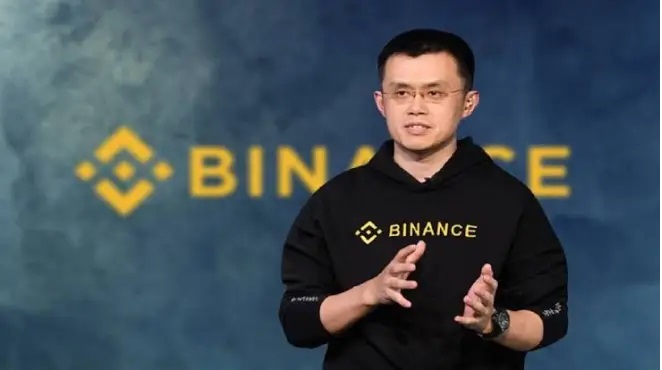
That is why Binance, the world’s leading cryptocurrency exchange and ecosystem builder, has adopted a diversified and prudent approach to its stablecoin strategy. In a recent interview with CoinDesk, Binance CEO Changpeng Zhao (CZ) shared his views on the current state and future prospects of stablecoins, and explained how Binance is positioning itself to offer a variety of stablecoin solutions to its users and partners.

CZ said that Binance does not have a preference for any specific stablecoin model or issuer, but rather supports multiple options to cater to different needs and preferences in the market. He said that Binance aims to provide “a basket of stablecoins” that can serve as “a hedging tool” for users who want to reduce their exposure to the risks of any single stablecoin.

According to CZ, Binance currently supports over 30 different stablecoins on its platform, including fiat-backed ones like USDT, USDC, BUSD, PAX, and DAI, as well as algorithmic ones like FEI and FRAX. He said that Binance also plans to launch more fiat-backed stablecoins in the future, especially for regions where there is high demand for local currency pegs.

CZ also revealed that Binance is working on its own algorithmic stablecoin project, codenamed Project U, which is still in the early stages of development. He said that Project U is intended to be a “decentralized” and “community-driven” stablecoin that will use a combination of smart contracts, oracles, and governance mechanisms to maintain its peg.

CZ acknowledged that algorithmic stablecoins are more complex and challenging than fiat-backed ones, but he expressed confidence that Binance has the expertise and resources to overcome the technical and operational hurdles. He said that Binance’s goal is to create an algorithmic stablecoin that is “more transparent”, “fairer”, and “more robust” than existing ones.

CZ also commented on the regulatory landscape for stablecoins, which has become more scrutinized and uncertain in recent months. He said that Binance is always compliant with the local laws and regulations in the jurisdictions where it operates, and that it cooperates with regulators and policymakers to educate them about the benefits and challenges of stablecoins.

He said that Binance supports the development of clear and consistent regulatory frameworks for stablecoins, as long as they are not overly restrictive or discriminatory. He said that Binance believes that regulation should be “principles-based” rather than “rules-based”, and that it should foster innovation and competition rather than stifle them.

CZ concluded by saying that Binance is optimistic about the future of stablecoins, and that it will continue to innovate and invest in this space. He said that Binance’s vision is to make stablecoins more accessible, reliable, and useful for everyone in the crypto industry and beyond.

Industry Leaders to Share Insights on Shaping the Future of Banking at the Inaugural CIBN Generation Next Forum

1

Experts and the banking industry leaders have been lined up by the Chartered Institute of Bankers of Nigeria (CIBN) to speak at the inaugural Generation Next Forum. The programme, organized by the foremost banking professional body in Nigeria, will see industry pioneers and thought leaders convening for an enthralling event that would be filled with insightful discussions, strategies, and cutting-edge technology exhibitions.

The event with the theme “Industry 5.0 Banking Revolution: Insights for Generation Next’’  holds at the Queen’s Park Events Centre, Victoria Island, Lagos on Thursday 3 August, 2023. Speakers and Industry leaders lined up for the event include Ken Opara, President and Chairman of Council, CIBN;  Nath Ude, MD, Nova Merchant Bank;  Abubakar Suleiman, MD/CEO Sterling Bank; Mitchell Elegbe, Founder/CEO, Interswitch; Jacob Stanley, CEO StanbicIBTC and VP FintechNGR. The event would also feature Akin Morakinyo, Registrar/Chief Executive, CIBN; Yvonne Johnson, MD/Co-Founder, Indicina; Eizu Uwaoma, Founder & CEO, Hexavian Group; Ade Bajomo, President, FintechNGR; Nefa Etomi, Head, Expansion Strategy and Operations, Paystack as well as Iyin Aboyeji, Founding Partner, Future Africa.

The CIBN Generation Next Forum promises to be an educative and insightful event for all stakeholders in the financial and technology sectors. As traditional banking faces transformative shifts in a rapidly evolving digital landscape, this forum comes as a beacon of knowledge and foresight to address the needs of the next generation of banking professionals and customers.

Throughout the event, attendees will have the opportunity to hear from eminent speakers and industry veterans, who will share invaluable insights and strategies for shaping the future of banking. The discussions will delve into key topics such as digital banking, blockchain technology, fintech disruptions, customer experience, and regulatory frameworks, among others.

The highlight of the CIBN Generation Next Forum will be an exclusive exhibition, where emerging start-ups would showcase cutting-edge technologies and innovations in the financial world. This exhibition, organized by Opolo Global Innovation, will offer a unique opportunity for attendees to witness firsthand the latest advancements that are reshaping the financial landscape.

With its comprehensive agenda and exceptional lineup of speakers, the CIBN Generation Next Forum aims to inspire and equip banking professionals, entrepreneurs, fintech enthusiasts, and policymakers with the knowledge and tools they need to thrive in the future of finance.

The event promises to be an immersive experience for all attendees, providing networking opportunities and fostering collaborations between finance and technology experts, industry players, and innovators.

In light of the ongoing global digital revolution, the CIBN Generation Next Forum stands as a beacon of transformation and a testament to the commitment of CIBN and Opolo Global Innovation Hub in driving finance-technology collaboration in Nigeria.

Join us for the liberation of the mind on #microtransactions at Tekedia Mini-MBA Live

0

Today, we continue our conversation on the mechanics of markets as our Faculty Afolabi Olamide of Touch and Pay Technologies Ltd (YC W22), the creators of Cowry card in Lagos, comes to Tekedia Mini-MBA Live. In less than three years, they grew from 1,000 to more than 3 million users, demonstrating the power of innovation.

What do they do? They digitize small payments like N200, N300, etc, making sure that revenue is assured for merchants, owners, vendors and companies. And the vision has worked, maximally: if you take care of the kobos, the Nairas will take care of themselves.

With more than 99% system reliability through a closed network, they made customers to become FANS, and when fandom happens in markets, you thrive. And it is contactless which means the card lasts longer in the rain, sun, and harmattan. Olamide will speak, and we will learn from him on why design wins markets. The market players include danfo owners, bus drivers, shops, etc who upon deploying their solutions see bigger revenue. Yes, when leakages are blocked, revenue increases. You can also see why Tekedia Capital invested in this company.

Join us for the liberation of the mind here

Senegalese Government Suspends TikTok Until Further Notice, Over Threat to The Stability of The Country

0
The brand is growing

The Senegalese government has suspended social media platform TikTok, over concerns that the app is used to spread hateful messages, threatening the stability of the country.

The country’s Minister of Communication, Telecommunications, and the Digital Economy, Hon. Moussa Bocar Thiam, announced this via a statement on Wednesday.

The statement reads,

The minister informs the public that it has been observed that the TikTok application is the social network favored by people with bad intentions to spread hateful and subversive messages threatening the stability of the country”.

This decision by the Senegalese government is coming two days after it restricted the use of mobile internet in the country, due to hateful and subversive messages on social media, following calls for protests over the arrest of opposition politician Ousmane Sonko. He was charged with plotting an insurrection, criminal conspiracy, and other offenses.

It is worth noting that Senegal has witnessed sporadic violent protests throughout the year, as opposition supporters have accused President Macky Sall of leveling charges against Sonko to disqualify him from the next election.

Political party in Senegal, PASTEF communiqué, said that President Macky Sall in his despotic determination to hold on to power in the country, albeit by Proxy, has just opened the floodgates to chaos by imprisoning his opposition on spurious grounds.

Macky Sall’s opposition, Sonko, said a local judge in the capital Dakar ordered him held temporarily following fresh charges against him, which includes conspiracy against the state and calls for insurrection. The charges are different from an earlier one of corrupting youth.

That led to Sonko’s conviction in June this year, which ignited deadly protests across the nation with 23 people killed. Sonko is popular among Senegal’s youth and has been seen as a threat to the ruling party ahead of the 2024 election.

His supporters have said the charges are to prevent him from running again for president after he placed third in 2019 race.

The fierce politician announced while in detention that he was going on a hunger strike, urging his supporters to stand up and resist oppression. He is currently facing a string of legal woes he claims are aimed at keeping him out of politics.

With the current ban on the short-form video platform, TikTok, which the Senegalese government termed as a tool used to spread hateful content, it will only intensify the political crisis and civil unrest in the country.

These act of government nations shutting down access to the internet and different social media platforms, has become prevalent among African countries.

A reference to when the Nigerian government in October 2020 shut down citizens’ access to Twitter during the EndSARS protest against police brutality.

These shutdowns typically occur during periods of political unrest, elections, or government crackdowns on dissenting voices. Governments have cited reasons such as national security, maintaining law and order, or preventing the spread of misinformation as their justifications for these actions.

Meanwhile, shutting down social media platforms has been a controversial measure, often criticized by human rights organizations and advocates of free speech, as it restricts citizens’ access to information and limits their ability to communicate.