DD
MM
YYYY

PAGES

DD
MM
YYYY

spot_img

PAGES

Home Blog Page 4310

New Course Announcement at Tekedia Institute – Pitch Mastery

0

When you are before those investors and major customers, if you cannot communicate clearly, you go alone (i.e. no one understands). And whenever that happens, you are going back without an investment or a deal. Mastering the art of pitching to investors and customers is a very critical element when anyone is starting, building or scaling a business.

Tekedia Institute recognizes the importance of pitching, and is introducing a very important new course to be used across many programs, including Tekedia Industries, Tekedia Startup Masterclass and Tekedia Mini-MBA. It’s time for Pitch Mastery!

Our Faculty is a venerable business leader with senior management experiences in many leading companies around the world, including MTN, Ericsson, Nokia, and Avanti Communications. Today,  Jane Egerton-Idehen is Head of Sales Middle East & Africa at Meta, the parent company of Facebook.

Tekedia Institute >> only the best business executives teach here!

CBN to Release All Available Old Naira Notes to the Public to Avert NLC’s Nationwide Strike

0
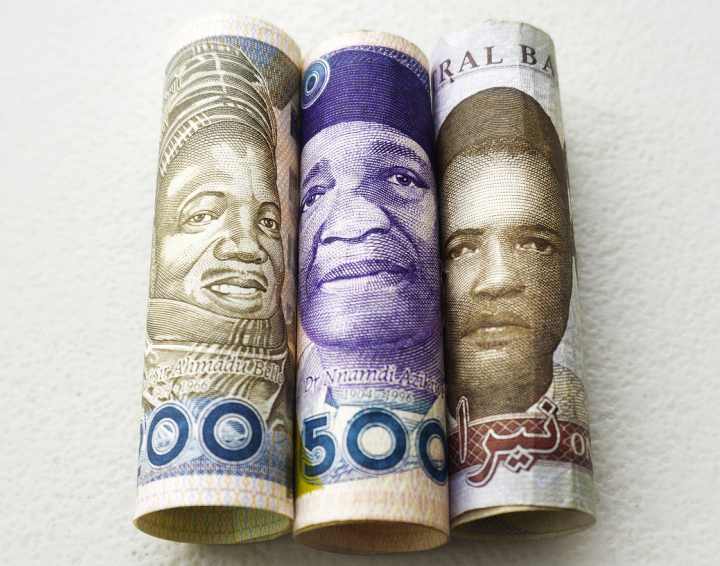
Nigerian naira banknotes are seen in this picture illustration, September 10, 2018. REUTERS/Afolabi Sotunde/File Photo

The Central Bank of Nigeria (CBN) is reportedly planning to release all N200, N500 and N1,000 notes in its vaults to commercial banks, in a move to avert proposed industrial action by the Nigerian Labour Congress (NLC).

The NLC had earlier issued a one-week ultimatum to the CBN to make cash available for Nigerians or face nationwide strike.

“CWC (central working committee) said poor implementation of the Naira re-design policy has caused considerable pain and hardship to the people.

“Accordingly, CWC resolved to give government seven working days, beginning from Tuesday, March 14, to make Naira notes available or Congress would be compelled to direct its members to withdraw services,” the NLC had said.

Following the expiration of the ultimatum, the NLC has directed public sector workers to embark on a nationwide strike beginning from next Wednesday.

The directive was given by the president, Joe Ajaero, during a media briefing on Wednesday in Abuja. He also directed the affiliates to get set for picketing of CBN branches across the federation.

The central bank has failed to push enough cash into circulation; weeks after the Supreme Court annulled the implementation of the naira redesign policy which created cash scarcity nationwide.

Total cash in circulation in the country has declined from N3.1 trillion in December 2022 to N982 billion in February 2023, according to Money and Credit Statistics. But the CBN said that N843 billion (85.8%) out of the sum in circulation was out of the banking system as at February 2023. This justifies the struggle Nigerians still face to access cash from commercial banks.

Former director-general of the National Bureau of Statistics (NBS), Yemi Kale, estimated that Nigeria lost between N10-15 trillion of national productivity in the first quarter of 2023 to the crippling impact of the naira redesign policy.

Against this backdrop, the proposed nationwide strike needs to be averted, lest, the economy grinds to a halt.

The CBN governor, Godwin Emefiele, is said to be working to beat the time by immediately emptying old N200, N500 and N1,000 notes in the apex bank vaults to commercial banks for disbursement to members of the public.

The decision was made following a meeting between Emefiele and Chief Executive Officers (CEOs) of banks on Wednesday evening.

“The CBN governor met with bank CEOs this evening virtually. It was a short meeting that lasted for just about 15 minutes,” one of the bank CEOs who attended the meeting was quoted as saying.

“The governor said all old N1,000, N500 and N200 notes will be released to commercial banks beginning from Thursday. The CBN will start with crisp old notes after which the ones deposited by DMBs will be returned.

“The plan is to flood the economy with cash and ameliorate the challenges Nigerians have been passing through.”

Scarcity of Cash Persists Despite CBN Directives to Nigerian Banks to Pay Out Old Notes to Customers

0

There are reports of the scarcity of cash across the country despite the Central Bank of Nigeria’s (CBN) recent directive to banks to dispense old notes to customers.

The apex bank in a bid to ease the cash crunch across the country which has heightened frustration among Nigerians has instructed banks to desist from hoarding cash and pay out both old and new notes to customers.

Reports disclose that despite the CBN’s directive, several banks across the country are reportedly short on cash, having little or no money to offer to customers. While some bank officials said their stocks of old notes were beginning to run low, others said they had exhausted the old currencies in their vaults.

According to a cost-benefit analysis by experts and a think tank group of the CBN’s naira redesign policy and its impact on the citizens and the economy, the Nigerian economy is grinding to a halt with a  loss estimated at  N20 trillion following the over 70 percent mop-up of the currency by the CBN.

The recent cash crunch which is affecting businesses across the country and has led to low customer patronage has not only crippled economic activities but has become a major threat to the livelihoods of Nigerians.

To further complicate the shortage of cash in Nigeria, as many Nigerians have been forced to resort to the mobile transactions using traditional bank apps, there are reports of incessant failed transactions as many banks in the country do not have the capacity to process the number of mobile transactions.

Due to this, the usage of electronic payment or e-payment systems recorded an abysmal 41.29 percent month-on-month rise, while cashless payment gateways used in the month of February were 901.46 million times, up from 638 million times in January.

Despite an increase in usage, the total value of cashless transactions fell in February, indicating that the number of failed transactions increased due to poor network infrastructure. This is contrary to the expectation of the Central Bank that the naira redesign policy will increase e-payment transactions in my country.

The fallout of the cashless policy has proved disastrous, with far-reaching socioeconomic consequences. Analysts disclose that the federal government and the CBN underestimated the cost-benefit side, which is now causing large-scale disruptions in the economy and loss of productivity.

They further maintained that the timeframe for implementation of the policy was unrealistic and not carefully considered. Some other consequences include inflation, unemployment, and economic growth slowing down. Statistics indicate that Nigeria’s Gross Domestic Product (GDP) will contract by N19 trillion in the first Quarter (Q1) of 2023.

Following the completion of elections in the country, citizens expect that there should be a massive flow of cash in the society, unfortunately, Naira scarcity persists. Citizens and experts have called on the CBN to do something urgently to address the naira scarcity before it further worsens the economy.

Workera Raises $23.5 Million in Series B Funding Round to Expand Product Offering

0

Skills intelligence platform that redefines how enterprises understand, develop and mobilize talent, Workera has announced the raise of $23.5 million in a series B funding round to expand product offerings.

The funding round was led by Jump Capital with participation from existing investors such as NEA, Owl Ventures, Sozo Ventures, and AI Fund.

Commenting on the recent fundraising, Workera CEO Kian Katanforoosh said that the fresh funds will be put toward expanding Workera’s product offerings and growing the size of its developer team.

In his words,

We have been fortunate to secure a sizable capital round amid a difficult environment largely owning to our success thus far and growing roster of Fortune 500 clients. The pandemic and the current market have forced companies to reassess their operating costs, look internally to develop employees and fill skills gaps in their business. This climate presents a market opportunity for us to drive increased sales of our precision upskilling solution as enterprises look to intelligently invest in and support their talent”.

He added, “The technology landscape is constantly evolving, and new technologies emerge regularly, that is why I expect enterprises to increase their spend on upskilling and retaining their employees to build technology skills like AI. The half-life of skills is also the lowest it has ever seen, so reinvention is the new norm for employees in the enterprise”.

With Workera, companies employees get role and goal specific learning plans, while companies have the ability to measure skills and create custom upskilling plans. Using a skills dataset with millions of measurements across over 7,000 skills to train AI algorithms, Workera claims to be able to understand the relationship between skills and measure more skills in less time by inferring whether someone has a skill or not.

Workera as a skills intelligence platform is redefining how enterprises understand, develop, and mobilize talent. It provides actionable skills data that inform firms talent strategies across hiring, upskilling, and mentorship.Currently spanning technologies like data science, AI, software, machine learning, cloud, and more, the startup domains and measurement evolve with the pace of the industry.

It would be recalled that Workera in 2020 raised a $5 million seed fund to further extend its adaptive skills assessments platform that helps workers unlock their full potential in data science, machine learning and other AI technologies. The World Economic forum (WEF) predicts upwards of 150 million new AI-related jobs will be created in the next two years, while only 300,000 AI professionals exist in the global workforce today.

To address the growing challenge, Workera founders Katanforoosh and Lee took an inventive bottoms-up approach to assessing and benchmarking skills that directly maps to enterprise-wide development. Informed by their experience teaching AI to over millions of people and upskilling 100+ Fortune 500 companies, the team devised a suite of computerized adaptive assessments to evaluate the more than 500 micro skills needed to carry out the essential tasks that make up Data and AI projects.

London Court Found Former Nigerian Deputy Senate President Ike Ekweremadu, Wife Guilty of Organ Trafficking

0

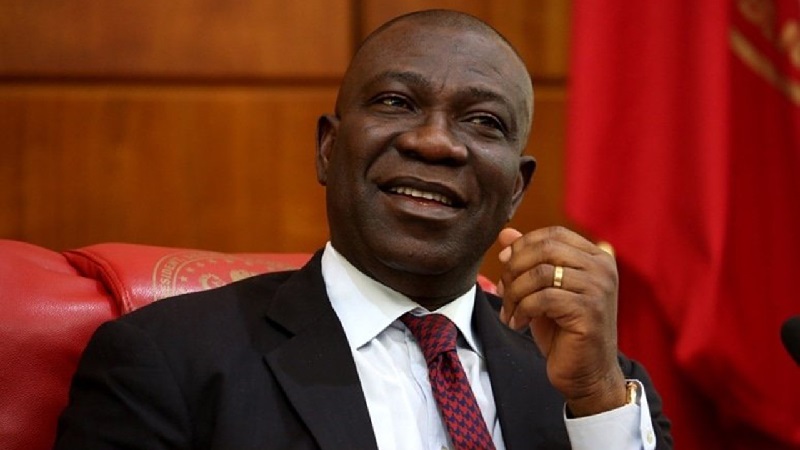
Former Nigerian Deputy Senate President, Ike Ekweremadu and his wife Beatrice, have been convicted by a London court for organ trafficking, following a six-week trial at the Old Bailey.

Ekweremadu was arrested in London in mid last year for attempting to exploit an organ from a young Nigerian man who he claimed to have altruistically donated a kidney to his ailing 25-year old daughter.

Also convicted were Ekweremadu’s wife and one Dr Obinna Obeta, who were all found guilty of facilitating the travel of the victim to Britain with a view to his exploitation.

The jury said in the first of its kind verdict under the Modern Slavery Act, that they criminally conspired to bring the 21-year-old Lagos street trader to London to exploit him for his kidney.

Ekweremadu 60, and his wife 56, were arrested in June last year in London after investigation by detectives found potential offences under modern slavery legislation. His wife was granted bail while Ekweremadu was remanded in prison as the trial went on.

The court was told that the victim, who cannot be named for legal reasons, had been offered an illegal reward to become a donor for the senator’s daughter after kidney disease forced her to drop out of a master’s degree in film at Newcastle University.

A report below by The Guardian reveals how the prosecutors convinced the jury that the Ekweremadu’s and Dr Obeta were conducting organ-harvesting exploitation.

In February 2022 the man was falsely presented to a private renal unit at Royal Free hospital in London as Sonia’s cousin in a failed attempt to persuade medics to carry out an £80,000 transplant. For a fee, a medical secretary at the hospital acted as an Igbo translator between the man and the doctors to help try to convince them he was an altruistic donor, the court heard.

The prosecutor Hugh Davies KC told the court that Ekweremadus and Obeta had treated the man and other potential donors as “disposable assets – spare parts for reward”. He said they entered an “emotionally cold commercial transaction” with the man.

The behaviour of Ekweremadu, a successful lawyer and founder of an anti-poverty charity who helped draw up Nigeria’s laws against organ trafficking, showed “entitlement, dishonesty and hypocrisy”, Davies told the jury.

He said Ekweremadu, who owns several properties and had a staff of 80, “agreed to reward someone for a kidney for his daughter – somebody in circumstances of poverty and from whom he distanced himself and made no inquiries, and with whom, for his own political protection, he wanted no direct contact”.

Davies added: “What he agreed to do was not simply expedient in the clinical interests of his daughter, Sonia, it was exploitation, it was criminal. It is no defence to say he acted out of love for his daughter. Her clinical needs cannot come at the expense of the exploitation of somebody in poverty.”

Ekweremadu, who denied the charge, told the court he was the victim of a scam. Obeta, who also denied the charge, claimed the man was not offered a reward for his kidney and was acting altruistically. Beatrice denied any knowledge of the alleged conspiracy. Sonia did not give evidence.

WhatsApp messages shown to the court revealed Obeta charged Ekweremadu 4.5m naira (about £8,000) made up of an “agent fee” and a “donor fee”.

Ekweremadu and Obeta admitted falsely claiming the man was Sonia’s cousin in his visa application and in documents presented to the hospital.

Davies said Ekweremadu ignored medical advice to find a donor for his daughter among genuine family members. He said: “At no point in time was there ever any intention for a family member close, medium or distant to do what could be paid for from a pool of donors.”

The judge, Mr Justice Jeremy Johnson, will pass sentence at a later date.