DD
MM
YYYY

PAGES

DD
MM
YYYY

spot_img

PAGES

Home Blog Page 432

Nigeria’s Thesis-to-NYSC Policy and the Promise of the NERD Databank

0

When the Federal Government announced that graduates must submit their thesis or project work to the National Education Repository and Databank (NERD) as a condition for National Youth Service Corps mobilization, it generated a wave of reactions on Facebook. Nigerians from different walks of life weighed in, offering a mix of optimism, skepticism, and policy suggestions. These public reactions are valuable because they reveal not only how citizens perceive educational reforms but also what they expect from government efforts to link education with accountability and opportunity.

Many welcomed the policy. They believe it will instill seriousness and accountability in students, discourage plagiarism, and make research more meaningful. Some noted that too many undergraduates treat their final projects as a formality rather than a chance to contribute to knowledge. Others argued that hosting these works in a national repository could build student portfolios and even open doors for commercialization and community impact. One commenter recalled a lecturer who once warned that a time would come when government jobs would require evidence of research work, a prophecy that now appears fulfilled.

Beyond the positive outlook, the Facebook discussions revealed deeper questions. A recurring concern was whether this new requirement would guarantee jobs for graduates. Several commenters asked if submitting their work would automatically translate into employment or create job avenues. Others worried that while the idea might enhance academic accountability, it does not change the reality of a labor market where most graduates struggle to practice what they studied. This tension between educational reform and employment prospects underscores a key gap in Nigeria’s development agenda.

There were also clear policy suggestions. Some argued that if government wants serious research, it should fund projects directly. Calls for research allowances for final-year students appeared repeatedly. Others broadened the debate to include entrepreneurship and skills development, proposing that graduates should receive capital loans to launch businesses based on practical skills learned in school. A few voices pushed the accountability question further, suggesting that politicians, judges, and senior officials should also have their certificates and research work verified through a similar repository. This shows how citizens see the thesis submission reform as not only about students but also about building a culture of integrity in public life.

Source: Facebook Comments on Daily Trust, 2025; Infoprations Analysis, 2025

When we compare these expectations to what the NERD databank currently offers, the gaps become clear. NERD is designed to host full texts of academic works from Nigerian universities, provide plagiarism checks, and serve as a centralized platform for education data. It already lists participating institutions and recent submissions, and its structure creates a national reference point for academic integrity. These are important steps toward building a culture of transparency in education.

However, NERD does not provide research funding, job guarantees, or entrepreneurship loans. Its role is primarily technical rather than economic. While it can help students build portfolios and make their research more discoverable, the system alone cannot create employment or solve structural issues in the labor market. The leap from repository to job avenue is possible only if deliberate policies link NERD with industry, entrepreneurship programs, and government employment processes.

This comparison highlights two important insights. First, Nigerians are ready to embrace educational reforms if they believe those reforms will create tangible opportunities. Second, the success of the thesis submission policy depends on more than technology. It requires financial support for students, strict institutional compliance, and pathways that connect academic work to industry, community development, and entrepreneurship.

If implemented carefully, NERD can do more than preserve dissertations. It can become the foundation of a knowledge economy where student research supports innovation and national development. Achieving that vision requires alignment of technical infrastructure with social and economic policies. Government must not stop at requiring submission. It must provide grants for robust research, create industry linkages to commercialize findings, and support graduates to transform ideas into enterprises.
BlockDAG Crosses $411M With BWT Alpine Formula 1® Team Deal as Solana Stalls at $239 & Cardano Holds $0.92

0

Solana (SOL) continues to capture attention, yet recurring network slowdowns and uncertain adoption strategies raise doubts about its long-term resilience. Cardano (ADA) price analysis shows similar hurdles, with the project still working to establish stronger demand drivers and cultural relevance beyond technical charts. While both are often called a top trending crypto, the challenge remains clear: scaling globally requires more than niche attention from crypto circles.

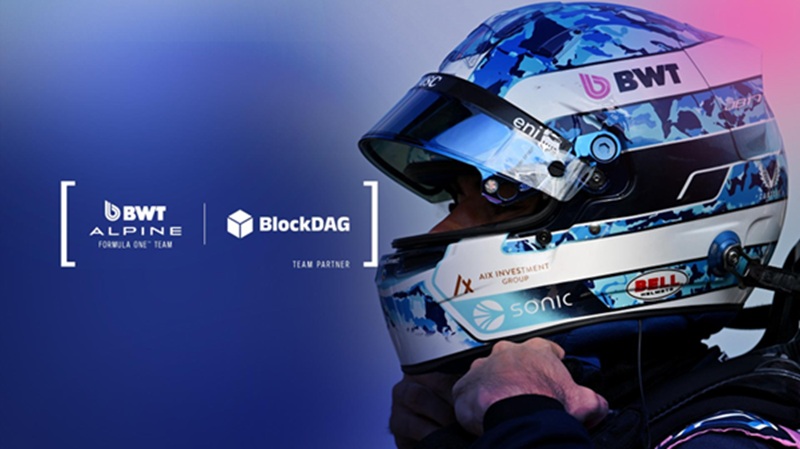
This is where BlockDAG (BDAG) stands apart. Through its multi-year BWT Alpine Formula 1® team collaboration, it integrates Web3 utilities, interactive fan events, and digital experiences into a sport followed by millions. This cultural alignment expands crypto’s reach, positioning BlockDAG as a top trending crypto built for real adoption.

Cardano Price Analysis: Key Levels to Watch

Cardano (ADA) is trading near $0.89, with recent highs around $0.91 and lows close to $0.88. Analysts note ADA is forming a symmetrical triangle pattern, with resistance between $0.92 and $0.95 and support slightly under $0.90. Breaking through the upper level could send ADA toward $1.25, but losing support might pull it back to $0.86.

Cardano’s challenge lies in capturing attention beyond its loyal user base. While ADA appears in many lists as a top trending crypto, its cultural impact is still limited. Without stronger mainstream connections, its momentum may rely primarily on technical chart patterns rather than real-world adoption.

Solana Price Update: Can It Break the Resistance?

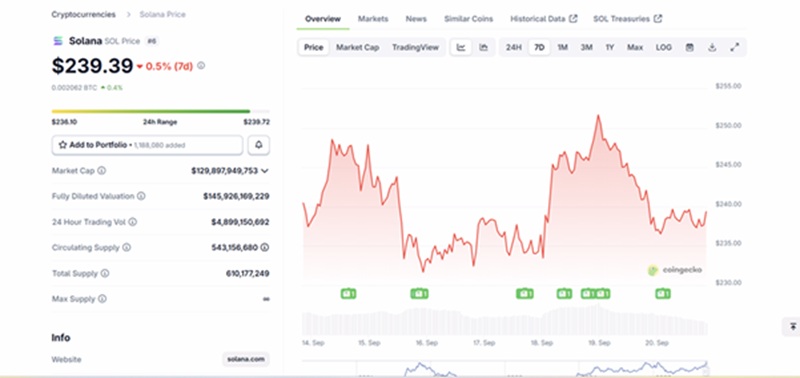
Recent Solana (SOL) performance shows the token holding around $239, with trading volumes averaging $1.5 billion per day and a market cap above $70 billion. While SOL remains a dominant layer-1 asset, recurring network slowdowns have created caution among users. Price charts show resistance near $160 and support near $150, leaving traders wondering if the token can break through or if it faces another short pullback.

Source- CoinGecko

Even with solid developer activity and institutional attention, Solana still faces the challenge of becoming culturally relevant to non-crypto users. It is frequently listed as a top trending crypto, but critics argue that its growth path remains largely confined to tech enthusiasts unless it finds a way to expand its reach.

BlockDAG Brings Web3 to BWT Alpine Formula 1® Team Fans

Unlike Solana and Cardano, which focus heavily on charts and technical narratives, BlockDAG is connecting blockchain directly to culture. Through its multi-year partnership with the BWT Alpine F1® team, it is bringing Web3 to millions of motorsport fans. Race weekends will feature interactive simulators, live fan activations, and digital tools that make blockchain accessible and engaging for a global audience.

This strategy sets BlockDAG apart as a top trending crypto with genuine staying power. Motorsport and blockchain share common themes of speed, precision, and performance, making this partnership a natural fit. Rather than competing for attention only in online forums, BlockDAG is entering mainstream spaces where audiences already gather, expanding its reach far beyond typical crypto channels.

The project’s numbers support its bold strategy. BlockDAG’s presale has crossed $411 million+, selling over 26.4 billion coins, with Batch 30 currently at $0.03 per coin. However, for a limited time, BDAG is still offered at $0.0013, creating a strong entry point before the price rises further. More than 312,000 holders have already joined, with over 1,000 new buyers daily, showing accelerating traction.

BlockDAG also boasts more than three million mobile users mining on its X1 app and hardware miners shipped to over 130 countries. These figures, combined with the visibility from its Formula 1® deal, show why many see it as the top trending crypto to watch ahead of its mainnet launch.

Final Say

While Solana trades near $160 and struggles against repeated resistance levels, and Cardano consolidates around $0.92 with traders waiting for confirmation of a breakout, both projects remain tied closely to technical charts for their momentum. Their progress depends on price action rather than broader adoption.

BlockDAG, in contrast, is proving that traction comes from cultural engagement and large-scale global partnerships that reach audiences far beyond crypto insiders. With over $411 million raised, 26.4 billion coins sold, and a presale price of just $0.0013 still available in batch 30, BlockDAG is building momentum that others lack.

By combining funding, visibility, and real-world adoption, it is positioning itself as the top trending crypto to watch.

Presale: https://purchase.blockdag.network

Website: https://blockdag.network

Telegram: https://t.me/blockDAGnetworkOfficial

Discord: https://discord.gg/Q7BxghMVyu

Binance Coin Nears Record High and Stellar Gains as BullZilla Presale Heats Up: Top New Cryptos to Join Now

0

Is the current market setting the stage for your next big crypto move? Over the weekend, Ethereum sparked renewed interest as spot markets held near the $4,014 mark, while Jump Crypto’s Firedancer team proposed Solana upgrades to remove compute-unit limits, an important reminder that the blockchain space never sleeps. Against this backdrop of innovation and bullish signals, three names are stealing the spotlight for investors hunting Top New Cryptos to Join Now: Binance Coin (BNB), BullZilla ($BZIL), and Stellar (XLM).

These assets aren’t just riding broader market optimism; each has its own fresh catalyst. BNB continues to show resilience after brushing past its all-time high of $1,079.07. BullZilla’s presale has just entered Stage 4, the “Red Candle Buffet,” and Stellar recently posted a 1.14% uptick while processing hundreds of millions of dollars in daily volume. Together, they represent a mix of established power, explosive presale potential, and steady network growth that many analysts consider among the Top New Cryptos to Join Now.

With traders eyeing late-2025 opportunities and institutional money edging back into risk assets, it’s worth digging into what makes these three stand out. Below we explore each project’s latest news, long-term fundamentals, and the specific reasons they could rank as the Top New Cryptos to Join Now.

Binance Coin (BNB): Resilient Giant Near Record Highs

BNB chain ecosystem news recently flirted with its all-time high of $1,079.07, now trading roughly 9.38% below that level, an impressive feat considering 2025’s volatile landscape. Binance has weathered regulatory storms while continuing to expand its ecosystem of decentralized finance (DeFi), non-fungible tokens (NFTs), and exchange services. That resilience places BNB squarely among the Top New Cryptos to Join Now for investors seeking blue-chip strength.


Fresh catalysts are supporting the narrative. Binance’s push into layer-2 scaling and global licensing agreements is helping maintain robust trading volumes. Meanwhile, the introduction of new staking pools and cross-chain partnerships brings increased utility for BNB holders. Analysts note that sustained network activity, combined with buyback and burn programs, can help maintain supply in check and enhance long-term value.


Additionally, BNB benefits from the ongoing migration of developers from congested blockchains. Recent Ethereum gas spikes only underscore the attractiveness of Binance Smart Chain for projects requiring low-fee transactions. These factors align with a market that prizes speed and scalability.

For investors eyeing the Top New Cryptos to Join Now, BNB offers a rare blend of maturity and growth potential, making it both a defensive and opportunistic play in the months ahead.

BullZilla (BZIL): Stage-4 “Red Candle Buffet” Presale Sparks Frenzy

BullZilla’s unique “mutation mechanism” and aggressive burn schedule have created a self-propelling hype machine. Currently priced at $0.00010574 in its 4th Stage (Red Candle Buffet), BullZilla early access tokens have already delivered impressive returns for early backers. Its dynamic presale, prices rise every $100k raised or every 48 hours, rewards those who move quickly, explaining why it’s repeatedly cited among the top new cryptos to join now.

The project’s Roar Burn mechanism permanently destroys tokens at each new chapter, tightening supply and adding scarcity. With each burn event live-tracked on the blockchain, community excitement surges, driving the “Roar Surges” that help sustain momentum.

BullZilla roadmap promises gamified staking and cross-chain compatibility, ensuring utility beyond mere speculation. Analysts highlight that these features, coupled with its viral marketing approach, position BullZilla as a potential breakout in the meme-coin and DeFi crossover niche.

  1. Current Stage: 4th (Red Candle Buffet)
  2. Phase: 4th
  3. Current Price: $0.00010574
  4. Presale Tally: Over $700k raised
  5. Token Holders: Over 2,000
  6. Tokens Sold: Over 29 billion
  7. Current ROI: 4,885.25% from Stage 4D to the listing price of $0.00527
  8. Upcoming Price Surge: 6.30% increase in Stage 5A to $0.00011241

How to Buy BullZilla (BZIL):

  1. Visit the official Bull Zilla presale website.
  2. Connect a compatible crypto wallet (e.g., MetaMask).
  3. Fund with ETH, BNB, or USDT.
  4. Select the amount of BZIL to purchase and confirm the transaction.
  5. Claim tokens after the presale concludes.

Investors searching for the Top New Cryptos to Join Now often look for asymmetric upside. BullZilla’s blend of scarcity mechanics and strong community buzz fits that profile perfectly.

Stellar (XLM): Quiet Strength and Network Expansion

Stellar is trading at $0.3623, up 1.14% in the last 24 hours, with a daily volume of $100,555,157. While not grabbing headlines like some rivals, Stellar network updates, steady performance and growing list of real-world partnerships keep it relevant as one of the Top New Cryptos to Join Now.

The network’s focus on cross-border payments aligns with global demand for faster, cheaper transactions. Recent integrations with fintech providers and central-bank digital currency (CBDC) pilots underscore Stellar’s potential as an infrastructure layer for the next generation of finance.

Institutional adoption remains a key narrative. From remittance corridors in Africa to tokenized asset pilots in Europe, Stellar’s reach is expanding quietly but effectively. This makes XLM appealing to investors seeking exposure to practical blockchain applications rather than pure speculation.

As the broader market eyes the next growth cycle, Stellar’s combination of modest volatility, consistent upgrades, and enterprise partnerships reinforces its position among the Top New Cryptos to Join Now, particularly for those looking for a balanced crypto portfolio.

Conclusion

The crypto landscape is buzzing with innovation and opportunity. Binance Coin represents blue-chip strength with continued ecosystem expansion. BullZilla captures the speculative imagination with a presale model designed for rapid appreciation. Stellar offers steady, utility-driven growth in the cross-border payments arena. Together they exemplify why these three stand out as the top new cryptos to join now.

Market timing is never guaranteed, but aligning with projects that pair fresh catalysts with proven fundamentals can tilt the odds in your favor. Whether you value liquidity, community energy, or enterprise adoption, BNB, BZIL, and XLM provide distinct pathways to participate in the next wave of crypto growth.

As always, diversification and diligent research remain key. The market rewards those who stay informed and act strategically, especially when evaluating the Top New Cryptos to Join Now.

For More Information:

BZIL Official Website

Join BZIL Telegram Channel

Follow BZIL on X  (Formerly Twitter)

FAQs

What makes Binance Coin a top pick right now?

BNB’s strong ecosystem, token-burning program, and near-record price performance highlight both growth and stability.

Why is BullZilla’s presale generating so much hype?

Its mutation mechanism, automatic price increases, and burn events create scarcity and strong community engagement.

Is Stellar still relevant in 2025?

Yes. Stellar’s expanding real-world payment and CBDC partnerships keep it competitive for cross-border solutions.

How can I purchase BullZilla tokens securely?

Use the official presale site, connect a trusted wallet, and fund with ETH, BNB, or USDT before confirming the transaction.

Are these investments risky?

All cryptocurrencies carry risk. Investors should research thoroughly and invest only what they can afford to lose.

Summary

Binance Coin, BullZilla, and Stellar stand out as the Top New Cryptos to Join Now thanks to their unique catalysts: BNB’s resilient price action and ecosystem growth, BullZilla’s Stage-4 presale frenzy, and Stellar’s steady expansion in cross-border payments. Together they offer a blend of blue-chip stability, speculative upside, and practical adoption opportunities.

Disclaimer

This article is for informational purposes only and does not constitute financial advice. Cryptocurrency investments are volatile and involve risk, including potential loss of capital. Always conduct your own research or consult a licensed financial advisor before making investment decisions.

Aster Flips Tether on 24-hour Trading Fees While Jim Cramer Says “Buy Crypto”

0

Aster DEX, a decentralized perpetual futures exchange built on BNB Chain and advised by Binance founder Changpeng Zhao (CZ), has achieved a major milestone by surpassing Tether (USDT) in daily fee generation on September 29, 2025.

According to DeFiLlama data, Aster raked in approximately $29.2 million in fees over the past 24 hours, edging out Tether’s $22.2 million and dwarfing competitors like Circle $7.7 million and Uniswap $4.19 million. This marks the first time a DeFi protocol has overtaken the dominant stablecoin issuer in daily revenue, highlighting the explosive growth in decentralized trading volumes.

Aster processed $62.5 billion in perpetual futures volume in the last 24 hours, fueled by high-leverage markets up to 1,001x and features like trade privacy to prevent front-running. Over the past week, Aster generated $93.5 million in fees—nearly 10x Hyperliquid’s $9.35 million—while trailing Tether’s $154 million overall but showing faster daily peaks.

The $ASTER token jumped 14% to around $1.96, up over 1,900% since its September launch, amid speculation of token buybacks that could trigger a supply shock. With investments from CZ’s YZi Labs and former Binance talent on the team, Aster is positioning itself as a “Binance killer” in DeFi, drawing $185 billion in weekly trading volume—more than double Hyperliquid’s.

This flip underscores DeFi’s maturation, as trading fees now rival stablecoin yields from incumbents like Tether and Circle. Analysts see it as a sign of liquidity shifting from centralized exchanges, with Aster’s integration into Trust Wallet and potential Layer-1 chain launch adding fuel.

Jim Cramer Says “Buy Crypto”

In a surprise tweet CNBC’s “Mad Money” host Jim Cramer posted simply: “buy crypto.” The cryptic message, accompanied by a photo likely symbolic or promotional, comes amid his ongoing book launch for How to Make Money in Any Market and has sparked widespread reactions in the crypto community.

Known as the “Inverse Cramer” indicator—where his calls often precede opposite market moves—this endorsement is being interpreted by many as a contrarian sell signal, with memes and jokes flooding X.

Cramer has shifted from calling crypto a “scam” in 2022 to advocating it as a hedge against the U.S.’s $37.8 trillion national debt. In July 2025, he revealed buying “a lot” of Bitcoin for his kids’ future, urging others to do the same.

He recommends keeping crypto under 5% of a portfolio as a speculative play, citing fortunes made despite volatility. In November 2024, he doubled down: “Own Bitcoin, that’s a winner.” X users are memeing it hard, with replies like “Time to sell everything”.

One post quipped: “A book on making money? Hope there’s a chapter on what to do when Jim Cramer says BUY CRYPTO.” These two headlines colliding on the same day feels like peak crypto chaos: DeFi innovation stealing the spotlight while a Wall Street icon accidentally (or not) fuels the “sell the news” vibe.

Aster’s $29.2 million in daily fees overtaking Tether’s $22.2 million signals a seismic shift in liquidity toward decentralized platforms. With $185 billion in weekly trading volume, Aster’s high-leverage perpetual futures (up to 1,001x) are pulling traders from centralized exchanges like Binance.

DeFi protocols like Aster generate revenue directly from trading activity, unlike Tether’s reliance on stablecoin yields tied to traditional finance. This shows DeFi’s ability to outpace CeFi in fee efficiency during high-volume periods.

Aster’s success, backed by figures like CZ and integrated with tools like Trust Wallet, boosts credibility for DeFi as a mature, scalable alternative to centralized systems. The $ASTER token’s 14% jump to ~$1.96 and 1,900% gain since launch reflect hype around potential token buybacks.

A supply shock could drive further price spikes, but volatility risks remain high. Higher fees could fund ecosystem growth, making $ASTER a focal point for speculative investment in DeFi.

Aster’s “Binance killer” narrative, amplified by its Binance-linked team, challenges centralized giants. Its $62.5 billion daily volume dwarfs competitors like Hyperliquid, signaling a potential reshuffling of market share.

Tether and Circle, reliant on stablecoin issuance, may face declining relevance if DeFi platforms continue capturing trading fees, especially as regulatory scrutiny of stablecoins grows.

Aster’s success bolsters BNB Chain’s position as a DeFi hub, leveraging low fees and high throughput to attract developers and traders. Features like trade privacy and extreme leverage highlight DeFi’s ability to innovate faster than CeFi, potentially drawing institutional interest despite regulatory risks.

Implications of Jim Cramer’s “Buy Crypto” Tweet

Cramer’s history as the “Inverse Cramer” indicator—where his calls often precede opposite market moves—means his “buy crypto” tweet could trigger short-term selling pressure. X posts already mock the call, with traders eyeing a dip.

Cramer’s mainstream reach via CNBC may draw new retail investors to crypto, but his mixed track record could lead to poorly timed entries, amplifying losses if markets correct. Cramer’s recent pivot to crypto as a hedge against the U.S.’s $37.8 trillion debt reinforces a growing narrative among Bitcoin bulls.

This could sustain long-term interest in BTC and other store-of-value assets, especially amid inflation fears. A Wall Street figure like Cramer endorsing crypto, even if polarizing, lends mainstream credibility, potentially encouraging hesitant investors to allocate that 5% portfolio slice he recommends.

Aster’s fee milestone showcases DeFi’s technical and economic prowess, while Cramer’s tweet reflects crypto’s growing acceptance in traditional finance circles. Together, they signal a tipping point where decentralized systems gain traction alongside mainstream narratives.

Cramer’s tweet may cause choppy price action, with traders fading his call, while Aster’s momentum could drive $ASTER and related tokens higher. Expect altcoin volatility as narratives clash.

Aster’s rise highlights DeFi’s ability to innovate and capture value, but Cramer’s influence could inflate CeFi-driven assets, creating a temporary disconnect. While Aster’s fees reflect real usage, Cramer’s tweet risks inflating speculative bubbles in unrelated tokens, potentially leading to a correction that overshadows DeFi’s structural gains.

Kazakhstan Launches State-Backed Crypto Reserve “Alem Funds”

0

Kazakhstan officially launched the Alem Crypto Fund, marking the country’s first national cryptocurrency reserve. This initiative represents a major step in integrating digital assets into the nation’s financial strategy, positioning Kazakhstan as a leader in Central Asian crypto adoption.

The fund is established by the Ministry of Artificial Intelligence and Digital Development, managed by Qazaqstan Venture Group, and registered within the Astana International Financial Centre (AIFC). It operates under the supervision of the Astana Financial Services Authority (AFSA) to ensure transparency, security, and regulatory compliance.

The fund’s debut purchase is BNB (Binance Coin), selected as the first digital asset for long-term holding. The exact amount invested has not been disclosed, but it underscores a strategic partnership with Binance Kazakhstan, a licensed entity within the global Binance ecosystem.

Primarily focused on long-term investments in digital assets to build strategic national reserves. In the future, it could evolve into a state savings tool, diversifying Kazakhstan’s economy and hedging against traditional market volatility.

Deputy Prime Minister Zhaslan Madiyev described it as a reliable instrument for major investors and a key foundation for digital state reserves.

Since 2021, the country has been a global Bitcoin mining powerhouse, peaking at 27% of worldwide hashrate after Chinese miners relocated there. It now holds 415,000 mining machines with 64 active licenses, supported by the “70/30 project” that allocates mining capacity while funding grid upgrades.

Launched Central Asia’s first spot Bitcoin ETF on the Astana International Exchange. Announced “CryptoCity,” a pilot zone in Alatau for crypto payments in everyday transactions like groceries and transport. Introduced KZTE, a Tenge-pegged stablecoin on Solana blockchain, in partnership with Mastercard and others.

National Bank outlined plans for a state-managed crypto reserve, funded by seized assets and public mining revenues. President Kassym-Jomart Tokayev has directed lawmakers to draft comprehensive digital asset legislation by 2026, including a full ecosystem for tokenized assets and institutional participation.

The reserve aligns with global trends, similar to El Salvador’s Bitcoin holdings or Norway’s sovereign wealth fund exposures via crypto ETFs. The launch generated buzz, with posts highlighting the BNB purchase and Binance tie-up. Users noted it as a “milestone in digital finance,” with one calling it a “strategic entry” amid Kazakhstan’s mining legacy.

This move could attract institutional investors and boost regional crypto hubs, though officials like National Bank Chairman Timur Suleimenov emphasize caution due to volatility. It follows a 2024 crackdown on illegal exchanges to enhance oversight.

Kazakhstan’s blend of state backing, mining infrastructure, and regulatory frameworks could set a model for emerging markets, potentially influencing similar reserves elsewhere.

By including digital assets like BNB in its reserves, Kazakhstan is diversifying beyond traditional assets like gold, foreign currencies, potentially hedging against inflation and fiat currency volatility.

The fund, backed by the Astana International Financial Centre (AIFC), signals a crypto-friendly environment, likely drawing institutional investors, blockchain startups, and foreign capital to Kazakhstan.

With 27% of global Bitcoin mining hashrate at its peak and ongoing mining operations, the fund could be partially financed by mining profits, creating a sustainable revenue stream for reinvestment.

The reserve aligns with Kazakhstan’s broader push to integrate digital assets via KZTE stablecoin, Bitcoin ETF, fostering a digital economy and reducing reliance on traditional sectors like oil and gas.

As the first Central Asian nation to launch a crypto reserve, Kazakhstan positions itself as a blockchain hub, potentially outpacing neighbors like Uzbekistan or Kyrgyzstan in digital finance innovation.

Following models like El Salvador’s Bitcoin adoption, Kazakhstan’s move could inspire other emerging markets to explore crypto reserves, enhancing its influence in global financial discussions.

The fund’s tie-up with Binance strengthens Kazakhstan’s alignment with major global crypto players, potentially deepening ties with tech-forward nations or firms while navigating U.S.-China tech tensions.

The reserve’s oversight by AFSA sets a precedent for regulated crypto markets, balancing innovation with risk management, which could serve as a model for other nations.

Kazakhstan’s vast mining infrastructure 415,000 machines, 64 licenses provides a foundation for scaling crypto-related tech, potentially supporting decentralized finance (DeFi) or tokenized asset platforms.

Kazakhstan’s crypto reserve could catalyze a shift in how sovereign wealth funds approach digital assets, encouraging other nations to explore similar strategies. It strengthens Kazakhstan’s role as a testing ground for crypto integration, potentially reshaping Central Asia’s financial landscape.