DD
MM
YYYY

PAGES

DD
MM
YYYY

spot_img

PAGES

Home Blog Page 4342

USDC DePegs Amid Silicon Valley Bank Crash

0

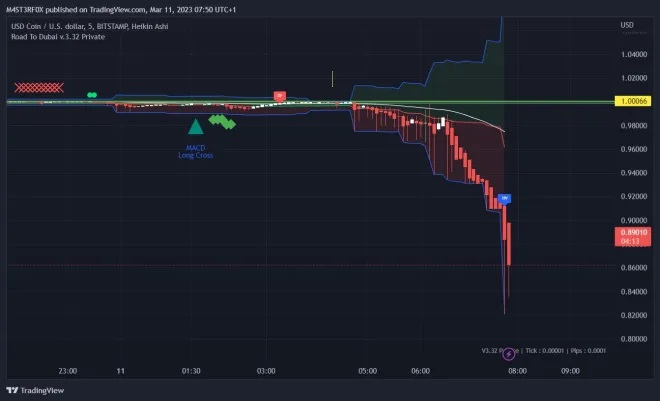
The wall surrounding Crypto stablecoins is collapsing with USDC and other major stables like DIA losing its 1:1 pegs against the US dollar. USDC stablecoin is issued by Circle with support from Crypto exchange, Coinbase just like what Binance had with Paxos in the past.

Despite the USDC depegging, $3.3B of assets may still have a potential 94% payout, 75% and more of assets are in Short-Dated US Treasury Portfolios. The USDC depeg was precipitated by the crash of Silicon Valley Bank [SBV] in which Circle has a chunk of reserves on.

Financial risk management in the past year:

BTC/ETH too volatile —> USDT

USDT too risky —> UST

UST death spiral —> $ in the bank

Bank insolvent —> USDC

USDC depeg —> —

Circle, the issuer of USDC wrote;

Following the confirmation at the end of today that the wires initiated on Thursday to remove balances were not yet processed, $3.3 billion of the ~$40 billion of USDC reserves remain at SVB. Like other customers and depositors who relied on SVB for banking services, Circle joins calls for continuity of this important bank in the U.S. economy and will follow guidance provided by state and Federal regulators.

This situation will have a long term impact on USDC even if/after peg recoverssince circle has proven unable to defend the peg. What defi protocol wants to rely on is a stablecoin that can depeg >10%. Who wants to hold that?

Even if USDC repegs after a few days

 – who wants a stablecoin that you can’t use to buy dips because it depegged.

– who will use it in defi when you can get liquidated because of depegs.

– who wants to risk being forced to baghold it when you want to use it during market stress.

For a stablecoin being always pegged is literally the point of it and what makes it usable, thus if Circle wants ppl to use it they should defend the peg, or risk losing adoption, usability and trust.

As long as Circle can continue to redeem at 1 USD, the system is working as designed and will level back out. It really depends on if they are liquid enough to make it through the panic; though I would imagine they can take some loans if necessary as well.

FUD on almost all stables due to depegging of $USDC currently trading at $0.89 at the time of writing. It’s okay to be afraid, but one thing you should know is that a lot of things happen in this space.  Be ready for anything at any time. For now I suggest you swap all your stables to #Bitcoin  to avoid getting hurt even if anything happens. I believe in the future of Decentralization and I hope everything will be okay overtime.

However, Czsamsunsb.eth is playing a big chess game on $USDC depeg; Borrow $USDT from Aave with $ETH then he converted 27.325M $USDT to 28.658 $USDC, Borrow $USDC from AAVE then converted 113.466M $USDC to $DAI. If $USDC goes 0, he made $113M from 28.658M and if $USDC is back $1, he will make $1.3M.

Following the degrading situation around USDC peg, Coinbase has announced temporary closure on USDC:USD conversion; Coinbase wrote on Twitter; “We are temporarily pausing USDC:USD conversions over the weekend while banks are closed. During periods of heightened activity, conversions rely on USD transfers from the banks that clear during normal banking hours. When banks open on Monday, we plan to re-commence conversions.”

Circle can just buyback all the USDC sold over the weekend for $0.90 and bring home a healthy 7% or 10% profit. If panic spreads in the next 48 hours they might even end up with an amount more than enough to cover any 10% or 15% haircut from SVB.

Actually, Circle can make tons of money by simultaneously doing the following: A) delay with various excuses USDC->USD conversions for a few days, B) scoop all discounted USDC in market prices from panicking sellers. The discounts can be even more than 10%, George Mastrokoukos noted.

I think the $USDC depegging situation is just going to get worse and worse till Monday, as per fud, people are swapping USDC in panic for a -20% loss, these are the ones that bought $BTC at the top last cycle.

Right now Silicon Valley Bank is under FDIC control. Is a federal bank status at this point. All staff including call-centres are under FDIC control. They are covering all deposits of 250,000$ like normal operations starting Monday at the first hour. But for those over 250,000$ they will have to wait for the liquidation of the SVB then will be handled by probably 0.xx$/ per dollar at the end. So they will still go into liquidation mode, Spawny.btc noted.

One way for the Fed to save small banks if these are even at risk would be to decrease interest rates. Probable consequence is that it’ll lead the Euro to increase over the Dollar in the coming weeks.

Belgium Joins Other Countries, Bans TikTok on Government-owned Devices

0
The brand is growing

Belgium has joined the growing number of countries to ban TikTok on government-owned devices, citing concerns about cybersecurity, privacy and misinformation. The decision comes on the heels of similar actions by the US, Canada and the European Union.

The decision means that TikTok will be temporarily prohibited from devices owned or paid for by Belgium’s federal government for at least six months, according to a post on Belgium’s Prime Minister, Alexander de Croo’s website.

The Chinese-owned company has been under the radar of Western authorities led by the US, over concern that it poses a threat to national security. Many states across the US, including Washington, have banned the use of the short-form video app on government devices.

Belgium is the latest US ally to prohibit the use of the platform on government-issued devices.

TikTok said it is “disappointed at this suspension, which is based on basic misinformation about our company.” The company said it’s “readily available to meet with officials to address any concerns and set the record straight on misconceptions.”

TikTok parent, ByteDance, has tried to distance itself from Beijing, moving its headquarters to Singapore in 2020. It has also moved its data centers away from China to mitigate the security concerns. But the efforts have failed to calm the nerves of Western authorities.

Recently, Denmark’s defense ministry ordered employees to remove the app from devices used for official business, following the steps of the US and others.

TikTok became a force to reckon with in a short time, racking up more than one billion monthly active users in challenge to US-based social media companies such as Facebook. While the growing apathy toward TikTok is said to be tied to the tech-economy rivalry between the US and China, every country that has made the decision to ban the app has cited security concerns.

De Croo said Belgium’s ban was based on warnings from the state security service and its cybersecurity center, which said the app could harvest user data and tweak algorithms to manipulate its news feed and content.

They also reechoed the warning issued by the FBI director, Chris Wray, in November, that TikTok could be compelled to carry out spying for Beijing.

“We are in a new geopolitical context where influence and surveillance between states have shifted to the digital world,” de Croo said in an online statement. “We must not be naive: TikTok is a Chinese company which today is obliged to cooperate with the intelligence services. This is the reality. Prohibiting its use on federal service devices is common sense.”

TikTok has in collaboration with US firms such as Oracle, moved its data centers to the US and Singapore, a measure the company said it has applied in Europe to ease concerns.

“The Chinese government cannot compel another sovereign nation to provide data stored in that nation’s territory,” the company said in a statement.

However, fuelled by tech-economy rivalry, TikTok’s ordeal is escalating, and may end in outright ban in the West. Early this month, the House committee approved a bill that will give President Joe Biden powers to ban apps seen as potential risk to the US national security.

TikTok said it’s disappointed by the move, adding that a US ban on TikTok is a ban on the export of American culture and values to the billion-plus people who use our service worldwide.

When the “Best” Ranked Bank Collapses within Days

0

I maintain that I should be included in the list of Richest Africans by Forbes. The reason that has not happened is because Forbes has not considered that my source of wealth – diversified education – is HUGE. And not just that, I am wholly leveraged. For many Nigerians and Africans, many think those rankings have absolute value. Nothing like that.

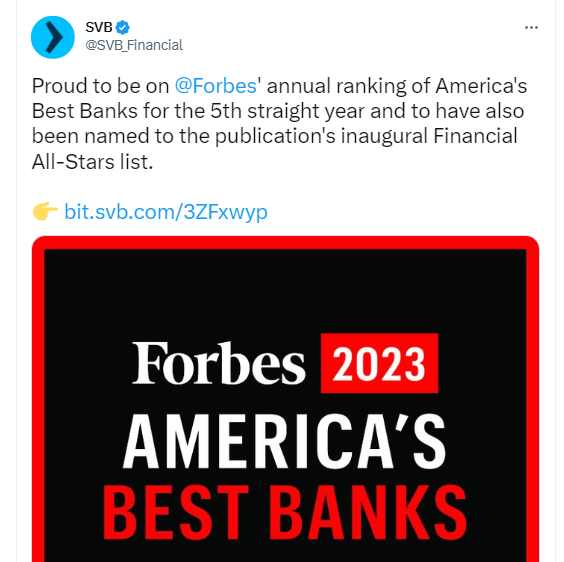
A case study: just four days ago, SVB was ranked one of America’s Best Banks! Today, that bank collapsed! If Forbes rewards me as a $billionaire, considering my diversified writing and leveraged commentary, I will accept it!

Silicon Valley Bank was shut down by U.S. regulators Friday as the troubled lender struggled to stabilize its finances amid a rush of withdrawals. The Federal Deposit Insurance Corporation took over SVB and transferred the lender’s assets to a newly created bank, the Deposit Insurance National Bank of Santa Clara. Insured depositors will have access to their accounts from Monday morning. SVB — which lends heavily to venture-backed tech startups — spiraled rapidly after announcing Wednesday it had sold a chunk of its portfolio at a $1.8 billion loss and was trying to raise more capital.

https://twitter.com/SVB_Financial/status/1632818336391213059

You can make your own case to Forbes. It is very possible you will join us in 2024 as Africa’s billionaires!

As BTC Falls, Crypto Market Drops by More Than $70 Billion

0

The Cryptocurrency market has witnessed more than $70 million wiped off its value due to the massive decline in the price of Bitcoin which fell 8% below $20,000.

The leading crypto asset traded at $19,000 which saw anxious investors express concern. Bitcoin has now lost over half of its gains from this year’s first six weeks when crypto traders drove the cryptocurrency up by around 40% and past $25k in mid-February.

Also, Ethereum fell to its lowest since mid-January, changing hands at about $1,430, closely matching Bitcoin’s decline. Two meme coins Dogecoin and Shiba Inu, both experienced declines of 11.3% and 10.3% respectively. Altcoins also witnessed declines as Stablecoins was the only exception. Tether has held on to its reign as the largest Stablecoin by cryptocurrency valuation.

The decline in the price of Bitcoin and the sell-off is attributed to several factors. Analysts disclose that the movement of cryptocurrency prices is quite correlated to U.S stock markets, in particular, the tech-heavy Nasdaq.

Federal Reserve Chairman Jerome Powell indicated that interest rates may go higher and stay higher than expected. The raising of interest rates over the past years has weighed on risk assets such as stocks, and in particular cryptocurrencies.

Analyst at Japanese crypto firm Bitbank, Yuya Hasegawa disclosed that this is not the perfect time to purchase any crypto asset, owing to the fact that the market is saturated with negative developments.

In his words, “There is just little reason to buy bitcoin now as the market is saturated with negative developments, not just specifically for the crypto industry, but also for the wider financial market as well”.

Another major factor impacting crypto prices is the shutdown of the crypto-friendly bank, Silvergate Capital, a major lender to the crypto industry.

The company wrote in a statement, “In light of recent industry and regulatory developments, Silvergate believes that an orderly wind-down of Bank operations and a voluntary liquidation of the Bank is the best path forward”.

This move is coming days after the bank disclosed that it was faced with a financial crisis, and believes that shutting down its operation is the best path forward. Its liquidation plan includes full repayment of all deposits.

Silvergate has served as one of the two main banks for crypto companies, along with New York-based Signature Bank. Bankrupt crypto exchange FTX was a major Silvergate customer.

In 2022, nearly $1.43 trillion of value was wiped off the cryptocurrency market. The crypto space in 2022 was marked by an implosion from macroeconomic issues, collapses of companies, bankruptcies, liquidity issues, and FTX collapse.

Despite the volatility in the crypto market, however, it is undeniable that the crypto industry has shown tremendous growth in the past few years. Analysts however predict that 2023 will be a good year for the crypto industry as confidence in the technology increases and more businesses decide to adopt it.

As more companies adopt blockchain technology, the need for skilled professionals to work in the sector will increase. This will create more job opportunities, which could foster further industry growth.

Also, this positive outlook has been bolstered by the fact that the industry has managed to weather the storm and shown signs of recovery even in difficult times.

Meanwhile, analysts predict that emerging crypto developments such as decentralized finance (DeFi) and decentralized autonomous organizations (DAOs) are likely to be the highest growth areas of crypto.

Banking 101 And Silicon Valley Bank Crisis

1
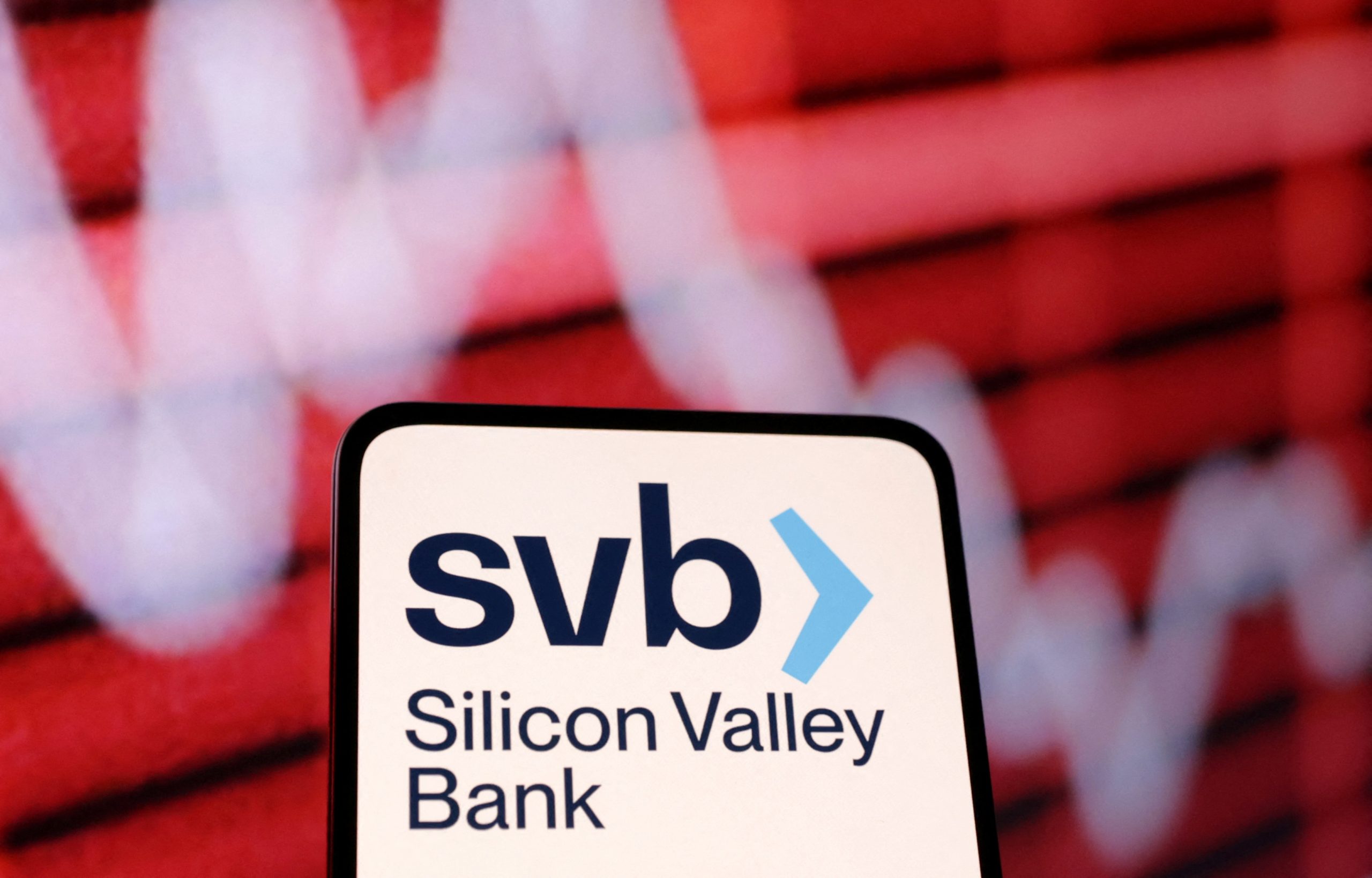
FILE PHOTO: SVB (Silicon Valley Bank) logo and decreasing stock graph are seen in this illustration taken March 10, 2023. REUTERS/Dado Ruvic/Illustration

Silicon Valley Bank comes down. Yes, the popular tech firm lender has revealed that it is in deep trouble, and within hours, the  share price tanked 60%, after announcing it needs to raise $2.25 billion to offset a $1.8 billion loss on some bond sales. Why is that happening? Blame the relatively high interest rates in the United States.

As I have noted here many times, many US banks would bleed valuation if the interest rates continue to stay high. At the beginning, they will look fine, since high interest rates mean more money from loans. Most of the loans like credit cards are not fixed rates; they are benchmarked to the prime rates which means as the prime rate changes, they change how much they charge customers. As I write, most banks are making more money from those loans.

Yet, there is an issue because before a high interest regime in a developed economy, there is always a moment of low interest rates. What do you do when interest rates go low? You load on bonds. Typically, bond prices inversely correlate with interest rates. 

Silicon Valley Bank was shut down by U.S. regulators Friday as the troubled lender struggled to stabilize its finances amid a rush of withdrawals. The Federal Deposit Insurance Corporation took over SVB and transferred the lender’s assets to a newly created bank, the Deposit Insurance National Bank of Santa Clara. Insured depositors will have access to their accounts from Monday morning. SVB — which lends heavily to venture-backed tech startups — spiraled rapidly after announcing Wednesday it had sold a chunk of its portfolio at a $1.8 billion loss and was trying to raise more capital.

Shares of SVB Financial, parent company of SVB, were suspended early Friday after dropping some 68% in pre-market trading.

VC firms had been advising portfolio companies to pull their money from the lender.

America’s four biggest banks — JPMorgan Chase, Citigroup, Wells Fargo and Bank of America — lost $52 billion in market value Thursday. (LinkedIn)

As interest rates rise, most fixed-rate bonds which are held as investments see lower yields. Banks are affected. About 2-3 years ago, with massive stimulus, citizens had surplus funds and they put those in banks as deposits. And with interest rates near zero, banks were not making much from loans, even as fewer citizens needed loans since the government was sending them cheques. What happened was banks loaded on bonds since lending was muted!

Unfortunately, right now, the values of those investments are now reduced and liabilities in the balance sheets of banks are rising. For small banks, that triggers liquidity issues and a need for more capital because you need liquidity to run a bank. That is the reality of most US banks, including SVB.

I predict that if the government does not arrest this, the projected recession will come via this path. This is possible since the government must still raise interest rates since inflation remains evident.

*Ndubuisi is an ex-Lagos banker.

Silicon Valley Bank, a major lender in the private market ecosystem, has sparked panic among venture capitalists and entrepreneurs by revealing plans to sell securities and raise billions in a public share sale to offset significant losses on its balance sheet. Following this announcement, the bank’s shares plummeted by approximately 60%, raising concerns of a bank run. Venture capitalists are advising their tech clients on where to move their money, with some recommending withdrawing deposits and relocating 6-12 months of cash burn to a more secure location. Despite the bank’s claims of being well-capitalized and possessing a high-quality, liquid balance sheet, signs of trouble are emerging, such as clients struggling to log into the bank’s website and wire transfers potentially being delayed (Fortune newsletter)

Update: SVB has collapsed, according to CNN. It was unable to raise capital

Silicon Valley Bank collapsed Friday morning after a stunning 48 hours in which its capital crisis set off fears of a meltdown across the banking industry.

Its failure marks the largest shutdown of a US bank since 2008, when Washington Mutual fell during the financial crisis.

California regulators closed down the tech lender and put it in control of the US Federal Deposit Insurance Corporation. The FDIC is acting as a receiver, which typically means it will liquidate the bank’s assets to pay back its customers, including depositors and creditors. The FDIC is an independent government agency that insures bank deposits and oversees financial institutions.

Comment: Ordinarily the bank didn’t manage their portfolio right. Huge funds with significant impact on their balance sheet if rate goes down were pushed to long term investment. If the tenor was right with good investment mix they wouldn’t have run into liquidity crisis. Or they didn’t foreseen this a year ago?

My Response: Profits corrupt in banking. To be a great banker, you need to know when to make the cut. If you have $2 billion that returns $200m yearly, it would be tough to call back that fund only for it to return $0. So seeing it is not enough as it is not physics. What if the government does another stimulus and prevents that problem? This explains why only the boring types build sustainable banking institutions, because one has to take the long game, and avoid chasing quarters.