
DD
MM
YYYY

PAGES

DD
MM
YYYY

spot_img

PAGES

Home Blog Page 4352

Top 3 Cryptos of 2023, Litecoin, Big Eyes Coin and Solana, If They Were Disney Characters

0

I Took the Buzzfeed Quiz ‘What Niche Disney Character Are You?’ Using the USPs of These Cryptos, Just for a Laugh.

The main characteristic of Disney’s main character is loyalty, and for the villains, it has to be sneakiness. But what about those niche characters – the ones like the unique selling points (USPs) of Litecoin (LTC),  Big Eyes Coin (BIG) and Solana (SOL)?

Speed of Litecoin
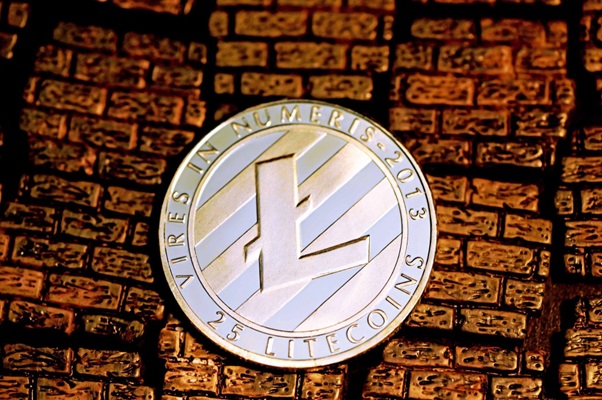
According to their whitepaper, they aim to process a block every 2.5 seconds. This is fast when compared to other cryptos, which can take minutes. So obviously, I wanted to select super speed as their superpower in the quiz. Unfortunately, as I scanned through the list of options, I could only choose from the following powers of super strength, flight, invisibility, shapeshifting, teleportation, and mind control. So I did what anyone would do in this situation. I went for the nearest option I could think of which was teleportation – the fastest mode of transport. Or, at least it will be once it is finally invented.

Quiz result: Chien Po, the bubbly and delightful soldier from ‘Mulan’. He was super fast and reliable, which suits Litecoin quite well.

Big Eyes Coin: Big Heart Coin

Big Eyes Coin was next. One of the questions was, ‘how would your friends describe you?’ Playful and passionate summed up that big-eyed cat who has set out to make a fun community for its users. Big Eyes Coin is also passionate about marine life. They are holding 5% of their Tokens to donate to ocean-saving charities! For its superpower, I chose flight because Big Eyes Coin has a target to reach for the moon, and its presale is a soaring success. They have already raised over $31 million! Use the Vault Pin 819 to get a complimentary 5,000% ROI Loot Box. WOW!

Quiz Result: Melody from ‘The Little Mermaid’. What links Big Eyes Coin with this character is that they are both driven, they have good intentions and their heart is in the right place. AWW!

Solana: Small (Energy Use) but Mighty Transactions

Solana prides itself on being carbon-neutral and climate-focused. Catchy and environmentally friendly. Awesome! This is largely what sets them apart from other cryptocurrencies out there. Their logo is a mixture of green and purple and that is the only information I needed for part one of the Buzzfeed quiz: pick a colour. I went for purple.

Solana’s superpower has to be super strength. This is because the average Solana transaction uses 3,290 Joules, according to their website. This is a fraction of the energy it takes to work on a computer which uses around 568,800 Joules or using a LED lightbulb which uses 36,000 Joules.

Quiz result: Gus, the mouse from the animated ‘Cinderella’ franchise. Not sure who that is? Well, the quiz was for niche Disney characters. Buzzfeed says that Gus fights for what he knows is right, just like Solana with their commitment to prioritising low energy consumption.

In Conclusion

Whether you are a mouse that talks about itself in the third person, a little girl who dreams of living under the sea or a soldier in a famous army, what makes us unique is what makes us special. Cryptocurrencies are no different, and they come with their own set of superpowers and quirky characteristics, too. Always do thorough research into cryptocurrencies to see if an investment is right for you.


Big Eyes Coin (BIG)

Presale: https://buy.bigeyes.space/

Website: https://bigeyes.space/

Telegram: https://t.me/BIGEYESOFFICIAL
Why are Dogetti, Sandbox, and MultiversX the Most Talked-About Cryptocurrencies in 2023 and Are Projected to Increase In Value?

0

New crypto tokens appear whenever a new technology, such as Web3, the metaverse, or artificial intelligence, is unveiled.

As the market gears up for a price surge that holds great promise, analysts are discussing a number of cryptocurrencies that have room for future growth. Major tools that traders can use to foretell the next dramatic shift in the crypto space encompass hype and trending news.

Dogetti (DETI) is one of the coins that has attracted the attention of these specialists. Although it is not possible to determine which kind of coins will perform well in the future, keeping an eye on promising initiatives like the dog-themed Dogetti Coin can assist investors in making wise choices. Read on to discover more about some of the promising crypto tokens in 2023.

Sandbox – A Future-Filled Crypto

Sandbox is a cryptocurrency project that was stimulated by the excitement surrounding the metaverse. It is one of the early virtual world pioneers to create an Ethereum-based metaverse platform. SAND, the native token that drives operations on this platform, recently rose to the top spot among the top 100 whales’ preferred cryptocurrencies. SAND is a special-purpose token with the potential to rise to the top of the token market in terms of value and use. Users can design a virtual environment in the Sandbox platform where they can interact and share content.

Sandbox is broken down into three primary areas: VoxEditor, Game Makers, and Marketplace. For those who want to design digital spaces, there is the VoxEditor. For those looking to create virtual world games, they have Game Maker. Besides this, users can buy and sell digital assets created on the platform through the Marketplace. The Sandbox’s native asset, SAND, increased by 115% in January 2023. It is currently trading at $0.627522 with a $146,749,095 24-hour trading volume.

Dogetti – The Don of Meme Coin

Dogetti (DETI) is an Ethereum Network-based ERC20 token created to target various aspects of the burgeoning cryptocurrency industry. Despite the ecosystem having a number of well-known meme coins, Dogetti’s presale success is setting a new standard in the crypto world. The intriguing qualities of DETI are what set it apart from the competition. Dogetti has sold out more than 6,673,170,000 DETI tokens in the first stage of the presale, earning $467,122 to date. Dogetti tokens are priced at $0.00007 per unit. The Dogetti presale target of 50,000,000,000 isn’t a long way away. The presale is expected to continue, with each upcoming stage seeing a gradual increase in price. The Dogetti ecosystem, which consists of Dogetti NFT, DAO, and Swap, is a one-stop solution for all the needs of the cryptocurrency community.

The Dogetti Family members will be kept updated and involved in the project’s development in the true essence of inclusivity and kin. In accordance with their “mirror protocol,” users will also be able to consistently earn additional income from the platform’s transaction fees. Dogetti is providing a one-time “secret family code,” “WISEGUY25,” during the Initial Coin Offer (ICO), which buyers can use to receive 25% more tokens with a DETI purchase.

MultiversX – Sharding Mechanism

A scalable and secure blockchain network called MultiversX aims to provide lightning-fast transaction speeds through sharding. The platform gives developers a specialized set of tools to create useful DApps that can contribute to the metaverse. MultiversX has launched the $EGLD or Electronic Gold, the native token for use in transactional operations on its platform. The $EGLD cryptocurrency serves as a medium for staking, smart contracts, governance, and the distribution of validator rewards in addition to its primary purposes.

xFabric, a blockchain subsystem for readily implementing DApps, is one of MultiversX’s most liked features. Developers can significantly change it to accommodate any use case. Correspondingly, because sharding makes it possible to scale beyond 100k TPS, it is very agile. The launch of a new version of MultiversX’s Maiar app for digital payments would be a one-stop shop for handling one’s finances.

More About Dogetti


Presale: https://dogetti.io/how-to-buy

Website: https://dogetti.io/

Telegram: https://t.me/Dogetti

Twitter: https://twitter.com/_Dogetti_

Crypto News Live Today: Decentraland (MANA) And Monero (XMR) Show Signs of a Rebound While TMS Network (TMSN) Surges in Presale

1

DeFi altcoins have continued to dominate crypto with exceptional performance, outshining their centralized counterparts for yet another week. Following a drop last week, Decentraland (MANA) and Monero (XMR) showed signs of recovery this week. TMS Network (TMSN) on the other hand, kept its head held high as it maintained its presale lead. Can Decentraland (MANA) and Monero (XMR) rise higher? Also, how far can TMS Network (TMSN) soar? Read on to find out.

Among the numerous projects running their presale campaigns, TMS Network (TMSN) stands out as a project with significant industry potential. TMS Network (TMSN) aims to revolutionize trading as we know it. What exactly is TMS Network? TMS Network is an Ethereum-based decentralized all-in-one trading platform that aims to revolutionize the traditional trading industry by providing a secure, efficient, and accessible DEX platform for traders to invest in a wide range of assets.

Decentraland (MANA) Will Fall in March

Despite Monday’s gains, March does not look promising for Decentraland (MANA). The technical analysis of Decentraland indicates a downward trend. Bears ruled Decentraland (MANA) for the majority of 2022. As a result, the price of MANA fell precipitously. On the last day of the year, the bears pushed Decentraland (MANA) to a new 52-week low.

Decentraland (MANA) experienced price gains in 2023, reaching a key price of $0.861 before reverting. Decentraland (MANA) is currently trading at $0.59, below its primary support level of $0.610, threatening an up to 30% decline. The market volume of Decentraland (MANA) has decreased by 35.44% in the last 24 hours. A drop in volume is typically an indication of bear dominance.

Monero (XMR) Is Neutral

The overall market sentiment for Monero (XMR) is slightly bearish. According to CoinCodex, Monero’s Fear & Greed Index is at a neutral 51. What’s more, sellers currently dominate the price of Monero (XMR) by a percentage of 51 – 55% across most major trading platforms. Monero (XMR) volume has also decreased by 3.63% in the last 24 hours, another indicator of slight bear dominance.

Despite massive rallies and drops in other coins over the last two months, Monero’s price volatility has been low. Monero (XMR) only gained 26% in January, followed by a 19% drop, leaving its price roughly the same as at the end of 2022. Investors looking for buy or sell opportunities in Monero (XMR) should know that Monero (XMR) is a less volatile cryptocurrency that can make small movements in any direction. 

Invest in TMS Network (TMSN) Instead

Why put your money at risk in a bearish Decentraland (MANA) or an indecisive Monero (XMR) when TMS Network (TMSN) provides a clear buy signal with higher returns? TMS Network (TMSN) presale prices represent a great buy opportunity, and here’s why you should get in now.

The TMS Network (TMSN) is a cutting-edge decentralized all-in-one trading platform. The TMS Network (TMSN) platform includes an array of features that work together to improve the trading environment. TMS Network (TMSN) solves issues like price manipulation, slow transactions, and insufficient education. TMS Network (TMSN) also enables traders to trade a broader range of asset classes, such as stocks, CFDs, cryptocurrencies, and forex. A large pool of assets provides traders with increased liquidity because they have access to more markets, allowing for faster trades and better prices for increased profits. The best part about using TMS Network (TMSN) is that you do not need to create a trading account when you visit a new trading platform. All you have to do is connect your wallet and then trade on all major trading platforms while withdrawing to your wallet.

The third reason you should buy TMSN tokens right now is that they pay you a commission. You will earn a portion of the revenue generated by any trading activity on the TMS Network (TMSN) platform if you hold TMSN Tokens. This provides TMS Token holders with a direct financial incentive to increase the trading volume on the platform, which generates more revenue for the platform and its users. Revenue distribution will be fully automated using smart contracts to ensure transparency and fairness.

The TMS Network (TMSN) presale is currently underway at $0.032. This price rises as more investors flock to the protocol and the demand for tokens rises. Market analysts predicted a 100x increase by the end of the year when TMS Network (TMSN) launches. Why let this chance slip through your fingers? Invest in the TMS Network presale today for lucrative returns in 2023.


For more information on TMS Network (TMSN:

Presale: https://presale.tmsnetwork.io

Whitepaper: https://tmsnetwork.io/whitepaper.pdf

Website: https://tmsnetwork.io

Telegram: https://t.me/tmsnetworkio

Discord: https://discord.gg/njA95e7au6

Cardano (ADA) vs Filecoin (FIL) – Which Crypto Is Better, Orbeon Protocol (ORBN) Gains Ground

0

Locating a promising crypto project in the current market can be difficult, with many coins lacking the real-world utility and growth potential that could help the value soar. However, analysts believe they have found the right one – Orbeon Protocol (ORBN), a project in Stage 9 of its public presale that could disrupt an entire industry initial value $0.004 is already up 1988% standing at $0.0835. But what will happen to this presale sensation when we compare it to coins such as Cardano (ADA) and Filecoin (FIL)? Let’s find out!

>>BUY ORBEON TOKENS HERE<<

The Orbeon Protocol (ORBN)

The Orbeon Protocol (ORBN) aims to shake the venture capital industry to its core by creating something never before done! A blockchain-based investment platform enabling investors of all income levels to purchase fractionalized NFTs secured by equity into Tier 1 startups.

Orbeon Protocol (ORBN) will find projects with excellent growth potential, mint an NFT representing a financing round for the company and then sell them partially to a large pool of investors for prices as low as $1.

Since the platform will be blockchain-based, its trustless and decentralized nature will significantly improve the environment for investors and startups.

Companies may enter the Web3 space as they reach a new audience they may not have been able to in the past, all while completing their financing rounds at a faster rate! There will also be an Orbeon Wallet, Swap, and Exchange, all powered by the ORBN token – currently priced at $0.0835. And since it has already jumped by 1988% from its starting price of $0.004, more price hikes are expected, with a $0.24 valuation predicted for it by the time the presale ends.

Get in on the presale now and enjoy a 50% deposit bonus on a top-tier platform that millions of global investors could adopt.

>>BUY ORBEON TOKENS HERE<<

Cardano (ADA)

Established in 2017, Cardano (ADA) is a token and a blockchain platform that utilizes the Proof-of-Stake (PoS) mechanism. You can use the Cardano (ADA) to cover transaction costs and participate in the PoS system.

Recently the number of Cardano (ADA) holders that have held the coin for a year has reached a new all-time high. This trend is good for Cardano (ADA) since it demonstrates an increasing belief in its potential.

At the moment, Cardano (ADA) is trading hands for $0.342, up 0.81% in the past 24 hours. However, in the last 14 days, the Cardano (ADA) has constantly dropped with a 15% fall. Even if Cardano (ADA) may see future price growth, investing in projects with more growth potential would be more profitable.

>>BUY ORBEON TOKENS HERE<<

Filecoin (FIL)

Filecoin (FIL) is a decentralized peer-to-peer storage network that allows anyone to buy and sell storage space. Customers who want storage space may buy the Filecoin (FIL) token from storage providers with extra space on their equipment.

The value of Filecoin (FIL) decreased towards the end of February but improved in March. After a strong rebound at the beginning of March, it appears that Filecoin (FIL) has cooled off. Filecoin (FIL) has a value of $6.14 with a market cap of $2.4B, down 2.01% during the last day alone.

The moving averages for Filecoin (FIL) are also displaying bearish movement in the last week, causing many analysts to grow more bearish. They predict Filecoin (FIL) will sink below $6 in the short term as more rivals emerge daily.


Find Out More About The Orbeon Protocol Presale

Website: https://orbeonprotocol.com/

Presale: https://presale.orbeonprotocol.com/register

ACADEMIC INSIGHTS: An Intellectual Debate on Cultural Studies and Political Economy, Resulting in Antagonistic Discourse

0

In academia, sustaining existing fields of study is not new because scholars constantly produce new knowledge that challenges or supports theoretical and conceptual arguments. However, developing a new field from existing ones with the proponents, scholars, aiming to partially or completely separate from the foundational principles of the sister field has attracted several intellectual debates. Some of these debates, such as the recent one among cultural studies and political economy scholars, have established the extent to which antagonistic discourse could be discerned during the debates, revealing the compatibility or incompatibility of scholars to coexist within the same theoretical and conceptual paradigms because of the claimed existential differences.

In this article, I use the intellectual debate between Nicholas Garnham and Grossberg as well as his colleague (Carey) to illustrate how cultural studies cannot completely dissociate itself from political economy. The debate started with the publication of Political Economy and Cultural Studies: Reconciliation or Divorce by Nicholas Garnham (1995a), followed by Cultural Studies vs. Political Economy: Is anybody else bored with this debate? written by Grossberg and published in 1995 as well. In the same year, Nicholas Garnham replied to Grossberg and Carey by defending some of his previous views and countering the views of Grossberg and Carey using different referential strategies (Richardson, 2007). Garnham frequently uses the positive self-presentation referential strategy of ‘our’ to depict the superiority of political economy over cultural studies, while some of the acclaimed weaknesses of cultural studies are used as part of the negative other-presentation referential strategy for substantiating his argument that cultural studies cannot be successful without being connected with political economy.

From the first paper to the third paper, the scholars create the impression that their fields of study are better with the intention of determining an appropriate intellectual hierarchy between them (van Laar, 2010). They specifically exchange information by making claims about certain theoretical bases, conceptual frameworks, stating facts and so forth, towards identifying their main and sub-arguments (Fairclough, 2003) without jettisoning “a more or less explicit or implicit ‘protagonist-antagonist’ organization” (Fairclough, 2003, p. 83). In the words of Laclau & Mouffe (1985), this movement leads them to simultaneously work towards establishing logics of difference and equivalence by using inclusionary and exclusionary approaches. At one point in their debate, the scholars identify the existing differential status of both fields, while at another point, the commonalities between the fields are established.

To really establish the antagonist discourses, in my view, the scholars deploy a polarisation approach. For instance, reductionism is frequently contrasted with economism, production with consumption, and dominant culture with popular culture, while they did not fail to disarticulate false consciousness with different meanings as they did for other elements that support their arguments. Political economy accepts the false consciousness that only the intellectuals have access to the truth, while the field of cultural studies rejects it, which Garnham considers absurd. Apart from this, another main point of disagreement is the structure of power and dominance. Garnham believes that political economy focuses on class-based issues while cultural studies tend to give gender and ethnicity equal standing despite the fact that they predate the capitalist mode of production and are largely influenced by class differences. Economic dominance is the foundation of racial and patriarchal dominance. In this case, Garnham believes that Grossberg and other cultural studies scholars cannot continue to claim that addressing framing or representational issues is sufficient for solving economic dominance. Garnham notes that structural economic problems that lead to disadvantageous representations need to be addressed.

Grossberg (1995) begins his argument by considering Garnham’s criticism as emanating from a misunderstanding of the relationship between cultural studies and political economy. This indicates that Grossberg sees the two within the context of a symbiotic relationship towards the generation of collective benefits to society. Grossberg argues that cultural studies did not reject political economy in the manner in which political economists have been presenting it to their colleagues. Despite this, Grossberg believes that cultural studies in some situations pay much attention to culture while rarely considering the larger economic contexts. However, Grossberg sees Garnham’s criticism as an attempt to reduce cultural studies from its complex nature to a black-and-white nature in an attempt to render the field irrelevant in the larger field of mass communication. Grossberg also draws attention to Garnham’s “critique by absence,” which refers to criticising a position for what it does not do or say. However, this is also out of place given the substantial research that has been done in the field of cultural studies on cultural production, reproduction, and institutions as opposed to just consumption.

Replying to Grossberg, Garnham rejects the claim credited to him that the relation between production and consumption is either simple or stable. “All production and consumption are that of commodities, although I would claim that such production and consumption are increasingly dominant—even in the cultural field narrowly defined—and that they take place in different sites which are articulated in specific ways” (p. 96). Grossberg continues to ponder what, if any, distinction exists between popular culture and dominant culture. Grossberg considers the distinction between popular culture and dominant culture in the context of capitalism. He argues that cultural studies are engaged with people’s experiences and the way to resist subordination, which is essential for overcoming power structures created by political economy and cultural studies.