DD
MM
YYYY

PAGES

DD
MM
YYYY

spot_img

PAGES

Home Blog Page 4368

INEC Admits Presidential Election was Flawed in Many Areas that Need Solutions

0

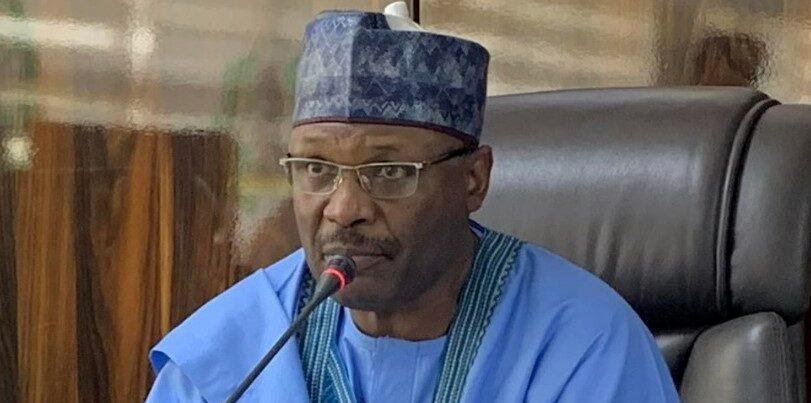
The Independent National Electoral Commission (INEC) on Saturday admitted that the February 25 presidential and National Assembly election was flawed in many areas that need immediate and long-term address.

The INEC Chairman Prof Mahmood Yakubu made the statement amid growing backlash over the conduct of the election, which has been described as a sham by many.

Speaking during a meeting with the Resident Electoral commissioners (RECs) held at the INEC headquarters, Abuja, Yakubu said the result of the election raises a number of issues that require immediate, medium and long-term solutions.

“It is imperative to review performance and assess preparations. No doubt, last week’s national elections raised a number of issues that require immediate, medium, and long-term solutions,” he said.

“The planning for the election was painstakingly done. However, its implementation came with challenges, some of them unforeseen. The issues of logistics, election technology, behavior of some election personnel at different levels, attitude of some party agents and supporters added to the extremely challenging environment in which elections are usually held in Nigeria.”

The 2023 election has so far yielded a twist to Nigeria’s political landscape, which has been at the tight grip of the two major political parties in the country – the APC and the Peoples Democratic Party (PDP). The emergence of the Labour Party (LP), a third force party backed mainly by youths known as ‘Obi-dients’ – an acronym coined from the name of the party’s presidential flagbearer Peter Obi, threw in an upset.

Obi joined the LP in May last year from the PDP, and in less than a year, he made it the party to beat with the support of the Obi-dient movement. The former Anambra State governor, who won the youths over by his impeccable record and simple lifestyle, was projected to win the presidential election by many opinion polls.

However, INEC declared Bola Tinubu of the APC the winner of the presidential election, amid allegations of voter intimidation, result manipulation and apparent failure of the Commission to transmit the results electronically from polling units to its Results Viewing Portal (IReV), in line with Nigeria’s electoral law.

Those have triggered heavy backlash and condemnation from both observers and Nigeria’s electorates. The European Union Election Observer Mission (EU EOM) said the situation has mitigated trust and confidence in INEC.

Against this backdrop, Nigerian electorates say they have no confidence in the Commission to conduct free and fair election on March 11, when governorship and state house of assembly election will hold.

But Yakubu said that a lot of lessons had been learnt and of immediate concern to the commission is how the identified challenges can be addressed ahead of the next Saturday’s governorship and state houses of assembly elections in 28 states.

He also said the commission would soon be conducting supplementary elections in 46 Senatorial and Federal Constituencies.

INEC Vows to Punish Compromised Staff, Conduct Free and Fair Election Next Saturday

0

Following the controversial outcome of the February 25 presidential and National Assembly election, which has been widely alleged to be flawed, the Independent National Electoral Commission (INEC) said it will punish every of its officials found culpable of misconduct during the electoral exercise.

INEC Chairman, Mahmood Yakubu, disclosed this on Saturday in Abuja at a meeting with Resident Electoral Commissioners RECs. The electoral umpire has been at the receiving end of backlash from Nigerian voters, groups and election observers, who said the election was blatantly rigged in favor of the ruling All Progressive Congress (APC), whose candidate Bola Tinubu, was declared the winner of the presidential election.

The allegation of election rigging, which emanated mainly from INEC’s failure to electronically transmit results from polling units to its portal in real time, using the Bimodal Voter Accreditation System, BVAS, in line with Nigeria’s electoral law, has cast fresh stench on the integrity of the electoral umpire.

In a move to save what is left of INEC’s image, Mahmood said both ad-hoc or regualr personnel found wanting for election malpractice will not be part the next election. He added that the next election, governorship and state house of assembly, will be conducted in full compliance with the electoral laws, including real-time transmission of results.

“As we approach the Governorship and State Assembly elections, we must work harder to overcome the challenges experienced in the last election. Nothing else will be acceptable to Nigerians

“All staff found to be negligent, whether they are regular or ad hoc officials, including Collation and Returning Officers, must not be involved in forthcoming elections. RECs must also immediately initiate disciplinary action where prima facie evidence of wrongdoing has been established,” he said.

Late arrival of electoral materials was part of the flaws of the presidential election – resulting in disenfranchisement. Mahmood told RECs that Election Day logistics must be finalized days before the election and must be handled by the Electoral Officers (Eos) at Local Government level.

“This has been our standard practice. Centralizing the process as was done in some States resulted in delayed deployment of personnel and materials and late commencement of polls.

“RECs will be held responsible for any tardy arrangement or the failure to deploy electric power generators to collation centers or polling units where such facilities are needed. The Commission has enough facilities in all the States of the Federation. Failure to deploy them is simply inexcusable”, he said.

Speaking on the concerns raised so far about the presidential election and how INEC intends to address them, Yakubu said there will be refresher training for ad hoc staff who participated in the last election. He explained that where there is reason to replace personnel, the new recruits must be properly trained so that processes are not delayed or compromised at any stage.

Yakubu said that the electoral body plans to address proven concerns of infractions, adding that any action taken by the Commission is without prejudice to the rights of parties and candidates to seek further remedy as provided by law.

The INEC Chairman assured that the BVAS will once again be used in the conduct of the election to accelerate voter accreditation and result management.

“Since last week, the Commission has intensified the review of the technology to ensure that glitches experienced, particularly with the upload of results are rectified. We are confident that going forward the system will run optimally”, he said.

The last Saturday presidential, House of Reps and Senatorial election, has been described as one of the most flawed in Nigeria’s history. The results are being contested by opposition parties including the Labour Party and the Peoples Democratic Party, who came second and third respectively. The parties have accused INEC of announcing doctored results in favor of the APC.

Against this backdrop, political stakeholders, interest groups and observers have called on INEC to redeem its image by ensuring that the remaining election is free from manipulation.

Unstoppable Domain accepts DogeCoin, As Key proponents still weary of possible Crypto Staking Ban

0

One of the largest Web3 domain providers in the world is now accepting the popular meme asset Dogecoin (DOGE) as an option for payments.

In a new announcement, major Web3 domain provider Unstoppable Domains says that it will now be adding DOGE to its list of digital assets that are now accepted as payment options.

Who left the DOGE out? We did! You can now buy Unstoppable domains using Dogecoin. Much ownership. Very currency. Such excite.

Source: Unstoppable Domains/Twitter

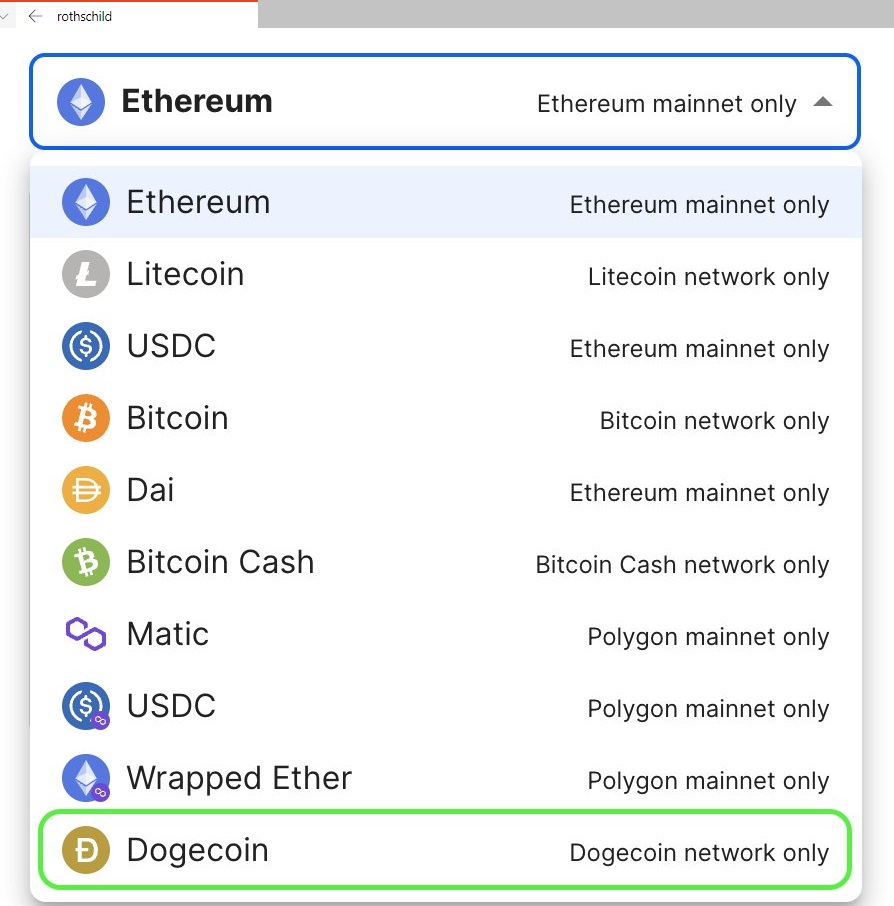
Other popular crypto assets accepted by the domain providers include stablecoins USD Coin (USDC) and DAI, peer-to-peer decentralized networks Bitcoin (BTC) and LItecoin (LTC), Bitcoin hard fork Bitcoin Cash (BCH), and smart contract platforms Ethereum (ETH) and Polygon (MATIC), as well as Wrapped Ethereum (wETH).

Recently, it was found that Dogecoin is outperforming the rest of the crypto market in terms of how many of its holders are currently above water. According to the crypto analytics platform IntoTheBlock, at least 40% of DOGE holders have consistently remained in the green. Furthermore, it found that the last time 60% of the token’s holders were underwater was back in 2015.

“Hold onto your seats DOGEArmy, Did you know that DOGE holders in profit rarely drop below 40%? In fact, the last time Dogecoin saw over 60% of holders at a loss was in 2015. Impressive, given other altcoins often suffer 90%+ losses in bear markets.”

The U.S. Exchange and Securities Commission has sparked new debates in the cryptocurrency community, among key players in the market, after Gary Gensler, the Chairman of the SEC made some important comments concerning cryptocurrency exchanges in the country.

According to Gary Gensler, cryptocurrency exchanges existing in the United States are not safe and qualified custodians for investment advisers.

He made the comment on Thursday, at the Investor Advisory Committee meeting. Gensler had made similar comments in the past and seems to be going the extra mile to reiterate his stance.

His comments are backing a proposed rule that demands that investment advisors find qualified custodians for the safeguarding of their assets. The assets also include digital currencies like Bitcoin and Ethereum. He remarked:

Based upon how crypto trading and lending platforms generally operate, investment advisers cannot rely on them today as qualified custodians. To be clear: Just because a crypto trading platform claims to be a qualified custodian doesn’t mean that it is.

Speaking on the proposal, he explains that it aligns with the rules put in place by Congress to expand custody rule as the economy witnessed many financial crises. The custody prioritizes investors’ assets above all else, he stated.

The proposal takes up Congress’s 2010 provision for us to expand the custody rule to cover all of an investor’s assets, not just their funds or securities. Congress granted us new authorities to expand the custody rule in response to the financial crisis and Bernie Madoff’s frauds. The expanded custody rule would help ensure that advisers don’t inappropriately use, abuse, or lose investors’ assets.

The market had been anticipating a move from the SEC since February after rumors started circulating that the U.S. SEC was actively making plans to ban cryptocurrency staking for retail customers in the United States.

While Cardano’s Charles Hoskinson seems to back the SEC, highlighting that Ethereum staking, in particular, was harmful to the entire cryptocurrency industry, the CEO of the leading cryptocurrency Coinbase seemed to have a different view.

Controversy Behind new Ordinal Bitcoin NFTs

0

Ordinal Bitcoin NFTs have two key features that distinguish them from others. Firstly, they are made up of on-chain data, meaning the actual image for the NFT is stored directly on the blockchain, rather than being linked to an external website like most NFTs on Ethereum.

This makes them unique and more secure, as the data cannot be lost or altered without affecting the blockchain itself. Eric Wall, a Swedish researcher and former Arcane Assets CIO, believes that storing fully on-chain NFTs is now seven times cheaper on Bitcoin compared to Ethereum.

Secondly, NFTs are linked to individual satoshis, unlike Ethereum NFTs, which have their own token. This creates a connection between the NFT and the underlying asset, Bitcoin.

However, it can be challenging to maintain this connection because Bitcoins are fungible, meaning each one is interchangeable and can only be differentiated through a complex transaction input-output system.

To solve this issue, Ordinals uses a shared numbering system that assigns every satoshi an ordinal number based on the order in which it was mined. This numbering system, along with other details, is used to maintain continuity for NFTs.

It’s important to note that Bitcoin does not natively support these features, and NFT holders may accidentally spend their NFTs on transaction fees if they are not careful.

The world of crypto, DeFi, blockchain, NFTs etc is a very community-focused space. And with every new development, the community ferociously discusses their opinions of it.

The supporters of the project suggest that it will have an overall favourable impact on the Bitcoin ecosystem. They believe that the integration of NFTs on the Bitcoin blockchain is a positive development that will bring more fees and use cases to the chain. This view is held by prominent Bitcoin influencer Dan Held, who argues that every transaction paying its fee is not spam and that the Bitcoin blockchain is open and accessible for anyone to build upon.

Some individuals believe that incorporating NFTs on the Bitcoin blockchain will negatively impact its financial and transactional use case. The CEO of Blockstream Adam Back, who is rumoured to be Satoshi Nakamoto, is a part of this group. He supports this argument and has suggested that Bitcoin users must “educate and encourage developers who care about bitcoin’s use-case to either not do that, or do it in a prunable space-efficient e.g. time-stamp way.”

He also took to Twitter to express his views on the project. He said that “”you can’t stop them” well of course Bitcoin is designed to be censor resistant. doesn’t stop us mildly commenting on the sheer waste and stupidity of an encoding, at least do something efficient. Otherwise it’s another proof of the consumption of block-space thingy.”

On the other hand, Casey Rodarmor responded to the criticism with the following arguments,

I actually love the haters,” he said. “I mean, they do more to drive people to find out about the project than anybody else. I don’t know what they think when they have these massive audiences, and they go, ‘This is an attack on Bitcoin’—it seems like you don’t want to do that if you don’t want people to use the thing.

He also added counterpoints that stated

“My design goal, from the beginning, was to create something that would strike people as being Bitcoin native. That means it can’t have a token, and it can’t be a sidechain. One thing that people don’t understand is that in order for Bitcoin to be secure, blocks must be full—that is part of the Bitcoin security model,” he said. “If blocks are not full, nobody has any reason to pay more than the minimum fee rate to have their transactions included. So, as a result, blocks must be full.”

The hype surrounding the Ordinals NFT has driven the price of the Stacks cryptocurrency (STX) up nearly 200% as of February. Ordinal NFTs, which are similar to Ethereum and other smart contract-based NFTs, use the smallest unit of bitcoin, the satoshi, to encode digital art, profile pictures, videos, audios and images directly on the bitcoin blockchain.

“The full potential of the Stacks network is beginning to be recognized which could drive the STX token rally even further,” Thielen said.

The NFT craze has faded in recent months amid the bitcoin, ethereum, and crypto price crash that wiped off nearly $2 trillion from the combined crypto market. The merger of NFTs and the bitcoin network provides greater security, transparency, and traceability, opening up more use cases and rekindling interest around NFTs.

The Central Bank of Nigeria’s Tenure Limits for Banking Executives

1

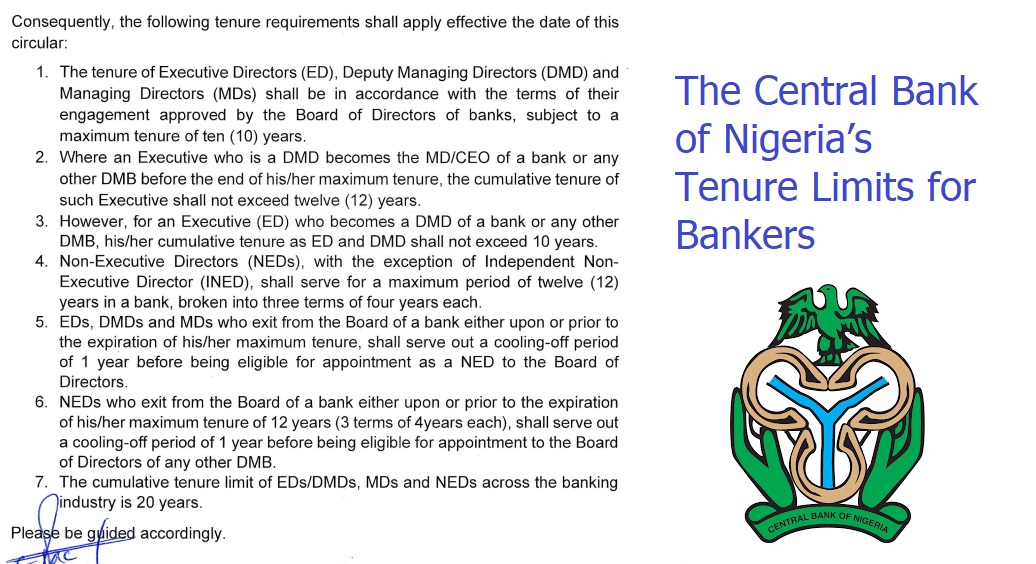
Simply, Nigerian bank executives can only serve a cumulative tenure of 20 years across the banking industry: “The tenure of executive directors (ED), deputy managing directors (DMD) and managing directors (MDs) shall be in accordance with the terms of their engagement approved by the board of directors of banks, subject to a maximum tenure of ten (10) years.”

Good People, that is an earthquake and changes are already happening, in First Bank and  Zenith Bank where the deputy managing directors have retired. But those are the easy fishes; expect the real shake-ups in the next few weeks.

Personally, I find this very fascinating and unfortunate at the same time. On the fascinating part, absolute power could corrupt and capping the tenure may help on corporate governance and succession. Yet, punishing brilliant minds for just rising fast would be painful. In other words, we can see stars being cut early in their careers.

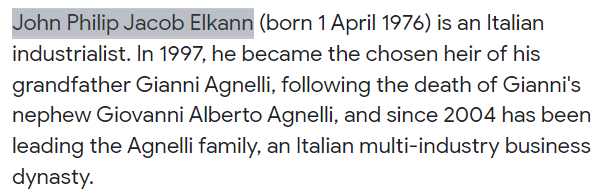
In a gala night party a few years ago, I delivered the evening oratory (the academic version of what comedians do), and when I was done, a lady came and handed me her business card, saying “I am Lady Rothschild…and my family business has been operating for more than 200 years… I enjoyed your presentation and please connect”. I did and she made some connections in New York and Zurich. Like the Agnelli Family of Italy (owners of Juventus FC club), the Rothschild Family is a family empire – and they run the shows.  By this rule, the Central Bank of Nigeria does not want that model in the nation.
Please read this explanation by Premium Times

The Central Bank of Nigeria has announced a revision of the tenure limit for executive management and non-executive directors of banks and financial institutions.

According to the review, the executives can only serve a cumulative tenure of 20 years across the banking industry.

In a circular addressed to all deposit money banks, signed by the director of financial policy and regulation department, Chibuzor Efobi, the bank said the review is part of measures aimed at strengthening governance practices in the banking industry.

“The tenure of executive directors (ED), deputy managing directors (DMD) and managing directors (MDs) shall be in accordance with the terms of their engagement approved by the board of directors of banks, subject to a maximum tenure of ten (10) years,” the central bank said in the circular, dated 24 February.

“Where an executive who is a DMD becomes the MD/CEO of a bank or any other DMB before the end of his/her maximum tenure, the cumulative tenure of such executive shall not exceed twelve (12) years.

“However, for an executive (ED) who becomes a DMD of a bank or any other DMB, his/her cumulative tenure as ED and DMD shall not exceed 10 years.”

“EDs, DMDs and MDs who exit from the board of a bank either upon or prior to the expiration of his/her maximum tenure, shall serve out a cooling-off period of 1 year before being eligible for appointment as a NED to the board of directors.

“NEDs who exit from the board of a bank either upon or prior to the expiration of his/her maximum tenure of 12 years (three terms of four years each), shall serve out a cooling-off period of 1 year before being eligible for appointment to the board of directors of any other DMB,” he CBN said.

Affected bank executives

Checks by PREMIUM TIMES showed that top executives affected by the new directive included Segun Agbaje of GTB, Tony Elumelu of UBA, Jim Ovia of Zenith and Herbert Wigwe of Access.

My Comment on Feed

Comment 1: I don’t see the similarity with the Rothchilds example.

My Response: I will not waste time asking you how or why or not. But if you care, you can explain. I respect your style of commenting, saying a lot but not helping anyone. The Agnelli family has a holdco which manages all their empires. There are many interests across industrial sectors. That holdco is run by a scion from the family.

In Nigeria, we have holdcos now managed or run by owners or sit-tight executives; right there, they control. Why the Nigerian version is young (3 decades vs hundreds of years), the pattern is the same. In one bank, the son picked from the father in Nigeria in the holdco and it is likely a family member will keep that holdco even as people are changed in the banks, etc. That is the similarity, from my angle. My note that CBN does not want that is that CBN is going all the way to holdco, not just the banks, meaning it does not want the scions to exclusively run the holdco.

Comment 2: I think that the comparison of CBN’s new guidelines with a supposedly endless tenure of private held non financial services business is not quite the same. Most Banks in Nigeria are supposedly public companies in name, in reality they’re set up to collect and collate money to be lent to favored friends and cronies. They suffer from high capital inadequacy and are mostly on the life support of the CBN. So entrenching goons as leaders of these institutions for a long term will injure the national economy. Even businesses like Rothschild have not been managed by same executives for the 200 years. CBN isn’t divesting ownership by its guidelines. It’s only making sure that management tenures don’t become too long to the injury of the institutions. Jack Welch and GE is a good example.

My Response: “private held non financial services business ” – how do you know there are non-financial? “The Rothschild family is the most famous of European banking dynasties”. “He [Agnelli] created his own bank, enabling people to purchase his cars on credit. In order to manage this empire, he founded IFI in 1927, a holding company he controlled, now known as Exor.” So, they were involved in financial services.

“Even businesses like Rothschild have not been managed by same executives for the 200 years.” – not sure since none is doing that in Nigeria for 200 years. The families do have scions run the shows for decades though!

I am not really for or against CBN policy, I only said it does not want the same playbook.

Comment 2R: Ndubuisi Ekekwe I said ‘even Rothschild hasn’t been managed by the same executives for its long life’ . It’s more common to have elongated tenure or even life tenure in privately held non financial services business.Please differentiate ownership of shares in financial services like Rothschild or Bakeshire Hathaway does from direct banking franchise like Chase and Bank of America.

My Response: ” It’s more common to have elongated tenure or even life tenure in privately held non financial services business.” I used the Rothschild and Agnelli because they have financial services under them -and they run the holdco most times exclusively by family members.

I understand your point but I want you to agree that these families do have control and command. John Elkann was about 21 when he was chosen by the Agnelli and at 28, he assumed the top job. From there, he hired the CEOs of Fiat, and financial services firm within the holdco. (See below and you can trace it back decades).

I understand Berkshire Hathaway, but I did not give it as an example; it was never a family business.