Very encouraging: The Nigerian government has ordered an immediate review of the plan to share N500 billion by N8,000 each to 12 million Nigerian households, as a palliative, to cushion the impact of subsidy removal. This is coming after the voices of the citizens were heard by the government.
I commend the government for this, and hope during the review they will pinpoint the root cause why many farmers need to be given food. Yes, our farmers generate famine and poverty, requiring the government to support them with handouts; a huge irony that in the land of farmers, farmers are hungry.
Why? It comes down to infrastructure and support systems. Let me take the case study of my village, Ovim, and Isuikwuato local government area of Abia state, in general. Before our son, then-navy commander Ndubuisi Kanu, became a governor, the road connecting Ovim to the cities like Okigwe was not there. As a result of that, many local markets did not have access to larger markets.
But when he built the road linking Ovim to Okigwe, he unlocked abundance in the village and environs. Magically, Oriendu Market became the most important market in the area, serving many communities because it has a decent road network. That road is like an economic liberation and till today, Admiral Kanu (RIP), remains an icon.
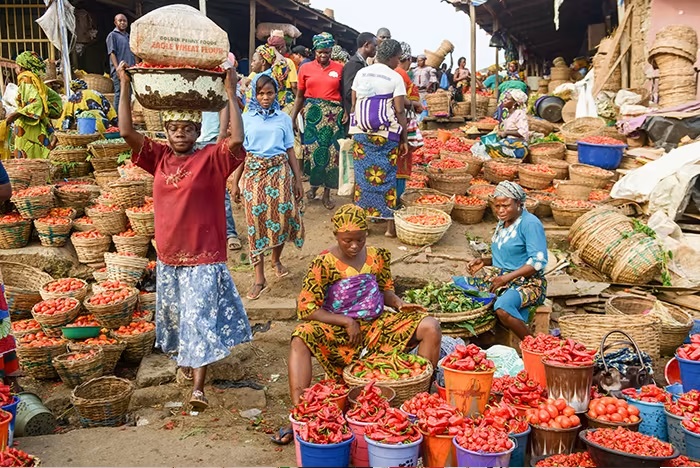
Then imagine if someone goes to Ovim and builds cold rooms which villagers could rent. So, when you come to the market to sell your farm produce, and you are unable to finish all the sales, that cold room can keep the produce fresh for the next market day, in four days. If that happens, the farmers will even become better because waste will drop.
To make that cold room work at scale, you need electricity. You get where I am going: can Nigeria use this N500 billion to provide coldroom-as-a-service in rural markets, supported by renewable energy startups? If that happens, the rural farmers will improve their incomes, and this N500 billion will become a pillar for the ascension of rural Nigeria. Of course, you can do a similar thing in many markets across our major cities.
Nigeria, do not share it; use it to build something productive!
Comment on Feed
Comment 1: Anytime I see people criticise the 8k cash transfer scheme, what comes to mind is “keynesian expenditure multiplier” but wetin I know.
My Response: I am not sure the “keynesian expenditure multiplier” works here. That works if you give that money so that local companies can produce to ensure people can keep their jobs, etc. It is likely this N8k will buy only imported products which means when you stop giving the handouts, everyone returns to ground zero.
Keynesian is designed to be a stimulant to be effective, and Nigeria has nothing to stimulant since we have no electricity, etc. If you give everyone in a village N8k, they may be fine for 4 days. But once that stops, you have not stimulated production in that village since the farmers have no electricity to build coldrooms, storage systems, etc.
Comment 1:Ndubuisi Ekekwe I taught keynesian expenditure multiplier was based on the marginal propensity to consume
My Response: You consume to help the production side. If not, when the funds end, you have not achieved anything. Under Buhari, we shared tons of money, scaling that consumerism, but with no connection to production. In the US, for example, they do it when companies are about to fold due to many factors (covid, recession, etc). By giving people money to spend, they save those companies since people buy their products. But it is not done in perpetuity. We have been sharing money for ages and that has not helped anything because it was never designed to drive and stimulate local production.