DD
MM
YYYY

PAGES

DD
MM
YYYY

spot_img

PAGES

Home Blog Page 44

PNC Bank Launches Direct Bitcoin Trading for Private Clients, Powered by Coinbase

0

PNC Bank, one of the largest U.S. financial institutions with over $400 billion in assets under management, has officially rolled out direct spot Bitcoin trading and custody services for eligible clients of its PNC Private Bank division.

This makes PNC the pioneering major U.S. bank to integrate such seamless, in-platform crypto access for high-net-worth individuals, bypassing the need for third-party exchanges.

The service is embedded directly into the PNC Private Bank Online platform via the “Portfolio View” feature. Eligible clients can now buy, sell, hold, and monitor Bitcoin alongside their traditional assets—all without leaving PNC’s secure ecosystem. This includes institutional-grade custody to ensure compliance and safety.

Coinbase’s Crypto-as-a-Service (CaaS) platform provides the backbone, handling trading, custody, and financing. Launched by Coinbase in June 2025, CaaS is designed for banks like PNC to scale crypto offerings quickly and securely, including features like stablecoin payments and tokenized assets in future expansions.

Initially targeted at PNC Private Bank’s wealth and asset management clients typically those with $1 million+ in investable assets. It’s the first phase of PNC’s broader “crypto for clients” initiative, with potential rollouts to other client segments down the line.

PNC Chairman and CEO William Demchak: “Partnering with Coinbase accelerates our ability to bring innovative, crypto financial solutions to our clients… This collaboration enables us to meet growing demand for secure and streamlined access to digital assets on PNC’s trusted platform.”

Coinbase Institutional Head Brett Tejpaul: “PNC is a market leader in delivering best-in-class products for their clients,” highlighting the mutual benefits.

This isn’t entirely out of left field—PNC and Coinbase inked their partnership back in July 2025, signaling a shift in traditional banking’s stance on crypto amid regulatory clarity. PNC had been testing the waters with blockchain pilots since joining RippleNet in 2018, but this marks their boldest move yet.

In exchange, PNC is providing select banking services to Coinbase, creating a symbiotic relationship. The launch coincides with broader market momentum: Bitcoin’s price is hovering around $95,000 today, buoyed by institutional inflows and Fed rate cut speculations.

Crypto news outlets are buzzing about this as a “key moment for institutional adoption,” with similar integrations expected from other banks soon. It democratizes Bitcoin access for conservative wealth clients, reducing friction and perceived risks. Expect a surge in BTC inflows from traditional finance—PNC’s client base alone could add meaningful volume.

It validates CaaS as a go-to infrastructure, potentially onboarding millions more users via banks. It’s a win for Coinbase (NASDAQ: COIN), whose stock is up ~2% intraday on the news. Early X chatter is positive, with posts emphasizing PNC’s “first-mover” status.

PNC is the 8th-largest U.S. bank by assets ($560B+). Once one top-10 bank crosses the line, the others like JPMorgan, Bank of America, Wells Fargo, Citi, Morgan Stanley, Goldman Sachs, will feel intense pressure to follow within 12–24 months.

Expect a wave of similar announcements in 2026–2027. Many are already in late-stage pilots with Coinbase, Circle, Anchorage, Fireblocks, or Bakkt. PNC Private Bank manages ~$190 billion in client assets. Even if only 1–3% of that eventually allocates to Bitcoin, that’s $2–6 billion of fresh demand from one bank alone.

Multiply that across the top 20 U.S. private banks/wealth managers ? potential for tens of billions in new institutional money flowing into BTC over the next 3–5 years. This flow will be sticky, low-velocity money not hot retail-trader capital, which tends to push Bitcoin’s price higher and reduce volatility over time.

Coinbase’s CaaS is now battle-tested at scale with a top-tier bank. Coinbase Prime + CaaS becomes the “Bloomberg Terminal” of institutional crypto – the rails every serious player plugs into. Coinbase will earn trading fees, custody fees, and spread on every transaction inside PNC. Analysts estimate this single deal alone could add $50–150M annualized revenue once fully scaled.

Now they can buy BTC the same way they buy a Treasury bond – inside their trusted bank portal with FDIC-insured login, proper 1099 reporting, and no seed phrases. This single feature will unlock billions from conservative allocators who were waiting for exactly this kind of offering.

Some money will still flow to IBIT, but a lot of private-bank clients now prefer the convenience of buying actual Bitcoin inside their main relationship bank instead of opening a separate brokerage account. This is not just another bank dipping its toe.

This is the moment traditional finance officially starts treating Bitcoin as a legitimate, bankable asset class. The psychological barrier has been broken. For Bitcoin’s price and long-term adoption, the PNC/Coinbase launch is one of the most bullish developments of the entire 2025 cycle – arguably on par with the spot ETF approvals of 2024.

Next dominoes to watch: JPMorgan Private Bank, Goldman Sachs, Morgan Stanley, Northern Trust, and BNY Mellon. When the second major bank announces, the race will be irreversible. Broader sentiment ties into today’s Fed drama, where rate cuts are back in focus, further fueling crypto optimism.


Bitcoin Consolidates Near $90,000 Amid Fading Bullish Momentum and Retail Withdrawal

0

The price of Bitcoin has continued to consolidate around the $90,000 mark, struggling to reclaim the $93,000–$94,000 resistance zone as bullish momentum slows.

A noticeable decline in spot ETF inflows has reduced buying pressure, keeping BTC within a tight range despite recent volatility. The crypto asset is currently trading at $90,451 at the time of this report.

Analysts note that Bitcoin’s inability to secure a sustained move above the $93,000–$94,000 zone reflects a combination of slowing demand and rising macroeconomic uncertainty rather than outright market weakness.

One key factor behind the consolidation is the moderation of spot ETF inflows, which had previously provided consistent buy-side support during rallies. With these inflows easing, Bitcoin has faced challenges in absorbing sell pressure at higher levels.

Despite this, bulls have defended the $90,000 support level. Technical charts indicate a contracting triangle forming with support at $90,000 on the hourly BTC/USD pair. Traders remain cautious, especially with the upcoming FOMC meeting expected to serve as a key catalyst, potentially reigniting upside momentum or driving further consolidation.

CryptoQuant data highlights a sharp drop in BTC inflows to Binance, the largest cryptocurrency exchange, in 2025. Retail investors holding up to 1 BTC often referred to as “shrimp” investors have largely withdrawn from trading. Compared to the 2022 bear market, activity among these small holders is only a fraction of previous levels.

Contributor Darkfost noted in a QuickTake blog post that “the activity of shrimps, meaning small Bitcoin holders, has dropped to one of the lowest levels ever recorded.” Daily inflows from shrimp investors to Binance averaged about 2,675 BTC ($242 million) in December 2022 using a 30-day simple moving average, but today this figure has collapsed to just 411 BTC, marking one of the lowest levels ever observed. Darkfost described this as “not a simple pullback, it’s a structural decline,” underscoring retail’s fading interest even as Bitcoin reaches record highs.

Amid Bitcoin price consolidation, Standard Chartered’s Geoff Kendrick in a recent comment stated that Bitcoin will not reach his $200,000 target by the end of the year, a forecast he has stood by for over a year. Instead, he now expects Bitcoin to hit $100,000 by the end of 2025.

However, he’s still very bullish and described the recent slump as “not a crypto winter, just a cold breeze,” in a note Tuesday. The global thought leader still maintains a long-term forecast of $500,000, but now expects that to happen in 2030, rather than 2028.

“Recent price action in Bitcoin has been challenging, to say the least. But we think the decline, while rapid, falls within ‘normal’ expectations, the 36% drop from the all-time high reached on Oct. 6 is similar in scale to previous drawdowns,” he said.

Kendrick noted that further corporate buying by crypto treasury companies was “likely over” and that future Bitcoin price increases will be driven by one thing only ETF buying.

“We still think this target [$500,000 by 2030] is attainable, as portfolio optimization between Bitcoin and gold continues to show that global portfolios are underweight Bitcoin,” he added.

Meanwhile, over the past two months, indicators comparing retail investors to whales have remained relatively bullish, with the whale-versus-retail delta hinting at a potential BTC price bottom. Analysts caution, however, that if Bitcoin fails to surpass the $92,000 resistance zone, it could resume its decline.

Immediate support is near $90,000, followed by major levels at $89,500 and the 61.8% Fibonacci retracement. Additional support zones include $88,800 and $87,500, with the key support resting at $86,500, a break below which could accelerate further losses in the near term.

USE.com Is Emerging as the Best New Crypto Exchange as the Beta Launch Countdown Begins

0

The global crypto ecosystem is entering a new phase of competition, where performance, transparency, and institutional standards matter more than ever. In the middle of this transformation, a new exchange is capturing the attention of traders, analysts, and early adopters across the world. USE.com is positioning itself as one of the strongest new centralized exchanges preparing to launch, and with the Beta launch countdown already live, the momentum is accelerating rapidly.

The rise of new trading platforms is not uncommon in the crypto sector. However, very few manage to attract the level of anticipation that USE.com has generated before even going public. This early traction comes from a combination of advanced engineering, trader-centric design, and a clear commitment to global accessibility. As interest in the best new crypto exchanges continues to grow, USE.com has already secured its position as a key contender entering the market this year.

USE.com Introduces a New Standard for Exchange Performance

One of the primary reasons USE.com is attracting attention is its performance architecture. The exchange is built around an ultra-fast matching engine designed to support high throughput, low latency, and deep liquidity. This is essential for both spot markets and perpetual futures, two categories that demand strict execution standards.

Institutional liquidity partners and optimization frameworks ensure that traders receive smooth order execution even during periods of high volatility. In a market where milliseconds can define a winning or losing trade, USE.com puts speed and stability at the center of its infrastructure.

The growing demand for exchanges that perform at institutional-quality levels is clear, and USE.com aims to fill that gap by offering a next-generation system capable of meeting professional trading expectations.

Security and Compliance Designed for the New Era of Centralized Exchanges

Security concerns have been one of the biggest sources of hesitation among traders considering new platforms. USE.com addresses this hesitation directly by building its security model to institutional standards. This includes advanced custody systems, strict internal controls, compliance frameworks that meet global expectations, and a serious approach to operational transparency.

In a landscape where traders increasingly prioritize safe and trustworthy platforms, USE.com positions itself as an exchange capable of competing with the strongest names in the industry. This aligns with the rising global demand for safer trading environments, especially for high-value users and long-term investors.

A Full Trading Ecosystem Designed for Every Type of User

USE.com is not entering the market as a single-product platform. Its ecosystem offers spot trading, perpetual futures, earning opportunities, launch products, and additional tools inside a unified interface. This all-in-one structure makes the exchange suitable for a wide range of traders, including newcomers, professionals, and institutional entities.

Low fees, global onboarding, and efficient local on-ramps also make USE.com an attractive choice for international users. The combination of accessibility and performance is one of the strongest competitive points the platform brings to the market.

Many traders have begun describing USE.com as an upcoming competitor to Binance, Bybit, OKX, KuCoin, and Bitget. These comparisons reflect the belief that USE.com is not launching as a minor platform but instead as one of the most serious new entrants aiming for top-tier status.

Why Traders Consider USE.com One of the Best Upcoming Exchange Launches

The intensity of interest around USE.com can be attributed to broader market trends. Many traders feel that older exchanges are beginning to fall behind in certain areas such as fee efficiency, transparency, infrastructure modernization, user support, or compliance practices.

As a result, searches for the best new crypto exchanges and best upcoming centralized exchanges have significantly increased. USE.com has organically entered these conversations due to the strength of its design, the clarity of its roadmap, and the rapid build-up of market attention before launch.

The Beta launch creates an additional catalyst. Traders are eager to experience the platform early, test its performance, and gain insight into what could become one of the leading platforms of this cycle.

Growing Speculation Around a Potential Token and Presale

Although USE.com has not announced any confirmed token presale, industry speculation has already begun. Exchange tokens historically perform well due to utility, fee incentives, and potential revenue mechanisms. Given the scale of USE.com’s upcoming launch and the increasing attention from early communities, many expect that a token announcement would rapidly gain global traction.

If USE.com introduces a presale, analysts predict it could emerge as one of the most notable crypto presales due to the strength of the platform behind it.

A New Era of Competition in the Exchange Market

The centralized exchange sector has evolved rapidly, but it is still dominated by a small number of major players. Traders have been waiting for new platforms that match the performance of top exchanges while delivering improved transparency, modern engineering, better onboarding, and consistent security practices.

USE.com arrives at the perfect time to meet these expectations. With its Beta launch approaching, the exchange is already being viewed as a contender that could redefine global trading standards in the new cycle.

Final Outlook

As traders worldwide prepare for the upcoming Beta, USE.com is widely considered one of the most important new exchange launches. Its combination of speed, compliance, low fees, global access, and a full trading ecosystem positions it ahead of most new entrants and puts it directly into competition with leading platforms.

If the exchange meets expectations during its Beta phase, USE.com may quickly solidify its place as a top global platform and one of the most promising new centralized exchanges of the year.


Telegram: https://t.me/useglobal

X: https://x.com/useexchange

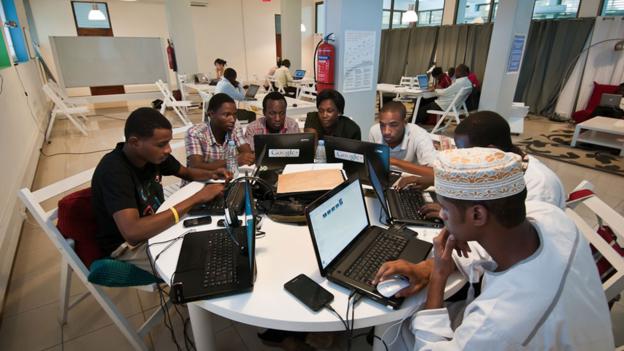
Africa’s Start-Up Ecosystem Hits Record $3 Billion Funding, Surpassing 2023

0

African start-ups have reached a significant milestone in 2025, raising more funding this year than they did in 2023, according to a report by Africa: The Big deal.

Observers of the ecosystem note that this growth comes after two consecutive years of decline, with fundraising dropping 35% in 2023 and a further 25% in 2024.

In the first half of 2025, 238 start-ups in Africa raised at least $100,000 each. Observers noted that this figure was consistent with trends seen since mid-2023, reflecting a steady flow of capital into the continent’s emerging start-ups.

So far, the continent has recorded a 33% year-on-year increase in start-up fundraising, marking a refreshing shift in momentum. Last month, start-ups across the continent secured $162 million in funding (excluding exits), with 79% of the capital raised through equity investments.

Across the continent, 32 ventures raised at least $100,000, including 16 start-ups that secured $1 million or more. Among these, six companies crossed the $10 million mark, demonstrating continued investor appetite for high-growth sectors.

However, what makes 2025 even more remarkable is that total funding has not only exceeded 2024 levels but has already surpassed the amount raised in 2023. While African start-ups secured “nearly $3 billion” in 2023, they are on track to finish 2025 with “over $3 billion” and the year is not yet over.

The growth is not limited to total funding. Equity investments alone have surpassed 2023 levels, reflecting renewed investor confidence in African innovation. The year has also seen the first two IPOs in over six years. In South Africa, fintech Optasia listed on the Johannesburg Stock Exchange on November 4, raising $345m in the process, at a market cap of $1.4b. On the opposite side of the continent, Moroccan fintech Cash Plus raised $82.5m through its IPO on the Casablanca Stock Exchange on November 25, at a $550m valuation.

It is worth noting that out of the top 100 most funded start-ups on the continent, roughly four out of five are headquartered or have their main office in one of the ‘Big Four’. The most represented country is South Africa, followed closely by Nigeria.

The Big Four for a long time have continued to attract the vast majority of the funding on the continent, with at least three-quarters of the funding going to just five cities: Cairo, Cape Town, Johannesburg, Lagos, and Nairobi.

In recent times funding is much more balanced between the four key markets, and as a result, between the four main regions (unfortunately Central Africa is barely represented in the numbers in 2025). In terms of total funding raised (excluding. exits), Kenya is in the lead, followed by South Africa, Egypt, and Nigeria. If we look specifically at equity, which is probably more relevant in this case, South Africa leads, followed by Egypt, Nigeria, and finally Kenya.

Notably, the year 2025 has recorded notable exit activity, including Walletdoc’s acquisition valued at more than $23 million. South African digital banking giant Capitec acquired payment processor Walletdoc in a deal worth up to R400m ($23.5m), signaling a fresh offensive in the country’s fiercely contested merchant services battleground.

The acquisition, signed on December 5 and announced Monday, sees the Stellenbosch-based bank take full ownership of the 10-year-old fintech. The move is a clear bid to wrestle market share from incumbents and agile challengers like Yoco and Nedbank in the SME payments space.

Another notable trend that continues to strengthen in 2025 is the growing role of debt financing in Africa’s start-up ecosystem. In October 2025, start-ups were reported to have raised $935 million in debt, already surpassing the total debt raised in all of 2024 and 2022. In terms of funding composition, debt represented 42% of total funding in 2025.

As the year enters its final stretch, 2025 continues to show remarkable progress for Africa’s start-up ecosystem. Total funding has reached $3 billion so far (excluding exits). Both total equity raised and the number of start-ups securing $1 million+ have risen significantly.

With rising funding, increased equity investment, and growing exit activity, 2025 is shaping up to be a landmark year for Africa’s start-up ecosystem.

Global Isn’t Generic: The Art of Making Localization Your Superpower

0

Many companies make critical mistakes when expanding internationally. They treat global markets as one uniform entity. Success in international business requires adapting products, services, and messaging to meet the needs of each local market.

The word “global” often misleads businesses into thinking that standardization equals better results. In reality, standardization without local adaptation creates a gap between products and users. Product managers face the challenge of balancing scale with relevance. They must know when to use a localization service to make products feel native.

Cultural nuances are more important than most realize. A product that succeeds in one market may not perform well in another. User expectations vary significantly across regions. Colors, payment methods, date formats, and communication styles differ widely. A simple gesture that is welcoming in one country might offend in another.

Local rules and compliance requirements add more complexity. Data privacy laws, industry standards, and certifications differ from country to country. This makes a strong localization service essential for managing risk and entering markets safely.

A working localization strategy includes:

  • Product adaptation: Adjusting features for local users
  • Content localization: Tailoring messages to cultural values and references
  • Technical modifications: Adapting to local infrastructure and devices
  • Legal compliance: Meeting local regulations and standards
  • Market positioning: Adjusting pricing and competitive positioning for each market.

Product managers should view localization as a strategic advantage rather than a task. Effective localization makes products feel native to each market, designed for local users rather than adapted after the fact.

The difference between translation and localization is critical. Translation changes words, while accurate localization transforms the entire user experience. This approach often requires specialized localization service providers who understand both technical and cultural market needs.

Leading global companies treat localization as a competitive edge, not a cost. Their products feel user-friendly and relevant across markets, rather than foreign or unfamiliar.

Turning Cultural Insight into a Competitive Edge Across Markets

Cultural intelligence transforms diversity from a compliance requirement into a true competitive advantage. Companies that understand and act on cultural differences grow their brands faster and outperform competitors.

Cultural intelligence (CQ) includes motivational, cognitive, metacognitive, and behavioral skills. Organizations with strong CQ understand cultural norms, handle sensitivities, and adjust strategies for each market.

Research shows that companies that adapt to local cultures can increase market share by up to 30%. More than half of businesses now change their internal culture to stay competitive. This demonstrates why cultural intelligence is critical to success.

McDonald’s is a clear example. The company maintains its global brand identity while adapting its menus to local tastes. Rice dishes in Asia and vegetarian options in India build stronger connections with customers.

Coca-Cola’s “Share a Coke” campaign started in Australia and replaced logos with popular local names. This personalized approach resonated with consumers and boosted sales.

Product managers can gain a strategic advantage by working with localization service providers who:

  • Learn about local behaviors and priorities
  • Adapt products and services to regional needs
  • Ensure compliance with local regulations
  • Connect global strategy to local execution.

Market leaders combine vision with cultural awareness. Partnering with specialized localization service providers ensures products, messaging, and operations align with local needs.

Over 70% of global expansions fail due to cultural mismatches. Innovative companies see cultural intelligence and professional localization services as essential investments.

From Translation to Transformation: Making Localization Work for You

Product managers at mid-sized companies gain a competitive advantage by recognizing that localization goes beyond translation. A strategic approach reshapes products and experiences for local markets.

Localization adapts the entire user experience to resonate with local audiences. Messaging, imagery, functionality, and design changes all play a role. Studies show 84% of businesses see positive revenue effects from effective localization.

Key steps to make localization work include:

  • Market research: Understand local priorities, behaviors, and culture.
  • Build diverse expertise: Include linguistic experts, cultural consultants, and local specialists.
  • Prioritize high-impact content: Focus on elements with the most traffic and the greatest user impact.
  • Balance consistency with adaptation: Maintain 60% global consistency and allow 40% local adaptation.
  • Invest in technology: Use AI-powered translation management systems to reduce time-to-market.

Companies that use professional localization service solutions are 2.5 times more likely to see year-over-year growth. 76% of consumers prefer buying from brands they feel connected to, and effective localization strengthens this connection.

Automation improves efficiency. Zendesk reduced project analysis time by 96%, and Deliveroo saved 40% of time for localization managers, developers, and designers.

With 90% of businesses planning international expansion in the next five years, working with specialized localization service providers is crucial for forward-thinking product managers.

How Top Brands Use Localization to Outperform

Localization is more than operational—it provides measurable market advantages. Studies show that 75% of companies break into new markets faster when they localize. Companies that adopt localization see 2.5 times higher year-over-year revenue growth.

Coca-Cola’s “Share a Coke” campaign tailored names to local markets, increasing brand love by 158% in South Africa. Netflix supports 78 languages and produces region-specific content that appeals locally before going global, boosting revenue by 16% annually.

Proven localization strategies include:

  • Cultural adaptation: McDonald’s offers region-specific menu items
  • Visual localization: Airbnb adapts listings for local architecture and interior styles
  • Product modification: IKEA designs products for local preferences.

Working with a specialized localization service provider gives brands the expertise to handle complex changes, such as regional menus or local store designs. Companies using these services for client communications are 2.67 times more likely to see revenue growth.

Conclusion: Global Isn’t Generic — Localization Is Your Superpower

Smart localization plans help companies expand internationally rather than relying on one-size-fits-all solutions. Product managers who make localization central to business strategy gain a real competitive edge.

Numbers confirm the impact. Companies partnering with localization service providers see stronger sales growth, better customer connections, and smoother market entry. Understanding local culture drives business wins by making products feel native rather than foreign.

Even with limited budgets, investing in professional help pays off with faster growth and a more substantial market presence. Businesses that think locally and partner with expert localization providers turn foreign products into trusted local favorites, achieving lasting international success.