DD
MM
YYYY

PAGES

DD
MM
YYYY

spot_img

PAGES

Home Blog Page 44

Bitcoin Trades Below $90k as Fear Index Hits Extreme Low

0

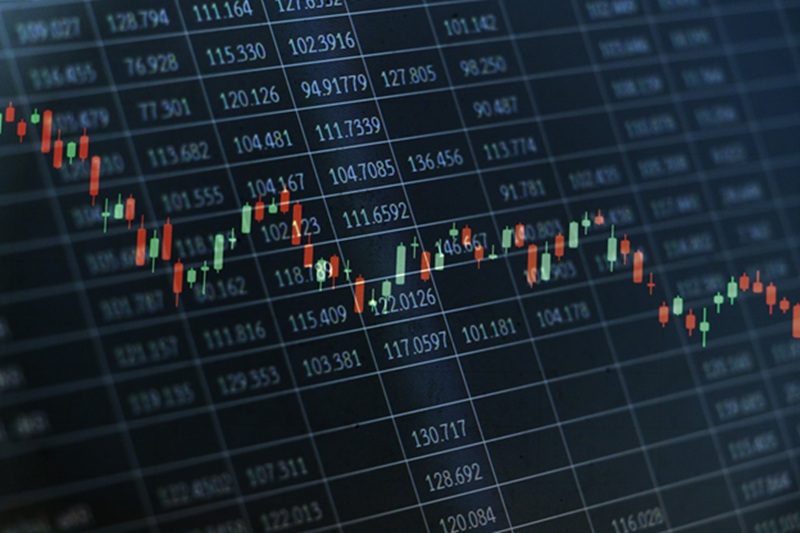
Bitcoin slipped back below the $90,000 mark as market sentiment plunged to one of its weakest levels in months, with the Fear & Greed Index signaling “extreme fear.”

In the battle between the bulls and bears, Bitcoin appears to be succumbing to pressure from the bears, as it trades at $89,504 at the time of writing.

This comes as the Fear and Greed Index is at 21, down from 10 before. Many investors have reportedly become careful after the big crash on October 10.

According to recent market data, the October 10 crash was the main reason sentiment fell to record lows of 10, triggered by surprise U.S.–China tariff war news. 

Recall that news of renewed economic tensions between the two global powers sent shockwaves across financial markets, with investors fleeing riskier assets including cryptocurrencies, amid fears of a deeper global slowdown.

Due to this crash, crypto order books became very thin. Market makers removed liquidity to avoid more losses, ETF inflows turned into outflows, and global demand for digital assets weakened. With most investors staying cautious, fear has dominated the market for several weeks.

Though markets have stabilized somewhat as the crypto greed & fear index has climbed slightly to 21, the market is still deep inside the fear zone.

In a December 5 post on the social media platform X, Alphractal CEO and founder shared insight into the latest Bitcoin price decline below $90,000. The on-chain expert revealed that losing the $89,800 level is the more relevant occurrence in the latest price downturn.

In a previous post on X, Wedson evaluated the likely trajectory of the Bitcoin price should it lose the $89,800 level. The crypto pundit revealed that losing this price mark could lead to an accumulation pattern for the bulls or a redistribution phase for the bears.

While the accumulation period for the bulls would initially coincide with lower prices, it eventually leads to a Bitcoin price return to above the latest local high. Meanwhile, a redistribution phase could see the bears push the flagship cryptocurrency to around the $70,000 mark.

According to the Alphractal CEO, the price of BTC also failed to hold the key on-chain levels, strengthening the probability of a broader price sideways phase. “Sideways action is the cause — the big pumps or dumps are just the effect,” Wedson had earlier stated in his previous X post.

Furthermore, Wedson noted that the next level to watch is $86,500, which, if lost, opens the very high possibility for the formation of a new local low around $80,500. This local low could provide a perfect spot for investors to buy the dip and enter the market.

Several analysts still expect more downside. A popular chart analyst, Ali Martinez, also pointed out another worrying sign, Bitcoin has dropped below its 730-day simple moving average (SMA), a level that has often marked the start of long bearish periods in the past. 

This important support is around $82,150, and if Bitcoin closes below it, the charts may turn even more negative. A deeper breakdown could push the price toward the $76,000 zone next.

The December 10–11 pivot will be crucial in determining whether this is another drop or the start of a real bottom. Analysts warn BTC may dip further, following bearish patterns, possibly continuing until a true bottom forms in 2026. A move back above $96,000–$106,000 is needed to confirm recovery momentum.

Outlook

In the short term, the outlook remains bearish to neutral, with analysts expecting additional volatility and possible retests of lower support zones.

However, over the long term, the broader Bitcoin narrative remains intact. Institutional adoption, expanding global interest in digital assets, and the gradual effects of Bitcoin’s halving cycle continue to support a bullish macro outlook. A sustained move above $96,000–$106,000 would likely confirm the beginning of a new upward phase.

Tom Lee Declares Crypto Has Bottomed As Sappy Seals’ Omnia Playtest Goes Live

0

Tom Lee, the co-founder of Fundstrat Global Advisors and a longtime crypto bull, made waves this week by stating that the cryptocurrency market has officially “bottomed” after a brutal correction phase.

Speaking at Binance Blockchain Week in Dubai on December 3-4, 2025, Lee attributed the recent downturn—marked by aggressive deleveraging and factors like quantum computing fears, liquidation cascades, and concerns over stablecoins like Tether—to a temporary overreaction that has now washed out weak hands.

He emphasized that traditional Bitcoin four-year halving cycles are “failing,” but this could signal an even stronger bull run ahead, with new highs potentially arriving before year-end.

Lee predicts ETH will outperform BTC soon, with the ETH/BTC ratio breaking out. His firm, Bitmine Immersion Technologies where he’s chairman, just accelerated ETH buys, snapping up nearly 100,000 ETH last week and another 41,946 ETH ($130M) on December 5 at around $3,100 per token—despite $4B in unrealized losses.

Bitmine now holds over 3.7M ETH, worth ~$18B, positioning it as the world’s largest Ethereum treasury. Lee eyes $62K ETH if the ETH/BTC ratio hits 0.25, driven by tokenization trends and the recent Fusaka upgrade.

BTC could hit $250K-$300K by end-2026, fueled by 200x adoption growth. He notes BTC’s holding above $92K amid bearish retail sentiment as a bullish divergence. Post-FTX recovery patterns match the current deleveraging pace— eight weeks in, and quantitative tightening ended December 1, unlocking liquidity.

ETH ETFs saw $360M inflows last week vs. BTC’s $120M, with retail accumulation spiking below $2,700. The reaction on X has been a mix of hype and skepticism—posts like “If he’s right… the next leg up might already be loading” are circulating, but others quip “time will tell if he’s right.”

As of December 5, BTC hovers near $93K and ETH at $3,200, with volume rising. Lee’s track record nailing post-2022 bottoms adds weight, but watch PMI data flipping to expansion for full rotation into risk assets.

Sappy Seals’ Omnia Playtest Goes Live

Sappy Seals, the Ethereum-based NFT project known for its 10K generative seals collection, floor ~0.19 ETH as of today, is leveling up its ecosystem with Omnia—a play-and-earn creature-collecting game formerly called Pixl Pets.

Developed by Sappy Brands, Omnia drops players into a glitch-ravaged world where mystical beasts emerge from cosmic instability, corrupted by a dark force. It’s all about taming, battling, trading, and evolving these “Omnia Pets” in a lore-rich universe tied to Sappy’s decentralized identity.

The first public playtest launched today, December 5, 2025, on Monad’s testnet— a high-throughput Ethereum L1. Announced via community channels, it’s open to early testers—grab a spot via their Discord or site for quests, events, and exclusive rewards.

Genesis Pixl Pets NFT holders get in-game perks like boosted creatures or early access. Think Pokémon meets blockchain—collect glitch-born monsters, complete dynamic quests, and trade in a player-driven economy. Regular events keep it fresh, with $PIXL tokens likely integrating for earnings.

This marks Sappy’s push into gaming as a “fun-first” Web3 hub, blending memetics, IRL events, and tech like animations. With Sappy Seals’ community of digital natives, expect viral lore drops and crossovers.

Head to omnia.lol to dive in—the continent’s instability awaits. If you’re a Seals holder, stake those rarities for $PIXL boosts while grinding playtests. GMONAD indeed—Sappy’s building universes, one sappy pet at a time.

AlphaTON Capital Files for $420.69M Shelf Registration With US SEC

0

AlphaTON Capital Corp (Nasdaq: ATON), a Nasdaq-listed digital asset technology company focused on the Telegram and TON, The Open Network ecosystem, announced it has filed a $420.69 million shelf registration statement with the U.S. Securities and Exchange Commission (SEC).

This filing marks a significant milestone, as the company has exited the SEC’s “baby shelf rules”—restrictions that previously limited smaller public companies with a public float under $75 million from issuing more than one-third of their float via shelf registrations in a 12-month period.

With its public float now exceeding this threshold, AlphaTON gains greater flexibility to raise capital efficiently over time through various securities, subject to market conditions and SEC approval.

The shelf allows AlphaTON to issue up to $420.69 million in securities a figure playfully nodding to crypto meme culture, reminiscent of FTX’s infamous “420.69” funding round. This replaces prior constraints and enables “takings” issuances as opportunities arise.

Funds will primarily support expansion of the company’s TON treasury, including direct purchases of TON tokens and related digital assets like GAMEE tokens. This aligns with AlphaTON’s policy of building a strategic reserve to bolster the TON/Telegram/Cocoon network.

Accelerating deployment of GPU and high-performance computing (HPC) resources for Telegram’s Cocoon AI network. The company recently deployed its first fleet of Nvidia B200 GPUs and secured $82.5 million for further GPU infrastructure.

Targeting revenue-generating businesses in the Telegram ecosystem, such as payments, content distribution, and blockchain-enabled services on TON. AlphaTON has already identified several high-potential acquisition targets.

Enhancing staking operations, Telegram-based app development, and investments in TON DeFi protocols and gaming platforms. AlphaTON has reallocated most of its assets to Toncoin and related staking positions, positioning public-market investors for indirect exposure to TON’s growth.

TON Capital, incorporated in the British Virgin Islands, positions itself as the “world’s leading technology public company scaling the Telegram super app,” tapping into Telegram’s 1 billion monthly active users. Led by CEO Brittany Kaiser former Cambridge Analytica whistleblower.

Executive Chairman/Chief Investment Officer Enzo Villani, and Chief Business Development Officer Yury Mitin, the firm advises from heavyweights like BitGo, Animoca Brands, Kraken, and SkyBridge Capital. It trades under ATON on Nasdaq and focuses on network validation, staking, and TON-based innovations.

ATON shares rose 14.7% from a low of $1.49 to $1.71 following the announcement, closing up over 7.5% on December 4. However, the stock has been volatile, with significant losses in the prior month amid broader digital asset treasury (DAT) sector pressures.

TON token (Toncoin) recently hit an all-time high of $8.25 but has since declined nearly 80% to ~$1.80, ranking 40th by market cap. AlphaTON’s move signals institutional confidence in TON’s integration with Telegram’s AI ambitions, including Cocoon, amid rising demand for decentralized AI compute.

The news quickly spread on X with posts from crypto influencers like WuBlockchain highlighting the filing’s implications for TON, Telegram mini-apps, and AI. Discussions emphasize the “meme-sized” $420.69M figure and its potential to accelerate TON’s growth.

This filing underscores AlphaTON’s aggressive pivot toward AI-blockchain convergence in the Telegram ecosystem, potentially inspiring similar moves by other DAT firms. For the full SEC filing or investor relations, visit AlphaTON’s website or EDGAR database.

NYT Escalates Legal War With Perplexity, Accuses Startup of Lifting and Monetizing Its Journalism

0

The New York Times has taken its fight against Perplexity to a new level, filing a lawsuit in federal court that accuses the fast-growing AI startup of systematically lifting, reproducing, and monetizing the newspaper’s journalism without permission.

The complaint, submitted Friday in the Southern District of New York, alleges that Perplexity “unlawfully crawls, scrapes, copies, and distributes” Times content — often in forms that the Times says are either verbatim reproductions or so close that they function as substitutes for the original work. The lawsuit says the Times repeatedly warned Perplexity to stop, issuing cease-and-desist letters last year and again in July, but the company allegedly continued the practice.

The accusation arrives after months of scrutiny from news outlets whose paywalled reporting has been turning up inside Perplexity’s summaries. Investigations by Forbes and Wired earlier this year found that the startup’s systems had been bypassing standard protections — including the industry-accepted robots.txt file — to harvest material behind paywalls.

The Times is making the same claim, arguing that Perplexity’s crawlers “intentionally ignored or evaded technical content protection measures” that publishers use to control which parts of their sites automated tools can access.

The paper argues that the consequences are direct and measurable: if Perplexity delivers Times reporting to users in ready-made form, the user no longer needs to subscribe, click through, or visit the Times website. That, the lawsuit says, undercuts the revenue streams the outlet depends on — subscription, advertising, licensing, and affiliate income — all while Perplexity positions the appropriated content inside a for-profit AI product.

Perplexity, founded in 2022, markets itself as an “answer engine” built on generative AI. Its pitch is simple: instead of searching, you ask questions, and the system produces a consolidated answer drawn from the web. The model has gained traction quickly, attracting investors and positioning itself as a challenger to ChatGPT and Google’s AI search experiments. That rise has also meant increasing friction with publishers who believe Perplexity is building a business on other people’s work.

The lawsuit lands amid a broader wave of legal pressure on the startup ecosystem. One day before the Times filed its case, the Chicago Tribune brought its own copyright lawsuit against Perplexity, also accusing the company of bypassing paywalls and repackaging its content. More broadly, the Times itself is no stranger to legal battles with AI firms: it sued OpenAI in December 2023 over similar claims, before eventually reaching a licensing deal that allows Amazon to bring Times content to products like Alexa.

The legal landscape around AI training and output remains unsettled. Major AI firms argue that scraping publicly available content is protected under fair use, and that generated summaries are distinct creative outputs. News publishers counter that AI systems powered by their articles are siphoning off their audience and financially undermining the journalism that AI companies rely on.

Perplexity has attempted in recent months to show publishers it wants a cooperative relationship, launching a revenue-sharing program last year and later expanding it to include its Comet web browser in August. But the Times says the startup’s current practices still amount to unauthorized copying.

“By copying The Times’s copyrighted content and creating substitutive output derived from its works, obviating the need for users to visit The Times’s website or purchase its newspaper, Perplexity is misappropriating substantial subscription, advertising, licensing, and affiliate revenue opportunities that belong rightfully and exclusively to The Times,” the complaint states.

Perplexity pushed back in a statement sent to The Verge. Spokesperson Jesse Dwyer said: “Publishers have been suing new tech companies for a hundred years, starting with radio, TV, the internet, social media and now AI. Fortunately it’s never worked, or we’d all be talking about this by telegraph.”

The Times is seeking damages and a permanent injunction that would bar Perplexity from what it describes as unlawful scraping and redistribution of its journalism. What the federal court decides could set one of the most consequential precedents yet in the standoff between generative AI companies and the news industry — a conflict that now stretches from OpenAI to Google, xAI, and a long list of AI upstarts whose systems rely on the work of reporters they neither employ nor pay.

Ana Marie Caballero Launches a free mint for her Latest Work “In Record Time” on OpenSea.

0

Ana María Caballero, the acclaimed poet and blockchain artist known for blending verse with digital collectibles, is launching a free mint for her latest work, “In Record Time”, on OpenSea.

This drop builds on her ongoing “Paperwork” series, which explores themes of bureaucracy, identity, and the poetic absurd through generative text-based NFTs.

As a free mint, it lowers the barrier for collectors—no ETH upfront for the initial claim—making it accessible amid fluctuating gas fees on Ethereum. Part of Caballero’s broader “Ana Maria Caballero” series on OpenSea, emphasizing “poem = work of art.”

Free; lazy minting via OpenSea, meaning no gas until resale; potential secondary fees apply. Limited passes, similar to her 2023 Buenos Aires unbundled mints where individual works from multi-artist packs became claimable.

Expect quick sell-outs based on past hype. Caballero’s work has gained traction for fusing poetry with Web3, as highlighted in her 2023 OpenSea interview where she discussed unbundling collections for broader access.

This drop continues that ethos, potentially including interactive elements like spoken-word audio or visual poetry variants. Head to OpenSea’s collection page (search “Ana Maria Caballero”). Connect your wallet, claim during the live window, and you’re in.

Use Polygon for even lower fees if cross-chain options appear. If you’re into literary NFTs, this is a gem—Caballero’s pieces often appreciate as cultural artifacts in the space. Past drops like her Paperwork passes (0.15 ETH) saw strong demand, so act fast.

Pump.fun Spotlights FIG Token in New Utility Program

Pump.fun, the Solana-based meme coin launchpad that’s generated over $850M in revenue since 2024, has expanded its freshly launched Spotlight program by adding the FIG token.

This move signals a pivot toward utility-driven projects, helping non-meme tokens cut through the noise with boosted visibility, liquidity pools, and community tools.

The Spotlight Program launched November 1, 2025, it’s designed to nurture “real” utility tokens think DeFi tools, Web3 business apps, or tokenized assets over pure hype plays.

Benefits include featured listings, automated liquidity mechanisms, tokenomics audits, and anti-rug safeguards—addressing pain points like discoverability and funding in early-stage crypto.

Advance the Internet Capital Market (ICM) by legitimizing tokenization for practical use cases, like payroll in Web3 banking or DeFi innovations. FIG likely standing for a utility-focused project, e.g., finance/figment-themed—details sparse but tied to Solana ecosystem tools joins as an early Spotlight selectee.

It gains instant exposure on Pump.fun’s platform, where launches cost just ~$2-3 0.02 SOL and include built-in scam prevention. Could see rapid liquidity growth, similar to how Pump.fun’s past ICOs raised $1.3B.

Expect integrations for trading, staking, or real-world utility like supply chain tokenization. Monitor for FIG-specific airdrops or AMM pools via the Spotlight dashboard.

Paperwork uses official government documents as raw poetic material. Caballero takes the cold, bureaucratic language of these forms — the boxes, stamps, signatures, and legalese — and transforms them into visceral, minimalist poetry that exposes the absurdity, violence, and intimacy hidden inside administrative systems.

She describes the series as: An exploration of how the state writes our most personal stories in the most impersonal way.” Each piece is a love/hate letter to bureaucracy: how paperwork simultaneously validates and erases human experience.

A smart contract layers generative text directly onto the forms. The text is drawn from Caballero’s original poetry fragments that deal with motherhood, migration, marriage, divorce, birth, death, and border crossings.

The output is different every mint: same form, different poem overlaid in Caballero’s handwriting-style font. Some versions include audio: Caballero reading the generated poem in English or Spanish. Editions vary 1/1s, small editions of 10–25, or open editions during specific drops.

WorldFirst major on-chain generative poetry project by a widely published “offline” poet Caballero has four print poetry books and has won major literary prizes. Bridges high literature and blockchain in a way that feels native rather than gimmicky.

In short, Paperwork is bureaucratic trauma and beauty run through a poetic algorithm — and it has become the gold standard for what serious literary art can look like on the blockchain. The current “In Record Time” free mint is essentially an accessible entry point into this landmark series.

Amid meme fatigue, this elevates sustainable projects; FIG could be a sleeper hit for long-term holders. Both updates highlight Web3’s maturation: artistic expression going gas-free on OpenSea and utility tokens getting a fair shot on Solana.