DD
MM
YYYY

PAGES

DD
MM
YYYY

spot_img

PAGES

Home Blog Page 4418

Online Misinformation Going to Worsen as AI Platforms Evolve And Spread – Mark Cuban

0

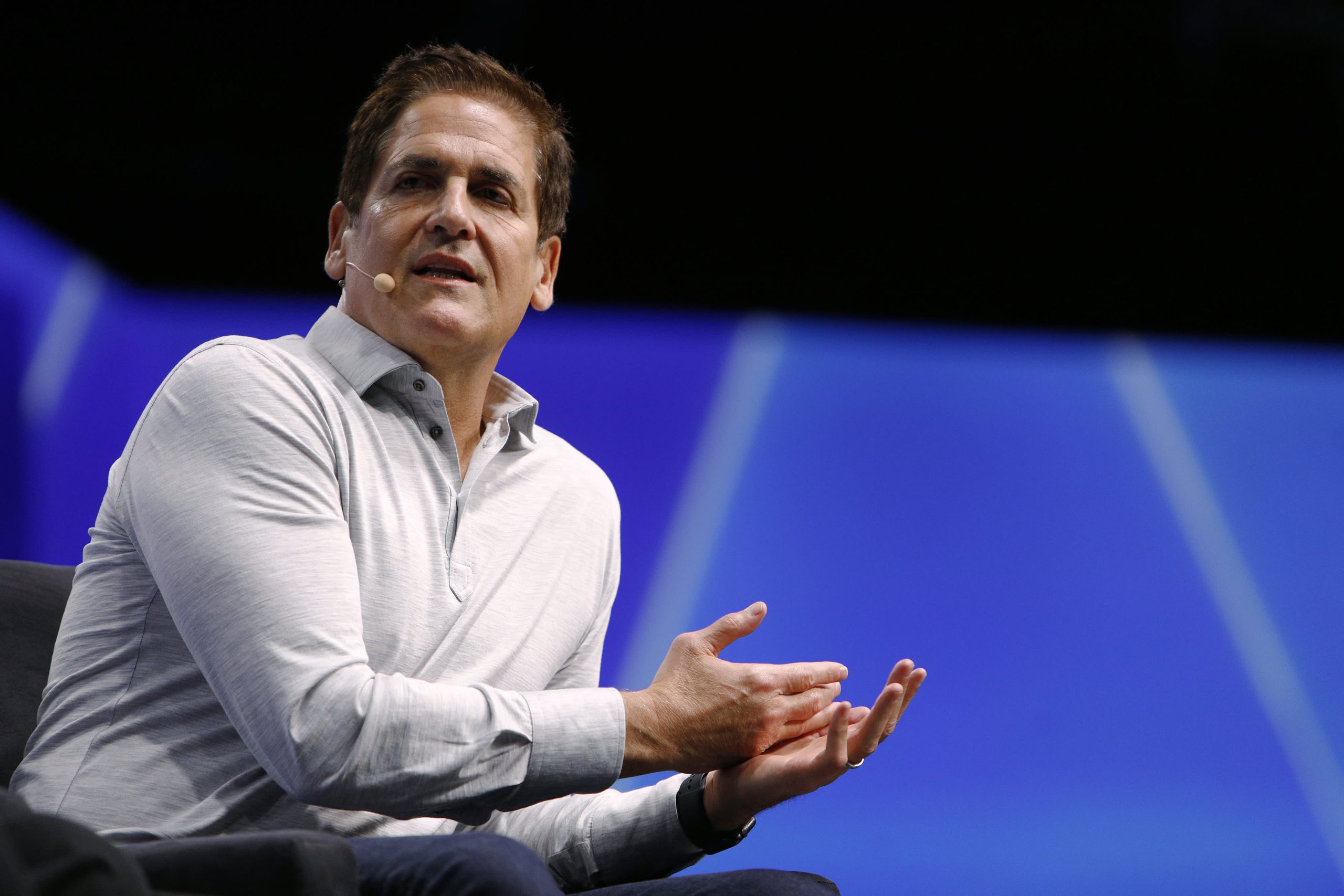
American billionaire entrepreneur Mark Cuban has recently revealed that online misinformation is going to get worse as artificial intelligence (AI) platforms spread and evolve.

He disclosed that AI chatbots such as ChatGPT and the likes, despite its remarkable features, has not in any way shown to be smarter than the average human, which he stated that these technologies can contradict themselves sometimes, providing different answers when repeatedly asked the same question.

In his words,

Online misinformation is only going to get worse as artificial intelligence platforms evolve and spread. Right now, misinformation tends to spread through social media platforms like Facebook or Twitter, and that’s with some semblance of human guardrails in place. But with ChatGPT and other similar platforms, the machines are in control.

Once these things start taking on a life of their own, it will be difficult for us to define why and how the machine makes the decisions it makes, and who controls the machine”.

Recall that last week, giant tech company Google lost $100 billion in market value, after its new artificial intelligence (AI) technology Bard, gave a wrong answer in its first demo.

Google’s AI chatbot claimed that NASA’s James Webb space telescope took the first image of an exoplanet but was wildly wrong. The first image was reported to be taken in 2003, by the European Southern observer’s very large telescope.

This spurred employees at the company to call out Google’s CEO Sundar Pichai and the leadership, following the release of its AI chatbot Bard, which they described as “rushed” and “botched”.

Mark Cuban disclosed that the error signifies that the technology is still in infantile stages which can be a problem, especially for large swaths of people who don’t always fact check claims they see on the internet.

Also, a recent Tekedia publication revealed that Google’s Senior Vice President Prabhakar Raghavan warned against the over reliance on AI chatbots for delivering accurate information.

In an interview, he said one of the pitfalls of AI chatbots is the problem of hallucinations, which often forces the technology to provide a convincing but completely made-up answer.

No doubt, AI chatbots represent an exciting new chapter in the history of tech, but in spite of the fact that this is the case they are not without their potential dangers and issues. Researchers working across a wide range of institutions have recently highlighted an alarming potential problem that can be caused by AI such as Chat GPT, which they revealed could increase the amount of misinformation that can be seen online.

On Nov. 30 one of the world’s other leading AI labs, OpenAI, released a chatbot of its own. The program, called ChatGPT, is more advanced than any other chatbot available for public interaction, and many observers say it represents a step change in the industry.

ChatGPT’s fluency is an illusion that stems from the combination of massive amounts of data, immense computing power, and novel processing techniques. Although, the AI language model is not perfect and may sometimes produce incorrect answers.

Author of Rich Dad Poor Dad Robert Kiyosaki Predicts Bitcoin to Hit $500,000 by 2025

0

American entrepreneur, businessman, and author of Rich Dad Poor Dad, Robert Kiyosaki, has predicted that the crypto asset Bitcoin, will hit $500,000 by 2025.

He also predicted Gold to hit $5,000 and silver $500 by 2025 which he disclosed will occur, following the printing of billions of fake money by the fed.

According to him, the U.S. Federal Reserve’s wrong monetary policy, forcing the regulator to print billions of fake money will lead to a surge in the price of several crypto assets due to a loss of faith in the U.S. dollar.

See what he wrote on Twitter,

Giant crash coming. Depression possible. Fed forced to print billions in fake money. By 2025 gold at $5,000 silver at $500 and Bitcoin at $500,000. Why? Because faith in US dollar, fake money, will be destroyed. Gold & Silver Gods money. Bitcoin people’s $. Take care.”

Kiyosaki predicted the imminent collapse of the financial markets to happen as early as tomorrow February 14, he attributes the worsening of market conditions to the inflation data due out tomorrow. The author urges people not to panic and to increase their exposure to strong assets.

He further assured his Twitter followers that he would spend “fake dollars” to acquire more gold, silver, and bitcoin, referring to them as real money.

Kiyosaki has previously explained that Gold, silver, and Bitcoin are real money. He noted that the U.S. dollar is “fake money” because rather than being tied to real money, which is the case for gold, it was tied to the full faith and credit of the United States.

Kiyosaki on his Twitter handle, had earlier stated why Gold, Silver, and Bitcoin are going higher lately. He wrote, “Q: Why are gold, silver, and Bitcoin going higher? A: Because US poor and middle class getting poorer & deeper in bad debt. Please don’t get poorer. At least buy one silver coin. Only $30 and start to get richer.”

Furthermore, the author has repeatedly said he does not have faith in the Biden administration, the U.S. Treasury, the Federal Reserve, or Wall Street.

Meanwhile, in a related development, American economist and member of the Federal Reserve Board of Governors since 2020, Christopher J. Waller, has issued a warning regarding the risks associated with investing in cryptocurrencies.

He said, “To me, a crypto asset is nothing more than a speculative asset, like a baseball card. If people believe others will buy it from them in the future at a positive price, then it will trade at a positive price today. If not, its price will go to zero.”

Meanwhile, since Bitcoin is the biggest and most well-known cryptocurrency, few investors see it as a reliable inflation hedge, which is even considered an excellent hedge compared to gold.

A veteran of the crypto industry and an adjunct professor at Columbia Business School Omid Malekan said that while cryptocurrencies like bitcoin, they are not proven to be a reliable long-term store of value, meanwhile, they could still gain acceptance over time and become less volatile.

A Major Milestone for Fasmicro Group

0

At Fasmicro Group, we reached a major milestone today, and I want to celebrate with our industrial partners, universities and stakeholders. As Africa’s only Intel certified and authorized programmable microprocessor knowledge partner,  we continue to serve our continent.  On this day in the engineering lab of the Johns Hopkins University, many years ago, after taking a course on processor design and development, I architected a playbook to take that knowledge home. Over the years, we have been to more than 120 universities in Africa and set up labs .

We have worked with companies, from power systems to telecoms on their market needs. And we have been recognized for the specific and specialized services we offer (many recognitions and awards). We have served on our engineering mission. Of course, we thank Intel Corporation for its support over the years .

To our head of engineering, Engr Ekele Eke (Nigeria’s finest engineer), and all our team, I say THANK YOU.

Photo: Sir Richard Branson honoured Ndubuisi Ekekwe, founder of First Atlantic Semiconductors & Microelectronics (FASMICRO).

Obi Rounds Off “Surprising” Presidential Campaign in Lagos – Rekindling Hope for A Better Nigeria

0

The presidential candidate of the Labour Party, Peter Obi and his running mate Datti-Baba Ahmed has concluded their campaign in Lagos on Saturday, becoming the first political party in the campaign trail to cover Nigeria’s 36 states and the federal capital territory Abuja.

The duo, who were underestimated in the beginning, are said to have pulled off a surprising campaign that has rattled the opposition, making the Labour Party the party to beat in less than a year.

Obi said “it’s been a whirlwind and a very value-added experience across the 36 States.” Thanking Nigerians for engaging constructively, he added that “the Mission to take back Nigeria is real and the core objective is in sight.”

The former Anambra State governor left the Peoples Democratic Party (PDP) in May 2022 to join the Labour Party, an underdog political party with one of the least structures in Nigeria, but has built a massive movement thriving on organic support, especially from the Nigerian youths.

Up against three established candidates – Bola Tinubu of All Progressive Congress (APC), Atiku Abubakar of the Peoples Democratic Party (PDP) and Rabiu Kwankwaso of the New Nigeria Peoples Party (NNPP) – the Obi-Datti presidential campaign has defied tribal and religious sentiments to garner stunning support from across the country, especially in the north and Southwest. Afenifere, a pan-Yoruba cultural group, had last year endorsed Obi over other presidential candidates, breaking ranks with the ethnocentric patronage of Nigeria’s political culture.

Dubbed “Obidients”, Obi supporters pride themselves in their “we no dey give shishi” (we don’t give a dime) mantra, underlining a new face of political ideology that Obi represents, which abhors moneybag politics. They have been self-financing many of the Obi-Datti political rallies.

Though the odds seem to be stacked against Obi, whose style of politics has been considered maverick – which stands no chance in Nigeria’s money-based political system, several polls conducted so far have projected him as the winner of Nigeria’s 2023 presidential election.

Some of the factors driving the movement

Compared to all other candidates, the Labour Party flagbearer has displayed uncommon charisma that has charmed a teeming number of Nigerians across all tribes, defying the anti-Igbo sentiment that has characterized Nigeria’s polity since the end of its civil war in 1970.

Obi’s impeccable record as the governor of Anambra State is believed to be his most selling point as he pushes for the most important job in Africa’s most populous nation. He said he left up to N75 billion in the State’s purse at the end of his second term, an uncommon gesture in Nigeria’s governors leadership pattern, notorious for looting states’ funds and incurring debts for their successors. Obi is also noted to be honest, unlike his contemporaries. He is the only governor in Nigeria who has rejected landed property allotted to him; another gesture that Nigerians have noted as an assurance that he is not seeking self-enrichment.

“As I have made it abundantly clear, my being the governor is by the grace of God & I believe FIRMLY that it is wrong to benefit from that. I became the governor because I wish to serve my people, and to do that devotedly, I believe I have to distance myself from undue privilege of the office,” Obi said in rejection of the property he was offered as a governor.

His campaign style is also said to be devoid of the norm. Obi is believed to have reintroduced issues-based campaigns into Nigeria’s political system, distancing himself from the regular trade of insults that have had Nigerians witnessed years of political campaigns characterized by bitterness. His manifesto has also been described as the best.

Those and other factors present Obi as a stark contrast to other front runners in the race, including Tinubu and Atiku, who have allegations of crimes and corruption trailing them. Accelerating his popularity is endorsement from prominent political figures in Nigeria, including former president Olusegun Obasanjo.

However, while the 61-year old has created a movement that millions of Nigerians, who are fed up with the present leadership, can reckon with, his journey to Aso Rock through Nigeria’s volatile political terrain is still very unpredictable. To many though, Obi has made his mark and should not be judged by whether he wins the February 25 presidential election or not. They believe that he has rekindled the hope of millions of Nigerians that a better future, free from the present leadership shackles stymieing prosperity, is possible.

New Naira Notes: Supervised Machine Learning and an Established Suffering Theater

0

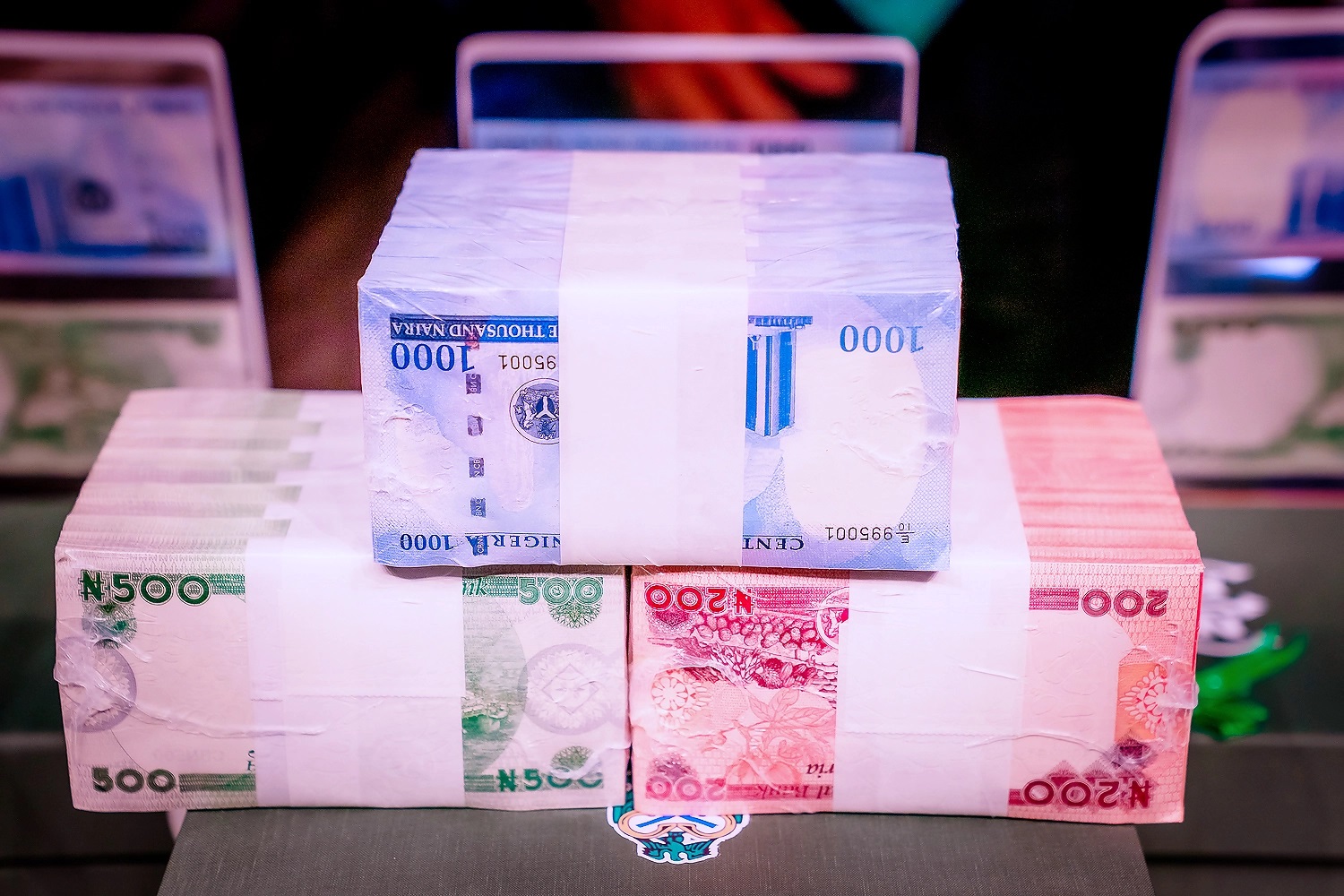
The announcement of the new naira notes by the Central Bank of Nigeria to replace existing ones in 2022 was not the first time that the apex bank would introduce new currency notes or redesign them. From the military administrations to the democratic administrations that saw the need for the policy, Nigerians have had the opportunity to feel the negative and positive consequences of it. Flipping through the historical records, our analyst discovered that introducing new notes has never had such a negative impact on people’s and businesses’ socioeconomic activities as redesigning some of the existing notes had on Nigerian people and businesses.

According to historical records, in April 1984, when President Muhammadu Buhari was the Head of State, the colours of all banknotes in circulation were changed, with the exception of the 50 Kobo banknote, in order to combat currency trafficking that was prevalent at the time. As noted earlier, in 2022, the same policy was introduced under his leadership, with the deadline slated for January 31, 2023. The deadline, like the events of 1984, is unrealistic given the country’s cash economy as opposed to a cashless economy. To douse the uncertainties that surround the policy, the apex bank came up with the Frequently Asked Questions and Answers on the Naira Redesign [PDF]. This and other media campaigns from the bank and other players in the banking sector were less effective during the early days of the stated deadline. On several occasions and in various fora, the governor of the Central Bank of Nigeria, Godwin Emefiele, repeatedly said there was no room for extension of the deadline. Having seen the possible impacts of the CBN’s position on people and the economy in particular, the members of the National Assembly rose through their unanimous resolution and urged the Central Bank of Nigeria (CBN) to extend the deadline for the return of the old currency from January 31, 2023, to June 30, 2023.

Throughout this period, the meaning of “deadline” was constantly constructed and negotiated among the state and non-state actors. As a result, it was difficult for all actors to agree on a single definition for “deadline,” while citizens who rely heavily on cash transactions experienced a variety of difficulties. Regardless of gender or income level, purchasing necessities and paying for medical expenses were difficult. From Kano to Aba and Ilorin to Sokoto, Nigerians cannot engage in their daily business activities. Like how the Nigerian military and other security forces developed and executed different special security missions to ensure the security of lives and property in some parts of the northern and southern regions, Nigerians were made to play and dance with pythons despite having money in banks.

State and non-state actors, throughout the period of negotiating and constructing meanings for the deadline in relation to the CBN’s proposed benefits, used Nigerians, according to our analyst, as a training dataset to teach models capable of establishing different theatres of suffering, as stated earlier. Our analyst notes that this is the first time one can easily detect how the government through the apex bank applies supervised machine learning, testing the possibility of politically-motivated ‘artificial intelligence’ in monetary policy in Nigeria. The use of machine learning in public policy is not new, especially in the global north. However, in our analyst’s view, machine learning driven by political motives a few days before general elections is much more dangerous to the collective well-being of the people the political leaders say they are protecting.

The CBN and some political actors primarily used machine learning as a material for forming sedimented meaning for having the new notes as solutions to vote-buying and ransom payments for kidnappers and terrorists. In this context, hegemonic meanings were created for the identified solutions without considering the possible sufferings that people would experience. Our analyst notes that the machine is supposed to be used to aggregate and coordinate people towards adopting appropriate processes for an easy swap of the old currencies with the new ones.

Instead, supervised machine learning as a materiality in various contexts divided the country into different antagonistic camps during the period of negotiating the deadline and constructing meanings for the essence of the policy. Our analyst identified cabals in the presidency versus APC’s presidential candidate team, APC’s presidential candidate team versus opposition political parties [PDP and LP], citizens versus cabals in the presidency, citizens versus APC’s presidential candidate team, citizens versus opposition political parties, citizens versus commercial banks and citizens versus operators of point-of-sale outlets camps. Before the Supreme Court’s judgment, which restrained the Federal Government from suspending the acceptance of the old Naira notes on the February 10, 2023 deadline, actors in these camps ensured that Nigerians had different kinds of suffering.