DD
MM
YYYY

PAGES

DD
MM
YYYY

spot_img

PAGES

Home Blog Page 4421

Naira Redesign Policy Will Yield Job Losses in Q1 2023 – Experts

0

Following the report released by the Manufacturers Association of Nigeria (MAN), which indicates that the recent naira redesign policy of the Central Bank of Nigeria (CBN) resulting in currency scarcity, will create a drop in employment rate in the production sector in the first quarter of 2023, experts have expressed concern that the policy will deepen Nigeria’s unemployment crisis.

The policy announced late last year unleashed cash scarcity that has impacted businesses across Nigeria, with the informal sector bearing much of the brunt. With businesses still struggling to find a way around the chaos, MAN’s Confidence Index Report says the employment rate would dip below benchmark points to 48.8 points in the first quarter of 2023.

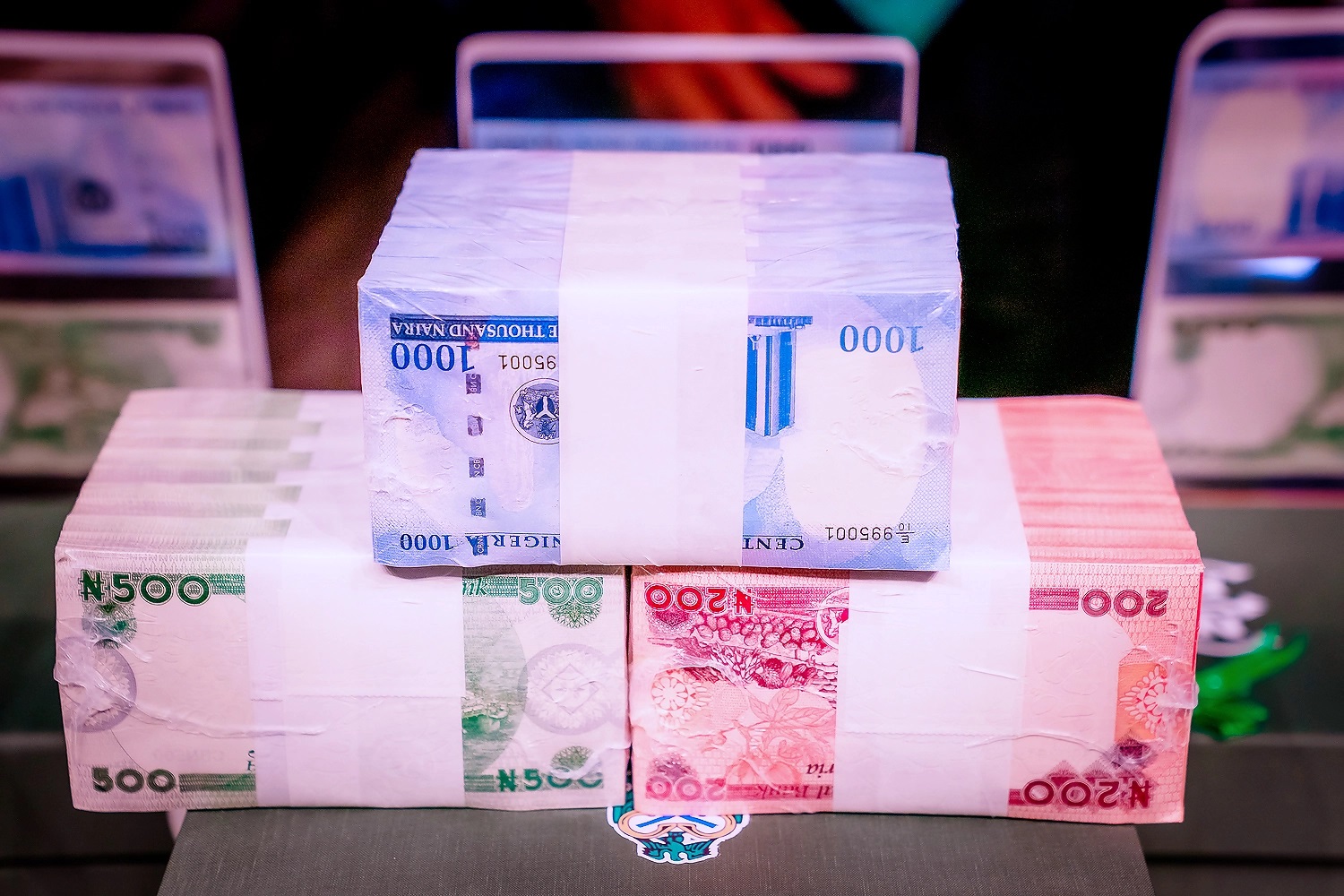
In a bid to curtail money laundering, vote-buying, illicit fund and terrorism financing, the central bank, backed the federal government, had set February 10 deadline to phase out the old N200, N500 and N1,000 notes. The implementation of the deadline has limited economic activities due to insufficient circulation of the redesign naira notes.

Gbolade Idakolo, a financial expert who spoke with Daily Post, said the situation will build on other unfavorable economic issues to compound Nigeria’s unemployment crisis.

“The unemployment rate presently is on the rise due to several factors including but not limited to foreign exchange scarcity and rate, energy crises, the rising cost of goods and services, poverty induced low purchasing power, high-interest rates and insecurity, etc.

“These factors have limited business productivity and profitability, leading to job losses in 2022,” he said.

“There is every likelihood that the addition of the Naira crises will further lead to economic losses directly affecting labour, which will further increase the percentage of unemployed Nigerians,” he added.

“These signs are prevalent, and it is evident in the present Naira crisis that, if not properly handled, could lead to further job losses.”

President Muhammadu Buhari, has on Sunday, appealed to Nigerians once again to be patient as the policy implementation unfolds. Earlier in his national broadcast on Thursday, Buhari had said that the policy, if fully implemented, will bring a lot of economic benefits to Nigeria.

“I am fully aware of the current hardship being faced as a result of some policies meant to bring overall improvement to the country. I’m appealing to you to exercise further patience as we take measures to ease these hardships. God willing, there is light at the end of the tunnel,” he said on Sunday.

The president said part of the reasons for the introduction of the policy is to minimize huge sums of cash in circulation as a result of illicit funds stockpiled by corrupt individuals outside banks’ vaults.

But Dr Ayo Teriba, the CEO of Economic Associates, EA, told Daily Post that the reasons don’t justify the amount of hardship the policy has brought upon Nigerians.

“Needless Naira Redesign policy, it leads to nowhere. Needless because who needs you to change the color of the naira? What benefit is the policy? It is cosmetics.

“People cannot access their money; the people protesting in banks are kidnappers, insurgents, bandits or vote buyers. You cannot say because you want to catch a thousand bandits or politicians and you will now expose 200 million Nigerians to hardship”, he stated.

As the old notes ceased to be legal tender following the expiration of the February 10 deadline, Buhari directed the CBN to allow N200 notes to co-circulate with the redesign notes in a bid ameliorate the hardship the currency scarcity caused. However, experts believe the adjustment is insignificant to the damage the policy has brought upon Nigerian labor market.

#Nigeria must rise for the RISE OF ALL [video]

0

#Nigeria must rise for the RISE OF ALL, and not just for a few. Let’s vote for leaders that will make us to #believe and usher abundance for all. #vote on Feb 25.

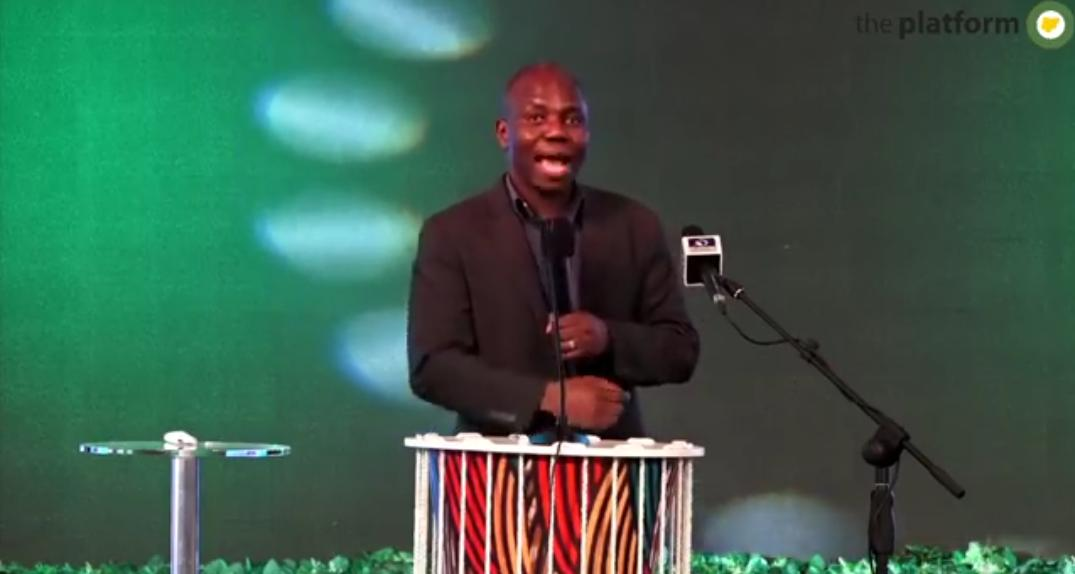
Extracted from Ndubuisi Ekekwe’s speech at The Platform


Full video here

The Power of Social Media  Verified Badges and Marketplace Club Memberships

1

Two cases:

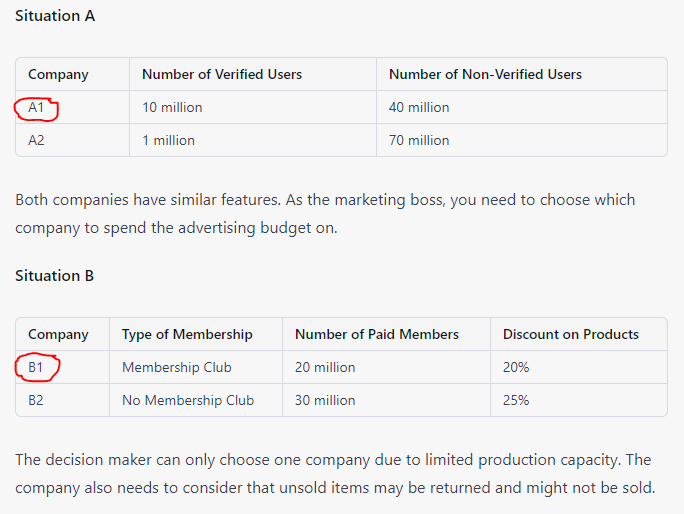
Case A: Company A’s chief marketing officer has to make a decision on how to spend a company’s advertising budget. Here are the two shortlisted companies, presented by her analysts. Company #A1 has 10 million verified and 40 million non-verified users. Company #A2 has 1 million verified and 70 non-verified users. Other indicators are similar.

Case B: Company B’s Head of Partnership has received two proposals from two companies, and each has offered final terms. The company can only pick one company due to its near-term production capacity. Company #B1 has a marketplace membership club where users pay to shop with associated benefits (like Amazon Prime) and is asking for 20% discount from Company B; total paid members are 20 million per annum. Company #B2 does not have any membership club but claims it reaches 30 million shoppers yearly, and is asking for 25% discount from Company B. Any item unsold is returned to Company B in both scenarios.

As we discuss Facebook’s decision to ask users to pay for verified badges, if you are the chief marketing officer, what would you do for Case A? Indeed, which one is a better deal to spend your ad money on?

I wrote about this when Elon Musk pioneered it, noting that it would be a good feature for Meta (Facebook parent company) and LinkedIn. Today, it has been adopted: “‘Meta Verified’ will give you a blue badge along with several other benefits, including increased visibility, protection against impersonation, priority customer support, and more” for $12/month.

For Case B, what would be your call considering that any unsold item is coming back and you’re unlikely to sell it.

In the WhatsApp Group sub-categories, discuss with others. During Tekedia Live on Saturday, we will spend a short time on this, and will examine the implications as we focus on this week’s module of Business Model and Strategy.

Note: Any variable or factor not included is assumed to be similar to Companies A1 and A2 and should be treated as non-factors. The same applies to Companies B1 and B2. What that means is this: they have similar credit rating, payment history, return ratios, etc. The only factors to consider for these distinct cases are those noted and their direct implied implications.

Source: extracted from Tekedia Mini-MBA  courseware

Comment on Feed

Comment 1: A1 and B1. This sounds like we even try to do these things with Facebook ads when creating audiences and targeting. (e.g Engage shoppers and look-alike audiences.)

Comment 2: For Case A the advertising budget would go to Company hashtagA1 – it has 10 million verified and 40 million non-verified users, and the verified users are more likely to be genuine, active users who are more dedicated and interested in the company’s products or services. Also, having higher number of non-verified users may not necessarily translate into more ‘customers’.

For Case B I would partner with Company hashtagB1. Although having a smaller reach, its customer base is more committed with 20 million paid members. The committed members of the membership club could potentially increase odds that they will make purchases as they have already invested in the service. Also the 20% discount can be used as an incentive to retain those customers and hopefully attract new ones through time.

Great exercise Prof.

Comment 3: With the info given and given that every other indicators are similar for Case A, I am under the assumption that company A1 and company A2 have the same advertising budget.
For the same level of advertising budget, the better deal for case 1 would be company A2 for these reasons:
Non-verified users make up 0.07% of verified user compared to 400% for company A1. A2 has smaller target audience who are able and willing to pay for membership and make for lesser advertising stress and spending. The marketing agency gets to make more profit from company A2. This is when compared to running an advertising campaign for company A1 which has larger audience who may likely be unwilling to pay to be verified users and therefore require more thoughtful and high impact strategy which would be relatively more costly.

This is all assuming both companies are operating under similar budgets.

For Case B: A partnership with B1 is considered the best option compared to B2 for these reasons:
While B1 has only 20million members per annum compared to the 30million shoppers claimed by B2, those 20million are certain, so are the revenue per annum, unlike B2. Also, their discount rate of 20% seems more favorable.

My Response: great insight. Would your call on Case A change if the CMO works in Company A. In other works, there is no advertising agency. In other words, there is no middleman, referring to your “The marketing agency gets to make more profit from company A2.”

Also, for Case A, is there a consideration that being verified provides a small level of “certainty” (i.e. they are real accounts, not bots)? Thanks for the contribution.

Comment 4Case A = #A1 has 50 million users ( 10 million verified users and 40 million non-verified users)

#A2 has 1,000,070 users (1 million verified users and 70 non verified users).

As a Chief Marketing Officer, I would ask my non verified users to verify their accounts by promising them some perks( for every verified account, the user gets 1$ bonus)

After I’ve got the users to verify their accounts. I would spend on users with more subscriptions.

Company #A1 is a better company to spend on because they have more subscribers/ users.

For Case B =

#B1 has a verified members with a credible platform .

#B2 doesn’t have a verified members and their claims are based on assumptions.

As the Head of Partnership for Company B, I would rather work with Company #B1 because of its production capacity, quality and credible products. “When you have a quality product, it reduces the risk of returning items back to the company .”

Comment 5: For case A, I will go with #A1 because 25% of the company’s users are verified. I’m certain that my products will be shown to at least 10 million persons.

For case B, I will go with #B1, 20 million verified shoppers is better than unverifiable 30 million shoppers. Besides, #B1 requests for a small discount compared to #B2.

Kenya’s Safaricom on The Verge of Launching Mobile Money Services in Ethiopia

0

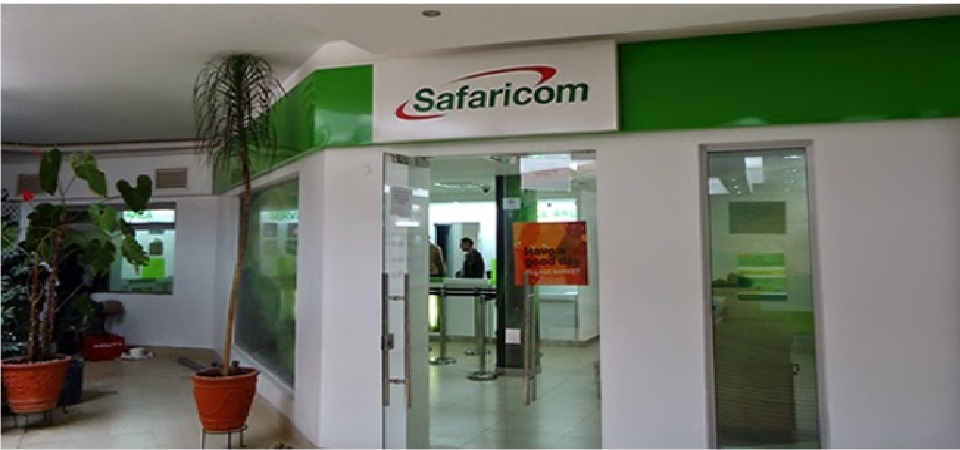
Kenyan mobile network operator Safaricom, is currently on the verge of launching its mobile money services in Ethiopia, four months after its license was approved by the Ethiopian government.

According to Safaricom’s CEO Aanwar Soussa, he disclosed that the startup is currently finalizing plans to launch operations by April 2023.

In his words, “We are finalizing our commercial and technical readiness, and we expect to launch operations within the upcoming financial year.

Our growth trajectory is even more exciting for us as we look forward to offering financial services through M-PESA. With a population of approximately 120 million people and financial inclusion at about 35%, 57% mobile penetration, and annual inward remittance of about $4.2 billion, Ethiopia offers a great opportunity to grow the business to the Kenya level in 10 years.”

Last October, Kenyan mobile money operator Safaricom was granted approval by the Ethiopian government to launch M-pesa in the country.

During the national launch of Safaricom Telecommunications Ethiopia (STE) in Ethiopia’s capital Addis Ababa, the country’s Finance Minister, Mr. Ahmed Shide, disclosed that the mobile money platform had received approval to roll out its services across the country.

He further noted  that Safaricom would be allowed to acquire permits of operation and license for M-Pesa services from the central bank following the approval. The license permits Safaricom to operate in the country for 15 years, it will also operate under its original name in offering mobile money services.

Launched on the 6th of March 2007 by Vodafone’s Kenyan associate, Safaricom, M-PESA is Africa’s leading mobile money service with more than 604,000 active agents operating across Egypt, Tanzania, Ghana, the Democratic Republic of Congo (DRC), Egypt, Kenya, Lesotho, and Mozambique.

A decade after its launch, M-Pesa has expanded to 10 countries, boasts 29.5 million active users and processes up to 614 million transactions per month.

M-PESA is a Safaricom product that allows users to transfer money using a mobile phone. Kenya is the first country in the world to use this service, which is offered in partnership between Safaricom and Vodafone. M-PESA is available to the public, even if they do not have a bank account or card.

The mobile money services provide more than 51 million customers across seven countries in Africa with a safe, secure and affordable way to send and receive money, top-up airtime, make bill payments, receive salaries, get short-term loans and much more.

M-Pesa is also lauded for its social value, offering opportunities for SMEs, and playing a significant role in helping the underbanked. The platform has directly transformed households as it evolved from a basic SIM card-based money transfer application into a fully-fledged financial service, offering loans and savings in conjunction with local banks, plus merchant payments services.

IMF Calls For CBN’s Autonomy and Act Review Amidst Crises Due to Naira Redesign

0

The International Monetary Fund (IMF) has called for a review of the Central Bank of Nigeria Act 2007 to enhance the bank’s autonomy and governance considering emerging problems and controversies around the Naira redesign policy of the Nigerian apex bank .

In a recent report of the IMF entitled ‘Nigeria: 2022 Article IV Consultation-Press Release; Staff Report; and Statement by the Executive Director for Nigeria released on its website, the CBN’s autonomy has been said to have been disputed due to the CBN’s naira redesign policy.

It is observed that the integrity and autonomy of the CBN needs to be reconsidered as some states’ governors challenge and issue counter-directives on the CBN’s pronouncement on the legal status of the old 1000, and 500 naira notes which is said to be in contrast with the subsisting ruling of the supreme court.

The IMF, in its article, stressed the importance of maintaining the CBN’s autonomy to make price stability its primary objective. The International financial institution also urged the CBN to abide by international standards by publishing its annual financial statements, and pruning government officials’ presence on its apex board and committees.

According to legit.ng, the IMF also recommended modernizing the CBN Act 2007, strengthening the CBN’s autonomy, safeguarding the independence and tenure of central bank officials, and phasing out some quasi-fiscal activities that may worsen financial repression and weaken the CBN’s price stability mandate.

The IMF article reads in part: “The CBN Act should be updated to make price stability the main goal, improve the bank’s independence by decreasing the number of government officials on the board and committees, and protecting the tenure of central bank officials. Legal changes should establish independent oversight, including a non-executive board and independent audit committee.

“Financial autonomy should be safeguarded through clear statutory limits on credit to government and prohibition of quasi-fiscal operations and developmental lending activities, which need to be phased out.”