DD
MM
YYYY

PAGES

DD
MM
YYYY

spot_img

PAGES

Home Blog Page 4433

Twitter Silently Reversed Decision to Block Access Without Login

0

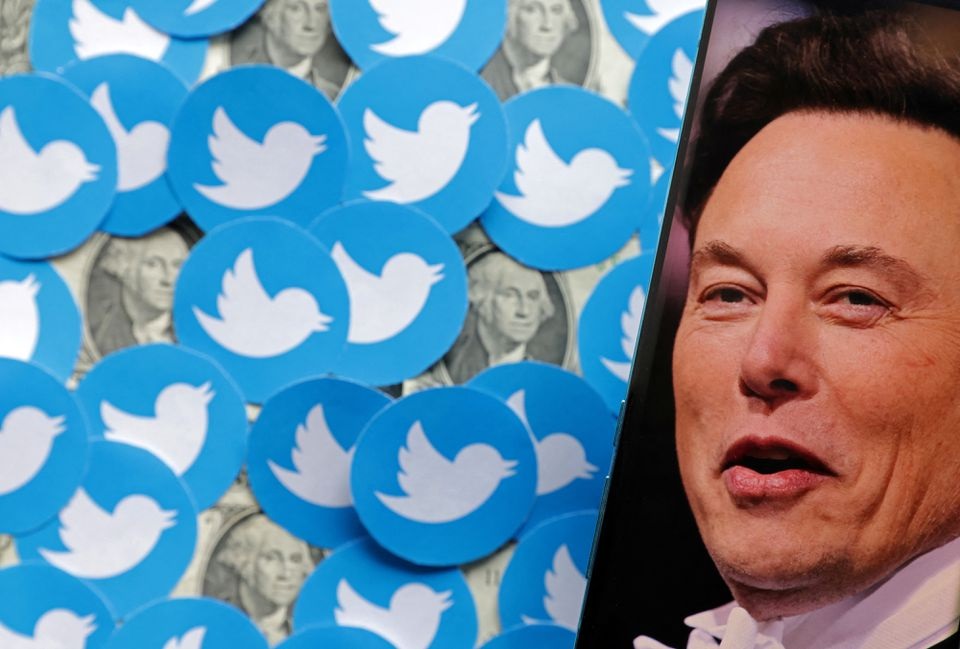
Twitter has silently reversed its decision to restrict tweet viewership without signing in, about a day after it was announced as part of the company’s efforts to halt data scraping.

The reversed decision means users can now access the social media platform’s links without having to sign in. Users started once again to access Twitter from different platforms like WhatsApp and Slack late Tuesday.

Musk announced a restriction on the number of tweets users can see over the weekend as a “temporary emergency measure” to combat data scraping. The billionaire said the login requirement was part of it.

“Temporary emergency measure. We were getting data pillaged so much that it was degrading service for normal users!” he said in a tweet.

Musk quickly reversed the tweet capping move after it triggered attempts by a lot of Twitter users to leave the platform, with many signing up on Truthsocial.

Twitter is yet to make an official announcement that it has rescinded the login requirement.

Musk appeared to have been forced to walk back on these decisions following heavy criticism and the threat of further damage to Twitter’s relationship with advertisers.

Marketing industry professionals said his decision could also undermine efforts by the company’s new Chief Executive and former advertising chief at NBCUniversal, Linda Yaccarino, to make peace with advertisers.

Mike Proulx, research director at Forrester, told Reuters on Sunday that the tweet limits have had a significantly negative impact on both users and advertisers, who are already grappling with the disruption Musk has brought to the platform.

“The advertiser trust deficit that Linda Yaccarino needs to reverse just got even bigger. And it cannot be reversed based on her industry credibility alone,” he said.

In addition, Twitter’s move comes a day before Meta launches its own text-based app called Threads. With a growing number of Twitter users who are dissatisfied with the way Musk is running the platform since he took over in October last year, Threads appears like an alternative.

It is not clear if Threads intends to allow users to access the web without signing in when it finally launches on Thursday, but the platform briefly allowed users to view posts on the web without logging in before pulling the links.

However, Twitter said in a blog post that it took the temporary decision to limit usage “so we could detect and eliminate bots and other bad actors that are harming the platform.”

The company added that the decision came unannounced because “any advance notice on these actions would have allowed bad actors to alter their behavior to evade detection,” and it does not impact its ad business.

“Currently, the restrictions affect a small percentage of people using the platform, and we will provide an update when the work is complete. As it relates to our customers, effects on advertising have been minimal,” the company said.

During the weekend, Musk initially limited the number of tweets users can see to 600 per day for unverified accounts, 300 for new unverified accounts, and 6,000 for verified accounts. It was later reviewed upward to 10,000 posts per day for verified users, 1,000 per day for unverified and 500 posts per day for new unverified users.

Meanwhile, ChatGPT’s OpenAI has a legal issue even as it plans to assemble a team ‘to manage “superintelligent” AI systems that it says could exceed human intelligence within a decade.’

Two novelists are suing OpenAI for copyright infringement, CNBC reports. Best-selling authors Mona Awad and Paul Tremblay allege that the firm wrongfully used their copyrighted novels to train ChatGPT, OpenAI’s chatbot. The authors say the artificial intelligence-powered platform can produce summaries of their work that are so on point that they’re “only possible” if the AI culled protected material. OpenAI, which received a $10 billion investment from LinkedIn’s parent company, Microsoft, says ChatGPT pulls its information from web crawls, which can include archived books and Wikipedia. A new analysis shows that ChatGPT downloads have slowed in recent weeks. 

Process Improvement and Operations Management at Tekedia Mini-MBA

0

Two things make Federal University of Technology Owerri special – four different internships (year 1, year 2, year 3 and year 4) -and option for triple degree in one (electrical electronics engineering with option in electronics computer engineering). In two of those internships, I served in NNPC (Owaza Gas Station under NNPC’s Nigerian Gas Company) and Shell (Kolo Creek Flow Station, Yenagoa) as an instrumentation and control engineer – electrical systems.

Good People, the experience remains unparalleled because the whole nexus of process improvement and operations management especially in Shell was legendary. Sure, they did not measure the quantity of food consumed, and that was the only thing under our control as interns!

Tomorrow at Tekedia Institute Mini-MBA Live, an industry zen-master from the storied Schlumberger will be teaching. Yes, our Faculty Rasheed Adebayo will educate us on process improvement and operations management. His course in our Institute is very popular in the oil and gas industry. Why not? If the process is broken, the tools and the people have no mission.  Now, he will teach live.

Tekedia Mini-MBA: the best teach here!

Alex Kruger Forecasts Strong Bitcoin Rally

0

Alex Kruger, a well-known crypto analyst and trader, has recently published an article where he forecasts a strong rally for Bitcoin in the coming months. He based his prediction on several factors, such as the increasing adoption of Bitcoin by institutional investors, the growing demand for Bitcoin as a hedge against inflation, and the improving technical indicators that signal a bullish trend reversal.

Kruger argues that Bitcoin is undervalued at its current price level, and that it has the potential to reach new highs by the end of the year. He cites the recent announcements by MicroStrategy, Tesla, and Square, among others, as evidence of the rising interest and confidence in Bitcoin as a store of value and a medium of exchange. He also points out that Bitcoin’s market capitalization is still relatively small compared to other asset classes, such as gold, stocks, and bonds, which means that there is plenty of room for growth.

Kruger also analyzes the macroeconomic environment and how it favors Bitcoin as a hedge against inflation. He notes that the unprecedented monetary and fiscal stimulus measures taken by governments and central banks around the world have resulted in a massive increase in money supply and debt levels, which could erode the purchasing power of fiat currencies. He believes that Bitcoin, as a scarce and decentralized asset, offers a viable alternative to protect one’s wealth from inflationary pressures.

Kruger examines the technical aspects of Bitcoin’s price action and identifies some key indicators that suggest a positive outlook. He observes that Bitcoin has broken out of a descending triangle pattern that had been forming since April, and that it has reclaimed the 200-day moving average as support.

He also highlights the bullish divergence between the price and the RSI (relative strength index), which indicates a possible reversal of the downtrend. He expects Bitcoin to test the resistance levels at $50K, $58K, and $64K in the near future, and to eventually surpass its all-time high of $69K.

Finally, Kruger concludes his assertion by stating that he is confident in his forecast and that he is holding a long position in Bitcoin. He advises his readers to do their own research and to be prepared for volatility along the way. He also warns them not to invest more than they can afford to lose, and to use proper risk management techniques.

The increasing adoption of bitcoin by institutional investors, the growing demand for digital assets — CBDCs in emerging markets, and the improving technical indicators on the charts are clear indications that the crypto and more importantly Bitcoin will transcend into mind blowing innovations in the coming months.

Plant The Tree of Capital; Join Tekedia Investment and Portfolio Management program

0

On Saturday, we will begin the Live Zoom of Tekedia Investment and Portfolio Management program. More than 150 professionals are co-learning with us in this edition. The prerecorded courseware went out on Monday (July 3), and on Saturday, I will open the live session with a two hour delivery.

Together, we will co-master how to plant that capital, to grow and blossom, exponentially. Among the five factors of production, CAPITAL remains the one with the highest velocity. What I mean is this: you can use capital to acquire Knowledge, Land, Labour – and even the Entrepreneur (co-founder-for-hire is common these days), and that means Capital is central in the formation, organization, and operation of firms. A man or woman with capital is a FACTOR because with capital, you can pursue a vision, and bring it to pass.

The questions remain: how do you make that capital to keep growing as you deploy it? How do you balance the risk as you plant it as a seed, since the soil of markets can consume it? How do you take care of your capital, from nursery into the main forest of markets? When you invest, you deploy capital so that firms, organizations or the partnering entity can use it to do something in the market system.

The Investment Process now means understanding the market system functions towards making sure your promised value is realizable and your capital protected. Legends of markets are made when they accelerate realized growth with minimal risk!

I invite you to register if you have not done so. It is $400 or N180,000 and we have many payment options here. Like a farmer, Tekedia Institute educates on how to pick the best fertile ground, the right fertilizer mix (balanced nitrogen, potassium and phosphorus) and shovels to have the best harvest. Co-learn with us and REGISTER.

This is the best investment course in Nigeria and Africa you can get for value.

MTN Mobile Money, MoMo, Hits 8 Million Users in South Africa

0

MTN, Africa’s largest telecommunications company, reports that its mobile money (MoMo), has hit a total of 8 million users in South Africa.

Chief Financial Services Officer MTN South Africa, Bradwin Roper disclosed that the surge in MoMo users is attributed to the increasing demand for alternatives, especially among those in rural areas where there is no traditional infrastructure.

Also, in search of connectivity, simplicity, reliability, added value, and an increasing range of services from a single source, MoMo has become the go-to platform for most South Africans.

In his words,

“As more South Africans look to join the mainstream financial services sector, they encounter discouraging fees, complexity, and bureaucratic hurdles. Compounding this is the present economic situation, which is seeing banking fees increase, and even double in some cases. Our commitment to this market is expressed in our MoMo platform, which has attracted eight million subscribers in a few years. The key to this success has not been due only to free services but access to everyday services and the promise of future advancements.

“The fee-free benefits of many of our MoMo services are significant, particularly as many individuals struggle to make ends meet amidst mounting financial pressures. The advantage that MTN and other significant players in this sector have, is that we do not have the legacy investments in technology and systems common to many mainstream financial institutions.

“Our ability to offer cost-effective and convenient smartphone-based services and quickly adapt to changing customer needs to launch add-on services means we have a significant business advantage. Consumer trends indicate that the search for alternative services will only accelerate in the future. Our ability to pivot, meet demands, and control costs together with our commitment to offering customers innovation at every step, will drive benefits for a growing customer base well into the future”.

MoMo platform which is powered by UBank, uses the Ericsson Wallet Platform, enabling customers to use their mobile phones, and other devices, to send and receive money, purchase airtime and prepaid electricity, and pay for their municipal bills and DSTV subscriptions.

MTN believes this is what makes MoMo appealing to SA’s unbanked community as well as those who might not enjoy the burden of withdrawing cash from their accounts.

Since the launch of MoMo in South Africa in January 2020, MTN said the mobile money service has continued to amass millions of users every year. In the first quarter of its launch, MoMo users had grown by 400,000.

Also, the number of active merchants accepting MoMo payments has continued to increase significantly, with the value of remittances growing.

In 2021, underlying the growth of MoMo across Africa,  MTN announced a $2 million partnership with the International Finance Corporation (IFC) to expand its mobile money business in South Africa.

The partnership aimed to target the unbanked and underbanked population by establishing a strong network of MoMo agents. MTN is attempting to tap the unbanked market in SA, which it has estimated at 11 million.