DD
MM
YYYY

PAGES

DD
MM
YYYY

spot_img

PAGES

Home Blog Page 4439

Microsoft Incorporates OpenAI GPT-3.5 to Power Some Features of Teams Premium

0

Microsoft has announced the incorporation of OpenAI’s GPT-3.5 into its Teams Premium, expanding the office tool’s features with AI-powered capabilities.

The incorporation of the GPT-3.5 AI language model means the premium tier of Microsoft Teams now has an ‘intelligent recap’ feature that automatically generates notes, tasks, and highlights of meetings.

Microsoft indicated that the move was spurred by the growing need for organizations to adapt to change, improve productivity, and reduce costs.

“Fortunately, modern tools powered by AI hold the promise to boost individual, team, and organizational-level productivity and fundamentally change how we work,” Microsoft said.

“This promise is rapidly becoming a reality. At Microsoft, we’re working to incorporate new, AI-powered capabilities across our consumer and enterprise products, including Microsoft Teams,” it added.

Microsoft Teams Premium, which was launched as a 30-day trial in December, is now available to everyone and has AI-enabled features such as branded meetings, custom meeting templates, and features like watermarking to better protect meeting contents.

“Built on the familiar, all-in-one collaborative experience of Microsoft Teams, Teams Premium brings the latest technologies, including Large Language Models powered by OpenAI’s GPT-3.5, to make meetings more intelligent, personalized, and protected—whether it’s one-on-one, large meetings, virtual appointments, or webinars,” the company said.

The biggest addition to Teams appears to be the ‘intelligent recap’, available in Teams Premium. Microsoft said customers can get these advanced meeting capabilities and more for one low cost of $10 per user per month. It added that “for a limited time, you can get Teams Premium for just $7 per user per month or 30 percent off the standard price.”

This move follows OpenAI’s decision to create and monetize a professional version of ChatGPT, a chatbot that Microsoft has invested billions of dollars in, and intends to incorporate into its web search engine Bing.

‘Intelligent recap’ offers several tools that make meetings easy. The feature uses OpenAI’s GPT-3.5 model to generate meeting notes and highlights even for those who weren’t present in a meeting.

“With intelligent recap in Teams premium, you’ll get automatically generated meeting notes, recommended tasks, and personalized highlights to help you get the information most important to you, even if you miss the meeting,” Microsoft said.

Other new features include the ability to review meeting recordings in shortest period, which is available for PowerPoint Live meeting recordings. AI-generated chapters divide the meeting into sections, making it easy for users to pick and choose the most relevant content. ‘Intelligent recap’ is designed to automatically generate meeting chapters based on the meeting transcript as well.

Another interesting feature is the ‘personalized timeline markers.’ It gives users the ability to privately catch up on the things they missed in a meeting using the ‘meeting recording.’ So you can quickly click and listen in on what you missed. Personalized timeline markers will expand to include when your name was mentioned and when a screen was shared.

“Soon, these personalized meeting highlights will expand to include speaker timeline markers that show you who spoke during the meeting, when they spoke, and allows you to jump to that moment,” Microsoft said, adding that “speaker timeline markers are intelligently organized by who you work most closely with, so you’ll never miss feedback shared from your manager in a meeting again.”

In addition, ‘intelligent recap’ helps users to focus on the meeting discussion itself and not on capturing notes. Microsoft said in the coming months, you’ll see key points and takeaways after the meeting, with AI-generated notes automatically created and powered by GPT-3.5. Follow-up is easy with AI-generated tasks and action items automatically suggested for you.

The company is also using the AI language model to solve one of the toughest collaboration challenges—working with people who natively speak different languages. With live translations, users can turn on live captions in Teams and see real-time captions in the spoken language.

“With live translations (for captions) now available in Teams Premium, you get AI-powered real-time translations from 40 spoken languages. Meeting participants can read captions in their own language, saving money and making meetings more productive and effortless,” Microsoft said, adding that only the meeting organizer needs to have Teams Premium for all meeting attendees to enjoy live translations.

Microsoft said the additional intelligent recap capabilities will be available in the second quarter of 2023. The company is keen on broadening its businesses with OpenAI. In addition to the Teams Premium’s AI incorporations, the company is reportedly moving to bring OpenAI technology to Word, PowerPoint, and Outlook.

India’s Largest Retail Chain to Accept Payments in Digital Rupee

0

Reliance Retail, India’s largest retail chain, will start accepting retail payments in digital rupee in a move that could supercharge the adoption of the country’s recently launched CBDC initiatives. Cryptocurrency in India is going through a process of legal identification. There is little surety if the country will legalize the digital currency considering that the digital rupee has started circulating in the market.

The retail CBDC will be mainly used for retail payments just like “cash”. It will be a digital rupee signifying legal tender in the form of digital token and issued in the same denominations as paper currency and coins and will be distributed through intermediaries, i.e., banks

Reliance Retail is part of the Indian conglomerate Reliance, said it has rolled out the support for CBDC at its gourmet store line Freshpik and will extend the feature across all its properties eventually. Thursday’s move makes Reliance the largest Indian firm to adopt the digital rupee.

This historic initiative of pioneering the digital currency acceptance at our stores is in line with the company’s strategic vision of offering the power of choice to Indian consumers, said V Subramaniam, Director, Reliance Retail, in a statement. With more Indians willing to transact digitally, this initiative will help us provide yet another efficient and secure alternative payment method to customers at our stores.

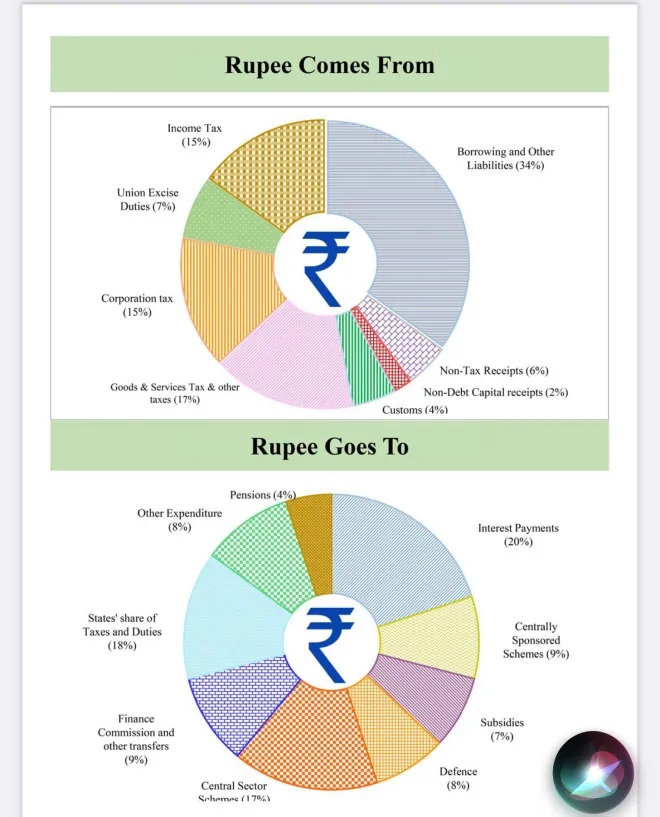
India’s Public Debt is alarmingly high — at 84% of the GDP. See how 34% of the Budget or 1/3rd is from Borrowed Liabilities and how 20% of all expenditure is for Debt Repayments

20% of the India’s budget is spent on interest expenditure while 34% of the budget is funded from borrowings. That means of every 1 Rupee borrowed, 59 paise go to interest payments on previous debt.

India’s central bank started to pilot the e?-R in December for retail markets across select Indian cities. Through e?-R, the Reserve Bank of India hopes to lower the economy’s reliance on cash, enable cheaper and smoother international settlements and protect people from the volatility of private cryptocurrencies. Based on the test results of the ongoing pilot, the central bank plans to experiment with additional features and applications of the digital rupee.

The Mukesh Ambani-led firm said it has partnered with ICICI Bank, Kotak Mahindra Bank and fintech Innoviti Technologies to launch the in-store support for digital rupee. Customers who wish to pay with the country’s CBDC (Central Bank Digital Currency), called e?-R, will be provided with a dynamic digital rupee acceptance QR code for scanning at the store.

India’s central bank has spent the last few years largely pushing to make its citizens avoid crypto trading. Despite a ruling from the country’s apex court, the central bank continues to force the hand of banks from engaging with crypto platforms in India, a move that has made on-ramp a nightmare for the firms involved, people with direct knowledge of the matter said.

Similarly, IDFC FIRST Bank has partnered with ToneTag, a global proximity and voice tech solution provider, to enable acceptance of digital rupee at merchant outlets. This follows a pilot launch of Central Bank Digital Currency (CBDC) for retail users by the Reserve Bank of India (RBI).

Madhivanan Balkrishnan, COO, IDFC FIRST Bank said;

This solution will change how merchants transact, and IDFC FIRST Bank is a proud partner in this collaboration. Digitization of cash payments is one more step in making transactions easier for our customers. As a bank that firmly believes in ‘Customer First’ approach this initiative aligns well with the same.

Kumar Abhishek, founder and CEO ToneTag said;

We are glad to collaborate with IDFC First Bank and participate in the first phase of CBDC retail pilot. In this pilot ToneTag will provide solutions through which merchants will be enabled to accept digital currency. With this launch India becomes one of the only few countries Globally to take this leap of digitalizing cash and reap its great potential to reduce counterparty credit and liquidity concerns, as well as increase the efficiency of payments and securities settlement. This indeed is going to be India’s decade and many kudos to RBI.

Tech Layoffs – Social Media Company Pinterest Makes Organizational Change, Trims Workforce by 5%

0

Image sharing and social media company Pinterest in a recent organizational change has trimmed its workforce by 5%, laying off almost 150 employees.

This is the company’s second round of layoffs after it carried out its first round in December last year. In the third quarter (Q3), the company had about 4,000 employees, with its recent layoffs, this will see the number significantly reduced.

Speaking on its recent layoffs of some members of its workforce, a spokesperson at the company said,

We’re making organizational changes to further set us up to deliver against our company priorities and our long-term strategy. Our employees are the heart of how we’re able to serve our Pinners around the world.

“All of the employees who were impacted contributed to Pinterest and as they transition, we’re committed to supporting them with separation packages, benefits, and other services.”

Recall last year November, also shut down its ‘creator rewards’ program which allowed content creators to earn money through monthly prompts and achieve certain engagement goals. According to them, this was to focus on other creator programs and features.

Also, due to the recent economic downturn, few other social media companies have been constantly tweaking their creator payment programs in recent times.

Companies such as Snapchat reduced its payouts to creators from millions of dollars per week to millions of dollars per year, Meta announced the closure of its Live Shopping program to focus on reels, also, Instagram closed its affiliate program, which allowed creators to get a commission if users purchased tagged products from their post

Pinterest joins the list of tech companies that have undertaken layoffs in the past few months as they seek to navigate the current economic downturn.

The image-sharing company witnessed a decline in its advertising budgets because of decades-high inflation that ravaged the earnings of online players from Alphabet, to Meta Platforms and Snap.

No doubt, the tech industry is reeling from a seemingly nonstop parade of layoffs across Silicon Valley and beyond. So far 256 tech companies have laid off 82769 employees in 2023.

According to a Crunchbase News tally, more than 58,000 workers in U.S.-based tech companies have been laid off in mass job cuts so far in 2023, with the tech sector making up 2.8% of total U.S. employment.

Big giant tech companies like Spotify, Intel Amazon, Meta, TikTok, Microsoft, IBM, Luno, Alphabet, and many others have also been affected by the economic downturn, causing them to cut down a big chunk of their workforce.

CBN Directs Banks to Begin Over The Counter Payment of New Naira Notes

0

The Central Bank of Nigeria (CBN) has directed deposit money banks (DMBs) to begin the payment of the redesigned naira notes over the counter, reversing earlier directive that prohibited the banks from doing so.

The directive comes amid growing chaos emanating from scarcity of the redesigned naira notes, which has left people and businesses suffering across the country.

In a statement signed by the CBN’s Director, Corporate Communication, Osita Nwanisobi, the apex bank said the new directive is subject to a maximum daily payout limit of N20,000.

The earlier directive, which forbade banks from issuing the new naira notes from the counter, was meant to stop banks from making a few of their customers a priority, but it compounded the hardship unleashed by the scarcity of the new naira notes.

It was also undermining the circulation of the redesigned naira notes since the few ATMs dispensing them give out only N1,000 notes. The situation forces people to rely on lower denomination of the old naira notes (N200 & N500) to complement transactions, leaving a vacuum stymieing CBN’s efforts to mop up the old naira notes in circulation.

But in the statement, the CBN said it is committed to seeing to the effective distribution of the redesigned naira notes. The financial sector regulator urged Nigerians to be patient as it works assiduously to address the challenge of long queues at ATMs.

The statement said the CBN has observed with grave concern, the activities of persons who sell the newly redesigned banknotes and those who flagrantly abuse the legal tender by hurling wads of naira notes in the air and stamping on the currency at social functions.

“We have equally noticed the queues at Automated Teller Machines (ATMs) across the country and an upward trend in the cases of people stocking and aggregating the newly introduced banknotes they serially obtain from ATMs for reasons best known to them.

“Also worrisome are the reported cases of unregistered persons and non-bank officials swapping banknotes for members of the public, purportedly on behalf of the CBN.

“We wish to state unequivocally that, contrary to the practice of these unpatriotic persons, it is unlawful to sell the Naira, hurl (spray), or stamp on the currency under any circumstance whatsoever,” it said.

While Nigerians struggle to get hold of the newly introduced naira notes, scores have been noticed swapping them for profit.

The CBN said in the statement that the perpetrators are breaking the law. Quoting Section 21(4) of the CBN Act, the apex bank said: “It shall also be an offence punishable under Sub-section (1) of this section for any person to hawk, sell or otherwise trade in the Naira notes, coins or any other note issued by the Bank.”

The CBN said it is collaborating with the Nigeria Police, Federal Inland Revenue Service (FIRS), the Economic and Financial Crimes Commission (EFCC) and the Nigerian Financial Intelligence Unit (NFIU) to address the unpatriotic practice.

Nwanisobi admonishes members of the public to embrace and adopt other payment channels for their transactions.

However, the CBN reversing its earlier directive to banks regarding issuance of the new naira notes is seen as a sign of desperation to tackle the challenges of the redesigned naira notes implementation as its February 10 deadline draws near.

The central bank earlier fixed January 31 as the deadline for the old naira notes to be returned to banks, but was forced to extend it as the circulation of the new naira notes significantly stalls.

The central bank governor, Godwin Emefiele, had on Tuesday, assured the House committee looking into the policy that the public will be able to return their old naira notes to the banks after the deadline, but reverses himself after, reiterating that the old notes can only be deposited at the central bank post February 10.

Binance Is Leaning Into Community Feedbacks With New Tools

0

The world leading Cryptocurrency Exchange, Binance, has announced on Wednesday a new feature that will allow its community to easily provide the company with comments and feedback. The tool will let users effectively participate in forming Binance’s product roadmap.

In its lates press release Binance said the primary goal of the new tool is to gather community input on what new features it wants to see implemented.

Community feedback will be gathered and reviewed by Binance, after which the product team will release a public-facing roadmap for user-suggested features in March.

Following the roadmap’s release, the community will vote on the proposed features, and the top suggested features will be added to Binance’s official roadmap. It will provide updates on the development status of those features, and the community may later provide feedback on user-suggested features that have already been launched.

Binance has always built feedback into the product development process,” said Binance Head of Product Mayur Kamat in the press release. On average, we get around 1000 pieces of feedback every month – now we have a dedicated place for the community to make suggestions and leave a lasting impact on future Binance product developments.

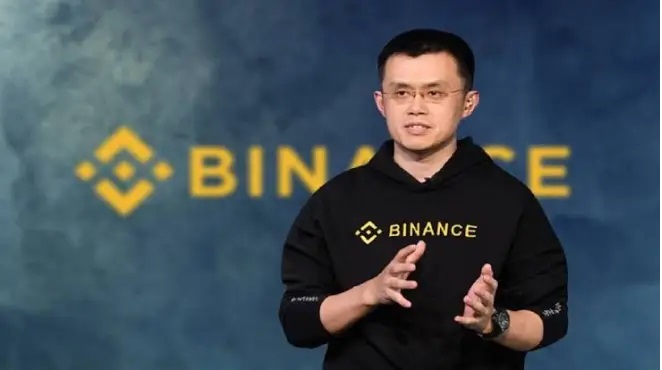
Binance CEO Changpeng Zhao (CZ) is highly active on Twitter, where he often discusses the latest happenings in the industry with his followers. He was an especially vocal member of public conversation in the events preceding and following the collapse of FTX, discussing his relationship with the bankrupt exchange, and distinguishing Binance’s operations from its fallen competitors.

FTX’s fallout was part of what spurred Binance to try implementing a “proof of reserves” system at his community’s request. Proof of reserves involves verifying the security of customers’ assets using on-chain data – though such a system isn’t complete without an independent auditor examining the company’s liabilities.

Though the exchange published a brief proof of reserves in December, the report was taken down days later as its auditor, Mazars Group, abandoned work with crypto companies altogether.

CZ has also tried to stand out by making Binance one of the only companies hiring workers during the crypto bear market last year. While Coinbase cut its staff by another 20% in January, CZ announced plans to expand Binance’s workforce by 30% last month.

BNB GREENFIELD WHITEPAPER

Similarly, BNB Chain announced on microblogging platform Twitter on the release of BNB Greenfield whitepaper. This new standard in Web3 data ownership and utility introduces a new structural and economic paradigm for data in the Web3 era.

BNB Greenfield consists of a trinity that works together to provide a decentralized data storage system with users at the center:

(1) BNB Greenfield Blockchain + Storage Providers.

(2) New BNB Greenfield dApps.

Users upload their data with unique access and usage permissions. Storage providers store that data off-chain with proper redundancy and backup. Metadata of users’ BNB ledger is stored on the BNB G A native programmable layer connects BNB Greenfield with BNB Smart Chain, opening the door for both new and existing dApps to leverage data stored on the network in new and exciting ways.

Potential use cases for BNB Greenfield include:

Personal Cloud Storage.

Hosting and Deploying Websites.

New Social Media Model.

Storing Terabytes of Data from BNB Smart Chain and L2 Rollup Transactions.

The release of the BNB Greenfield whitepaper is just the beginning of a journey towards greater data independence, ownership, and opportunity for users, builders, and the Web3 community.