DD
MM
YYYY

PAGES

DD
MM
YYYY

spot_img

PAGES

Home Blog Page 4444

ChatGPT May Kill Google in Two Years – Gmail Creator, Paul Buchheit

1

As ChatGPT wave garners momentum, the belief that it poses a big threat to Google is rapidly growing. Gmail creator, Paul Buchheit, is one of the believers that the web search giant doesn’t stand a chance when the AI-powered chatbot is fully developed.

Buchheit said ChatPGT has the potential to destroy Google in two years at max. He said Google’s downfall will come from the depletion of its search-based revenue, which is the most profitable part of the tech giant’s business.

“Google may be only a year or two away from total disruption. AI will eliminate the Search Engine Result Page, which is where they make most of their money,” Buchheit wrote on Twitter, adding that “even if they catch up on AI, they can’t fully deploy it without destroying the most valuable part of their business!”

His assessment is based on the quality of responses given to queries by ChatGPT. The chatbot imbibes GPT-3.5, a large language model released last year, to generate answers and authentic-looking responses to queries about all topics. It also enables users to accomplish tasks such as creating poems, composing college essays and writing code.

“The way I imagine this happening is that the URL/Search bar of the browser gets replaced with AI that autocompletes my thought/question as I type it while also providing the best answer (which may be a link to a website or product),” Buchheit said.

ChatGPT set off an alarm when it was launched in November 2022, racking up more than one million users within its first month. The AI-powered machine has triggered concern across sectors, putting educators on high alert as its widening impact threatens critical thinking. But Google seems to be the only company in the tech industry being rattled by the chatbot.

Microsoft made a whopping $1 billion investment in OpenAI, ChatGPT’s parent company, in 2019, and has increased funding early this year with additional investments worth billions of dollars. Microsoft’s investment in OpenAI includes deal to incorporate ChatGPT with its search engine, Bing.

Google, which reportedly issued “code red” following the unprecedented rise of ChatGPT, has been exploring ways to deal with the chatbot’s emergence. CEO Sundar Pichai is said to have reached out to the company’s founders, Larry Page and Sergey Brin to help accelerate AI projects at Google. The company is reported to be also working on plans to “demonstrate a version of its search engine with chatbot features this year” and is developing more than 20 AI products to seemingly counter ChatGPT, per New York Times.

Financial Express reported that more details of the plans are expected to be revealed during the upcoming Google I/O 2023 developer conference.

But ChatGPT is grappling with shortfalls impeding its reliability. It only has information of events that took place post 2021. OpenAI cofounder and CEO Sam Altman said the chatbot cannot be trusted at this time because it is still prone to misinformation and biases. But it recently announced that it’s working to expand ChatGPT, creating a professional version that will correct its lapses.

However, Buchheit said ChatGPT’s abilities pose existential threat to Google, and will potentially kill it just as Google did to Yellow Pages, a dominant pre-internet business.

“The old search engine backend will be used by the AI to gather relevant information and links, which will then be summarized for the user. It’s like asking a professional human researcher to do the work, except the AI will instantly do what would take many minutes for a human,” he said.

“One thing that few people remember is the pre-Internet business that Google killed: The Yellow Pages!

“The Yellow Pages used to be a great business, but then Google got so good that everyone stopped using the yellow pages. AI will do the same thing to web search,” he added.
Osun Election Tribunal: INEC Said BVAS Data Obtained by APC Incomplete

0

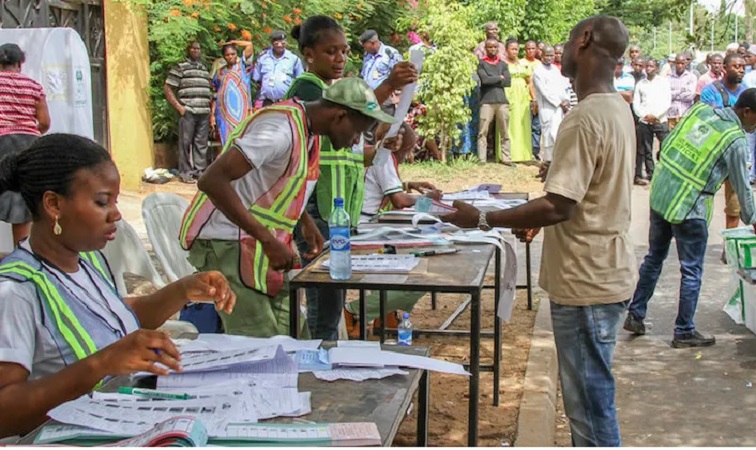
The Independent National Electoral Commission (INEC) has weighed in on last week’s judgment of Election Petitions Tribunal, which declared Oyetola Adegboyega of All Progressive Congress (APC), the winner of July 16, 2022, Osun State’s governorship election.

But the judgment, which was based on over-voting, has questioned the integrity of the Bimodal Voter Accreditation System, BVAS, a new tech system that the electoral umpire is relying on to conduct credible elections in 2023.

The tribunal nullified thousands of votes credited to Peoples Democratic Party candidate, Ademola Adeleke, who was declared the winner of the election by INEC.

But during his appearance on ChannelsTV’s program, Sunrise Daily, on Monday, a former Director, Voter Education and Publicity, INEC, Oluwole Osaze-Uzzi, said the discrepancy that resulted in the over-voting scandal does not discredit the BVAS.

Osaze-Uzzi said the avoidable discrepancy happened because the APC obtained a certified copy of the initial server report before some of the data had been transmitted by the BVAS hardware.

He noted that the situation created two sources of information – the BVAS server and its printout, which he indicated to be the reason while the jury was not unanimous in the verdict.

“The second [tribunal] member – the honourable justice who dissented from his two colleagues – said, ‘I would rather use the primary source of this information, and the primary source of this data is actually the machine itself,’” the INEC official said.

“It is basically a computer. So, rather than go to the server where it transmitted data, I would use the printout from the machine itself.

“The machines were tendered, so were the reports from the server, and there ought not to have been a discrepancy, but somewhere along the line, not all the data had been transmitted at the time the APC obtained the certified copy of the initial server report.”

The Osun State’s governorship election was a test-run of the BVAS, which INEC has touted as a solution to rigging that had characterized Nigerian elections in the past. However, the issue of over-voting has cast doubt on the machine’s ability to help the electoral body deliver election results that would not be contested.

Speaking on that, Osaze-Uzzi said the BVAS exposed the discrepancy, which is a validation that the hardware will play a big role in enhancing the electoral process.

“It was BVAS that exposed that as it were, and the fact that the BVAS report was relied on. But we have to be careful; which of the BVAS reports was relied on? Was it what was transmitted to the server – to the back-end – or was it the BVAS itself?” he asked.

Talking more about the judgment, Osaze-Uzzi said there is a need to break the verdict of the tribunal. He explained that the transmission of data from the BVAS created a discrepancy that resulted in different opinion of the three-man panel. According to him, the chairman and the second member of the tribunal relied on the initial report and the initial report of the back-end, duly certified by INEC.

“It was downloaded from the server [after it was] transmitted. But a couple of days later – INEC used the word ‘synchronised’, I’m not too sure I like that word, but – you synchronise it and say, ‘Have all the results been transmitted – has all data been transmitted from the machine, BVAS itself, to the server?’

“The machine is a physical one and then it transmits to a physical one. It now went, checked and said, ‘There’s a problem here.’ The BVAS report now downloaded itself, [we] now brought it out and examined each BVAS machine and now found out that no, some data was not transmitted to the server,” Osaze-Uzzi said.

The judgment, which has stirred mixed reactions from many quarters, is expected to be looked into by higher courts. Adeleke said he is going to challenge the judgment at the Court of Appeal.

Sam Bankman-Fried through FTX Precipitated Celsius and 3AC’s Bank-Run

0

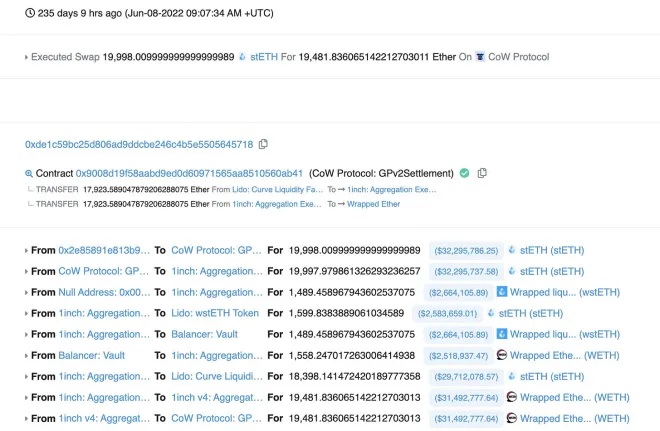
On 6th of August 2022, two mystery wallets withdrew $75M+ of stETH from FTX. They then proceeded to market-sell everything, kicking off a “de-peg” event seen as one of the contributing factors to Celsius’s bankrun and the demise of Three Arrow Capital [3AC].

We know today as per revelations emanating from FTX Implosion that Sam Bankman-Fried and Alameda Research was behind these sales prompting the winding off of Celsius and 3AC.

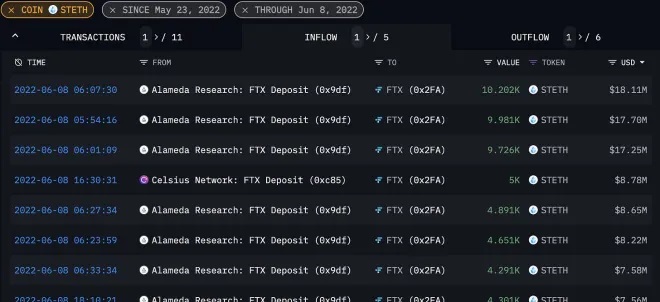
The stETH depeg event of last year led to a significant stress in the Crypto market, and many rumors of Celsius liquidity problems created holes for Institutional Investors. Celcius announced just four days after the Alameda stETH sales, that it was halting withdrawals. Alameda Research was suspected of playing a role in the June depeg but there wasn’t much verifiable proof onchain.

Alameda Reservation previously doxxed wallets publicly withdrew liquidity and sent stETH to FTX. Many sharp traders like HsakaTrades had their suspicions.

Nansen also reported on these wallets as contributing to the depeg, but wasn’t able to identify them or their intention. Today we can be certain that Alameda/SBF owned them. These mysterious wallets both recently sent ETH and stETH to the FTX Estate in January.

TL;DR

Whilst stETH is strictly speaking, not required to trade on par with ETH, many players had build up leveraged stETH-ETH positions on Aave which puts them at risk of liquidation if the price ratio deviates too much from the 1:1 “peg”

  • Our on-chain investigation revealed that contagion stemming from the de-peg of UST and subsequent collapse of the Terra ecosystem was likely the main factor for stETH deviating away from this 1:1 ratio
  • As stETH cannot be redeemed for ETH until after the Merge, the primary way to obtain liquidity on large stETH positions is through Curve
  • Large quantities of stETH (in the form of bETH) which were deposited in Anchor were almost entirely bridged back to Ethereum mainnet in a matter of days, increasing the selling pressure and causing uncertainty among participants
  • During the Terra collapse (May 7-16), the main liquidity pool on Curve lost more than half its TVL (3AC and Celsius alone withdrew almost $800m combined), resulting in a classic “liquidity crunch” as reflected in the pool’s imbalance which left the stETH price “vulnerable”

Given the poor market backdrop post-Terra’s collapse, both pool imbalance and liquidity on Curve for stETH failed to recover; the drying up of liquidity meant that there was no other avenue for significant stETH holders such as Celsius to cover their positions, culminating in the widely publicized events that occured on June 11-13.

Alameda took seven figures in slippage in the largest single swap of a crypto trade I’ve ever seen them do on chain. There were certainly savvy enough to understand the slippage impact which makes me think they had motives outside of best-price execution.

Alameda Research could have processed this trade OTC on behalf of Celsius last year or another big party. Not sure this makes sense given;

A. stETH inflows into FTX were all Alameda that week. Celsius only deposited ~$5M of stETH into FTX AFTER the depeg ?

B. What kind of OTC slippage is that?

China’s Crypto Tax Provides Clear Regulatory Frameworks for Investors and Businesses

0

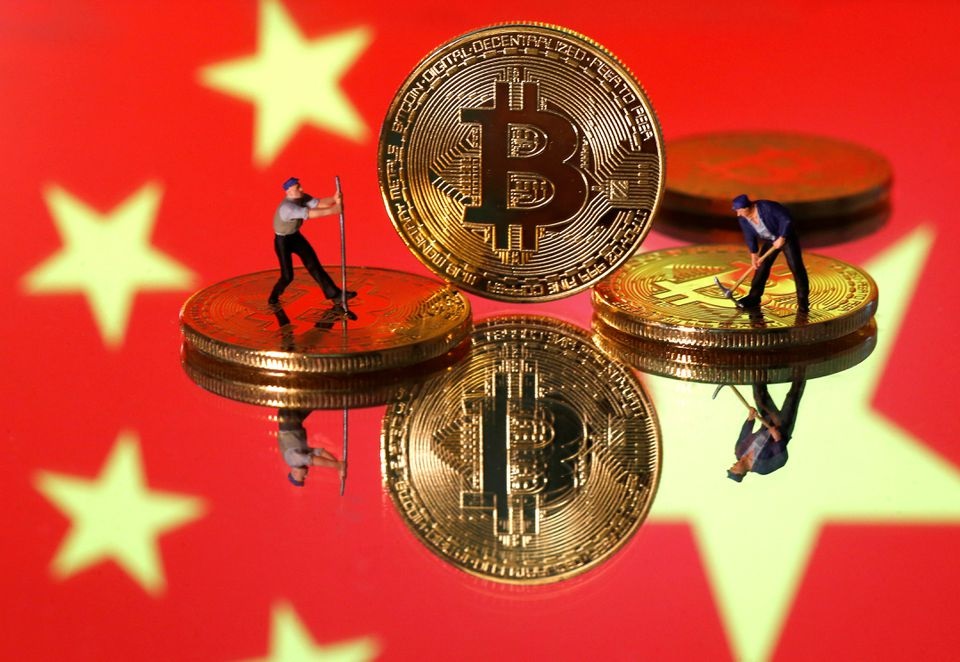
Local Tax Authorities in China have begun imposing a 20% personal income tax on the investment profits of individual crypto investors and Bitcoin miners, China currently has strict regulations on illegal financial activities. Within the current legal framework, China does not prohibit individuals from holding Bitcoin and cryptocurrencies under the ‘Invalid Civil Act’.

Governments around the world are growing concerned by the amount of power it takes to mine Crypto which prompted an initial ban from China, and Russia banning it outrightly on concerns bordering on Climate Change and Energy Consumption used for Cryptocurrency mining.

Experts argue that the need to tax cryptocurrencies may have the potential to force the legalization of the crypto industry in China.

Interestingly, China has revealed a CBDC (digital currency) with expiration dates that force people to spend instead of saving. Don’t you think that sounds like the exact opposite of freedom? The solution is in Crypto. CBDC aren’t cryptos, they are just dystopian in my opinion— nothing decentralized about it.

Huw Van Steenis, Vice Chair at Oliver Wyne noted that;

The rage for central bank digital currency is waning. The live pilots in the Bahamas and China are yet to be successful and the fear of missing out on crypto has collapsed. Most central bankers at Davos are sticking to desk exercises only.

HE, Justin Sun, Tron Blockchain Founder and Huobi Global Advisor noted on microblogging platform Twitter that China has taken a big step towards cryptocurrency regulation with the implementation of a tax on crypto transactions. This signals the country’s increasing embrace of cryptocurrencies.

The tax on crypto transactions is a clear indication that the Chinese government views cryptocurrencies as a legitimate form of wealth and wants to ensure its proper taxation. The tax policy is expected to boost the adoption of cryptocurrencies in the country, as it provides a clear regulatory framework for individuals and businesses.

With the increasing use of cryptos in China, it is expected that the government will further regulate the crypto industry, providing further legitimacy and stability. The crypto tax in China is a positive development for global cryptocurrency market and may set a precedent for other countries to follow.

Floki Inu stated that;

We believe that China (and Asia) will contribute greatly to the next phase of explosion in crypto adoption, and we have some special developments for our Chinese Vikings.

More details will be revealed in the Floki roadmap which will be released SOON.

In an interesting perk, Little Red Book, (XiaohongShu), the Chinese version of Instagram integrates Conflux Network as permissionless blockchain allowing users to showcase NFTs minted on Conflux on their profile page in the digital collection section called ‘R-Space’.

The platform has more than 200 million active monthly users and this integration brings NFTs a step closer to mass adoption, where people are actively using Web3 technology on a daily basis within a Web2 system.

Large internet players in China have initiated efforts embracing Web3 transition. Conflux Network is starting to become the major bridge connecting the two worlds and take the leadership role to expand Web3 technologies into traditional Web2 industries, Ming WU— CTO at Conflux.

Yes, as US continues to battle China, everyone must pay attention on Chinese asset classes:

The U.S. has stopped providing American suppliers licenses to export to Huawei, with the idea of potentially cutting the Chinese telecom giant’s access to U.S. tech altogether, various outlets report, citing anonymous sources. The proposed move would involve all U.S. suppliers, including Intel and Qualcomm, which Bloomberg considers a “hardening of stance” compared with the previous administration. The U.S. has long considered Huawei a national security threat, and the Commerce Department added the firm to its Entity Listin 2019. Huawei has denied that its products pose a national security risk.  China is “deeply concerned” about the escalation, a foreign ministry spokesperson says.

Apple Scores Biggest Quarterly Market Share in China

0

Tech giant company Apple has reportedly won its biggest quarterly market share in China, despite Covid 19 disruptions and the recent economic downturn.

According to Counterpoint research data, Apple accounted for nearly 24 percent of China’s smartphone sales in the last three months of 2022.

Meanwhile, the company saw lower demand for its latest generation of iPhones than it had projected earlier this year.

The company struggled with supply chain challenges last year after it experienced new sales in China for the first time since early 2020 when China was just hit by the first wave of covid-19. The iPhone maker saw its sales decline the entire year even as it outperformed in Q4 as the most sold brand.

In the first quarter of last year, Apple became the top-selling smartphone brand in China for the first time in six years. It however fell back behind Chinese rivals after suffering more than others from a first-quarter slump in sales. Its sales plunged 23% in the three months to March, compared with the previous quarter.

Chinese homegrown brands such as Vivo, Oppo, and Honor fared better than Apple as their sales were denounced after suffering from iPhone 13’s strong performance in the last quarter of 2021.

Recall that Apple’s largest supplier in China Foxconn stopped building iPhones and other products in Shenzhen China after authorities put the city into a lockdown over the covid-19 outbreak.

Apple’s shipments of its latest lineup of iPhones were temporarily impacted by Covid restrictions in China, which saw its assembly facility in Zhengzhou which normally houses about 200,000 workers operate at a reduced capacity due to covid curbs.

Its iPhone Pro models remained in high demand, but deliveries were challenged by coronavirus lockdowns and worker protests at its Zhengzhou plant in China.

The company further warned in November last year that it expected shipments of iPhone 14 pros to be affected by the covid restrictions that limited production at its factory.

The disruptions in China spurred the Tech giant Apple to seek ways to diversify its production from China as it eyes expansion to India.

On the other hand, the global smartphone market has been hurting from an economic slowdown triggered by rising inflation and interest rates. Consumer spending has plummeted, with the Chinese market recording double-digit drops at several points throughout the year.

The fourth quarter of 2022 marked a significant setback for the global smartphone market, with shipments suffering the largest-ever decline of 18.3% year-on-year (YOY). The total annual number of units shipped for the year reached 1.21 billion, the lowest shipment total since 2013.

IDC figures released earlier this week showed all major brands taking a big step back, with retailers selling through inventory build ups rather than taking on new shipments.

According to a report, the holiday quarter’s decline in smartphone shipments is caused by rising inflation and macroeconomic concerns, which are delaying recovery until the end of 2023.

However, consumers may see more trade-in offers and promotions in 2023 as the market seeks new ways to boost upgrades and sales, particularly high-end models.