DD
MM
YYYY

PAGES

DD
MM
YYYY

spot_img

PAGES

Home Blog Page 448

Ethena Targets $1, Shiba Inu Battles Resistance but BlockDAG’s Awakening Testnet Already Delivers Real Utility

0

Ethena has shown progress, but questions remain about stability, even as analysts highlight Ethena’s growth potential tied to its synthetic dollar system. Shiba Inu, on the other hand, continues to ride sentiment cycles with price swings dominating the Shiba Inu market trend, yet its huge supply keeps the upside capped in the eyes of many. So, where do you look if you want the best long term crypto that isn’t stuck between speculative hype and token supply drag?

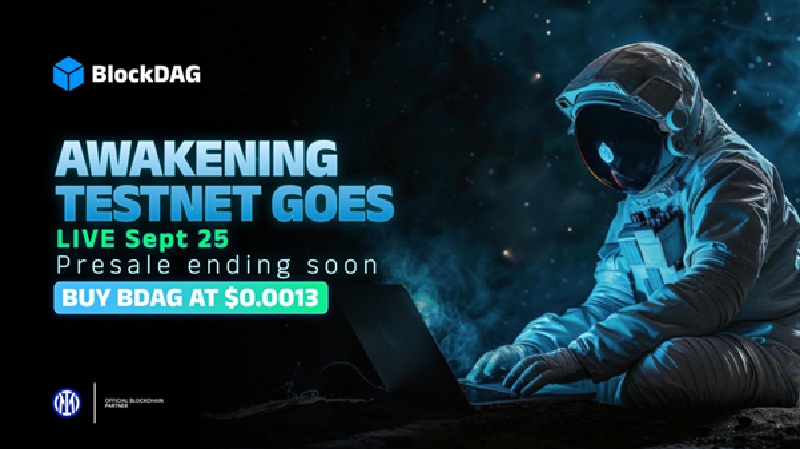
BlockDAG is about to flip that script with its Awakening Testnet going live on September 25. Unlike others still promising features after launch, BlockDAG is delivering them during presale: live chain sync, miner integration, vesting mechanics, and a reworked ledger for scale. This is the pre-launch proving ground that could turn BDAG into the next $1 coin faster than anyone expected.

BlockDAG: Countdown to Awakening Testnet & $1 Price Prediction

BlockDAG is entering a turning point with its Awakening Testnet set to go live on September 25. This isn’t a simple trial environment; it’s a public stress test where the full chain comes alive with real miner sync, refined vesting contracts, and a redesigned ledger built for speed and scale.

By running these systems before mainnet, BlockDAG is proving the network’s backbone while the presale is still open. That combination of delivery and timing creates urgency, because once the tech is validated under load, the push toward $1 BDAG becomes harder to ignore.

The presale is already showing the pressure building. Nearly $410 million has been raised, with $40 million in just the last month, close to $1 million every day. Prices are locked at $0.0013 during the final phase, and with 312,000+ holders joining at over 1,000 daily, supply is moving fast. These numbers give the presale a real moneymaking edge for anyone entering before the wider market catches on.

Hardware and community growth add weight to the picture. Over 20,000 X-Series miners are already in use across 130 countries, while 3 million people mine through the X1 mobile app. This isn’t speculative infrastructure; it’s live participation that reinforces why BlockDAG is being talked about as the best long term crypto play. The decentralised footprint makes it harder for competitors to match the momentum.

For holders, the Awakening phase is more than a technical launch. It’s the moment when presale value and network proof align, signalling that BlockDAG isn’t just another short-term hype cycle. It’s positioning itself as the best long-term crypto investment, with fundamentals and delivery both happening before the official mainnet release.

Ethena Growth Potential: ENA Gains Strength With USDe Adoption

Ethena is building traction by pairing its ENA coin with the stablecoin USDe, which is seeing growing adoption through fiat on-ramps like Transak. This makes buying and using USDe easier, pushing real-world usage beyond just trading.

Analysts highlight Ethena’s growth potential as it benefits from yield via sUSDe staking, funding rate strategies, and whale accumulation signalling long-term confidence. Current prices hover around $0.70–$0.75, with predictions ranging from $1 to $1.50 if resistance levels near $0.77–$0.85 break. That kind of move shows why ENA is being considered as one of the best long-term crypto options, backed by both technical indicators and growing user utility.

The network’s ability to scale while refining its tokenomics gives ENA a strong runway. Forecasts point toward potential highs of $2–$3 in the coming years if adoption accelerates and USDe’s role strengthens across platforms.

At the same time, risks like token unlocks, whale sell-offs, and regulatory scrutiny around stablecoins cannot be ignored. Still, Ethena’s blend of synthetic dollar stability and staking-driven returns continues to drive Ethena’s growth potential, positioning it as a contender for anyone seeking the best long term crypto investment with real market mechanics behind it.

Shiba Inu Market Trend and Its Place Among the Best Long Term Crypto Picks


The Shiba Inu market trend has been defined by sharp rallies and equally sharp pullbacks, with current prices moving between $0.00001300 and $0.00001450. Key support sits near $0.00001280 while resistance is seen around $0.00001450–$0.000015.

Analysts note bullish divergences in technical signals and whale accumulation, including a recent 500 billion SHIB purchase, which suggests there’s still momentum left. At the same time, the enormous supply of nearly 589 trillion tokens makes upside slower, showing why SHIB struggles to be considered alongside projects often viewed as the best long term crypto investments.

Looking forward, forecasts range from modest gains to highly optimistic targets near $0.000020 or even $0.000081 if multiple resistance zones break. Renewed social media interest and daily burn activity also support the idea that SHIB isn’t fading, but it needs consistent adoption to keep advancing.

The Shiba Inu market trend highlights its role as a trader’s coin rather than a solid best long term crypto option, yet it still attracts attention because of its community-driven support and history of unexpected price runs. For those betting on sentiment-driven growth, SHIB continues to deliver volatility and opportunity.

BlockDAG: The Clear Standout

Shiba Inu continues to attract attention, with the Shiba Inu market trend showing tight ranges between support at $0.00001280 and resistance near $0.00001450. Whale accumulation and daily burns keep it relevant, but its huge supply still limits its ability to be seen as the best long term crypto. Ethena, meanwhile, is building strength through USDe adoption and staking yields, with analysts pointing to Ethena’s growth potential that could push ENA above $1 if momentum holds. Both networks show activity, but they also carry risks that make their future less certain.

BlockDAG is taking a different route by delivering its Awakening Testnet ahead of mainnet. Live miner sync, ledger upgrades, and refined vesting all land while the presale is still open, already raising nearly $410M. That kind of progress mid-sale is why BDAG is being viewed as the best long term crypto investment, with the countdown to $1 already in motion.

Presale: https://purchase.blockdag.network

Website: https://blockdag.network

Telegram: https://t.me/blockDAGnetworkOfficial

Discord: https://discord.gg/Q7BxghMVyu

MoonBull Whitelist Nears Deadline: Next 1000x Crypto Set to Launch Alongside Bonk and Dogwifhat Momentum

0

Recent shifts in the meme coin universe have been nothing short of dramatic. Dogwifhat (WIF) recently slipped below key support around $0.76, facing bearish pressure as technicals weigh on sentiment. At the same time, Bonk (BONK) is holding near critical support around $0.000020, attempting to stave off a deeper drop despite strong sell-offs. These tremors in the meme sector have created a vacuum for the next explosive contender, an opening that an emerging token is trying to seize.

MoonBull ($MOBU) is preparing for its presale on September 26, and the whitelist will close soon. People on the whitelist will get early updates, extra tokens, and secret rewards. Many believe this could be the next 1000x crypto, and anyone who misses the chance might just end up watching others cash in.

MoonBull: The 1000x Crypto Contender

MoonBull ($MOBU) is being cast as the next serious 1000x crypto play. Designed for meme enthusiasts and degen traders alike, it is an Ethereum-based meme coin that rewards early backers with elite staking perks and surprise token drops reserved for its whitelist. With Stage One tightly capped and reserved for whitelisted users, the stage is set for scarcity driven demand.

Whitelisted users benefit from multiple layers of upside, including entry at the lowest price, access to bonus allocations, private insights into upcoming roadmap stages, and exclusive secret token drops. Everything is under wraps until the launch. However, whitelisters get first crack, and that is where the real upside lies in a 1000x crypto setup.

The phrase 1000x crypto fits well here. MoonBull is pushing that narrative. Scarcity combined with early entry benefits and secret token drops creates strong upside potential. Whitelist members in particular gain favorable positions since they enter at the best price and can buy before the public rush.

How to Get Into the MoonBull Whitelist

  • Submit an email securely through the official whitelist form.
  • Confirm and wait for the private notification.
  • Get early access before Stage One goes live publicly.

The catch? It’s first-come, first-served. Once the limited slots are gone, they’re gone forever. Those who hesitate will be left grazing on the sidelines while others ride the bull.

Dogwifhat (WIF): Legacy Meme Potential and Current Price Stress

Dogwifhat is one of the more established meme coins in today’s market, holding strong name recognition in the meme space. With a circulating supply of nearly 1 billion WIF and recent trading volume in the hundreds of millions, it retains significant liquidity.

In the past, Dogwifhat has swung hard on hype and community momentum. Some analysts recently projected that WIF could aim toward $5 if broader altcoin strength returns. But that is speculative, and recent price action shows the coin is under pressure. WIF is testing critical support around $0.76, and its RSI is showing oversold signals, indicating weak momentum.

Dogwifhat’s upside in a 1000x crypto framework is harder to justify today. It is past the infancy stage. The supply is ample, the hype is mature, and many traders may already be in. That reduces the room to burn. On the other hand, its brand carries weight, and if new catalysts emerge, such as tokenomics upgrades or viral campaigns, it could still rebound aggressively.

Bonk (BONK): Utility Meme With Structural Experiments

Bonk is a Solana-based meme token that has gradually evolved beyond its initial meme status. The token is integrated into over 400 Solana-based DeFi and gaming apps. Recent DAO-level proposals have included token burns and ecosystem promotions, showing that governance and utility are being layered.

Despite its upside, Bonk has faced pullbacks. The token is clinging to around $0.000020 support, under pressure from broader market sentiment. But bullish technicals suggest a retest of $0.000032 may be possible if demand returns.

What is unique about Bonk is its willingness to toy with structural innovations. There is even talk of a Bonk Income Blast ETF that aims to deliver daily upside exposure plus income strategies. That is a bold experiment for a meme coin. If it works, it could give Bonk a semi-decentralized financial product aura, boosting legitimacy.

Final Thoughts

Based on the research and market trends, MoonBull emerges as the most compelling candidate. Time is running short. The whitelist window is closing, and presale momentum is building. The 1000x crypto landscape always favors bold early believers.

Join the MoonBull whitelist now. Secure your early access and join the queue for what could be the next explosive meme coin surge.


For More Information:

Website: https://www.moonbull.io/

Telegram: https://t.me/MoonBullCoin

Twitter: https://x.com/MoonBullX

Frequently Asked Questions for 1000x Crypto

What’s the next big meme coin?

MoonBull is shaping up as the most talked about upcoming meme coin, particularly due to its presale mechanics, whitelist benefits, and giveaway incentives.

Which meme coin to buy right now?

That depends on risk appetite, but MoonBull’s presale offers early entry potential. Established names like Dogwifhat and Bonk have liquidity but less explosive runway from here.

Which meme coin will explode in 2025?

MoonBull is a strong candidate given its structure and hype. Bonk might surprise if its structural innovations gain traction, and Dogwifhat could bounce if hype returns.

How to find meme coin presale?

Watch emerging token communities, join cryptosphere groups, subscribe to dedicated presale launch platforms, and follow new token whitelist announcements like MoonBull’s.

Do meme coins have a future?

Some do, especially those that layer utility, governance, and reward mechanics onto meme culture. MoonBull is attempting to combine meme energy with staking and secret drops, which increases odds of staying power.

Bitcoin Hits 2-Week Low as Selling Pressure Mounts, but Analysts Remain Confident in Long-Term Bull Market

0

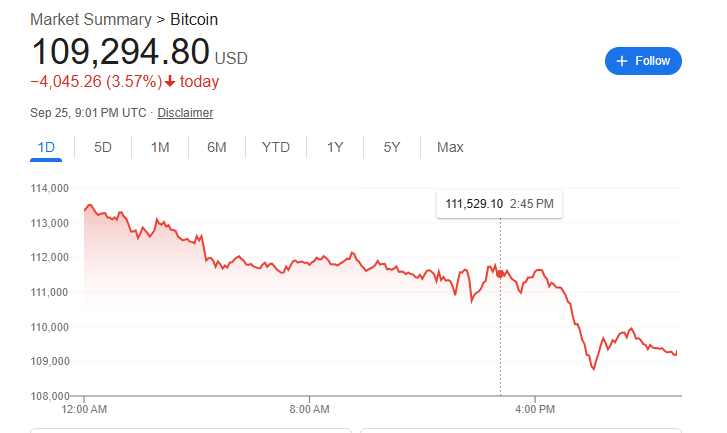
Bitcoin (BTC) dropped to a two-week low of $108,865 on Thursday, weighed down by persistent selling during the Asia trading sessions, which has steadily eroded gains made during U.S. rebound rallies.

Despite interest from buyers stepping in at intra-day lows, bearish momentum continues to dominate as institutional traders offload large positions.

Rising Liquidation Risk and Institutional Selling

According to Hyblock data, a significant liquidation cluster has formed between $111,000 and $107,000, with leveraged long positions vulnerable to absorption if selling pressure continues.

Meanwhile, perpetual futures markets remain the main driver of Bitcoin’s price action. Heavy selling from large-scale institutional investors (wallets holding between 1,000 to 10 million BTC) has consistently outpaced retail spot buying (wallets holding 100 to 1,000 BTC), tipping the balance in favor of bears.

ETF inflows, which had been a key source of Bitcoin demand, slowed sharply around the recent FOMC meeting, while long-term holders have increased their selling. This shift has left the market fragile, with a critical support level now forming near current prices. Analysts warn that a failure to hold above this range could open the door to further downside, potentially pushing BTC toward $105,000 to $90,000.

Macro Headwinds Add to Pressure

The broader macro environment is also weighing on Bitcoin.

Federal Reserve Policy: Odds of an October rate cut dropped from 92% to 85.5%, denting risk asset sentiment. 

Geopolitical Tensions: Escalating conflicts, including reports of Russian jet interceptions over Alaska and ongoing violence in Gaza, have driven traders toward safe-haven assets like gold, further limiting Bitcoin inflows.

Technical Outlook: Key Levels to Watch

Crypto analysts emphasize that Bitcoin must reclaim its 21-week EMA at $114,200 to invalidate the current bearish structure. Failure to do so could lead to a deeper pullback. However, order book data suggests that a short squeeze is possible given the overwhelming short-side dominance, which could trigger a sharp upward move if buying pressure suddenly spikes.

Some bullish traders are eyeing a potential inverse head-and-shoulders pattern, with BTC currently forming a higher low. Historical patterns also indicate that Bitcoin tends to rebound strongly in October and November, suggesting a seasonal rally could be on the horizon.

Ethereum Enters Bear Market

Ethereum (ETH) also faced significant weakness, falling below $4,000 on Thursday and officially entering a technical bear market after dropping more than 20% from its August peak of $4,850.

The decline intensified once ETH broke below $4,150, dragging the price down to $3,930 and erasing weeks of gains.

Prominent gold advocate Peter Schiff linked ETH’s sharp reversal to Bitcoin, warning that it signals a broader bearish phase for the entire crypto market.

Long-Term Outlook Remains Bullish

Despite the short-term sell-off, many analysts and industry leaders remain optimistic about Bitcoin’s long-term trajectory.

Coinbase CEO Brian Armstrong predicts BTC could hit $1 million by 2030.  Also, former BitMEX CEO Arthur Hayes shares a similar outlook, forecasting Bitcoin could reach $1M to $3.4M by 2028, depending on how global monetary policies evolve.

Hayes’ prediction hinges on the potential for massive money printing triggered by yield curve control policies from Treasury Secretary Scott Bessent, which he believes could cause a “once-in-a-century change” in the global financial system.

Outlook

Bitcoin’s near-term outlook remains fragile as institutional selling, slowing ETF inflows, and global tensions weigh on price action. However, historical patterns and bullish long-term forecasts suggest that the current weakness may be temporary.

A decisive move above $114,200 could signal renewed strength and position BTC for a rally into the final months of the year.

A $500 Billion Valuation for Tether Would Have Profound Implications Across Crypto and Finance

0

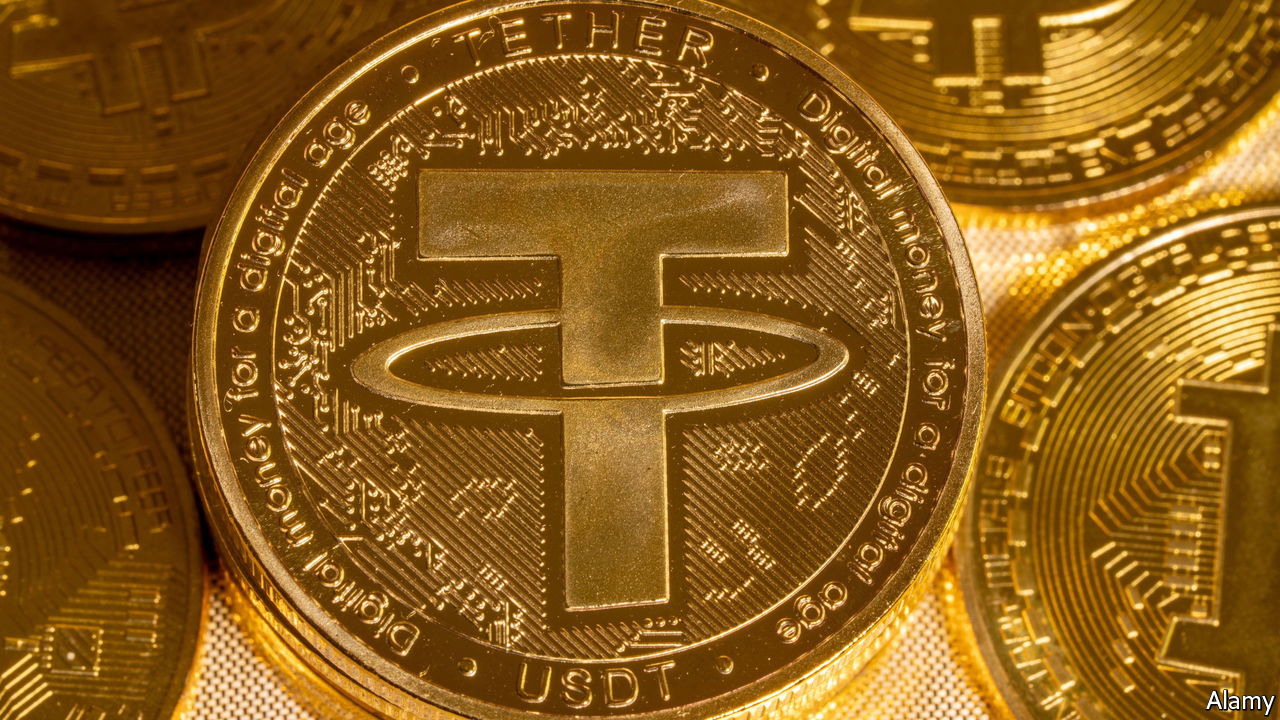
Tether Holdings SA, the issuer of the world’s largest stablecoin USDT, is actively exploring a major capital raise that could value the company at approximately $500 billion—potentially making it the most valuable private company globally.

This would surpass current leaders like SpaceX valued at around $350 billion in recent rounds and OpenAI at $300 billion earlier in 2025, based on the scale of Tether’s operations and profitability.

Tether is in talks to raise $15–20 billion through a private equity placement, offering roughly 3% of the company to investors. Cantor Fitzgerald is advising on the deal. The implied valuation of $500 billion is ambitious but tied to the stake size; final terms could adjust lower depending on negotiations.

Discussions are ongoing as of late September 2025, with CEO Paolo Ardoino confirming the company is evaluating “high-profile key investors.” However, a conflicting statement from Tether USAT’s new CEO Bo Hines a U.S.-focused subsidiary indicated no immediate plans for fundraising, suggesting this may apply to the core El Salvador-based entity.

Proceeds would fuel expansion into AI, energy, communications, and other sectors, diversifying beyond stablecoin issuance. Tether has already allocated up to 15% of profits to Bitcoin purchases.

Why This Valuation Makes Sense and Why It’s Eye-Popping

Tether’s USDT has a circulating supply exceeding $170 billion, dominating over 50% of the stablecoin market. The company’s profitability is staggering: Q2 2025 profits: $4.9 billion 99% margin from U.S. Treasury yields on reserves.

Year-to-date: $5.7 billion. PE Multiple: Analysts estimate ~68x based on $173 billion in USDT circulation and a 4% yield. Rival Circle (USDC issuer) is valued at ~$30 billion, highlighting Tether’s lead despite past regulatory scrutiny (e.g., 2021 disclosures on reserve backing).

Buzz is building, with users hyping it as a “stablecoin king flex” and speculating on BTC implications amid $118K prices. Posts emphasize Tether’s BTC stacking and whale activity. Falling U.S. interest rates could squeeze yields, and centralization concerns loom in a market where Tether holds outsized influence.

Regulatory hurdles persist, especially with U.S. re-entry plans. If successful, this cements stablecoins as a trillion-dollar asset class bridge between crypto and TradFi. If it closes at $500B, Tether won’t just be the top private company; it’ll redefine crypto’s role in global finance.

Tether’s USDT, with over $170B in circulation, already commands ~50% of the stablecoin market. A $500B valuation would solidify its lead over rivals like Circle’s USDC ($30B valuation), potentially discouraging competition and centralizing stablecoin influence.

A $500B valuation puts Tether on par with major banks (e.g., Goldman Sachs at ~$170B), signaling stablecoins’ growing role in global finance. This could accelerate institutional adoption of crypto for payments and settlements.

Tether’s size and U.S. re-entry plans via Tether USAT will likely intensify regulatory oversight, especially given past concerns about reserve transparency. Stricter rules could reshape stablecoin operations or spark U.S. policy shifts on digital assets.

Tether’s ~$5B quarterly profits rely on U.S. Treasury yields. Falling interest rates could compress margins, impacting valuations and forcing diversification into AI, energy, or communications as planned.

USDT’s peg to the U.S. dollar reinforces its global use, but a $500B Tether could amplify debates about dollar dominance in a world exploring CBDCs and de-dollarization.

The $15–20B raise would fund Tether’s expansion into AI, energy, and communications, potentially disrupting these sectors. Success could position Tether as a cross-industry titan, akin to tech conglomerates.

Tether’s raise is framed as a “stablecoin king” moment, potentially shifting public perception of crypto from speculative to foundational. This could drive mainstream adoption. A $500B valuation concentrates wealth among Tether’s investors and leadership, raising questions about inequality in crypto’s growth.

If Tether secures a $500B valuation, it could redefine crypto’s role in global finance, accelerate stablecoin adoption, and reshape private markets. However, its success hinges on navigating regulatory hurdles, maintaining reserve stability, and delivering on diversification.

Research Institute Bain Warns of $800bn Shortfall in Global AI Compute Funding by 2030

0

The global race to scale artificial intelligence may hit a financial and infrastructure wall sooner than expected. New research from Bain & Company’s sixth annual Global Technology Report, released Tuesday, finds that by 2030, the world will need $2 trillion in annual revenue to fund the computing power required for anticipated AI demand.

Even after factoring in AI-driven savings, Bain projects an $800 billion shortfall—raising alarms about whether global supply chains, capital markets, and power grids can keep pace.

The report estimates that incremental AI compute requirements could reach 200 gigawatts by the end of the decade, with the United States alone accounting for half. Meeting that need would require technology executives to deploy roughly $500 billion in capital expenditures on new data centers while identifying $2 trillion in revenue streams to sustain profitability.

“By 2030, technology executives will be faced with the challenge of deploying about $500 billion in capital expenditures and finding about $2 trillion in new revenue to profitably meet demand,” said David Crawford, chairman of Bain’s Global Technology Practice. “Because AI compute demand is outpacing semiconductor efficiency, the trends call for dramatic increases in power supply on grids that have not added capacity for decades.”

Bain warns that AI’s growth is already surpassing Moore’s Law, doubling compute requirements faster than chip efficiency improvements can offset. The imbalance risks creating global strains on energy, hardware supply chains, and capital spending. The report highlights that the “arms race dynamic” between nations and top providers could exacerbate risks of both overbuilding and underbuilding critical infrastructure.

Despite infrastructure challenges, companies at the forefront are reaping financial rewards. According to Bain, tech-forward enterprises that scaled AI across core workflows—sales, marketing, customer support, and R&D—have delivered 10% to 25% EBITDA gains over the past two years. Still, most firms remain stuck in experimentation mode, extracting only modest productivity boosts.

The report singles out “agentic AI” as the next frontier, where autonomous agents collaborate across workflows and applications. Bain projects that within three to five years, 5% to 10% of enterprise technology spending could go into foundational agentic capabilities, with up to half of spending eventually consumed by AI agents running across organizations.

Bain identifies four levels of maturity:

  • LLM-powered retrieval agents
  • Single-task workflows
  • Cross-system orchestration
  • Multi-agent constellations

Levels two and three are where “capital, innovation, and deployment velocity are converging,” Bain said, stressing that leaders at these stages are already compounding their advantage while laggards risk falling further behind.

SaaS faces AI disruption

Software-as-a-service (SaaS) providers face an uncertain but potentially lucrative transition. Bain argues that generative and agentic AI could expand SaaS markets by automating user tasks and embedding into workflows. Yet incumbents will need to make high-stakes strategic bets, including selective open-sourcing and changes to monetization. Winning providers must “own the data, lead on standards, and price for outcomes, not log-ons, in an AI-first world,” the report said.

Sovereign AI and a fractured supply chain

Bain also points to the rise of “sovereign AI” as governments move to localize control over critical infrastructure, mirroring shifts in semiconductor supply chains. Export controls, tariffs, and decoupling between the U.S. and China are accelerating fragmentation. China now accounts for roughly 20% of global chip manufacturing capacity, raising the stakes for U.S. and European firms.

“Sovereign AI capabilities are increasingly seen as a strategic advantage on par with economic and military strength,” said Anne Hoecker, head of Bain’s Global Technology Practice. “Considering these differences, global AI standards are unlikely to converge.”

For multinational firms, Bain advises optionality—moving boldly where confidence is high, while prioritizing flexibility where uncertainty looms.

Quantum computing and humanoid robots on the horizon

Alongside AI, Bain spotlights two other transformative technologies. Quantum computing, though still in early stages, could unlock $250 billion in value across industries from pharma to logistics once fully capable fault-tolerant machines arrive.

Meanwhile, humanoid robots are shifting from viral demos to billion-dollar valuations, though deployments remain limited and heavily reliant on human oversight. Early adopters, Bain argues, will be best positioned to lead if ecosystem readiness improves.

Private equity dealmaking cools

The report also notes a slowdown in North American technology private equity deals in the second half of 2025. Tariff-related uncertainty and geopolitical tensions have tempered momentum despite a strong start to the year. While software continues to outpace GDP growth, its penetration across manufacturing and retail is topping out, forcing investors to hunt harder for top-tier growth opportunities. Even so, tech remains one of the strongest-performing PE sectors, Bain finds.

With AI scaling at breakneck speed, Bain concludes that technology leaders face a paradox: they must prepare for unprecedented capital and energy demands while navigating geopolitical fragmentation and disruptive innovation. Companies that adapt quickly to agentic AI and sovereign technology regimes will have an edge, but the risks of missteps—from overinvestment to supply shortfalls—remain high.