DD
MM
YYYY

PAGES

DD
MM
YYYY

spot_img

PAGES

Home Blog Page 449

Gold Breaks $3,800 as Fed Rate Cut and Shutdown Fears Fuel Safe-Haven Rush

0

Gold prices smashed through a historic threshold on Monday, climbing above $3,800 per ounce for the first time as expectations of a U.S. Federal Reserve rate cut combined with political gridlock in Washington to fuel a flight into safe-haven assets.

Spot gold surged 1.5% to $3,816.79 per ounce by 0923 GMT, after touching a record $3,819.59 earlier in the session. U.S. gold futures for December delivery advanced 1% to $3,846.60, according to Reuters.

The rally came as the U.S. dollar index slipped 0.3%, making greenback-priced bullion cheaper for overseas buyers. The shift in currency markets reflects mounting bets that the Fed will move ahead with interest rate cuts in the coming months, easing pressure on non-yielding assets such as gold.

President Donald Trump is set to meet Democratic and Republican congressional leaders later Monday to hammer out a deal to extend government funding. Without an agreement, a shutdown could begin on Wednesday, raising uncertainty in financial markets already on edge.

“With the Fed set to cut further rates over the next six months, I think there should be more upside for the yellow metal, targeting a level of $3,900/oz,” said UBS analyst Giovanni Staunovo. “Concern about the U.S. government shutdown is also supporting demand for safe-haven assets like gold.”

The latest Personal Consumption Expenditures (PCE) Price Index, released Friday, matched expectations and reinforced dovish market sentiment. According to the CME FedWatch Tool, traders are now pricing in a 90% chance of a 25-basis-point cut in October and a 65% probability of another cut in December.

Gold thrives in precisely these conditions — lower rates, a weaker dollar, and rising geopolitical or economic uncertainty. Already up more than 45% year-to-date, bullion has transformed into the standout asset of 2025, eclipsing equities and many commodities in performance.

Many brokerages have turned bullish, with ETF flows adding momentum. SPDR Gold Trust, the world’s largest gold-backed exchange-traded fund, reported its holdings climbed 0.89% to 1,005.72 metric tons on Friday.

“We think official demand and ETF holdings are playing a pivotal role in gold strength, while jewellery demand and recycled supply are restraining factors,” Reuters quoted Deutsche Bank as saying in a note.

A Broader Metals Surge

The rally has not been confined to gold. Spot silver rose 2.1% to $46.94 an ounce, its highest in more than 14 years. Platinum climbed 2.5% to $1,606.77, a 12-year high, while palladium edged up 0.7% to $1,279.15.

“Silver and platinum-group metals are responding to two primary things — increased industrial activity on rate cuts and higher levels of inventory holding as nations seek to ensure they have adequate availability in a world of supply chain uncertainty,” said independent analyst Ross Norman.

Analysts note that the rally evokes memories of past surges in safe-haven demand during moments of market upheaval. In 2011, gold briefly topped $1,900 an ounce amid fears of a eurozone debt crisis and a U.S. credit rating downgrade. The scale of today’s move, however, dwarfs those past milestones — underscoring how the combination of Fed policy, political brinkmanship, and investor anxiety is creating a perfect storm for precious metals.

With shutdown fears looming and rate cuts appearing increasingly inevitable, many market participants see room for the rally to extend further. But the sharp climb also raises questions over sustainability: whether gold is now behaving less like a safe haven and more like an overheating asset class, drawing in speculative flows that could mirror past bubbles.

Investor Psychology Shifts

What makes the current surge notable is how it is reshaping investor behavior. Portfolio managers traditionally used gold as a hedge against inflation or crisis, but with equities wobbling and bond yields under pressure from the prospect of looser Fed policy, allocations are shifting more decisively toward bullion and other metals.

ETF inflows, particularly into SPDR Gold Trust, show retail and institutional investors alike treating gold less as a secondary hedge and more as a primary asset. Market strategists note that some investors are reducing equity exposure to fund these positions, while others are treating gold as a substitute for Treasuries in the short term, given concerns about U.S. fiscal stability.

For central banks and sovereign wealth funds, the calculus is similar: diversify reserves in a world where U.S. fiscal politics appear increasingly unstable, and where the dollar may weaken further if the Fed opens the door to multiple rate cuts.

That convergence of traditional safe-haven buying with speculative momentum is what makes this rally unusual. If sustained, it could alter long-standing patterns of portfolio construction, with gold playing a more dominant role in multi-asset strategies than at any point since the late 1970s.

However, investors currently appear unmoved by warnings of overheating. In a year where the yellow metal has already outpaced nearly every major asset, the path toward $3,900 — and perhaps beyond — looks increasingly plausible.


Fintech And AI Dominate Middle East and North Africa (MENA) Startup Funding

0

Startup funding in the Middle East and North Africa (MENA) region has demonstrated remarkable resilience in 2025, bucking global venture capital slowdowns and surpassing 2024 totals by mid-year.

Total funding in the first half (H1) of 2025 alone reached $2.1 billion across 334 deals, which has seen a 134% year-on-year increase driven by a mix of equity and debt instruments, with debt accounting for 44% ($930 million) of the capital. This momentum carried into Q3, with July alone seeing $783 million across 57 deals, more than double the previous year’s figure. 

In the broader MENA region, Fintech and Artificial Intelligence (AI) have emerged as the undisputed leaders, attracting a significant amount of funds from investors. This is due to their alignment with digital transformation, regulatory support, and scalability in underserved markets.

Fintech’s Unrivaled Position

Fintech has been the top-funded sector consistently, underscoring its role as MENA’s innovation powerhouse. In H1 2025, the sector secured 93 deals in MENA alone, increasing its share of total deals to 30%, the highest of any industry in the past five years. Funding also nearly matched FY 2024 levels, with $598M raised.

This sector dominance reflects broader trends as over 1,000 fintech firms now operate in MENA, with four unicorns and projections for 35% annual revenue growth through 2028 outpacing the global average of 15%.

Key drivers include payment solutions, buy-now-pay-later (BNPL), and embedded finance, bolstered by regulatory tailwinds like Saudi Arabia’s licensing of 68 finance companies by September 2025.

Notable 2025 deals include:

Tabby (Saudi Arabia): $160 million Series E in February, valuing the BNPL platform at $3.3 billion and crowning it MENA’s most valuable fintech.

NymCard (UAE): $33 million Series B in March for API-first payment infrastructure expansion across 10+ markets.

Tamara (Saudi Arabia): $2.4 billion in September, dominating regional BNPL and pushing weekly funding totals over $4.2 billion.

In April-May, fintech secured $86.5 million across 14 deals, edging out proptech. Overall, 119 fintech startups raised $700 million in 2024 (30% of total MENA funding), a trend accelerating into 2025 with 28% of fintechs now embedding AI as a core component.

AI’s Rising Momentum

While fintech holds the crown, AI funding is on a significant growth trajectory, with funding surging amid global AI fervor but tempered by regional investor familiarity gaps many prefer “safer” fintech over pure-play AI.

H1 saw $44.7 million in the UAE alone for AI/Web3 ventures. Globally, AI-fintech investments hit $10 billion in 2023, with MENA following suit through targeted expansions. As of September 2025, AI investments are accelerating economic diversification, particularly in Saudi Arabia and the UAE, with projections estimating a $320 billion economic boost by 2030 through automation, improved services, and innovation across sectors like finance, healthcare, and energy.

While global AI funding exceeded $100 billion in 2024 (up 80% from 2023), MENA’s share has grown resiliently, capturing 12% of regional venture funding in 2024 despite broader VC slowdowns.

Key trends include:

– Government-Led Initiatives: National strategies like Saudi Arabia’s Vision 2030 and the UAE’s AIATC are channeling billions into infrastructure, talent development, and sovereign AI models.

– Sector Focus: Fintech AI (e.g., fraud detection) and healthcare applications lead, with AI projected to add $30 billion to MENA’s economy by 2030.

Despite a Q2 2025 global VC drop to $91B, MENA’s AI funding is poised for recovery, fueled by events like Expand North Star and FII Forum. 

PayPal Announces Plan To Invest $100M Across Startups In Middle East And Africa

US-based digital payments giant PayPal, has unveiled plans to invest $100 million across the Middle East and Africa to fuel innovation, support emerging startups, and drive inclusive economic growth.

The investment will be channeled through minority stakes, acquisitions, PayPal Ventures funding, technology deployment, and talent development, with a focus on helping local businesses scale, unlocking new opportunities for innovators, and bringing millions of consumers and communities into the digital economy.

Below are the key impacts, grounded in the context of the investment and regional dynamics:

Access to Capital: The $100 million will provide critical funding for early-stage startups, particularly in fintech, payments infrastructure, and digital commerce. This addresses a major challenge in MEA, where access to venture capital is often limited compared to other regions.

Scaling Opportunities: Through PayPal Ventures’ minority equity stakes and potential acquisitions, startups like Tabby, Paymob, and Stitch (already in PayPal’s portfolio) can scale faster, accessing global markets via PayPal’s infrastructure.

Innovation Catalyst: Investment in tech and talent will spur innovation in areas like AI-driven payments, buy-now-pay-later services, and mobile money solutions, which are critical in MEA’s mobile-first markets.

Overall

The dominance of funding in the MENA region signals the maturation of the region as a global innovation hub. Notably, with the fintech and AI region attracting a significant portion of funding, both sectors are poised to birth 4-6 new unicorns by the year 2026.

Bitwise Files For HYPE ETF As Circle Explores Option To Allow USDC Transactions to Be Reversed

0

Bitwise Asset Management, a prominent crypto asset manager, submitted a Form S-1 registration statement to the U.S. Securities and Exchange Commission (SEC) to launch the Bitwise Hyperliquid ETF.

This would be the first spot ETF in the U.S. to hold and track HYPE, the native token of Hyperliquid, a blockchain-based perpetual futures decentralized exchange (DEX). The ETF aims to provide investors with regulated exposure to HYPE through traditional brokerage accounts, without requiring direct custody of the token.

Coinbase Custody Trust Company will handle asset storage. Bitwise Investment Advisers. The fund will support in-kind creations and redemptions, allowing authorized participants to exchange ETF shares for actual HYPE tokens or vice versa instead of cash.

This mechanism, approved by the SEC in July 2025, is designed to reduce costs and improve efficiency compared to cash-based models. Modeled after spot Bitcoin and Ethereum ETFs, the trust will directly hold HYPE tokens to reflect their market value.

The filing comes amid growing competition in the perpetual DEX space, where Hyperliquid faces rivals like Aster and Lighter, which have recently surpassed its 24-hour trading volume. Despite this, the news highlights increasing institutional interest in altcoin ETFs, following approvals for products like the REX-Osprey XRP ETF earlier in September.

However, Bitwise noted that HYPE does not currently qualify for accelerated SEC review under new generic listing standards, as there are no CFTC-registered Hyperliquid futures contracts. The next step is filing a Form 19b-4 to initiate formal SEC review, which could take up to 240 days.

Market reaction was muted: HYPE traded around $42.50 on September 25, up about 4% initially but flat overall amid a broader multi-week downtrend. Analysts like Bloomberg’s James Seyffart expressed optimism for approval in the “near future,” potentially boosting HYPE toward $55 if institutional inflows materialize.

Circle Explores Allowing USDC Transactions to Be Reversed

Circle Internet Financial, issuer of the USDC stablecoin (the second-largest by market cap), is investigating mechanisms to make certain USDC transactions reversible, primarily to aid recovery of funds lost to fraud, hacks, or errors.

This exploration, marks a departure from blockchain’s core principle of transaction immutability, where transfers are final and irreversible once confirmed. Circle President Heath Tarbert discussed the idea in an interview with the Financial Times, emphasizing the tension between instant settlement and the need for recourse in traditional finance (TradFi).

Currently, Circle can freeze or blacklist addresses it froze $58 million in USDC linked to a Solana scandal in May 2025 but it cannot undo completed transactions. Proposed reversals would likely involve: Limited to “certain circumstances” like proven fraud, with agreement from all parties involved.

Not at the base layer of Circle’s upcoming Arc blockchain announced in August 2025 as an enterprise-grade L1 for stablecoin payments, using USDC as its native gas token. Instead, it could use developer modules or an overlay layer for “counter-payments” or refunds, similar to credit card chargebacks.

Arc plans to include opt-in privacy to hide transaction amounts while revealing wallet addresses. Proponents argue this could build trust for mainstream adoption, aligning USDC with legacy systems and potentially expanding its role in payments and capital markets. Goldman Sachs forecasts USDC’s market cap could grow by $77 billion to 2027 under such enhancements.

However, critics worry it introduces centralization risks, undermining crypto’s decentralized ethos and raising questions about who controls reversal decisions. Circle’s official USDC terms still state that transactions are irreversible, so this remains exploratory.

The company has not detailed exact parameters or timelines, but its Refund Protocol could serve as a foundation. This push aligns with Circle’s institutional focus, including integrations like Fireblocks for enterprise custody.

Accenture Bets Big on AI, with a Warning to Workers to Reskill or Exit

0

Accenture has made artificial intelligence its growth engine — and a survival test for its workforce. In its full-year results for fiscal 2025, the global consultancy stated that AI had become a gold mine, but with a catch: employees unable to adapt to the technology would be shown the door.

Chief Executive Julie Sweet told analysts the firm is reorienting its workforce under what she described as a “compressed timeline.” The company is absorbing one-time charges of $865 million across two quarters as part of a sweeping “business reoptimization strategy” that prioritizes upskilling and exits for employees whose roles cannot be augmented by AI.

“We are investing in upskilling our reinventors, which is our primary strategy,” Sweet said. “But where reskilling is not viable, we are exiting people so we can get more of the skills in we need.”

Accenture is ramping up global hiring to fill those gaps. It now boasts 77,000 trained AI professionals, nearly doubling from 40,000 in 2023, alongside 550,000 employees who hold a baseline knowledge of AI. The strategy underscores a broader shift in professional services where consultancies — once seen as people-heavy operations — are racing to become AI-first organizations.

The results highlight why. Accenture’s revenue from generative AI and agentic AI tripled year-on-year to $2.7 billion in fiscal 2025, while bookings nearly doubled to $5.9 billion. Those figures are central to its growth story, driving overall revenue up 7% to $69.7 billion and lifting net income by more than 5% to $7.8 billion.

Yet the transformation isn’t without pain. U.S. government contracts, a lucrative area for Accenture, have slumped under cost-cutting measures by the Trump administration. Sweet admitted the pullback is weighing on growth but pointed to signs of recovery, including a new partnership with Palantir aimed at securing larger federal digital transformation projects.

Accenture is also keeping a close eye on upcoming changes to the H-1B visa program. Roughly 5% of its U.S. workforce is on H-1B visas, but Sweet said the company expects no major disruptions under current proposals.

The real disruption, however, is internal. Accenture’s pivot makes clear that AI is not simply a tool to be adopted but a dividing line in the workforce. For employees who can reskill, the opportunities are growing; for those who cannot, the exit door is closer than ever.

An Industry in Transition

Accenture is only joining a growing number of consulting firms in reshaping its business around AI. The broader consulting industry is undergoing a parallel transformation as clients demand AI integration across finance, healthcare, retail, and government services. Deloitte has committed more than $2 billion to AI initiatives, including new alliances with cloud providers, while PwC has launched its largest-ever hiring program centered on AI talent. EY, for its part, is retraining tens of thousands of employees through its “EY.ai” initiative and rolling out proprietary AI platforms for tax and audit services.

This growing adoption is not confined to consulting. Across industries, companies are investing heavily in AI to automate repetitive tasks, improve customer service, and generate new revenue streams. From Wall Street banks deploying AI in trading algorithms to healthcare providers using it for diagnostics, the shift is reshaping business operations at scale.

But with opportunity comes dislocation. Studies from the World Economic Forum and McKinsey project that millions of traditional jobs will be displaced globally over the next decade, even as new AI-enabled roles emerge. The challenge for firms is balancing growth against the social and political costs of workforce churn. Accenture’s “reskill or exit” model is one of the starkest examples of how that balance is being tested.

With AI revenues already reshaping its balance sheet, Accenture’s experiment is expected to serve as a test of whether massive investments in AI can be matched with equally ambitious workforce transitions – while it supports the notion that in an AI-driven economy, adaptability is no longer optional.

[Register] “Tekedia AI Technical Lab: From Design To Deployment” Begins Sat, Oct 4

0

This Saturday, October 4, 2025, our sister company, Tekedia Institute, will begin a new academic journey – our very first technical program. We started as a business school, equipping thousands of professionals and businesses across markets. But our co-learners asked us to do more. Yes, they wanted the rigor of Tekedia’s business education extended into the world of technology. And today, we answer that call.

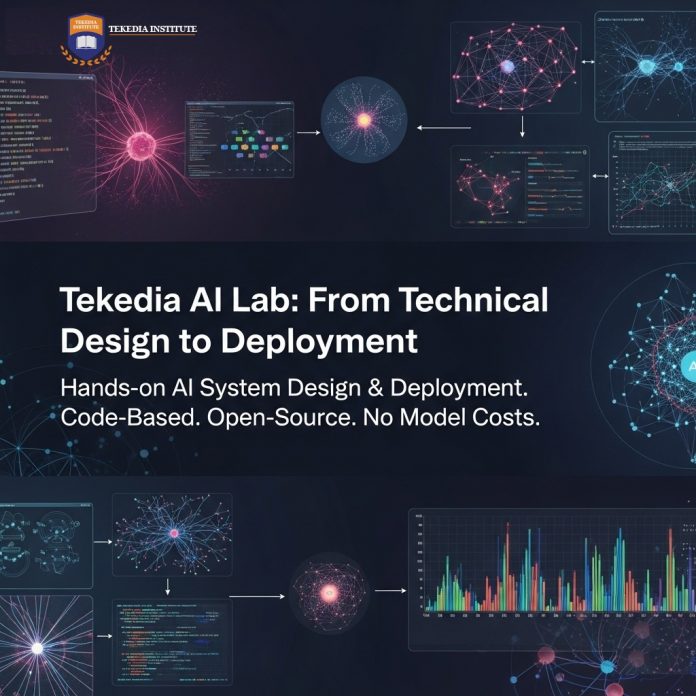
Tekedia AI Technical Lab: From Technical Design to Deployment is our voyage into that space. The mission is simple: to help innovators understand how AI agents are built, while removing the unnecessary complexities. You will not just theorize – you will design, deploy, and your AI agent will go live. Hosting and domain will be provided, because learning here must end in creation.

Two decades ago, companies that lacked websites were dismissed as unserious as a translation into the web began; today, a mission is largely hopeless without one. In this age, we are in another redesign – a Cambrian moment of accelerated productivity – and the serious institutions of tomorrow must have AI agents. At Tekedia, we have prepared the pathways: simple, practical, and executable.

Join us. Our team is already sending credentials to our co-learners. Register, log in, and begin your transformation. Go here and register for Tekedia AI Technical Lab and advance the personal economy and mission of your firm.