DD
MM
YYYY

PAGES

DD
MM
YYYY

spot_img

PAGES

Home Blog Page 452

Arbitrum Faces Resistance, Mantle Strengthens, BlockDAG Surpasses $410M+ With Live Ecosystem

0

Many following the latest Arbitrum (ARB) Price Prediction see a familiar challenge, the coin struggles to push past resistance despite solid network activity. Meanwhile, recent Mantle (MNT) updates show a strong rally after its ZK upgrade, though some wonder if momentum can continue once initial hype cools. The question remains, which network is building consistent results instead of short bursts? BlockDAG is offering that answer.

Its progress isn’t about future promises. Miners are already shipped, a mobile app with millions of users is live, dashboards and explorers are active, and developer tools are functioning. Instead of waiting until launch, BlockDAG (BDAG) is proving itself in real time. It’s scaling faster than most altcoins this year, making a convincing case as the top crypto for 2025 with an ecosystem already working globally.

BlockDAG’s Operational Rollout Builds Confidence

BlockDAG shows that real delivery is worth more than empty projections. While many projects wait for mainnet launch to demonstrate progress, BlockDAG has already deployed miners, a mobile app, live dashboards, explorers, and developer tools.

Currently, over 3 million people are mining through the X1 app, while 20,000 X-Series hardware miners are active across 130 countries. This dual system creates both accessibility and scale, setting a benchmark even established Layer 1 networks find hard to match.
The Awakening Testnet phase is now live, showcasing every core feature, from account abstraction and updated vesting contracts to Stratum miner integration and explorer tools. It’s a rollout that proves BlockDAG is functional and expanding daily, setting it up as the top crypto for 2025.

Financial momentum matches its ecosystem growth. The presale has raised more than $410 million, with $40 million in the last month alone, averaging $1 million per day. The current Batch 30 price sits at $0.03, with a limited-time $0.0013 offer available, giving buyers a clear opportunity before BDAG launches at $0.05.

This structure explains why BlockDAG is seen as more than a presale. It’s a live network rewarding early participants and preparing for exchange listings with a proven foundation, positioning it strongly as the top crypto for 2025 with both utility and profitability ahead.

Mantle Strengthens After ZK Rollup Integration

The latest Mantle (MNT) updates reveal how the project is expanding with meaningful upgrades. Its move to a ZK Validity Rollup using OP Succinct reduced withdrawal times from a week to roughly one hour and cut fees to about $0.002 per transaction.

Confidence rose quickly, with Mantle’s total value locked surpassing $2 billion, and some measures pushing it near $3.9 billion when including ecosystem assets like mETH and FBTC. The rally pushed MNT’s price to highs between $1.69 and $1.77 in mid-September, directly linking adoption to price growth.

Additional updates strengthen its reach. Bybit added MNT to its debit card program in Europe, allowing spending across Mastercard merchants. New trading campaigns boosted liquidity, while governance approval of MIP-33 secured funding for development until mid-2026. With steady inflows, builder programs, and strong engagement, Mantle is preparing to hold above $1.70 and aim for $2 as momentum continues.

Arbitrum’s Struggle at Resistance Levels

Current Arbitrum (ARB) Price Prediction highlights the balance between support and resistance. ARB trades between $0.48 and $0.52, with buyers defending $0.48 and resistance building at $0.55–$0.57.

Analysts note that if support fails, ARB could drift toward $0.39–$0.40. A rebound, however, may open the door to retesting the $0.55 area. With stablecoin liquidity rising and on-chain activity picking up, its next move depends on whether this support holds firm.

Long-term views remain divided. Some see ARB averaging around $0.38 through 2025 if bearish sentiment continues, while more bullish projections target $0.70 to $1.10 if Ethereum Layer 2 demand grows. Lending activity and stablecoin supply are building its base, but for now, all eyes are on the $0.48 support as a springboard for the next climb.
Outlook For 2025

Recent Mantle (MNT) updates prove upgrades can fuel adoption fast, with withdrawal times cut, TVL above $2 billion, and prices moving past $1.70. At the same time, Arbitrum (ARB) Price Prediction shows a cautious picture, with support near $0.48 still under pressure. Both underline how delivery defines trust.

That’s why BlockDAG is pulling ahead. With millions of mobile miners, 20,000 hardware miners in 130 countries, and live dashboards, explorers, and developer tools, its structure is already active. The presale has exceeded $410 million, and a special $0.0013 entry is still available. With a proven foundation and exchange listings ahead, BlockDAG is making a strong case as the top crypto for 2025, showing measurable progress before going live.

Presale: https://purchase.blockdag.network

Website: https://blockdag.network

Telegram: https://t.me/blockDAGnetworkOfficial

Discord: https://discord.gg/Q7BxghMVyu
 

Next 100x Crypto Presale Spotlight: BullZilla Presale Gains Traction While Solana and SUI Build Long-Term Value

0

The crypto market’s appetite for high-growth opportunities is stronger than ever, and 2025 is shaping up to be a year of record-breaking presale momentum. Among the newest contenders, BullZilla ($BZIL) is stealing the spotlight with an explosive presale structure that rewards early adopters. Meanwhile, established heavyweights like Solana (SOL) and rising stars such as SUI continue to attract investors looking for long-term blockchain innovation.

Together, these three names represent some of the most exciting possibilities for traders seeking the next 100x crypto presale and beyond.

BullZilla: Record-Breaking Presale

BullZilla’s early rounds have already drawn significant attention from retail investors and seasoned traders alike. With presale stages advancing every 48 hours or once $100,000 is raised, BZIL is designed to create a sense of urgency. This accelerated schedule not only builds hype but also provides a built-in mechanism for price appreciation. As tokens are burned through the Roar Burn Mechanism, scarcity intensifies, potentially amplifying future demand.

The broader market context makes this even more compelling. Bitcoin’s steady dominance ensures a rising tide for altcoins, but it is projects with strong community narratives, like BullZilla that often outperform during bullish phases. Early participants are betting that BZIL’s combination of meme appeal and deflationary tokenomics could position it as a breakout performer when it lists on major exchanges later in the year.

Solana: High-Speed Growth Engine

Solana remains one of the most powerful smart-contract platforms, continuing to scale with lightning-fast transactions and ultra-low fees. Developers flock to Solana for decentralized finance (DeFi), NFT marketplaces, and Web3 gaming applications, keeping SOL at the forefront of innovation. With the network’s 2025 roadmap including further throughput improvements and ecosystem expansion, many analysts forecast continued growth, even as competition heats up.

Investors view Solana as both a technological leader and a potential hedge against Ethereum’s scalability challenges. Its performance during recent market upswings reinforces the idea that SOL could sustain long-term price appreciation, especially if mainstream adoption of DeFi and decentralized applications accelerates.

SUI: Emerging Layer-1 Contender

SUI is rapidly establishing itself as a next-generation blockchain built for scalability and developer flexibility. Backed by cutting-edge Move language architecture, SUI’s focus on fast finality and low transaction costs positions it as a direct competitor to Solana and other high-performance networks. Partnerships and early ecosystem growth are fueling optimism that SUI could secure a substantial market share in 2025.

Analysts highlight SUI’s ability to handle large-scale gaming, NFT, and social media applications without sacrificing security or decentralization. While still younger than Solana, SUI’s momentum and developer adoption suggest strong upside potential for investors seeking a fresh Layer-1 opportunity.

Conclusion

For those searching for the next 100x crypto presale, Bull Zilla fast-moving sale schedule and unique burn mechanics provide an aggressive, early-stage opportunity. Solana continues to prove its staying power with unmatched transaction speed and a thriving ecosystem, while SUI delivers a new frontier for scalable, developer-friendly applications. Together, these projects highlight the range of choices available to investors, whether they prefer presale excitement, established infrastructure, or emerging innovation.

As always, crypto investments carry risk, and market conditions can change rapidly. Prospective buyers should conduct thorough research and only invest capital they can afford to lose.

For More Information:

BZIL Official Website

Join BZIL Telegram Channel

Follow BZIL on X  (Formerly Twitter)

FAQs

What makes the BullZilla presale unique?

BullZilla’s presale operates on a rapid schedule, stages advance every 48 hours or once $100,000 is raised. This design creates urgency and steady price increases while incorporating a deflationary Roar Burn Mechanism to reduce token supply over time.

How does Solana differ from other blockchains?

Solana offers extremely fast transaction speeds and very low fees, making it a preferred platform for DeFi, NFTs, and Web3 gaming. Its scalability gives it an edge over older networks, such as Ethereum.

Why is SUI gaining attention in 2025?

SUI’s architecture is built for high-performance applications such as gaming and social platforms. Its developer-friendly Move language and strong early partnerships make it an appealing Layer-1 investment option.

Is BullZilla a guaranteed 100x return?

No cryptocurrency investment can guarantee returns. BullZilla’s potential is driven by market demand, community interest, and broader crypto trends, all of which are subject to volatility.

Can I invest in Solana or SUI alongside BullZilla?

Yes. Many investors build diversified portfolios. Solana and SUI are available on major exchanges, while BullZilla is in presale and can be purchased through its official platform.

Summary

BullZilla, Solana, and SUI represent three different angles of crypto opportunity in 2025. BullZilla offers a high-risk, high-reward presale with rapid stage changes and token-burning mechanics. Solana remains a proven network with strong developer activity and ultra-fast transactions, while SUI introduces fresh technology for scalable Web3 applications. Together, they illustrate the spectrum of choices for investors seeking growth from early-stage presales to established high-performance blockchains.

Disclaimer

This content is for informational purposes only and does not constitute financial advice. Cryptocurrency investments are highly volatile and involve significant risk, including potential loss of capital. Always conduct independent research and consult a qualified financial advisor before making investment decisions.

Best Crypto to Buy Now as it Aims to Dominate in Q4 2025: Solana (SOL) vs Little Pepe (LILPEPE)

0

As Q4 2025 approaches, investors decide between well-known Layer-1 giants like Solana and up-and-coming meme-utility stars like Little Pepe. SOL has excellent fundamentals, but Little Pepe (LILPEPE)’s presale has been doing well lately, and new utility features could mean it has more room to grow from here.

Solana’s Strengths and Q4 Outlook

Institutional investors are still interested in Solana. On-chain data suggest that almost 70% of SOL tokens are staked, which makes the supply very tight and adds to the supply pressure dynamic. The Currency analytics.  A lot of the network’s transaction volume, DeFi usage, and NFT activity are still strong, which strengthens SOL’s reputation as a quick, scalable Chain on Layer 1

Analysts predict that SOL could reach between $260 and $300 immediately, potentially rising to $400 or more if the price continues to increase. At the same time, Galaxy Digital’s big treasury boost shows that institutions are even more confident in SOL. But SOL is currently at a high entrance price, and most of its potential gains are already priced in for anyone who thinks it will keep being used. If the overall mood in the crypto market changes, resistance levels around $240 to $250 could be hard to break through.

Little Pepe’s Explosive Presale Momentum

Little Pepe (LILPEPE) is now in Stage 13, where each token costs $0.0022. In Stage 12, they sold almost 16 billion tokens and made $25.48 million. The listing price is set at $0.003, meaning that anyone currently in the presale will make money right now, assuming the market stays the same. Each presale stage has sold out early, showing a lot of interest and trust from investors.

Little Pepe (LILPEPE) has more than just good presale statistics. It runs on its own Ethereum-compatible Layer-2 chain, with very cheap transaction fees, built-in security against snipers and bots, no trade tax, and speed improvements. The project has also completed audits (CertiK, others) and received favorable trust scores, which help mitigate common risks in meme coin investments.

Why Investors Might Prefer Little Pepe Right Now

Little Pepe (LILPEPE) has a great risk/reward profile for investors who want to get the most out of the next spike. Buying in during presale means you spend less money and have a better chance of making more money.

Its technical usefulness (Layer-2 chain, audit, no-tax trading, anti-bot features) fixes problems that meme tokens commonly have. And because demand and marketing are skyrocketing, it might profit from excitement cycles sooner rather than later.

SOL is more of a mid- to long-term bet with higher barriers to explosive returns at this stage, even though it is projected to go well. There may be less possibility for big profits now that much of the price is already built in, and institutions may have high expectations.

Before prices increase, you must download a crypto wallet like MetaMask or Trust Wallet to join Little Pepe’s ($LILPEPE) Stage 13 presale. Use the ERC-20 network to add ETH or USDT to your wallet. Afterward, go to littlepepe.com to buy your Little Pepe ($LILPEPE) tokens on the site. You can get your tokens from the same page when the presale concludes. Don’t miss out! Make sure you get your share before the subsequent price rise.

Conclusion

Solana is strong and has a nice base for development in the fourth quarter of 2025, but for investors who want to earn a lot of money right now, Little Pepe (LILPEPE) is the better choice. Its successful presale, inexpensive entry price, great features, and strong community support indicate that it could potentially generate more revenue than SOL in percentage terms. Consider Little Pepe (LILPEPE) if your strategy permits you to take on greater risk in exchange for a bigger reward. But if you want to make more money with less risk, SOL is still a fantastic pick for any portfolio.


For more information about Little Pepe (LILPEPE) visit the links below:

Website: https://littlepepe.com

Whitepaper: https://littlepepe.com/whitepaper.pdf

Telegram: https://t.me/littlepepetoken

 Twitter/X: https://x.com/littlepepetoken

Sui Price Drops 8%, Cardano Faces Resistance, BlockDAG $410M Presale With Runtime Upgradability Becomes Top Pick

0

Cardano (ADA) price news keeps circling back to its uphill battle with scaling hurdles, while Sui (SUI) updates show progress but still leave developers cautious about stability. Both face the same old question: what happens when the next upgrade comes, and does it break what’s already working? Why should builders and holders live with that uncertainty?

The Testnet Awakening has happened, and runtime upgradability is now live, removing that fear. BlockDAG brings in upgrades without disruptive forks, giving developers confidence that their work won’t get derailed. This is a massive advantage and one reason BDAG is viewed as the top crypto to buy in 2025, combining smooth upgrades with a presale that has already drawn in massive adoption. With stability, user-first design, and profit potential, it’s clear which project is building better momentum.

BlockDAG Brings Fork-Free Upgrades With Awakening

The Testnet Awakening has happened, and runtime upgradability is now live, solving one of blockchain’s oldest headaches, disruptive hard forks. Instead of splitting networks or forcing developers to rebuild, BlockDAG now delivers upgrades that flow smoothly without breaking existing applications. For builders, this is a turning point.

Their dApps, tokens, and smart contracts will continue running even as the network evolves, creating real confidence and long-term stability. That reliability is a major reason BlockDAG is already being recognised as the top crypto to buy in 2025.

The design isn’t just about smoother upgrades; it’s about creating a future-proof system that encourages developers to stay and build. This approach removes uncertainty that has slowed adoption on other blockchains, making BDAG a more secure bet for anyone looking at the infrastructure side of crypto. By keeping the ecosystem stable while still improving performance, BlockDAG has set itself apart as one of the few projects delivering real solutions.

Backing this technical leap is a presale that continues to post impressive numbers. Over $410 million has been raised, with more than 26.4 billion coins sold and 312,000+ unique holders onboarded.

Coins are priced at $0.0013, with projections suggesting up to 3,746% ROI if BDAG lists at $0.05. Adoption is already visible, with 3 million people mining through the X1 mobile app and more than 20,000 X-Series physical miners shipped worldwide. For investors, this combination of fork-free upgrades and explosive presale growth cements BlockDAG as the best crypto to buy in 2025.

Cardano (ADA) Price News: Roadmap Shifts & Market Struggles

Cardano (ADA) price news has focused on its updated roadmap, where the Foundation committed liquidity injections into stablecoin projects and launched a venture hub to fund startups. The push includes exploring real-world asset integration and governance changes through expanded DRep roles. On paper, it’s an ambitious plan to strengthen adoption. Yet the token still struggles near the $1 resistance line, leaving investors unconvinced in the short term.

Developer activity on Cardano remains high, with thousands of commits logged weekly and over 114 million transactions processed. However, this growth is undermined by market hesitation. Analysts warn that ADA may stall below resistance unless stronger catalysts appear.

Compared to chains already solving upgrade headaches, ADA looks stuck between strong fundamentals and a weak price response. For investors searching for the top crypto to buy in 2025, Cardano’s roadmap is promising, but execution risk is high. The variation of Cardano ADA news shows a project pushing forward, yet still facing confidence issues.

Sui (SUI) Updates: Partnerships Grow but Price Faces Pressure

Recent Sui (SUI) updates highlight partnerships in Asia that are focused on real-world adoption. Health tech firm CUDIS is using Sui for data ownership, while South Korea’s T’order app is integrating stablecoin payments into hundreds of thousands of POS systems. This expansion includes a KRW-pegged stablecoin designed to cut fees and speed up transactions. Alongside this, Sui reported 2 million tokens removed from circulation and continued momentum with initiatives like Google’s AP2.

But price action tells a more cautious story. Sui (SUI) updates show the token dropping from $3.40 to retest support near $3.10, with forecasts pointing to possible declines toward $2.40.

Technical analysis shows the coin trading below key moving averages, reflecting bearish sentiment. While the project’s partnerships boost credibility, traders hesitate to call it the top crypto to buy in 2025 until the price stabilises. For now, the variation of SUI news shows adoption building, but token performance remains under pressure.

Conclusion

Cardano (ADA) pushes updates in DeFi and governance but struggles to stay above $1 resistance. Sui (SUI) builds partnerships in South Korea and health tech with stablecoin integrations, yet its price tests $3.10 support. Both projects stay active, but stability and confidence remain in question.

BlockDAG takes a different path. The Testnet Awakening has happened, and runtime upgradability is now live, ensuring network improvements come without disruption. With more than $410 million raised, 26.4 billion coins sold, and millions already mining, BDAG is delivering adoption and innovation at scale. It’s no surprise that analysts call it the top crypto to buy in 2025, and the variation of crypto to buy in 2025 points strongly to BlockDAG.

Presale: https://purchase.blockdag.network

Website: https://blockdag.network

Telegram: https://t.me/blockDAGnetworkOfficial

Discord: https://discord.gg/Q7BxghMVyu

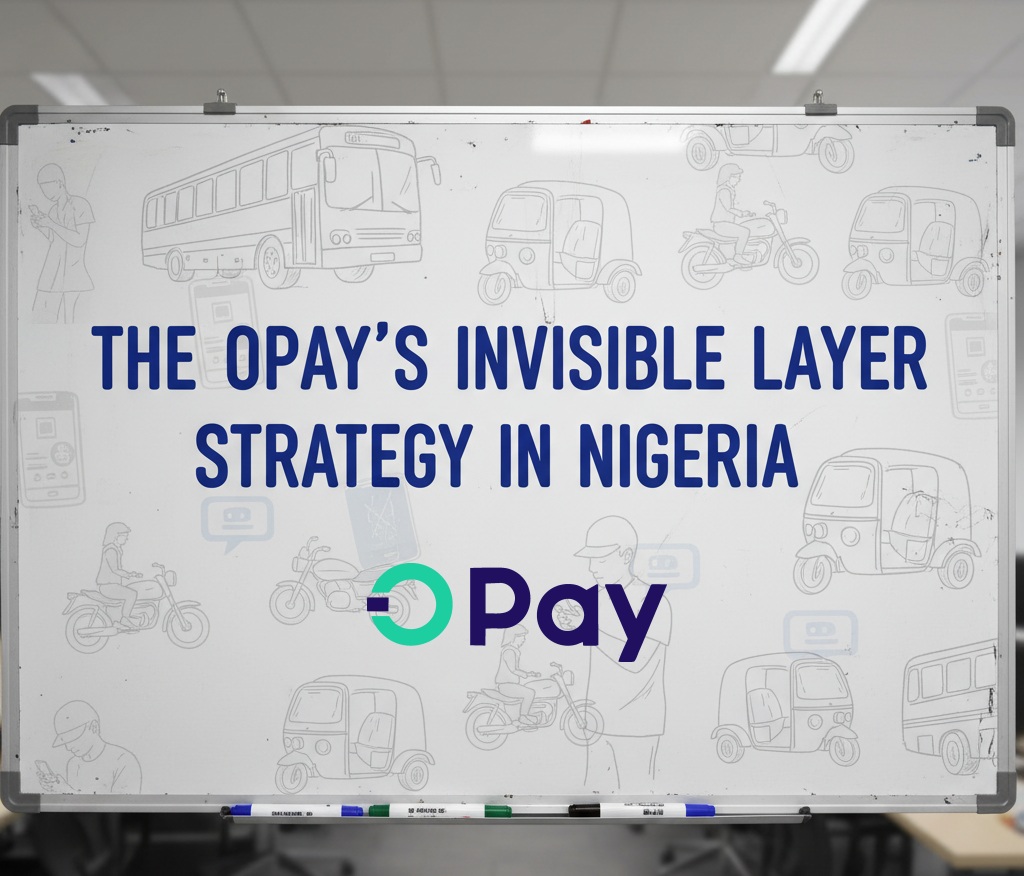
The OPay’s Invisible Layer Strategy in Nigeria

1

OPay entered Nigeria’s market with what I describe as the Invisible Layer Strategy. The company did not come to build a sustainable motorcycle hailing business or a mass-transportation empire. Instead, ORide, OBus, OKeke and the rest were simply decoys—tools to force millions to download the OPay app. By subsidizing rides, OPay pulled users into its orbit, knowing fully that the thin margins in transportation could not sustain long-term growth. But those loss-leading ventures had one critical value: they seeded the foundation for the paytech business, which was always the real play.

How did I know? The branding of those ventures, from OBus to ORide, was designed around OPay – the fintech unit.

In Harvard Business Review, I have written on the One Oasis Strategy and Double Play Strategy, and OPay exemplified those strategies in its business in Nigeria. Yes, OPay was hemorrhaging cash on transportation, but as users began to pay, withdraw, and transact through its wallet, the company built a fortress in payments. Then came the inflection point—one million users. At that moment, OPay no longer needed to keep up appearances. The ride-hailing units were closed, and the company doubled down on payments, its original vision.

To appreciate the genius here, consider what it would have cost OPay to acquire one million quality users via traditional advertising. Instead, it spent on subsidized transport rides, but those funds bought not just eyeballs—they bought transactions, habits, and trust. Today, the ORide and OBus brands are gone, but their footprints remain in the massive OPay userbase.

The lesson is timeless: what is your invisible layer? What sacrificial venture are you running today, not because of its direct margins, but because of the customer base it can help you unlock tomorrow? In the Igbo nation, we say “onye jiri ihe ya mee ?z?, na-ach?ta ?z? ?z?” [he who uses what he has to open a path will find even greater pathways]. What is your own strategy for acquiring customers?

Comment on OPay’s Invisible Layer Strategy in Nigeria

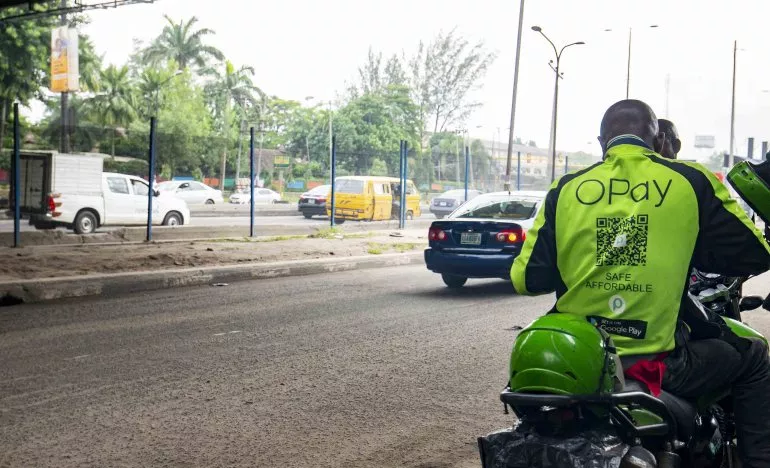
Some have written that OPay pivoted when ORide, OBus, OKeke and others “failed”. Respectfully, that is not accurate. From the very beginning, OPay was the destination. The day ORide launched, the riders’ uniforms carried not ORide as the dominant brand but OPay. The day OKeke began, the same OPay logo was the anchor.

Look closely at the ORide bikers—you will notice something striking: the company never wanted you to remember ORide. It wanted you to remember OPay. Those transport ventures were never the endgame; they were simply transient bridges. The stable state, from Day One, was always payments. How then do you call a pivot something that was the original vision?

But let us note this: in business, the One Oasis is not fixed. As I teach in Tekedia Mini-MBA, the oasis can evolve as markets evolve. Consider Dangote Group. Years ago, when Nigeria’s rail network functioned, logistics was not the anchor of Dangote’s empire. Today, in a nation with broken supply chains, Dangote Logistics is the crown jewel. Cement, petroleum, fertilizer—they are all tied together by one thing: the unrivalled logistics capability, powered by Dangote Sinotruk West Africa which produces the trucks that move the empire. That is the heart of Dangote Group; other things are multiple plays.

That is the lesson: while OPay’s destination was clear from the start, in other businesses, the One Oasis can shift. Smart companies must master the art of knowing when the Oasis is moving—and redesign their playbook accordingly.

Comment on Feeds:

My Response: As you noted, One Oasis Strategy was at play, and we can say right now it is the OPay app. They have built many things around it. But at the beginning of this business, the one oasis was the ORide which was the most popular unit of that business. That ORide seeded the OPay via a double play. Here, a double-played product can evolve over time to become a business important unit. The One Oasis in a business is not static; things can move and shift.

For example, I think that the One Oasis in Dangote Group is logistics right now. But it was not like that when Nigeria had working railtracks which moved cargoes. Today, with Dangote logistics, the business has no competitor because you can have fuel, cement, etc …do you have means to move them? Only Dangote does in Nigeria.

Remember:  The day ORIDE launched, at the back of the uniforms, the OPay logo was there. Simply, OPay was the grand mission on Day 1.

The Invisible Layer Strategy and Why OPay Is Emerging As Nigeria’s Most Potent Fintech