DD
MM
YYYY

PAGES

DD
MM
YYYY

spot_img

PAGES

Home Blog Page 454

Pinkfong’s Memecoin Launches on Story Protocol

0

Pinkfong—the South Korean entertainment company behind the global phenomenon “Baby Shark” YouTube’s most-viewed video with over 16 billion views—made waves in the crypto space by tokenizing its iconic IP on Story Protocol.

This move launched an official IP-backed memecoin, $PINKFONG, on the ip.world platform, allowing fans and creators to “remix and expand” the brand through on-chain contributions, licensing, and community-driven growth.

Pinkfong’s massive reach—boasting 240 million+ YouTube subscribers and 140 billion+ total views—has long made it a cultural juggernaut, and this blockchain integration aligns incentives by letting the company hold a portion of the token supply while rewarding community participation.

Built on Story Protocol, a blockchain layer for intellectual property (IP) management, the token leverages automated royalties, verifiable ownership tracking, and remix tools to turn cultural assets into programmable, monetizable ones. ip.world, a degen-focused launchpad on Story, facilitates these IP-backed memecoins.

$PINKFONG serves as a memecoin with built-in IP mechanics—holders can stake, remix content (e.g., fan art or videos), and earn from ecosystem growth, all while Pinkfong retains control over licensing.

The token exploded on launch, surging to a $500 million market cap within hours, drawing comparisons to viral memecoin runs like $SLERF or $SPX. As of the latest updates, it’s hovered around $220–500M amid high volatility, with trading volume spiking due to the brand’s mainstream appeal.

This isn’t just another hype-driven pump; it’s a blueprint for bridging traditional entertainment with Web3. Licensed IPs like Pinkfong add legitimacy to memecoins, potentially shifting them from pure speculation to revenue-generating assets (e.g., via royalties from remixes or merchandise).

Story Protocol’s ecosystem—already powering projects like Aria tokenizing music rights from Blackpink and Justin Bieber and ip.world (which has paid out $200K+ to meme creators)—positions it as a leader in the $80T IP market.

Community buzz highlights the “mainstream entry” potential: “Baby Shark got a memecoin before GTA 6,” with aligned incentives between Pinkfong and holders fueling long-term upside.

Pinkfong’s move validates the potential for globally recognized IPs to integrate with blockchain, turning cultural assets into programmable, monetizable entities. This could inspire other major brands (e.g., Disney, Pokémon) to tokenize IPs, leveraging blockchain for fan engagement and revenue.

Unlike purely speculative memecoins (e.g., $DOGE), $PINKFONG’s IP backing ties it to real-world value royalties, licensing. This could shift memecoins toward utility-driven models, attracting institutional interest and reducing perceptions of crypto as a “scam” space.

Story’s infrastructure—handling automated royalties, remix rights, and ownership tracking—sets a precedent for scalable IP management on-chain. Its $80T addressable market global IP could draw more creators and brands, making tokenized IPs a new asset class.

Fans can now remix Pinkfong content (e.g., Baby Shark fan art, videos) and earn via staking or royalties, aligning incentives between the brand and its community. This could redefine how fandoms interact with IPs, fostering co-creation over passive consumption.

Story Protocol’s payout of $200K+ to meme creators since August 2025 shows a viable model for rewarding contributions. This could attract digital artists, musicians, and influencers to Web3, boosting adoption.

Pinkfong holding a portion of the token supply raises questions about control. If the brand exerts too much influence (e.g., over licensing), it could undermine the decentralized ethos, alienating crypto-native users.

The $500M market cap spike later stabilizing around $220–500M highlights memecoins’ speculative nature. While Pinkfong’s brand lends credibility, price swings could deter risk-averse investors or fans unfamiliar with crypto.

Royalties from remixes and merchandise tied to $PINKFONG could create sustainable income for Pinkfong and holders, unlike traditional memecoins reliant on hype. This could stabilize token value over time.

The success of $PINKFONG may spur similar launches on ip.world, driving competition among IP-backed tokens. This could grow the memecoin market beyond its current $50B+ valuation, with Story Protocol as a key player.

Tokenizing IP introduces regulatory uncertainty, especially around cross-border licensing and copyright enforcement. Unclear laws could lead to disputes over remix rights or royalty distribution.

Pinkfong’s kid-friendly audience may raise scrutiny about marketing crypto to minors or unsophisticated investors. Regulators like the SEC could impose stricter rules, impacting adoption.

Tokenizing a cultural phenomenon like Baby Shark shows how brands can gamify engagement, turning passive fans into active stakeholders. This could lead to metaverse-like ecosystems (e.g., a Baby Shark NFT universe).

Pinkfong’s 240M+ YouTube subscribers expose a mainstream audience to Web3. If even 1% engage, it could onboard millions to crypto, accelerating blockchain adoption.

The success of ip.world’s “degen” launchpad (akin to Pump.fun) suggests memecoins can be a gateway for serious IP projects, blurring lines between meme culture and enterprise-grade blockchain use cases.

Memecoin volatility could erode trust if $PINKFONG crashes, damaging Pinkfong’s brand and Web3’s reputation. Crypto’s complexity may alienate Pinkfong’s casual fanbase, limiting participation to tech-savvy degens.

Pinkfong’s $PINKFONG launch could be a tipping point, proving that IP-backed memecoins can merge entertainment, fandom, and finance. If successful, it may spark a wave of tokenized IPs, from Hollywood franchises to music catalogs, reshaping how creators and brands monetize culture.

However, navigating volatility, regulation, and user onboarding will be critical to sustaining momentum. Expect more brands to experiment, potentially leading to a “Web3 IP renaissance” or, if mishandled, a cautionary tale of overhyped crypto ventures.

CSRC’s Pause Reflects China’s Cautious Approach to Managing the Risks of RWA Tokenization

0

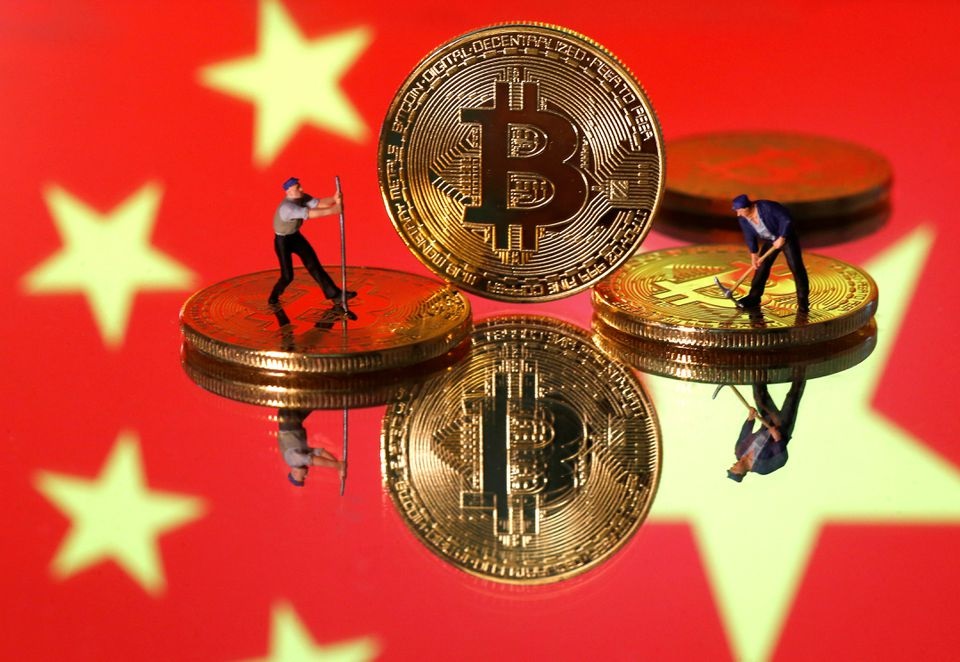
Reuters reported that China’s securities regulator, the China Securities Regulatory Commission (CSRC), has informally advised at least two major mainland brokerages to suspend their real-world asset (RWA) tokenization operations in Hong Kong.

This move signals Beijing’s growing caution toward the rapid expansion of digital asset activities offshore, even as Hong Kong positions itself as a crypto-friendly hub. The guidance emphasizes improving risk management and verifying that tokenized products are backed by legitimate underlying businesses, rather than speculative ventures.

Real-world assets (RWAs) refer to traditional financial instruments—like stocks, bonds, funds, real estate, or even trade receivables—converted into digital tokens on a blockchain. This process aims to enhance liquidity, enable 24/7 trading, and streamline settlements.

Globally, the RWA market has surged to approximately $29 billion in value, with projections estimating it could exceed $2 trillion by 2030. Chinese firms, including GF Securities and China Merchants Bank International, had recently launched RWA products in Hong Kong, such as a 500 million yuan ($70 million) digital bond issuance.

The instructions were issued in recent weeks and appear targeted at leading brokerages, though it’s unclear if more firms will be approached or how long the halt will last. This follows a similar August directive from regulators urging brokerages to stop publishing research endorsing stablecoins, amid rising retail interest.

While mainland China maintains a strict ban on crypto trading and mining since 2021, Hong Kong has aggressively pursued tokenization. In June 2025, its Financial Services and the Treasury Bureau (FSTB) and Hong Kong Monetary Authority (HKMA) initiated a legal review of RWA frameworks, inspired by international models.

New rules effective August 1, 2025, require issuers to hold HK$25 million ($3.2 million) in capital and fully back tokens with safe assets. Analysts view this as a temporary “speed bump” to align policy on money settlement, risk controls, and market structure with technological advances, rather than a outright ban.

It may prioritize lower-risk RWAs, like tokenized money-market funds or government bonds, over real estate-linked products. Globally, this could influence other jurisdictions pacing their tokenization efforts, as China remains a major player in bitcoin mining and holdings despite restrictions.

The news quickly spread on X, with users highlighting the tension between China’s caution and Hong Kong’s ambitions: Crypto news accounts like 99BitcoinsHQ and TheKryptoXpress described it as a “crackdown” or “halt,” linking it to broader crypto inflows.

ImCryptOpus noted potential impacts on tokenized assets, while CryptoTogii questioned if it’s a “sign of caution or a crackdown.” Some posts, like from TheEmagenewsDAO, tied it to positive DeFi developments, such as Vitalik Buterin’s comments on low-risk DeFi.

Hong Kong has been positioning itself as a global crypto hub, with progressive policies like the August 2025 RWA tokenization rules requiring issuers to hold HK$25 million in capital and fully back tokens. The CSRC’s pause could undermine investor confidence and slow the growth of tokenized asset markets in the region.

The directive highlights a disconnect between mainland China’s conservative stance and Hong Kong’s pro-crypto policies, creating uncertainty for firms operating in both jurisdictions. This could discourage new entrants or delay planned tokenization projects.

Tokenization of RWAs, such as bonds and real estate, enhances liquidity and enables fractional ownership. A pause could limit access to these benefits, particularly for Chinese brokerages like GF Securities, which recently issued a 500 million yuan ($70 million) digital bond.

The halt may dampen enthusiasm among retail and institutional investors in Hong Kong, who have been drawn to tokenized assets for their 24/7 trading and settlement efficiency. This could redirect capital to other crypto hubs like Singapore or Dubai.

The CSRC’s emphasis on verifying legitimate underlying businesses for tokenized products reflects Beijing’s priority to curb speculative ventures and ensure financial stability. This aligns with prior moves, like the August 2025 directive against stablecoin research.

With the global RWA market valued at $29 billion and projected to reach $2 trillion by 2030, China’s pause could create a ripple effect, prompting other regulators to scrutinize tokenization frameworks. This may slow adoption in jurisdictions following Hong Kong’s lead.

Affected firms like GF Securities and China Merchants Bank International may need to overhaul risk management systems or pause planned issuances, incurring costs and delays. Smaller firms may struggle to comply with enhanced scrutiny. The CSRC’s focus on “legitimate” backing could steer tokenization toward low-risk assets like government bonds or money-market funds, sidelining higher-risk products like real estate or trade receivables.

Analysts, as noted in Reuters, view this as a “speed bump” rather than a ban, suggesting China may refine its RWA framework to balance innovation and control. The pause could lead to clearer regulations, potentially benefiting the market long-term.

However, it may also pave the way for more robust regulations, ensuring sustainable growth in tokenized asset markets. This development underscores China’s guarded approach to crypto innovation, balancing financial stability against the allure of blockchain efficiency.

Michael Saylor Urges U.S. to Adopt Bitcoin as National Digital Reserve as Corporate and Institutional Demand Soars

0

Michael Saylor, Executive Chairman of MicroStrategy and one of Bitcoin’s most vocal advocates, is urging the United States to think bigger about digital assets.

He believes Bitcoin should not only be viewed as an investment but also treated as a strategic national digital reserve.

In a recent interview with CNBC, Saylor projected that Bitcoin (BTC) could see a significant price surge toward the end of 2025 after months of sideways trading. This optimism comes amid growing corporate and institutional demand for the cryptocurrency, which he says is already exceeding its natural supply.

Last week, Saylor joined other crypto leaders in Washington, D.C., to promote the proposed “Strategic Bitcoin Reserve Bill.”

During discussions with policymakers, he emphasized that Bitcoin is far more than a speculative asset. “The U.S. should own a large part of cyberspace,” Saylor said, stressing Bitcoin’s potential to become the foundation of the future monetary system.

His comments follow President Donald Trump’s March 6, 2025, executive order to establish a Strategic Bitcoin Reserve. This reserve will be a permanent national asset, funded by Bitcoin seized by the U.S. Treasury. Trump stated during the announcement: “A crypto reserve will elevate this critical industry after years of corrupt attacks by the Biden administration… I will make sure the U.S. is the crypto capital of the world. We are making America great again.”

Currently, the U.S. government holds 200,000 BTC, the largest stash of cryptocurrency owned by any country. Trump’s pro-Bitcoin stance is expected to further legitimize Bitcoin and other cryptocurrencies on a global scale.

According to Saylor, Bitcoin’s recent price stagnation hovering between $112,000 and $115,000 does not reflect the massive demand building behind the scenes.

Miners are generating about 450 BTC per day. Businesses are buying approximately 1,755 BTC daily. ETFs are absorbing another 1,430 BTC daily. This imbalance, with demand far exceeding new supply, is likely to create upward pressure on Bitcoin prices in the coming months. “Companies capitalizing on Bitcoin are buying even more than the natural supply created by miners,” Saylor explained.

Saylor revealed that around 180 companies are now adding Bitcoin to their balance sheets, with BlackRock ETFs among the most significant institutional buyers. His company MicroStrategy, holds 638,985 BTC, making it the largest corporate Bitcoin holder in the world.

Saylor explained that these companies fall into two categories:

1. Operating companies – Firms that would normally return capital to shareholders through dividends or stock buybacks but are instead holding Bitcoin as a treasury reserve asset to strengthen their capital structure.

2. True treasury companies Organizations fully focused on Bitcoin as digital capital, creating digital credit instruments much like gold-backed credit in previous centuries. “The world ran on gold-backed credit for 300 years. Now it will run on digital gold-backed credit for the next 300 years,” Saylor said.

While Saylor often compares Bitcoin to gold, he believes Bitcoin is vastly superior because it is programmable, transferable, and instant. “Gold has value, but it isn’t flexible. You can’t move gold instantly or program it. Bitcoin is like gold but with technology.”

A Future Monetary Standard

As 2025 draws to a close, Saylor envisions Bitcoin evolving beyond a trading asset to become the backbone of the global financial system.

He predicts that growing institutional adoption, corporate treasuries, and ETF accumulation will continue to squeeze Bitcoin’s supply and drive prices upward. “This isn’t just about holding Bitcoin it’s about building a future monetary system,” Saylor concluded.

With government backing, institutional interest, and relentless corporate demand, Bitcoin could soon transition from a volatile digital currency to a strategic global financial standard, reshaping the future of money.

Qualcomm Pitches 6G as AI-Ready Wireless Standard, but It’s Expected By 2028

0

At its annual Snapdragon Summit in Maui, Hawaii, Qualcomm CEO Cristiano Amon unveiled the company’s vision for the next generation of wireless connectivity, projecting that the first “pre-commercial devices” with 6G capability could arrive by 2028.

The successor to 5G, Amon argued, will be critical in enabling the next phase of artificial intelligence, powering everything from XR glasses to AI-driven wearables, according to Gizmodo.

“The amount of data will dwarf the existence of models,” Amon said, positioning 6G as essential infrastructure for “agentic AI” systems that can carry out complex, multi-step tasks. Qualcomm, whose chips already power Android smartphones, Google’s Pixel Watch 4, Meta’s Ray-Ban Display smart glasses, and Xreal’s upcoming “Project Aura,” sees 6G as the connective fabric binding these devices together.

Unlike today’s networks, which mostly deliver faster download speeds, 6G will require a fundamental shift in architecture. Qualcomm executives said new memory systems and more advanced neural processing units (NPUs) will be needed to handle AI workloads in real time. In the future, smartphones may act less as standalone gadgets and more as central hubs distributing AI-powered services to a growing ecosystem of wearable devices.

Yet while Qualcomm is making the case for 6G as indispensable to AI’s future, it admits the rollout will be slow. Pre-commercial devices may appear in 2028, but fully consumer-ready 6G products are unlikely before 2030. That uncertainty reflects a broader industry question: will AI features embedded in new hardware be compelling enough to convince users to upgrade? Early evidence suggests consumers remain cautious—many still find AI-enabled smartphones like the Pixel 10 sufficient for their needs.

China pulling ahead

Globally, however, the race toward 6G is accelerating, and early signs suggest China is setting the pace. Chinese telecom operators have already conducted multiple large-scale trials, launched experimental satellites to test 6G signals, and set 2030 as their target for nationwide rollout. Huawei and ZTE are both leading R&D efforts, and Beijing has tied 6G development to its broader strategy of technological self-sufficiency.

By comparison, the U.S. approach has been more fragmented. Qualcomm’s roadmap emphasizes AI integration, while Washington is only beginning to outline a national 6G strategy amid ongoing disputes with China over control of wireless supply chains. Europe, meanwhile, is channeling billions of euros into research consortia under its Horizon framework, hoping to avoid falling behind both Washington and Beijing.

While Qualcomm insists 6G is vital for the AI era, China is positioning the technology as a foundation for global digital dominance—an ambition that raises the stakes for U.S. firms.

AI Energy and infrastructure challenges

The energy demands of AI remain daunting. Nvidia recently announced a $100 billion partnership with OpenAI to build vast new cloud systems by 2026, projects that will require unprecedented electricity. Amon warned that if wireless connectivity lags, it could create bottlenecks for these AI ambitions.

Qualcomm chips already underpin much of the Android ecosystem, and the company argues that anchoring 6G to AI-readiness is the best way to stay ahead of consumer and industrial needs—even if no one yet knows what the “killer app” will be.

For consumers, that means 6G remains a distant promise. Qualcomm projects that the first real devices will not reach mass markets until close to 2030. Until then, the company’s strategy is to prepare the ground, even as rivals abroad push aggressively to set the global standard first.

The stakes extend well beyond faster connections. If China maintains its lead in setting 6G standards, it could give Beijing outsized influence over the technologies that underpin the next wave of AI, reshaping the balance of power in digital infrastructure. Qualcomm’s message from Maui was clear: the U.S. cannot afford to lag.

Secure Method to Bypass OTP Verification with a Temporary Number

0

Nowadays, you need an OTP to register or log in to websites. That is more secure, but it presents challenges for users who want to keep their behaviour private or control their accounts. There are also instances where professionals and test users have to work around bypass OTP restrictions without sharing their real numbers. The most secure way to get this done is with a temp number for verification.

Why OTP Verification Exists

To start with alternatives, let’s consider what OTP is and why it is imposed on developers. OTP codes that platforms depend on to:

  • Confirm user identity during registration.
  • Block spam bots with Captcha.
  • Give stored passwords an added layer of protection.
  • Validate accounts with real mobile numbers to reduce fraud.

However, for nearly all common cases of usage, this system works as expected. Yet our more advanced users sometimes need secure methods to skirt the constraints of OTP while maintaining a safe experience.

Risks of Using Personal Numbers for OTP

Depending on a personal number for each verification, online methods have a few risks:

  • Privacy exposure: Your digits show up all over the place, and you’ll be getting tracked.
  • Unsolicited Spam: Many chat services receive user numbers from elsewhere and share or sell those numbers, leading to repeated promotional messages.
  • Account vulnerability: If your number gets deactivated, you may lose access to accounts connected to it.
  • Scalability limitation: We cannot manage multiple accounts or region test profiles with one number.

For power users, such as developers, marketers, and privacy-conscious individuals like myself, these risks render personal numbers incompatible with mass or anonymous use.

The Role of Temporary Numbers

Temporary phone numbers are virtual phone numbers that can be accessed online. These numbers are hosted on cloud infrastructure, not permanent SIM cards. They are designed to generate one-time passwords for SMS, and then the number is discarded.

Core advantages include:

  • Anonymity: No association with an identity.
  • Immediate availability: Numbers can be created within seconds.
  • Cost control: Pay only for what you use.
  • Global numbers: Make and take calls from anywhere in the world without SIM cards.

Secure Method to Bypass OTP Verification

Experienced users should also have a method for using temporary numbers to bypass OTP.

Step 1: Select a Reliable Provider

Not all offers produce the same results. A reliable service should be available worldwide with clear pricing and a high delivery success rate of SMS codes.

Step 2: Choose the Target Country

Some services may require numbers from certain regions. Most disposable number providers let you filter by country to help with compatibility of region-locked platforms.

Step 3: Generate a Temporary Number

Once you select your target platform and country, generate a number. This number functions similarly to a traditional phone number during the verification step.

Step 4: Input the Number During Sign-Up

Use the temporary number on the platform where verification is needed. Request the OTP as you usually would.

Step 5: Receive the OTP Securely

Access the OTP directly on the provider’s dashboard. Advanced systems ensure instant delivery without delays.

Step 6: Complete and Discard

Enter the OTP on the platform and finalise your registration. After use, discard the number to maintain privacy.

This workflow provides a secure and repeatable method to bypass OTP checks without linking accounts to personal data.

Advanced Use Cases

  • Developers: Test regional app features by simulating user sign-ups from different countries.
  • Marketers: Manage multiple campaign accounts across platforms without exposing a personal line.
  • Privacy enthusiasts: Explore online tools or services without compromising their primary identity.
  • Businesses: Expand into new markets by creating localised accounts using region-specific numbers.

Security Considerations

While temporary numbers are effective, professionals should observe best practices:

  • Avoid using them for sensitive accounts, such as banking or financial apps.
  • Use them primarily for disposable, secondary, or test accounts.
  • Complete verification quickly, since numbers may expire within minutes or hours.
  • Track usage to avoid duplicate verifications that can lead to service bans.

Why SMS-MAN is a Trusted Option

For individuals seeking reliability and affordability, SMS-MAN is the ideal source for temporary phone numbers for OTP verification. SMS-MAN Works in more than 190 countries and with popular messengers like WhatsApp, Facebook, Twitter, Line, WeChat, and Telegram, without requiring your real number (Find out if your country is supported). You can also use this service to create accounts using personal numbers, too! No backlinks, always safe to buy! Such versatility – Buy only premium functions. And its pay-per-use feature means it won’t break the bank for power users verifying lists in bulk.

Conclusion

OTP-based verification has become a universal standard, but personal numbers aren’t always safe or scalable. Advanced users can use temporary numbers to securely bypass OTP requirements without compromising on privacy, spam, or being tied to multiple platforms. Thanks to companies such as SMS-MAN, the procedure has become easy and fast for international citizens.