DD
MM
YYYY

PAGES

DD
MM
YYYY

spot_img

PAGES

Home Blog Page 4551

Elon Musk Encourages Tesla Workforce to Push For A Strong Fourth-Quarter Finish

0

Tesla CEO Elon Musk via an email has commended the company’s workforce for their work in 2022, also encouraging them to push for a strong fourth-quarter finish.

Musk urged them to volunteer to help deliver Tesla vehicles to customers before midnight on Dec. 31st, if at all possible.

As it is a custom at the company, every last day of most quarters, it enlists employees from all over the company to bring new cars to customers to reach or exceed target delivery goals.

Meanwhile, Tesla’s Q3 2022 earnings results dropped, although it saw a decent finish. The company reported a revenue of $21.45 billion in Q3 and earnings of $1.04 per share, which fell below analysts’ expectations of $21.96 billion.

Tesla’s automotive revenue stood at $18.69 billion, an increase of 55% from a year ago. The cost of revenue for the company’s core automotive business rose to $13.48 billion during the quarter, up from $10.52 billion during the second quarter (Q2), in line with the increase in automotive sales.

Its automotive regulatory credits made up 1.5% of automotive revenues at $286 million for the quarter.

The company’s net income (GAAP) for Q3 2022 reached $3.33 billion, with automotive gross margins holding steady at 27.9%, exactly where it stood in the second quarter of 2022. During the same period last year, Tesla reported $1.62 billion in profits.

Despite its weak performance and failure to meet analysts’ expectations in the Q3 earnings, Elon Musk is optimistic that there will be a significant increase in the fourth quarter earnings.

He had earlier disclosed that the company already has an excellent demand for Q4 and expects to sell every car it has so far produced.

Musk revealed that all Tesla factories across the globe are running at full speed, and the company is delivering every car it makes, keeping operating margins strong.

I’m of the opinion that we can far exceed Apple‘s current market cap. In fact, I see a potential path for Tesla to be worth more than Apple and Saudi Aramco combined. That doesn’t mean it will happen or will be easy,” he said.

Meanwhile, Tesla Stock Is Headed for Its Biggest-Ever Annual Decline. Its current stock price of TSLA 8.08%, is poised Friday to close the worst year in the stock’s history, having lost more than $700 billion in market valuation amid investor concerns about production disruptions, and worries as Elon Musk shifts to focus on Twitter.

Reports reveal that while 20% of the Tesla stock decline is due to concerns about demand and growing EV competition, 80% is because of his focus on Twitter.

The electric-vehicle maker’s shares fell roughly 65% from the start of the year, which is pushing Elon Musk to change strategy, which has seen him sell Tesla stock after pledging not to do so.

GTBank Suspends International Transactions on Naira Mastercard

0

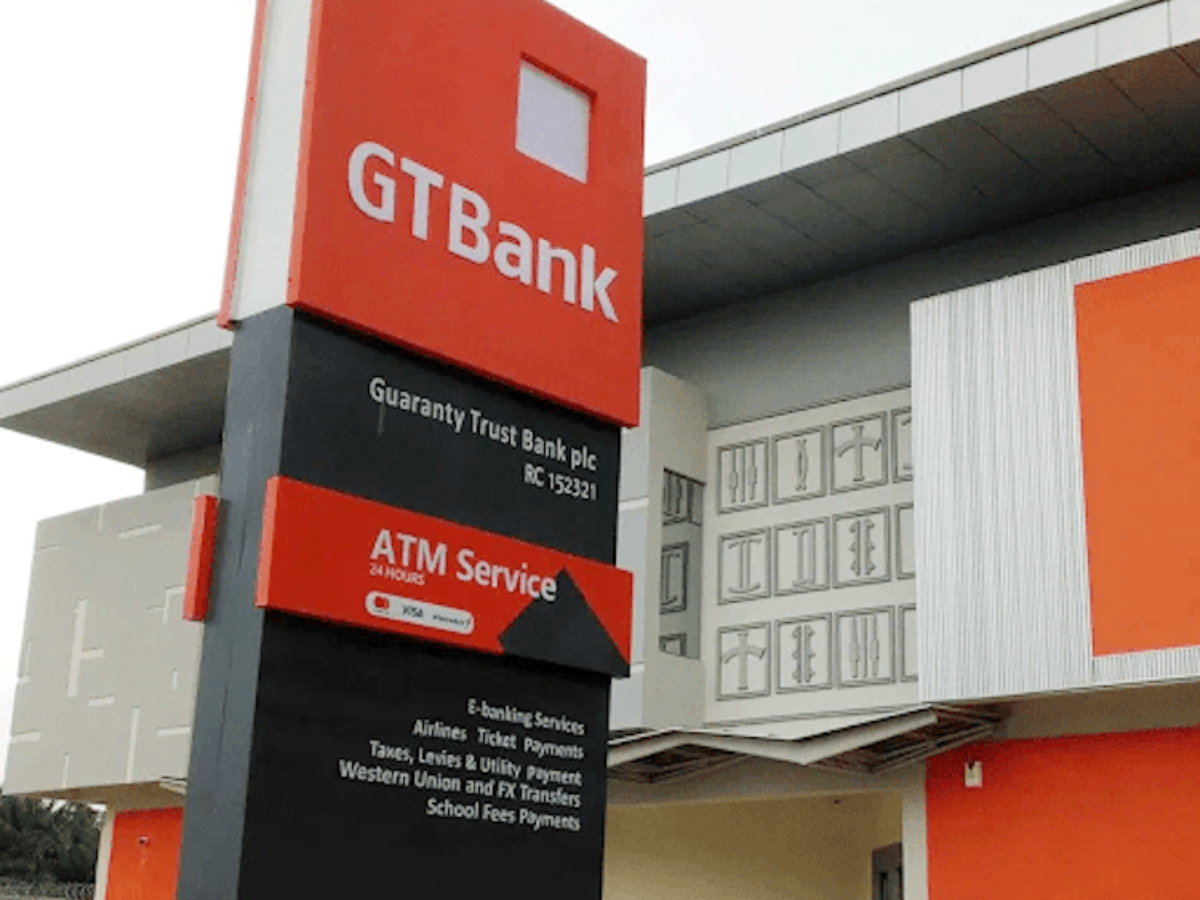
Guaranty Trust Bank (GTBank) has joined the growing number of Nigerian banks limiting and suspending international transactions on debit cards.

The bank announced in a statement sent to customers on Thursday, that it will suspend international transactions on its naira Mastercard from Saturday, December 31, 2022.

According to the statement, customers will be unable to make international automated teller machines (ATM), and point of sales (POS) transactions on their naira Mastercards.

“We write to inform you that you will no longer be able to use your naira Mastercard for international online and POS transactions effective 31st December 2022,” the statement said, urging customers to get and make use of “GTBank dollar card for all your international spending requirements.”

The statement further said that the bank’s dollar card allows a daily $1,000 (or equivalent in the transaction local currency) withdrawal limit on ATM transactions. It added that there would be no withdrawal limit on “annual spend and POS transactions” for the dollar cards.

The bank’s decision is understood to be born of Nigeria’s forex crisis that has forced the Central Bank of Nigeria to initiate strict policies to protect the country’s currency, the naira. Other financial institutions have made similar moves as the situation tightens.

Following the decision of Standard Chartered Bank to suspend international transactions on its naira visa debit card in July, other financial service operators like Flutterwave, Eversend and other fintech platforms have also stopped virtual card services for international transactions.

In September, First Bank announced that it’s suspending international transactions on its naira Mastercard, citing Nigeria’s forex situation. The bank had earlier in March, reduced the international spending limit on naira cards from $100 to $20.

Earlier in February and March, Zenith Bank and the United Bank for Africa reduced the international spending limit on their naira cards from $100 to $20 a month.

As at Dec. 30, the Naira trades at N736/$1 at the parallel market, an uptick from its lowest in the year which soared above N850/$1. The backdrop has been attributed to many factors headed by insufficient dollar liquidity. Nigeria’s oil export, its major means of earning forex, has been severely stymied by oil theft and lack of functioning refineries, which has forced the country to import refined products at international rates.

With low earnings from oil export, Nigeria’s foreign reserve has depleted to zero from its $3.0 billion balance in 2014. The West African country’s push for economic diversification has yielded little success, indicating the government’s helplessness in the face of a deteriorating forex crisis.

The CBN governor Godwin Emefiele has told the banks to get involved in exports to generate forex. He said the apex bank will soon stop supplying dollars to commercial banks. With the central bank’s stringent policies targeted at stopping the naira from total collapse and lack of sufficient forex supply, the banks are increasingly halting debit cards-based international transactions.

But this means more trouble for Nigerian businesses, especially, Small and Medium Enterprises (SMEs) and individuals who depend on bank-issued debit cards to carry out international transactions.

$1.7 Million Assets Swapped by Alameda Research through various Crypto Mixing Services

0

30 Cryptocurrency wallets linked to Alameda Research, the bankrupt sister company of crypto exchange FTX, became active on Dec. 28 following four weeks of inactivity. These wallets swapped and mixed over $1.7 million worth of crypto assets through various crypto-mixing services.

Crypto mixers are often used by market exploiters and criminals to obscure the transaction path so that the funds cannot be traced to the original source.

As Cointelegraph reported on Dec. 28, the sudden movement of funds from Alameda wallets just days after Sam Bankman Fried was released on bail raised suspicions across the crypto community. Nearly 24 hours later, it seems the culprit behind these fund transfers used extensive planning to hide transaction routes.

According to data shared by the crypto forensic group Arkham, the first transfer of funds began with multiple Alameda addresses swapping tokens for Ether and sending them to crypto mixers. A majority of these transfers were tracked to two main wallets starting with 0xe5D and 0x971.

Tokens from the Alameda wallet were first sent to an address starting with 0x738, and then on to an address 0x64e. This 0x64e wallet then splits up the ETH and sends it to smaller wallets, in sizes of generally $200,000 and $50,000. After that, it was sent to services such as Fixedfloat and ChangeNOW.

In a statement on its company blog, ChangeNow spoke out against “fraudulent actions”, such as those connected to the Alameda wallets case. The team statement indicated that the company is putting, “serious effort into preventing such incidents,” continuing:

“Currently, [ChangeNow’s] compliance team is working closely with investigators to detect the flow of the illegal funds, while also keeping a close eye on alerts from the community on funds with suspicious trails.”

Another wallet was used to swap for stablecoins, where wallet assets were first swapped into USDT and then sent to Fixedfloat. A total of 800,000 USDT was swapped out using mixers, while another 400,000 USDT was funneled via other methods. An additional 200,000 USDT worth of stablecoins were sent to the Bitcoin network using renBTC.

In total, $1.7 million worth of funds were swapped and sent through various mixing services as follows:

  • 270.5 ETH through ChangeNOW (~$325k)
  • 800,000 USDT through Fixedfloat
  • 200,000 USDT through Curve SynthSwap to native BitcoinBTC
  • 200,000 USDT through Airswap
  • 200,000 USDT through other crypto-mixing services

The movement of funds from the Alameda wallet funneled through mixing tools created quite a buzz in the crypto community. Many question the timing of the fund transfers while others point toward the use of mixing services and the inability of authorities to prevent such a thing despite the matter being sub-judice.

Grit Leadership Skills of CEOs to Develop Toward a New Business Year in 2023

0

Globally, CEOs and senior executives continually scramble for knowledge, skills and best practices that can enable them to lead their companies to stay afloat the waters. The CEO at the height of his duty is like the sailor steering his ship to beat the storm. The stories of great decline of businesses are no particularly exciting references though they offer a plethora of insights and curious patterns.

Often CEOs have excelled in a very different job and the skills that have made them successful are not necessarily the ones that will make them successful as a major company chief executive.

The forgoing words of Graham Wallace, former Cable Wireless Chief executive quoted in Steve Tappin and Andrew Cave’s The New Secretes of CEOs raise an air of curiosity.

I particularly found those words edgily insightful having had a firsthand experience of how brilliant men of impressive track records, highly celebrated and favored in the early part of their careers, soon had to struggle and be made to hit the bottom rock of their careers as chief executives or managing directors of their new ventures. Some have to toil their ways to recovery; for others, it is usually a fall into an endless abyss.

Frankly, the CEO position extends beyond being a natural or charismatic leader. Invariably, CEOs are corporate leaders and managers. Corporate leadership implies a highly skilled and experienced profession rather than a thing of talent or natural gift. Natural abilities no doubt contribute significantly to the performance and success of the CEO but equally important or even more apposite to the CEO’s role are professional competencies including corporate coping skills.

While rising to leadership status is often preordained by natural abilities, the ability to endure and sustainably navigate the leadership challenges is largely predicated on values that are scarcely innate. Thus, in the words of Daniel Goleman, most leaders are hired for their IQ (natural abilities), they are fired for their lack of EQ (emotional intelligence) which is invariably learned and mastered through life experiences.

Steve Tappin and Andrew Cave analysed 200 global chief executives and came up with a proposition that the CEO ultimately have to learn to be tough, resilient and self-sufficient whether those set of habits come to them naturally with ease or they are cultivated through the pain of discipline.

Being tough, resilient and self-sufficient is the act of grit leadership. Toughness is the ability to face challenges head on without self-pity or caring much about what others think or feel; resilience is the ability to quickly recover from challenges and adapt to existing conditions; and self-sufficiency entails the ability to independently make tough problem-solving choices towards growth. All of these are emotional-adversity competencies needed to navigate the corporate resistance.

Furthermore, CEOs are expected to be properly skilled at directing the delivery of the corporate values. However, it has been observed that identifying the most important stakeholders per time or per offering of the business could be a major source of problem to most CEOs.

According to the study of CEOs by Steve Tapping and Andrew Cave, it was found that 38 percent of CEOs consider shareholders as the most important stakeholder; 24 percent claimed the customers are the most important to them; 13 percent would rather give precedence to their employees and the remaining 25 percent see all stakeholders as equally important to the survival of the business.

In any case, the CEO must be able to understand the centre of gravity and the centre of influence of the business and then design and execute the business model based on this awareness.

Permutations and Combinations in the Global Economy in 2023: A Great Dilemma for Agenda 2030

0

Every year, global think tanks and public affairs analysts make a series of predictions about economic growth based on owned and publicly available data. It is also not new that they publish the performance of economies around the world in the middle of each year. They have never stopped not releasing performance and forecasts as the year comes to a close.

In all of these situations, they use local, regional, and global media organizations to communicate with the public, particularly political and business leaders, in order for them to see bigger pictures in how the economy is managed and what the consequences would be if identified problems were not addressed holistically.

Opinion leaders in their respective settings disseminate the good and bad performances through the media, without leaving future predictions, to the people at the bottom of the socioeconomic and political pyramid. At the end, when negative economic performance and potential poor future economic performance are disseminated, everyone is in a panic mode.

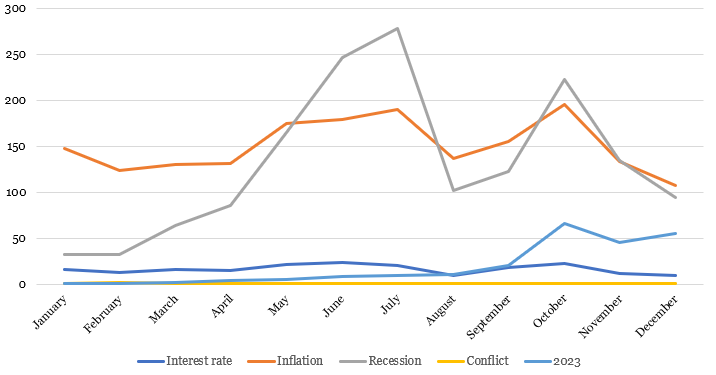
The year 2022 will end in a few hours and people all over the world have developed a diverse and significant interest in inflation and recession (see Exhibit 1), which have been cited by many global thinkers as key issues the world will face in 2023. This viewpoint is based on the fact that the world struggled in 2022 to solve problems caused by social unrests and political conflicts in some parts of the world. They will also pose significant threats to the global economy in 2023, as central banks struggled to address inflation rates despite various and numerous mitigation strategies developed throughout the year.

Hence, the need for people around the world for asking Google (through Internet search); What will the economy look like in 2023? Will 2023 be a year of recession? Why there will be recession in 2023? What will happen to the US economy in 2023? Will the job market get better in 2023? Where will interest rates be in 2023?

Thousands of answers from leading thinkers around the world are equally available as they ask these questions and others, as our analysts stated earlier. In this regard, a number of publications that relate to the questions have been made by Ipsos, Bloomberg, Harvard Business Review, the International Monetary Fund, regional development banks, central banks, and individuals. According to the IMF, “While price growth is expected to ease in 2023, economic growth is certain to slow sharply alongside rising interest rates, too. The global economy will grow just 2.7 percent in 2023, down from 3.2 percent in 2022.”

While earlier predictions or forecasts appeared to have a significant impact on developing nations, our analyst notes that the effects of the current estimates may be felt equally around the world. Due to ongoing political conflicts in some regions of Europe, South East Asia, and Africa. For some nations, the Russia-Ukraine war has already resulted in food insufficiency and energy inequality. Additionally, it has changed how developing nations like China, Iran, and Algeria engage in international politics with the rest of the world and Russia. Developing nations, such as African countries, are already in severe debt distress.

Exhibit 1: Global interest in key issues of 2022 economy

Source: Google Trends, 2022; Infoprations Analysis, 2022

In all of these, our analyst observes that the world desperately needs global thinkers who understand how to separate issues from interests and interests from actors in order to find common grounds for countries to thrive without harbouring long-term grudges. The world is in shambles, as meeting the goals and targets of Agenda 2030 requires 7 years.  If the current level of hostilities continues in 2023, Agenda 2030 will suffer greatly.

The world requires thinkers who will genuinely promote understanding and appreciation of today’s social, economic, and political differences. The thinkers who will process available information in large chunks and present larger pictures for each nation to see how they can coexist in our evolving multicentric world.