DD
MM
YYYY

PAGES

DD
MM
YYYY

spot_img

PAGES

Home Blog Page 4556

Brazilian Government Declares a-Three-Day Public Holiday To Mourn Deceased Soccer Maestro, Pele

0

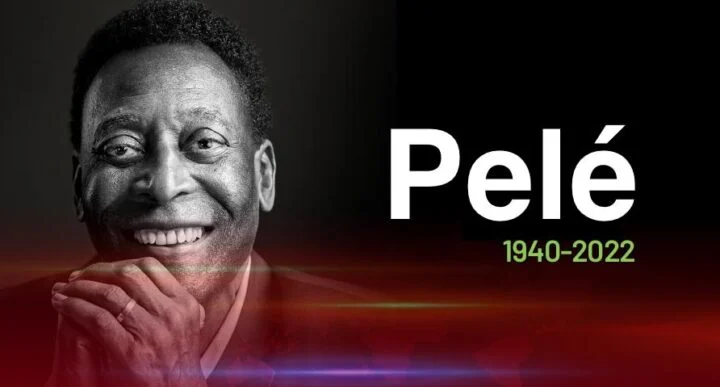
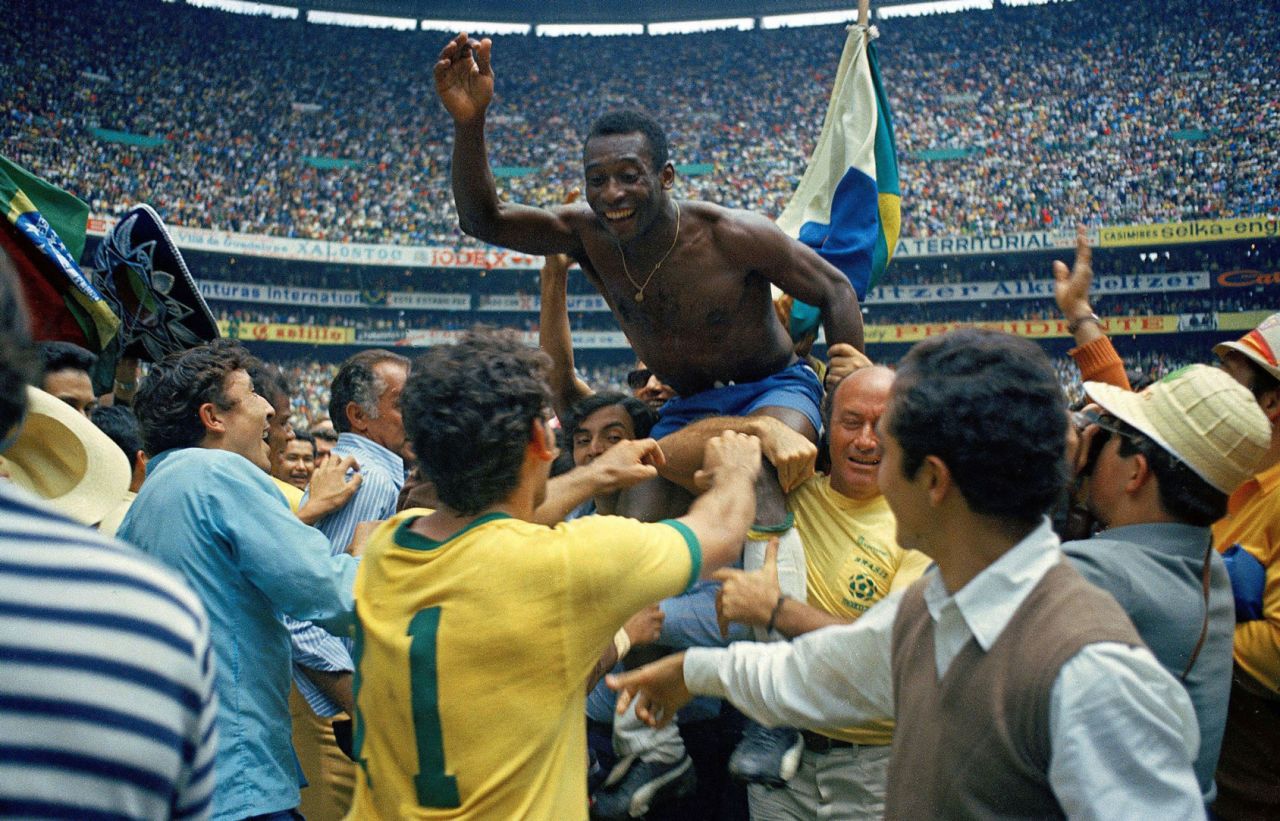
The Brazilian government has declared a-three-day national holiday to mourn the late Brazilian soccer maestro, Edson Arantes do Nascimento aka Pele, who died yesterday after a long battle with cancer.

The announcement was made on Friday by President Jair Bolsonaro, whose tenure at office as the 38th president of Brazil is expected to come to an end in two days. In his address, Bolsonaro made the following remark about the deceased footballer:

“Pele was a great citizen and patriot, raising the name of Brazil wherever he went,” he said.

In a tweet the president-elect, Luiz Inacio Lula da Silva has reacted to this announcement saying: “few Brazilians carried the name of our country as far as he did”.

In less than 24 hours since the announcement of the death of the great legend, there has been an overflow of tributes from netizens across the worlds.

Why That Product Is Struggling in the Market – Check Your Product-Channel Fit

0

At the early stages of companies, we spend significant efforts to attain product-market fit or PMF (customers love the product and are paying for it). I posit that you must attain PMF before you begin to scale your company, if not, you will waste your marketing budget, and at the end, will be unable to retain customers.

When companies fail to attain PMF, most times, it is not that the product and the market (customers) cannot attain sustained transaction equilibrium, what actually happens is that the founder has not worked first to attain a Product-Channel Fit (PCF). We do ignore PCT which I think is a critical prerequisite to PMF.

You have built that product with Facebook as the channel. As you are about launching, Facebook changes its algorithm, making your product class harder to be distributed. If you do not understand that, you may think that your market is off when the real issue is that the channel is the problem. Of course, most times, we have no control on the channel; we can only control our product. So, everything falls back to the product.

It is painful when you see fintech companies in Nigeria with  mobile app-only strategy. I have no idea how they plan to attract mid-size companies . Those companies will never  allow staff to access their financial resources via smartphones. If you check, the startups have missed the distribution channel fitness. (Most mid-size firms prefer to use a dongle to lock laptops or desktops to access their banking resources).

Pay attention to your product channel fitness even as you architect your Product-Market Fit.

To win in markets, you need to have a great product-market fit. It is a spot where the frictions in markets and the “forces” (the products and services) you are creating to overcome them attain equilibrium.

[Bear with me for using big grammar. My grandmother, Lechi, truly liked them because it showed that I was learning in secondary school. How do you come back from school without saying something she could not understand, after all the school fees? ]

So, when Peloton, an experience exercise company, which helped people do exercise at home, was raking it at the peak of the pandemic, I wrote: “before you invest, think beyond Covid-fit to market-fit”. In other words, that product must not just do well during Covid pandemic, but also when normalcy returns.

A new course in Tekedia Mini-MBA extrapolates this to include Model alongside Channel, Product and Market. The convergence of these four factors are catalytic in a company’s ability to scale. I hope to welcome you to Tekedia Institute as we study Product Development and Roadmapping.

Comment on Feed

Comment: Great words Ndubuisi Ekekwe , the reason for a startups inability to attain PMF may just be because the right channel hasn’t been discovered yet.
However, what do you have to say about companies that achieve false PMF? Where the supposed PMF attained is actually detrimental to scaling.

The startup had seemingly ticked all the boxes and customers are buying the product yet it’s failing to attract mainstream customers while using that model. What do you advise at that juncture sir?

My Response: From my perspective, there is nothing like “false  PMF” – it is either you are there or not. What happens is this: most times, we use marketing blitz to cushion PMF. In other words, you sell $100 for $70 and think people are buying. But once you stop that promo, those customers go.  Yes, you are unable to retain them, and if you are unable to retain customers, do not bother to scale. 

In a course I am developing on this for Tekedia Mini-MBA, I added the power law of distribution to show how the greatest  companies get up to 70% of their customers from a single channel.  For Tekedia Mini-MBA, more than 80% of our learners come from LinkedIn (we have stopped updating Twitter).

Comment 2: so is it safe to say…. beyond finding the right distribution channel for a product , it’s also important to put it up against the varying conditions along the distribution channel ?

My Response: Absolutely. Those varying conditions are part of the factors. Zynga did well under Facebook Desktop. But when FB moved to mobile, Zynga faded. Of course, the company went back and acquired mobile-first gaming startups, to re-initiate growth. This is a dynamic game and never static.

Moralis CEO Believes Ethereum Could Hit $10K in 2023

0

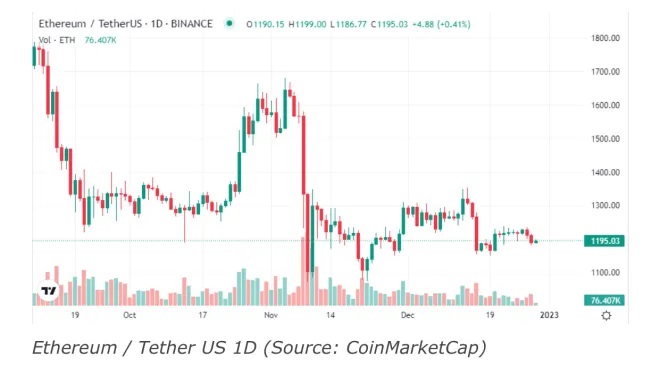
One of the cryptocurrencies in the red today is the biggest altcoin by market cap, Ethereum (ETH). According to the market tracking website CoinMarketCap, ETH saw a 0.08% drop in price over the last 24 hours and now trades at $1,194.81 after reaching a low of $1,185.70 over the same time period. The altcoin is also still in the red by about 1.55% over the last seven days.

The post Moralis Web3 CEO Believes Ethereum Could Hit $10K Very Soon appeared first on Coin Edition.

ETH did, however, strengthen against its biggest competitor, Bitcoin (BTC), by 0.48% since yesterday. Also in the red zone is ETH’s 24-hour trading volume which currently stands at $4,555,223,608 after a more than 3% decline. The altcoin’s market cap stands at $146,212,976,126.

About nine hours ago, the CEO and co-founder of MoralisWeb3 who goes by the name of Ivan on Tech, took to Twitter to ask the crypto community if they are still bullish on Ethereum (ETH). A few hours later, the CEO responded to his own tweet by confirming that he is, in fact, bullish on ETH. He even went as far as to say that he believes ETH could reach $10k very soon.

He also stated that he clings to this belief despite some of the criticism he has received for his opinion on ETH and its future performance.

The comments on his post mostly agreed with the fact that ETH has the potential to reach $10k, but many believe it might not happen as soon as the CEO believes it will.

Apparently, Ethereum’s energy consumption fell 99.99% following its merge to proof-of-stake. To people criticizing $ETH do you really think $BTC will become a global digital currency when energy consumption is just going to increase? Or followed the energy crisis in Europe?

NFTs enable creators to monetise their art and easily enter a global marketplace of collectors and traders. Whether they are on Bitcoin, Ethereum or any other chain, the underlying concept of digital collectables is not going away, Blockchain technology is harnessing the power of art.

Almost 1 Million Ethereum Were Sold by Whales, Causing Surge in Price

Meanwhile, Ethereum’s price performance in December was sad, to say the least. Poor fundamentals, a depressing macro situation on the market and a lack of network activity were the primary reasons behind the lack of momentum on the market.

However, the real reason might be far more prosaic after we take a look at whale wallets. According to the on-chain data, Ethereum whales who held up to 100,000 ETH have sold or moved up to 880,000 Ethereum since the beginning of this month.
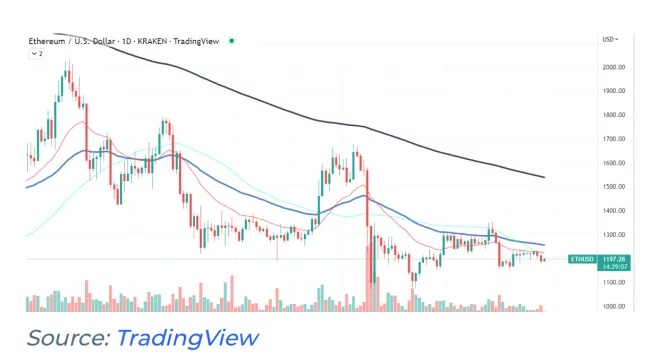
At least part of that sum has most likely been sold on the market, corresponding to the selling pressure we witnessed on the market throughout the month.

Even though the trading volume on Ethereum has not been exceptional in December, with the poor liquidity on the market, even a selling pressure of 500,000 ETH would be enough to push the price of the second biggest cryptocurrency on the market below the $1,200 price level.

Another large contribution to the active redistribution of assets was part of the global trend of funds migration from centralized cryptocurrency exchange to self-custody.

Even though migration from exchanges to wallets is not associated directly with the selling activities, it could be a correlating factor, as some investors prefer liquidating their holdings rather than simply moving them to their own wallets.

As we mentioned above, the fundamental reason behind the plunging price of ETH could be tied to the decreasing network activity as more investors are leaving the industry for good, or at least until the market recovers.

At press time, Ethereum is trading at $1,194, deliberately trying to hold the $1,200 price threshold, which acts as a platform for any move toward the next resistance.

Forecasters Predict Bitcoin price would surpass $600K if it matches Gold

0

Bitcoin (BTC) is due to copy gold’s explosive 1970s breakout as it becomes the world’s “hardest asset” in 2024. That was one forecasted from the latest edition of the Capriole Newsletter, a financial circular from research and trading firm Capriole Investments.

BTC is due to copy gold’s explosive 1970s breakout as it becomes the world’s “hardest asset” in 2024.

That was one forecasted from the latest edition of the Capriole Newsletter, a financial circular from research and trading firm Capriole Investments.

Bitcoin due big moves “and more” in 2020s

Despite BTC price action flagging at nearly 80% below its latest all-time high, not everyone is bearish about even its mid-term outlook.

While calls for a further drop before BTC/USD finds its new macro bottom remain, Capriole believes that 2023 will be bright for Bitcoin as a revserve asset.

The reason, it says, lies in the world economy’s financial history of the past century, and in particular, the United States after the dollar deanchored from gold completely in 1971.

Gold, as the world’s premier safe haven of the time, saw “huge” gains during the decade, and fifty years later, it is Bitcoin’s turn.

“Because gold was much smaller in the 1970s (and Bitcoin today is even smaller by comparison), it had capacity to make big moves through a decade of inflation and high interest rates,” Capriole wrote:

That’s one reason why we believe Bitcoin will do the same, and more, this decade.

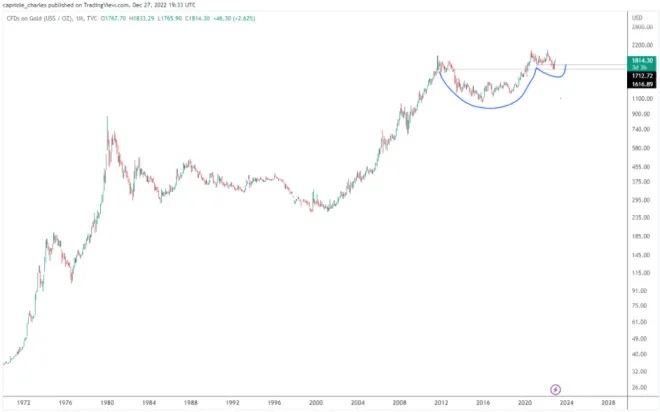
Accompanying charts underscored gold’s potential to repeat its 70s behavior, among which were a “cup and handle” chart structure playing out since 2010.

XAU/USD 1-month annotated chart. Source: Capriole Investments

When it comes to Bitcoin vying with gold for the safe haven crown, meanwhile, the potential lies in the numbers — at just 2.5% of gold’s market cap, BTC diving 80% from its $69,000 peak last year has little bearing on the overall picture.

“Given Bitcoin represents just 2.5% of gold’s market capitalization today, its 80% drawdown adds a mere 2% additional drawdown to the combined hard money (gold + Bitcoin) drawdown,” the newsletter continued.

Giving a total hard money drawdown of 24% through to November 2022, comparable with the 1970 and 1975 figures for gold.

Should the stage already be set for a Bitcoin copycat move of 70s gold, the growth potential is thus all the more impressive — even now, Bitcoin’s market cap is just 10% that of gold before its bull run of the time began.

“Bitcoin has more growth potential than gold because it is smaller. A like-for-like demand in both assets will result in a 40X greater price change for Bitcoin,” Capriole stated.

“The hardest asset in the world”

A further key argument echoed that long championed by commentators such as Saifedean Ammous in the popular book, The Bitcoin Standard.

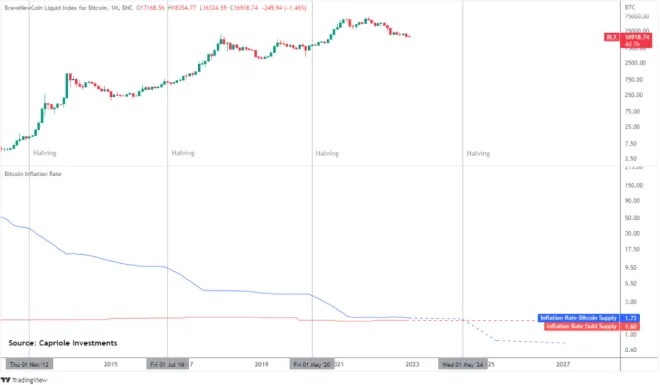
There, the debate focuses on investors’ shift to Bitcoin as its inflation rate drops below that of gold, increasing its monetary “hardness” versus the metal:

“There are many other attributes that make Bitcoin stand out from gold, such as its equitable decentralization, ability to transfer instantaneously and be used for micro-payments. But most importantly, Bitcoin is harder than gold.”

This, Capriole added, will confirm Bitcoin as “the hardest asset in the world” at its next block subsidy halving in 2024.

“All-in-all, gold went up 24X in the 1970s,” Capriole summarized:

“Now imagine the 2020s, where the Fed can’t afford to be as aggressive (debt is way higher today) and we have digital, accessible, harder money: Bitcoin.”

BTC/USD chart with Bitcoin, gold inflation rate data. Source: Capriole Investments

Is Pele a Nation or Global Legend?

0

Pele, Edson Arantes do Nascimento, died on December 29, 2022. According to various sources, he was born on October 23, 1940 in Três Coraçes, Minas Gerais, Brazil. While battling colon cancer, he was covered by several media outlets around the world and discussed by individuals and organizations on various digital platforms and in physical settings. Using Pele as a keyword for navigational search on Google yields approximately 270 million results, with the majority of publications focusing on his life times and death period, as of the time of writing this piece.

Aside from the mainstream news media, creative industry players have also curated a number of his activities on pitches and in general administrations for public consumption. Our investigations reveal that the public has been flooded with stories about how he helped some countries during their political crises, as well as how he supported the less fortunate in his immediate communities and beyond. For example, Netflix already has a film about his football career.

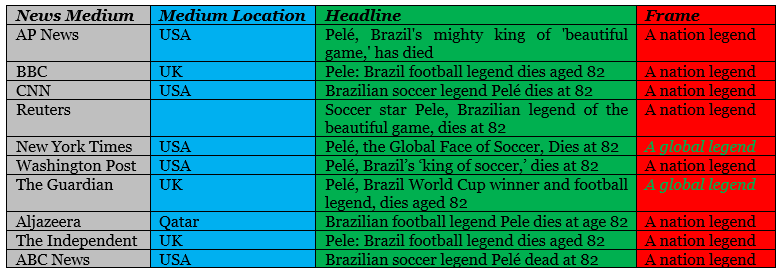
Exhibit 1: Select news media and their respective frames

Source: Media Organisations, 2022; Infoprations Analysis, 2022

Meanwhile, the purpose of this piece goes beyond explaining his life and achievements as reported in the media. The piece looks at how the “King of Soccer” was portrayed in the global media in the days leading up to his death. The selection and examination of prominent news organizations from the global north and south reveals that AP News, BBC, Reuters, Washington Post, Aljazeera, The Independent, and ABC News portrayed him as “a nation legend” rather than “a global legend” in their early reports. According to research, The New York Times and The Guardian, both based in the United States of America and the United Kingdom, regarded him as “a global legend.”

Based on the emerging insights, our analyst concludes that it is obvious that international media, such as those chosen for analysis, may create a “backward frame” when the death of an acclaimed international icon occurs in contrast to a “forward thinking frame”. When natural disasters occur, our analyst believes that “backward framing” occurs when media organizations and their employees fail to repeat previously held framing patterns of a specific person or organization. Those who used the “forward frame” by portraying him as “a global legend” solidify their previous belief that he was truly “a king of soccer.”