DD
MM
YYYY

PAGES

DD
MM
YYYY

spot_img

PAGES

Home Blog Page 4556

Coinbase Predicts Investors Will Flock to these Two Crypto Assets in 2023

0

Coinbase crypto exchange is singling out two digital assets that will become a favorite with investors looking for quality.

The US crypto exchange says in its 2023 Crypto Market Outlook report that one of the key themes for next year will be institutional investors seeking quality amid a worsening macroeconomic picture.

According to Coinbase, Bitcoin (BTC) and Ethereum (ETH) will be favored by investors based on among other things the fact that they are tried and tested.

Within crypto, we expect digital asset selection will transition towards higher quality names like bitcoin and ether based on factors like sustainable tokenomics, the maturity of respective ecosystems, and relative market liquidity. Moreover, many traditional risk assets still seem rich, and the investment theses for cryptocurrencies like BTC and ETH have not fundamentally changed in our view, which could eventually open up some key value opportunities.

The US digital asset exchange says that the prices of cryptocurrencies will likely continue to correlate to other risk assets.

We assign a low probability that crypto performance will decouple from traditional risk assets in the first few months of 2023, particularly without a differentiated catalyst.

On the competition among smart contract-enabled blockchains, Coinbase says that Ethereum’s successful transition to a proof-of-stake consensus mechanism has reinforced its ability to continue being a leader among layer-1 blockchains.

Ethereum’s successful Merge of its consensus and execution layers in September 2022 has also strengthened the case for ambitious future upgrades, despite the trend towards long-term core protocol ossification.

In our view, this supports the fundamental narrative for Ethereum as a leader in a multichain world, particularly since nearly all networks are competing for the same pool of users and capital.

Yet, despite the uncertainty surrounding the potential fallout, there are important characteristics that distinguish this market from the previous crypto winter. For one, institutional crypto adoption remains firmly entrenched. Many investors take a long-term perspective and recognize the cyclical nature of these markets. Rather than stepping back, they are using this environment to hone their knowledge and build the infrastructure to prepare for the future.

But no one is arguing that digital assets haven’t faced an important setback. The total market capitalization of cryptocurrencies is currently around US$835 billion, down 62% from $2.2 trillion at the end of 2021, albeit still high relative to most of the asset class’ history. Comparatively, the Nasdaq is down 30% since the end of 2021 and the S&P 500 down 18%.

From a Sharpe ratio perspective however, crypto’s risk-adjusted return actually performed in line with US and global stock indices through 2022 and did much better than US bonds. Prior to the fallout in November, an equally-weighted basket of BTC and ETH offered a negative Sharpe ratio of 1.08 compared to an average negative return of 0.90 for US stocks. This is a significant deviation from the trend observed in the last crypto winter, when digital assets underperformed nearly all traditional risk assets for the duration of 2019 and into early 2020.
Alameda-Backed Ren Warns Crypto Could Be Lost As Platform Shuts Down

0

Ren Protocol, the Alameda-funded crypto platform that issues wrapped bitcoin under renBTC, is remodeling itself after the FTX crash.

Ren is winding up its 1.0 protocol as it was run under a company now involved in FTX bankruptcy proceedings. The team disabled minting last month.

Ren warned that the upgraded version may not be compatible with 1.0, so holders of Ren assets should quickly bridge back to native chains “or risk losing them.

The Ren 1.0 network is likely to imminently shut down, and any remaining assets are at risk of being lost,” the team said in a Sunday tweet. DeFi liquidity pools which support Ren assets, such as Curve, could be impacted.

Reminder that Ren assets need to be bridged back to the respective native chains. The Ren 1.0 network is likely to imminently shut down, and any remaining assets are at risk of being lost.

— Ren (@renprotocol) December 17, 2022

Ren serves as a blockchain bridge, allowing users to send tokenized versions of their crypto between networks by first depositing them to the platform.

In renBTC’s case, users lock bitcoin in RenVM to receive an ERC-20 token. This digital asset can be used across the Ethereum’s DeFi protocols, for example, before being sent back to Ren for burning, which unlocks the initial bitcoin deposit. RenBTC’s market value was more than $1 billion last November, now $15.2 million.

Sam Bankman-Fried’s venture-slash-trading firm Alameda Research acqui-hired Ren last February for an undisclosed sum. Ren began to support Solana shortly after.

Alameda reportedly contributed $700,000 per quarter to keep the operation going. A community call last month revealed Ren had just $160,000 in funding left, only enough cash to last until the end of the year.

Ren says it can deploy 2.0 with more funding

Ren already announced its 2.0 upgrade in August and intended to roll it out slowly. But the development team decided to expedite the process after the FTX bankruptcy to ensure the “ecosystem’s safety and integrity.

The team is also moving away from the renproject.io domain, which is owned by Alameda. Control is expected to be transferred to a decentralized autonomous organization (DAO), RenDAO.

Holders of native Ren crypto, REN, are voting on a proposal which looks set to mint 200 million tokens ($14.6 million) to cover operations moving forward. REN has dropped more than 40% since FTX imploded last month, now down 86% year to date.

The total value of crypto locked inside RenVM had also evaporated leading up to FTX’s demise, from $1.15 billion in January to around $150 million at the start of November, currently at $36 million.

Ren in particular is egregious because they were at one point a decentralized protocol, but then partnered with ftx and recentralized. Many folk holding renbtc didn’t even know about the change.

— scoopy (@scupytrooples) December 18, 2022

Ren 1.0’s sudden shuttering hasn’t been totally well received. Indeed, Ren has long had its critics, particularly over trust concerns surrounding deposited bitcoin and centralization of its RenVM network.

Chad Barraford, tech lead for Ren competitor Thorchain, told Blockworks in a recent interview that Ren runs all RenVM nodes itself and said the platform is an example of “the problem of centralization within DeFi.”

Users can now expect an upgrade to Ren 2.0, designed to make the protocol an open-source and community-controlled project with an independent incentive structure. The protocol plans to deploy 2.0 as soon as it secures additional funding.

As ChatGPT Rises, Google Reportedly Issues “Code Red”

0

Rattled by the growing popularity of ChatGPT, Google’s parent company, Alphabet, is reportedly making moves to address potential threats the new AI-powered search machine may pose to its business.

The Times reported, citing an internal memo and audio recording it reviewed, that CEO Sundar Pichai participated in several meetings around Google’s AI strategy and has directed numerous groups in the company to refocus their efforts on addressing the threat that ChatGPT poses on its search engine business.

Per the Times, teams in Google’s research, Trust and Safety division among other departments have been directed to switch gears to assist in the development and launch of new AI prototypes and products. Some employees have even been tasked to build AI products that generate art and graphics similar to OpenAI’s DALL-E used by millions of people, the report said.

Reporting on the development, Insider highlighted below, efforts that Alphabet is making to ensure that Google’s multi-billion dollar ad business is not in any way threatened by the rise of ChatGPT.

Google’s move to build out its AI product portfolio comes at a moment when Google employees and experts alike debate whether ChatGPT — run by former Y Combinator president Sam Altman — has the potential to replace the search engine and in turn hurt Google’s ad-revenue business model.

Sridhar Ramaswamy, who oversaw Google’s ad team between 2013 and 2018, said that ChatGPT could prevent users from clicking on Google links with ads, which generated $208 billion — 81% of Alphabet’s overall revenue — in 2021, Insider reported.

ChatGPT, which amassed over 1 million users five days after its public launch, can generate singular answers to queries in a conversational, human-like way by synthesizing information from millions of websites. Users have asked the chat bot to write a college essay, provide coding advice, and even serve as a therapist, Insider previously reported.

But some have been quick to notice that the bot is often riddled with errors. ChatGPT is unable to fact-check what it says and can’t distinguish between a verified fact and misinformation, AI experts told Insider. It can also make up answers, a phenomenon that AI researchers call “hallucinations.”

The bot is capable of generating offensive responses that are racist and sexist, Bloomberg reported.

The chat bot’s high margin of error and vulnerability to toxicity are some of the reasons why Google is hesitant to release its AI chat bot LaMDA — short for Language Model for Dialogue Applications — to the public, according to the Times. A recent CNBC report said Google execs are reluctant to release it widely in its current state over concerns over “reputational risk.”

Chat bots are “not something that people can use reliably on a daily basis,” Zoubin Ghahramani, who leads Google’s A.I. lab Google Brain, told the Times before ChatGPT was released.

Instead, Google may focus on improving its search engine over time rather than taking it down, experts told the Times.

As Google reportedly works full steam ahead on new AI products, we might get an early look at them at Google’s annual developer conference, I/O, which is expected to take place in May.

Ministry of Interior Outlines Three Easy Steps Nigerians In Diaspora Can Fast-track Passport Renewal this December

0

The Ministry of Interior has outlined the process for swift passport renewal for Nigerians in Diaspora, amid the public outcry about difficulties encountered by applicants.

In a post titled: Nigerians in Diaspora; Three Easy Steps to Fast-track your Passport Renewal Process this December, the ministry said that the Nigerian Immigration Services (NIS) has made it easier for Nigerians living abroad to obtain a new passport in just two weeks through the newly-launched special Diaspora fast-track passport renewal programme.

The immigration office said the programme will run from 12 December 2022 to 31 January 2023, and “you can travel to Nigeria even if your passport is expired and renew it once you arrive.”

The ministry thus outlined the three steps that Nigerians in Diaspora could take to renew their passport during this Christmas season. They’re listed below as follows:

“Step 1 – Register online through the online registration portal.

Log in to the passport application portal at https://passport.immigration.gov.ng and apply online. The application process includes making payment for your preferred passport type via approved payment platforms.

Step 2- Visit the Diaspora Desk at any international airport in Nigeria.

On arrival into Nigeria via any of the international airports in Lagos, Abuja, Kano, Enugu and Port Harcourt, locate the Diaspora desk and provide your application details.

You will then be given a fast-track letter (this letter overrides the date on your online application, so no panicking) to any passport office of your choice.

Step 3 – Capture Your biometric information.

Visit your preferred passport office between Monday and Wednesday. Once you get there, your biometrics, including your photo and fingerprints, will be captured, and your passport will be produced and ready in two weeks.

Also, note that you will need your National Identification Number (NIN) for your passport application. You are also to ensure that your personal information in the passport application matches the information on the NIN and vice versa; otherwise, the process cannot be completed.”

The Ministry of Interior said that Passport Offices will be open on Saturdays to support the operations.

In April last year, the Minister of Interior, Ogbeni Rauf Aregbesola, outlined a new line of action aimed at putting a permanent end to the general challenge facing the issuance of passports. The move became necessary as Nigerians; both at home and abroad, face severe difficulty getting passports.

As part of efforts to remove the bottlenecks in passport issuance, Aregbesola announced in May 2021, the launch of Temporary Passport (TP), as a replacement of the former Emergency Travel Certificate. The Ministry also approved front offices at the airports, where Nigerians who arrive in the country with expired passports can have their passports renewed immediately.

The three easy steps are expected to put an end to the dependence of Nigerians in Diaspora on embassies for passport issuance.

Web3 Vs Metaverse

0

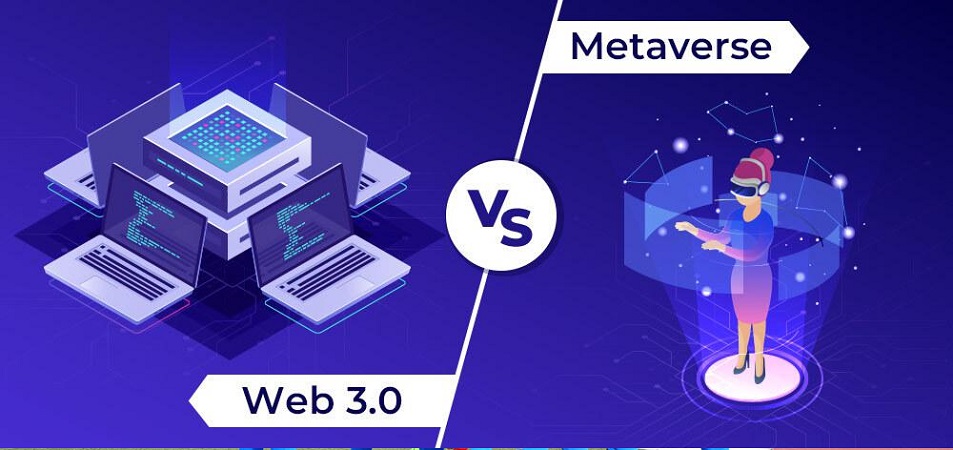
Web3 and Metaverse were born out of the problems of a centralized internet. Though similar in some ways, they solve different problems. Through the hype of blockchain technology and Facebook’s creation of their Metaverse, more people have been curious about these two concepts and that’s why you’re here today. In this article, I’ll highlight why metaverse and web3 are interrelated, also different in many ways, and why you should choose Poly186 as it is the metaverse that will change the world.

What are Web2 and Metaverse

Web 3.0 is the upcoming third generation of the internet where websites and apps will be able to process information in a smart human-like way through technologies like machine learning (ML), Big Data, decentralized ledger technology (DLT), etc.

The Metaverse is an embodied internet that enables people around the world to meet by creating an avatar that can be personalized and make them feel more non-fictional than a normal video call.

Similarities of Web3 and Metaverse

They are built on similar technology; they both use AI(Artificial Intelligence) for advanced user interface and also semantic web

They are both in the early stages

They both evolve with changes in blockchain technology

Difference Between Web3 and Metaverse

Objective: web3 objective is to create a decentralized and democratic internet while metaverse wants to establish an interactive 3D reality for users’ effortless and realistic interactions.

Application: Web 3.0 is the process engine that uses the blockchain’s advances while metaverse uses web3 advances to function properly and grant access to users.

Ownership Battle: the goal of web3 is to make the internet a public-controlled property, an example is BTC, while the goal of a metaverse is to facilitate full ownership of one’s intellectual property.

Perception of Reality: Web 3.0 is primarily concerned with who will rule and govern the internet in the future(this is because they want the people to rule), and the Metaverse is concerned with how users will interact with it.

Application; web3 has applications like Bitcoin (the first and largest cryptocurrency), Apple Siri, and Opensea, while metaverse has features like online shopping, NFT, and video games.

Closing Thought

Web3 and Metaverse is truly an innovation that will change the world, though interrelated, their purpose, use cases, and type of ownership differentiate them from each other.Poly186 is a metaverse that stands out among all as it is created with the world’s needs at heart.

Editor’s Note: More Thoughts on this from any expert, John Payne, the CEO of Croquet.

What if the web were multiuser and 3D? Hint: It would be the Metaverse. The Metaverse will happen much faster than everyone thinks as it gains traction via 3D worlds in traditional web sites. Millions of virtual 3D spaces and worlds embedded in the web interoperably with existing sites will collectively form a significant portion of the larger interoperable Metaverse . No one is going to throw away their current web site and build a new one that is multiuser and immersive, but the parts of the site that benefit most will evolve in those directions very rapidly. The Metaverse is an evolution… the next generation of the Web… not a Revolution.

Metaverse Grows Fast Without Virtual Reality

One of the most limiting factors (beyond bad graphics) for Meta and its efforts with Virtual Reality in the Metaverse is what used to be called the “one walkie talkie problem.” When only 10% (generously) of the population have VR headsets and only half of those know where they are, the vast majority of people can’t join in and you have a massive problem with participation and engagement. By allowing any user to participate using so-called Metaverse Browsers that are entirely cross platform to any device with a browser and are frictionless (no downloads or native apps), the growth of the Metaverse will accelerate massively, along with growth in participation and engagement. While it is true that VR can deliver a more immersive experience, it is not a binary experience and has high cost. Very good immersive 3D experiences are available today in cross platform environments that can be offered across any device, ranging from desktops to phones and head mount XR devices. Another case where perfect is the enemy of very good and useful today.

Big Companies Stop Experimenting And Start Building A “Real” Metaverse

Large companies will always do marketing, advertising, customer acquisition and promotions in centralized environments like Roblox, Meta and Decentraland but they will never send their customers, data or transactions there, often because laws or compliance policies prevent them from doing so. The “Real” Metaverse will emerge as an extension of the Web and the Internet, where these large companies already have major traffic and presence on their existing web properties today. The Open Metaverse is decentralized and interoperable and will form the basis for how large companies interact with existing customers for transactions, support, upselling and logistics on the websites they already manage and control today.

Artificial Intelligence will make content creation significantly faster.

Tools like GitHub Copilot, DALL-E, and ChatGPT will continue to evolve, become more accessible to a wider audience, and become more ethically acceptable to use. Metaverse technologies rely heavily on high-quality content, which has historically been expensive and time-consuming to produce. That content will become inexpensive to make, and those content creators will not need to invest as much time in learning the tools.

Metaverse platforms will embrace asynchronous content.

Real-time communication platforms are and will continue to be important, but not all users can be online at the same time. Ghost avatars, rich notes between friends, and other time-independent interactive content will continue to evolve.

Metaverse technologies will be built by and used by a more diverse group of people.

Given the potential reach of metaverse technologies, it’s imperative that these technologies be built for people with a wide range of backgrounds and abilities. As solutions for identity in the metaverse become more varied, people will be able to express themselves safely in the way that feels most comfortable for them. Safety and anti-harassment tools will be built into platforms as they become more decentralized.