

DD
MM
YYYY

PAGES

DD
MM
YYYY

spot_img

PAGES

Home Blog Page 4564

The Potentials of Bitcoin Mining on the African Economy

2

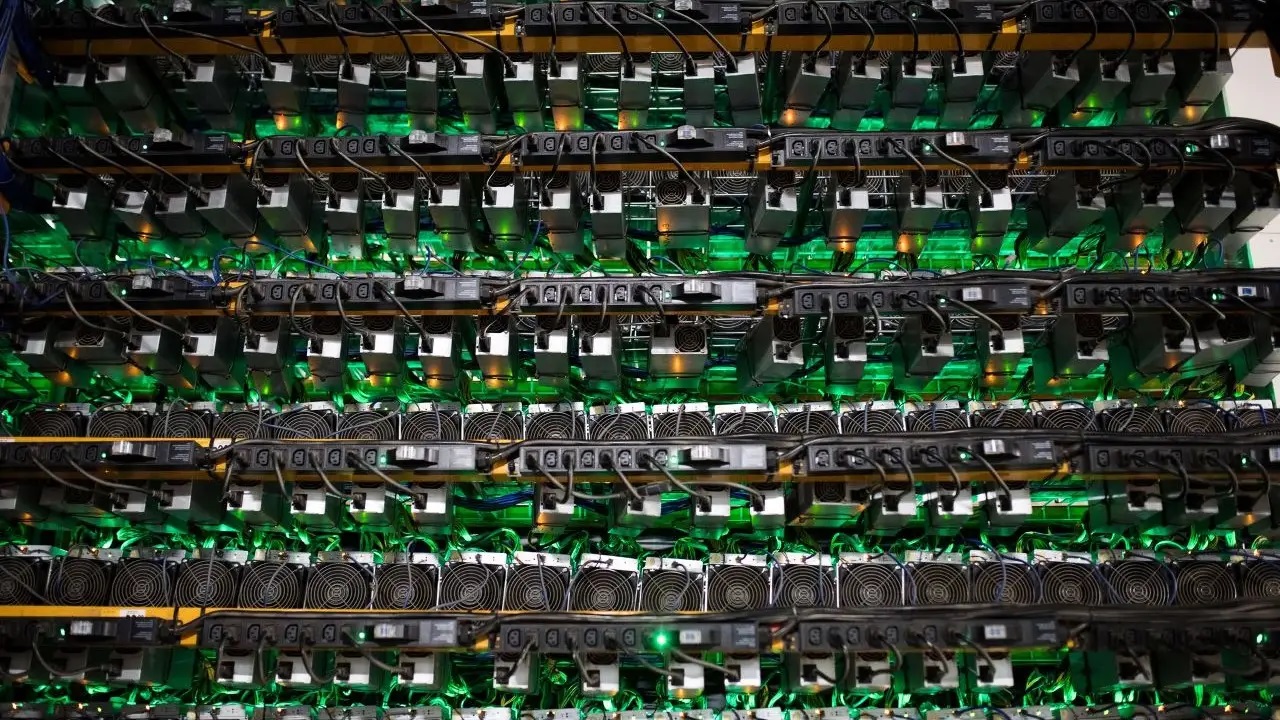
According to Simplilearn, “Bitcoin mining is the process by which Bitcoin transactions are validated digitally on the Bitcoin network and added to the blockchain ledger. It is done by solving complex cryptographic hash puzzles to verify blocks of transactions that are updated on the decentralized blockchain ledger…. and cryptocurrency mining is a process of creating new digital “coins.” However, that is as far as simplicity goes. The process of recovering these coins requires solving complex puzzles, validating cryptocurrency transactions on a blockchain network and adding them to a distributed ledger to locate them.”.

Bitcoin and other cryptocurrencies have the potential to greatly impact the African economy. It can provide individuals and communities with access to cheaper electricity. In many parts of Africa, access to affordable and reliable electricity is limited, hindering economic growth and development. However, the use of Bitcoin and other cryptocurrencies is helping to address this.

Bitcoin Mining in Africa is gaining popularity as a way to boost the economy and create jobs in the region. Many African countries, including Ghana, Zimbabwe, and South Africa, are home to large, organized mining operations that are helping to drive the growth of the local economy.

One of the main benefits of Bitcoin mining in Africa is the potential for job creation. Many African countries have high unemployment rates, particularly among young people. Bitcoin mining provides an opportunity for people to earn a steady income by contributing to the growth of the Bitcoin network. This can help to reduce poverty and improve living standards in the region.

In addition to creating jobs, Bitcoin mining in Africa can also help to drive innovation and technology development. Many of the mining operations in the region are run by local companies that are using advanced mining hardware and software to maximize their profits. Renewable energy or cheap energy combined with technology transfer can help to improve the overall technological capacity of the region. In return, it can produce long-term benefits for the economy.

Bitcoin Mining Startups

There are several companies that are leading the way in Bitcoin mining in Africa. BitPesa, for example, is a Kenyan company that operates a large Bitcoin mining facility in the country. The company uses state-of-the-art equipment and employs local workers to mine Bitcoin and other cryptocurrencies. BitPesa has also partnered with local banks and businesses to help drive the adoption of Bitcoin and other digital currencies in the region.

Another example is Bitland, a Ghanaian company that operates a Bitcoin mining farm in the country. Bitland focuses on promoting the use of Bitcoin and other cryptocurrencies in Africa. It has also partnered with local organizations to educate people about the benefits of digital currencies. The company has also established a network of Bitcoin ATMs across the country, which makes it easier for people to buy and sell Bitcoin.

Overall, Bitcoin mining in Africa has the potential to provide significant benefits for the region. By creating jobs, driving innovation, and promoting the use of digital currencies, Bitcoin mining can help to drive economic growth and improve living standards in the region.
On 2023 Elections, Nigeria Not In a Place for any President to Immediately Deliver Results — Oby Ezekwesili

0

The 2023 general election is less than 60 days away. At this stage of the nation’s electoral period, it is only natural for various political parties and party candidates seeking power to intesify their efforts toward curring favour of the Nigerian electorates who are going to cast their votes during the presidential and National Assembly polls on February 25 and decide who shall have their mandate of steering the political ship of the country from its current state to where it ought to be.

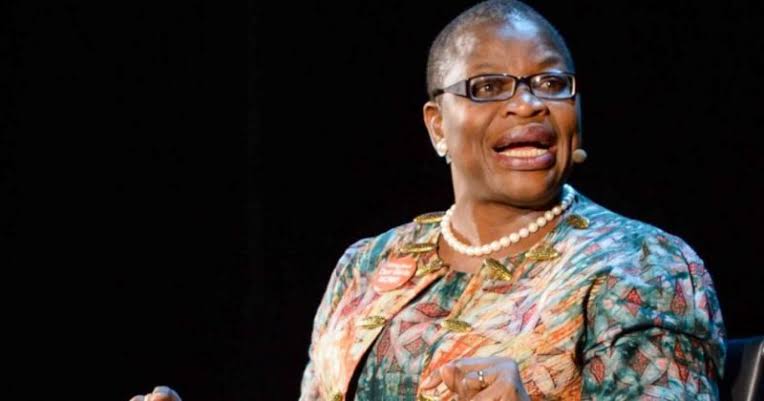
In view of the hope of Nigerians for a productive election come February 2023, former education minister, Dr Oby Ezekwesili emphasised the need for the Nigerian electorates to avoid basing their hopes or choice of candidates on political promises like wise the need for political contenders to cultivate the habit of telling the electorates the truth about the state of the nation, rather than promising immediate returns if they are voted to power.

Dr Ezekwesili disclosed this in an interview with Channels Television’s Political Paradigm, published on Channels TV blog on Tuesday. According to the former minister for education, regardless of who emerges the new president of Nigeria next year, immediate results may not be achieved in four years due to the level of decay in the system. Dr. Ezekweli gave the following remarks:

‘’Candidates who are running for elections must tell electorates the bitter truth. The bitter truth is that the country is not in a place for any President to immediately deliver results.

‘’What matters is that you have a president who understands the problems that need to be solved and has the idea of how to go about solving it.

‘’Any candidate who is promising instant results after the 2023 elections is not being fair to you. So, it is important that we understand that citizens must be ready for the work ahead because it is going to require everybody working together to make this happen” she said.

Tell That Technology; You Want Your Life, Soul Back: Is It Possible?

0
The crash in iPhone sales is changing Apple business model

Technologies, like other objects for human and organizational use, are developed, used, scaled, and transformed several times to ensure optimal performance. Technologies have hailed us from the personal to the group level, and from the business to the societal level, thanks to the ideologies of developers and business capitalists.

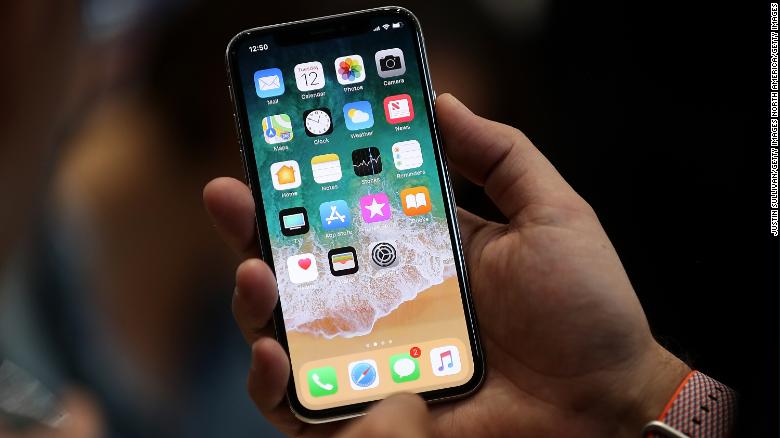
One rarely wakes up in a day without having to use technology. We touch our phones every time. We typically find it difficult to function without our various mobile communication devices. Working professionals and business executives cannot complete their daily tasks without the use of laptop computers and other corporate-related technologies.

In our homes, when mass communication devices like the television or radio are broken, we typically feel bad and began thinking about how we were missing the day’s news in various ways. When modern technologies let us down, we hardly think that communicating on an interpersonal and communal level is what we need. When our washing machines broke down or stopped working altogether, we worried about how difficult it would be to clean our clothes. We hardly ever consider using our hands, which are nature’s technology. When a car has a similar status, we view using our legs to travel a short distance by walking or trekking as a natural punishment and occasionally a sign of poverty, especially when those who are aware of our car ownership witness us using the natural technology.

There have been counterarguments and alternatives over the years regarding the advantages and inherent risks of using various technologies. In recent research by Pew Research, a number of academics, professionals, and technological experts made the observation that technology causes more issues than it fixes. Through his observations of dominant restrictive social interaction practices, our analyst also expressed a similar viewpoint. According to him, using “primitive technologies” won’t be a bad idea because social and interpersonal communication technologies are having a negative impact on families, friends, and coworkers.

Mark Boyle makes the case that technology destroys people and places in his well-known article series on life without technology. He has been rejecting it for a while. According to Mark Boyle, who authored the majority of the articles for The Guardian UK, it is crucial for him to be without a laptop, the Internet, a mobile phone, a washing machine, or a television. “I want my life back. I want my soul back.”

Boyle, Mark, did. He claimed in later articles that he preferred his life without technology. He was able to work without being interrupted. He was able to spend time with his family without having to feel bad about not creating the necessary family bond through interpersonal interaction.

While Boyle rejected his technologies, I was surprised to be told that I had to destroy a technology I chose for class case analysis. How can I destroy a technology that improves my personal and professional relationships? How can I destroy a technology that gives me the impression that I am a member of influential people in my communities and business groups? A technology that I do not allow my children to play with, demonstrating how much I value it. My technology; my soul and life. Even when it is damaged, I do not hesitate to restore it to its previous state of making my life easier and more bearable. No. I can’t get rid of it!

I said these for several minutes, and everyone was taken aback. My tutor stated that my responses are similar to previous students, who were asked to destroy technologies they use. But, in the age of surveillance capitalism and neoliberalism, is it really possible to reclaim our life and soul?

Elon Musk’s Starlink Set to fight for its Share of Nigeria’s Internet Space, as it launches in days

1

Broadband Internet system Starlink, owned by Tesla and Twitter CEO Elon Musk, is set to fight for its share of the Nigerian internet space, following its proposed launch before the end of 2022 or thereabout.

The launch is coming months after the Internet Service system was on May 2022 approved by the Nigerian Communications Commission (NCC) to begin operations in Nigeria.

According to Nigeria’s minister of communications and digital economy, Prof. Isa Pantami, he said As part of the partnership, Space X is to provide broadband access across the whole of Nigeria, enabling nationwide access to broadband connectivity way ahead of the December 2025 schedule, as outlined in our National Broadband Plan. With this collaboration with SpaceX’s Starlink, Nigeria is set to be the 1st African country to introduce the service.

The NCC had earlier disclosed that Starlink had received two licenses to commence operations in Nigeria, which are the International Gateway license and Internet Service Provider license, and will be trading as Starlink Internet Services Nigeria Ltd.

The company’s CEO Elon Musk had on May 27, 2022, made this known via his Twitter handle, where he stated that Starlink has been licensed to operate in Nigeria and East African country Mozambique.

Although, Starlink failed to commence operation in Nigeria after its initial proposed date. Recall that in July 2022, Musk took to his Twitter handle to disclose that Starlink would become active in Nigeria in August 2022, which he urged potential users to begin ordering the $99 starter kits.

Following Musk’s comment, the official Starlink website disclosed that the internet service provider intends to begin service in the fourth quarter of 2022, further stating some criteria for its availability to potential customers.

“Order now. Starlink is targeting service in your area starting in Q4 2022. Availability is subject to regulatory approval. Within each coverage area, orders are fulfilled on a first-come, first-served basis,” the website read.

But ever since then, the internet provider is yet to begin operation in Africa’s most populated country. The internet service provider currently operates in more than 30 countries where it is legally approved.

Its launch in Africa, particularly in Nigeria, has been in the works since 2021. Last May, SpaceX sent some representatives to the Nigerian Communications Commission (NCC), the country’s telecommunications regulator, to discuss the possibility of obtaining a license to operate Starlink in Nigeria.

Starlink is a low-latency broadband internet system created to meet the needs of consumers in rural areas with low internet penetration across the globe.

It delivers super-fast internet via satellites to rural areas, and it is theoretically capable of delivering 150Mbps internet speeds to any place on the planet.

It’s high-speed, low-latency service is made possible via the world’s largest constellation of highly advanced satellites operating in a low orbit around the Earth.

Starlink is renowned for its impressive internet speed of 104Mbps, a sharp contrast to the average cellular internet speed of 17.38Mbps. Furthermore, the use of the LEO satellites is likely to significantly reduce internet downtimes.

Once users purchase the Starlink Kit, it comes with everything they need to get online in minutes including the Starlink, WiFi router, cables, and base.

Its arrival in Nigeria, will no doubt heighten the competition amongst Nigerian telecom operators such as MTN, Airtel, and 9mobile, who have continued to compete against each other by offering affordable and fast internet services to their customers.

Government Regulation of the Cryptocurrency Industry Won’t Stop Builders

0

More regulation of the Cryptocurrency and Blockchain space is coming. In fact, 2023 may see it coming in hard as governments front run the pilots of Central Bank Digital Currencies. With India and Nigeria doing just that, and with the country taking on the G20 presidency in December, there seems to be rapid “progress” towards such global regulations on Cryptocurrencies and Digital assets.

On one hand, it might potentially it could prove to be an opportunity for the community to help shape more progressive policies that make India a global leader (and more competitive). However, many fear that the government is not really listening to the industry.

India’s Path Towards Crypto Regulation

India took its first step towards crypto regulation during the Budget Session in February 2022. They started with the announcement of the introduction of taxes on virtual digital assets (VDAs). However, the crypto industry heavily criticized the legislation and declared it a ‘crippling tax regime’. Meanwhile, the country’s central bank previously called for a ban on cryptocurrencies – will now have a prominent role in framing global crypto regulation.

It really does sound negative coming out of the Central Bank or Department of Economic Affairs. However, we are still a long way off from seeing that regulation, and more importantly its actual implementation. Of more immediate concern for Indian crypto, lovers are the dark clouds of the current bear market and not speculation on possible future regulation.

Though it might seem reasonable to conclude that currently there is a lot of doom and gloom for the Indian crypto grassroots, the truth is a very different place. There you find people doing what all smart people do in a bear market and that’s BUILD! And nothing more clearly embodies the positive outlook and vibrancy of the space than the recently concluded Indian Blockchain Week.

Held between November 29 and December 7, the annual Indian Blockchain Week, was a series of events aimed at fostering young South Asian talent. Around 1000 delegates from the blockchain industry, government, and academia came together in Bangalore to participate in hackathons, workshops, conferences, and community events. Top highlights included the ETHIndia hackathon and Polygon x Buidl.so Demo Day. The ETHIndia hackathon provided an opportunity for individuals from different backgrounds to come together and create something positive through collaboration and learning. Meanwhile, the Demo Day attendees included some of the top investors in the Indian web3 space.

Nigeria’s Government v. SEC- Crypto Related Regulations

Following SEC’s suspension of cryptocurrency approval in February 2021, the central bank banned crypto trades in a move to neutralise threats to Nigeria’s financial system. This occurred despite young Nigerians accounting for the largest volume of cryptocurrency transactions outside the U.S.

Apparently, Nigeria’s SEC will only consider “sensible digital assets” and not crypto, as it plans to improve trading in digital assets.

Per Bloomberg, the general director; Lamido Yugda said, “We are looking at digital assets that really protect investors.”

According to the Chainalysis Crypto Adoption Index 2021, Nigeria ranked sixth in global crypto adoption out of 154 countries. Although, the country didn’t make the top-10 in the 2023 rankings, data by Merchant Machine have shown that Nigeria will lead global Crypto adoption by 2030: “Nigeria is at the top of the list, with an estimated 100% by 2030. This means that if crypto use continues to grow at its current rate, the entire population of Nigeria will be using cryptocurrencies! The popularity of cryptocurrency could be explained by the country’s poor economy making alternative currencies appealing. The devaluation of Nigeria’s currency, the naira, will likely continue to drive more and more Nigerian natives to invest in cryptocurrency instead.”

In wanting a better conclusion, it’s just worth remembering that governments will regulate but its people that build. And crypto has the advantage that some of the most forward-thinking innovative minds are here working for a better future.