DD
MM
YYYY

PAGES

DD
MM
YYYY

spot_img

PAGES

Home Blog Page 4586

Filecoin (FIL) And Toncoin (TON) Fall Behind HedgeUp (HDUP) as They Tap Into $17 Trillion Market

0

The bears have their claws in deep. Overall, optimism is still high for 2023, but that hasn’t stopped most coins from having a bad week – and some a bad month. Filecoin (FIL) and Toncoin (TON) are just a couple of examples.

The decentralized finance (DeFi) platform, Toncoin (TON), and the data storage blockchain, Filecoin (FIL) exemplify the downward trend. TON is down 20% while FIL is down 16% over the last month.

>> Buy HedgeUp Now <<

Filecoin (FIL)

Filecoin (FIL) is a decentralized data storage platform. Users can earn FIL by providing storage space or pay FIL to rent it. The goal is to offer a decentralized option to services like Dropbox and iCloud. The blockchain has a unique consensus mechanism that encourages the users of the blockchain to provide as much storage as possible.

A month ago, FIL was trading at $5.75. Since then, it has dropped drastically to $4.41. This is almost a 23.3% decrease.

>> Buy HedgeUp Now <<

Toncoin (TON)

Toncoin (TON) was originally developed by the message service, Telegram. Now, however, it is operated and developed by the TON Foundation. It is a Layer 1 blockchain that is known for its fast transaction times.

The Toncoin blockchain uses a proof-of-stake (PoS) consensus mechanism, which is scalable, reliable, and easy on the environment. The blockchain is designed to send and store funds, with service fees paid in TON.

TON is down from $2.2775 a month ago. It is now at $1.84. The token had been showing improvement over the past week but slipped again between yesterday and today.

>> Buy HedgeUp Now <<

HedgeUp (HDUP)

It’s not all cloudy in the world of cryptocurrency, though. Projects like HedgeUp (HDUP) prove that there is a silver lining out there. HedgeUp (HDUP) has been having tremendous success with its presale. This is because of all the value it is bringing to the table.

HedgeUp (HDUP) is building an entire ecosystem around alternative assets. The best part about it is that they are the only Web3 project tapping into this $17 trillion industry. Nor is there anyone else on the horizon.

Alternative assets are anything outside traditional investments. While it is the investing equivalent of ‘miscellaneous,’ HedgeUp (HDUP) is concentrating on high-end physical assets like jewelry and artwork. HedgeUp (HDUP) will create non-fungible tokens (NFTs) for the assets they procure, with each NFT representing a piece of the asset.

The assets themselves will be insured and stored and the NFTs will be available on HedgeUp’s (HDUP) marketplace for as little as $1.

However, HedgeUp (HDUP) is much more than an NFT marketplace. The team at HedgeUp (HDUP) wants to bring more comprehensive financial options to investors of every stripe. To that end, HedgeUp (HDUP) is building a well-rounded ecosystem.

There will be a DAO that holders of HDUP will have voting rights to. They will also have access to financial classes, banking options, and even a metaverse.

The HedgeUp (HDUP) presale is going strong. HDUP is currently available for $0.020. But, when the next stage gets here, that will go up to $0.036. So, while so many altcoins are going down, HDUP is going up.

For more information about HedgeUp presale use below links:

  • Website: https://hedgeup.io/
  • Presale: https://app.hedgeup.io/sign-up
  • Telegram: https://t.me/HedgeUpChat
  • Twitter: https://twitter.com/HedgeUpOfficial

Learning from the Fines of the European Union on Big Tech

0
The African Union logo is seen outside the AU headquarters building in Addis Ababa, Ethiopia, November 8, 2021. REUTERS/Tiksa Negeri

The den of fines has done it again. Yes, the European Union, the unparalleled region for crafting world-changing tech regulations, and milking fines out of them, has dropped a big one on Meta (parent of Facebook): “Giant tech company Meta has been slammed with a record fine of 1.2 billion euros ($1.3 billion) by the European privacy regulators for breaching data regulation. …Meta breached conditions set out in the pan-EU regulation governing transfers of personal data to third countries without ensuring adequate protection of users’ information.”

Everyone does this, and can the African Union drop some fines to balance our budgets? The EU is going for $1.3 billion, can we go for $500 million with an option for a discount. This has to be a great business.

Sure, Meta sees that as the cost of business. With all the regulations in the EU, it may be time to examine if those regulations are affecting its native companies abilities to scale in the online community space. Sure, you can ask: Nigeria which has no serious regulations, do we have any? Fair enough – next fine please.

Meta Slammed With A Record Fine of 1.2 Billion Euros For Breaching Regulation Law

Meta Slammed With A Record Fine of 1.2 Billion Euros For Breaching Regulation Law

0

Giant tech company Meta has been slammed with a record fine of 1.2 billion euros ($1.3 billion) by the European privacy regulators for breaching data regulation.

Reports reveal that Meta breached conditions set out in the pan-EU regulation governing transfers of personal data to third countries without ensuring adequate protection of users’ information. The tech company was also ordered to halt exporting European Union user data to the US for processing in compliance with the GDPR.

Speaking on the issue, the European Data Protection Board (EDPB) chairman Andrea Jelinek said,

“The EDPB found that Meta IE’s infringement is very serious since it concerns transfers that are systematic, repetitive, and continuous. Facebook has millions of users in Europe, so the volume of personal data transferred is massive. The unprecedented fine is a strong signal to organizations that serious infringements have far-reaching consequences.

“Given the seriousness of the infringement, the EDPB found that the starting point for calculation of the fine should be between 20% and 100% of the applicable legal maximum. The EDPB also instructed the IE DPA to order Meta IE to bring processing operations into compliance with Chapter V GDPR, by ceasing the unlawful processing, including storage, in the U.S. of personal data of European users transferred in violation of the GDPR, within 6 months after notification of the IE SA’s final decision”.

The huge fine slammed on Meta is reported to be the biggest since the EU’s strict data privacy regime took effect five years ago, surpassing Amazon’s 746 million Euro fine in 2021 for data protection violations.

Meanwhile, Meta, which had warned investors last year April that 10% of its global ad revenue would be at risk if the EU data flow suspension were to be implemented, vowed that it would appeal the sanction, asking the court to put the decision on hold.

The company’s president of global affairs Nick Clegg responded by saying,

“Thousands of businesses and organizations rely on the ability to transfer data between the EU and the US to operate and provide everyday services. This is not about one company’s privacy practices, there is a fundamental conflict of law between the US government’s rules on access to data and European privacy rights, which policymakers are expected to resolve in the summer.

“We will appeal the ruling, including the unjustified and unnecessary fine, and seek a stay of the orders through the courts. There is no immediate disruption to Facebook in Europe”.

Meta case might force the social media company to carry out a costly and complex revamp of its operations if it is forced to stop shipping user data across the Atlantic. 

Huge Percentage of Nigerian Foods Exported Abroad Are Rejected – NAFDAC

0

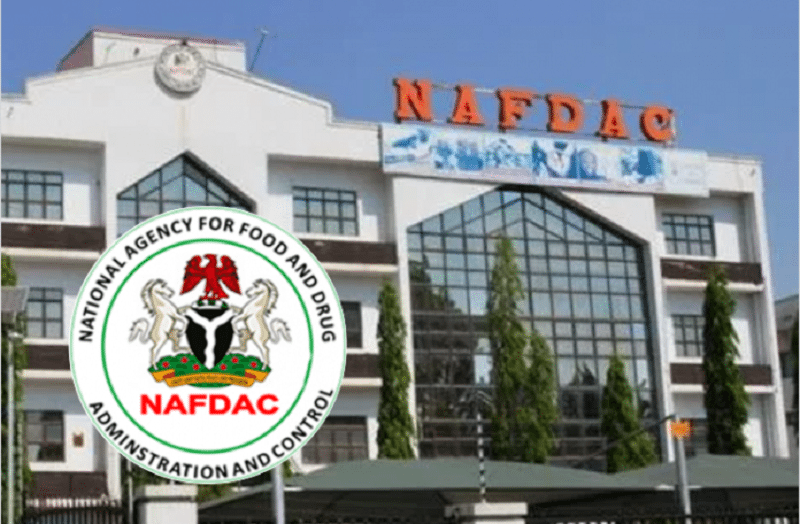
The National Agency for Food and Drug Administration and Control (NAFDAC), has revealed that over 70% of Nigerian foods exported abroad are rejected.

This was disclosed by the director general of NAFDAC, Mojisola Adeyeye during the commissioning of the new NAFDAC office complex for the Murtala Muhammed International Airport/NAHCO in Lagos.

Mrs. Mojisola disclosed that the high rate of rejection of Nigerian foods exported, is accruing huge losses for the country, considering the huge amount of money spent to export those products.

She further added that the deplorable state of export trade facilitation for regulated products leaving the country has remained a serious concern for the agency while noting that the rejection rate could decline if collaboration between NAFDAC and other government agencies at the ports is strengthened.

In her words,

“Over 70 percent of the products that leave our ports get rejected. Considering the money spent on getting those products out of the country, it is a double loss for both the exporter and the country.

“The mandate to safeguard the health of the populace by ensuring that food, medicines, cosmetics, medical devices, chemicals, and packaged water are safe, efficacious, and of the right quality in an economy that is overwhelmingly dependent on the importation of the bulk of its finished products and raw materials could never have been actualized without the effective presence of NAFDAC at the ports and land borders.

“Without customs, we will not be able to do a lot of what we have been able to do. The collaboration between Customs and NAFDAC is huge. NAFDAC is a complex organization. We are scientific. We are police and we work with the Department of State Services. We work with Interpol and the Federal Bureau of Investigation because of the few unscrupulous stakeholders”.

Mrs. Mojisola commended the Nigerian police for their efforts, noting that they played a pivotal role in investigations, raids, and enforcement.

To save Nigeria’s reputation in International commerce, the NAFDAC boss disclosed that the agency is responding to the challenge by collaborating with the agencies at the ports, to ensure that goods meet the regulatory requirements of the importing countries and destinations.

She also urged all stakeholders in export trade to see this issue as a call to duty to collaborate with the agency to ensure that the rejection of Nigerian foods exported abroad is reduced drastically.

It is however worth noting that the rejection of Nigeria’s agricultural exports in the international market has continued to linger for a long time with no end in view.

Last year, NAFDAC expressed concerns over 76 percent of Nigeria’s exported agricultural commodities that were rejected by the EU for not meeting required standards. Also in January last year, the Shippers Association of Lagos (SALS) stated that 82 per cent of the country’s exported agro-allied products are either seized or rejected in Europe.

Various reasons have been adduced for the rejection of Nigerian exported goods, especially agricultural produce in the international market, ranging from standardisation limitations, unapproved chemical compositions in produce, and low quality among others. 

Following the challenging issue, the federal government had over the years expressed its commitment to tackling the rejection crisis, but meanwhile, the challenge persists.

10,000 BTC Traded for 2 PIZZAs 13 Years Ago

0

On May 22, 2010, a programmer named Laszlo Hanyecz made history by buying two pizzas from Papa John’s for 10,000 bitcoins (BTC). At the time, this was equivalent to about $41 USD. However, as of today, those bitcoins are worth over $400 million USD.

This transaction is widely regarded as the first real-world purchase using cryptocurrency and is celebrated as Bitcoin Pizza Day every year. Hanyecz later said that he did not regret his decision, as he wanted to support the Bitcoin network and prove that it could be used as a medium of exchange.

Bitcoin Pizza Day is a global celebration of the first time that cryptocurrencies were used to buy physical goods. On May 22, 2010, Laszlo Hanyecz paid 10,000 bitcoins for two pizzas from Papa John’s, making history as the first person to use bitcoin as a medium of exchange. The pizzas were worth about $41 at the time, but today they would be worth over $300 million.

Bitcoin Pizza Day is a way to commemorate this milestone and to appreciate how far bitcoin has come since then. It is also a fun opportunity to enjoy some delicious pizza and to support businesses that accept bitcoin as payment. Many pizza restaurants offer discounts or special deals to customers who pay with bitcoin on this day. Some bitcoin enthusiasts also donate pizzas to charities or communities in need.

Bitcoin Pizza Day is more than just a celebration of pizza and bitcoin. It is also a celebration of the innovation and evolution of cryptocurrency and its impact on the world. Bitcoin Pizza Day reminds us of the potential and promise of decentralized digital money and how it can empower people and create new opportunities.

If you want to join the celebration emphasis on “IF”, here are some activities you can do on Bitcoin Pizza Day:

Order two pizzas and pay with Bitcoin. You can use services like PizzaForCoins or Lightning Pizza to find pizza places that accept Bitcoin as payment. You can also look for discounts offered by pizza restaurants on this day.

Share your pizza photos on social media with the hashtag #BitcoinPizzaDay. You can also tag Laszlo Hanyecz and thank him for his contribution to Bitcoin history.

Learn more about Bitcoin and how it works. You can watch documentaries, read books, listen to podcasts, or take online courses about Bitcoin and cryptocurrency. You can also check out CoinDesk or Bitcoin Magazine Learn section for more resources.

Donate some Bitcoin to a charity or a cause you care about. You can use platforms like GiveDirectly, BitGive, or The Giving Block to find organizations that accept Bitcoin donations. You can also support projects that are building on Bitcoin, such as Lightning Network or Taproot.

Have fun and enjoy the BITCOIN PIZZA! Remember that Bitcoin is not only about money, but also about freedom, innovation, and community. Celebrate the spirit of Bitcoin and its potential to change the world for the better.

HAPPY BITCOIN PIZZA DAY.