DD
MM
YYYY

PAGES

DD
MM
YYYY

spot_img

PAGES

Home Blog Page 46

Britain and Germany Seal £52m Deal for Mobile Artillery As Europe Accelerates Defense Build-up

0

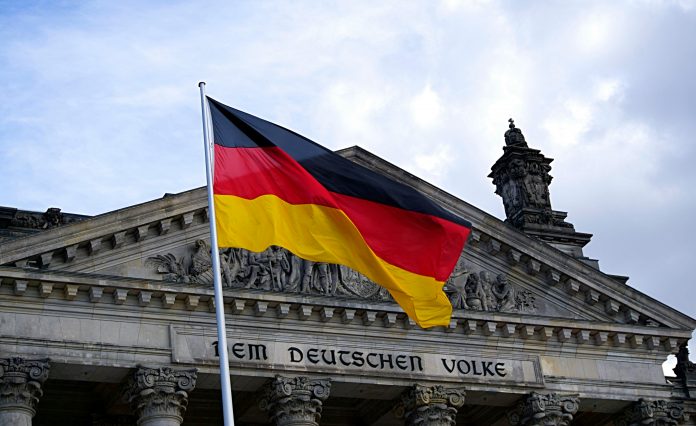
Britain has signed a £52 million ($70 million) joint procurement agreement with Germany to acquire a new generation of mobile artillery systems, underscoring a growing push among European allies to strengthen land warfare capabilities amid heightened security concerns.

The move comes against the backdrop of a far-reaching rearmament drive across Europe, triggered by Russia’s invasion of Ukraine and the return of high-intensity warfare to the continent.

The British Ministry of Defense said on Sunday that the agreement will deliver an early capability demonstrator of the RCH 155 artillery system to the British Army, along with two units for Germany to support testing and evaluation. While limited in scale, the deal is being closely watched as a potential precursor to larger orders as both countries seek to modernize their land forces.

The RCH 155 system is produced by Franco-German defense group KNDS in cooperation with Germany’s Rheinmetall. Mounted on an armored vehicle, the system is designed to fire while on the move, allowing units to strike and rapidly relocate, a capability that has proved critical on the battlefields of Ukraine, where counter-battery fire and drones have made static positions increasingly vulnerable.

According to the Ministry of Defense, the system can fire up to eight rounds per minute and hit targets at distances of more than 70 kilometers. It can be operated by just two crew members, reflecting a shift towards greater automation and efficiency in modern artillery units. With a range of about 700 kilometers without refueling, the platform is intended to support sustained operations over wide areas.

British officials said the early capability demonstrator will allow the army to test how the RCH 155 performs alongside existing artillery, logistics, and command-and-control systems. The evaluation is expected to inform future decisions on whether the platform could replace or complement current systems as the army reshapes itself for high-readiness deployments. Germany, meanwhile, will use the additional units to refine operational concepts and technical performance as it rebuilds its artillery strength.

Since Russia invaded Ukraine in February 2022, European countries have moved both individually and collectively to strengthen their defense capabilities, reversing decades of underinvestment. Governments have raised military spending, replenished ammunition stocks, expanded training programmes, and accelerated the acquisition of heavy weapons, with artillery emerging as a central focus.

Germany announced a landmark €100 billion special defense fund shortly after the invasion and has since committed to meeting NATO’s target of spending 2% of GDP on defense. Britain has also pledged to increase defense spending over the medium term, while emphasizing closer cooperation with European allies despite having left the European Union.

Joint procurement initiatives such as the RCH 155 deal are increasingly seen as a way to share costs, speed up delivery, and improve interoperability among allied forces. European leaders have argued that fragmented national ??????? in the past left militaries with incompatible systems and limited industrial scale, weaknesses that the war in Ukraine has exposed.

The partnership also highlights the growing role of European defense manufacturers, as firms such as KNDS and Rheinmetall benefit from surging demand for artillery, armored vehicles, and ammunition. Production capacity, supply chains, and workforce expansion have become strategic priorities as governments seek to ensure long-term readiness.

Although the Ministry of Defense did not say whether the current agreement would lead to a full-scale purchase, officials on both sides have framed it as an important step in deepening UK-German defense ties. As the security environment in Europe remains tense, even relatively small procurement deals are taking on broader significance, signaling a sustained commitment to strengthening military capabilities in the face of ongoing geopolitical uncertainty.


Brazil Court Steps in To Contain Petrobras Strike as Unions Split Over Pay, Pensions, and Staffing Rules

0

Brazil’s top labor court has intervened to limit the operational impact of a prolonged strike at state-controlled oil giant Petrobras, ordering the company to maintain staffing levels at 80% across all facilities while negotiations with workers continue, in a ruling that underlines growing tensions between management and unions over pay, pensions, and transparency.

In a decision issued on Saturday, Brazil’s Superior Labor Court said unions must also refrain from blocking the movement of workers, equipment, and fuel to and from Petrobras facilities, including those operated by its logistics arm, Transpetro. The court framed the measures as necessary to protect production, transportation, and the national fuel supply as the labor dispute drags on into its second week.

Petrobras sought to reassure markets and consumers that operations remain under control.

“We continue working and ensuring production and supply,” Sylvia dos Anjos, the company’s head of exploration and production, told Reuters on Sunday.

The company said contingency teams had been deployed at critical units to guarantee that refining, logistics, and distribution activities continue despite the industrial action.

The strike began on December 15 after months of inconclusive talks, and has laid bare divisions within Brazil’s powerful oil unions. Petrobras said that after nearly four months of negotiations, 11 unions have accepted its latest compensation proposal, effectively ending strike action “in the vast majority” of their bases. However, five unions remain opposed, keeping pressure on the company and the government, which is Petrobras’ controlling shareholder.

One of the most influential dissenting groups, Sindipetro-NF, which represents about 25,000 oil workers, rejected the latest offer on Friday. The union has argued that Petrobras’ proposal fails to adequately address wage demands and broader concerns about working conditions, especially at a time when inflation and household costs remain elevated in Brazil.

Sindipetro-NF took a more nuanced view of Saturday’s court ruling. While opposing the 80% staffing requirement in principle, the union welcomed the court’s order compelling Petrobras to provide detailed information on its workforce, including headcount by operating unit, job title, and function. The union described this aspect of the decision as “a victory,” saying it would help expose staffing pressures and strengthen workers’ bargaining position.

Another major labor group, the National Federation of Oil Workers (FNP), which represents around 26,000 workers and is also participating in the strike, was more critical. FNP said the court-mandated staffing level was “unenforceable,” arguing that monitoring compliance across Petrobras’ sprawling network of offshore platforms, refineries, terminals, and pipelines would be highly complex.

At the heart of the dispute are not only wages but also long-running and sensitive issues related to Petrobras’ pension funds. Salary talks are intertwined with disagreements over deductions linked to payments to pensioners, a topic that has repeatedly triggered labor unrest at the company in the past. Union leaders say these pension-related deductions significantly reduce take-home pay for active workers, while Petrobras has argued that the measures are necessary to ensure the sustainability of its pension schemes.

Petrobras has consistently downplayed the impact of the strike on oil and fuel output, saying production levels have been maintained and that the domestic market remains fully supplied. Even so, the court’s intervention highlights official concern about the risk of prolonged disruption at a company that plays a central role in Brazil’s energy security and public finances.

With unions divided, pension issues unresolved, and no clear timeline for a breakthrough, the dispute remains open-ended. The court ruling may buy Petrobras time to keep operations running, but it does little to resolve the deeper structural disagreements that continue to fuel labor unrest at one of Brazil’s most strategically important companies.

Amazon Halts Drone Delivery Plans in Italy Amid Regulatory and Business Challenges

0

Amazon has decided to suspend its plans to launch commercial drone deliveries in Italy, marking a significant setback for the company’s ambitious Prime Air initiative in Europe.

The U.S. e-commerce giant announced on Sunday that it would no longer pursue commercial drone deliveries in Italy after conducting a strategic review. While Amazon said it had made “positive engagement and progress” with Italian aerospace regulators, the company cited broader regulatory and business factors that made the project unsustainable in the long term.

“Following a strategic review, we have decided to stop our commercial drone delivery plans in Italy,” Amazon said in a statement to Reuters. “Despite positive engagement and progress with Italian aerospace regulators, the broader business regulatory framework in the country does not, at this time, support our longer-term objectives for this program.”

Italy’s civil aviation authority, ENAC, expressed surprise at the decision. In a statement released on Saturday, the regulator described Amazon’s move as unexpected, noting that it appeared to stem from internal company policy rather than aviation safety concerns. ENAC linked the decision to “recent financial events involving the Group,” suggesting that broader strategic or budgetary considerations influenced the suspension.

Amazon had successfully conducted initial drone delivery tests in December 2024 in San Salvo, a town in central Abruzzo. These tests were part of the Prime Air program, which aims to leverage autonomous drones for lightweight package deliveries within minutes of ordering. Italy had been considered a potential European hub for scaling up such operations, following limited trials in the United States and the United Kingdom.

The decision underscores the broader challenges facing drone delivery across Europe. Even where aviation authorities are increasingly open to testing unmanned aerial vehicles, commercial deployment faces hurdles including labor laws, data protection rules, local zoning regulations, and overall business viability. Amazon’s decision to halt its drone delivery plan in Italy indicates that regulatory approval alone may not be sufficient to bring cutting-edge logistics technologies to market.

Amazon’s move comes amid a period of reassessment of capital-intensive projects, as the company prioritizes profitability and operational efficiency following a post-pandemic e-commerce slowdown. While Amazon did not elaborate on the “recent financial events” mentioned by ENAC, analysts suggest the decision reflects a strategic recalibration of investments in experimental technologies amid cost pressures.

Despite the setback, the e-commerce giant remains committed to drone delivery in other markets where regulatory and business conditions are more favorable. The Italian experience highlights a crucial issue for tech-driven logistics: achieving operational scale requires alignment not only with regulators but also with broader market frameworks, including fiscal policies, infrastructure readiness, and commercial viability.

The suspension is also seen as a warning to European policymakers and technology companies alike that, besides a complex mosaic of local businesses, ambitious innovations like drone delivery must navigate technical hurdles to succeed.

The Umunneoma Economics

3

Thank you, Dr. Reuben Abati, for mentioning this Ovim village boy and for referencing my Harvard Business Review work on the Umunneoma Economics of the Igbo Apprenticeship System, in your show.

Let me also use this moment to explain this economic framework more clearly, so that as people study Adam Smith’s classical economics, Confucian economic philosophy in China, and other schools of thought, they can also add Umunneoma Economics, literally, the economics of good brethren, to their intellectual toolkit.

It is a framework rooted in community, reciprocity, and shared prosperity, where enterprise is not just about individual accumulation but about lifting others as you climb. In Umunneoma Economics, wealth creation is intertwined with obligation: you succeed, and you return to enable another; you rise, and you pull a brother or sister up. That is the logic behind the Igbo apprenticeship system and the cooperative spirit that rebuilt communities after devastation.

So yes, alongside the invisible hand of Adam Smith and the moral order of Confucius, there is also the visible hand of community, Umunneoma, where trust, mentorship, and shared destiny become factors of production.


Umunneoma Economics, explained by Ndubuisi Ekekwe in a seminal Harvard Business Review project, is a business philosophy rooted in the traditional African (specifically Igbo) concept of shared prosperity and community support, captured by the maxim “onye aghana nwanne ya” (do not leave your brethren behind). It is a model of stakeholder capitalism that contrasts with traditional Western shareholder capitalism focused on individual accumulation and market dominance.

Key tenets of Umunneoma Economics include:

  • Shared Prosperity: The core idea is that success should be measured by the quantifiable support provided to stakeholders and the community, rather than by absolute market dominance or building individual conglomerates.
  • Poverty Prevention: The system aims to prevent poverty by mass-scaling opportunities for everyone, ensuring that wealth accumulation lifts the entire community.
  • Co-opetition (Cooperative Competition): Participants in the system “co-opetitively participate to attain organic economic equilibrium”. This involves major participants funding their competitors, surrendering market share, and enabling the formation of livable economic clusters.
  • The Igbo Apprenticeship System (IAS): Umunneoma economics is largely an articulation of the successful Igbo Apprenticeship System (known locally as Igba-Boi), which is considered responsible for the rapid economic recovery and wealth accumulation in Southeast Nigeria after the 1970 Biafran War.
  • Focus on Stakeholders: Unlike shareholder capitalism which prioritizes investor returns, Umunneoma economics focuses on the welfare and rise of all stakeholders (employees, community members, and even competitors).

This economic philosophy has gained recognition as a viable framework for a more equitable world, aligning with emerging discussions on stakeholder capitalism.

On literacy rates:

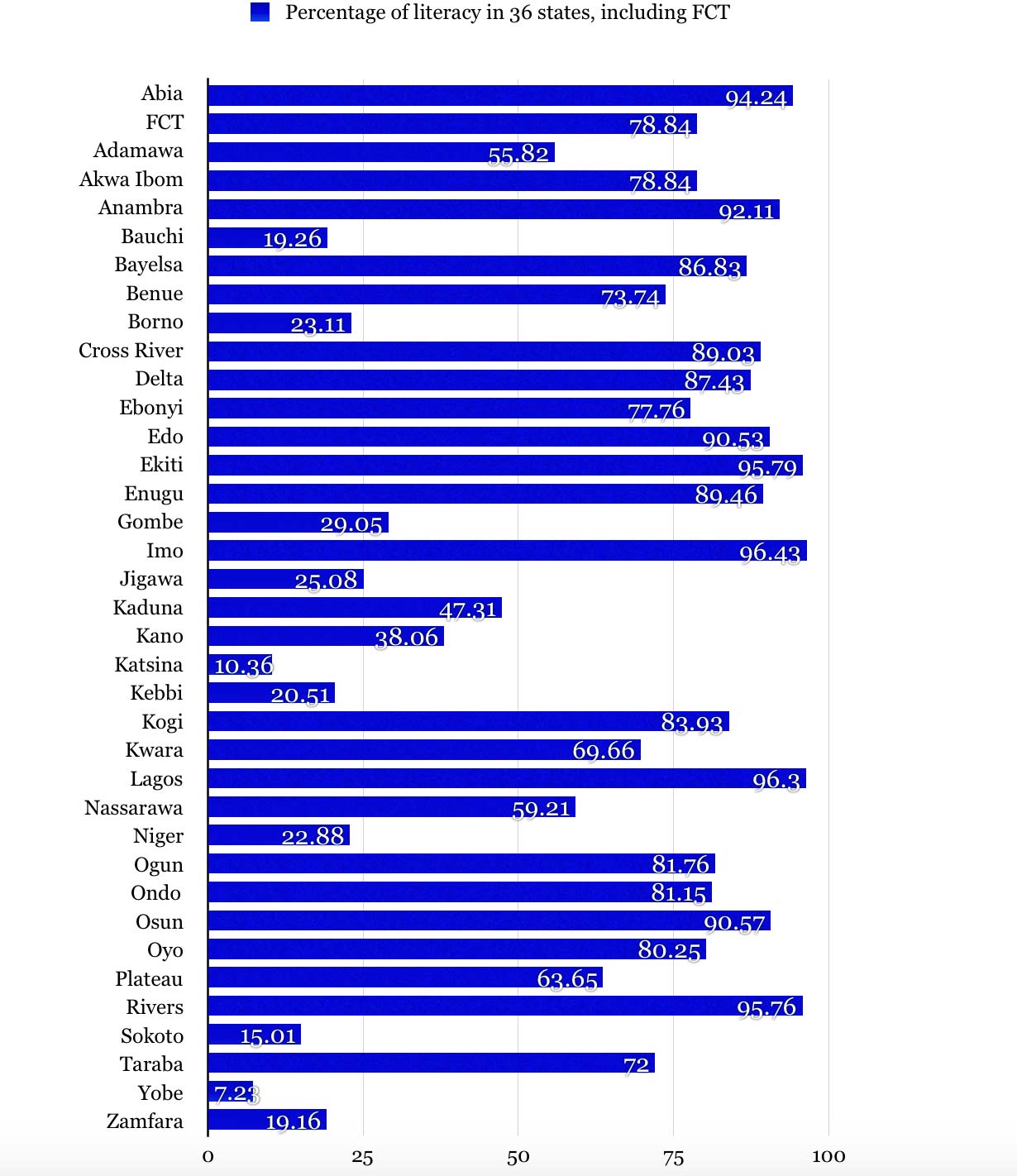
Dr. Abati, let me address the point on literacy rates. The facts are these: using official government data, South-East Nigeria has consistently done well in literacy rates. Abia, Imo, and Anambra have for years recorded literacy levels of above 90%. Enugu is in the high 80s, while Ebonyi is slightly below 80%. These are among the strongest literacy outcomes in Nigeria by geopolitical zone, and they would not have been possible if boys are not enrolled in schools!

Therefore, the thesis that Umunneoma Economics has negatively affected male-child enrollment is not supported by data. The evidence points in the opposite direction. (See data here: https://www.tekedia.com/yobe-states-7-23-literacy-rate-and-digital-transformation/)

That said, I concede one historical nuance. In the 1970s and 1980s, male-child enrollment in parts of the South-East was indeed lower than female enrollment. But that was not because education was devalued. It was because The Greatest Generation, Igbo men and women who engineered the rebuilding after the Biafra War, made a strategic choice.

They challenged young males to move into enterprise, using the apprenticeship system as a vehicle to escape the miry clay in the Igbo Nation, and to prevent a vicious cycle of poverty. It was a deliberate economic reconstruction strategy. I have spoken with some of these men, and many confirmed that the reconstruction was “war” and the boys were tasked to fight it through the markets.

By the late 1980s, that phase had largely run its course. And from the early 1990s, as Igbos began integrating fully into Nigeria’s capital formation system (visible via investments and properties across Lagos, Abuja, and beyond), male literacy rebounded strongly. Since then, literacy rates in the South-East, including for males, have remained among the highest in the country.

In short, history must be read with data and context. And on literacy, the numbers speak clearly.

CPPE Sees Nigeria Entering Growth Phase in 2026, With 4.5% GDP Growth Following Stabilization Gains

0

Nigeria is poised to move from a period of macroeconomic stabilization to a phase of stronger economic growth in 2026, according to a new outlook by the Centre for the Promotion of Private Enterprise (CPPE), which projects GDP growth of between 4.0 and 4.5 percent next year.

The projection is contained in CPPE’s latest report, Review of the Nigerian Economy in 2025 and Outlook for 2026, which argues that reforms implemented over the past year have begun to yield measurable results, setting the stage for a gradual but more durable expansion.

According to the report, 2025 marked a clear turning point in Nigeria’s economic trajectory. Dr. Muda Yusuf, CPPE’s Chief Executive Officer, said the combination of exchange-rate stability, easing inflation, and improved investor sentiment helped pull the economy out of the volatility that defined earlier reform phases.

“With reform momentum sustained, Nigeria is expected to transition more decisively from stabilization to growth,” Yusuf said.

One of the most significant stabilizing factors highlighted was currency performance. Throughout much of 2025, the naira traded within a relatively narrow band of N1,440 to N1,500 per U.S. dollar. Periodic appreciation episodes helped restore confidence among businesses, reduced uncertainty around pricing and planning, and eased imported inflation pressures, particularly for manufacturers and traders dependent on foreign inputs.

Inflation also slowed sharply over the year. CPPE noted that headline inflation fell from 24.48 percent in January to 14.45 percent by November, driven by improved exchange-rate predictability, better supply conditions, and some moderation in food prices. The report stated that consumer sentiment improved as the prices of several food items and imported goods recorded outright declines, offering modest relief to households after a prolonged cost-of-living squeeze.

Business conditions mirrored these gains. The NESG–Stanbic IBTC Business Confidence Index remained in positive territory for most of 2025, reflecting stronger corporate sentiment. According to CPPE, several firms that recorded losses in 2024 returned to profitability in 2025, supported by lower foreign exchange losses, better cost management, and more stable operating conditions.

However, the report draws a clear distinction between stabilization gains and deeper structural strength, particularly on the fiscal side. CPPE described federal government fiscal performance in 2025 as weak, noting that heavy debt-service obligations continued to constrain budget execution. Oil-sector underperformance compounded the problem, with revenue targets missed despite optimistic budget assumptions.

The 2025 budget was based on an oil price of $75 per barrel and production of 2.06 million barrels per day. Actual outcomes, CPPE said, were significantly lower, with average oil prices closer to $66 per barrel and production around 1.66 million barrels per day. The shortfall limited capital spending and reinforced the government’s dependence on borrowing.

In contrast, sub-national governments fared better. The report noted that many state governments recorded stronger fiscal outcomes, aided by improved liquidity, better internally generated revenue, and more effective execution of capital projects. This divergence, CPPE said, underscores the growing importance of fiscal decentralization and local revenue mobilization in Nigeria’s economic resilience.

On sectoral performance, services remained the backbone of growth, accounting for 53 percent of GDP by the third quarter of 2025. Telecommunications, financial services, trade, construction, and real estate were the main drivers, benefiting from population growth, urbanization, and digital adoption.

Manufacturing, however, continued to lag, expanding by just 1.25 percent. CPPE attributed the weak performance to persistent power supply challenges, high logistics costs, and limited access to affordable finance. Agriculture grew by 3.79 percent and contributed 31.21 percent of GDP, but insecurity, low productivity, and weak value-chain development continued to limit its export potential and broader contribution to growth.

Looking ahead to 2026, CPPE expects growth to strengthen further, led by the services sector and supported by moderating inflation. Yusuf said the slowdown in inflation could create room for gradual monetary easing, potentially lowering interest rates and stimulating private-sector investment.

Capital markets are also expected to play a larger role. CPPE pointed to the potential listing of the Dangote Refinery as a major catalyst that could deepen market liquidity, attract portfolio inflows, and strengthen Nigeria’s investment profile.

“Policy credibility remains strong, reinforcing investor confidence and capital inflows,” Yusuf said.

Still, the report cautions that the outlook is not without risks. CPPE flagged persistent insecurity affecting agriculture and logistics, volatility in oil prices and production, high power and transport costs, and mounting debt-service obligations, estimated at over N15 trillion in 2026, or about half of projected government revenue.

External factors such as geopolitical tensions, which could disrupt trade and capital flows, were also identified as potential headwinds. Domestically, CPPE warned that pre-election fiscal pressures, political uncertainty, and resistance to tax reforms could undermine revenue expectations and slow reform momentum.

In its conclusion, CPPE described 2025 as a year that delivered stability rather than prosperity, while framing 2026 as a period of cautious but tangible opportunity.

“If reform momentum is sustained and security challenges are effectively addressed, 2026 could mark the beginning of a more robust growth phase with tangible improvements in living standards,” Yusuf said.

The report comes against the backdrop of earlier concerns raised by CPPE over delays in the submission of the 2026–2028 Medium-Term Expenditure Framework. The organization has warned that such delays weaken legislative scrutiny and undermine the credibility of the budget process, noting that the Fiscal Responsibility Act requires the MTEF to be submitted at least four months before the start of a new fiscal year.