DD
MM
YYYY

PAGES

DD
MM
YYYY

spot_img

PAGES

Home Blog Page 4607

Regulatory Framework Governing Islamic/Non-Interest Banking in Nigeria

0

The Central Bank of Nigeria in keeping with its mandate under the Central Bank of Nigeria Act, is also charged with regulating Non-Interest Financial Service providers in Nigeria, with the focus of this article being the provisions of its regulatory framework  governing Islamic Banking.

The core focus topics of this article are:-

– The components of the regulatory framework governing Islamic Banking in Nigeria.

– The objectives of the Islamic Banking regulatory framework.

– The licensing requirements for Islamic Financial Service providers in Nigeria.

What is the main component of the regulatory framework governing Islamic Banking in Nigeria?

The main regulatory instruments for Islamic Banking in Nigeria are The Central Bank of Nigeria Guidelines For the Regulation & Supervision of Institutions Offering Non-Interest Financial Services in Nigeria (or “The Guidelines”).

What are the objectives of these guidelines?

The objectives of these guidelines are the provision of minimum standards for the operation of IIFS(Institutions Offering Islamic Financial Services) in Nigeria.

What is the applicability scope of the guidelines

The guidelines are applicable to IIFS operating under the principles of Islamic Commercial Jurisprudence only and are not applicable to other non-islamic non-interest financial institutions .

What are the pre-licensing operational requirements for Islamic Banks in Nigeria?

The requirements for licensing as an Islamic Financial Institution are :-

– A written application to the CBN .

– Evidence of a technical agreement executed by the promoters of the proposed institution with an established and reputable Islamic Bank or Institution.

– A license to undertake Islamic Banking may be issued by the CBN upon such terms, conditions which authorize the operation of a Non-Interest Financial Institution (NIFI) on a regional or national basis for banks or any other banks for Financial Institutions.

– An IIFS with Regional Banking authorization shall be entitled to carry on operations within a minimum of 6 and a maximum of 12 contiguous states of the Federation lying within not more than 2 geopolitical zones of the country as well as within the Federal Capital Territory.

– An IIFS with national banking authorization shall be entitled to carry on banking business operations within every state of the federation including the Federal Capital Territory.

To find out the full length of licensing requirements for an IIFS, consult your lawyer.

Can IIFS operate digitally under the CBN Guidelines?

Yes they can, subject to CBN Guidelines on digital banking.

Can conventional banks /financial institutions set up Islamic Banking subsidiaries or branches

Yes, they can. However, such Islamic banking subsidiaries or branches of conventional banks or OFIs shall be established in line with the licensing requirements for the establishment of a full-fledged NIFI.

Do AML/CFT(Anti-Money-laundering/Combating the Financing of Terrorism) laws and regulations currently in force in Nigeria also apply to IIFS?

Yes, they do.
The regulatory framework governing the E-Naira currency system in Nigeria.

0

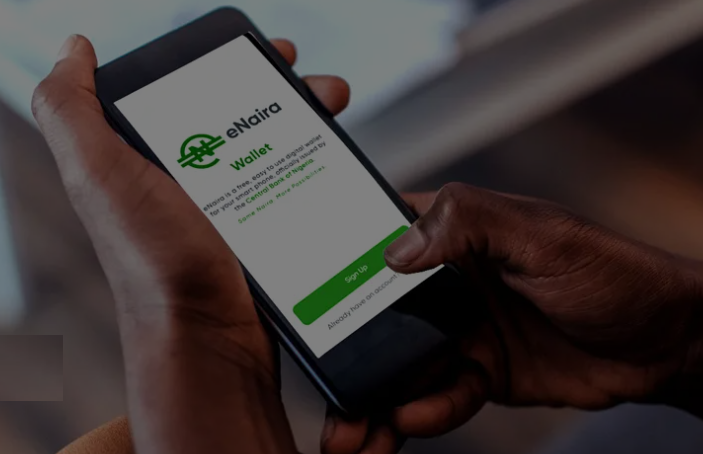
In keeping with its cashless policy, the Central Bank of Nigeria CBN on the 25th of October,2021 issued a set of bold guidelines governing the use of the E-Naira & signifying Nigeria’s leap into the digital currency space.

The E-Naira Guidelines were made pursuant to the Central Bank of Nigeria CBN Act of 2007 and is the latest addition to Nigeria’s legal tender portfolio, representing one of the first examples of digital fiat currency in Africa.

This article will be looking at the notable provisions of the regulatory framework governing the E-Naira, especially the following :-

  1. The legal qualities of the E-Naira.
  1. The objectives of the E-Naira system.
  1. The E-Naira delivery platform and system components.
  1. Transaction adaptability and limits of the E-Naira.

What are the objectives of the E-Naira currency system?

The objectives of the E-Naira are :-

– To complement physical cash as a less expensive, more efficient, safe, generally acceptable & trusted means of payment/store of value.

– The improvement if monetary policy effectiveness.

– The enabling of the government’s capacity to deploy targeted social interventions.

– The provision of cheaper alternative channels for government revenue collection & the boosting of remittances through formal electronic channels.

What is the applicability scope of the CBN E-Naira Guidelines?

These guidelines are applicable to all Financial Institutions and users of the E-Naira.

Is the E-Naira a Cryptocurrency?

No, the E-Naira in the strictest sense is not a Cryptocurrency which defines decentralized Blockchain-backed representations of value, but it is a Digital currency and specifically, a Digital adaptation of Fiat currency, which makes it closer to a Stablecoin it Digital fiat.

What are the components of the E-Naira delivery platform

The components of the E-Naira delivery platform are :-

  1. The Digital Currency Management System (DCMS) :- For the purpose of minting and issuing E-Naira.
  1. The FI (Financial Institutions) Suite :- This is the primary app used by FIs to manage their digital currency holdings, requests and redemptions.
  1. E-Naira wallets :- For end-user transaction purposes.
  1. The E-Naira stock wallet :- This belongs solely to the CBN and it is for the purpose of warehousing all minted E-Naira.
  1. E-Naira Treasury wallets :- To be maintained by an FI to warehouse E-Naira received from the CBN E-Naira stock wallet.
  1. E-Naira branch wallets :- which may be created by an FI for its branches and which shall be funded from the treasury E-Naira wallet. 
  1. The E-Naira merchant speed wallet :- This is used only for receiving and making E-Naira payments for goods and services.
  1. E-Naira Speed wallets :- This is for End-users to transact on the E-Naira platform.

Who are the recognized participants in the E-Naira system under the CBN Guidelines?

The participants in the E-Naira system are :-

  1. The CBN :- Which has the functions of minting, issuing, distributing, redeeming and when necessary destroying the E-Naira as well as monitoring compliance with applicable regulations.
  1. FIs(Financial Institutions) :- Which stand as Intermediaries between the CBN and customers as well as facilitating E-Naira Speed wallet onboarding for Bank customers and integrating the E-Naira Speed wallet feature into their electronic banking channels.
  1. Merchants :- With the role of providing customers with alternative channels for making transactions using E-Naira and providing cash-back services for customers.
  1. Consumers :- Who have the role of creating and funding E-Naira Speed wallets as an alternative transaction settlement option.

What are the types of E-Naira consumer transactions permissible under the CBN Guidelines?

The following consumer transactions are permissible under the CBN Guidelines :-

  1. P2P (Person to Person) transactions.
  1. P2B/B2P(Person to Business/Business to Person) transactions.
  1. P2G/G2P (Person to Government/Government to Person)  transactions.
  1. Cash or Bank account to E-Naira Speed wallets.
  1. E-Naira Speed wallets to cash or Bank accounts.

Are there transaction limits on the E-Naira?

Yes there are, but these limitations are on a category basis. The E-Naira transaction limit categories are:-

The Tier 0 category 

Daily Transaction limit – 20,000.00 Naira

Speed wallet limit – 120,000.00 Naira

The Tier 1 category

Daily Transaction limit – 50,000.00 Naira

Speed wallet limit- 300,000.00 Naira

The Tier 2 category

Daily Transaction limit – 200,000.00 Naira

Speed wallet limit – 500,000.00 Naira

The Tier 3 category

Daily Transaction limit – 1 Million Naira

Speed wallet limit – 5 Million Naira

The Merchant category

Daily Transaction limit – No limit

Speed wallet limit – No limit

How are consumer complaints and disputes arising from the E-Naira resolved?

Consumer complaints from E-Naira issues should first be directed to the help desk of the FI where a speed wallet is domiciled to be resolved within a 48-hour timeframe before being escalated to the Central Bank of Nigeria.

The Better Team Lost – The Magics of World Cup

0

For the first time, I felt bad that England lost a game. Typically, I like to see England beaten so that the press will allow us to rest. From the fanatical and loquacious English fan base to the more-than-life media empires, how can the world cope if England wins a modern World Cup. If that happens, the Economist may dedicate a cover page on How England Won!

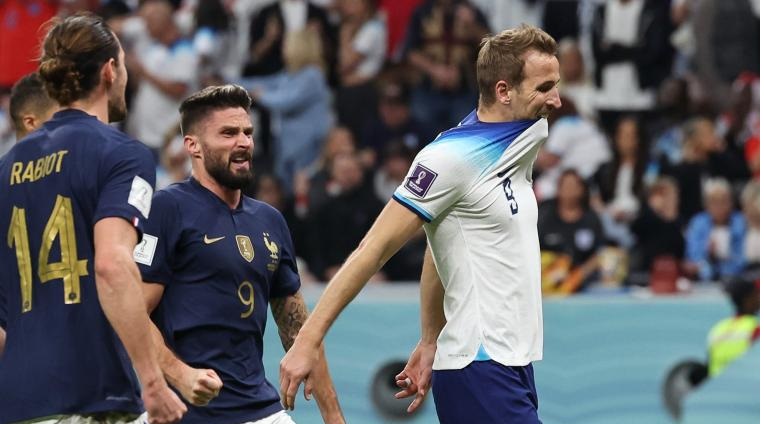
But today against France, while I started rooting for France, I quickly switched to England because England played better football. The French team was uncharacteristically poor on defense, doing plays no one would have done in World Cup quarter finals, and hoped to remain in the tournament.

Perhaps, that is why France is the World champion – they know how to win. Today, except for the individual brilliance of Giroud and Griezmann – and the excellence of Lloris, the winner was the second team.

But that is why it is World Cup; unlike club tournaments, moments of individual magics become history: the dribbling legends of Pele, the infallibility of Roger Milla, the hand of god of Maradona, the rock of Maldini, the passes of Zidane, the power hits of Ronaldo (yes, the other one) and let me add “kissing the net” of Yekini which remains a moment in Nigeria.

Congrats France. England, you played well; hope one day, your moment will come. I hate to see better teams lose except when Nigeria or Enyimba FC is playing. Now, Morocco and France; I am biased: all the way for Morocco (Morocco is Nigeria and CAF now!!!!).

  • I am Sausa, Former Football & Sports Strategist
  • Secondary Technical School Ovim Abia State

Bankman-Fried Agrees to Testify Before Congress Amidst Call for His Conviction

0

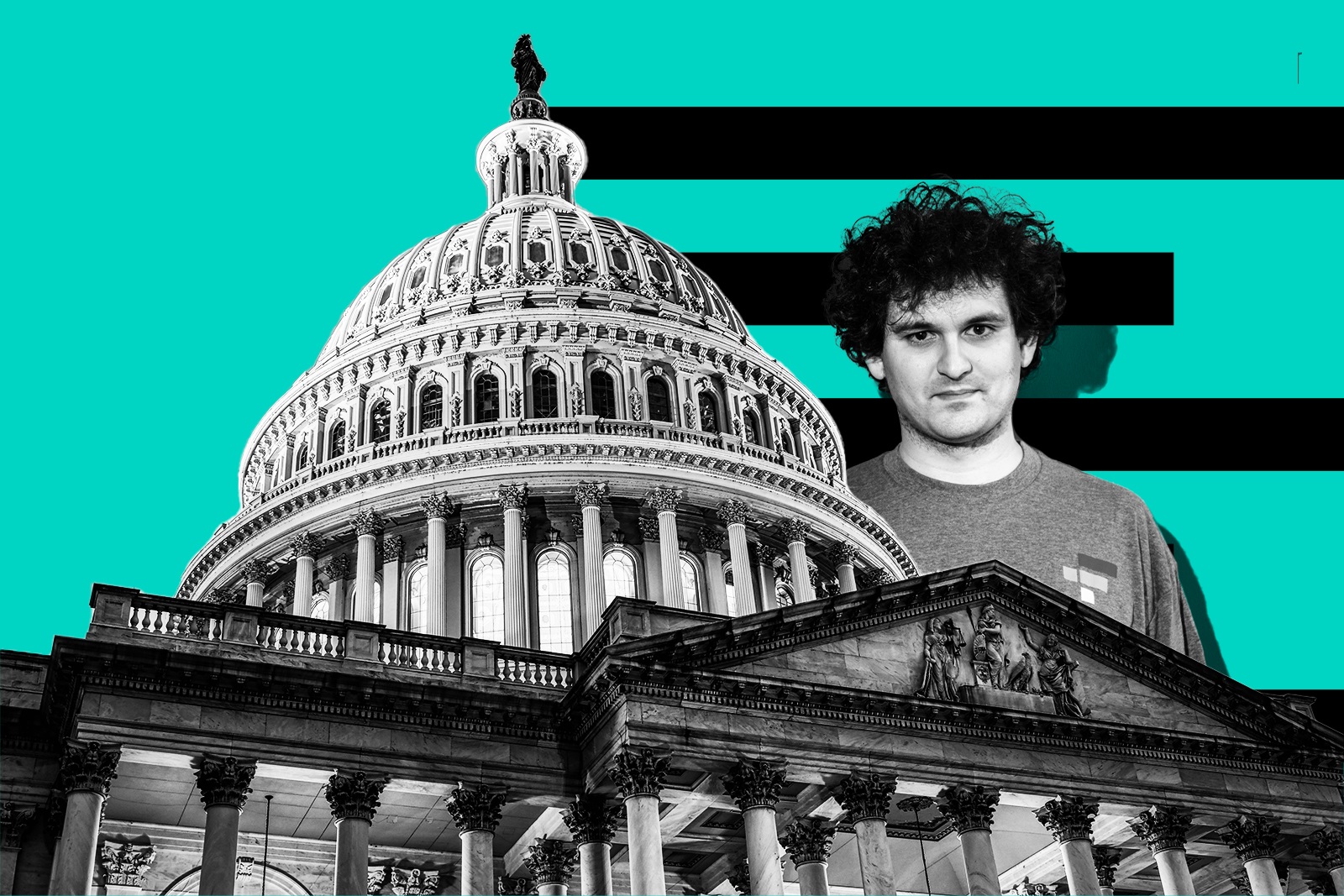
Sam Bankman-Fried, the founder and former CEO of the collapsed crypto exchange FTX, has agreed to honor the invitation of House Committee on Financial Services amid heavy criticism and allegation that he is guilty of fraud.

On Thursday, Bankman-Fried tweeted in response to the invitation of Rep. Maxine Waters that he’d be attending the Dec. 13th hearing, although he said he still doesn’t have “access to much of my data — professional or personal.” He added that “there is a limit to what I will be able to say, and I won’t be as helpful as I’d like.”

“I will try to be helpful during the hearing, and to shed what light I can on: — FTX US’s solvency and American customers –Pathways that could return value to users internationally — What I think led to the crash — My own failings,” he said.

Bankman-Fried has maintained innocence even as prominent business leaders join voices in alleging that the once bright-shining chief executive committed fraud leading to the fall of FTX.

FTX filed for bankruptcy in November after Bankman-Fried failed to secure a bailout fund from rival exchange Binance – leading to his resignation. However, the company’s implosion has opened a Pandora’s box of issues centered on “what happened to $10 billion investors’ fund?” question.

While Bankman-Fried admitted that ignorance and oversight on his part formed a huge part of FTX’s ordeal, he has denied committing any form of fraud. He said on Friday that one of his “biggest failings” is thinking of himself “as a model CEO, who wouldn’t become lazy or disconnected. Which made it that much more destructive when I did.”

“I’m sorry. Hopefully people can learn from the difference between who I was and who I could have been,” he added.

The former executive has exonerated himself from any wrongdoing in all his interactions with the media since the collapse of FTX. He had earlier told Rep. Waters that he was not sure if he would testify on Dec. 13 because he has not finished “learning and reviewing what happened.” But his critics see it all as typical excuses that people use to evade responsibility in a matter like this.

Tesla and Twitter CEO Elon Musk and “Shark Tank” investor Mark Cuban have suggested that Bankman-Fried be given a jail term.

“Let’s just give him an adult timeout in the big house & move on,” Musk said on Twitter, a hint he thinks Bankman-Fried should go to prison.

Mark Cuban, billionaire owner of the Dallas Mavericks NBA team told TMZ: “I don’t know all the details. But if I were him, I’d be afraid of going to jail for a long time.”

Changpeng “CZ” Zhao, Binance CEO, who moved to provide FTX with a bailout fund but backed out hours later saying the exchange’s predicament, was much deeper than Bankman-Fried had told him, called Bankman-Fried a “fraudster.”

“SBF perpetuated a narrative painting me and other people as the ‘bad guys’. It was critical in maintaining the fantasy that he was a ‘hero’,” said Zhao.

“SBF is one of the greatest fraudsters in history, he is also a master manipulator when it comes to media and key opinion leaders,” he tweeted.

Federal prosecutors have reportedly opened investigation into FTX’s implosion. Bankman-Fried is being probed over allegations he manipulated the crypto market and mishandled customer funds. He’s also been accused of orchestrating trades to undermine digital token Tether that risked a crypto crash.

Tekedia Mini-MBA End of Year Boat Cruise Knowledge Party [video]

0

The most amazing part of Tekedia Mini-MBA is that it brings people, learners and innovators together.  And those learners have come together to start companies, improve businesses, and do many awesome things. As our learners organize in cities and communities independently, Tekedia Institute wishes everyone safe connections and success.  I just received that some Tekedia Institute alumni organized an End of Year party / Boat Cruise Party.

We are truly thankful for how our small contributions at the Institute are bringing people together. Please include me in the Aso Rock Innovation Party!!!

Tekedia Institute >> more than a business school, you meet future business and professional partners here.