DD
MM
YYYY

PAGES

DD
MM
YYYY

spot_img

PAGES

Home Blog Page 4623

A Legal appraisal of Central Bank of Nigeria Withdrawal Limit Policy

0

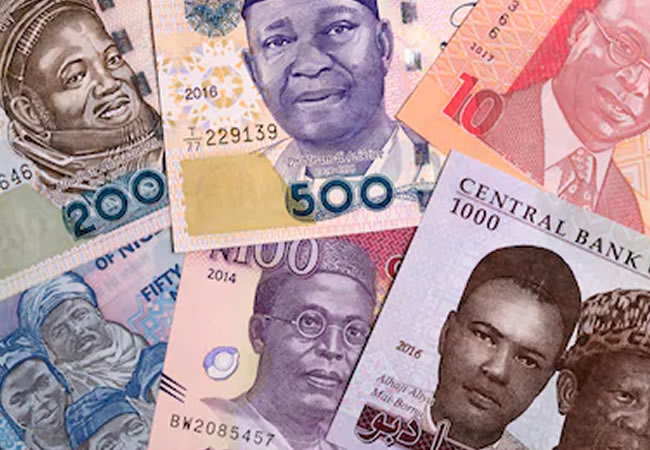
The Central Bank of Nigeria launched on the 6th of December, 2022, a new withdrawal limit directive in keeping with its cashless policy objective and the launch of the new Naira notes by the CBN as well.

This policy has been received with some mixed feelings among the Nigerian population, with its urban & upwardly mobile demographic sections hailing it as a smart move while other sections of the population, especially those involved in what many call the “real economic sectors” of Nigeria, see the withdrawal limit policy as one more badly thought out move by the CBN which has been accused by some sections of the country of limitless incompetence.

However, the focus of this article is to look at the literal provisions of this directive and their legal implications as well as  provide a prediction of the regulatory and legal issues that may or may not arise from this policy.

What is the applicability scope of the Naira Withdrawal limit policy?

The CBN policy (set to take effect from January 9,2023) is applicable to all deposit money banks and OFIs (Other Financial Institutions) in Nigeria. 

What exactly are the provisions of the CBN withdrawal limit policy?

The provisions of the CBN Naira Withdrawal limit policy are :-

– Maximum OTC (Over The Counter) cash withdrawals per week of 100,000.00 Naira for individuals and 500,000.00 Naira for Corporate entities.

– Processing fees of 5% for Individuals & 10% for Corporate entities regarding withdrawals above the limits mentioned in the preceding paragraph.

– 3rd party cheques for amounts above 50,000.00 Naira shall not be eligible for OTC payments, though extant limits of 10 Million Naira I’m clearing cheques still exist.

– The maximum cash withdrawal limit per week from Automated Teller Machines or Points of Sale(POS) machines shall be 100,000.00 Naira subject to a maximum limit of 20,000.00 Naira per day.

– Only denominations of 200 Naira and below shall be loaded into Automated Teller Machines.

– In compelling circumstances not exceeding once a month where cash withdrawals above the prescribed limits is required for legitimate purposes, such cash withdrawals shall not exceed 5 Million Naira for individuals and 10 Million Naira for corporate entities respectively and shall be subject to the processing fee percentage mentioned in the first paragraph in addition to enhanced due diligence requirements.

For transactions under this paragraph, customers are required to obtain the following information at the minimum and upload same on the CBN portal created for the same purpose :-

– A valid means of identification.

– The payee’s Bank Verification Number (BVN).

– A notarized customer declaration of the purpose for the cash withdrawal.

– Senior Management approval for the withdrawal by the Managing Director of the drawer where applicable.

– An approval in writing by the Managing Director or Chief Executive Officer of the bank authorizing the withdrawal.

What are the legal & regulatory implications of the CBN withdrawal limit policy?

The withdrawal policy has its legal pros and cons which will be carefully outlined below :-

Pros 

  1. The withdrawal limit policy has greatly reduced the ability to safely evacuate the proceeds of financial crime.
  1. The New Naira redesign and withdrawal limit comes with even stricter AML/ CFT (Anti-Money Laundering/Combating the Financing of Terrorism) compliance requirements.
  1. The withdrawal limit may serve as the single biggest boost given to the use of the E-Naira.
  1. The withdrawal limit policy may potentially create in line with the CBN cashless policy drive, a very significant explosion in Fintech service demand while by Fintech awareness penetration into formally underbanked areas as well as the creation of previously unknown service platforms like Digital Bureaux De Change & E-Naira Speed wallet payment option enabling & support. 

Cons

  1. The CBN withdrawal limit policy stands as a very big violation of the fundamental right to own and access property (moveable and  immoveable) guaranteed under the 1999 Constitution (as amended).
  1. The CBN withdrawal limit policy might have inadvertently created a new shadow industry specializing in racketeering on the huge gap in physical cash supply that might arise from the policy similar to the strong Dollar racketeering allegations that trailed the CBN some years ago.
  1. The CBN Guidelines do not apply to other financial entities like Cooperative societies that will simply become more parallel to the CBN by virtue of being closer to the most underbanked sections of the population most affected by this withdrawal limit policy.
  1. The CBN might sooner or later be knee-deep in lawsuits for vicarious liability claims arising from the expectedly large number of electronic transaction payment issues that the sheer forced demand for cashless financial services might cause.


How To Register A Licensed Credit Bureau In Nigeria

0

Credit Bureaux are basically corporate entities that specialize in providing lenders & creditors with due diligence-based information on potential borrowers needed to make lending decisions. 

In Nigeria, credit bureaus are licensed businesses operating under a defined regulatory framework.

The focus of this article is the process of getting a a credit bureau registered, with a focus on :-

– The components of the regulatory framework governing credit bureaux in Nigeria.

– Who is eligible to promote and own a credit bureau registered in Nigeria.

– The licensing requirements for a credit bureau in Nigeria.

– The permissible purposes of a credit bureau in Nigeria.

What is the main Regulatory instrument governing credit bureaux in Nigeria?

The main regulation governing credit bureaux in Nigeria is the CBN Credit Bureaux (Licensing, Operations & Regulations) Guidelines 2008.

What is the applicability scope of the CBN Guidelines?

The CBN Guidelines are applicable to all credit bureaux licensed by the CBN in Nigeria.

What is the objective of the CBN Guidelines?

The CBN Guidelines were drafted and passed to define the licensing, operational & regulatory requirements for a privately owned credit bureau under the CBN Act.

Who can legally own and invest in a credit bureau?

– Individuals and corporate entities can invest in a credit bureau subject to CBN approval.

– A bank is not allowed to invest in more than 1(One) credit bureau.

– Investments by a bank and its subsidiaries in a credit bureau shall not exceed 10% of the total paid-up capital of the credit bureau.

What are the licensing requirements for credit bureaux in Nigeria?

Licensing credit bureaux in Nigeria is in 3 stages namely :-

– The Application receipt and appraisal stage.

– The Approval-in-Principle stage.

– The Final Licensing stage.

Application Receipt and Appraisal

This stage involves sending an application to the CBN along with:-

  1. A non-refundable application fee of 250,000.00 Naira made payable to the CBN.
  1. Evidence of Payment of the minimum capital requirement of 500 Million Naira (refundable) to the CBN.
  1. A Certified True Copy CTC of the applicant company’s MEMART Memorandum/Articles of Association.
  1. A detailed feasibility report on the proposed credit bureau.

The Approval-in-Principle (AIP) stage

Upon being satisfied with an application, the CBN will grant an AIP lasting 180 days within which the credit bureau must comply with all the conditions specified in the guidelines, otherwise the AIP might be withdrawn by the CBN.

The Final Operating Licensing stage

After the AIP grant has expired and all necessary pre-conditions have been satisfied by the applicant, a final operating license will be granted subject to the following:- 

– The CBN has conducted an on-site verification to ascertain it’s readiness to commence operations.

– A license will automatically expire if a credit bureau has not commenced business within the first 6 months of the issuance of the license.

– All licensed credit bureaus shall be required to add “credit bureau” to their corporate names e.g. ABC LTD(credit bureau).

– Such names as mentioned in the preceding paragraph shall be registered with the Corporate Affairs Commission (CAC).

– No credit bureau shall be registered with a name which includes words like ‘central’, ‘federal’, ‘federation’, ‘national’, ‘Nigeria’, ‘state’, ‘Christian’, ‘Islamic’ or ‘Biblical’.

What are the permissible purposes for accessing credit information from a credit bureau under the CBN Guidelines?

Some of the permissible purposes for accessing any credit information from a credit bureau are:-

  1. Applications for credit by borrowers.
  1. The review of existing credit facilities.
  1. Funds transfers of 1 Million Naira and above.
  1. Prospective/Current employee checks. 
  1. The acceptance of guarantees.

Where is a credit bureau allowed to collect customer/borrower data from?

Credit Bureaux shall under the Guidelines be allowed to collect data from:-

  1. Nigerian banks.
  1. The CBN Credit Risk Management System 
  1. Insurance companies.
  1. Asset management companies.
  1. Other licensed credit bureaux.

Are there sanctions for illegal data disclosures by credit bureaux?

Yes, there are. Illegal disclosures by credit bureaux can attract punitive fines of 500 Thousand Naira and subsequent daily fines of 10,000.00 Naira from the CBN.

Inactive Twitter Users to Lose Account as Musk Unveils Plans to Free up Name Space

0

Twitter CEO Elon Musk has disclosed plans to delete 1.5 billion dormant accounts on the platform, to free up the name space.

He disclosed that the deletion of these accounts is obvious because they haven’t tweeted or logged in since the account was created.

He tweeted, “Twitter will soon start freeing the name space of 1.5 billion accounts. These are obvious account deletions, with no tweets and log-in for years”.

This move is coming after a Twitter user earlier this month had urged Musk to purge accounts that haven’t been active in the last 15 years which he accepted to implement.

Another user @erichjrusch disclosed that there are so many inactives sitting on excellent Twitter handles, he suggested that If they have been inactive for more than a year, they should be given 30 days to log in or risk their account being deleted.

Musk replied definitely, which implies that he might be considering implementing the idea.

While some users have embraced Musk’s plan to delete inactive accounts, some other users do not buy the idea as they feel that some inactive accounts belong to those who have died, and should be preserved for their loved ones.

A user @Northmantrader wrote, “Hate to say it, but all our accounts will become inactive after we die. Should all our history be expunged? So much of our history is now happening on social media. Should it not be preserved for future historians & even loved ones?”

Another user @ShepDanellos wrote, “Please don’t auto-delete inactive accounts. Rather, put them in some kind of status that frees up the handle but preserves their tweets. This is important for archival reasons, especially for those who are no longer with us.”

Meanwhile, on the platform’s inactive account policy, it stated that for users to keep their account active, they must ensure to log in at least every 6 months, noting that accounts may be permanently removed due to prolonged inactivity.

In 2022, Twitter reported around 450 million monthly active users, with 237.8 million monetizable daily active users as of the second quarter (Q2) of 2022.

Twitter usage reportedly rose the week Musk took over as the CEO of the company, which in the first weekend of November, Twitter saw its most daily active users ever.

Ever since Musk’s takeover of Twitter on October 2022, he has been carrying out a serious revamp on the platform. From massive layoffs, permission of free speech, Twitter blue subscription fee, the abolition of remote work, Content moderation and account, etc.

His position as the CEO of the social media company has kept most users on the edge of their seats, waiting for the next changes he has in store.

Flasko (FLSK) Sees A Price Spike As Render Token (RNDR) And Loopring (LRC) Sink Lower

0

As volatility increases, established cryptocurrency coins are vulnerable to unexpected price movements. Render Token (RNDR) and Loopring (LRC), two popular cryptocurrencies, might have adverse price movements in 2023. Nevertheless, new cryptocurrency projects like Flasko are currently capturing the attention of many crypto enthusiasts.

Keep on reading to learn why Flasko may top the charts in 2023.

Render Token (RNDR) Down 88% In The Last Year

The Render Network links creators who need more processing power to render their scenes to suppliers who are paid in the Render Token (RNDR) for their GPU resources. Anyone with a modern GPU may contribute rendering power under the framework in return for a Render Token (RNDR).

The Render Token (RNDR) value saw a slight 4.83% rise in the last seven days, but the past year for this coin has been pretty bad overall. The Render Token (RNDR) suffered a price drop of nearly 88% in the past 12 months, as the token is currently trading at $0.5207. Although the Render Token (RNDR) may experience an upward swing in the coming weeks, we believe investing in projects with room for growth is more beneficial.

Flasko (FLSK) Presale Gains More And More Popularity

The Flasko platform offers a high liquidity asset class for crypto owners aiming to meet the market demand for exotic, unique, and fine wines, whiskeys, and champagnes.

The minds behind Flasko seek to accomplish this by creating the first alternative-investment platform where investors may buy whole or partial NFTs backed by the bottle of wine, whiskey, or champagne it represents.

A user can also have the actual bottle brought to their preferred location if they buy the whole NFT. That’s correct; if you acquire a complete NFT, a bottle of Dom Perignon Brut may arrive at your home.

The Flasko team will lock the liquidity for 33 years, and a Solid Proof audit has been passed, two positive signs for a new crypto project.

The Flasko presale is in Stage Two with hopes of launching on Uniswap soon. As the presale advances, so does its price. Flasko is valued at only $0.111, an excellent entry point for investors who want to capitalize on the projected 4,000% rise in 2023.

Loopring (LRC) May Never Reach $4

The Loopring (LRC) token pays for network and activity costs on the Loopring protocol. Loopring (LRC) is essential to the functioning of the trading platform since it supports the safety and reliability of the network. Loopring (LRC) was once a worthwhile cryptocurrency asset for traders. Unfortunately, that time has passed as the coin lost nearly 90% of its value in the last year.

At this time, the price of Loopring (LRC) is $0.2457, a drop of 11% over the past week, and analysts say that this negative trend will continue. Investing in Loopring (LRC) is not so desirable as the coin continues to stumble.

Follow the links below and buy into this future blue-chip coin:

Website: https://flasko.io

Presale: https://presale.flasko.io

Telegram: https://t.me/flaskoio

Twitter: https://twitter.com/flasko_io

Shiba Inu (SHIB) And Celer Network (CELR) Lack Use Cases In Comparison To Flasko (FLSK)

0

Cryptocurrencies with actual use cases are closely watched by investors all around the globe, particularly if they notice rapid development amid challenging circumstances. Unfortunately, market uncertainty has slowed the growth of several popular cryptocurrencies. Investors should purchase presale tokens since investing in a growing currency at the right moment will ensure profitability.

With the recent market downturn, investors in Shiba Inu (SHIB) and the Celer Network (CELR) are migrating to Flasko.

Celer Network (CELR) On A Downtrend

On the Celer Network, through the mobile app CelerX and as a stake in liquidity backing auctions, individuals can use the Celer Network (CELR) tokens as a payment option. Lenders who stake more Celer Network (CELR) tokens earn income and are more likely to be selected as liquidity providers.

Nevertheless, the Celer Network (CELR) token’s recent performances have been dismal; it is now down 20% over the past 30 days. With this sudden price change, the Celer Network (CELR) token holders seek new projects with more potential.

The Price Of Shiba Inu (SHIB) Sinks Even Lower

Because the well-known meme token skyrocketed last year, Shiba Inu (SHIB) has likely been one of the most closely observed global coins. However, Shiba Inu (SHIB) has since encountered difficulties and is currently worth 75% less than last year. Investors are unsure if Shiba Inu (SHIB) can regain its initial enthusiasm.

The Shiba Inu (SHIB) coin is worth $0.000009394, and investors see dark days ahead. And we do not blame them; ultimately, Shiba Inu (SHIB) is a meme coin with no real-world use cases.

Flasko (FLSK) To Bring Innovation In The NFT Sector

Compared to coins like Shiba Inu (SHIB) and the Celer Network (CELR) token, Flasko has a unique distinction – real-world use case. How?

Users can purchase NFTs supported by premium champagnes, wines, and whiskeys on the first platform for alternative investments that Flasko will create. The fractionalization of NFTs, which stand in for Flasko investments, enables anybody to buy NFTs.

An enormous profit is ensured by early investment in new initiatives. Investors in Flasko may purchase the token at a bargain and make significant returns by 2023 with the current presale price of only $0.111. As various crypto experts believe Flasko may reach $3.80 in May 2023, buying now is a must!

For those wondering about security, Solid Proof has conducted an audit of Flasko, which it passed with high marks. Furthermore, team tokens will be locked for three years, while Flasko will freeze liquidity for 33.

If you invest now, you will also gain discounts and first dibs on brand-new items from high-end beverage startups that Flasko will collaborate with. If you find these perks intriguing, feel free to follow the links below:


Website: https://flasko.io

Presale: https://presale.flasko.io

Telegram: https://t.me/flaskoio

Twitter: https://twitter.com/flasko_io