The Nigerian Police has devised a digital means aimed at curtailing car theft in the country. The Inspector-General of Police, IGP Usman Alkali Baba launched the digitalized Central Motor Registry (CMR) Command Centre at the Force Headquarters, Abuja.
The CMR is designed as a platform for information of registered vehicles that will help the police with search and investigation in case they are stolen.
A statement issued by the Force Public Relations Officer, CSP Muyiwa Adejobi said the CMR, which has two command centers located in Lagos and Abuja, and 37 information centers across Nigeria, will be available for Nigerians to report vehicles stolen as far back 2018.
“The newly digitalized Central Motor Registry Command Centre will make it possible for members of the public to report vehicles stolen from as far back as 1st January 2018, and yet-to-be-recovered to input the vehicle details on the online platform to serve as a reliable data point for the possible recovery of the vehicle.
“The platform will also process motor vehicle information to support police operations and efforts toward enhancing national security.
“The digitalization of the CMR is complete with 2 Command Centres in Abuja and Lagos, 37 CMR Information Centres across the Country and in the Federal Capital Territory, 200 e-Enforcement Operational Patrol Vehicles with automatic number plate recognition on each vehicle as part of the first batch,” he said.
The PRO said the Centre is domiciled at the Department of Information and Communication Technology and urged Nigerians to make use of it to help the police to tame rising cases of stolen vehicles in the country.
“This is in line with the IGP’s quest to ensure a digital environment for policing the country for robust and more proactive measures in crime prevention, investigation, and prosecution.
“The Inspector-General of Police, therefore, admonished Nigerians and other residents in the country to take advantage of the platform at https://reportcmr.npf.gov.ng to upload their vehicle information on the website with effect from today 7th December 2022, as a security step for preventing it from being stolen and re-registered,” he said.
Car theft results in substantial loss of fortune in Nigeria. Between 2013 and 2015, data analysis on stolen vehicles shows that car owners lost about N1.8 billion to car theft. This is due to poor recovery.
Out of 2,544 vehicles stolen between 2013 and 2015, only 1,377 were recovered, putting the national recovery rate at 54%, according to data from the National Bureau of Statistics.
This means that the police and other institutions involved in recovery of stolen vehicles could only recover five out of every 10 vehicles or half of the vehicles reported stolen within the period.
The CMR, if fully implemented, is expected to help the police in tracking and recovering more stolen vehicles.
Proof of Reserve (PoR), is an attempt to bring transparency to centralized Crypto Entity’s through a verifiable auditing practice. Proof of Reserve are the next big step toward the coming Bull market. Being able to see if your favorite Crypto protocols won’t collapse overnight by tracking their finance. DAO are about to get way more interesting, Newsletters aren’t that convincing; showing the public wallet addresses of Reserves and Liabilities held in Trust is better (on-chain transactional proof).
Coinbase, Grayscale GBTC Trust won’t publish full details of its Proof of Reserves and Liabilities due to privacy fears or contractual obligations, Grayscale GBTC Trust is the largest legal holder of BTC.
Consequently, Binance underwent a Proof-of-Reserves and Proof-of-Liabilities verification at 22 Nov 2022 23:59:59 UTC, when a snapshot of their total reserves and liabilities was taken to determine the total collateralization ratio of their Bitcoin Asset Holdings.
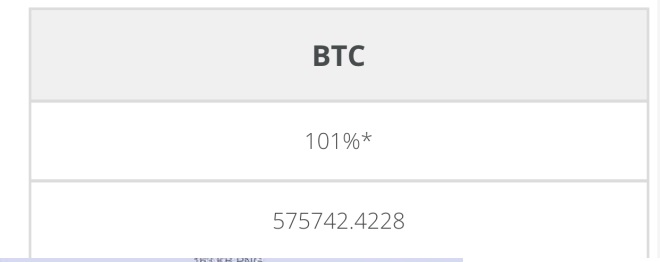
Binance Users, have the ability to independently verify that their assets were included in the total liabilities calculation through a Merkle-Proof. At the time of assessment, Mazars observed Binance controlled in-scope assets in excess of 100% of their total platform liabilities.
The collateralization ratio takes into account In-Scope-Assets lent through the margin and loans service offering which are collateralized by Out-Of-Scope Assets. The Merkle Root was compiled by hashing all client accounts into a single output. The Merkle Root for Binance PoR PR22NOV22 on 22 November 2022 is ab47221413078d47b0d9beb40447786904dae1ed2ff35e365416b5de6cd1089ee.
Binance tweeted, Proof of Reserve (PoR) is the first step to regaining and maintaining the trust of crypto users. With PoR, it helps to drive an industry that is safer and more transparent.
As part of #Binance’s user fund transparency work and Proof of Reserves updates, we're working with digital assets experts at global financial audit, tax and advisory firm, @Mazars_SA.
The first report from Mazars about Binance’s $BTC Proof of Reserves has been published today.
One month after FTX and Alameda Research collapse, Bitcoin is at $16.8k, circa the minimum reached in June. A very good reaction to the collapse of the second biggest Crypto Exchange. This collapse will trigger exchanges executing Proof of Reserve and therefore strengthening the whole ecosystem.
Did the implementation of proof of Reserves and Liabilities (PoR) increase your trust in using CeFi services?
TikTok is facing increasing apathy induced by national security concerns in the US. Days after FBI director Chris Wraywarned that the short-video app poses a national security threat to the United States as it could be exploited for espionage by the Chinese government, Maryland is moving to ban TikTok and other apps from China and Russia.
Governor Larry Hogan announced Tuesday that the ban, which takes effect in the state’s executive branch of the government, is to address cybersecurity concerns posed by the apps.
The concern, which prompted Hogan to announce an emergency cybersecurity directive to prohibit the use of the platforms, is that they could be used to collect sensitive information of American users.
“There may be no greater threat to our personal safety and our national security than the cyber vulnerabilities that support our daily lives,” Hogan said in a statement.”
“To further protect our systems, we are issuing this emergency directive against foreign actors and organizations that seek to weaken and divide us,” he added.
Maryland is not the only state to have taken that step. A week ago, South Dakota Gov. Kristi Noem, announced that state employees and contractors are no longer allowed to access TikTok on state-owned devices, due to the app’s ties to China, per AP.
Also, South Carolina Gov. Henry McMaster, on Monday asked the state’s Department of Administration to ban TikTok from all state government devices it manages. These follow the decision of Nebraska Gov. Pete Ricketts to block TikTok on state electronic devices in August 2020.
The moves by the state governors to limit the use of TikTok are being spearheaded by Washington. The US government is seriously concerned that the Chinese Communist Party would ask ByteDance, TikTok’s parent company, to turn in users’ data whenever it is needed for intelligence operations.
The US military was among government’s institutions to be prohibited from using TikTok on official devices.
“It is a risk that most governments are starting to realize it’s not worth taking,” AP quoted Trenchcoat Advisors co-founder Holden Triplett, a former FBI government official who worked in Beijing and counterintelligence, saying.
TikTok has made a lot of changes to calm the concern. In 2020, ByteDance moved its headquarters to Singapore to demonstrate its independence from Beijing. It has also, in a bid to calm the growing concern, vowed to effect major changes in operation, including partnering with American companies such as Oracle to move its data centers away from China.
Los Angeles-based TikTok Chief Operating Officer Vanessa Pappas, has said the company protects all American users’ data and that Chinese government officials have no access to it.
Despite these efforts, calls to ban or quit the platform are growing. On Tuesday, Wisconsin’s Republican representatives in Congress called on Democratic Gov. Tony Evers to delete the video platform TikTok from all state government devices, calling it a national security threat.
“Wisconsinites expect their governor to be aware of the dangerous national security threats TikTok poses and to protect them from this avenue for CCP intelligence operations,” U.S. Sen. Ron Johnson and U.S. Reps. Mike Gallagher, Tom Tiffany, Glenn Grothman, Bryan Steil and Scott Fitzgerald said in a letter.
In 2020, former President Donald Trump moved to end TikTok’s operation in the United States. The controversial move, which was later put to an end after his successor, Joe Biden reversed many of Trump’s executive orders, is still being touted today.
A researcher with the conservative Heritage Foundation last month called on government officials to ban TikTok from operating entirely in the United States.
But TikTok spokesperson Jamal Brown said the concerns driving bans “are largely fueled by misinformation about our company.”
“We are always happy to meet with state policymakers to discuss our privacy and security practices,” Brown said. “We are disappointed that the many state agencies, offices, and universities that have been using TikTok to build communities and connect with constituents will no longer have access to our platform.”
Over $3B worth of bitcoin has been removed from exchanges in the last month. People are waking up after the FTX exit scam. In March 2022, the FTX Exchange announced that it was expanding its operations into the European market.
FTX obtained a license to operate in Europe by partnering with a Cyprus-licensed financial company called K-DNA Financial Services, LTD. According to FTX’s regulatory disclosures page:
FTX Europe’s domain is approved through K-DNA Financial Services Ltd., a duly incorporated Investment Firm in Cyprus that is passported to the European Economic Area. FTX is a brand operated by K-DNA Financial Services Ltd. and regulated by the Cyprus Securities and Exchange Commission, with license number 273/15.
At first glance, this might seem to be an ordinary transaction. After all, it would make sense to team up with an already-licensed firm rather than creating a new company and going through the entire regulatory process from scratch. However, it turns out that K-DNA Financial Services was no ordinary financial firm.
Prior to its purchase by FTX, K-DNA was one of many companies involved in one of the largest financial fraud schemes in recent history: the binary options industry.
BINANCE CEO: SBF is one of the greatest fraudsters in history and a master manipulator of the media. CZ-Binance wrote a long Twitter thread explaining the wrong narratives he’s seen recently.
BLOOMBERG, knew the FTX situation MONTHS before as Marc Cohodes AlderLaneEggs handed them the info. They REFUSED TO PUBLISH it, saying: “It wasn’t good for the business. People got fired. FTX is paying a lot for ads.”
What are binary options, and how are they tied to fraud?
Binary options are an investment product that enable traders to bet on yes-or-no outcomes. For example, a trader could buy a binary option stating that the price of a certain stock will go up 5% or more in a day. The option has pre-determined payout odds and does not involve the trader taking a direct position in the underlying assets, unlike traditional options contracts. Binary options have no connection to the underlying asset or event.
A slightly more complex version of a binary option is the “contract for differences” (CFD). Like binary options, CFDs are cash-settled and never result in any delivery of the underlying security. Unlike binary options, the payout or loss on a CFD tracks the price movement of whatever the underlying asset might be. Consequently, the payout or loss on a CFD is uncapped.
Both binary options and CFDs are generally illegal in the United States due to the obvious potential for abuse. However, a massive binary options industry operating in Europe has flourished for well over a decade. Many of the firms in the binary options space originated in Israel. By the mid-2010s, the binary options industry employed thousands of people multiple countries and generated annual revenues in the hundreds of millions of dollars.
In 2016, a bombshell exposé by The Times of Israel revealed that many binary options firms were engaging in consumer fraud. Operating massive call centers reminiscent of a scene from The Wolf of Wall Street, the firms would cold-call people across Europe and use high-pressure tactics to convince their marks to try trading binary options products. If investors later tried to withdraw their deposited funds, the firms would stall them or, in some cases, simply abscond with the money.
The binary options industry also has ties to one of the biggest corporate scandals in Europe. Wirecard, a payment processing company that became the darling of the German stock market, collapsed after the company’s frauds were exposed. Wirecard functioned as a money laundering service for a number of different criminal enterprises, including the binary options industry.
After a series of reports by The Times and other outlets, in 2017 the Knesset responded by outlawing the entire binary options industry in Israel. However, binary options-style scams have continued to flourish throughout Europe, frequently operating out of Eastern European nations with limited regulatory capabilities.
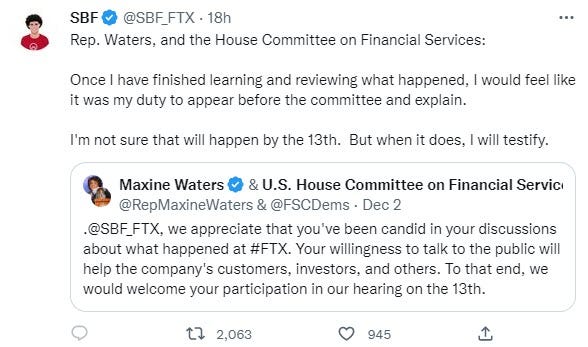
Sam Bankman-Fried dictating terms to a Congressperson is just incredible.
Ben Armstrong tweeted, There are so many names with the most ridiculous history all related to one another via poker scandal, and now they’re all here running this industry. Dan will pay in due time, there’s some very intriguing info and incriminating data on Mr. Friedberg. However, the smaller fish must fry first, then we’ll take down the big tunas and serve their salty secrets for the world to taste. It’s gonna be like playing a game of human dominos.
If you haven’t figured it out yet, Dan Friedberg created the FTX scam.
Ultimate Bets 2.0.
We need @phil_hellmuth to spill what he knows about his former lawyer
Also, where did Alameda Trabucco disappear too? It’s amazing how he “retired” an “stepped down” from Alameda Research just months before this meltdown.
SBF confirmed that users on FTX was just trading “notional” assets when asked by Cryptomanran. Which means none of it was real and funds was stored “elsewhere”. Isn’t this the same as the QuadrigaCX scam where the founder ended up “dead”? Ben Armstrong Wrote;
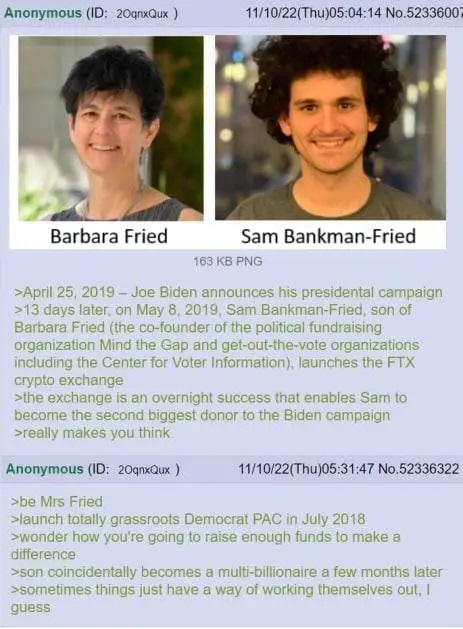
It’s actually pretty sad to watch SBF/FTX. The people behind this scam are Joe, Barb, and Dan Friedberg, Sam has blame. PLENTY. But over time, you are going to find out just how evil Sam’s parents are. They are literally allowing their son to incriminate himself for their benefit.
Sam Bankman Fried talking with Tiffany Fong via YouTube, says he gave just as much money to Republicans but did it via PACs (dark money). He never had a side. He was just trying to bribe enough people to get the scam “crypto” industry regulated by the CFTC.
The Economist recently asked whether “Crypto could be useful for anything other than scams and speculation” post-FTX collapse. We underestimate how much the FTX scandal has now frightened non-tech folks (ex. doctors, lawyers, artists) into thinking all of Crypto and Blockchain tech may be a scam.
Growth stocks have been dominating the 21st century. Facebook, Amazon, Alphabet and Starbucks are just some companies that have seen huge percentage gains.
According to NASDAQ, a growth stock is any share in a company that is expected to grow at the a rate significantly higher than the average growth for the market.
Their share prices, revenue or profits flow at faster rates than the market, meaning some investors choose growth stocks to earn profits from the rapid price appreciation they offer, rather than income from dividends, although this can equally go the other way and result in losses).
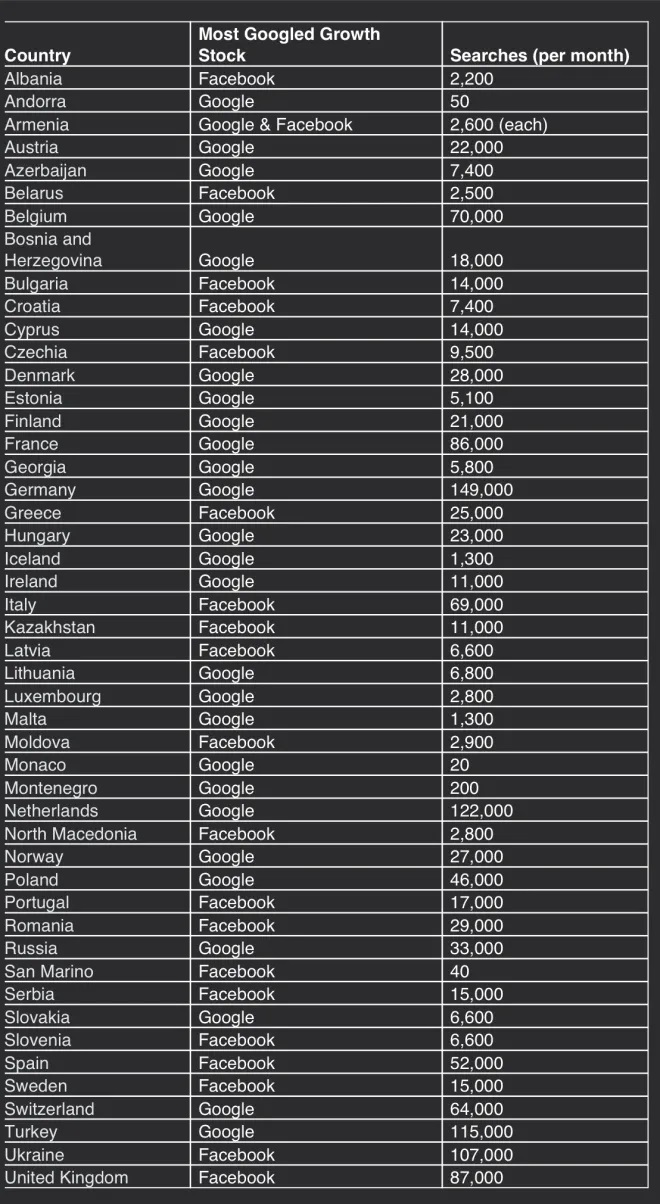
However, what is the most popular growth stock in each country in Europe? Well, CMC Markets has revealed the answers by comparing monthly AHrefs search data, revealing the most searched for growth stock in each country.
Derivatives are a type of leveraged product, which means you only need to deposit a small percentage of the full value of the trade in order to open a position (also called margin trading?). While margined (or leveraged) trading allows you to magnify your returns, losses will also be magnified as they are based on the full value of the position.
As an example, our margin rates for indices start at 5%. This means that you only have to deposit 5% of the asset’s full value in order to open a position, allowing you to trade with 20x leverage. This is equivalent to a 20:1 leverage ratio.
Most Googled Growth Stock
Two growth stocks dominated the results, with Google and Facebook being the highest performers across all countries in Europe.
27 European countries had Google as the most frequently searched growth stock, making it the most popular on the continent. The country with the highest number of searches per month goes to Germany, which is searching for Google stock 149,000 times per month.
Other countries with high monthly searches for Google stock include the Netherlands, with 122,000 searches and Turkey with 115,000 searches a month.
A total of 20 European countries have Facebook as the most frequently searched growth stock. The country with the highest number of searches per month is Ukraine, with 107,000 searches each month.
Other countries with high search results for Facebook include the United Kingdom with 87,000 searches a month and Italy with 69,000.
Armenia, was the only country tying on both Google and Facebook, with 2,600 monthly searches each.
Michael Hewson, Chief Market Analyst at CMC Markets said: “Google and Facebook are dominating as the most popular growth stocks across Europe. Both of these companies have a huge influence on the market, and the media, which is why many Europeans are looking to invest in them.
We can see that countries such as the UK, Italy and Austria are producing thousands of searches each month for these two stocks.
The study was conducted by CMC Markets, a UK-based financial services company that offers online derivative trading such as spread betting and contracts for difference across world markets such as shares and foreign exchange.
Are there any risks?
The use of leverage can lead to loss of capital if your trade is unsuccessful, and even margin calls or account close-outs.
You are also subject to costs such as Overnight Fees?, which can be positive or negative depending on the direction of your position and the applicable holding rate.
The financial markets can be volatile and lead to gapping and slippage of your positions, so it’s important that you monitor your positions carefully.
Before placing your trade, remember to make sure that you have followed risk management guide? as part of your strategy.