DD
MM
YYYY

PAGES

DD
MM
YYYY

spot_img

PAGES

Home Blog Page 465

Musk’s xAI Escalates Legal War Against OpenAI With Fresh Trade Secrets Lawsuit

0

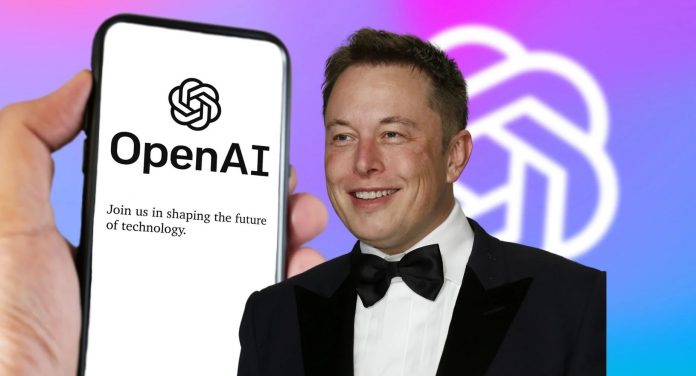
Elon Musk’s artificial intelligence startup, xAI, has filed a new lawsuit against OpenAI in the U.S. District Court for the Northern District of California, escalating an already bitter feud between the two companies.

The complaint, lodged on Wednesday, accuses OpenAI of deliberately poaching xAI employees and stealing proprietary technology underpinning Grok, xAI’s flagship chatbot. Musk’s lawyers argued that OpenAI has engaged in a “deeply troubling pattern” of raiding talent to gain inside knowledge of xAI’s systems.

“OpenAI is not merely soliciting or hiring a competitor’s employees,” the filing states. “OpenAI is waging a coordinated, unfair, and unlawful campaign: OpenAI is targeting those individuals with knowledge of xAI’s key technologies and business plans.”

The lawsuit further alleges that OpenAI encouraged recruits to violate confidentiality agreements signed with xAI, effectively breaching non-disclosure obligations to secure a competitive advantage.

OpenAI rejected the allegations outright. “This new lawsuit is the latest chapter in Mr. Musk’s ongoing harassment,” the company told Business Insider. “We have no tolerance for any breaches of confidentiality, nor any interest in trade secrets from other labs.”

The case names ex-xAI engineer Xuechen Li, who is already facing a separate trade secrets lawsuit Musk’s company filed in August. Earlier this month, a judge granted xAI’s request for a temporary order barring Li from working on or communicating about AI technology with OpenAI. Still, a source familiar with the matter said Li had never worked for OpenAI, raising questions about the scope of Musk’s claims.

The complaint also references other departures, including “early xAI engineer” Jimmy Fraiture and a senior finance executive, both of whom have since joined OpenAI. While Fraiture is not a defendant, xAI alleges the hires form part of OpenAI’s broader strategy to extract sensitive information.

This lawsuit is the latest escalation in a widening legal war between Musk and OpenAI, the company he cofounded in 2015 but later abandoned amid strategic disagreements. Musk has since become one of OpenAI’s most vocal critics, accusing the company of betraying its nonprofit origins by morphing into a multibillion-dollar for-profit venture aligned with Microsoft.

In addition to suing OpenAI, Musk has also taken aim at Apple. In August, xAI filed suit against the iPhone maker, alleging it conspired with OpenAI to stifle competition in the AI market. OpenAI, for its part, has countersued Musk, arguing that his barrage of lawsuits constitutes harassment rather than legitimate grievances.

The xAI–OpenAI clash is not unfolding in isolation. Talent raids and trade secrets lawsuits have become a defining feature of the AI industry’s rapid growth. Google’s DeepMind, for instance, has faced poaching pressure from rival labs, while Anthropic—founded by former OpenAI employees—was itself born out of a rift over how safely and profitably AI should be developed. Earlier this year, Meta sued a former research scientist, alleging he had misappropriated proprietary algorithms, while smaller AI startups have accused Big Tech players of using their recruiting pipelines to siphon off both staff and intellectual property.

The legal battles underscore the extraordinary value of human capital in AI. Unlike other tech sectors where patents or hardware dominate, much of AI’s competitive edge lies in research talent and access to training data. This has fueled aggressive recruitment wars, leading to disputes like xAI’s claim that OpenAI is systematically targeting employees with insider knowledge of Grok’s architecture and roadmap.

Analysts say the outcome of Musk’s lawsuits could carry broad implications. If xAI were to succeed in its trade secrets claims, OpenAI might face restrictions on how it builds and trains its models, potentially slowing its ability to compete with rivals like Google DeepMind, Anthropic, and Amazon-backed labs. But if the cases are dismissed, Musk risks being seen as weaponizing litigation in a corporate grudge match.

The courtroom battles also highlight a deeper rift over the direction of artificial intelligence development. Musk has long argued that AI must be developed safely and transparently, a vision he claims OpenAI abandoned when it pivoted toward commercial partnerships. OpenAI, by contrast, maintains it remains committed to responsible innovation and sees Musk’s legal onslaught as an attempt to discredit a competitor rather than safeguard the industry.

As filings stack up, the dispute underlines how the race for AI supremacy is unfolding not just in research labs and cloud servers but also in courtrooms. With Musk’s xAI and OpenAI at the center of one of the tech industry’s most personal and high-stakes legal clashes, the outcome could set important precedents for how talent, intellectual property, and competitive boundaries are managed in the artificial intelligence industry.


This Ethereum L2 Token Might Rally Past $2.50 from Under $0.0025 by the Time ETH Hits Its Bull Run Peak in 2025

0

As ETH’s expected 2025 bull run nears, one Ethereum-compatible Layer 2 token is gaining measurable attention as it promises a strong bullish move. Little Pepe ($LILPEPE) is currently trading at $0.0022 and has been steadily increasing since its presale launch. The token started at $0.0010 and has gained more than 120% since 13 presale rounds.
With Layer 2 infrastructure, zero tax policy and growing utility, the project has emerged as a serious competitor for large-scale ROI. Looking at its structural development and market positioning, it is clear that Little Pepe represents an attractive option to target an upcycle towards beyond $2.50 in the longer-term cycle.

Presale Journey Reflects Strong Market Confidence

The LILPEPE presale was initially launched on June 10 at $0.001 during Stage 1. Each stage that followed introduced price increases, reflecting high investor confidence and token demand. Stage 2 was sold at $0.0011, Stage 3 at $0.0012, and Stage 4 at $0.0013. The trend continued: Stage 5 closed at $0.0014, Stage 6 at $0.0015, Stage 7 at $0.0016, and Stage 8 at $0.0017. Following that, Stage 9 sold at $0.0018, Stage 10 at $0.0019, Stage 11 at $0.0020, and Stage 12 at $0.0021.

Currently, the LILPEPE presale Stage 13 is live, offering tokens at $0.0022. To date, 15.99 billion LILPEPE tokens have been sold out of 17.25 billion, raising a total of $26 million out of a $28.77 million target. The next stage, Stage 14, will push the price to $0.0023, continuing the linear price expansion that has consistently rewarded early entrants.

Real Utility and Layer 2 Architecture Define the Ecosystem

Little Pepe runs on a Layer 2 blockchain that is Ethereum compatible, that provides high throughput and ultra-low fees and scalable infrastructure. The staking rewards, zero trading tax, sniper bot protection, DAO voting system, and meme launchpad are some of the features of this system. Future developments on the path include NFT integrations and cross-chain compatibility, further increasing token utility. 100B of Little Pepe tokens is the max supply, with planned allocation for staking, liquidity, marketing, reserves and CEX listings.

The Ongoing Giveaways Enhance Investor Confidence

The presale has been driven by an ongoing giveaway of $777,000, where 10 winners receive $77,000 worth of tokens each by contributing a minimum of $100.

https://x.com/littlepepetoken/status/1963648061063999860

After completing Stage 11, the boost in investor interest led Little Pepe to announce an additional Mega Giveaway for high-volume buyers between Stages 12 and 17 with 15+ ETH in rewards, further fueling enthusiasm and participation in the presale

This initiative is to spur community participation while encouraging greater capital inflows. Given its positive presale run from $0.0010 to $0.0022, along with the technical value of the Layer 2 blockchain, Little Pepe is sitting with a scalable base.

As Ethereum’s price action continues to be volatile, Layer 2 tokens that have real-world utility, such as LILPEPE, may experience greater visibility and adoption. With an ongoing increase in token price and an increase in the number of users, the future of the project could be that the price scale could be much higher. If the current rate of growth is sustained, however, a future rally to $2.50 is a future scenario based on present data.


For More Details About Little PEPE, Visit The Below Link:

Website: https://littlepepe.com

From 1 ETH to 8 ETH: The Ultimate Guide to Flipping Ethereum Into Ozak AI Before Its Next Big Price Surge

0

With the cryptocurrency market still developing, shrewd investors are looking to the next big thing. As Ethereum is trading at around $4,030, numerous people are shifting their focus towards Ozak AI, the new project that incorporates artificial intelligence (AI) with blockchain technology. As the presale continues in Phase 6, it is the ideal moment to invest in Ozak AI before its projected boom.

Ozak AI Presale Performance: A Good Investment Opportunity

Ozak AI has already collected more than 3.4 million in its presale, and more than 919 million tokens have been sold. Phase 6 will involve tokens priced at $0.012 apiece, where the first people to invest in the project will have a chance to get tokens at a lower price before the price increases. The next phase will see the token price rise to $0.014 as the presale continues. It means that the project is in high demand, and many believe that the token will reach a target price of $1.00 when it is launched, and the returns may be up to 9900%.

The returns could be substantial for investors who possess Ethereum (ETH). As 1 ETH is already worth more than 4000 dollars, buying Ozak AI tokens at 0.012 per unit would lead to huge returns. As an illustration, 1 ETH invested today would enable investors to purchase 83,333 Ozak AI tokens. When the price per token is raised to 1.00, the same investment would yield 8 ETH, which shows that high returns may be achieved as Ozak AI gains value.

Important Characteristics that propelled the growth of Ozak AI

Ozak AI is now one of the most discussed presale projects of 2025, which has advanced features and a unique implementation of AI and blockchain technology. The platform provides predictive AI indicators in financial markets, which allow the user to make informed decisions using real-time data. In addition, the connection with the Pyth Network, which delivers real-time financial information on various blockchains, will make sure that the predictions provided by Ozak AI are accurate and timely.

Besides the predictive features, Ozak AI has no-code integration tools, which are easy to use and available under the Weblume. This aspect renders it usable by users of any level of experience, which offers a smooth integration with decentralized applications (dApps). Also, the Rewards Hub of Ozak AI provides staking, governance, and rewards, which enable users to engage in the platform and receive more benefits. These are the features that distinguish Ozak AI from other projects in the market.

Youtube embed:

Next 500X AI Altcoin

Strategic Alliances Improve the Position of Ozak AI

Strategic alliances with key players in the industry also contribute to the growth of Ozak AI. The partnership with Dex3 increases the liquidity and makes the trading experience smoother for the users, whereas the partnership with Pyth Network makes the platform’s market predictions more accurate. Such collaborations, along with the innovative technology of Ozak AI, can put the project in a position to achieve massive growth in the blockchain and AI industry.

Now is the best moment to consider flipping Ethereum to Ozak AI with the current market fluctuations and the impressive performance of the presale of Ozak AI. Those investors who invest earlier than the token price goes up will realize significant returns, especially when Ozak AI hits its target price of $1.00. The technological base, strategic alliances, and features of the project make it a good opportunity to be successful both in the short-term and in the long-term.

Conclusion: An Intelligent Investment Decision

Ozak AI is an attractive prospect to individuals who want to convert 1 ETH into 8 ETH. As the presale continues, the combination of AI and blockchain is unique to the platform, and with the strategic partnerships, Ozak AI will experience tremendous growth. As the presale continues and the price of the tokens increases, investors can buy tokens at a fraction of their future value. You should not miss this opportunity to transform your Ethereum into Ozak AI before its next massive price increase.

For more information about Ozak AI, visit the links below:


Website: https://ozak.ai/

Twitter/X: https://x.com/OzakAGI

Telegram: https://t.me/OzakAGI

CFTC Announces New Initiatives Enabling Use of Tokenized Collateral Including Stablecoins on Derivatives

0
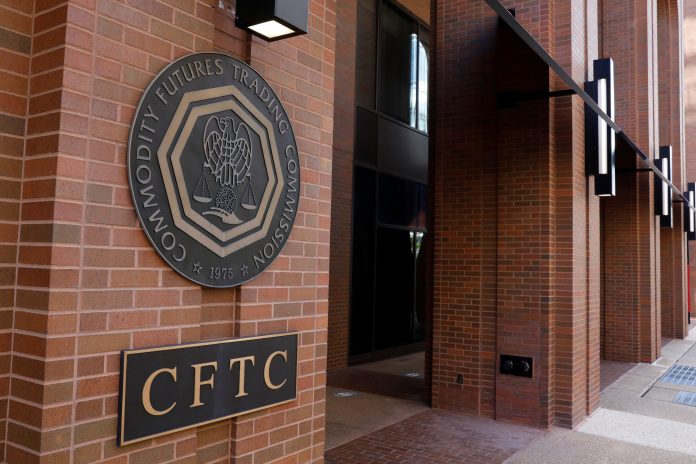
Signage is seen outside of the US Commodity Futures Trading Commission (CFTC) in Washington, D.C., U.S., August 30, 2020. REUTERS/Andrew Kelly

U.S. Commodity Futures Trading Commission (CFTC) has announced an initiative to enable the use of tokenized collateral, explicitly including stablecoins, in derivatives markets such as futures and swaps.

This move aims to enhance capital efficiency, reduce costs, and integrate blockchain-based assets into traditional finance while maintaining regulatory safeguards. Acting Chairman Caroline D. Pham described collateral management as the “killer app” for stablecoins, emphasizing that it could revolutionize how margin requirements are met in the $20 trillion U.S. derivatives market.

Building on the CFTC’s February 2025 Crypto CEO Forum and recommendations from the President’s Working Group on Digital Asset Markets report. It follows the GENIUS Act, the first U.S. law specifically regulating stablecoins, passed earlier in 2025.

Stablecoins like USDC and USDT could be treated similarly to traditional collateral for satisfying margin needs in regulated derivatives trading. This would allow for instant, 24/7 settlement via blockchain, potentially freeing up billions in tied-up capital and reducing default risks through programmable smart contracts.

The CFTC is seeking public feedback from stakeholders on pilots, regulatory amendments, valuation, custody, and security until October 20, 2025. A pilot program could launch as early as 2026, involving firms like Circle, Coinbase, and Ripple.

Major crypto players have endorsed the plan, viewing it as a step toward U.S. leadership in tokenized finance: The GENIUS Act enables licensed U.S. stablecoins as collateral in derivatives and traditional markets, lowering costs and unlocking 24/7 liquidity.

Tokenized collateral and stablecoins will modernize U.S. derivatives, boosting efficiency and global competitiveness. Ripple SVP Jack McDonald: This integrates stablecoins into the “heart of regulated financial markets,” improving transparency and efficiency.

Tether and Crypto.com both expressed support for the initiative’s potential to drive innovation in clearing and risk management. This isn’t full approval yet—it’s an exploratory push—but it signals accelerating U.S. regulatory embrace of crypto.

Analysts see it as groundwork for a potential “Treasury Dollar” a U.S. government-issued digital dollar and could unlock trillions in DeFi-like efficiencies for institutions. However, risks like valuation volatility and custody challenges remain, which the feedback period will address.

Stablecoins enable instant, 24/7 settlement on blockchain networks, reducing the time and capital locked in traditional collateral processes T+1 or T+2 settlement for cash or Treasurys. This could free up billions in liquidity for market participants.

A futures trader could use USDC to meet margin requirements instantly, avoiding delays and costs associated with moving fiat or securities. Blockchain-based collateral management via stablecoins cuts intermediaries, manual processes, and operational overhead.

Smart contracts can automate margin calls and collateral transfers, lowering transaction fees. Reduced costs could attract more participants to derivatives markets, increasing trading volumes and liquidity.

Allowing stablecoins as collateral legitimizes crypto assets in regulated markets, bridging DeFi and TradFi. This could accelerate institutional adoption of tokenized assets. The initiative aligns with the GENIUS Act (2025), which regulates stablecoins, signaling a U.S. push to lead in tokenized finance and counter global competitors like Singapore or the EU.

Programmable stablecoins and smart contracts could enhance risk management by automating collateral valuation, transfers, and default mitigation. This reduces counterparty risk in the $20 trillion U.S. derivatives market.

Real-time collateral adjustments via blockchain could prevent defaults seen in past market crises. The initiative lays groundwork for a tokenized “Treasury Dollar” or central bank digital currency (CBDC). Stablecoins as collateral could serve as a testing ground for a government-backed digital asset.

A U.S. CBDC could compete with private stablecoins like USDT or USDC, reshaping global reserve currency dynamics. Clear CFTC guidelines and the GENIUS Act provide a regulatory framework for stablecoins, reducing uncertainty for issuers and users. This could position the U.S. as a leader in digital asset regulation.

Stablecoins, while pegged to assets like the USD, can face de-pegging risks like the USDC’s brief dip in 2023. The CFTC must ensure robust valuation mechanisms. Blockchain-based collateral requires secure custody solutions to prevent hacks or loss of funds.

The pilot phase potentially 2026 and feedback period due October 20, 2025 must address how stablecoins fit within existing margin rules and systemic risk frameworks. Firms like Circle (USDC) and Tether (USDT) could see massive growth as their stablecoins become integral to derivatives markets.

Licensed U.S. stablecoins may gain an edge over non-U.S. issuers, reshaping the stablecoin landscape. Tokenized collateral mimics DeFi’s efficiency (e.g., instant settlement, transparency) but within regulated markets. This could inspire broader tokenization of assets like bonds or equities.

Trillions in locked capital could shift to blockchain-based systems, transforming clearinghouses and financial infrastructure. By integrating stablecoins, the U.S. strengthens its financial innovation edge, potentially countering China’s digital yuan or other global CBDCs. However, it must balance innovation with systemic stability to avoid market disruptions.

The CFTC’s move could redefine derivatives markets by blending blockchain efficiency with regulatory oversight. It promises lower costs, faster settlements, and greater institutional crypto adoption but hinges on addressing risks like volatility and custody.