DD
MM
YYYY

PAGES

DD
MM
YYYY

spot_img

PAGES

Home Blog Page 4670

Nigerian Fintech Startup Pivo Secures $2m in Seed Funding to Expand Freight Services

0

Nigerian fintech startup Pivo has secured $2 million in a seed fund backed by investors such as Precursor Ventures, Vested World, Y Combinator, FoundersX and existing investor, Mercy Corp Ventures.

The investment was attracted by the company’s innovative solution to SME’s payment bottleneck that slows down the industry’s supply chain. It takes small and medium businesses several days to receive invoice after executing orders. Pivo speeds up payment for freight carriers by providing a bank account, a debit card and digital invoicing tools that track payments.

Launched in 2021 by Nkiru Amadi-Emina and Ijeoma Akwiwu, Pivo provides financial services that include credit, payments and expense management, to SME vendors within large manufacturing supply chains. These services make it easy for supply chain SMEs to make, receive and track payments.

“We launched Pivo in 2021 with our credit product, Pivo Capital. Since then we have launched Pivo Business which offers business accounts with features like invoicing and bulk payments to help SMEs manage their cash flow better. We’re focused on building an all-in-one financial services platform for supply chain SMEs and are glad to have the backing of our investors,” the company said.

Pivo said in a statement it intends to use the financing to upgrade existing products, build new ones, hire talent and expand outside of Lagos, its first market and other African countries, particularly in East Africa.

The startup, which has raised $2.55 million since launch, told TechCrunch in an interview that the prevalence of friction in companies’ management of cashflow inspired its founders to seek solution.

“In most cases, we found out that managing cash flow was the primary issue for these businesses — it was either nonexistent or just paper-based,” Amadi-Emina said. “A lot of the payments made were made with cash and we thought to build a digital bank that provides financial services geared towards solving these various problems for SME vendors that operate within large manufacturing supply chains, starting first and foremost with the logistics providers, and then gradually moving to the supplier pockets and at the tail end of things.”

Pivo said it relies on manufacturing supply chain relationships and deploys financial services to the SMEs within them.

Truckers usually need advance or full payment before they leave a depot for their destination – a situation that usually creates a vacuum in the supply chain. To solve this problem, Pivo has deployed the credit play of its platform, Pivo Capital, as an early payment alternative for truckers and allows logistics companies to deal with any upfront costs such as diesel and driver’s allowance.

Pivo Business, its payments reconciliation arm, helps these small businesses to facilitate payments via peer-to-peer transfers and track payments with debit cards with spend controls, per TechCrunch.

With less competition, Amadi-Emina explained that all these features will drive Pivo to capture a sizable portion of a $4 billion addressable market opportunity.

The startup currently serves about 500 SMEs as direct customers and makes revenue by charging interest on capital and fees on payments processed. Pivo Capital which is one of its products has disbursed over $3 million to SMEs and currently records a 98% repayment rate while transaction volume on Pivo Business grew over 400% between April and September this year. The startup has registered a total volume of $4.7 million from July to date, according to Amadi Emina.
ChangeMaker Ed: Ecole Les Rossignol, Runda, Kamonyi — Rwanda

1
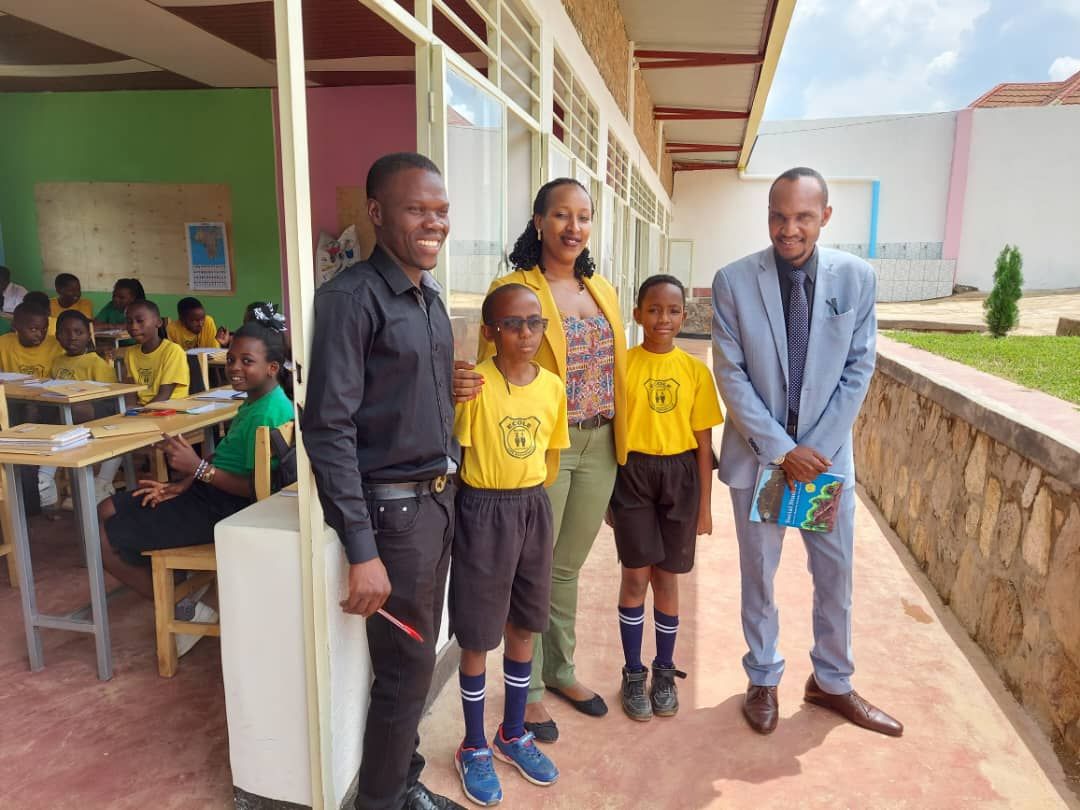
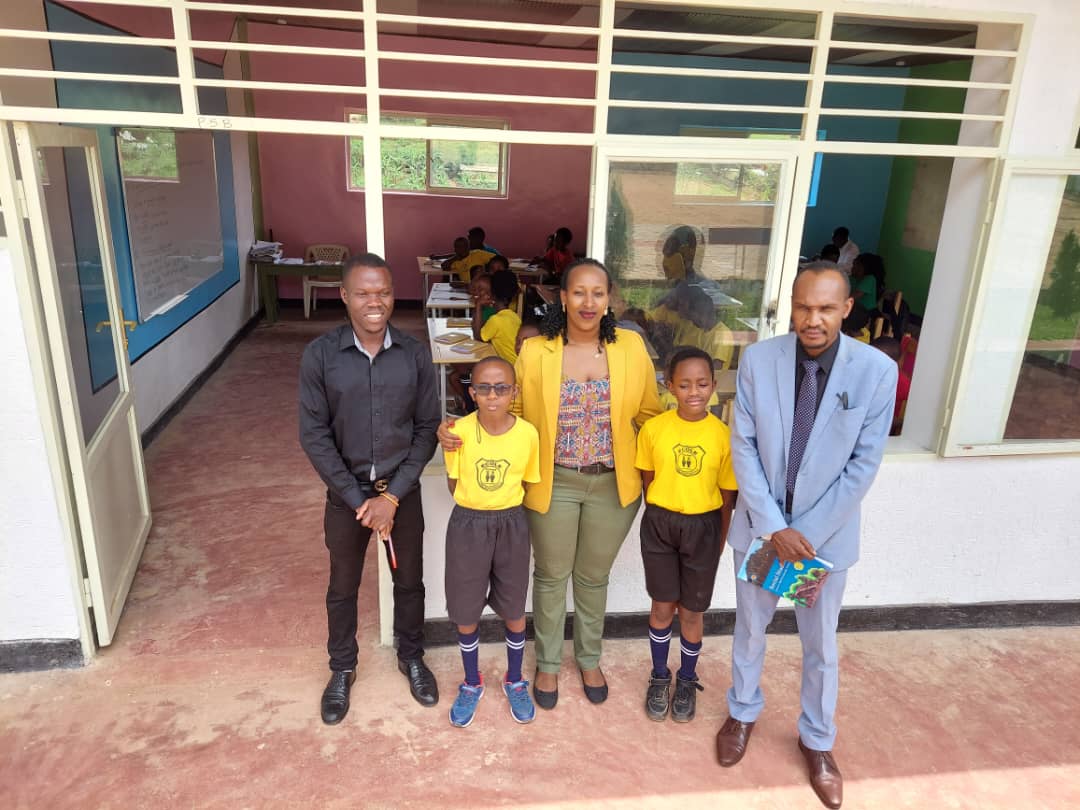
My recent visit, Thursday, 17 November 2022, to a school in a rural area in the Southern Province of Rwanda was eye-opening and, therefore, worth reporting. For company, I had a woman companion, Tuyishimire Germaine, who had other things in mind especially with regards to the education of the “Girl Child” notably those in P5 — a point I will return to shortly. In the meantime, it is worth pointing out that the visit started out from the nursery section working our way from M1 (Nursery 1) all the way to M3 (Nursery 3).
Indeed, M3 is the last post towards transition to primary. It also has some language implications as pupils transition from French to English tuition at this point. The primary section was the highlight of the day as we visited almost every arm cutting across P1 to P5 (P means primary). It wasn’t hard to identify the Head Boy, Shimwa Alain Divin, from class interactions considering his speed of response to the numerous questions posed — especially in relation to mathematics and social studies.

However, the primary section, although currently just up to P5, was reminded about the need for an ‘exit strategy’ to which the response was positive.

“The school is currently advertising for P6 teachers and preparing pupils for the National exams which are usually taken in P6.”

Going back to the Girl Child education (i.e., SDG4), my female colleague undertook a tour with six P5 girls (including the head girl) to discuss matters of feminine hygiene, toilet usage and dealing with puberty — these touch upon SDG3 and SDG5 — and provides some further insights as to why it matters.

Why it Matters — Because everyone counts

According to the National Institute of Statistics of Rwanda (NISR), the current projections show that Rwanda’s population is estimated to continue growing for the rest of the century and reach 21 million by 2050, and 30 million in 2076. Around 70% are youth with 27.6% between the ages of 16 and 30, which underlines the importance for Rwanda to continue to invest in harnessing the demographic dividend. The 2022 Population and Housing Census, the fifth in the series (since the first in 1978) is themed: “Be counted because you count” which translates to “Ibaruze kuko uri uw’agaciro” in Kinyarwanda, to have the data to inform decisions and policies to build the “Rwanda We Want” and the “Africa We Want.”

As captured in the recent United Nations Population Fund (UNFPA) Rwanda Newsletter Issue 3, 2022, “As the world has the prospect of reaching 8 billion people by the end of this year, Rwanda is projected to have a population size of 13 million people in 2022.” This milestone is a moment for celebration. As we celebrate, let us remember what this population growth implies.

“Rwanda We Want” from Germaine to “Germane for the World”

The UNFPA advocates for:

“…measuring and anticipating demographic changes with its emerging opportunities and challenges in addressing maternal mortality, voluntary family planning and addressing gender-based violence often which is below the waterline of visibility.”

The Government of Rwanda has been commended for its strong leadership and commitments made to support Sexual and Reproductive Health and Rights for all and together with partners, including donors, private sector and civil society organizations in achieving the International Conference on Population and Development (ICPD) programme of action.

As my companion, Germaine, recently demonstrated, sexual and reproductive health is “germane” to the mental (psychosocial) development of the “Girl Child” in Africa — and especially as they transition to adolescence, is feminine hygiene. At the ages from 9–12 (the current range at P5), the physical and cognitive skills are important, and hopefully this would provide a platform for the mothers of these girls to be invited to parent evenings to discuss the development of their daughters, as well as the need for open communications between both parties.

“We observed the absence of such communications following interactions with the young girls.”

Quality education as enshrined in SDG4 goes beyond knowing “math” and “English”, it requires psychosocial development, including understanding the biological makeup, improving communications skills, and developing self-confidence alongside leadership skills — thereby leaving no one behind — “Ibaruze kuko uri uw’agaciro”.

The Rwanda We Want, Africa We Want — Some key pointers/ takeaways

1. Opportunities and challenges in addressing maternal mortality, voluntary family planning and addressing gender-based violence requires more visibility.

2. The Government of Rwanda has demonstrated strong leadership commitments in support of sexual and reproductive health for all with a range of partners.

3. Young people form 70% of the population — a demographic dividend — with prospects and challenges.

4. There is a prospect to leverage inclusive development “leaving no one behind,” which is embedded in the National Strategy for Transformation.

5. The updated population data will help inform not only decisions and policies, but also strategic planning, effective implementation, monitoring of interventions and data disaggregation which is crucial in achieving the SDGs.

6. Runda in Kamonyi District is a deprived neighbourhood compared with other districts in Rwanda.

7. Ecole les Rossignol is more than your average school — providing educational services to the local community and employing local workers.

8. Leadership is formed at the grassroots, and universities need to be involved in the education value-chain from primary upwards and onwards — not just secondary school leavers.

9. School visits by stakeholders are educational and can inform targeted policy interventions – in areas of civic duty, leadership and governance, and especially as enshrined in the social studies P5 curriculum.

10. There is a need for institutional support including financial and non-financial (e.g., books, ICT equipment, and know-how) from key stakeholders including those in the different tiers of government, development partners and non-governmental organisations.
11. The Centre for Economic Governance and Leadership at the University of Kigali is happy to work alongside  key stakeholders including embassies, the Ministry of Education and the Rwanda Basic Education Board to provide support to social initiatives such as these, and especially in deprived areas of the country.
12. This is very important considering HE Paul Kagames case for “education for all ”, recently published as photos.

The Most Important Provisions of Banks and Other Financial Institutions Act (BOFIA) 2020 Nigeria

0

The Banks and Other Financial Institutions Act (BOFIA) was signed into law by President Muhammadu Buhari on the 12th of November,2020.

This new law effectively repealed the old BOFIA 1991 and became the primary piece of legislation regulating the Nigerian Banking and Financial Services Sector through the Central Bank of Nigeria (CBN).

This Act was specifically enacted to overhaul and improve the Banking and Finance sector for a more positive impact on Nigerian economic development.

This article will be looking at the most important provisions of the act and their resultant effects on Banking and Financial services today. 

These provisions are as follows :-

Loans/Credit Facilities :- Under the BOFIA 2020, there is to be no more advancing of unsecured Loans or loans above 1 Million Naira by a bank or Other Financial Institution (OFI) except in compliance with CBN Regulations on Collateralization or with the prior approval of the CBN.

Transfers of shareholdings in Banks and Other Financial Institutions :- Under the BOFIA 2020, the consent of the CBN is now required where there is a planned transfer of significant shareholdings (which are interpreted as 5% and above) or percentages of the paid-up share capital of a Bank or OFI.

The Prohibition of Unlicensed Banks and Other Financial Institutions:- The BOFIA expressly prohibits the operation of Banks and Financial Institutions without CBN licensing.

The establishment of a Banking Sector Resolution Fund :- Otherwise known as “The Fund”, this is a fund to be domiciled with the Central Bank of Nigeria for the purpose of paying the Operational costs of bridge banks as well as the cost of transferring all or part of the business of a bank or financial institution as a result of a resolution and credit facilities where requested to banks and OFIs under Resolution.

Banks and Other Financial Institutions are as a result, subject to an annual levy towards this fund to be paid not later than the 30th of April every year.

The Introduction of a Special Tribunal For the Enforcement and Recovery of Eligible Loans :- Otherwise known as “The Credit Tribunal”, this is a measure of the BOFIA aimed at the creation of a more efficient sector-wide eligible loan recovery system, having jurisdiction over the enforcement of securities, guarantees or attachments or assets under eligible loan commitments made by any bank or OFI in Nigeria with its customers.

The Introduction of Stiffer Penalties for Defaults of BOFIA and Associated Provisions :- Some of these stiffer penalties include personal liability burdens for officials of defaulting banks in the event of compliance negligence on their parts as well as monetary fines of up to 50 Million Naira for violations of the BOFIA.

The introduction of CBN observation rights at Bank and OFI Board/Management Meetings:- The Act now allows for the CBN Governor to appoint agents (examiners) having the right to attend in observer capacities, board and management meetings of banks and OFIs.

Immunity of the CBN & Other Related Entities From Liability Claims :- This applies under the Act to claims of liability arising from the exercise by the CBN of its powers granted by the same Act.

Also,the Act now limits remedies open to parties suing the CBN to monetary compensation in cases of CBN license revocation, effectively banning the issuing by any court of restorative (Status Quo) orders against the CBN.

Liability limitations in cases of Force Majeure :- Under the Act, banks and OFIs are exempt from liability in cases of inability to render services to customers due to Force Majeure situations like natural disasters (classified under “Acts of God”), national incidents like coups, Medical/Public Health outbreaks/epidemics, etc.

CBN Powers Against Failing Banks :- Under the Act, the CBN Governor is empowered to when it deems it fit, halt payments in pursuance of contractual obligations entered into by failing banks as a party.

The CBN can also exercise its power under the Act to transfer a part or whole of a failing bank to 3rd party purchasers from among a set of intervention options at its disposal regarding failing banks, including but not limited to the power of the CBN itself to acquire controlling shares of failing banks and as a final solution, revocation of the failing bank’s license.

Has MetaMask backtracked on its ‘Web 3’ credentials?

0

ConsenSys the parent company of MetaMask, has announced it will collect user data via  its popular Infrura tool.

Infura is an API-based tool that allows users to connect their application to the Ethereum network, which provides the basis for many projects, such as Aragon, Gnosis, OpenZeppelin, and ConsenSys’s own flagship wallet service MetaMask.

This effectively means the MetaMask efforts to create REAL Web 3 is being backtracked.

MetaMask made history a few months back as being the only true Web 3 service by having a dApp at the UI (user interface) of their Android and iOS based wallet product.

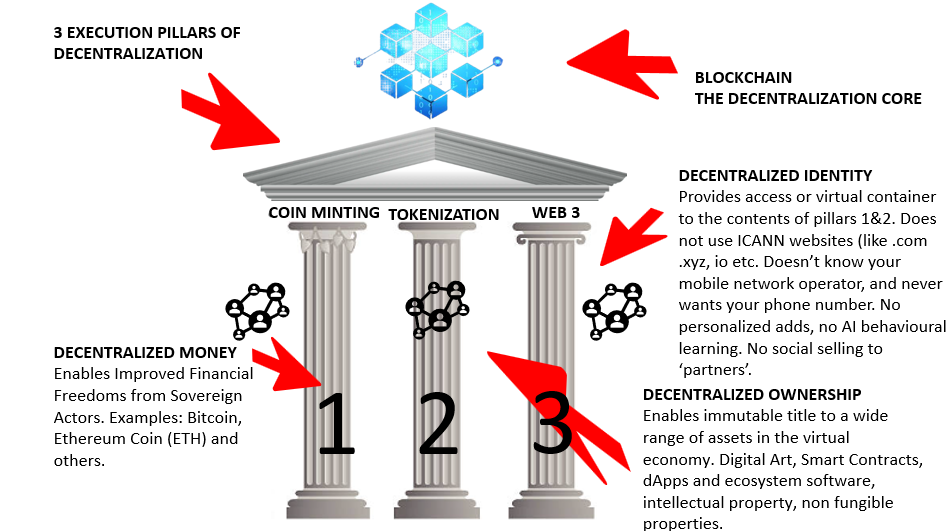
The other way to ensure a Web 3 ecosystem becomes realized is to have it accessed through a Web 3 domain by users who are exhibiting a decentralized identity.

With users data now being collected, it destroys the ecosystems Web 3 credentials and leaves users in a ‘Web 2’ status of having their identities centralized as they access blockchain assets.

This is the current state of most so called ‘Web 3’ projects, who are stopping short at tokenization of assets, but not achieving the decentralized identity and ecosystem admittance that is core to Web 3 principles.


9ja Cosmos is here… Get your .9jacom and .9javerse Web 3 domains  for $2 at:

https://www.encirca.com/handshake-9jacom/

https://www.encirca.com/handshake-9javerse/

Some information is courtesy of ‘Decrypt’

Musk Set to Unveil Different Colours of Verification Badges For Company And Government Accounts

0

Twitter CEO Elon Musk has disclosed plans to launch different colors of verification badges for company and government accounts on the micro-blogging platform.

Musk announced that government accounts will have a grey-colored verification badge, while company accounts will have a gold color verification badge, also noting that the blue-colored badge will still be used for individual accounts.

The Twitter CEO had earlier suspended the $8 payment for the ‘blue tick’ badge, which he disclosed was necessitated until there is high confidence of stopping impersonation.

He however disclosed that the launch of its verified service will hold next week Friday, noting that accounts on the platform will be easily distinguished by the colour of their badge.

He wrote on Twitter, “Sorry for the delay, we’re tentatively launching Verified on Friday next week.

“Gold check for companies, grey check for government, blue for individuals (celebrity or not) and all verified accounts will be manually authenticated before check activates. Painful but necessary”.

Musk stated that others would display a secondary tiny logo showing they belong to an organization if verified as such by that organization.

The paid blue tick verification badge on the platform was earlier free for some individuals who were popular personalities, and organisations. 

However, after Musk’s acquisition of the platform, in a bid to diversify the company’s source of revenue, he had to introduce the $8 payment fee for the verification badge.

Despite facing backlash over proposals to charge for the feature, Musk still went ahead with the plan.  He justified his plans to charge for the verification badge, by tweeting “we need to pay the bills somehow”, also adding that it was the only way to “defeat the bots and trolls”

In a Twitter thread, Musk said subscribers of the new Blue service would also get priority in replies, mentions and search. Users will also see half as many adverts and will be able to post long video and audio clips. No timing for the changes was announced.

The blue tick verification process was introduced on the platform in 2009, in a response to celebrity concerns about impersonation after it was slammed with a lawsuit for not doing enough to prevent the platform from imposters and parody accounts.