DD
MM
YYYY

PAGES

DD
MM
YYYY

spot_img

PAGES

Home Blog Page 4682

The clash of ego between Wike and Ayu will cost PDP heavily in Nigeria Election 2023

0

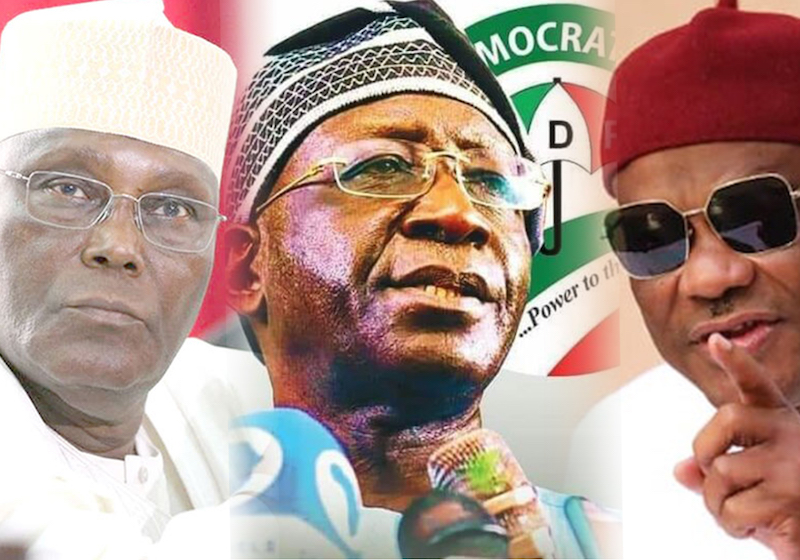
The fight between Governor Nyesom Wike of Rivers state with his faction (the G5 governors) and the PDP which was initially personal against the removal of Iyorcha Ayu is just a clash of ego; nobody wants to let go of his ego for the sake of peace and progress of the party and this clash of ego is about to cost them their presidential bid. 

In all these, it is Alhaji Atiku Abubakar, the presidential flag bearer of the party that will bear the brunt, and that begs the question; what is Atiku Abubakar and his team doing and have  been doing to resolve this fight between the G5 governors led by Wike against the PDP led by Iyorcha Ayu or does he by any stretch of the imagination dream that he can win the presidential election without the support of 5 major PDP governors?, whoever is giving the go-ahead is actually deceiving him, because having followed elections in Nigeria critically, I can make the bold assertion that without the supports of those governors, He Will Not Win. 

If it is the ego that is stopping him from approaching Nyesom Wike and listening to his demands then the ego wants to rob him of another chance of him becoming the president of Nigeria; if it is because he (Atiku) shares a personal relationship with Iyorcha Ayu, hence why he won’t support his  removal as the party national chairman, then his is not ready yet to be the next president of Nigeria and he just wants to waste his money again for campaigns and come back to repeat the process in the next four years 

In all fairness, despite the fact that Governor Nyesom Wike might have a personal vendetta against Iyorcha  Ayu, the national chairman of the PDP, what Wike and the rest four governors are demanding is the right thing and it is what the PDP constitution provided for; “Equitable and just representation of every region in the party structure”. 

The presidential flag bearer and the party national chairman must not come from the same region; since the presidential flag bearer in the person of Alhaji Atiku Abubakar is from the northern region, it is only equitable, just, and fair that the party chairman comes from the southern region and not also the Northern region, hence why Iyorcha Ayu should resign to give room for a southerner to take over the leadership of the party. This is the core demand of the G5 governors and other aggrieved members of the party in their camp.

Other party members were dismissive of this fight which was started by Wike, that Wike will come to terms and back down, but there is every indication that Wike is not backing out of the fight anytime soon until his demands are met and he has been able to successfully sell this fight to other four governors and has gathered a lot of followers out of the PDP who has joined him to chant and demand in one voice that “Iyorcha Ayu must resign”.

Let us even assume that Wike has personal grievances against Ayu, hence why he is calling for his resignation, can we also say that the rest four governors who have also joined the Wike camp also have a personal issue against Ayu?, especially a governor like Seyi Makinde of Oyo state, who unwaveringly stated that he does not mind sacrificing his re-election bid for the second term as the governor of Oyo state, he just want the right thing to be done, which is the equitable representation of all region in the party structure.

The PDP in all indications has shown that they are not ready for this election, they just want to put up a show and waste money again. When they are ready Nigerians will know, they need to first put their house in order if they really mean business.

Naira Redesign: CBN Introduces Policy to Protect the Unbanked, Underserved and Rural Dwellers

0

The Central Bank of Nigeria (CBN) has unveiled a new plan to protect rural dwellers and others who may be affected by the redesign of naira notes.

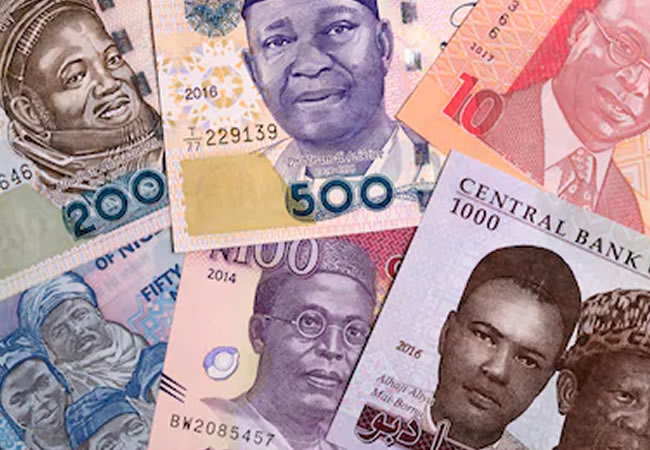
Last month, the financial regulator announced the decision to redesign N200, N500 and N1,000 notes in a move aimed at curtailing the amount of money outside the banks. The CBN also said the naira notes’ redesign will help in curbing money laundering, counterfeiting, terrorism and vote-buying as the 2023 general elections draw near.

However, while the move has been widely applauded, concerns have also been raised about it. The CBN said the redesigned notes will be released from Dec 15, and consumers have until Jan 31, 2023 to return the old notes to the banks. For rural dwellers, the unbanked and the underserved, meeting the deadline poses a challenge.

Against this backdrop, the senate has also joined the call for the CBN to extend the deadline to accommodate those not adequately covered through financial inclusion.

In a statement titled: “Currency Redesign: CBN Commits to Protecting Nigerians in Unbanked, Underserved, and Rural Areas,” which was signed by CBN’s Director of Corporate Communications, Osita Nwanisobi, the apex bank said it has taken steps to ensure that the policy is duly implemented nationwide without causing any group of people financial harm.

The CBN said agent locations across the country have been fully enabled for BVN registration, opening banking accounts/wallets & e-Naira wallets, electronic card distribution, and cash deposit, among others. This is to enable rural dwellers to deposit their old naira notes before the deadline.

Read the press statement below:

Further to its Press Release of October 26, 2022, on the above subject, the Central Bank of Nigeria (CBN) is pleased to note the positive response of the banking public to the policy through increased currency deposits across banks and other financial institutions.

The CBN remains committed to the seamless implementation of the initiative to ensure the achievement of its objectives to preserve the integrity of the local legal tender by reducing the significant amount of cash outside the banking system and its use in criminal activities, curtail counterfeiting, and promote financial inclusion, amongst others.

Whilst noting the progressive increase in financial access points and alternative banking channels over the years (electronic/internet banking, mobile apps, ATM, Cards/PoS, eNaira, agent banking, etc.), the Bank acknowledges that these may not be evenly distributed across all geopolitical zones and in some rural areas. In operationalizing this initiative, the CBN has been collaborating with relevant agencies and other stakeholders in the financial system in its execution, particularly ensuring that vulnerable citizens are not disenfranchised.

Accordingly, the banking public in rural and/or underserved areas may access CBN branches in the 36 States of the Federation to enquire about options for depositing their current N200, N500, and N1,000 notes, wallet/account opening processes, financial access points, etc.

Furthermore, agent locations across the country have been fully enabled for BVN registration, opening banking accounts/wallets & e-Naira wallets, electronic card distribution, and cash deposit, among others. Due to the policy, the agents have also been accorded priority to enable them to deposit cash collections through bank branches across the federation.

The Bank shall continue to monitor developments and issue updates to the banking public on the implementation of the Naira redesign policy as may be necessary.

The Innovation and Growth of Firms [video]

0

I am Ndubuisi Ekekwe. I am the Lead Faculty of Tekedia Institute USA. I invite you to register for the next edition of Tekedia Mini-MBA. I am an entrepreneur, an investor, a teacher, a businessman and a techie. On some days, I wake up working on microprocessors (my company is Africa’s only programmable microprocessor certified and authorized partner of Intel Corp) and by the end of the day, I have attended a couple of board meetings. 

In our school, we bring 360-degree understanding and perspectives to business because we understand every element of the business system. The next edition (Feb 6-May 6, 2023) comes with a revamped curriculum; I invite you to register here. .

You will enjoy spending 12 weeks with me and our Global Faculty members for N90,000 or $170. Do it and let us accelerate your leadership ascent and business growth. Come here and understand NUMBERS (click and listen).


The Important Components of the Regulatory Framework Governing The Maritime Sector in Nigeria

0

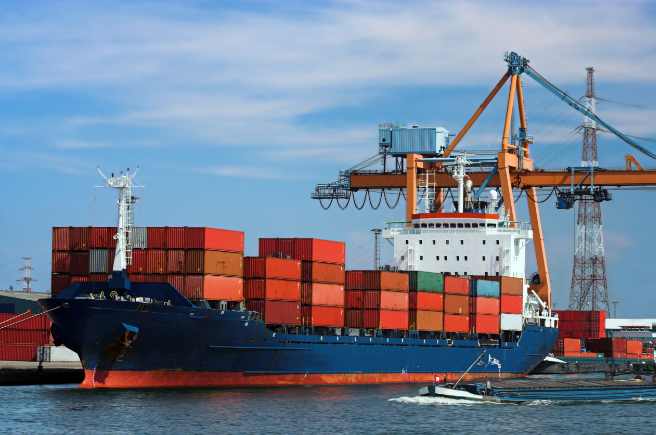
Travel by sea and other related water bodies remains the prominent means of executing International trade and the movement of goods in bulk. However, this places a huge regulatory burden on countries which have to exercise the utmost diligence in screening which vehicles and cargo loads pass through their ports of entry. 

This forms the focus of this article which looks at the Nigerian Maritime Sector and the components of the regulatory framework governing it. 

The components of the Regulatory Framework governing the Nigerian Maritime Sector are :-

The Maritime Sector in Nigeria is governed by the following laws and agencies :-

The Constitution of the Federal Republic of Nigeria 1999 (as amended)

-The Cabotage Act of Nigeria.

– The Admiralty Jurisdiction Act.

– The Merchant Shipping Act.

– The Federal High Court of Nigeria.

– The Nigerian Ports Authority (NPA).

– The Nigerian Maritime Safety and Administrative & Safety Agency (NIMASA).

The Federal High Court of Nigeria :-  The Admiralty Jurisdiction Act provides for the jurisdiction of the Federal High Court as covering the following subject matters :-

  1. Questions of proprietary interest in marine vessels .
  1. Any maritime jurisdiction being exercised previously by any court in Nigeria before the commencement of the Admiralty Jurisdiction Act.
  1. Actions or applications relating to any cause or matter by any ship owner or any other person under the Merchant Shipping Act.
  1. Liability Claims arising from Oil pollution .
  1. Causes of action arising from inland waters shipping classified as a national waterway.
  1. Causes of action arising from Federal ports in the country.
  1. Causes of action arising from banking transactions in support of the exportation and importation of goods from and into Nigeria via marine vessels.

The Merchant Shipping Act :- This is an act of the National Assembly that serves as the foundational legislative instrument governing ship collisions and liabilities arising from collisions.

Under this Act, liability for damages or loss caused by marine collisions will be directly proportional to the level of causative responsibility attributable to the parties involved.

This act also applies to ships and vessels owned by the Nigerian Government.

The Nigerian Maritime Administrative and Safety Agency (NIMASA) :- NIMASA is a government agency created by the NIMASA Act 2007 and which is entrusted with jurisdiction over Maritime safety , security, and shipping registration as well as Maritime labour matters.

NIMASA’s main functions are :-

– Overseeing the registration and licensing of ships.

– Developing a framework for the regulation and management of Maritime training and Safety standards.

– Regulating seafarer certification.

– Providing & enforcing maritime vessel safety regulations compliance.

– Ensuring safety in the Nigerian shipping industry regarding ship construction and navigation standards

– Exercising regulatory functions regarding merchant shipping.

The Coastal & Inland Shipping (Cabotage) Act 2003 :- This is an act of the National Assembly which was created to serve the functions of –

  1. Exercising regulatory functions over marine transportation in Nigeria.
  1. Ensuring the creation of a Cabotage vessel financing fund.
  1. Creating a favourable support system to enable Nigerian citizens own or manage vessels while limiting over-dependence on foreign vessels in the carriage of goods across the country’s waterway system.

The National Industrial Court of Nigeria (NICN):- This is a component of the Superior Court hierarchy that exercises original jurisdiction over Maritime Labour causes in Nigeria.

The International Maritime Organisation (IMO) :- This is an  agency of the United Nations (UN) established in 1958 and which admitted Nigeria into it’s membership on the 15th of March, 1962.

This agency was created to implement the UN Convention on the law of the sea 1982 (which Nigeria is a signatory to) which is one of the most developed systems of international law governing peace time international maritime causes.

Senate Backs CBN on Naira Notes Redesign, But Want the Deadline Extended

0
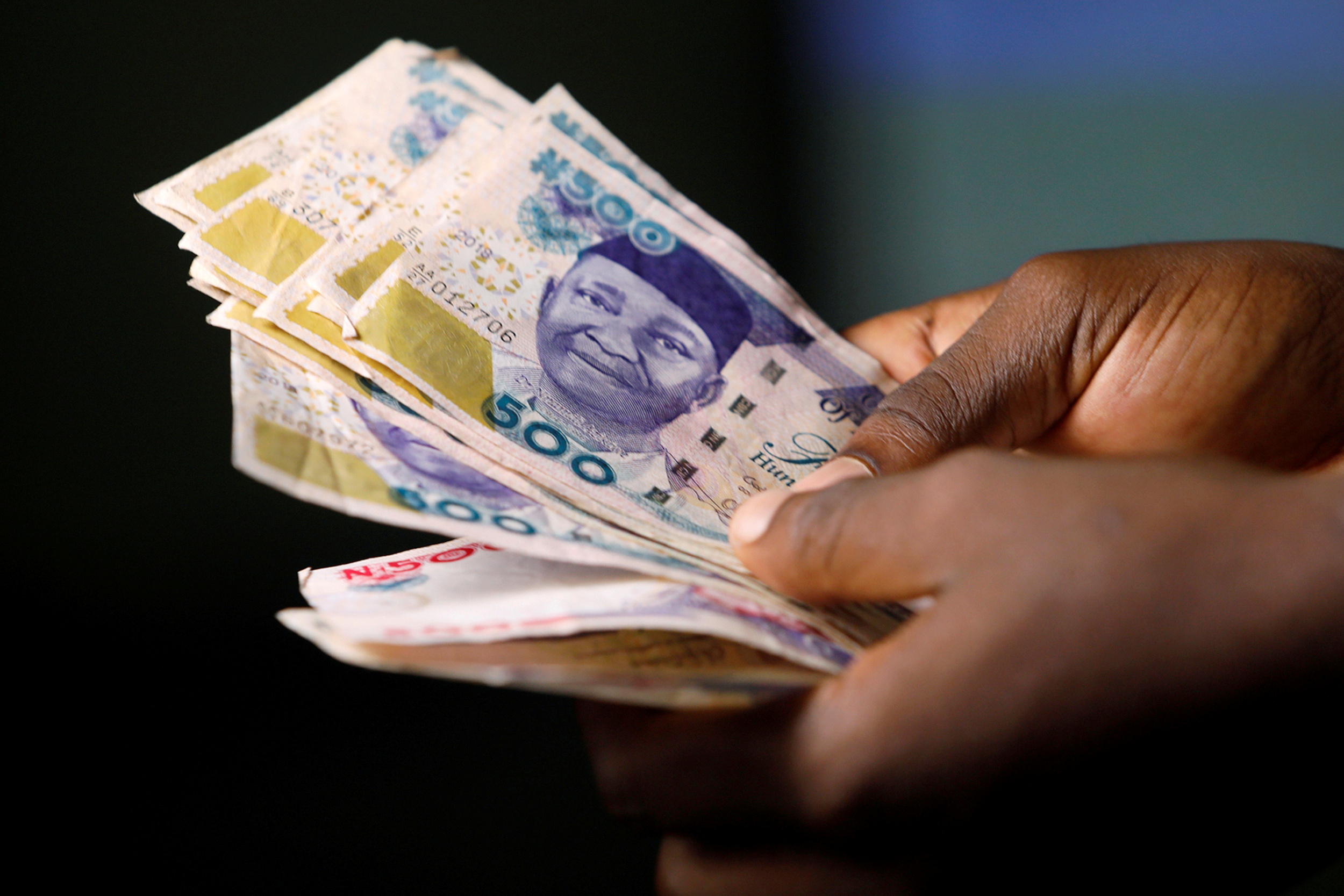
Nigerian naira banknotes are seen in this picture illustration, September 10, 2018. REUTERS/Afolabi Sotunde/File Photo

The decision of the Central Bank of Nigeria (CBN) to redesign N200, N500 and N1,000 naira has got legislative backing from the Nigerian Senate.

The upper legislative arm of the National Assembly approved a motion supporting the redesign of the naira notes after a rowdy session.

Senator Uba Sani moved the motion with the title: “Re-design of the New Naira Notes by the CBN: A Call for Legislative Support.”

The motion read: “Notes that currency management is a key function of the Central Bank of Nigeria and the integrity of the Naira and efficient supply of banknotes are indicators of a performing central bank, especially in predominantly cash-based economies such as Nigeria;

“Notes also that in recent times, currency management in Nigeria has faced series of challenges that have affected the ability of the CBN to efficiently carry out its mandate of issuing legal tender (i.e., provision of an adequate volume of clean banknotes in the right denominational mix for members of the public)

“Concerned that these challenges will continue to grow in scale, with attendant consequences on CBN and Nigeria’s reputation, if left unaddressed;

“Aware that these challenges are primarily centered around the wholesale hoarding of Naira banknotes by members of the public. Available statistics show that cash outside banks consist of over 80 per cent of Currency-In -Circulation (CIC).”

The motion succeeded by a majority of bipartisan support amidst concern that the Jan 31, 2023 deadline given by the central bank to totally implement the redesign is insufficient.

The motion was debated mainly on the argument that the deadline should be shifted by three more months. Senator Orji Uzor Kalu, with the support of senators Ali Ndume, Abiodun Olujimi, Betty Apiafi, Barau Jibrin, Chukwuka Utazi, argued that although the CBN policy is good, the deadline should be extended to enable effective compliance.

According to Kalu, the CBN governor Godwin Emefiele should be invited by the Senate Committee on Banking and Finance and be persuaded to move the deadline to April 30, 2023.

However, the senators’ push for the CBN to move the deadline is understood to be a ploy to help politicians offload the huge cash they have stockpiled for the elections. With the elections scheduled to hold in the early months of 2023, the central bank’s directive that old naira notes should be deposited to banks by the end of January, will greatly scuttle politicians’ chances to influence the outcome of the elections with vote-buying.

But senator Sani urged the red chamber to support the CBN naira redesign policy including the deadline. President Muhammadu Buhari had said that the CBN’s decision to redesign the naira notes, which is scheduled to take effect from Dec 15, has his backing.

The CBN said as at the end of September 2022, N2.73 Trillion out of the N3.23 trillion currency in circulation, was outside the vaults of commercial banks across the country, and supposedly held by the public. Thus, the apex bank’s decision to redesign the naira notes is aimed at curtailing the amount of cash stashed outside banks’ vaults. This, as believed by many, will help tame inflation.

With a divided house, the concern that rural areas would not be able to meet the CBN’s Jan 31, 2023 deadline, due to underbanking, became another concern for the Senate.

Senator Ali Ndume had earlier noted that there were only five banks in the entire 27 local government areas in Borno State since the insurgency started in the state, amplifying the concern that in some states across the country, Nigerians who lack access to financial inclusion will be seriously impacted by the naira notes redesign. Most banks in the rural communities have been shut down due to insecurity.

Although the senate indulged in heated debate over the matters arising, particularly the deadline issued by the CBN, it later resolved to support the naira notes redesign with legislation.

Deputy President of the Senate, Senator Ovie Omo-Agege, who presided over the session, said it was the prerogatives of the CBN to redesign the naira and put a deadline for compliance.

However, the Senate agreed that Emefiele has more clarification to make on the issue as regards its impact on national interests.

There is belief that the naira redesign will help in the fight against insecurity. But Senator Betty Apiafi noted that terrorists have opted to collect ransom in foreign currency, following the CBN’s decision to redesign the naira notes.