DD
MM
YYYY

PAGES

DD
MM
YYYY

spot_img

PAGES

Home Blog Page 4695

Tech Company BLOC Set to Provide Nigerian SMEs Access to Financial Services, Partners With SMEDAN

0

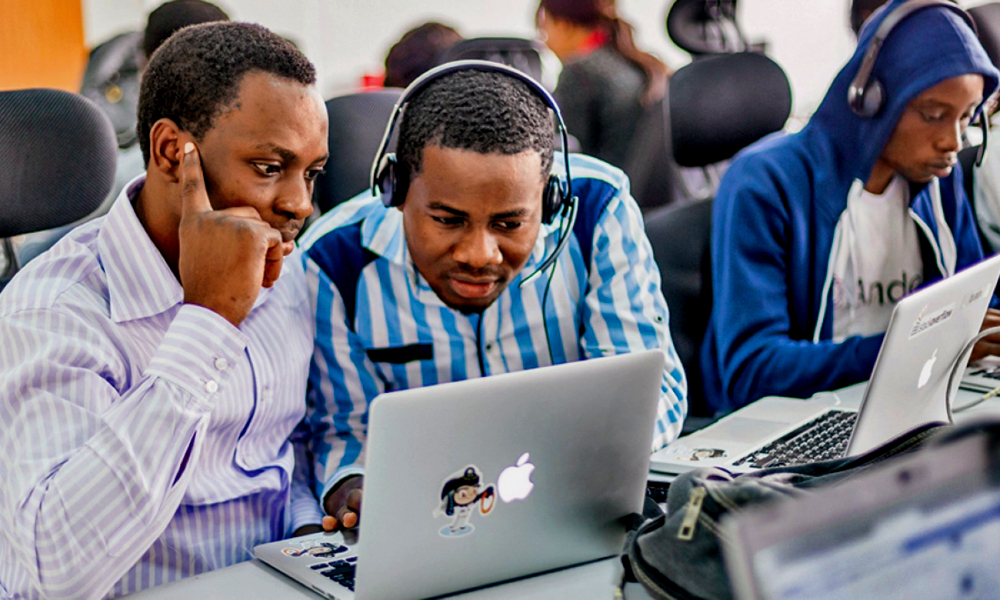
Technology company that offers Fintech infrastructure to businesses, Bloc has partnered with the Small And Medium Enterprises Development Agency of Nigeria (SMEDAN), to provide SMEs with easy access to financial services.

Backed by a CBN-Issued microfinance banking license and a PSSP license, Bloc seeks to embed digital financial services into the product and services of small businesses in the country.

Following its partnership with SMEDAN, it will enable easy onboarding of these SMEs, by providing them with fintech services such as lending, Issuance of POS, industry-specific supply chain solutions, digital banking, bill payment, loyalty cards management, social commerce platforms, etc.

Speaking on Bloc’s partnership with SMEDAN, the Director-General and Chief Executive Officer of SMEDAN, Mr. Wale Fasanya disclosed that such strategic partnership will significantly increase the growth of SMEs in the country, also creating multiple inventions.

In his words, “We know this partnership with Bloc and the subsequent platforms that are being developed will benefit the SMEs that work with us by improving access to specialized services developed by the innovative FinTech sector of Nigeria.

“We have more than 4,000,000 registered FinTechs and we are always thinking of ways by which we can improve their existence. Our success is measured by how much we can do for them, and we believe we have shown our level of innovation by developing this platform with Bloc.”

Also commenting on the partnership, Bloc’s Business Development Officer, Mr. Kingsley Ikart said “As an infrastructure company that provides services to other FinTechs, we believe that this platform designed by SMEDAN and Bloc would allow some of these FinTechs to extend their brilliant services to SMEs that would otherwise not have been aware of what they do.

“He further described the partnership between Bloc and SMEDAN as a win-win situation. This is because these SMEs can now benefit from such innovations without stressing themselves and compromising the time they need to attend to their businesses”.

With so many technological advancements in the world today coupled with global adoption, consumer expectations are changing. Many SMEs are including financial technology products, which has no doubt created a significant impact on their business.

Following Bloc’s mission to provide financial services to SMEs in Nigeria, it will no doubt lead to the exponential growth of these SMEs, thereby positively impacting Nigeria’s economy due to their significant role.

Twitter Reportedly Suspends $8 Verified Checkmark, Following Impersonation Chaos

0

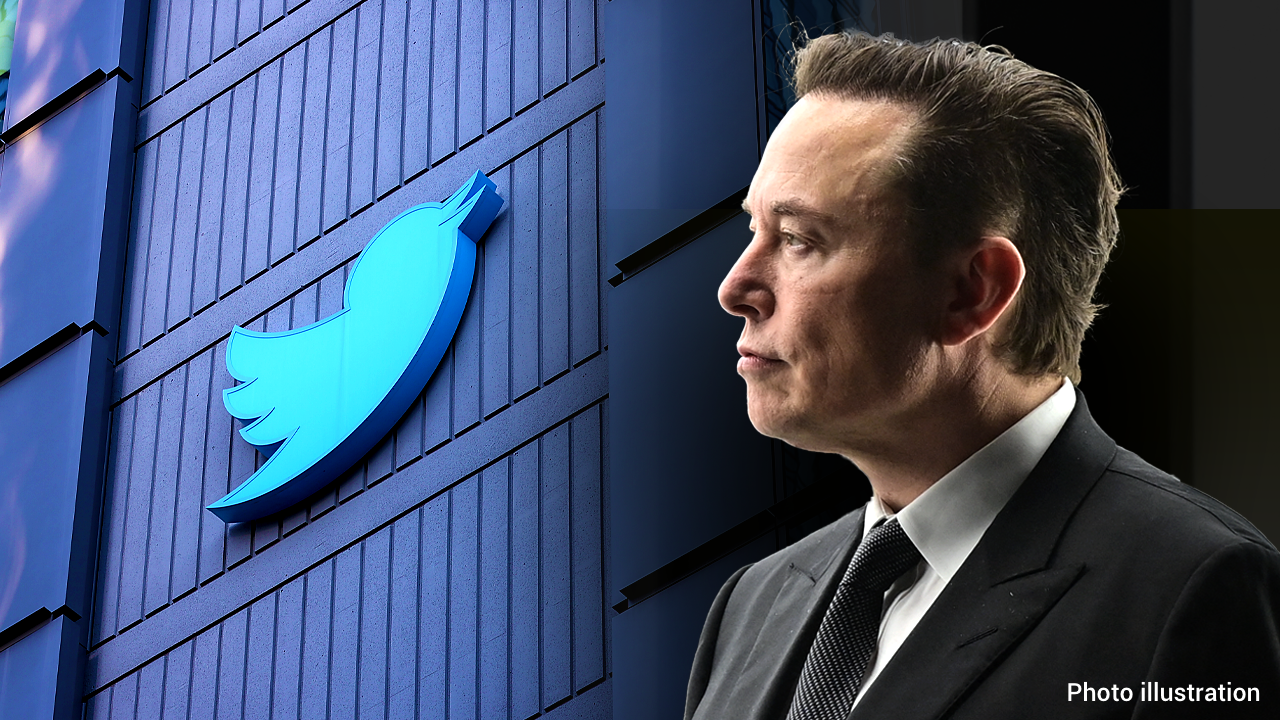
Twitter has suspended Twitter Blue following massive impersonation that followed the idea introduced by new owner Elon Musk earlier this week.

Musk, who completed the acquisition of Twitter at the end of October, introduced $8 verification fee as an additional means of generating revenue for the social media company. The Twitter Blue now offers anyone who pays $8 per month the opportunity to be verified.

The idea has led to increase in number of verified accounts as many pay $8 for the blue checkmark. But it also unleashed unprecedented impersonation and disinformation on Twitter, forcing the platform to halt the feature.

“Twitter has suspended the launch of Twitter Blue and is actively trying to stop people from subscribing ‘to help address impersonation issues,” Schiffer tweeted.

Schiffer said the internal note was shared on the company Slack: “An update on what we did tonight: hid the entry point to Twitter Blue, added the ‘official’ label for ONLY advertisers. Note: here is at least one way for users to sign up for Blue. Legacy Blue users can go to subscriptions and upgrade,” she quoted the note saying.

Musk’s decision to monetize Twitter verification was highly criticized. Many users believe it will defeat the purpose of the checkmark which lends credibility to user identity. But he didn’t change his mind. He only reviewed the verification fee from the $20 he wanted it to be to $8.

Now with many signing up for the blue checkmark, impersonation of public figures and firms has become prevalent on the platform. Reports said that racial abuse and bullying have also rocketed on Twitter since Musk took over.

Musk’s idea of putting an end to the impersonation is directing that parody accounts must indicate it in their bio. He warned last week that any Twitter handles engaging in impersonation without clearly specifying “parody” will be permanently suspended. On Friday, he announced new updates.

“Going forward, accounts engaged in parody must include “parody” in their name, not just in bio,” he said, adding that “We’re adding a “Parody” subscript to clarify,” he said.

With that yet to be complied with by users, as indicated by the growing number of impersonated accounts, Twitter has chosen to shut down the Twitter Blue feature until the problem is fixed.

Schiffer reported that Twitter’s note said existing subscribers will still be able to access Twitter Blue features, and that the company disabled the option to purchase Twitter Blue on iOS.

Twitter users confirmed this early on Friday, saying the sign-up for Twitter Blue was no longer available on the iOS app. The Verge reported that users who still had the option to subscribe received an error message that said, Thank you for your interest! Twitter Blue will be available in your country in the future. Please check back later.

The unprecedented crisis has put Twitter’s checkmark revenue stream on hold. Musk said it should account for half of the company’s revenue.

It is not clear if making users indicate when accounts are parody will stop the mess. Musk said on Thursday that Twitter will do lots of dumb things in coming months. “We will keep what works & change what doesn’t,” he added.

How not to talk with Africa about Climate Change – By Muhammadu Buhari

4

By Muhammadu Buhari

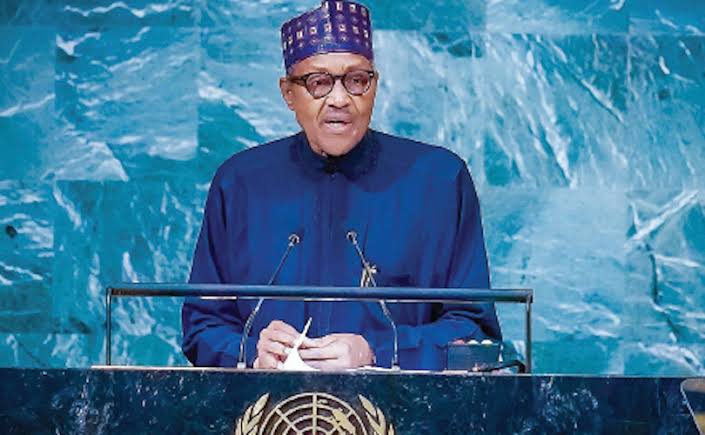
Part of my nation is underwater. Seasonal flooding is normal in Nigeria, but not like this. Thirty-four of the country’s 36 states have been affected. More than 1.4 million people have been displaced.

Together with drought-driven famine in the Horn of Africa, cascading wildfires across the North and wave upon wave of intensifying cyclones in the South, climate disasters in Africa form the backdrop to this year’s U.N. Climate Change Conference (known as COP27) in Egypt.

Many of my peers are frustrated with Western hypocrisy and its inability to take responsibility. Governments have repeatedly failed to meet their commitments to the $100 billion fund for climate adaptation and mitigation in the developing world — for the mess their own industries caused. According to the United Nations, Africa is the continent worst affected by climate change despite contributing the least to it. Even though the COP27’s agenda notes the need for compensation for loss and damages (as distinct from adaptation and mitigation funding), that demand has mostly been met with silence in the West.

Amid this simmering acrimony, I offer a few words of advice to Western negotiators at this year’s COP27. They should help the West avoid exacerbating what the U.N. secretary general has called “a climate of mistrust” enveloping our world. Some of the global south’s demands seem obvious. But experience of the recent past suggests they need to be reiterated.

First, rich countries should direct a greater share of funding to developing nations’ adaptation to the effects of climate change. Most financing currently flows toward mitigation projects, such as renewable energy projects, that reduce emissions. While such projects have their uses, far more money needs to go to helping Africa adapt to the effects of climate change — which seems only fair for a continent that produces less than 3 percent of global emissions.

Africa urgently needs investment in adaptation infrastructure — such as flood prevention systems — to stave off the disasters that destroy communities and cripple economies.

Second, don’t tell Africans they can’t use their own resources. If Africa were to use all its known reserves of natural gas — the cleanest transitional fossil fuel — its share of global emissions would rise from a mere 3 percent to 3.5 percent.

We are not the problem. Yet the continent needs a reliable source of power if it is to pull millions of citizens out of poverty and create jobs for its burgeoning youth population. Africa’s future must be carbon-free. But current energy demands cannot yet be met solely through weather-dependent solar and wind power.

Don’t tell Africa that the world cannot afford the climate cost of its hydrocarbons — and then fire up coal stations whenever Europe feels an energy pinch. Don’t tell the poorest in the world that their marginal energy use will break the carbon budget — only to sign off on new domestic permits for oil and gas exploration. It gives the impression your citizens have more of a right to energy than Africans.

Third, when you realize you need Africa’s reserves, don’t cut its citizens out of the benefits. In the wake of the Ukraine war, there has been a resurgence of interest in Africa’s gas. But this impulse is coming from Western companies — backed by their governments — who are interested only in extracting these resources and then exporting them to Europe.

Funding for gas that benefits Africa as well as the West is conspicuously lacking. At last year’s COP, Western governments and multilateral lenders pledged to stop all funding for overseas fossil fuel projects. Without these pools of capital, Africa will struggle to tap the gas needed to boost its own domestic power supply. Consequently, its development and industrialization will suffer. Donor countries don’t believe in the developing world exploiting its own hydrocarbons even as they pursue new oil and gas projects within their own borders.

Western development has unleashed climate catastrophe on my continent. Now, the rich countries’ green policies dictate that Africans should remain poor for the greater good. To compound the injustice, Africa’s hydrocarbons will be exploited after all — just not for Africans.

Fourth, follow your own logic. Africa is told that the falling cost of renewables means that it must leapfrog carbon-emitting industries. At the same time, Western governments are effectively paying their citizens to burn more hydrocarbons: Lavish subsidy packages have been drawn up to offset spiraling energy bills. Meanwhile, Africa is the continent closest to being carbon-neutral. It reserves the right to plug holes in its energy mix with the resources in its ground — especially when they will make almost no difference to global emissions.

The Western countries are unable to take politically difficult decisions that hurt domestically. Instead, they move the problem offshore, essentially dictating that the developing world must swallow the pill too bitter for their own voters’ palates. Africa didn’t cause the mess, yet we pay the price. At this year’s COP, that should be the starting point for all negotiations.

Pay attention to Time, popular and yet dispensable

0

Daily, I work hard to be in charge of the hours, minutes and seconds of the day. I stay focused to ensure I am not fighting time because time is insensitive to my efforts. The seconds will tick, the minutes will go and the hours will pass. So, to win and thrive, I have to find ways to boss time (yes, be in charge), to avoid being lost in its timeless nature. 

Indeed, there is no greater liberation than owning your TIME, and no great success has been achieved without knowing that time is scarce even in its limitless form. But managing time does not mean spending less or more time on something; it’s simply knowing what to spend time on.

When something is popular and yet dispensable, pay attention to that item. Time is popular (it defines our days) but yet most times we do not pay attention to it. Do not be confused by its limitless form because it is actually a scarce item. #time the hours. 

https://www.tekedia.com/the-biggest-failure-is-not-fixing-things-that-lead-to-failures/


How CEOs Master Their Time And Why They Get the Big Paycheck

0

The role of the Chief Executive Officer (CEO) is a noble one and highly sought after in the corporate ecosystem. It’s the most powerful and influential title in business. The CEO controls the biggest organization’s resources (usually) including the paycheck. However, this is often counterbalanced with having the highest exposure to risk-taking and being  mainly responsible for the outcomes.

According to a 2017 report by the Economic Policy Institute, CEOs pay has risen much more quickly since the Great Recession of 2008 than for anybody else. Where the regular workers’ pay has fallen flat, CEOs now make an average of 271 times regular workers’ pay. That is on ratio 271:1

Despite how excitingly rewarding the position of CEO is, acting the CEO is the most all-consuming, lonely and stressful thing in business management.

According to McKinsey’s analysis of the mindset and practices of excellent CEOs, what the CEO controls—the company’s biggest moves — accounts for 45 percent of a company’s performance. The analysis further shows that just three in five newly appointed CEOs live up to performance expectations in their first 18 months on the job. The high standards and broad expectations of directors, shareholders, customers, and employees create an environment of relentless scrutiny in which one move can dramatically make or derail an accomplished career.

Analysis of how CEOs spend their time shows CEOs average 60 hours per week — though some CEOs probably put in more than the average. On average, CEOs spent 9.7 hours per weekday, making 48.5 hours a week; around 4 hours per weekend day; and 2.4 hours per vacation day, all of which adds up to 62.5 hours a week. Further analysis reveals that about 75% of CEO time is scheduled in advance, with 25% spontaneous. The specifics for hours spent are as follows:

25% on people and relationships

25% on functional and business unit reviews

16% on organization and culture

21% on strategy

3% on professional development

4% on mergers and acquisitions

4% on operating plans

Surprisingly, 1% on crisis management

Regarding how CEOs communicate, study found 61% of CEOs’ communication is face-to-face; 24% is electronic, and 15% good old-fashioned phone and letters.

Michael Porter who led a Harvard Business school study of 27 CEOs across a wide range of industries remarks “Time is indeed the scarcest resource of the CEOs”.