
DD
MM
YYYY

PAGES

DD
MM
YYYY

spot_img

PAGES

Home Blog Page 47

MrBeast Pushes Deeper Into Fintech With Acquisition of Gen Z Banking App Step

0

The deal signals how major creators are turning their vast audiences into launchpads for regulated financial products, blurring the line between influencer culture and mainstream consumer finance.

YouTube megastar MrBeast has taken a decisive step beyond content and consumer goods, announcing that his company, Beast Industries, is acquiring Step, a fast-growing banking app aimed at teenagers and young adults.

The move marks one of the clearest signs yet that creator-led businesses are positioning themselves as serious players in the financial services sector, not just entertainment. It is also a marker of how far the creator economy has matured, and how influence, once monetized mainly through advertising and merchandise, is now being deployed to reshape entire consumer-facing industries, including finance.

Step sits at the intersection of two powerful trends. One is the long-running effort to bring younger users into the formal financial system earlier, particularly in the U.S., where credit histories play an outsized role in determining access to housing, education, and employment opportunities. The other is the struggle of fintech companies to sustain growth as venture funding tightens and customer acquisition costs rise sharply.

Founded as a teen-focused banking app, Step offers fee-free accounts, debit cards, and tools designed to help users build credit without taking on traditional debt. Its pitch has resonated with Gen Z parents and teenagers alike, helping it grow to more than 7 million users and attract roughly $500 million in funding. Celebrity investors and top-tier venture firms gave Step credibility, but scaling further in a crowded fintech landscape has remained a challenge.

That is where Beast Industries enters the picture. Jimmy Donaldson’s audience is not just vast, but unusually young and globally distributed. Unlike many influencers whose followings are concentrated on a single platform, MrBeast operates across YouTube, Shorts, gaming, and live formats, giving him repeated touchpoints with the same demographic Step is trying to reach. In practical terms, this offers Step something fintech startups rarely have: a built-in, trusted marketing channel with hundreds of millions of potential users.

Donaldson has framed the deal as a response to a gap in financial education, saying he was never taught how to invest, build credit, or manage money. That message aligns closely with Step’s positioning and helps soften a key risk for creator-led financial ventures: trust. Banking products require users to believe not just in the brand, but in its stability and intent. By leaning into a narrative of empowerment rather than profit, Beast Industries appears to be trying to anchor Step as a long-term platform rather than a quick monetization play.

Strategically, the acquisition also fits into the broader evolution of Beast Industries itself. The company has steadily moved away from being seen as a YouTube-first business. Feastables, its chocolate brand, has emerged as the main profit engine, while content increasingly functions as marketing rather than the end product. Other ventures, such as MrBeast Burger, highlighted the operational risks of scaling physical businesses too quickly, offering lessons that likely informed the more measured move into fintech through an established platform like Step.

Still, banking is a fundamentally different challenge. Unlike snacks or subscriptions, fintech operates under strict regulatory oversight, relies on partnerships with licensed banks, and faces reputational risks if products fail or users feel misled. Any misstep could quickly spill over into MrBeast’s core brand. That makes governance, compliance, and operational discipline central to the success of the deal, even if Beast Industries remains largely behind the scenes.

The acquisition also speaks to a shift in how fintech companies may grow in the coming years. For much of the last decade, growth was fueled by cheap capital and aggressive digital advertising. Today, with funding scarcer and scrutiny higher, distribution is becoming more valuable than novelty. Platforms that already command attention, whether social networks or creator-led ecosystems, are increasingly attractive partners or acquirers.

The deal may raise fresh questions about how financial products are marketed to younger audiences, especially when promotion is tied to entertainment figures with enormous influence. For competitors, it is expected to add pressure to rethink how they engage Gen Z customers who are skeptical of traditional banks but deeply loyal to digital communities.

In that sense, MrBeast’s move into fintech is less about one app and more about a broader reordering of consumer finance. As creators evolve into conglomerates, they are beginning to compete not just with brands but with institutions. Step may be the first major test of whether that influence can be converted into durable trust in one of the most sensitive sectors of the economy.

Google Waymo’s Contradiction as Humans in Philippines Continue To Make Most Critical Decisions

0

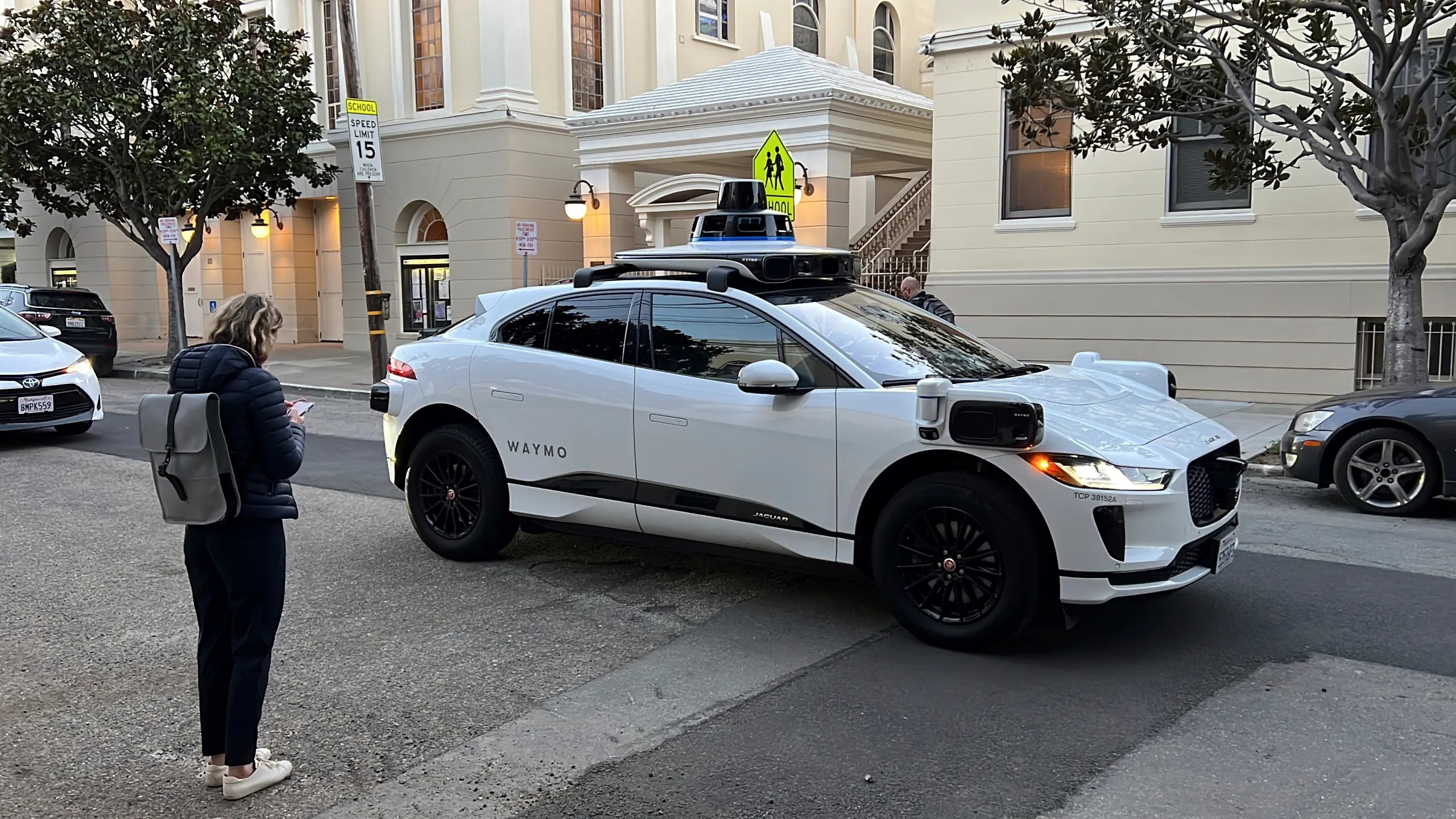
A quiet revelation is emerging: Waymo’s robotaxis may drive themselves on U.S. roads, but many of their most critical decisions are still made by human operators sitting thousands of miles away in the Philippines. Waymo, after all, is owned by Google’s parent company. Autonomy, it seems, is layered.

Waymo has long been held up as the gold standard of autonomous driving, a symbol of how far artificial intelligence has progressed beyond human control. Yet testimony at a recent U.S. Senate hearing has exposed a less visible but increasingly important reality: when Waymo’s vehicles encounter situations they cannot resolve on their own, responsibility often shifts to remote human workers, many of whom are based in the Philippines.

The disclosure by Waymo’s chief safety officer, Mauricio Peña, cut through years of marketing around “driverless” technology. Peña told lawmakers that in rare or complex scenarios, Waymo’s robotaxis can hand over control to remote operators who guide the vehicle through the situation. These workers act as a form of last-resort intelligence, stepping in when sensors, software, and pre-trained models are insufficient to safely navigate the real world.

This reminds me of an experience many of us had during industrial training in Nigeria’s oil and gas industry. You would leave Port Harcourt in a new vehicle, driven by a polished professional. Everything felt regulated, certified, and safe. Then, somewhere around Ogoni on the way to Ikot Abasi, the road ended, and the sea began.

To cross it, you boarded a small speedboat manned by a driver who might not even be allowed through the gates of the oil company, often visibly drinking. Once the boat took off, all power and influence shifted. The man at the helm was a human “fish”, someone who could survive what you could not in the sea. Ironically, most people on board had swimming certificates, yet none could swim well enough to matter. In that moment, safety protocols dissolved, replaced by an uncomfortable trust in informal expertise. Yes, the roads are great for professional drivers but on the sea, anything could go!

There is an Igbo saying: a bird that flies off the ground only to perch on an anthill is still very much on the ground. Waymo’s autonomy fits this wisdom. If its most critical decisions are still made by human operators in the Philippines, then the real question is no longer just about Waymo’s engineering.

It is about who those humans are, how they are trained, and how much judgment we are delegating to people we never see. In the age of AI, technology may scale but accountability remains stubbornly human.

Waymo Admits Its Robotaxis Are Often Controlled By Workers In The Philippines

0

Waymo’s robotaxis may drive themselves on U.S. roads, but many of their most critical decisions are still made by human operators sitting thousands of miles away in the Philippines.

Waymo has long been held up as the gold standard of autonomous driving, a symbol of how far artificial intelligence has progressed beyond human control. Yet testimony at a recent U.S. Senate hearing has exposed a less visible but increasingly important reality: when Waymo’s vehicles encounter situations they cannot resolve on their own, responsibility often shifts to remote human workers, many of whom are based in the Philippines.

The disclosure by Waymo’s chief safety officer, Mauricio Peña, cut through years of marketing around “driverless” technology. Peña told lawmakers that in rare or complex scenarios, Waymo’s robotaxis can hand over control to remote operators who guide the vehicle through the situation. These workers act as a form of last-resort intelligence, stepping in when sensors, software, and pre-trained models are insufficient to safely navigate the real world.

What unsettled lawmakers was not simply the existence of human intervention, but where that intervention takes place. The Philippines has become a global hub for outsourced digital labor, from call centers to content moderation and data labeling. Waymo’s reliance on Filipino contractors places the country at the center of America’s most advanced autonomous driving program, even as public messaging continues to emphasize full autonomy.

The logic is partly economic and partly structural for Waymo. Remote driving and support roles require a large, always-available workforce trained to respond quickly to unpredictable scenarios. The Philippines offers a deep labor pool with strong English proficiency and long experience supporting U.S. technology firms. Costs are lower than in the United States, and maintaining round-the-clock coverage across time zones is easier. In practice, this makes the Philippine workforce a quiet but critical component of Waymo’s safety architecture.

The arrangement, however, raises uncomfortable questions about what autonomy really means. If a robotaxi in San Francisco freezes at a construction zone or behaves unpredictably around emergency vehicles, a human operator in Manila or Cebu may be the one deciding how it proceeds. That human judgment, mediated through screens and networks, becomes part of the driving system itself. Autonomy, in this sense, is not the absence of humans but a reorganization of where and how their labor is used.

But this has prompted safety concerns. Senators pressed Peña on latency and reliability, given the physical distance between vehicles and operators. Even small delays in communication could matter in traffic situations unfolding in seconds. Peña maintained that Waymo has built safeguards into its systems and that remote intervention is tightly controlled. Still, the hearing underscored a basic tension: the more robotaxis are deployed at scale, the more edge cases arise, and the more human backup is required.

The focus on foreign workers also reflects a broader shift in Washington’s thinking about technology and national control. Massachusetts Senator Ed Markey called the use of overseas remote drivers “completely unacceptable,” framing the issue not just as a labor question but as one of sovereignty and security. Lawmakers voiced unease about critical transportation decisions being influenced by workers outside the United States, particularly as autonomous vehicles become more integrated into urban infrastructure.

Waymo’s case is especially sensitive because of its hardware choices. Unlike Tesla, which builds and controls its own vehicles, Waymo uses cars manufactured in multiple countries, including China. Although Peña emphasized that Waymo’s autonomous systems are installed and managed in the U.S., the combination of foreign-built vehicles and foreign-based operators has fueled suspicions about vulnerabilities in the system. In an era of heightened scrutiny over supply chains and data flows, even indirect links to China or other overseas networks attract political attention.

For the Philippine workforce itself, the role highlights another recurring pattern in the AI economy: essential labor that remains largely invisible. Much like the content moderators and data annotators who helped train large language models, remote operators supporting robotaxis occupy a gray zone. They are central to system performance but rarely acknowledged in public narratives about innovation. Pay, working conditions, and long-term career prospects for these workers are seldom discussed, even as their decisions can carry real-world consequences.

Although Waymo is not alone in this model, its prominence makes it a test case. The company has positioned itself as a leader in safe, scalable autonomy, operating commercial robotaxi services in multiple U.S. cities. As deployments expand, reliance on remote human support may grow rather than shrink, at least in the near term. That reality complicates claims that autonomy will soon eliminate human involvement in driving altogether.

The Senate hearing suggests that regulators are beginning to look past the surface of AI systems to examine the labor structures beneath them. Scrutiny of Waymo’s Philippine workforce is unlikely to fade. It touches on safety, labor practices, national security, and the credibility of autonomy itself. The technology may be cutting-edge, but its foundations rest on human judgment — relocated, outsourced, and largely unseen.

EU Moves to Rein In Meta’s AI Strategy on WhatsApp, Threatens Interim Measures

0

By threatening interim measures against Meta, EU regulators are signaling that access to dominant platforms like WhatsApp will be treated as a frontline competition issue in the AI era, not one to be settled years later.

European Union competition regulators have taken a decisive step against Meta Platforms, warning that they may order the U.S. technology group to stop blocking rival artificial intelligence services from WhatsApp while an antitrust investigation is still ongoing.

The move underscores Brussels’ growing determination to intervene early in fast-moving digital markets, particularly as AI becomes embedded in services used daily by hundreds of millions of people.

On Monday, the European Commission said it had sent a statement of objections to Meta, formally accusing the company of breaching EU competition rules by abusing a dominant position. At issue is Meta’s decision, implemented on January 15, to allow only its own Meta AI assistant to operate on WhatsApp, effectively excluding competing AI chatbots from access to the messaging service’s Business API.

What makes the case especially significant is the Commission’s stated willingness to impose interim measures, a tool used sparingly in EU antitrust enforcement. Such measures are designed to prevent “serious and irreparable harm” to competition before a final ruling is reached, reflecting regulators’ concern that delays could allow market power to become entrenched beyond repair.

“We must protect effective competition in this vibrant field,” EU antitrust chief Teresa Ribera said, arguing that dominant technology companies should not be allowed to leverage their existing platforms to tilt emerging AI markets in their favor.

Ribera said the Commission was considering swift action to preserve access for competitors to WhatsApp while the investigation proceeds, warning that Meta’s policy risks causing lasting damage to competition in Europe.

The case sits at the intersection of two forces reshaping global regulation: the rise of generative AI and the EU’s increasingly interventionist stance toward Big Tech. WhatsApp is one of the most widely used messaging platforms in Europe, giving Meta a powerful distribution channel at a time when AI companies are racing to integrate chatbots into consumer and business workflows. Regulators fear that denying rivals access to such a platform could distort competition at a formative stage of the market.

Meta has rejected that view, saying the Commission is overstating WhatsApp’s importance as a gateway for AI services. In an emailed statement, a company spokesperson said there was “no reason for the EU to intervene,” adding that users can access AI tools through app stores, operating systems, devices, websites, and partnerships across the industry. The spokesperson said the Commission’s reasoning “incorrectly assumes the WhatsApp Business API is a key distribution channel for these chatbots.”

The dispute echoes similar concerns raised outside Europe. In December, Italy’s competition authority moved against Meta on the same issue, prompting the Commission to cite the Italian case as a precedent for considering interim measures. By contrast, a Brazilian court last month suspended an interim order imposed by that country’s antitrust agency, illustrating how regulators and courts globally are still grappling with how to apply competition law to AI-driven markets.

However, the urgency appears to outweigh the risk of legal pushback for Brussels. The Commission has repeatedly argued that traditional antitrust timelines, which can stretch over several years, are ill-suited to digital markets where competitive dynamics can shift in months. In AI, officials worry that first-mover advantages tied to user access and data could lock in winners long before regulators reach final decisions.

The investigation also highlights the EU’s willingness to press ahead with enforcement despite criticism from the United States, where officials and industry groups have accused European regulators of disproportionately targeting American technology companies. The Commission has insisted that its actions are technology-neutral and grounded in law, even as geopolitical tensions rise around trade, industrial policy, and technological leadership.

The outcome of the case could have implications far beyond Meta. A decision to impose interim measures would send a strong signal to other platform owners that integrating proprietary AI tools into dominant services may attract swift regulatory scrutiny if rivals are shut out. It would also reinforce the EU’s broader strategy under its competition rules and new digital laws to keep markets open while technologies are still evolving.

The case adds to Meta’s mounting regulatory burden in Europe, where it is already subject to obligations under the Digital Markets Act. For the AI sector, it sharpens a central question: whether control over platforms with massive user bases will be allowed to shape the competitive landscape of artificial intelligence, or whether regulators will step in early to keep those gateways open.

The Commission said its decision on interim measures will depend on Meta’s response and its right of defense. Even so, the warning alone marks a turning point, suggesting that in the race to define the AI economy, Europe is no longer prepared to wait until the finish line to decide whether the competition was fair.

Alphabet Returns to Debt Markets as AI Spending Soars, Warning of New Risks to Ads and Excess Capacity

0

Alphabet’s AI spending spree is reshaping its balance sheet, risk profile, and core business model, marking a turning point in how even Big Tech funds and manages growth.

Alphabet is turning again to the debt market to help bankroll one of the most aggressive artificial intelligence investment drives in corporate history, while simultaneously flagging fresh risks tied to the technology’s rapid rise and the sheer scale of its infrastructure buildout.

The renewed trip to the debt market is seen as a signal that the artificial intelligence boom has reached a scale where even one of the world’s most cash-generative companies is rethinking how it finances growth — and openly acknowledging the risks that come with it.

In its latest annual filing, released alongside earnings, the Google parent laid out a more cautious narrative around AI than investors have been accustomed to hearing. While executives continue to frame AI as a once-in-a-generation opportunity, the company also warned that the speed, cost, and uncertainty of the buildout could strain operations, expose it to financial liabilities, and, in a worst-case scenario, leave it sitting on underutilized infrastructure.

That backdrop explains why Alphabet is preparing to raise about $20 billion through a multi-tranche bond sale, including an ultra-long 100-year sterling bond, according to people familiar with the deal quoted by CNBC. Demand has been strong, with the offering reportedly several times oversubscribed, underscoring how eager investors remain to lend to top-tier technology names even as borrowing rises.

The fundraising follows a $25 billion bond sale late last year and caps a sharp pivot in Alphabet’s capital structure. Long-term debt quadrupled in 2025 to $46.5 billion, a striking shift for a company that, for years, relied overwhelmingly on internal cash flows. The reason is simple: the scale of AI investment now dwarfs what operating cash alone can comfortably support without trade-offs.

Alphabet said it may spend up to $185 billion in capital expenditures this year, more than double its 2025 outlay. That figure places it firmly among the biggest corporate spenders on infrastructure in history. The money is being poured into data centers, specialized chips, custom silicon, power generation, cooling systems, and high-capacity networking — all essential to training and running large language models such as Gemini.

Yet the filing makes clear that this is not just about owning servers. Alphabet is increasingly relying on long-term leasing arrangements with third-party data-center operators to secure capacity quickly. While this approach accelerates deployment, it also raises costs and complexity, and creates contractual obligations that could become a burden if demand forecasts miss the mark.

Large commercial agreements, the company warned, could increase liabilities if Alphabet or its partners fail to perform. This is a notable admission in an industry that has largely emphasized upside while downplaying execution risk.

Management is keenly aware of the tension. Chief financial officer Anat Ashkenazi told analysts the company wants to invest “in a fiscally responsible way” and preserve a strong financial position. But when CEO Sundar Pichai was asked what worries him most, his answer was blunt: compute capacity. Power availability, land, supply chains, and the pace of expansion now dominate the strategic agenda.

Alphabet’s predicament mirrors a broader shift across Big Tech. Microsoft, Meta, and Amazon are all dramatically increasing capital spending, and together with Alphabet are projected to lift capex by more than 60% this year compared with already record levels in 2025. The collective outlay is fueling what Nvidia CEO Jensen Huang has described as the largest infrastructure buildout in human history.

For Alphabet, however, the stakes extend beyond infrastructure efficiency. AI is beginning to intersect directly with its core advertising business, which still accounts for the majority of revenue and profits. As generative AI tools become more capable, there is a growing question about how users interact with the internet — and whether traditional search, the backbone of Google’s ad machine, could be disrupted.

That concern appeared explicitly in Alphabet’s risk disclosures for the first time. The company acknowledged that consumers may reduce their use of conventional search as AI assistants answer questions directly, potentially altering traffic patterns and advertising formats. Alphabet said it is adapting with new ad products and strategies, but cautioned there is no guarantee these efforts will succeed.

So far, financial performance suggests resilience. Advertising revenue rose 13.5% year on year in the fourth quarter to $82.28 billion, easing fears that AI is already eroding demand. But investors are looking beyond current results to the medium-term implications of a shift in user behavior that could be structural rather than cyclical.

At the center of Alphabet’s AI push is Gemini, its flagship model and assistant, which now boasts more than 750 million monthly active users, up sharply from the previous quarter. The rapid uptake underscores why the company feels compelled to invest at scale: falling behind rivals such as OpenAI or Anthropic would risk ceding influence over the next generation of computing interfaces.

Yet scale cuts both ways. The more capital Alphabet commits upfront, the greater the risk of overcapacity if monetization lags, competition intensifies, or technological change renders today’s infrastructure less valuable. The company’s own warning about “excess capacity” reflects a growing recognition that the AI arms race may not deliver returns evenly or immediately.

Alphabet’s decision to lean more heavily on debt also reflects a subtle recalibration of financial strategy. Borrowing allows the company to preserve cash for flexibility, smooth out investment cycles, and take advantage of still-favorable credit markets. But it also ties Alphabet more closely to investor sentiment and interest-rate dynamics, at a time when capital markets are increasingly sensitive to execution risk.

In that sense, the bond sale is symbolic. It shows how AI has pushed Big Tech into territory once associated with capital-intensive industries such as energy or telecommunications, where long-dated assets, fixed costs, and leverage are part of the business model.

Currently, Alphabet retains enormous advantages: scale, data, engineering talent, and a balance sheet that remains strong by almost any measure. But its latest filings and financing plans suggest a more candid tone about the challenges ahead. The AI boom may still be in its early innings, but Alphabet is already grappling with the reality that building the future of computing is expensive, complex, and fraught with trade-offs that even Google cannot fully control.