DD
MM
YYYY

PAGES

DD
MM
YYYY

spot_img

PAGES

Home Blog Page 470

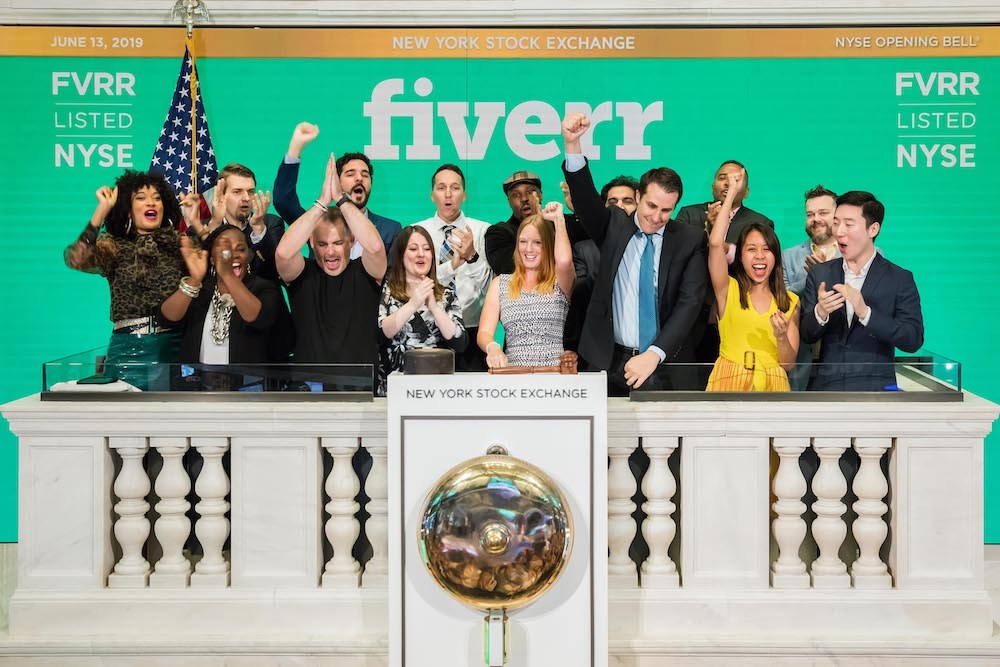
Fiverr Cuts 250 Jobs as It Pivots to an “AI-First” Strategy, Joining a Growing Trend in Tech

0

Fiverr is laying off 250 employees, about 30 percent of its workforce, as part of a sweeping shift to become an “AI-first company.” CEO Micha Kaufman confirmed the move in an essay posted on X, calling it a return to “startup mode.”

The Register, which first reported the layoffs, noted that Fiverr’s move is far from unique in 2025. Several tech companies, including language-learning platform Duolingo, announced similar “AI-first” pivots that come with significant workforce reductions.

In his essay, Kaufman said the transformation would make Fiverr “leaner, faster, with a modern AI-focused tech infrastructure, a smaller team, each with substantially greater productivity, and far fewer management layers.” The company has already integrated AI into areas like customer support and fraud detection, and Kaufman argued that these changes mean Fiverr doesn’t “need as many people to operate the existing business.”

The layoffs add a layer of irony to Kaufman’s earlier comments on AI. In May 2025, during an interview with CBS News, he advised workers to “automate 100 percent” of their roles using AI, insisting that doing so would not make them replaceable because human employees still bring “non-linear thinking” and “judgement calls.” For the 250 staff members affected this week, that reassurance has not held up.

The scale of the cuts is smaller than those at larger firms. Workday, for example, eliminated 1,750 roles in February 2025 as it too restructured around AI. Still, for employees, the result is the same: more responsibilities shouldered by fewer people, a dynamic becoming increasingly familiar across the tech industry as automation reshapes staffing needs.

Different Paths in the AI-first Era

Fiverr’s AI-first gamble highlights a broader split in how companies are navigating the technology shift. While some, like Fiverr and Duolingo, are embracing AI as a replacement for large chunks of their workforce, others are focusing on augmentation rather than substitution. Microsoft and Salesforce, for instance, have leaned into AI by building copilots and automation tools aimed at supporting employees rather than replacing them outright.

The contrast reflects an unresolved debate in Silicon Valley: should AI serve as a complement to human workers or a justification for streamlining them out of the picture? Fiverr is squarely in the second camp, betting that leaner operations and higher productivity per employee will create long-term shareholder value.

Yet there are risks. Gig economy platforms thrive on creativity and human connection, and industry analysts warn that a fully AI-driven approach could alienate both workers and clients who value human oversight. Rivals like Upwork, while also investing heavily in AI, have so far avoided mass layoffs, positioning their AI tools as enhancements to freelancer capabilities rather than wholesale replacements.

Fiverr’s layoffs also play into a larger divide about AI’s impact on jobs. CEOs like Anthropic’s Dario Amodei have warned that AI could displace half of all entry-level white-collar positions within a decade, while Nvidia’s Jensen Huang has countered that AI will create new categories of work. Despite those differing views, most analysts agree that the technology is already eroding job security in areas where tasks can be automated.

If its AI-first strategy delivers greater efficiency and customer satisfaction, Fiverr could establish itself as a model for leaner, tech-driven gig platforms. But if the move alienates freelancers or clients who see less value in an AI-heavy marketplace, it risks opening the door to competitors who balance automation with human-centered services.

The outcome may signal the future direction for mid-sized tech firms navigating similar pressures — whether AI will serve primarily as a tool for empowering workers or a mechanism for cutting them loose.

TokenWorks’ NFTStrategy Could Drive Demand, Increase Liquidity, And Boost Visibility For BAYC, Pudgy Penguins, Moonbirds, Meebits, CryptoDickButts

0

TokenWorks has announced the launch of NFTStrategy, a novel initiative introducing tokens designed to perpetually purchase NFTs from prominent collections, including Bored Ape Yacht Club (BAYC), Pudgy Penguins, Moonbirds, Meebits, and CryptoDickButts.

According to posts on X, the Day 1 tokens—$APESTR (BAYC), $PUDGYSTR (Pudgy Penguins), $BIRBSTR (Moonbirds), $MEEBSTR (Meebits), and $DICKSTR (CryptoDickButts)—aim to capitalize on the buzz generated by TokenWorks’ previous project, $PNKSTR. The NFTStrategy tokens are intended to continuously acquire NFTs from these collections, potentially impacting their market dynamics.

Bored Ape Yacht Club (BAYC): Created by Yuga Labs, BAYC remains a flagship NFT collection with a market cap of approximately $405.6 million. Despite a recent 14.7% floor price drop to 9.59 ETH, BAYC continues to dominate the NFT space. Yuga Labs has shifted focus back to BAYC after selling the intellectual property (IP) of CryptoPunks and Meebits, while Moonbirds characters will still appear in Yuga’s Otherside game.

Pudgy Penguins: With a market cap of $399.1 million and a token ($PENGU) market cap of $2 billion, Pudgy Penguins is a leading NFT project. Its floor price recently fell 17.3% to 10.32 ETH, but trading volume remains robust at 2,112 ETH (~$9.36 million) in a week. The project has expanded into physical merchandise and the Pudgy Party game, which saw over 50,000 downloads despite a 20% $PENGU token price drop in August.

Moonbirds: Launched in April 2022 by PROOF Collective, Moonbirds generated $280 million in initial sales. Yuga Labs acquired Moonbirds in 2024 but sold its IP to Orange Cap Games in May 2025. The collection’s floor price dropped 10.5% recently, with a trading volume of 1,979 ETH (~$8.77 million).

Meebits: Originally created by Larva Labs and acquired by Yuga Labs in 2022, the Meebits IP was sold to The Meebit Company in February 2025. The collection of 20,000 3D voxel characters has seen significant trading, with historical sales around $227 million.

CryptoDickButts: While less detailed in recent news, CryptoDickButts is included in TokenWorks’ strategy, indicating its relevance in the NFT space. Its inclusion alongside blue-chip collections suggests a niche but active community.

The NFTStrategy tokens could drive demand for these NFT collections by continuously purchasing them, potentially increasing floor prices and trading volumes. However, the broader NFT market has faced challenges, with recent double-digit floor price declines across major collections tied to Ethereum’s price correction.

The perpetual buying mechanism of tokens like $APESTR, $PUDGYSTR, $BIRBSTR, $MEEBSTR, and $DICKSTR could create consistent demand for the targeted NFT collections. This may stabilize or increase floor prices, especially for collections like BAYC and Pudgy Penguins, which have recently seen floor price declines of 14.7% and 17.3%, respectively.

Continuous buying could attract speculators, driving short-term price spikes. However, if the buying mechanism is not sustainable (e.g., due to limited token liquidity or funding), it could lead to artificial inflation followed by sharp corrections, harming investors.

The speculative nature of NFTs, combined with a novel token-buying mechanism, may lead to unsustainable hype. If the strategy fails to deliver consistent value, it could erode trust in TokenWorks and the broader NFT market, which is already grappling with volatility tied to Ethereum’s price corrections.

Perpetual buying could enhance liquidity for the targeted collections, making them more attractive to traders. For instance, Moonbirds and Meebits, recently transitioned to new IP owners, may see renewed interest. The focus on specific collections could divert attention and capital from other NFTs.

TokenWorks’ strategy may appeal to investors seeking exposure to blue-chip NFTs without directly purchasing them. The tokens could offer a novel investment vehicle, though their value will likely depend on the underlying NFTs’ performance and the strategy’s execution.

The NFT market’s volatility, coupled with the untested nature of perpetual buying tokens, poses significant risks. Investors could face losses if the tokens fail to maintain value or if the NFT market continues its downward trend (e.g., recent double-digit floor price drops).

Perpetual buying mechanisms could attract attention from regulators, especially if perceived as manipulative or speculative schemes. The SEC and other bodies have increasingly focused on NFTs and token-based projects, which could lead to compliance challenges for TokenWorks.

The perpetual buying model requires significant capital. If TokenWorks relies on token sales or external funding, any shortfall could disrupt the strategy, impacting token holders and NFT prices. The strategy’s success is tied to the broader NFT market’s health.

The success of NFTStrategy may depend on market sentiment, the sustainability of perpetual buying mechanisms, and TokenWorks’ execution. Posts on X suggest excitement around the initiative, but skepticism about speculative NFT investments persists.

US Federal Reserve 25-Basis-Point Signals Shift Toward A More Accommodative Monetary Policy

0

A 25 basis point (0.25%) interest rate cut by the Federal Reserve generally signals a shift toward a more accommodative monetary policy, aimed at stimulating economic activity by making borrowing cheaper and increasing liquidity.

Lower interest rates reduce the appeal of traditional safe assets like bonds, which offer lower yields, pushing investors toward riskier assets like cryptocurrencies. This can lead to increased capital inflows into Bitcoin, Ethereum, and altcoins as investors seek higher returns.

Markets often price in expected rate cuts, so a 25-basis-point cut may not trigger an immediate price spike if already anticipated (e.g., a 95.4% likelihood was noted for a December 2024 cut). Instead, short-term volatility could occur as traders react to the Fed’s broader economic projections or comments from Chair Jerome Powell.

Bitcoin is often viewed as a hedge against fiat currency depreciation, especially in a low-rate environment where increased liquidity could weaken the U.S. dollar. A 25-basis-point cut may enhance Bitcoin’s appeal as a store of value, particularly with its fixed supply of 21 million coins.

However, if the cut signals deeper economic concerns (e.g., recession fears), Bitcoin could face near-term selling pressure alongside other risk assets. Altcoins and decentralized finance (DeFi) protocols may see amplified effects due to their higher risk profiles. Lower rates could spur investment in DeFi projects, as cheaper borrowing encourages speculative ventures.

However, volatility risks remain high, and rapid price swings could follow. Stablecoins, pegged to the dollar, may see increased usage in a low-rate environment, as their issuers earn less on reserves, but demand could grow for trading volatile tokens.

The crypto market’s response may be tempered by external factors, such as incoming U.S. policies under President Donald Trump (e.g., tariffs, tax cuts), which could drive inflation and limit further rate cuts in 2025. This uncertainty may dampen bullish sentiment.

Regulatory developments, like enhanced SEC oversight or pro-crypto legislation (e.g., the CLARITY Act), could also influence market dynamics, potentially overshadowing the rate cut’s impact. The Fed’s forward guidance, including projections for 2025 rate cuts (currently estimated at two more), will heavily influence crypto markets. Unexpected hawkish signals could trigger sell-offs.

Job reports, inflation data (e.g., CPI at 2.7% in November 2024), and GDP growth will shape the Fed’s future moves, indirectly affecting crypto sentiment. Posts on X suggest optimism for Q4 2025, with expectations of new all-time highs for crypto if liquidity increases. However, these are speculative and not definitive.

A modest 25-basis-point cut may have a muted impact compared to larger cuts (e.g., 50 basis points in September 2024), as markets often anticipate smaller moves. Crypto’s high volatility means price movements may not solely reflect Fed policy. Factors like institutional adoption (e.g., Bitcoin ETFs) or regulatory shifts can dominate.

Economic uncertainties, such as Trump’s policies or global growth concerns, could counteract liquidity-driven gains. A 25-basis-point rate cut is likely to support crypto prices by increasing liquidity and risk appetite, potentially driving short-term gains in Bitcoin and altcoins.

However, the effect may be limited if already priced in, with volatility possible based on Fed guidance and broader economic signals. Investors should monitor FOMC projections, regulatory developments, and macro trends while avoiding emotional trading driven by market hype.

Cronos Trades At $0.23, Toncoin Holds $3.18 While BullZilla’s Best New Crypto Presale Now Raises Over 500k

0

Every market cycle creates a new set of winners, but only a few tokens make it into the spotlight as the best new crypto presales now. Investors, students of finance, and blockchain builders are looking for projects that balance hype with structured tokenomics. BullZilla, Cronos, and Toncoin are three names currently dominating conversations. Each represents a different opportunity, but one, BullZilla, has already raised over $500,000, cementing its role in the conversation about the best new crypto presales now.

BullZilla: The Front-Runner In Best New Crypto Presales Now

BullZilla ($BZIL) has quickly risen as a frontrunner among the best new crypto presales now. Stage 3, Phase 3B is already underway, with over $500K raised and more than 1,700 token holders onboard. At its presale price of $0.00006574, it gives early investors a rare asymmetric risk-reward profile.

BullZilla Tokenomics: Zilla DNA

The Zilla DNA design is one reason analysts include BullZilla in discussions about the best new crypto presales now. Its tokenomics split across presale allocation, staking rewards, a treasury, and a burn pool. The presale alone accounts for 80B tokens, or half the supply, with a progressive pricing engine that increases the cost of entry every time $100K is raised or 48 hours pass.

Mutation Mechanism: Presale That Never Sleeps

The Mutation Mechanism is what truly makes BullZilla stand apart from other projects branded as the best new crypto presales now. Automatic price increases ensure urgency, rewarding early participants and continuously driving momentum. Investors recognize this as a sustainable growth strategy, not just short-term hype.

Side Panel: $10,000 Investment Scenario

Entry Investment Presale Price Potential Price At $0.01 Portfolio Value
$10,000 $0.00006574 $0.01 ~$1,523,000

This illustrates why many investors rank BullZilla among the best new crypto presales now: small entries can lead to life-changing upside if targets are met.

How To Buy BullZilla Coins

Buying BullZilla is simple, another reason it ranks as one of the best new crypto presales now. Set up a Web3 wallet like MetaMask, buy Ethereum, connect to the official presale portal, and swap ETH for $BZIL. Tokens are claimable at the end of presale, locking in allocations immediately.

Cronos: Market Speculation Adds To The Best New Crypto Presales Now Buzz

Cronos (CRO) trades around $0.23, but speculation over a Robinhood listing has thrust it into comparisons with the best new crypto presales now. A $105M deal with Crypto.com, involving 684.4M CRO, has reignited excitement, similar to Coinbase’s 2021 catalyst that drove CRO toward $1.

Support sits at $0.218, with resistance near $0.281. Analysts see potential upside toward $0.26–$0.281 if momentum sustains. Its ability to capture headlines and new investors places it adjacent to conversations about the best new crypto presales now, even though it’s technically a post-launch token.

Toncoin: Utility Meets The Best New Crypto Presales Now Narrative

Toncoin trades near $3.18–$3.19, consolidating around support at $3.10. Resistance at $3.75 remains the next major hurdle, but a breakout could target $8. This setup has pushed Toncoin into broader discussions of the best new crypto presales now, even though it is already live.

Toncoin’s unique strength is its integration with Telegram’s massive user base. While inconsistent trading volume raises caution, its long-term adoption potential is undeniable. Investors who seek exposure beyond meme coins often combine Toncoin with allocations in the best new crypto presales now, giving their portfolio a blend of stability and explosive growth.

Conclusion: The Crown Of Best New Crypto Presales Now

Cronos offers speculation-driven upside. Toncoin delivers utility-backed growth potential. But BullZilla leads the list of the best new crypto presales now. With nearly half a million dollars raised, 1,700+ holders, and features like the Mutation Mechanism and Zilla DNA, it provides both viral momentum and structured tokenomics.

For those scouting the best new crypto presales now, BullZilla’s potential ROI dwarfs its competitors. Cronos and Toncoin will likely perform, but BullZilla’s presale structure, designed to reward loyalty and early conviction, makes it stand tallest among the best new crypto presales now available today.

For More Information:

BZIL Official Website

Join BZIL Telegram Channel

Follow BZIL on X  (Formerly Twitter)

Frequently Asked Questions about Best New Crypto Presales Now

Why is BullZilla ranked among the best new crypto presales now?

Because of its $500K raised, progressive pricing model, and strong staking system.

How high could Cronos go?

If Robinhood listing rumors hold true, CRO could revisit $0.26–$0.28 and beyond.

What’s Toncoin’s growth driver?

Its integration with Telegram, supporting a possible breakout to $8.

Is investing in the best new crypto presales now risky?

Yes. High returns come with high volatility, liquidity issues, and regulatory risks.

How do BullZilla’s tokenomics add value?

Through structured allocations, the Roar Burn, and high-yield staking.

Glossary

  • APY: Annual Percentage Yield from staking rewards.
  • Burn Mechanism: Reducing token supply to drive scarcity.
  • Mutation Mechanism: BullZilla’s progressive presale pricing system.
  • Presale: Early-stage token sale before official launch.
  • Zilla DNA: BullZilla’s tokenomics structure.

ALT TEXT

best new crypto presales now, BullZilla Presale, BullZilla next 1000x, best crypto to buy today, BullZilla vs Bitcoin, BullZilla vs Litecoin, meme coin presales September, Cronos Robinhood listing, Toncoin Telegram integration, BullZilla staking

Disclaimer

This article explores three tokens shaping market momentum. BullZilla dominates the best new crypto presales now conversation, raising $500K in Stage 3 at $0.00006574 with 1,700+ holders. Cronos gains traction through Robinhood listing speculation, trading near $0.23 with upside to $0.26–$0.281. Toncoin consolidates at $3.18 but could surge toward $8 thanks to Telegram integration. Together, they illustrate the breadth of opportunity in crypto, but BullZilla leads the pack as the ultimate play in the best new crypto presales now.

Bitcoin Eyes $124K as Fed Rate Cut Sparks Fresh Momentum and Institutional Accumulation

0

Bitcoin has seen a steady uptick over the past week, climbing above $117,742 on Thursday, showing signs of renewed bullish momentum.

The crypto asset is now positioning for a potential run toward its $124,000 all-time high (ATH) after the U.S. Federal Reserve slashed interest rates by 25 basis points and signaled the possibility of more cuts later this year. This move has boosted investor confidence, setting the stage for further market rallies in the coming weeks.

Throughout September, Bitcoin’s price action has remained resilient, with 18 consecutive days of mostly green candles. This strength has been largely driven by institutional accumulation, even as retail traders take profits by offloading their holdings.

Recent Santiment data revealed that addresses holding between 0.1 and 100 BTC have been actively selling to secure gains. However, these coins are being absorbed by larger institutional players, indicating a structural transfer of Bitcoin from weaker retail hands to long-term holders, a historically bullish signal for BTC.

Crypto analyst Ali Martinez highlighted $115,440 as the most critical support level in the current market structure. According to Martinez, Holding Above $115,440 could build momentum toward $137,300, reinforcing bullish sentiment.

He further noted that dropping below $115,440 risks triggering a sharper correction with $93,600emerging as the next significant support zone. Bitcoin is currently testing resistance between $116,000 and $117,000, a zone that has repeatedly capped upward price movement. A clean breakout above this level could open the door to $123,288, while failure to break through may lead to a pullback toward $114,700 or even $111,900.

Analyst Ted also identified $117,200 as a key pivot point. He noted that if BTC successfully reclaims this level, it could quickly rally toward $120,000. Failure to do so might see prices dip to around $113,000.

On-Chain Signals Point to Bullish Continuation

According to Swissblock, the recent short-term volatility in Bitcoin reflects normal market repricing rather than a breakdown. The firm believes this could be the final downside move before a significant rally, supported by two major bullish factors:

1. Rising Liquidity – More capital flowing into the market.

2. Strong Network Growth – Increasing Bitcoin adoption and usage.

Historical data shows that these conditions often precede sharp upward moves, suggesting BTC could be preparing for a breakout.

Fed Cuts Provide Fuel for Q4 Rally

The Federal Reserve’s recent rate cut has injected fresh optimism into risk markets like Bitcoin. With two additional cuts hinted at before year-end, liquidity conditions could become even more favorable for BTC.

Historically, September has been a challenging month for Bitcoin, but this year seems different. The crypto asset climbed 3% last week, and a Bitfinex Alpha report highlighted signs of a stable base forming, backed by strong on-chain buy pressure and Cost Basis Distribution (CBD) metrics.

Technical Outlook: Path Toward $130K

Bitcoin’s daily chart shows a solid bounce from the $107,000 demand zone and a move back above the 100-day moving average, currently around $113,000. The RSI has crossed above the 50% mark, signaling a clear bullish momentum shift.

If Bitcoin maintains this trajectory, Near-Term Targets: $124,000 (previous ATH) and $130,000. Some analysts are even eyeing $150,000 if macroeconomic conditions align.

Future Outlook

Bitcoin’s current price action suggests a growing battle between retail sellers taking profits and institutional buyers accumulating aggressively. With the Federal Reserve providing tailwinds through rate cuts, the stage is set for BTC to potentially reclaim its $124K all-time high and push toward $130K and beyond.

However, the $115,440 support level remains crucial. A breakdown below this threshold could flip the narrative bearish, exposing Bitcoin to deeper corrections as low as $93,600.